Shopify PPC campaigns win or lose on structure long before creative or bid strategy touches the account. A DTC brand can run gorgeous product photography, sharp ad copy, and premium landing pages and still hit a 1.8x ROAS ceiling because the underlying structure buries hero SKUs inside a long-tail Shopping campaign, blends prospecting and remarketing into one audience the algorithm cannot optimize, and skips brand keyword protection entirely. Get the structure right and the same creative on the same ad spend produces a 4.5x to 6x blended ROAS.
Shopify PPC campaigns get an extra edge from the native Google Merchant Center, Meta Business Suite, and TikTok Business Center channel apps that keep the product feed synced with zero manual overhead. That advantage only matters if the campaign structure sitting on top of the clean feed is right. Shopify PPC campaigns fail the same way non-Shopify e-commerce PPC campaigns fail. One catch-all Shopping campaign, one merged Meta audience, no brand protection.
This guide covers Shopify PPC campaigns and the broader ecommerce ppc campaign structure the way we run it for Shopify, WooCommerce, BigCommerce, and Magento brands spending $10,000 to $80,000 a month on paid. You get the four-campaign-type framework across Google Shopping, Google Search, Meta Ads, and TikTok Ads. You get the margin-tiered Shopping split, the audience isolation rule for prospecting versus remarketing, the feed hygiene checklist that fixes 60 percent of ROAS problems before bid tuning, the 90-day restructure cadence, and the ROAS math a properly structured Shopify DTC account hits inside 90 days. For a deeper look at the vendor side, our Shopify PPC management guide walks through the account manager vetting checklist. Twelve minutes of reading, one working structure.
The four campaign types that run every Shopify PPC campaigns account
Every mature Shopify PPC campaigns account runs four campaign types in parallel. Google Shopping carries transactional intent. Google Search carries brand protection plus category research capture. Meta Ads carries top-of-funnel reach plus warm remarketing. TikTok Ads carries reach on younger demographic brands. Skip any one of the four and the account leaves 15 to 40 percent of revenue on the table. Run all four with clean structure and the account hits the 4.5x to 6x blended ROAS ceiling.
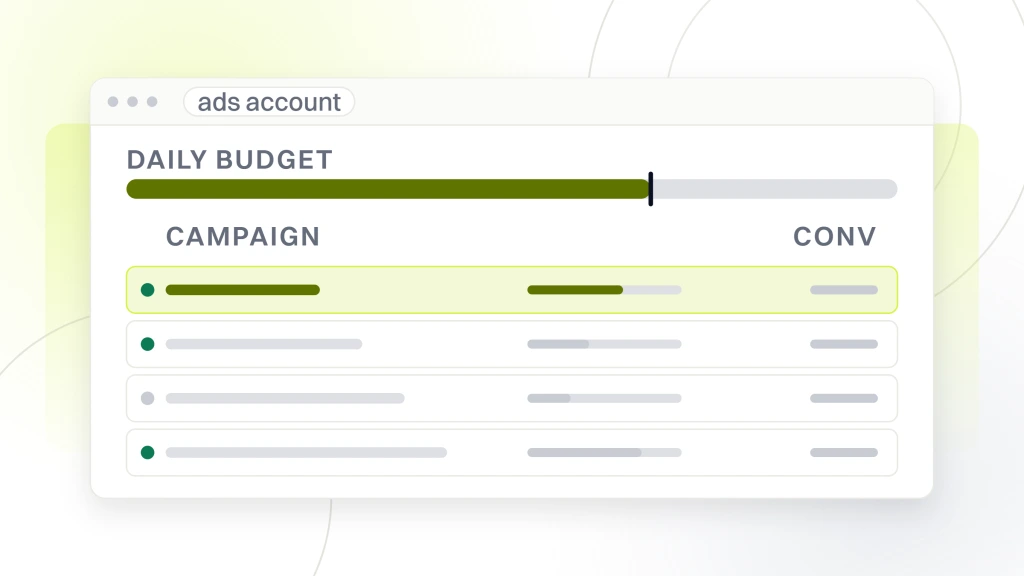
The share of budget across the four platforms shifts by category and margin. Fashion and beauty brands lean 40 percent Google, 40 percent Meta, 15 percent TikTok, 5 percent brand search. Home goods and electronics lean 60 percent Google, 25 percent Meta, 5 percent TikTok, 10 percent brand search. Software and info products skip Google Shopping and lean 60 percent Google Search plus 35 percent Meta. Adjust the mix to the category, keep the four-type framework, and revisit the split every 90 days as new conversion data compounds smart bidding signals.
Meta’s own documentation on the Advantage Plus Shopping campaign type is the canonical reference for the shift from manual ad set targeting toward algorithmic control. Google’s parallel is the Performance Max campaign format that consolidates Shopping, Search, display, and YouTube inventory under one campaign. Both platforms are pushing brands toward algorithmic-first structures, and both reward clean feeds and strong creative more heavily than legacy campaign types did.
Google Shopping structure by margin tier
Google Shopping is the largest single revenue driver on almost every Shopify PPC campaigns account. The single biggest structural mistake is running one Shopping campaign for the entire catalog. That single-campaign structure lets the algorithm allocate budget across every SKU equally, which starves hero products of impressions and floods long-tail SKUs with wasted spend. Split into three or four margin-tiered campaigns using custom labels flagged inside the product feed.
Hero SKUs are the top 20 percent of products by revenue. They belong in a dedicated campaign with a Target ROAS at 400 to 550 percent and premium bid strategy. Mid-catalog SKUs are the next 30 percent of products by revenue. They belong in a second campaign at Target ROAS 300 to 400 percent. Long-tail SKUs are the remaining 50 percent. They belong in a third campaign running Maximize Conversion Value bidding to catch impressions the hero campaign misses. Seasonal SKUs run in a fourth time-limited campaign that scales up during peak and pauses off-season.
Custom labels that make the split work
Custom labels inside the Shopify Google Merchant Center feed drive the campaign split. Label 0 flags margin band (high, mid, low). Label 1 flags inventory priority (hero, mid, long-tail). Label 2 flags seasonality (evergreen, spring, summer, fall, winter, holiday). Label 3 flags AOV band. Label 4 flags stock level (over, healthy, low, out). The Shopify app pushes updated feed data every 30 minutes so campaign inclusion rules stay current without manual work.
Feed hygiene before bid tuning
Feed hygiene fixes 60 percent of Google Shopping ROAS problems before a single bid change. Product titles need the brand, product type, key attribute, and size or variant in that order. Product images need clean white backgrounds at 800 by 800 pixels or larger. GTINs need to be present on every SKU or the item disapproves. Product descriptions need 300 to 500 words of unique copy. Category taxonomy needs to match Google’s product category tree. Every one of these fields is checked on account setup. Most brands find 15 to 40 percent of the catalog failing at least one check on the first audit.
Google Search structure for Shopify PPC campaigns
Google Search inside a Shopify PPC campaigns account splits into three separate campaigns. Brand keyword protection is the first. Category keyword targeting is the second. Product keyword targeting is the third. Merging any two of the three into one campaign wastes budget because the intent signals differ and the bid strategies differ.
Brand keyword protection runs on the brand name plus common misspellings and competitor variants. Budget sits at $200 to $800 a month even for large accounts because the traffic volume is capped by search demand. CPC runs $3 to $8. ROAS regularly hits 10x to 25x because the searchers are already looking for the brand. Skip brand protection and competitors will bid on the brand name and steal high-intent traffic that would otherwise convert organically. Reference reading on the current best practices sits at Google Ads Smart Bidding documentation.
Category and product keyword campaigns
Category keyword campaigns target research-phase queries like “luxury home decor” or “sustainable athletic wear.” CPC runs $25 to $75. ROAS runs 1.5x to 3x on category terms because intent is lower. Product keyword campaigns target specific product queries with clear commercial intent. CPC runs $15 to $50. ROAS runs 2.5x to 5x on product terms because intent is higher. Match landing pages to intent. Category ads land on collection pages. Product ads land on product pages. Same landing page for both cuts conversion in half.
Meta Ads structure for ecommerce ppc campaign structure
Meta Ads inside the ecommerce ppc campaign structure splits prospecting and remarketing at the campaign level rather than the ad set level. Merging the two audiences into a single campaign starves the remarketing audience of dedicated budget because the algorithm optimizes the mixed campaign toward cold prospecting impressions where reach is cheaper. The campaign-level split is the single largest structural decision on Meta Ads for DTC brands.
Cold prospecting audiences run inside a dedicated campaign with either broad targeting (Advantage Plus Shopping) or interest-based lookalikes depending on account maturity. Accounts under 30 days of pixel data lean on interest targeting and lookalike audiences built from customer email lists. Accounts with 90 or more days of pixel data typically move to Advantage Plus Shopping campaigns where the algorithm handles targeting. Budget for cold prospecting sits at 60 to 75 percent of total Meta spend because prospecting fills the top of the funnel that remarketing later monetizes.
Warm remarketing audiences and dynamic product ads
Warm remarketing audiences run inside a second dedicated campaign targeting site visitors from the past 30, 60, or 90 days, cart abandoners, and past purchasers for cross-sell or reorder. Dynamic Product Ads pull the specific products the shopper viewed on the site and re-serve them inside Facebook and Instagram feeds. Remarketing budget sits at 25 to 40 percent of total Meta spend and typically produces 30 to 45 percent of Meta revenue at a lower cost per acquisition. The campaign-level split from prospecting keeps the budget from bleeding out into cold audiences. If your team is also weighing which campaign is best for e-commerce email flows, our email marketing for e-commerce flows guide covers the paid-plus-owned coordination pattern.
TikTok Ads structure for ppc for shopify stores
TikTok Ads inside ppc for shopify stores works for brands with a 25 to 40 demographic fit and a product line that films well. Fashion, beauty, lifestyle, and food and beverage brands regularly hit 3x to 5x ROAS on TikTok Ads. Home goods, electronics, and B2B products struggle to clear 2x. Test with a small budget for 60 days before committing to a full TikTok campaign structure.
TikTok structure splits into a creative-led prospecting campaign and a Spark Ads campaign that boosts organic creator content. Creator content routinely outperforms brand-produced content by 2x to 3x on ROAS because the format matches native TikTok viewing behavior. Budget for TikTok sits at 5 to 15 percent of total Meta plus TikTok spend for demographic-fit brands. Skip TikTok on brands where the demographic does not match and reallocate to Meta remarketing. The wrong platform on the wrong audience is worse than no platform at all.
Bidding strategy ramp for structure ppc campaigns ecommerce
Bidding strategy on structure ppc campaigns ecommerce accounts walks through a three-phase ramp across the first 90 days. Run Manual CPC or Maximize Conversion Value in month one while each campaign gathers the first 50 conversions. Switch to Target ROAS bidding in month two once the campaign hits the 50 conversion floor. Advanced strategies like Portfolio Bid Strategies and seasonality adjustments kick in once the account has 200 or more conversions per campaign.
Set the initial Target ROAS at 80 percent of the historical average ROAS from the Manual CPC period. That 80 percent target gives the algorithm room to chase volume while holding the account to a specific per-conversion revenue floor. Once the campaign hits the target for 21 straight days, raise the target by 10 percent and repeat. Slow ramping the target upward captures compounding ROAS gains that fast ramping misses through overshoot.
When seasonality adjustments earn a slot
Seasonality adjustments and portfolio bidding come into play for mature accounts with 200 or more conversions per campaign and predictable seasonal patterns. Seasonality adjustments tell Google to expect a specific conversion rate change during a known event window like Black Friday, back-to-school, or category-specific sales. Portfolio bid strategies group multiple campaigns under one bid strategy so the algorithm can optimize across campaigns rather than treating each in isolation. Both features add complexity that most accounts under $30,000 monthly spend do not need but that mature $100,000-plus monthly accounts benefit meaningfully from.
Shopify PPC campaigns platform comparison side by side
The four platforms that carry Shopify PPC campaigns in 2026 each play a distinct role in the funnel and carry distinct cost per acquisition ranges. The table below compares Google Shopping, Google Search, Meta Ads, and TikTok Ads on the numbers a DTC marketing lead cares about when writing the paid channel budget.
| Platform | Share of DTC revenue | Cost per acquisition | Best used for | Structural priority |
|---|---|---|---|---|
| Google Shopping | 45 to 65 percent | $18 to $55 | Transactional intent | Margin-tiered campaigns |
| Google Search brand | 5 to 10 percent | $3 to $8 | Brand protection | Dedicated brand campaign |
| Google Search category | 8 to 15 percent | $25 to $75 | Research-phase capture | Separate from brand and product |
| Meta prospecting | 10 to 18 percent | $28 to $75 | Top-of-funnel reach | Advantage Plus Shopping |
| Meta remarketing | 8 to 14 percent | $12 to $35 | Warm audience monetization | Campaign-level split |
| TikTok prospecting | 3 to 10 percent | $32 to $85 | Younger demographic reach | Creative-led testing |
The share of DTC revenue each platform contributes shifts by category. Fashion and beauty brands typically see Meta Ads and TikTok Ads punching above their default share because the categories rely on visual creative. Home goods and consumer electronics brands typically see Google Shopping punching above its default share because the categories rely on transactional search intent. Software and information products rarely benefit from Google Shopping and skew Google Search plus Meta. The right structural priority depends on category, but the four-platform framework holds across every DTC vertical we work with.
Abigail Ahern Shopify PPC campaigns restructure reference
Abigail Ahern ran a full Shopify PPC campaigns restructure with our team through a 4-year engagement that started in August 2020. The London luxury home decor DTC brand ran on Shopify with a custom theme and 62 percent gross margin at $88 AOV, high enough for aggressive paid spend across all four platforms. The starting PPC account leaned heavily on discount-led messaging, branded keyword traffic, and a single Google Shopping campaign with Maximize Conversion Value bidding across the entire catalog. There was no brand keyword protection on Google Search, a merged prospecting-plus-remarketing Meta campaign, and no TikTok presence.
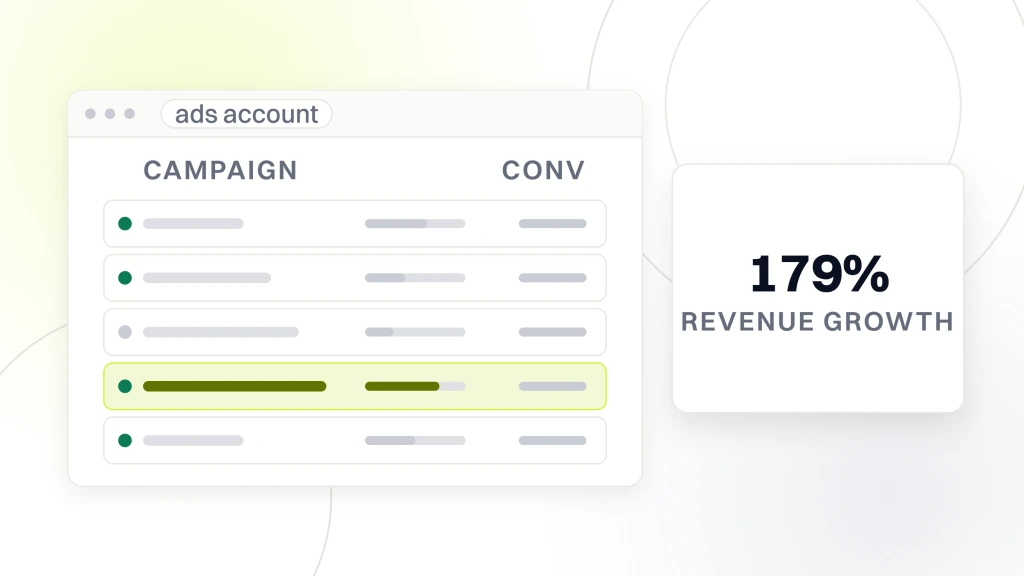
The restructure worked in three phases across the first 12 months. Phase one split Shopping into four margin-tiered campaigns (hero, mid-catalog, long-tail, seasonal) and rebuilt the product feed with custom labels flagging margin, inventory priority, and seasonality. Phase two added Google Search campaigns for brand protection, category targeting, and product keyword targeting as three separate campaigns. Phase three separated Meta prospecting from remarketing into distinct campaigns and launched a TikTok Ads test campaign targeting the 25 to 40 demographic that skewed toward Abigail Ahern’s luxury aesthetic content on the platform.
Results in the first 12-month window hit +179 percent e-commerce revenue, 1,588 percent paid-search ROAS (more than double the previous year), and 3,000 percent paid-social ROAS through retargeting and prospecting. Meta remarketing ROAS hit 5.2x once the campaign-level split freed the budget from bleeding into cold prospecting. TikTok Ads produced 8 percent of total PPC revenue by month 12 at ROAS of 3.4x. Brand keyword protection recovered $84,000 in annual revenue that competitors had captured through bidding. Zero discount banners across the whole rebuild. The paired program lives inside our ecommerce marketing agency retainer for DTC brands running all four PPC platforms through a single team.
Shopify PPC campaigns mistakes we see on every audit
Shopify PPC campaigns mistakes cluster around six repeating patterns we see on almost every account audit. Fixing all six inside 60 days typically produces a 20 to 40 percent ROAS gain on the same ad spend without touching creative. The mistakes are cheap to fix and expensive to leave alone across a full quarter.
- Single Shopping campaign for the entire catalog. Buries hero SKUs under long-tail products. Split into 3 to 4 margin-tiered campaigns.
- Merged Meta prospecting plus remarketing. Starves remarketing of dedicated budget. Split at the campaign level.
- No brand keyword protection on Google Search. Competitors steal high-intent traffic. Add a $200 to $800 monthly brand campaign.
- Same landing page for category and product Search ads. Cuts conversion in half. Match landing pages to intent.
- Skipping product feed hygiene. 60 percent of ROAS problems live in feed data. Fix feeds before tuning bids.
- Static campaign structure across quarters. Drift accumulates as inventory shifts. Restructure every 90 days.
- No conversion tracking on the landing page confirmation. The account bids blind. Wire tracking before scaling spend.
Order to fix the six mistakes
Fix conversion tracking first because every other fix depends on the account having clean data to optimize against. Fix product feed hygiene second because it delivers the largest ROAS gains on Google Shopping. Split the Shopping campaign into margin tiers third to let the algorithm allocate budget by profitability. Add brand keyword protection fourth as a same-week quick win. Separate Meta prospecting from remarketing fifth to free the remarketing budget. Match landing pages to Search ad intent sixth. Set a quarterly restructure cadence as a background process from the start. Brands that batch the six fixes over 60 days rather than trying to rebuild everything in a single week see cleaner analytics on what specific fix moved the numbers.
The 90-day restructure cadence that catches drift
Every mature Shopify PPC campaigns account runs a 90-day restructure cadence. Inventory shifts. Seasonal patterns change. The algorithm learns from new conversion data. Waiting longer than 90 days between restructures means the campaign structure that worked in Q1 is running on Q2 assumptions in Q3, which produces silent underperformance nobody notices until the ROAS drops 20 to 30 percent from peak.
The quarterly review covers campaign splits by margin tier, audience overlap across prospecting and remarketing, feed hygiene and custom label accuracy, negative keyword lists, budget allocation across campaign types, and bid strategy adjustments based on the last 90 days of conversion data. Brands running the 90-day cadence typically see 15 to 25 percent higher blended ROAS than brands that let campaign structure ossify for 6 to 12 months at a stretch. If you are also weighing organic growth to reduce paid dependency, our writeup on Shopify PPC agency tracking and management covers how organic and paid work together on the same funnel, including how to get orders on Shopify from a blend of paid, email, and SEO channels.
Budget and management fees for Shopify PPC campaigns
Shopify PPC campaigns need $8,000 to $50,000 in monthly ad spend for mid-market DTC brands depending on category competitiveness and revenue target. Early stage brands under $50,000 monthly revenue typically sit at $4,000 to $12,000 in monthly ad spend. Mid-stage brands at $50,000 to $500,000 monthly revenue sit at $12,000 to $30,000. Mature brands above $500,000 monthly revenue sit at $30,000 to $80,000 or more. The split across campaign types runs 55 to 65 percent Google Shopping, 15 to 25 percent Google Search, 15 to 25 percent Meta Ads, and 5 to 15 percent TikTok Ads for brands where the demographic fits.
Management fees for a Shopify PPC agency typically run 12 to 18 percent of ad spend or flat $2,000 to $6,000 monthly on smaller accounts. Redefine Web retainer tiers run $999, $1,499, $2,499, and from $4,500 a month depending on ad spend scale, platform count, and reporting depth. Ad spend is billed separately from the retainer. The $999 tier covers Google Shopping plus brand search for single-platform accounts under $8,000 monthly spend. The $1,499 tier adds Meta Ads. The $2,499 tier adds TikTok Ads and dedicated account manager time. The from-$4,500 tier covers accounts above $30,000 monthly ad spend with full four-platform structure, weekly reporting, and quarterly restructures. For a broader view of the vetting side, see our Shopify PPC management guide.
Product feed hygiene that drives Shopping ROAS
Product feed hygiene inside Shopify PPC campaigns is the single highest-payoff work item on a new account audit. Sixty percent of Google Shopping ROAS problems live in feed data. The Shopify Google Merchant Center channel app handles the sync mechanics automatically, which means most brands assume the feed is fine and move straight to bid tuning. Wrong sequence. Fix the feed first, then tune bids.
Start with product titles. The working format is brand plus product type plus key attribute plus size or variant, in that order, capped at 150 characters. “Abigail Ahern Balthazar Table Lamp Black Marble 60cm” beats “Table Lamp Black Marble Modern” on both impression share and click-through rate. Then product images. White backgrounds at 800 by 800 pixels or larger. Lifestyle images work for secondary slots but the primary image needs to be the clean product shot. Then GTINs. Missing GTINs cause item disapprovals. Every SKU needs one or the entire product row drops from the feed.
Category taxonomy and custom labels
Category taxonomy needs to match Google’s product category tree exactly. Wrong category assignment cuts impression share by 40 to 60 percent because the ad becomes ineligible for the right auction. Custom labels drive the margin-tiered campaign split covered above. Label 0 tags margin band. Label 1 tags inventory priority. Label 2 tags seasonality. Label 3 tags AOV band. Label 4 tags stock level. Update labels every 30 days as inventory shifts. Automate the label refresh through a Shopify metafield sync where possible so the operational overhead stays low.
Shopify PPC campaigns outlook through 2028
Shopify PPC campaigns outlook through 2028 hinges on three shifts. Google Shopping ad surface expansion across YouTube Shopping, Discover, and Gmail promotions gives clean product feeds more places to earn impressions with zero additional structural work. Meta Ads Advantage Plus Shopping campaigns keep growing share as brand-side control shrinks and Meta’s algorithm takes over targeting decisions. TikTok Ads become table stakes for DTC brands with a demographic fit as the platform matures its Shopping surface and ad targeting depth.
Advantage Plus Shopping on Meta and Performance Max on Google keep growing share of total ad spend as both algorithms mature. The trade-off is brand-side control shrinks. Advantage Plus decides which products to show, which audiences to reach, and which creative to test with less operator input than legacy campaign types. Brands that trust the algorithm with clean feeds and strong creative typically see ROAS gains. Brands that treat Advantage Plus as a black box and skip the underlying feed and creative work see disappointing results and blame the algorithm. Structural discipline matters more, not less, as algorithmic control grows.
Start structuring Shopify PPC campaigns this month
Start structuring Shopify PPC campaigns with three moves this month. Audit the current Google Shopping campaign structure and split into three or four margin-tiered campaigns if the account is running a single catch-all campaign. Separate Meta prospecting from remarketing at the campaign level if the two audiences are currently merged. Add a brand keyword protection campaign on Google Search at $200 to $800 monthly ad spend if the account does not already bid on brand keywords. Those three moves alone typically produce a 15 to 25 percent ROAS gain inside 30 days without touching creative or bid strategy.
Then plan the 90-day full restructure. Month one hits the Shopping campaign split, Meta campaign split, and brand protection launch. Month two adds Google Search category and product keyword campaigns with matched landing pages, tunes the product feed with custom labels, and layers Meta remarketing dynamic product ads. Month three tests TikTok Ads for demographic-fit brands, moves Google Shopping to Target ROAS bidding after 50 conversions per campaign, and sets the quarterly restructure cadence. Brands that follow the phased ramp see steady ROAS growth rather than boom-bust cycles. The paired scope that runs all four platforms under one team sits inside our e-commerce PPC strategies for better ROAS writeup, which covers the full scope for a Shopify DTC brand running paid at scale.
Shopify PPC campaigns succeed when the structure lets the algorithm learn on distinct campaigns per intent, per audience, per margin tier. Split by intent. Split by audience. Split by margin. Restructure every 90 days. Wire clean feed hygiene before touching bid strategies. The framework works. The rest is the weekly discipline of watching ROAS, tuning bids, and refreshing creative against Google, Meta, and TikTok’s evolving ad surface expansions through 2028 and beyond. For teams that want the full paid scope layered on top of a mature Shopify DTC operation, the paired retainer covers all four platforms under a single team at Redefine Web.