
A DTC skincare brand doing $2.1M annual revenue asked our team for a second opinion on a paid media account managed by a rival vendor. Monthly ad spend was $34,000 across Google and Meta. Blended return on ad spend read 2.1x on the vendor dashboard. The founder could not reconcile the return with the store’s bank deposits.
An ecommerce ppc audit checklist ran across three hours the next morning. The pixel had been double-firing purchase events since a Shopify theme swap 11 weeks earlier. Non-branded search was buying broad-match terms for competitor brand names at $6.80 per click. Performance Max was eating 71% of the branded query traffic the shopping campaign used to earn at half the cost. Three fixes recovered $9,200 of monthly waste inside the first billing cycle.
This guide is the exact ecommerce ppc audit checklist our team runs on DTC accounts. Where waste hides. How to score campaign structure. What quality score really tells you. How to audit the product feed. Which negative keywords pay for the audit. How to test conversion tracking. Which priority fixes rank first by revenue impact per hour of work.
What the ecommerce ppc audit checklist covers end to end
An ecommerce ppc audit covers seven areas across Google and Meta ad accounts for a DTC store. Waste spend. Campaign structure. Quality score. Product feed health. Negative keyword coverage. Conversion tracking. Priority fixes ranked by revenue impact per hour of work across the next 30 days.
The seven scoring areas our team walks in order
Every real ecommerce ppc audit walks the same seven scoring areas in the same order, so the fixes stack cleanly on top of each other. Waste comes first. Catching waste pays for the rest of the audit in most accounts. Structure comes second, since a broken campaign map hides waste behind aggregated numbers. Quality score comes third. It tells you whether the search inventory is auction-competitive or bleeding cost per click on every impression.
Product feed comes fourth. Shopping and Performance Max sit on the feed and no amount of bidding fixes a broken title structure. Negative keywords come fifth. They are the cheapest single lever inside shopping and PMax. Conversion tracking comes sixth. Every return number above is fiction if the pixel is broken. Priority fixes come seventh. The founder needs a ranked list of what to do this week, next week, and next month.
Deliverables a DTC founder should receive
A written scorecard with red, amber, and green flags per area. A screen recording walking through the account structure with commentary on what to keep and what to rebuild. A ranked list of priority fixes with hours estimated per fix and revenue impact scored on a scale of one to five. A 30, 60, and 90-day roadmap tying the fixes to a cadence the founder or vendor can operate against.
Our writeup on ecommerce ppc management covers what the same scorecard looks like when a retainer picks up execution after the standalone audit closes.
Where waste hides inside ecommerce ppc campaigns audit work
Waste is the highest-return finding in most paid media accounts. It converts to recovered spend on the same day the fix goes live. Ecommerce ppc campaigns audit work usually surfaces 15 to 35% of monthly ad spend that is not producing incremental revenue. Finding it takes a disciplined walk of five reports and one query log review.
The five reports every waste scan pulls
- Search terms report across the last 90 days, filtered by spend descending, looking for irrelevant queries eating budget on broad-match keywords.
- Placement report on display and Performance Max, filtered by spend, looking for mobile app and low-quality site placements draining budget.
- Audience insights report on Meta, checking whether lookalike and interest audiences still have runway or have exhausted the reachable pool.
- Device performance report across Google and Meta, checking whether mobile, tablet, and desktop are producing return in line with spend share.
- Geography report filtered against shipping zones, checking whether the account is buying clicks in geographies the store cannot serve profitably.
A DTC apparel brand spending $18,000 monthly on Google Ads typically finds 25 to 40 disqualifying queries in a single 90-day search terms review. Each one adds to a negative keyword list at the account level. The recovered budget alone often equals two months of the audit fee. Waste scans that skip the query log entirely miss the largest single recovery inside the audit. That’s why cheap audits leaning on aggregated dashboard numbers fail to move the account after delivery.
Campaign structure review inside an ecommerce ppc audit
Campaign structure is the second scoring area. A broken structure hides waste behind aggregated numbers that look reasonable at the account level. Real structure scoring walks the map of search, shopping, Performance Max, prospecting, and retargeting. It asks whether each campaign has a clear job the other campaigns are not doing at the same time.
Structure red flags we see most often
The five red flags that show up in most audits are broad-match keywords sitting alongside exact-match in the same ad group without a shared negative list, shopping campaigns competing against Performance Max on the same product feed without a brand-segmented asset group, prospecting audiences overlapping retargeting audiences with no exclusion setup, single-campaign Meta accounts running prospecting and retargeting from one budget with no learning phase separation, and consolidated shopping campaigns priced against blended return targets that hide margin differences across product categories.
Each of these red flags inflates cost per acquisition. Fixing structure before touching bids is the difference between a real audit and a surface-level dashboard review that produces no compounding recovery.
How the working structure looks
The working structure separates branded search into its own campaign with a dedicated budget cap. It keeps shopping in a standard campaign for the products the store wants direct control over. It uses Performance Max on secondary and impulse-purchase products with a brand-excluded asset group setup. It runs Meta prospecting in a dedicated campaign with broad and lookalike audiences at a two-week creative rotation. It holds Meta retargeting in a separate campaign with dynamic product ads pulling from the same feed the shopping campaign runs against.
Every campaign gets a written role in the account documentation, so the next audit can score against a stated intent rather than reverse-engineering the vendor’s decisions.
Quality score inside auditing ecommerce ppc campaigns
Quality score is the third scoring area. It decides how much every click costs at auction. Auditing ecommerce ppc campaigns without pulling the quality score column on search inventory produces a fake picture of account health. Most cheap audits skip this step. It’s manual and unrewarding to explain to the founder.
The three components of a quality score fix
Quality score decomposes into expected click-through rate, ad relevance, and landing page experience. Expected click-through rate improves when ad copy leads with the query the shopper searched, uses dynamic keyword insertion where the account structure supports it, and rotates two ad variants per ad group with a clear winner promoted every 21 days.
Ad relevance improves when the ad group holds five to eight tightly related keywords rather than 60 loosely related ones, so the ad copy can match query intent without generic language. Landing page experience improves when the shopper lands on a collection or product page that matches the query, loads in under 2.5 seconds, and passes Core Web Vitals on mobile. A quality score gain from 5 to 8 typically drops cost per click by 25 to 40% on the same keyword. That makes quality score work the fourth-highest-return line item in most audits.
What Google’s help documentation actually says
Google publishes explicit guidance on quality score inside the Google Ads help documentation. Every real audit pulls that page open next to the account and scores each ad group against the framework rather than guessing. Founders reading the audit later should see the framework applied to their account, not a generic checklist copied from elsewhere.
Product feed health inside the ecommerce ppc audit checklist
Product feed health is the fourth scoring area. Shopping and Performance Max sit on the feed and no amount of bidding fixes a broken title structure. Feed audits get skipped most often in cheap ecommerce ppc audit services. The fix takes 12 to 25 hours and vendors would rather bill for optimizations than rebuilds.
The feed audit checklist we walk on every account
- Title structure leading with category, brand, primary attribute, and secondary attribute in that order across every SKU in the catalog.
- Description length expanded from Shopify defaults to 800 to 1,500 characters that surface intent-matched terms Google reads for query matching.
- GTIN, MPN, and brand attributes filled in wherever Shopify or WooCommerce left them blank. Missing IDs suppress impression share on branded and comparison queries.
- Product images at 1200 by 1200 pixels minimum with a clean background, checked against Merchant Center policy warnings weekly.
- Custom labels set for margin tier, seasonality, and stock depth, so campaign structure can bid against product economics rather than the flat feed.
- Availability and pricing synced through the Shopify or WooCommerce feed connector with a maximum drift of four hours between store and Merchant Center.
A DTC brand doing $2M annual revenue on Shopify typically has 200 to 800 SKUs. A full feed rebuild takes 12 to 25 hours of an analyst’s time across the first 60 days of a new engagement. The recovered impression share plus improved product ranking usually pays back the rebuild inside two billing cycles. Our writeup on what is ppc in ecommerce covers the feed math for first-time buyers who have not run a Merchant Center account before.
Negative keyword coverage the audit almost always upgrades
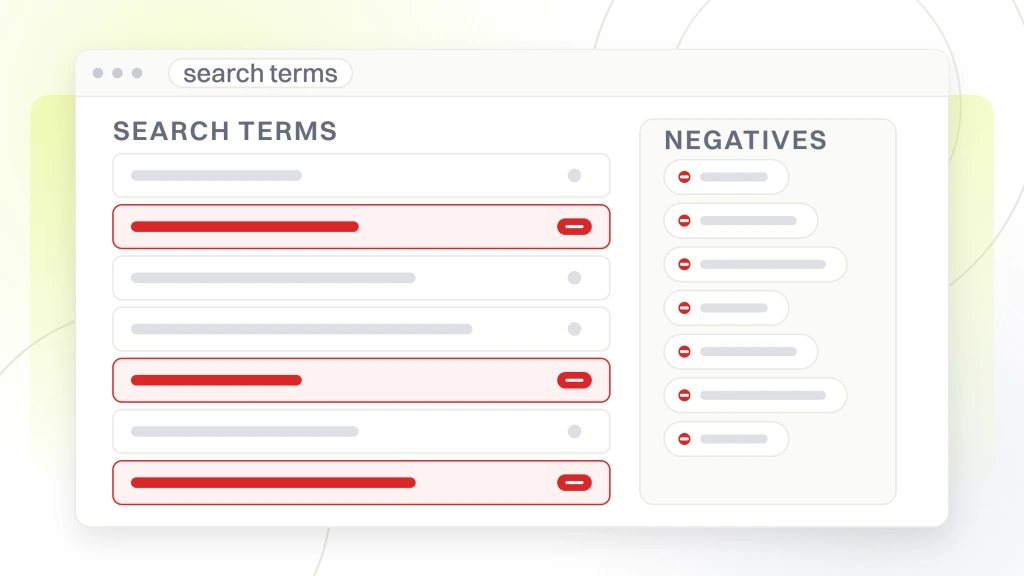
Negative keywords are the fifth scoring area. They are the cheapest single lever inside shopping, search, and Performance Max. Most accounts we audit carry a shared negative list of 30 to 80 terms when the working list should sit at 400 to 1,500 terms curated across account, campaign, and ad group levels. Adding 300 negative keywords to a shopping campaign inside a single audit session typically drops wasted spend by 10 to 18% within one week.
The three negative keyword layers our team maintains
Account-level negatives hold the terms no campaign in the store should ever spend on. Free, cheap, DIY, YouTube, and job-related searches sit here across most DTC accounts. Campaign-level negatives hold terms that make sense in one campaign but not another. Branded terms sit as negatives on the non-branded search campaign to keep attribution honest. Competitor brand names sit as negatives on the shopping campaign to protect margin.
Ad-group-level negatives hold the tight overlap between related product categories, so the running shoe ad group does not eat clicks from the trail running shoe ad group. Cheap ecommerce ppc audit services skip campaign and ad-group layers entirely. Building them requires reading the search terms report line by line, which takes real time.
How the working list gets built
The working list builds from three passes. First pass reads the last 90 days of search terms across every active campaign, sorted by spend, tagging any query that produced zero conversions across at least 40 clicks as a candidate. Second pass reads competitor and generic-question queries and adds them as phrase-match negatives at the account level. Third pass reviews the placement report on Performance Max and adds bad placements as excluded content.
The list gets versioned in a shared document, so the next audit can score changes rather than rebuilding from scratch.
Conversion tracking gaps that break every ecommerce ppc audit
Conversion tracking is the sixth scoring area. Every return number the audit reports is fiction if the pixel is broken. Ecommerce ppc audit work that skips tracking validation usually accepts the vendor dashboard at face value and misses the largest single failure mode in DTC paid media. Pixel and Conversions API testing takes 45 minutes and finds real issues on roughly 60% of accounts we audit.
The four tests every tracking audit runs
Test one confirms the Meta pixel fires on ViewContent, AddToCart, InitiateCheckout, and Purchase events with unique values, tested through the Meta Events Manager test browser. Test two confirms the Conversions API server-side event stream fires on the same events with matching values, tested through the deduplication report.
Test three confirms GA4 records the same purchase count and revenue value inside a 5% tolerance of the store’s back-end order data, tested by reconciling three days of orders manually. Test four confirms Google Ads imports the same GA4 conversion actions or fires its own tag directly, tested through the conversion source report. Accounts that pass all four sit in the top 20% of tracking hygiene. Accounts that fail two or more should not be evaluated on any return number until the tracking is rebuilt.
What tracking failure typically looks like
A DTC skincare brand doing $18,000 monthly ad spend on Meta reported a 3.4x return on ad spend on the vendor dashboard. The audit found the pixel was firing Purchase twice on every order. A Shopify app installation had added a duplicate pixel snippet 11 weeks earlier. Real return on ad spend sat at 1.7x once purchases were deduplicated. The founder had been paying an agency retainer against a metric that overstated performance by a factor of two. Fixing the pixel took 30 minutes. The audit paid for itself in that single fix.
Priority fixes ranked by revenue impact per hour of work
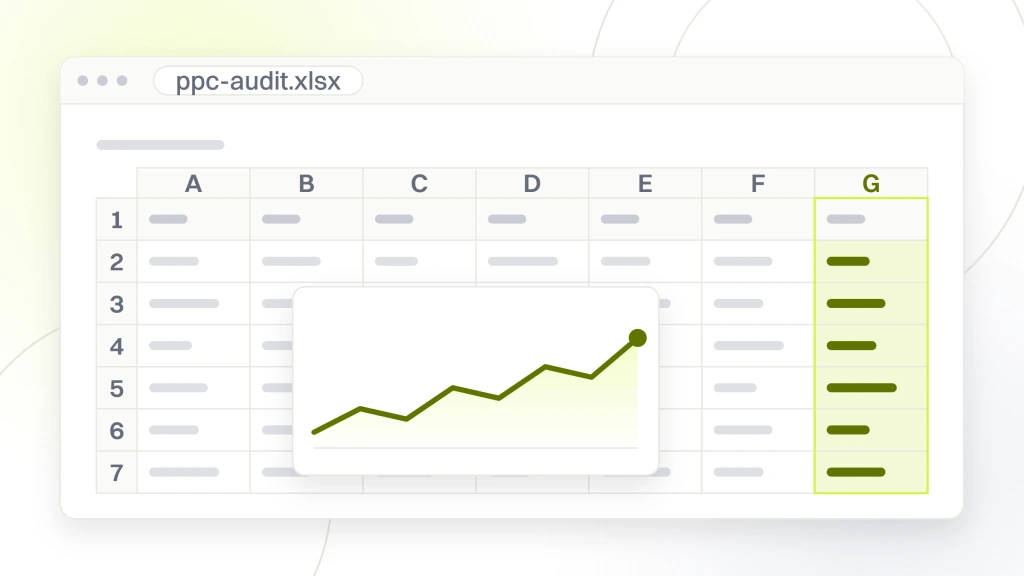
Priority fixes are the output the founder actually uses after the audit closes. A scorecard with 40 findings but no ranking produces analysis paralysis. Ranking fixes by revenue impact per hour of work is the discipline that turns audit findings into recovered spend inside the first 30 days after delivery.
The scoring matrix our team applies
| Fix | Hours to apply | Revenue impact (1 to 5) | Priority tier |
|---|---|---|---|
| Rebuild broken pixel and Conversions API | 1 to 2 | 5 | P0 same-week |
| Add 300 negative keywords across shopping and search | 2 to 3 | 4 | P0 same-week |
| Split branded search into a capped campaign | 1 | 4 | P0 same-week |
| Rebuild product feed titles and descriptions | 12 to 25 | 5 | P1 next 30 days |
| Restructure PMax asset groups by margin tier | 3 to 5 | 4 | P1 next 30 days |
| Rebuild Meta prospecting audience map | 4 to 6 | 4 | P1 next 30 days |
| Refresh creative on a two-week cycle | 6 to 8 per cycle | 3 | P2 next 60 days |
| Reprice bid targets against margin | 2 to 4 | 3 | P2 next 60 days |
The matrix keeps the founder focused on the same-week fixes that recover the fastest cash and delays the longer feed rebuild until the recovered spend is funding the analyst hours. Any priority list that reverses the order (feed rebuild first, negatives last) burns founder patience and delays recovery by 30 to 45 days. Our writeup on ecommerce ppc services covers how the priority tiers stack into the first 90 days of a retainer that picks up execution after the audit closes.
How much a real ecommerce ppc audit costs across the DTC market
A real ecommerce ppc audit costs $500 to $2,500 as a standalone project for a DTC store between $500,000 and $5 million annual revenue. Freelance audits sit at the lower end. Boutique agency audits sit at the middle. Enterprise-tier audits from named PPC agencies run $3,500 to $8,000 with a live walkthrough call included.
What each price tier honestly delivers
A $500 freelance audit typically covers a written scorecard with 15 to 25 findings and no live call. That works for founders who understand paid media well enough to act on the writeup without hand-holding. A $1,200 to $2,500 boutique agency audit covers a written scorecard with 30 to 50 findings, a screen recording walkthrough, and a 30-minute call to review priorities.
A $3,500 to $8,000 enterprise audit covers a written scorecard with 60 to 100 findings, a live workshop with the internal marketing team, and a 90-day roadmap document with named owners per fix. Founders should pick the tier that matches their internal capacity to act on findings, not the cheapest available option. A $500 audit followed by no execution wastes the money faster than a $2,500 audit followed by 20 hours of ranked fixes applied.
Why our team runs the audit free
Redefine Web runs the ecommerce ppc audit checklist free of charge, with or without a retainer. Audit findings shape the first 90-day roadmap the retainer operates against.
If you want our team to do the work, we quote a fixed monthly price once the audit shows what the account needs. Ad spend is billed separately from retainer fees.
Red flags in cheap ecommerce ppc audit services
Cheap ecommerce ppc audit services hide the same failure patterns across the DTC market. Spotting the patterns at discovery saves the founder six weeks of wasted internal time trying to act on a scorecard that was never going to move the account.
The five red flags we see most often
- Dashboard-only audits that report account-level metrics without pulling the search terms report or placement report, missing the largest single waste finding.
- No tracking validation anywhere in the deliverable, which means every return number reported is untested and possibly fictional.
- Generic priority lists ranking fixes alphabetically or by tab order rather than by revenue impact per hour of work.
- No feed audit in the scorecard. Feed problems are the number one shopping-campaign failure mode. Feed audits take real time to walk.
- No live call included for standalone audits past $1,000. A founder acting on 40 findings without a walkthrough usually applies three of them and moves on.
Every red flag above shows up in our audits of failed ecommerce ppc audit engagements we replace. Founders who screen for the five patterns at discovery filter roughly 60% of underperforming audit providers before signing. The remaining 40% still need scope specificity in the audit contract itself. Verbal promises about deliverable depth rarely survive from sales conversation to writeup delivery.
A real ecommerce ppc audit engagement in production
Boogie Board, a DTC brand selling reusable writing tablets across Google Ads and Meta, came to our team with a paid media account that had scaled ad spend past six figures without a fresh audit in over a year. Targeting on Google Ads was loose. Landing pages were not tuned to product benefits. There was no A/B test rhythm on creative or copy. The founder wanted a full read before renewing the vendor contract.
Our team ran the full ecommerce ppc audit checklist. Waste scan surfaced broad-match query spend on gift and generic writing-pad terms that never converted. Structure review flagged unsegmented shopping campaigns pricing children’s tablets against adult productivity tablets on one blended target. Feed audit rebuilt SKU titles to lead with category and use case. Conversion tracking testing confirmed the Meta pixel and GA4 were reconciling inside a 4% tolerance once event dedup was fixed. Priority fixes ranked six same-week actions, five next-30-day actions, and four next-60-day actions.
Across the annual audit and retainer window, Boogie Board managed $650K in ad budget through the rebuilt account, boosted conversion rate 11% through refined targeting and landing page work, and cut cost per sale to $31 (numbers from the Boogie Board case study). The engagement moved into a retained relationship with weekly cadence, monthly reporting tied to contribution margin, and a 90-day rolling audit that runs every quarter to stop drift. Founders reviewing the paid side should compare it against organic through the seo vs ppc for ecommerce budget-split framework.
Where the ecommerce ppc audit checklist fits the DTC growth stack
An ecommerce ppc audit sits at the diagnostic layer of the DTC growth stack. Every downstream tactic (retainer scoping, creative production, feed hygiene, conversion rate work) compounds through the audit findings or fights against them. Founders that skip the audit before signing a paid media retainer usually discover the same failure modes six months in, when the retainer fee has been paid twice over.
How the audit ties into the retainer stack
Our team runs the ecommerce ppc audit as the first deliverable inside every paid media retainer we open. The audit produces the scorecard. The scorecard produces the 90-day roadmap. The roadmap produces the weekly cadence. The weekly cadence produces the monthly report the founder actually reads. Removing the audit at the front breaks the whole chain. The retainer is then executing on unaudited assumptions about the account. Shopify-specific retainers follow the same pattern with platform-specific overlays we apply to the audit for Shopify Merchant Center accounts.
What honest scoping looks like at signing
Honest scoping at signing includes a written statement of the audit scope, the deliverable format (scorecard plus screen recording plus call), the ranked priority list format, and the handoff timeline for the retainer to pick up execution. The retainer is a fixed monthly price we quote after the free audit, based on what the scorecard finds. Ad spend is billed separately.
Six-month contracts are standard. Paid media learning phases take 45 to 60 days to stabilize and quarterly audit rhythm needs at least two learning phases to produce compounding recovery. The ecommerce ppc agency hub covers the retainer scope for founders who want the audit and execution run together.
Book a scoped ecommerce ppc audit for your DTC store
You’ve read the ecommerce ppc audit checklist. The next step is booking one against your account. Our team runs a fixed-scope audit inside three to five hours of analyst time and hands over a written scorecard, screen recording walkthrough, and 30-minute call to review the ranked priority list. The audit is free. If you want our team to run the fixes, we quote a fixed monthly price based on what the audit finds. Ad spend billed separately.