A shopify web development agency doesn’t draw the storefront. It writes the code the storefront runs on, and that’s the job most founders confuse with the design brief until the first change order lands. You want a designer for the Figma file. You want a developer for the Liquid template, the metaobject schema, the app extensions, the theme editor sections, the Hydrogen route, and the checkout script that goes live without breaking Meta CAPI. Mix the two roles up and you’ll pay for a pretty homepage the moment your product logic gets weird.
This guide covers what our ecommerce website design services team delivers when a founder hires us for development work. Theme customization scope. Shopify app development. Liquid architecture. Hydrogen and headless routes. Platform migrations that keep SEO alive. Real 2026 prices per tier. Every number below runs off DTC store builds we finished through 2024 and 2025.
Shopify app development agency scope and pricing
A Shopify app development agency writes public or private apps against the Admin API, Storefront API, and App Bridge, wrapping business logic the theme can’t hold. Private apps run for one merchant. Public apps get listed in the Shopify App Store. Both use the same stack (Node or Ruby backend, React frontend, App Bridge for auth), and both cost $30k to $180k depending on scope. Founders who need one custom feature (a bundle builder, a made-to-order flow, a quote request tool) rarely need a public app. A private app usually costs 40% less and goes live faster.
Private app scope for one merchant
A private app for one merchant covers a specific business rule. Custom bundle builders where the SKU count varies (jewelry sets, food subscription boxes, gift-wrap bundles). Configurable product builders where price depends on 5+ input axes (industrial equipment, made-to-order fashion). Quote request tools where B2B customers submit a cart and get a custom quote before checkout. Wholesale portals where price tiers switch on customer group. Loyalty engines where points accrue against rules the standard apps can’t cover. Every one runs 6 to 14 weeks against a $30k to $85k budget, with the code owned by the merchant at handoff, not held ransom by the agency’s SaaS.
Public app scope for App Store distribution
Public apps go live in the Shopify App Store and run across many merchants. Scope expands to include Shopify billing API integration, GDPR webhooks, App Store listing assets, security review for scopes above the standard set, and a multi-tenant architecture that scales past the first 100 installs. Public app budgets run $90k to $180k plus the first year of hosting and support. Founders who want App Store distribution should confirm they have a distribution plan before signing. Roughly 60% of new App Store apps sit under 50 installs after 18 months. Building without a distribution story usually turns an App Store dream into a private app after 12 months of slow install growth.
Liquid templating and metaobject architecture inside a build
Liquid is the templating language every Shopify theme runs on. Metaobjects are the structured data layer Shopify added in 2022 that replaces the old pattern of stuffing product data into rich-text description fields. Together they define how flexible a storefront is once the design lands. Developers who ignore metaobjects and cram everything into product descriptions build stores that break the first time the merchandising team tries to filter or sort by a data point.
Where Liquid earns its keep
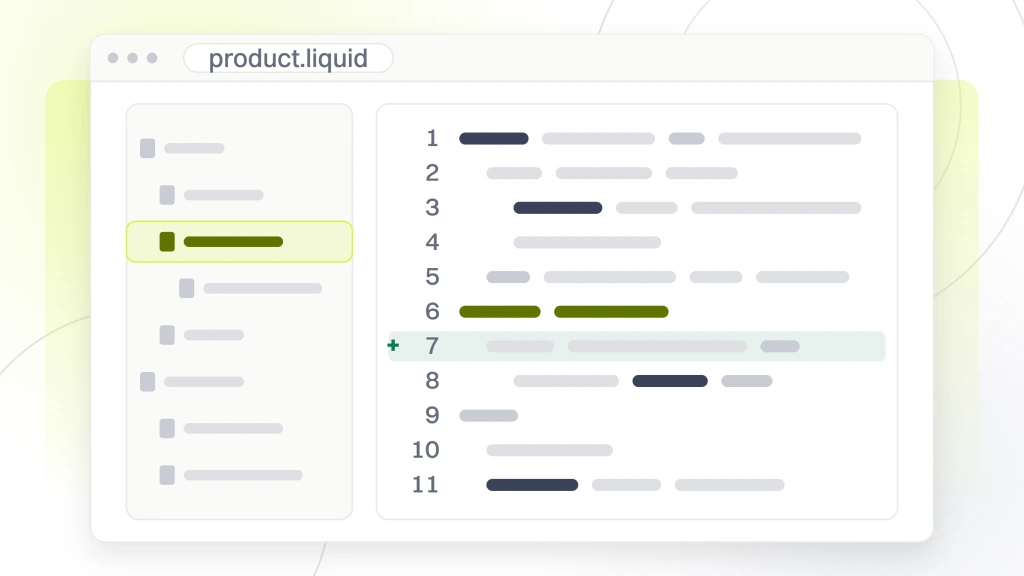
Liquid handles the presentation logic that connects Shopify’s data model to the rendered HTML. PDP variant swap logic. PLP filtering by metafield values. Bundle price math. Currency and unit conversions. Recently viewed products. Localized copy across markets. A senior Liquid developer writes tight, cached, snippet-based templates that render in under 400ms server-side. A weaker developer writes bloated templates with nested loops that push server rendering past 900ms and drag Lighthouse scores into the mid-60s. The gap between the two developers is invisible in Figma and obvious the moment the store hits real traffic. Shopify’s own Liquid reference documentation is the honest bar every developer on the build should be measured against.
Why metaobjects change what the store can hold
Metaobjects let developers define custom content types (recipes, ingredient lists, warranty terms, sizing charts, ambassador profiles) that products, collections, and pages can reference. Before metaobjects, this data lived in rich-text description fields nobody could query. After metaobjects, it lives in structured records the storefront can filter, sort, and merchandise against. The difference matters most on catalogs with 500+ SKUs where the merchandising team wants to run collection pages by ingredient, material, or use case. A build that skips metaobject architecture ends up fast at launch and hits the wall at month nine when the growth team asks for a filter the theme can’t hold. A build that invests two weeks in metaobject design at kickoff runs cleanly for the next three years.
Hydrogen and headless Shopify development when the storefront needs it
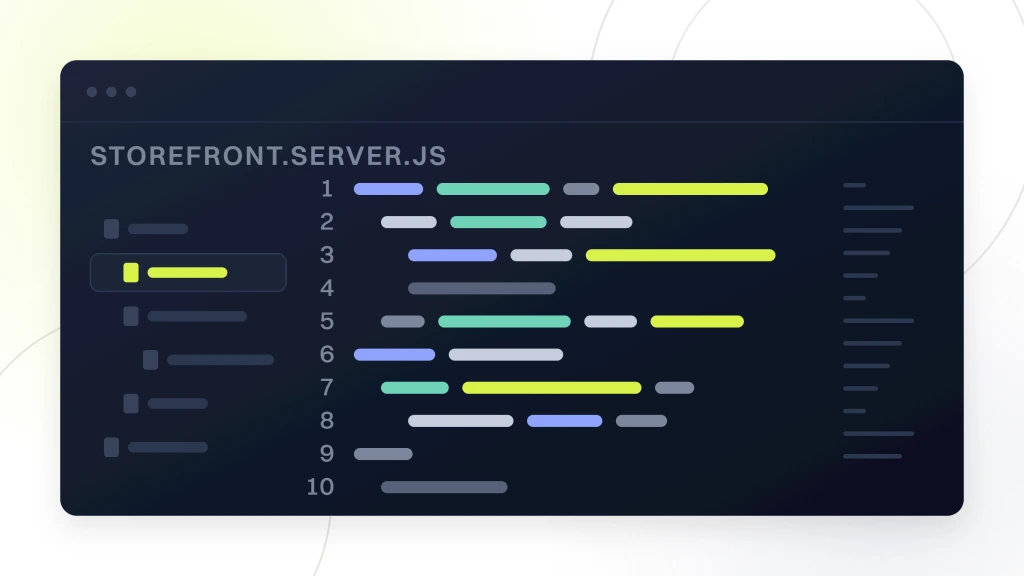
Hydrogen is Shopify’s React-based framework for headless storefronts, deployed on Oxygen (Shopify’s edge hosting) or self-hosted on Vercel and Netlify. Headless splits the storefront from the Shopify admin, letting the front-end run on any stack, and Shopify remains the commerce engine. Founders who hear headless and assume they need it usually don’t. The pattern is worth the tax when brand-native motion, editorial content, or multi-market catalogs outrun what Liquid can hold.
When Hydrogen actually pays back
Hydrogen pays back on three brand profiles. Editorial-heavy brands where the storefront blends deep magazine-style content with commerce (Aesop-style discovery pages, Glossier-style long-form product stories). Multi-market brands where regional catalog logic, currency handling, and localization patterns strain the Shopify Markets feature set. Performance-critical brands where the LCP budget stays under 1.5 seconds mobile no matter what apps get added. Each profile earns real gains from a Hydrogen build, and each is a small slice of the DTC market. Roughly 8% of merchants who ask us about Hydrogen actually need it. The rest move faster on a well-scoped Liquid theme against Shopify’s own Online Store 2.0 sections.
Cost and timeline for a Hydrogen build
A Hydrogen build runs $120k to $280k with a timeline of 22 to 34 weeks. The cost premium over a Liquid theme covers React front-end code, Oxygen or Vercel deployment pipeline, edge caching strategy, SEO parity work (server-side rendering, meta tags, JSON-LD schema, sitemap generation), and a full re-implementation of the checkout hand-off pattern. Founders who go headless without budgeting for SEO parity usually see 20% to 40% organic traffic drops within 90 days, since the crawler read the pre-Hydrogen HTML as canonical and now sees an inconsistent React tree. Google’s own JavaScript SEO basics documentation is the honest bar for any headless build going live in 2026. Brands weighing the Plus tier upgrade should pair this piece with our guide to picking a shopify plus development agency the right way.
How do shopify development agencies price their work in 2026
Shopify development agencies price by tier. Theme customization runs $18k to $60k. Fully custom theme builds run $80k to $180k. Hydrogen headless builds run $120k to $280k. Private app development runs $30k to $85k. Add 15% to 25% for split scopes across two agencies. Retainers start at $599 monthly.
| Scope tier | 2026 price range | Timeline | Best fit revenue band | What you actually get |
|---|---|---|---|---|
| Theme skin only | $4k to $12k | 3 to 6 weeks | Under $500k annual | Palette, hero, one section |
| Theme customization | $18k to $60k | 10 to 14 weeks | $500k to $8M annual | Section schemas, custom sections, Liquid |
| Fully custom theme | $80k to $180k | 18 to 26 weeks | $8M to $22M annual | Bespoke Liquid, design system, metaobjects |
| Hydrogen headless | $120k to $280k | 22 to 34 weeks | $15M plus annual | React front-end, Oxygen edge, SEO parity |
| Private app build | $30k to $85k | 6 to 14 weeks | Any band | App Bridge, custom business logic |
| Post-launch retainer | $599 to $6k monthly | Ongoing | Any band | Bug fixes, feature work, speed budget |
What drives price up inside a tier
Six factors drive price up inside a tier. Catalog size (500+ SKUs pushes theme customization past $40k, since collection filtering work compounds). Integration count (Klaviyo, ShipStation, Yotpo, ERP, PIM each add real hours). International markets (currency, tax, language, catalog logic multiply cost 30% to 50%). B2B logic (customer group pricing, quote requests, wholesale portals add $15k to $40k). Migration complexity (moving from WooCommerce, BigCommerce, or Magento adds $20k to $60k depending on cart history and URL preservation). Enterprise security requirements (SOC 2, vendor security review, penetration testing add 15% to 25%). Founders who hear a low quote should ask which of these six the agency scoped in and which got left as future change orders.
Shopify development agencies versus freelance Shopify developers
The freelance-versus-agency choice is the second-most common question DTC founders ask us before signing. A skilled freelance Shopify developer bills $85 to $180 per hour. An agency bills $145 to $260 per hour blended. The agency premium buys a project manager, a QA tester, a design partner, and a bench of developers who cover holidays and sick days. The freelancer buys direct communication and lower cost.
When a freelance developer wins
A freelance Shopify developer wins on smaller scopes where communication overhead outruns the work itself. Section additions to an existing theme. A single custom Liquid snippet. A one-off metafield migration. A 40-hour bug-fix sprint. A dedicated single-developer month for feature work on a store the founder already owns cleanly. Every one of these fits inside 40 to 200 hours and doesn’t need a project manager to run cleanly. Freelance rates on those scopes usually save 35% to 50% versus agency rates. The trade-off is bus-factor risk. One freelancer with a family emergency stalls the project until they return, and there’s no bench to cover the gap.
When an agency wins
An agency wins on larger scopes where multiple skill sets run in parallel. Full theme builds (design, front-end, QA, project management, deploy pipeline). App builds (backend engineer, frontend engineer, QA, security review). Migrations (data engineer, front-end developer, SEO specialist, project manager). Hydrogen builds (React developer, edge caching specialist, DevOps, SEO specialist). None of these fit inside one freelancer’s skill set without heroic effort, and heroic effort tends to slip timelines. Agencies carry insurance, backup capacity, and formal change-order processes that keep the scope honest across a 22-week build. Freelancers on the same scope usually finish 30% to 50% late, and only stay on schedule when the founder actively runs the project themselves.
Shopify migration projects a development agency runs cleanly
Migrations to Shopify from another platform (WooCommerce, BigCommerce, Magento, custom stacks) are the highest-risk work a Shopify web development agency handles. Founders who treat a migration as a design refresh usually lose 40% to 70% of organic traffic within 60 days, since URLs, redirects, structured data, and metafield mapping all break at once. Founders who treat it as a code project with a real cutover plan usually preserve 90+ percent of organic traffic and gain conversion rate on the new platform.
Migration scope that keeps SEO alive
- Full URL audit of the source platform with intent classification (product, collection, blog, page, legacy 404).
- 301 redirect map covering every URL that changes shape, deployed at DNS cutover.
- Metafield and metaobject architecture that mirrors the source data model without losing structure.
- Product import script that preserves SKU, handle, variant, image alt, and inventory across platforms.
- Structured data audit (Product, Offer, Review, Breadcrumb, Organization) with parity check on the new stack.
- Cart and account history migration where compliance and platform APIs allow it.
- Rehearsal cutover on a staging domain 5 to 10 days before real DNS switch.
The migration mistake that costs the most
The single migration mistake that costs the most is skipping the 301 redirect map. A store with 900 products, 60 collections, and 200 blog posts has roughly 1,400 URLs Google crawls. When those URLs change shape on the new platform and no redirect map catches them, Google drops the ranking within 30 days, since the old URLs 404 and the new URLs have no history. Recovery takes 6 to 12 months of link building and ranking earn-back, which usually costs more than the entire migration. A written redirect map that survives QA is 2 to 3 days of developer time and saves the ranking every time.
Picking a shopify web development agency without regret
Picking the wrong shopify web development agency costs six months and $80k more than picking the right one. The pattern of the wrong pick is the same across the DTC brands who call us to rebuild. They hired an agency on brand fit, not on engineering depth, and discovered the mismatch at week 14 when the build stalled on a Liquid problem the developer had never solved before. A better selection process closes that gap in two conversations.
Six questions worth asking on the first call
- Who is the named engineer on this build, and can they join a technical call before the contract goes out?
- What is the Lighthouse mobile score across your last five launched Shopify stores, live URLs, tested today?
- How do you handle Meta CAPI deduplication when the theme has server-side pixels and app-side pixels firing together?
- What is your metaobject architecture pattern for a 500-SKU catalog with 3 filter axes?
- What is your rollback plan if the DNS cutover breaks the store at 2am on launch night?
- How does the 30-day stabilization period work, and who is on call for it?
Signals that separate real developers from dressed-up designers
Four signals separate a real Shopify development agency from a designer with a developer subcontractor. GitHub repositories the agency can show under NDA. Named engineers on the sales call, not the account manager pretending to speak for engineering. Case studies with technical specifics (custom apps built, migration size, Lighthouse gains) not just before-and-after screenshots. A written 30-day stabilization block in the contract with a named developer on call. Agencies that clear all four have delivered dozens of real builds. Agencies that dodge any one are usually pitching a Figma file with a rendered homepage as a bespoke development project. The Google helpful content documentation pairs cleanly with this bar, since it forces the same honesty test on every claim an agency makes about its work.
A real shopify development agency build that went live
Abigail Ahern came to our team with a Shopify storefront that had grown organically over four years on a template. The catalog covered roughly 900 SKUs across premium home decor. The brand voice was luxury. The theme was fighting it every step. Category filtering ran off product tags nobody had audited in years. The PDP framed brand-critical photography in a 60/40 layout the theme built for supermarket brands. The old code base ran a Lighthouse mobile score of 42 and an LCP of 4.1 seconds, both of which capped what paid media could earn against the traffic.
Our team scoped a fully custom Shopify Plus theme build across 24 weeks. Discovery took three weeks. The design system landed at 48 components with four states each. Development took nine weeks against a metaobject-first architecture, and every content type (product story, ambassador profile, brand pillar) was structured before any Liquid got written. Integration coverage included Klaviyo, ShipStation, Yotpo, Meta CAPI with server-side dedup, and a custom mood-board recommendation engine we built as a private app. QA took three weeks. Launch happened on a Tuesday morning behind a Sunday rehearsal.
Over the following 18 months on the custom build, ecommerce revenue grew 179% year over year. Paid search return on ad spend hit 1,588%. Paid social return on ad spend hit 3,000%. Add-to-cart rate on the PDP moved from 6.2% to 13.4%. Lighthouse mobile went from 42 to 91. LCP moved from 4.1 seconds to 1.6 seconds. The development work didn’t cause the numbers alone. It removed the ceiling the old theme was placing on brand-aligned merchandising, and that let paid media and email programs work against a store built for the brand instead of against it. Our follow-up post on ecommerce web design pricing tiers breaks down the price side of the same decision for founders on the fence.
Where a shopify web development agency fits the growth stack
A shopify web development agency sits at the code layer of the growth stack. Everything upstream (design, brand, product photography, merchandising strategy) feeds into the code. Everything downstream (paid media, SEO, email, CRO testing) runs against the code. Founders who fix the code layer first make every downstream marketing dollar 20% to 40% more efficient. Founders who patch the code and run ads at the same time pay customer acquisition cost against an underperforming funnel and blame the ad platform.
Development scope maps to revenue tier cleanly. Under $500k annual, a theme skin covers it. From $500k to $8M annual, theme customization pays back inside 12 months. From $8M to $22M annual, a fully custom theme with metaobject architecture removes the ceilings a template places on merchandising. Over $15M annual with editorial-heavy content or multi-market catalog logic, Hydrogen headless earns the tax. Founders who match the tier to the band avoid the two most expensive mistakes. Over-scoping too early, and under-scoping too late.
The rest of the growth stack rides on top. Paid media pointed at a converting store. SEO on category and product pages that treats them as landing pages. Email flows that catch shoppers who bounced. Reviews collection that populates trust signals. Every tactic works better when the storefront code isn’t fighting it. Our ecommerce marketing agency team runs both the build and the growth work under one roof, so the code and the media budget stop pointing at each other when performance dips. The Shopify app development documentation pairs cleanly with the app scope inside this guide for founders scoping their own team.
Development scoping runs alongside a design hire in most Shopify engagements. Our companion piece on shopify web designer hiring compares freelance, agency, and in-house design options with 2026 hourly rates and the portfolio evaluation checks that catch fake Shopify experience early in the process.