Every DTC founder searching for a shopify web designer hits the same three-way fork on a Tuesday afternoon. A freelance designer on Upwork quoting $65 an hour with 8 Shopify stores in the portfolio. A boutique agency sending a $28,000 proposal wrapped in a case-study PDF. A LinkedIn note from a former in-house designer angling for a full-time seat at $95,000 base plus equity. On the surface, the 3 options look interchangeable. Over 18 months, they price out to totally different totals of ownership. Founders who pick without a framework tend to pick wrong, hire twice, and burn 4 months of storefront progress along the way.
This guide walks a DTC founder through how to hire a shopify web designer at any revenue stage. It covers the freelance versus agency versus in-house tradeoffs by brand shape, portfolio questions that catch fake Shopify experience early, and real 2026 hourly rates by market and specialty. It spells out project types (theme customization, PDP redesign, PLP overhaul, checkout tune-up) that each option handles well and each one handles badly. Every pattern below comes from real hires our team has scoped, replaced, or run alongside for DTC brands over the past 2 years.
What a shopify web designer does day to day
A shopify web designer works at the intersection of visual design, front-end Liquid, and merchandising strategy. The role is not pure Figma work. It’s the layer that translates brand identity and shopper psychology into a storefront capable of turning DTC traffic into revenue day after day.
Founders who hire pure visual designers walk away with pretty PDPs that add to cart at 4%. Founders who hire pure developers walk away with fast stores that look like every other Dawn build on the internet. The strongest hires combine both sides.
The 5 deliverables a real Shopify designer produces
A real Shopify designer produces 5 deliverables across a standard engagement. First, a design system built inside Figma with 30 to 50 components covering PDP, PLP, cart, checkout, homepage sections, and account pages, each with default, hover, focused, error, and loading states. Second, section templates for the Shopify theme editor that give merchandisers drag-and-drop control without breaking the visual system. Third, high-fidelity mockups for the 4 highest-traffic page types (home, category, product detail, cart) at mobile and desktop breakpoints. Fourth, a working prototype in Figma with linked flows for the primary purchase paths. Fifth, front-end Liquid, HTML, and CSS code that renders the design system to production without a separate developer’s translation layer eating 30% of the budget. Designers who stop at Figma mockups and hand the file to a Liquid developer add cost, time, and translation errors that a full-stack Shopify designer avoids by writing the code themselves.
Where design ends and merchandising strategy begins
The best Shopify designer candidates think through merchandising strategy before opening Figma. Category page sort order. Product photography style guides. Cross-sell placement inside the cart drawer. Upsell logic on the thank-you page. Filter design on collection pages. Search result ranking rules. A designer who asks about the brand’s AOV, current add-to-cart rate, and top-selling SKUs before starting is producing conversion-oriented design. A designer who asks only about brand colors and fonts is producing decoration. That framing sharply separates the $75-per-hour designer from the $180-per-hour designer. Founders picking on price alone often trade $50 an hour for 40% higher conversion rate over 24 months, which is a bad trade.
Freelance shopify web designer when the model wins
A freelance Shopify designer wins on a specific shape of DTC brand. Under $1.5M annual revenue. Single-founder or small team with no in-house creative direction. A clear scope with defined start and end dates. A budget between $6,000 and $28,000 for the whole project. A founder willing to project-manage the freelancer directly instead of paying for account management. The freelance model breaks down at higher revenue stages, longer engagements, and scopes that need coordinated design plus development plus copywriting handoffs.
Where freelancers deliver strong value
Freelancers deliver strong value on scoped projects. A single PDP redesign for a hero product doing 40% of revenue. A homepage refresh for a brand that already has a design system. A checkout tune-up covering the cart drawer, gift wrap upsell, and delivery date picker. A collection page overhaul with new filter architecture. Each of these projects fits inside 40 to 120 hours of freelance time, has a defined output, and does not need the layered coordination an agency provides. Freelancers billing $60 to $110 an hour deliver these scopes for $3,000 to $13,000 and hand off cleanly. Founders who use freelancers for scoped projects rather than open-ended engagements get real value. Founders who use freelancers to run a full storefront redesign across 12 weeks usually watch the project slip into month 5, since freelance capacity flexes with the freelancer’s other clients rather than a project timeline. Our piece on custom ecommerce web design services breaks down when a scoped custom project is honestly cheaper than a full agency engagement.
Where the freelance model breaks
The freelance model breaks on 3 things. Scope creep, since there’s no account manager holding the founder to the original brief. Timeline slip, since a single freelancer with 3 clients hitting deadlines the same week will slip one of them. Quality inconsistency, since no editor or design director reviews the work before it lands in the founder’s inbox. A solo freelancer running Shopify projects is one bad flu week away from a 2-week project delay. Founders who need reliable weekly output over 16 to 24 weeks get chronic disappointment from the freelance model no matter how strong the freelancer is individually. The math is not a critique of the freelancer. It’s a critique of the model. One human being cannot buffer capacity the way a team of 6 can.
Shopify web design agency when the model earns its fee
A shopify web design agency earns its fee premium over freelance rates on projects that need coordinated design plus development plus copywriting plus project management across a 12 to 24 week arc. That coordination is what the agency sells. Founders who read the pricing as paying for one designer’s hours are calculating the wrong denominator. The agency fee covers the design director reviewing the work, the account manager holding the timeline, the developer translating Figma into Liquid, the QA engineer catching the checkout bug before launch, and the copywriter shaping the merchandising brief that shaped the design system in the first place.
What a real agency engagement covers
A real shopify web design agency engagement covers 8 roles across the project, whether or not the invoice lists them out. A copywriter scoping the merchandising brief and conversion targets. A designer building the design system, section templates, and page mockups. A second copywriter drafting section copy that matches the visual hierarchy. A front-end developer translating the design system into production Liquid and CSS. A back-end developer handling Shopify Functions, Flow automations, and integrations. A QA engineer running the pre-launch test matrix across browsers, devices, and payment methods. A project manager holding the timeline and coordinating client feedback. An account manager owning the client relationship past the launch. Agencies charging $28,000 for a $12,000 freelance scope are pricing the coordination layer, not the design hours. Founders who understand this pick the right engagement shape for the project shape.
When the agency premium is worth paying
The agency premium is worth paying when the project needs the coordination. A full storefront redesign with 40 plus pages, a new component library, new copy, integrations, and a launch date the brand has committed to publicly. A checkout extensibility build combined with a PDP redesign and Klaviyo flow rebuild across 16 weeks. A migration from a legacy theme to a modern architecture where 5 roles need to hand off cleanly. Founders who try to run these projects with a solo freelancer will lose the calendar to coordination gaps. Founders who hire an agency for a $6,000 single-page redesign are overpaying for coordination they don’t need. The rule of thumb. If the scope needs 3 or more roles working in parallel, agency wins. If it needs one role working on a defined output, freelance wins. Our companion piece on shopify design agency partners covers agency evaluation for founders sitting on that fork.
In-house shopify web designer hiring decision for growth brands
Bringing a Shopify designer in-house is a decision most DTC brands make too early. The math looks appealing on paper. A full-time designer at $95,000 base plus $18,000 in benefits and equipment costs $113,000 fully loaded per year, or about 900 billable hours at $125 an hour of freelance equivalent. Founders see that math and assume in-house is cheaper. The math is right on billable hours and wrong on delivered output. In-house designers spend 40% to 60% of their time on non-design work (meetings, Slack, feedback cycles, roadmap conversations) that doesn’t appear in the freelance rate comparison.
When in-house makes real sense
In-house makes sense at 3 brand stages. Past $5M annual revenue where the storefront needs weekly iteration and a Shopify Plus upgrade path and the design work is a full-time job. When the brand runs 8 plus scheduled drops per year and each drop needs custom landing pages, PDP variants, and email campaign creative. When the brand has 3 or more parallel marketing channels (paid, organic, retention, wholesale) each demanding design support, and the coordination cost of a freelancer or agency for every request eats too much timeline. At those stages, a full-time in-house designer earns their salary back inside 12 months on speed alone. Under those stages, the designer sits underutilized 40% of weeks, resents the underutilization, and quits inside 18 months.
The hybrid model most brands should pick
The hybrid model beats pure in-house for most DTC brands between $1.5M and $6M annual revenue. Hire an in-house designer or product marketer to own the brand voice, roadmap, and creative direction. Retain a shopify web design agency for the storefront-specific execution work (theme changes, PDP redesigns, checkout builds, seasonal campaign pages). The in-house hire runs $70,000 to $110,000 and stays fully utilized on brand-level work. The agency runs $2,500 to $7,000 monthly on retainer for the Shopify execution. Total cost lands around $130,000 to $190,000 annually for coverage that would cost $220,000 in a fully in-house team of 2. The hybrid model protects the brand from the single-point-of-failure risk of one in-house designer who quits and takes the design system context with them.
Shopify web designer portfolio evaluation without getting fooled
Every candidate arrives with a portfolio of 8 to 20 screenshots that look great in a Dribbble grid. Portfolio review is where 80% of hiring mistakes happen, since founders scroll past the Dribbble screenshots without opening the live stores, without inspecting the code quality, and without asking whether the designer led the work or just contributed to it inside an agency team. A 20-minute portfolio audit catches most bad hires before the contract ever gets signed.
The 5 portfolio checks that catch fakers
Five portfolio checks separate real Shopify experience from screenshot theater. Check that the designer names 5 plus live URLs the founder can visit today, not blurred mockups or case-study PDFs. Open the live stores and view source. If the theme is Dawn with minor CSS overrides and the designer is billing $150 an hour claiming custom theme work, the portfolio is padded. Check the designer’s role on each project. A senior designer at an agency delivering 10 Shopify stores over 3 years is real. A junior designer who contributed section copy to 2 stores at an agency claiming 10 Shopify stores as portfolio work is padded. Check for mobile performance. A designer delivering stores that score 40 on Lighthouse mobile does not know Shopify performance. Check for pre and post analytics if the designer will share them. Real senior designers can name the CVR change on at least 2 projects. Fakers cannot.
Where fake experience hides
Fake Shopify experience hides inside pretty screenshots of Dribbble concepts that never went live. Inside case studies for agencies where the designer was one of 6 hands and cannot point to specific decisions they made. Inside claims of complex customization that reduce to Dawn plus a few section templates. The designer who says they built a bespoke Shopify theme when they installed a $180 ThemeForest theme and swapped colors is the pattern that costs founders the most hiring cycles. Live URLs and view-source are the 2 checks that catch this pattern reliably. The Shopify Partners directory verifies whether a designer or agency holds real Partner status versus an unverified claim. Founders who skip these 2 checks in the interview stage will discover the truth in month 3 when they ask for a design system change and the designer cannot make it, since the theme was never custom. A quick read on top ecommerce web design examples gives founders a baseline for what real senior-level Shopify work looks like in production.
Shopify web design services hourly rates in 2026
Shopify web design services rates in 2026 have compressed at the low end and spread at the high end. Global freelance rates start at $18 an hour for junior designers on Upwork. Senior specialist rates hit $220 an hour for Plus-experienced designers running headless projects. Independent salary data from MentorCruise puts the median US Shopify designer at $60,000 a year, or about $28 an hour, and senior Shopify designers around $90,000. The spread has widened, since the skill gap has widened. A designer delivering stores with Lighthouse mobile scores of 90 plus and Core Web Vitals passing rates of 85% commands rates that a designer delivering 45 mobile scores cannot approach.
| Designer profile | Hourly rate (USD) | Typical project size | Best fit brand |
|---|---|---|---|
| Offshore freelance (junior) | $18 to $35 | $800 to $4,000 | Pre-launch brands, side projects |
| Offshore freelance (senior) | $40 to $75 | $3,000 to $18,000 | Single-page redesigns, small brands |
| US freelance (mid) | $65 to $110 | $5,000 to $22,000 | Scoped projects, growth brands |
| US freelance (senior) | $110 to $180 | $12,000 to $45,000 | Bespoke projects, established brands |
| Boutique agency (5 to 20 people) | $135 to $195 | $18,000 to $95,000 | Full storefront rebuilds |
| Mid-size agency (20 to 60 people) | $165 to $250 | $45,000 to $220,000 | Plus tier brands, complex builds |
| Enterprise agency (60 plus) | $225 to $400 | $95,000 to $700,000 | Headless, multi-region, enterprise |
| In-house senior designer | $95k to $150k salary | Full-time role | $5M plus revenue brands |
Why the rate spread is so wide
The rate spread is wide since the skill spread is wide. A senior US freelance designer who has delivered 40 Shopify stores over 8 years, writes production Liquid, understands Shopify Functions, and can talk conversion rate optimization commands $180 an hour honestly. A junior offshore designer who has installed 6 ThemeForest themes commands $22 an hour honestly. Both call themselves shopify web designers on LinkedIn. Founders paying $22 an hour and expecting $180 hour output get what they pay for. The correct move is to match the rate to the project complexity. Simple product page redesigns on a Dawn theme run cleanly at $50 an hour. Bespoke storefront rebuilds with custom checkout extensibility do not run cleanly at $50 an hour no matter how appealing the total quote looks on paper. Our post on ecommerce web design pricing tiers breaks down full project pricing for founders scoping the total-cost side rather than the hourly-rate side.
Theme customization project scoping for Shopify builds
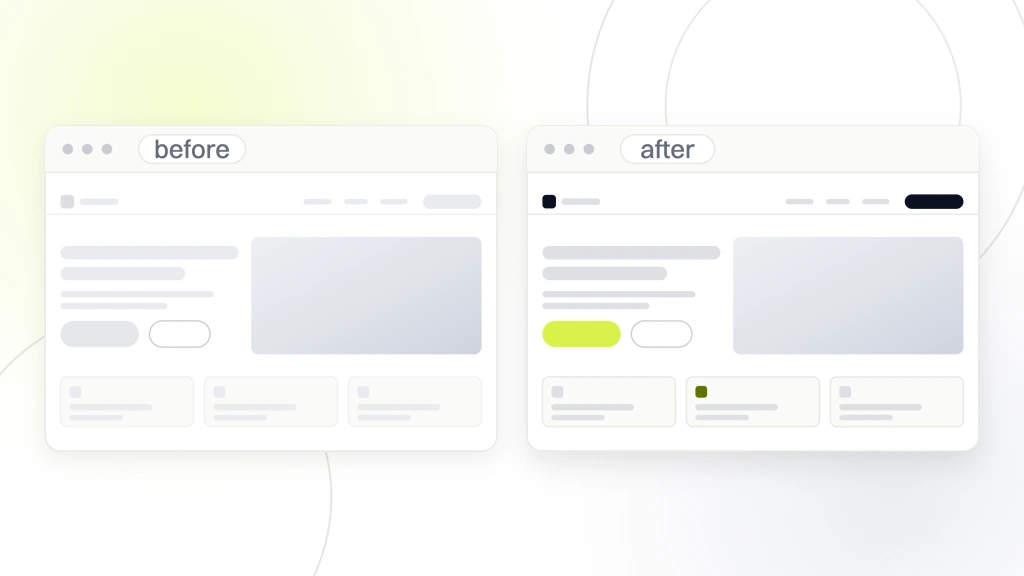
Theme customization is the most common Shopify design project and the one most often mis-scoped. Founders read theme customization as small CSS tweaks to a purchased theme. Agencies quote theme customization as $18,000 bespoke builds. The gap is the definition of the phrase. A clean scoping conversation spells out exactly what customization gets delivered, what stays default, and what nobody touches on this engagement.
Three theme customization scope tiers
Three tiers cover the honest theme customization scope range. Tier one is a light customization of a base theme like Dawn or Impulse, running $3,000 to $9,000, covering brand color and font application, hero section rebuild, PDP layout swap, and a custom collection template. Tier two is a medium customization running $12,000 to $32,000, covering a full section library rebuild, 3 custom PDP templates for hero SKUs, custom filters, cart drawer redesign, and a checkout extension for gift wrap or delivery notes. Tier three is a bespoke theme from scratch running $45,000 to $180,000, covering a full design system, custom Liquid architecture, section templates matching brand voice, and every page type built to spec. Founders who confuse tier one with tier three end up disappointed. Founders who ask what tier the quote represents get a clear answer and a scoping conversation that matches the brand’s actual needs.
Which tier a brand actually needs
Which tier a brand needs turns on brand voice specificity, current storefront maturity, and revenue at stake. Brands with a specific visual voice that no base theme expresses need at least tier two. Brands running $2M plus annual revenue where a 15% conversion rate change is worth $300,000 annual gross should invest at tier three, where the design system supports fast iteration. Brands under $500k annual should stay at tier one and revisit in year two once revenue justifies the deeper investment. Founders trying to buy tier three at $8,000 will get a designer who quotes low, delivers late, and produces tier one output. The scope conversation is the fair filter. A Shopify designer who explains the tier tradeoffs honestly is worth signing. A designer who quotes bespoke at Dawn-customization prices is either dishonest or does not know their own market rate.
PDP redesign and checkout tune-up projects
PDP redesign and checkout tune-up are the 2 highest-return projects a DTC brand can commission from a Shopify designer. The PDP is where 60% to 80% of add-to-cart decisions happen. The checkout is where 30% to 55% of intent gets lost. A design intervention on either page moves revenue directly and measurably inside 90 days of launch. Every brand at $1M plus should have both projects on their annual roadmap.
PDP redesign scope and cost
PDP redesign scope covers 8 elements. Hero product photography treatment with primary image, thumbnail carousel, and video slot. Product title, price, and social proof placement. Variant picker (color swatches, size buttons, subscription toggle) and quantity selector. Add to cart button design, sticky behavior on mobile, and cart drawer animation. Product description with tabs, accordions, or scroll-triggered sections. Trust signals (reviews, returns policy, shipping estimator, security badges). Cross-sell and upsell placement (frequently bought together, complete the look, matching items). Below-fold content (ingredients, materials, care instructions, FAQ). A full PDP redesign runs $4,500 to $22,000 depending on the number of product templates needed and the depth of the interactive design. Brands with 3 to 6 hero product templates that carry 60% of revenue get the strongest ROI from the redesign. Brands with 40 SKUs sharing one PDP template get less ROI per dollar.
Checkout tune-up projects on Shopify
Checkout tune-up projects on Shopify split by tier. Basic Shopify allows limited checkout customization (branding, custom fields via Checkout UI extensions on Plus only, thank you page customization). Plus supports full Checkout Extensibility with custom fields, upsell blocks, gift wrapping, delivery date pickers, and post-purchase upsell. Checkout tune-ups on Basic run $2,500 to $8,000 covering thank you page redesign, order status page, and email template updates. Checkout tune-ups on Plus run $8,000 to $35,000 covering custom checkout UI extensions, Functions for discount and delivery rules, and post-purchase flow. The Shopify checkout extensibility documentation is the technical baseline for founders pressure-testing agency claims about what is possible on their tier before signing.
Shopify web design company red flags to watch for in 2026
The shopify web design company market has attracted opportunistic entrants over the past 3 years as ecommerce budgets grew. Alongside legitimate agencies, a wave of shops appeared with recycled portfolio work, template-based delivery pitched as bespoke, and pricing decks that never match the delivered output. Founders get sharper at spotting these shops once they know the patterns to watch for.
The 6 red flags that predict a bad hire
Six patterns predict a bad shopify web design company hire. Award badges from unnamed award programs or self-created awards. Portfolio case studies for brands that no longer exist or never launched. Pricing decks that hide project scope in vague phrases like discovery sprint or brand alignment workshop. Refusal to name the specific designer or developer who will work on the project. Client list padding where the agency claims work on brands that were clients of a former employee who moved elsewhere. No written scope document before contract signing (the deal is scoped in the sales call and the SOW appears after payment). Any 2 of these 6 patterns should stop the founder from signing. All 6 together are a professional embarrassment the founder should discuss publicly to warn other founders in the network.
What honest agencies look like
Honest shopify web design agencies show 3 consistent traits. Named humans doing the work whose LinkedIn profiles the founder can check. Case studies with live URLs, pre and post metrics, and a client name the founder can email for a reference. Scopes written line by line with hours and deliverables per phase before any payment happens. Founders who insist on these 3 things filter out 90% of the low-integrity market before wasting a sales call. Founders who skip them will hire, fire, and re-hire until they learn the pattern the expensive way. Our writeup on ecommerce web design and development services covers the honest-agency filter for founders scoping both design and development sides together.
A real shopify web design services engagement that launched
Boogie Board came to our team with an ecommerce store built on a legacy theme, paid social budgets climbing, and a cost-per-sale line that was eating margin faster than revenue could catch up. The founder had strong product-market fit and no visible ceiling on demand. The storefront was the constraint. Our team scoped a bespoke Shopify design engagement across 18 weeks paired with a paid media rebuild. Discovery covered founder interviews, 12 customer conversations, and a competitive audit across 4 adjacent commerce brands.
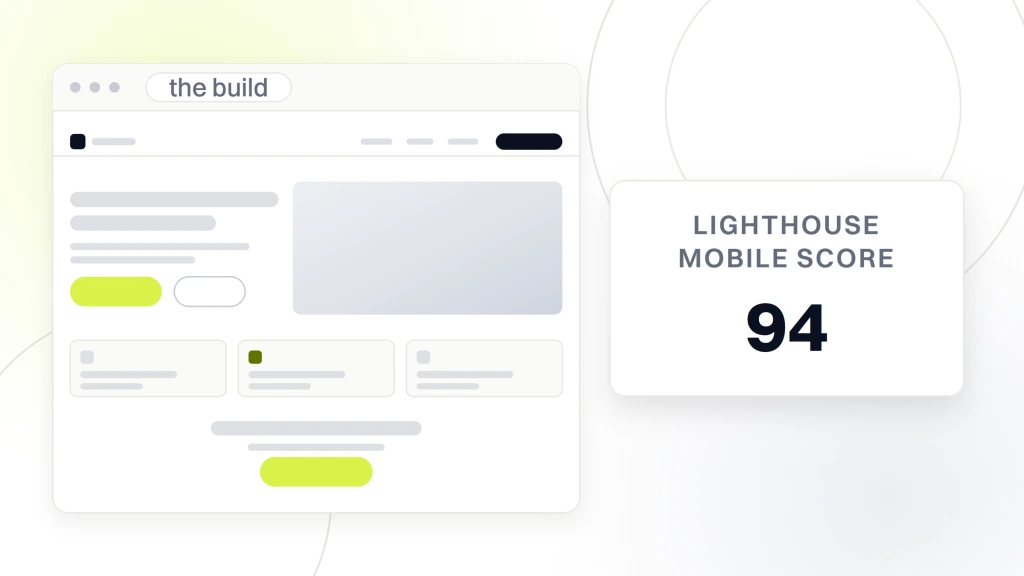
The design system landed at 38 components with default, hover, focus, error, and loading states, using editorial photography and generous whitespace as the primary visual language. Front-end work ran 9 weeks against the design system with a mobile-first workflow, hitting Lighthouse mobile scores of 94 across the top 4 page types. Checkout extensions added gift wrap, subscription toggle, and post-purchase upsell blocks. Klaviyo flows tied to viewed-product and abandoned-cart events went live alongside the storefront launch.
Over the annual window that followed, Boogie Board saw conversion rates climb over 11% through the optimized landing pages and refined ad targeting, cost per sale settle at $31, and $650,000 in ad spend deployed with sustainable revenue growth on the other side. The design work did not create the numbers by itself. It removed the credibility ceiling the prior storefront had placed on the brand and let the product convert at the rate its price point deserved. Founders looking at design as an aesthetic decision should reread that sequence, since it was a revenue decision. Our follow-up piece on ecommerce web design company criteria covers the sequence in more depth.
Where a shopify web designer fits the DTC growth stack
A shopify web designer sits at the front of the DTC growth stack. Every dollar spent on paid media, SEO, email, or retention runs through the storefront the designer built. Founders who fix the storefront first make every downstream marketing dollar 15% to 35% more efficient, since the conversion rate on the traffic is higher. Founders who patch the storefront and run ads at the same time pay customer acquisition cost against an underperforming funnel and blame the ad platform when the numbers underperform.
The 3-way freelance versus agency versus in-house decision resolves on brand shape rather than budget. Pre-launch to $1.5M annual, use a senior freelancer for scoped projects. $1.5M to $6M annual, use a shopify web design agency on retainer with a small in-house creative hire for brand voice. Past $6M annual, build an in-house design team of 2 to 4 with an agency for spike capacity on drops and campaigns. Every stage past the pre-launch phase benefits from a design system built once by a coordinated design group rather than iterated forever by rotating freelancers.
The rest of the growth stack sits alongside. Paid media pointed at a converting store. SEO on category and product pages treated as landing pages. Email and SMS flows that catch shoppers who bounced. Retention programs that raise second-order rate. Every tactic works better once the storefront is not fighting it. Our ecommerce website design services team runs both the design build and the growth work under one roof, and the Smashing Magazine writeup on Shopify’s modern stack pairs cleanly with the design decisions in this guide for founders and CTOs pressure-testing agency claims before signing anything.