
Performance max for dentists is Google’s automated campaign type that runs across Search, Display, YouTube, Discover, Gmail, and Maps from a single asset feed, using machine learning to steer budget toward the surfaces most likely to book appointments. Google pitches it as the one lever that finds patients everywhere. The truth on dental accounts is narrower. It earns its slot on high-volume practices with strong conversion signal and a clean audience feed, and it burns budget on low-volume accounts or any practice that has not settled its Search Ads program first.
The short version. Performance max for dentists needs 30 conversions a month per campaign to learn. It needs brand keyword exclusions so PMax stops cannibalizing free brand-search traffic. It needs a Google Business Profile connected and audience signals fed in. Get those three right and PMax adds 15 to 30% incremental booked patients on top of a mature dental Google Ads account. Skip the guardrails and PMax pours the budget into YouTube placements that will never book a patient.
What Performance Max for Dentists Actually Runs
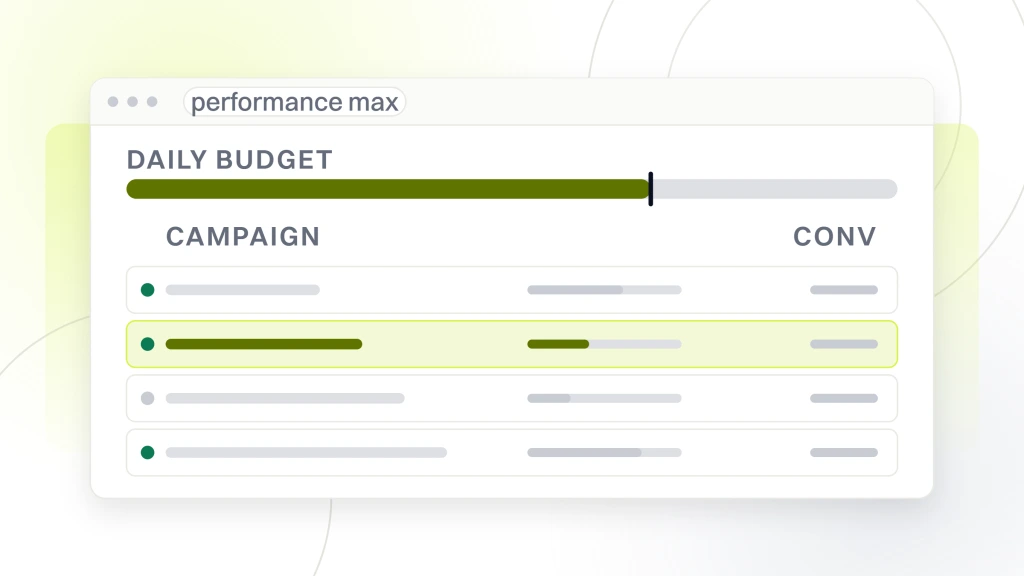
The campaign type automates targeting, bidding, and placement across every Google inventory surface from one shared asset feed. The practice uploads text, images, video, and audience signals. Google chooses who sees the ad, where it runs, and what each impression costs. The trade is straightforward. Control moves to the algorithm, and reach expands in return.
What the machine learning layer decides
PMax picks which asset combinations to serve to which searchers on which surfaces, from real-time bid signals. It decides between a static image on Gmail, a video on YouTube pre-roll, or a text ad on Search based on which combination the model expects to convert. It reallocates budget across surfaces as it learns which mixes book patients. The practice sees only the aggregate results, not the individual auction decisions.
Where PMax fits alongside Search and LSAs
PMax runs alongside dental Search Ads and Local Services Ads without replacing either. Search Ads keep tight control over specific high-intent queries with matched landing pages. LSAs cover the top of the results with the Google Guarantee badge. PMax fills in the surrounding surfaces. Think YouTube pre-roll, Display Network, Gmail promotions tab, Discover feed, and Maps.
Where PMax should not run
PMax should not run on dental accounts producing fewer than 30 conversions a month total. The algorithm needs enough signal to learn. Below that threshold it burns budget on YouTube placements that never book patients. Do not launch PMax before Search Ads and LSAs are already producing predictable results. PMax layered on top of a broken account amplifies the waste, not the wins.
Conversion Signal Requirements for Pmax Dental Ads
Pmax dental ads need clean conversion tracking with enough monthly volume for the algorithm to optimize. The minimum threshold is 30 conversions a month per campaign. Below that, PMax cannot learn which asset combinations produce booked patients. The tracking also needs to fire only on qualified conversions, not every raw form fill that lands in the inbox.
What counts as a valid conversion
Valid PMax conversions for dental accounts include booked appointment forms, phone calls over 60 seconds via CallRail integration, and offline conversion imports from the practice management system for booked appointments that came from the ads. Do not fire conversions on every contact-form submission, since most are not qualified leads. Firing on unqualified events teaches PMax to find more unqualified visitors, which is the opposite of the goal.
Offline conversion imports
Offline conversion imports feed the practice management system’s booked-appointment data back to Google Ads. That tells PMax which ad-driven form fills turned into booked patients and which stayed unqualified in the CRM. Skip the imports and PMax optimizes on raw form-fill volume, not booked patient volume, which usually means cheap unqualified conversions rather than expensive booked patients. Set up offline imports through Zapier, a native connector, or a monthly CSV upload. See Google’s offline conversion import documentation for the setup path.
Conversion values and target ROAS
Assign realistic conversion values to each event so PMax’s target ROAS bidding can optimize. A booked appointment might carry a $400 conversion value based on new patient lifetime value math. A qualified phone call might carry $200. Values inform PMax’s bid decisions across audiences and placements. Without conversion values, PMax optimizes for conversion count regardless of quality, which usually means cheap unqualified conversions rather than expensive booked patients.
Audience Feed for Google Performance Max Dental Campaigns
Google performance max dental campaigns work best when the audience feed includes custom signals rather than only relying on the algorithm’s automatic targeting. The audience feed is where the practice gives PMax hints about which patients matter and which do not. Miss the audience feed and PMax defaults to broad targeting that spends the budget wide and thin, across searchers who will never step into the operatory.
- Customer match. Hashed email list of past patients uploaded via Google Customer Match.
- Website visitors. 30-day site visitor audience from GA4 or Google Ads tag events.
- Search behavior. Custom segment built from Google Search behavior signals.
- Demographics. Age brackets and income tiers that match the practice’s patient mix.
- Geographic. Radius targeting around the practice, tightened to 8 to 15 miles.
Customer match uploads
Upload a hashed email list of past patients to Google Customer Match. Match rates on dental email lists run 45 to 65% depending on list hygiene. The matched audience becomes a signal for PMax to find similar patients across Google inventory. Refresh the upload quarterly with the latest patient list from the practice management system to keep the signal current.
Search behavior custom segments
Build a custom segment from search behavior that includes dental keywords, competitor names, and adjacent health searches. That segment tells PMax which real-time search intent signals to prioritize when serving ads. Without the segment, PMax broadens too far into general health browsing and the cost per booked patient drifts up. Update the segment monthly as search patterns shift.
Geographic radius tightening
PMax defaults to a broad radius that includes patients outside a realistic driving distance to the practice. Tighten the radius to 8 to 15 miles for most single-location dental practices. Multi-location groups can set per-campaign radiuses that match each location’s realistic draw area. That single move usually improves cost per booked patient 15 to 25% within a month.
Brand Exclusion and Guardrails for Pmax Dental Ads
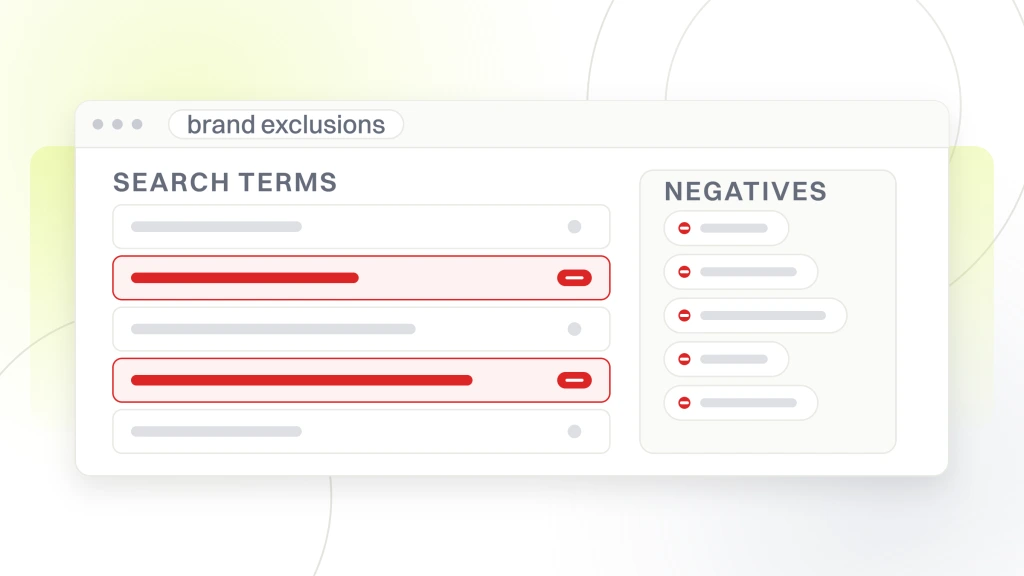
Brand keyword exclusion is the single most important guardrail on the campaign type for dental accounts. Without it, PMax bids on the practice’s own brand name in Search auctions and takes credit for conversions that would have happened organically. That inflates PMax reporting while draining budget on free traffic the practice already earned.
| Guardrail | What it does | Setup time | Impact |
|---|---|---|---|
| Brand keyword exclusion | Blocks PMax from brand-search auctions | 15 minutes | Prevents 20 to 40% budget waste |
| Negative keyword list | Blocks unqualified query themes | 30 minutes monthly | Reduces spam leads by 15 to 25% |
| Placement exclusion | Blocks low-quality Display and app inventory | 1 hour quarterly | Cuts wasted impressions on kid apps |
| Radius tightening | Limits geographic reach | 10 minutes | 15 to 25% CPA improvement |
How to add brand keyword exclusion
Google finally added account-level brand exclusion lists in 2023. Navigate to Tools and Settings, then Content Suitability, then Brand Exclusion. Upload the practice’s brand name and common variants. Apply the list to the PMax campaign. That prevents PMax from bidding on the practice’s own name in Search auctions and taking credit for conversions the practice already owned.
Negative keyword list
Add a negative keyword list to the PMax campaign covering unqualified query themes. Common negatives for dental include “free,” “cheap,” “jobs,” “school,” “license,” “student,” “dental hygienist school,” and any competitor brand names the practice does not want to bid on. Refresh the list monthly based on search terms that appeared in reports. See dental google ads keywords for a starter negatives list.
Placement exclusions
Add placement exclusions covering kid apps, gaming apps, offensive content categories, and mobile app networks that do not match dental audience quality. PMax defaults to serving on any placement Google considers relevant, which includes a lot of noise. Run a monthly placement report and add negatives for domains and apps that produced impressions without conversions during the previous 30 days.
Real Numbers From a Dental Group Running Performance Max
Smile Design Dentistry, a 50-plus location dental group, layered PMax onto an existing Search and LSA program through a phased rollout. The numbers below track the first six months of PMax spend at network scale once the guardrails were in place and the audience feed was clean. Full details in the Smile Design Dentistry case study.
Incremental booked patients
Across the network, PPC conversion rate climbed 20% and cost per call dropped 30% over the 12-month curve as PMax scaled alongside Search and LSAs at 50+ locations. Cost per booked patient on PMax landed at $148, versus $92 on LSAs and $215 on Search Ads for cold traffic. The PMax layer picked up patients who had not clicked on Search or LSAs but were retargeted successfully across YouTube, Display, and Gmail.
Where PMax spent the budget
Placement reports showed PMax allocated 41% of budget to YouTube pre-roll, 26% to Display Network, 18% to Search partners, 9% to Discover feed, and 6% to Gmail. That mix would have been impossible to run manually since bid decisions moved in real time. The trade-off was that individual placement performance was less visible than in traditional campaigns. See Think with Google research on YouTube ad performance for the underlying reasons YouTube retargeting works this well on dental audiences.
Where the guardrails prevented waste
Brand exclusion prevented PMax from bidding on Smile Design Dentistry’s own brand terms, which would have added $6,200 a month in wasted spend on free brand-search traffic. Placement exclusions blocked 47 kid apps and 12 gaming apps identified in the first month’s placement report. Radius tightening from Google’s default 50-mile radius to the location-appropriate 12-mile radius improved cost per booked patient by 22% versus the initial three-week test. See dental marketing roi for the reporting cadence.
Common PMax Mistakes on Dental Google Ads Accounts
Every dental practice new to PMax runs the first campaign badly, since Google’s interface tucks the critical guardrails behind three dropdowns and the launch wizard hides them. The mistakes below cover the wreckage we clean up on most audits of accounts that ran PMax without a specialist. Fix these three and PMax stops burning budget within a single billing cycle.
Running PMax without brand exclusion
Without brand keyword exclusion, PMax bids on the practice’s own brand searches and takes credit for conversions the practice already owned. That inflates PMax reporting by 20 to 40% and drains budget on free brand-search traffic. Set brand exclusion the same day the campaign launches. There is no grace period during which brand cannibalization is acceptable.
Running PMax below the conversion threshold
Dental accounts with fewer than 30 monthly conversions cannot feed PMax enough signal to learn. Running PMax below that threshold produces higher cost per booked patient than the existing Search and LSA campaigns, since PMax spends the budget on placements it has not yet learned to filter. Grow the account with Search and LSAs first. Add PMax after the conversion floor is met, not before.
Ignoring placement reports
PMax placement reports show where the budget went across Google surfaces and specific apps or domains. Ignoring the reports lets PMax keep spending on placements that never book patients. Review monthly and add exclusions for any placement that generated meaningful impressions without conversions during the prior 30 days. That habit usually improves PMax cost per booked patient by 15 to 25% within a quarter.
Pmax Dental Ads vs Search Ads and LSAs
Pmax dental ads sit alongside Search Ads and Local Services Ads in the dental Google Ads stack. Each does something the others cannot. The mistake is treating PMax as a replacement rather than an additive layer. The right question is not which campaign type to run, but how to allocate budget across all three based on account maturity and market density.
Where each campaign type wins
LSAs win on generic high-intent queries where the Google Guarantee badge converts patients at the top of results. Search Ads win on service-specific queries where landing page control matters and specific offers move the number. PMax wins on cross-surface reach that reaches patients who never clicked a Search or LSA ad but consumed the video or Display creative and later booked through brand search.
Budget allocation across the three
Most mature dental accounts we run allocate 35 to 50% of Google budget to LSAs, 30 to 40% to Search Ads, and 15 to 30% to PMax. The mix depends on market density and conversion volume. Newer accounts skip PMax entirely and split budget between LSAs and Search until the account crosses the 30-conversion threshold. See dental google ads management for the monthly management workflow across the stack.
How the three campaigns interact
PMax remarketing hits patients who bounced off Search Ad landing pages. LSAs catch fresh generic searches at the top of the results. Search Ads catch specific service queries with matched landing pages. Together the three campaign types build a full-funnel presence on Google that individually would leave gaps for competitors to fill.
When to Turn Off Performance Max for Dentists
PMax is not right for every dental account, every quarter, or every service. Some dental practices should turn PMax off and stick with LSAs and Search Ads. Others should pause PMax for a season and return when conditions change. Knowing when to turn it off matters as much as knowing how to run it.
When conversion volume drops below the threshold
Seasonality, a temporary practice pause, or a quarter with fewer new patient inquiries can drop conversion volume below the 30-per-month floor PMax needs. When that happens, pause PMax and let the algorithm’s learning phase reset rather than running it under-fed. Restart PMax when volume climbs back above the threshold. The pause protects the campaign’s performance history from the noise of an under-fed learning phase.
When cost per booked patient stays higher than Search and LSAs
If PMax cost per booked patient stays higher than Search and LSAs on the same account for three months even after guardrail adjustments, the account is not a fit for PMax. Reallocate the budget to LSAs and Search Ads instead. Not every dental account is a PMax account, and forcing PMax on an account that cannot support it burns budget every month it runs.
When the practice cannot serve extra volume
Practices booked out four to six weeks on new patients often cannot serve the extra volume PMax produces. Pause PMax when the schedule tightens past that point. Restart when capacity opens. Running PMax through a capacity crunch wastes budget on patients who drift to competitors during the wait, which is the exact opposite of the intended effect.
Asset Feed Quality for Google Performance Max Dental Campaigns
The asset feed is the raw material PMax combines into ads across every Google surface. Weak assets produce weak ads regardless of how smart the algorithm is. Strong assets give PMax the range to test combinations that book patients. Most dental practices under-invest in the asset feed and then blame the algorithm for underperformance.
Text asset requirements
Upload 5 short headlines under 30 characters, 5 long headlines under 90 characters, 5 descriptions under 90 characters, and 1 long description under 90 characters. Vary the angle across the assets. Try outcome-first, offer-first, proof-first, question-first, and value-first. That variety gives PMax range to test which angle resonates with each audience segment. See Google’s responsive design fundamentals for the underlying principles that apply to ad asset variety.
Image and video requirements
PMax requires images at 1200×1200 and 1200×628 pixel ratios, plus at least one YouTube video. Missing video assets triggers Google to auto-generate a slideshow video from the still images, which almost always looks worse than a purpose-shot video. Invest in one 15-second dentist-to-camera video before campaign launch. That single asset usually improves PMax cost per booked patient efficiency 12 to 20% versus the auto-generated fallback.
Asset refresh cadence
Refresh 25 to 40% of the asset feed every quarter. Google reports asset performance labels of Best, Good, and Low. Replace Low-labeled assets first. Keep Best-labeled assets and rotate in new variants to test whether newer creative can outperform the current winner. That cadence keeps the asset feed fresh without forcing full-scale rebuilds that reset the campaign’s learning.
Where a Dental PPC Retainer Handles PMax Management
Running PMax well takes real specialist time. The asset feed needs refreshing. The conversion imports need testing. The placement reports need auditing. The brand exclusion list needs updating. Most dental practices bundle PMax management inside a broader dental ppc retainer, since the specialist time is hard to hire in-house.
Monthly workload
PMax management runs 3 to 6 hours a month at a specialist level for a single-location dental practice with a mature account. Multi-location groups run 8 to 16 hours a month, since the audience feeds and placement audits scale with location count. That workload sits inside the broader Google Ads retainer rather than as a separate line item, since the campaigns interact and the reporting is shared.
Where retainers usually price PMax
Most dental ppc retainers include PMax management within the Google Ads scope rather than upcharging it as an add-on. The workload sits inside the same reporting and optimization cycle as Search and LSAs. PPC retainer tiers land at $999, $1,499, $2,499, and from $4,500 a month for the Google Ads program that includes Search, LSAs, PMax, and remarketing. Ad spend is billed separately. See dental ppc management for what monthly management covers.
DIY vs outsourced
DIY PMax management works for practices with an in-house marketing lead who can dedicate 4 to 8 hours a month to the campaign, has current PMax certification, and can navigate Google Ads at a specialist level. If any of those conditions do not hold, outsource PMax to a dental PPC specialist. The cost of a poorly run PMax campaign easily exceeds the retainer fee within a month or two of drift.
Ready to Run Performance Max for Dentists Without Wasted Budget
Performance max for dentists earns its slot in a mature dental Google Ads stack when conversion signal is strong, the guardrails are in place from day one, and the audience feed matches the practice’s real patient mix. Set brand exclusion and placement exclusions the day the campaign launches. Review the placement reports every month. Pause the campaign when volume drops or the schedule fills up. Do that and PMax adds a meaningful incremental layer to the paid patient acquisition stack that Search and LSAs alone cannot reach. Want a specialist to run the setup and the monthly optimization? Get in touch and we can walk the account.