
Commercial real estate PPC is a paid search and paid listing program where brokerages, investors, and developers bid on tenant, investor, and broker queries across Google, LoopNet, CoStar, and CREXi, then pay only for the clicks that reach their listings. Done right, it books qualified tours with tenant reps and investors within 14 days of launch, not 6 months.
Commercial real estate queries run 4 to 15 times higher per click on Google Search than the real estate average, since deal values are 100 to 1,000 times larger. That gap is where campaign discipline pays back. Waste a click on a tire-kicker and you lose $30. Land a click that turns into a signed LOI and you can earn $80,000 in commission on one deal.
I have spent the last 8 years running paid programs for brokerages, developers, and REIT-adjacent operators. The pattern that separates the winners from the money-burners is boring: tight keyword lists per asset class, aggressive negative keyword hygiene, listing-level landing pages, and honest reporting on tours and LOIs instead of clicks. This guide walks through all of it, with real numbers you can screenshot.
Table of contents
- What CRE paid search actually is
- Why paid search works when generic marketing fails
- The 4 channels every serious program should run
- How to set your monthly ad budget
- Keyword architecture by asset class
- Landing pages that turn clicks into tours
- Tracking tours, LOIs, and closed deals
- Pricing and what CRE agencies charge
- Commercial real estate PPC FAQs
What CRE paid search actually is
Paid search in the CRE market is built around 3 specific buyer types: tenant reps searching for their client’s next lease, principals hunting acquisition targets, and end-user tenants looking for their own space. Each type searches differently, needs different landing pages, and closes on a different timeline. Lump them together and your budget vanishes.
The channels split the same way. Google Search captures the query the moment a broker or tenant types “class A office space Chicago Loop.” LoopNet and CoStar capture the in-app browsing behavior of brokers who never leave those platforms. CREXi and CommercialCafe fill the remaining audience. A serious agency runs at least two channels. Most run three.
The math that decides everything. A $2M office lease with a 4% broker commission is $80,000 in commission per deal. If your typical funnel is 10 clicks to 1 tour, and 4 tours to 1 signed lease, one deal takes 40 clicks. At $25 per click that is $1,000 in ad spend per closed deal. That is an 80x return on ad spend. Even at $2,500 in ad spend per deal, the math is 32x.
Why paid search works when generic marketing fails
Generic marketing sells the brokerage from a commercial real estate marketing agency playbook. A targeted paid program sells the specific space. That distinction is where the ROI lives.
A tenant rep in Houston looking for 40,000 square feet of industrial in the northwest submarket does not care about your firm’s 30-year history. They care about ceiling height, dock count, rent per foot, and available date. A paid ad that says “40K SF industrial, 32′ clear, 8 docks, NW Houston, $9/SF NNN” wins that click every time. A generic “Houston commercial real estate services” ad loses it. Same broker. Same intent. Different result.
Reasons paid search beats organic reach for active listings:
- Speed to first tour. Google Search delivers your first qualified tour request in 3 to 14 days after launch. Organic SEO takes 3 to 6 months to move the same needle.
- Listing-level control. You promote the space that has 45 days left on market, not the one that already has 3 offers. Try that with organic search.
- Broker-role targeting. Bidding on “tenant representation Denver” reaches tenant reps directly. Bidding on “1031 exchange commercial” reaches principals. Two campaigns, two buyer types, zero overlap.
- Attribution clarity. Every tour form and every phone call ties back to the exact keyword and ad, so you know why leads convert or stall. Your leasing report writes itself.
Ad platforms do not know a broker from a tenant rep from a curious homeowner. Your negative keyword list is the one signal that keeps paid search honest.
The 4 channels every commercial real estate PPC company should run
A serious program runs across 4 channels, each for a different job. Skip one and you leave signed deals on the table.
| Channel | What it captures | Typical CPC | Best for |
|---|---|---|---|
| Google Search | Active tenant, investor, and broker queries | $8 to $45 | Every asset class, every submarket |
| LoopNet Sponsored Listings | In-app broker browsing | $200 to $1,500 per listing per month | Class A office, industrial above 20K SF, retail |
| CoStar Promotion | Broker and analyst research | $300 to $2,000 per listing per month | Investment sales, portfolio deals |
| Google Display + Retargeting | Warm audiences from listing page visits | $0.60 to $2.40 | Every listing above $1M value |
How to prioritize. Start with Google Search on your top-3 highest-margin listings. Add LoopNet sponsored slots for the same 3 listings. Layer retargeting on top so anyone who visited the listing page sees a follow-up ad within 24 hours. This 3-channel stack costs $4,000 to $7,000 a month and covers 80% of the qualified demand in most submarkets.
For the wider PPC context, the fuller answer on paid search fundamentals lives in our PPC Management Services guide. It walks through campaign structure, quality score, and reporting cadence at a level that applies to CRE and every other vertical.
How to set a paid search budget for CRE
Budget the campaign against the deal, not the industry average. A $500K retail lease commissions at $20,000, so a $6,000 program spent to close one deal per quarter still returns 3x on ad spend. A $10M investment sale commissions at $200,000, so the same $6,000 program returning one closed deal per year still returns 33x.
The 5 to 10% rule of thumb. Spend 5 to 10% of expected annual commission on paid ads. A brokerage with $1.2M in commission goals should budget $60,000 to $120,000 a year, or $5,000 to $10,000 a month, on paid search.
- Under $3,500 a month. Single-asset-class, single-submarket test. Google Search only. Fine for a solo broker with 1 to 3 active listings.
- $3,500 to $6,000 a month. Two channels, one asset class, one to two submarkets. Standard starter tier.
- $6,000 to $12,000 a month. Full 4-channel program across 2 asset classes and 3 to 5 submarkets. Where most mid-market brokerages land.
- $12,000 and up per month. Multi-market portfolio management. Common for national developers and REIT-adjacent groups.
Set a hard budget cap. Google will spend up to 2x your daily budget on high-traffic days. Cap your monthly spend inside the platform, not in your head.
Keyword architecture by asset class
Every asset class has its own vocabulary. Bidding across all of them from one campaign is the single most expensive mistake I see in CRE paid search audits. Break campaigns by asset class first, then by submarket, then by intent.
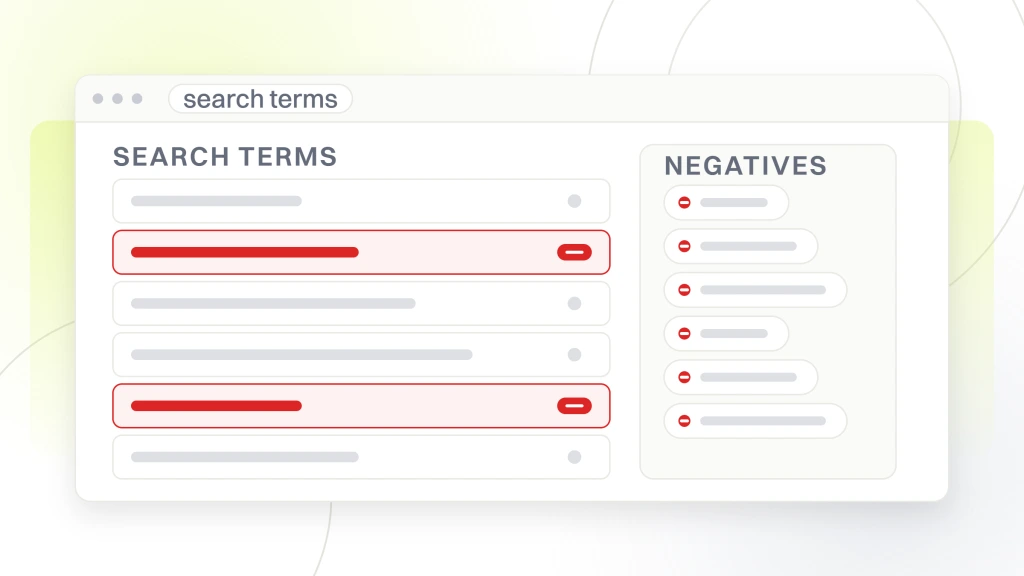
Office keyword patterns: “class A office space [submarket]”, “office sublease [city]”, “executive suites [neighborhood]”, “medical office for lease [zip]”, “office building for sale [metro]”. Add “[SF range] SF” modifiers where relevant. Negatives: residential, apartment, condo, home, rental home.
Industrial keyword patterns: “warehouse for lease [submarket]”, “industrial space [city]”, “flex space [city]”, “cold storage [metro]”, “distribution center [submarket]”. Include ceiling-height and dock-count modifiers when your inventory supports it. Negatives: storage unit, self storage, mini storage, personal storage, garage.
Retail keyword patterns: “retail space for lease [neighborhood]”, “restaurant space [city]”, “end cap [submarket]”, “pad site [metro]”, “shopping center for sale [region]”. Add “second generation” and “vanilla shell” where relevant. Negatives: retail store, buy online, online shopping.
Investment sale keyword patterns: “cap rate [metro] [asset]”, “1031 exchange [asset] [region]”, “commercial property for sale [submarket]”, “multi tenant [asset] for sale”. These reach principals, not brokers. Different landing pages, different ads.
Add “NNN”, “triple net”, “class A”, “sublease”, and “warm shell” as negatives when you sell the opposite lease type. This one edit tightens click quality by 25 to 40% in week one.
If you run organic search too, the campaigns should share a keyword map. The Redefine Web real estate SEO framework shows how paid and organic keyword sets should overlap on high-intent terms and diverge on informational ones.
Landing pages that turn clicks into tours
Send paid clicks to a homepage and 82% of them bounce. Send them to a listing page with specs, floor plan, and a tour form, and you book 8 to 14% of clicks as qualified tour requests. The Nielsen Norman Group’s B2B website usability research confirms the pattern: specific product pages outperform generic services pages by 2 to 4x on conversion.
What every CRE landing page needs, above the fold:
- Asset class + submarket + size in the H1. “32K SF Class A Office, Chicago Loop” beats “Chicago Office Space” every time.
- Rent or asking price. Hiding price kills 30 to 45% of qualified interest. Show it.
- Delivery date. “Available now” or “Q3 2026” filters the timeline mismatches.
- Key specs. Ceiling height, column spacing, dock count for industrial. Class, floor, view for office. Frontage, GLA, parking for retail.
- Tour form or calendar link. One field: name, email, phone. Anything more cuts conversion by 20 to 40%.
Below the fold: floor plan, aerial photo, walkscore or drive-time map, submarket comps, and a broker headshot with direct phone number. Every element earns its place. Anything that is not helping a tenant rep decide to tour gets cut.
Case study: Abels Residential, London letting agency
Abels Residential, a London-based letting and rental management firm, entered a saturated market with zero digital presence. We built a conversion-focused site with clean lead capture forms, on-page SEO tuned to London rental keywords, and off-page SEO for scale. Result: 20+ qualified rental leads per month, 300+ keyword rankings on Google’s first page, and a sub-2 second page load. The playbook translates directly to the CRE side. Match the ad to the property, land the click on a page built for conversion, and you compound qualified leads month over month.
Case study: McCarthy Court, luxury Sidcup development
McCarthy Court, a 7-unit luxury development in Sidcup, needed to sell out pre-completion with no physical tours available. We built an immersive virtual showcase site with property renderings, eco-conscious feature emphasis (solar, EV charging, energy-efficient lighting), a lifestyle narrative, and prominent lead capture CTAs. Result: 100% occupancy in 3 months of completion, 60+ qualified buyer leads, and 10K targeted campaign visits. The same principle applies to the commercial market: an immersive property page paired with disciplined paid search turns paid clicks into signed leases and closed sales, even when the building is still framed lumber.
Tracking tours, LOIs, and closed deals
Report on the metric that pays your rent. In the CRE world, that is tours booked, LOIs signed, and deals closed, in that order. Clicks and CTR are diagnostic. They tell you the campaign is healthy. They do not tell you the campaign is profitable.
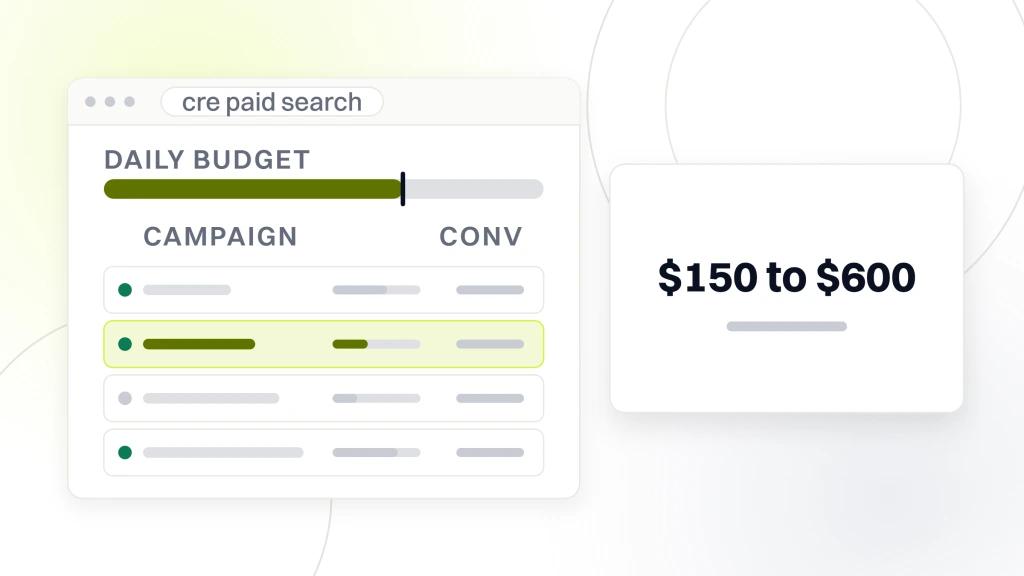
The 3-metric CRE paid search scoreboard:
- Cost per tour. Total ad spend divided by tour requests attributed to paid. Healthy range: $150 to $600 depending on asset class and price point. Above $600 means the keyword list is loose or the landing page is off.
- Cost per LOI. Ad spend per signed letter of intent. Healthy range: $800 to $3,500. Above $3,500 means your tour-to-LOI conversion is broken, not your ads.
- Return on ad spend (ROAS). Commission or deal value earned per dollar of ad spend. Sub-10x means audit. 15x plus means scale.
The tools that make attribution work: CallRail or CallTrackingMetrics for phone attribution by keyword, Google Ads conversion import for form fills, HubSpot or Salesforce for LOI stage tracking, and a monthly report that stitches all three together. Skip any one of these and your ROI numbers stop being defensible.
A $6,000 monthly program that books 2 signed LOIs at $80K commission each returns 26x on ad spend. Track LOIs, not clicks.
Pricing and what commercial real estate PPC companies charge
Agencies charge on 3 models: percentage of ad spend, flat monthly retainer, or performance-based per tour or per LOI. Retainer is the standard for CRE, since deal cycles are long and per-lead attribution takes 60 to 180 days to clear.
Redefine Web PPC retainer tiers:
- $999/mo. Single Google Search campaign, single asset class, single submarket, weekly optimization. Fits a solo broker or a single active listing.
- $1,499/mo. 2-channel program (Google Search + retargeting), single asset class, 2 submarkets. Fits a boutique brokerage with 3 to 8 listings.
- $2,499/mo. Full 3-channel program (Google Search + LoopNet + retargeting) across 2 asset classes and up to 5 submarkets. Fits a mid-market brokerage.
- From $4,500/mo. Multi-market portfolio management, 4 channels, every asset class and submarket you need. Fits developers, REITs, and national brokerages.
Ad spend is billed separately in every tier. That is standard across CRE-specialist agencies. Any firm that bundles ad spend into their fee is hiding margin from you.
For campaign structure tuned to real estate agents and brokerages, see the Redefine Web real estate PPC page. It covers agent-level campaign templates that adapt cleanly to the commercial rollout playbook.
When paid search does not work for CRE
Not every listing deserves paid search. Skip the campaign if:
- The asking price is above market by 15% or more. Paid ads amplify positioning. If the space is overpriced, paid search gets you more “nice space, wrong price” feedback, not offers.
- You have no listing page. Sending paid traffic to a homepage or an MLS-style search index burns budget. Build the page first.
- Your tour-to-close rate is below 5%. Fix your sales process first, then scale the top of the funnel. More tours will not save a broken close.
- The lease term is under 6 months. Sub-lease and short-term deals rarely support the ad spend needed to fill them fast.
Being honest about these cases is what separates a good agency from a firm that will spend your budget and blame the market.
The wider take on agent- and brokerage-side paid search sits in our real estate PPC management services for agents, teams, and brokerages. That guide covers residential and mixed brokerage models in depth, and the campaign patterns port directly to the commercial side.
For the parallel home services take on structuring paid campaigns end to end, see our PPC for home services campaign structure guide. The keyword, ad copy, and negative-list mechanics translate cleanly from home services to CRE.
The 90-day launch plan for CRE paid search
Use this as your first quarter blueprint. It works for a solo broker with one listing and for a REIT with 40 listings.
- Week 1. Audit existing traffic, define target deal count and commission, set monthly budget, install call tracking.
- Weeks 2 to 3. Build landing pages for the top-3 highest-margin listings. Write 3 to 5 ad variants per listing. Load 200-plus negative keywords per campaign.
- Week 4. Launch Google Search campaigns. Cap daily budget at 50% of target for the first 14 days. Set up LoopNet sponsored slots for the same listings.
- Weeks 5 to 8. Weekly optimization: pause zero-conversion keywords, raise bids on tour-generating terms, add search-term-report negatives every Monday.
- Weeks 9 to 12. Layer retargeting. Add CoStar promotion for your higher value listings. Publish your first quarterly report on cost per tour and cost per LOI.
By day 90 you should have 8 to 20 tours booked from paid, 2 to 5 LOIs in negotiation, and a clean report you can hand to your principals.
The wider take on real estate marketing across paid and organic, covering the branding and content work that supports paid search over 12 to 24 months, is in the Redefine Web real estate marketing hub.
See the FAQ block below for answers to what a PPC is in real estate, who the biggest firms are, which agencies specialize, how to create a campaign, floor plan advertising, and CRE paid search on Reddit.
Book a commercial real estate PPC audit with Redefine Web
If you have a listing on the market longer than 90 days, or a campaign running above $2,000 a month with no tour attribution, the audit pays for itself in the first month.
Book a 20-minute audit before you scale. We open your Google Ads and LoopNet account, mark the wasted spend, and hand you a 90-day plan you can run in-house or with us.
The bottom line: paid search in the CRE market is not a lead generation channel. It is a tour generation channel. Every dollar you spend either books a tour with a qualified tenant rep or investor, or it does not. Track the tours. Report the LOIs. Scale what works. Cut what does not. That is the whole discipline.