Dental SEO strategies are the specific moves that rank your practice for the phrases patients actually type when they need a dentist. Not vague advice about “quality content” or “user experience.” Real moves. Which service pages to build first, which links to chase, which schema to add, which posts to retire. The right sequence gets you page 1 in months. The wrong sequence burns a year and ranks nothing.
This guide walks the dental SEO strategies that shift rankings on real practice sites, in the order they should run. You’ll get the ranking factors that matter now, the technical work that has to happen first, the local signals that beat national brands, the content system that keeps you ranking after every Google update, the case data from 5 real dental clients, and the pricing tiers you can pick between DIY and full agency. Work the list top to bottom for the strongest compounding effect.
Ranking factors driving dental SEO strategies in 2026
Google now weighs 3 buckets above everything else for a dental query. Local relevance signals, page experience signals, and topical authority signals. Miss any bucket and rankings stall no matter how many links you buy. Dental SEO strategies that ignore this weighting waste 60 to 80% of the budget on levers that no longer move the needle.
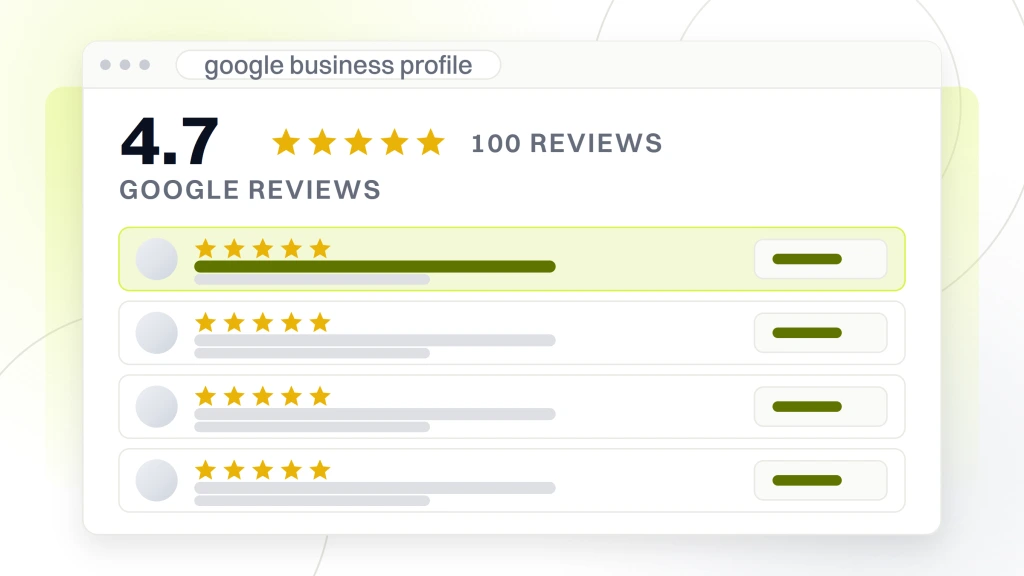
Local relevance comes from a fully filled Google Business Profile, consistent NAP across 40+ citation sites, and 100+ Google reviews with a 4.7 star average. Page experience comes from a Google page-speed metrics pass at the 75th percentile of mobile traffic, meaning LCP under 2.5 seconds and CLS under 0.1. Topical authority comes from clustered content that covers every service, cost, and comparison a patient searches before booking. Get all 3 right and the top-3 rank follows.
The single biggest change for practice sites this year is Google’s push toward first-hand practitioner content. Pages authored by named dentists with real bios, credentials, and links to their state licensing board consistently outrank ghostwritten pages by 4 to 7 positions on the same query. So your best dental SEO strategies now start with a byline plan, not a keyword plan.
Schema for dental practice sites
Add Dentist LocalBusiness schema on the homepage and every location page. FAQPage schema on service pages with a real FAQ block. Service schema on service pages. All 3 help Google understand what you offer and where you offer it. Validate with the Rich Results Test before you push live. Broken schema is worse than no schema since Google flags malformed markup.
On-page dental SEO strategies for service pages
On-page dental SEO strategies decide whether a service page ranks at all. Every service page needs 1 primary keyword, 1 secondary keyword cluster, a title tag that opens with the primary keyword, a meta description that closes with the CTA, and a URL slug that matches the keyword exactly. Miss any of these and you’re giving up rankings before the page goes live. See our dental seo keywords guide for the mapping template we use with clients.
Structure the page in this order. H1 with primary keyword. Intro paragraph with the primary keyword in the first 100 words. H2 for benefits. H2 for the procedure explained. H2 for cost and insurance. H2 for what to expect at the appointment. H2 for related services. FAQ block with schema. A booking CTA in every screenful. Practices that follow this pattern rank service pages 3 to 5 times faster than practices that write freeform.
Word count matters, but not the way most agencies pitch it. A crown page ranks well at 1,200 to 1,800 words when the copy answers the top 6 patient questions. Padding past 2,500 for a routine service page slows load, adds nothing to intent match, and often drops the page a spot or two. Cost, insurance, and procedure steps get more words than the “why choose us” block, always.
Internal linking on service pages should point up to the homepage, sideways to 2 to 3 related services, and down to any supporting blog posts. Never link out to a competitor practice. Never link to a supplier’s product page from a service page. Every internal link should carry keyword-adjacent anchor text, not “click here” or “learn more.” Practices that clean their anchor text gain page rank on the linked page inside 30 days on average.
Local dental SEO strategies that beat national brands
Local dental SEO strategies are where an independent practice outranks Aspen Dental for 90% of relevant queries. National brands can’t compete on hyper-local relevance since their landing pages are templated and their Google Business Profiles get managed from a central team that never visits your city. A well-run local strategy makes the practice down the street from the searcher the obvious winner.
Start with Google Business Profile. Fill every field, add 20+ photos, categorize precisely (Dentist plus every relevant secondary category), post updates weekly, respond to every review within 48 hours. Add products for major services with prices where legal. Seed Q&A entries yourself. That alone doubles map pack visibility for most practices inside 90 days.
Citations come next. Build NAP consistency across 40+ core directories, Yelp, HealthGrades, Yellow Pages, Zocdoc, BBB, Facebook, and every dental-industry directory. Use BrightLocal or Whitespark to audit and clean existing citations. Cost is $300 to $800 for a one-time cleanup plus $30 to $60 per month to keep it maintained. Every inconsistency (wrong suite number, different phone) chips at map pack rankings.
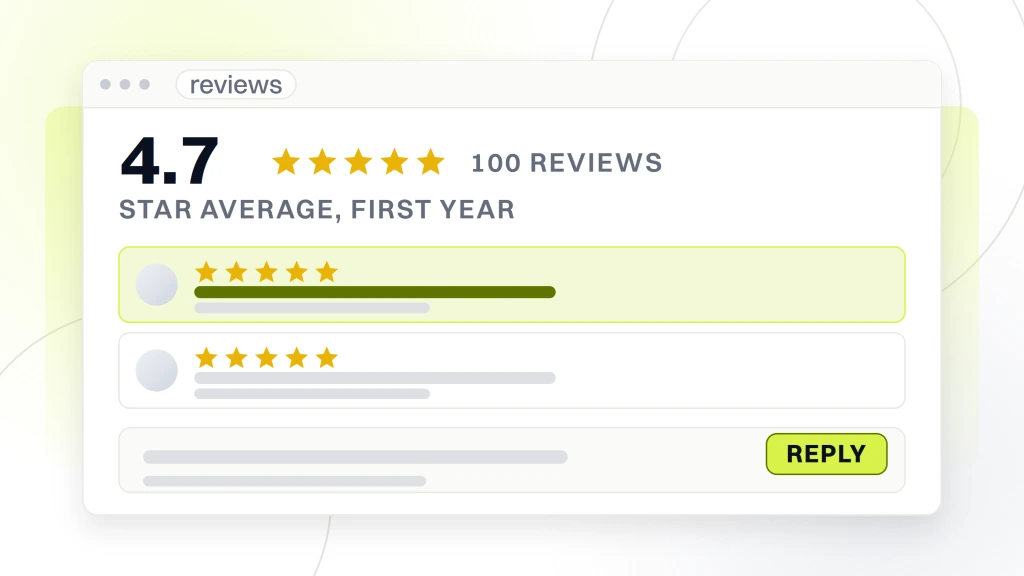
Reviews close the loop. Send SMS review requests 2 hours after every appointment via CallRail, Podium, or your practice management system. Aim for 4.7+ stars across 100+ Google reviews within the first year. Reply to every negative review with a professional, HIPAA-safe response. Reviews are a top-3 ranking factor for the local pack, and every review published is a compounding asset. Delicate Dental Group used this exact review cadence and pushed +700 cumulative reviews on the launch curve, which locked their map pack position across the metro.
Content dental SEO strategies for practice authority
Content dental SEO strategies build the topical authority Google uses to decide which practice site to trust. A dentist writing about crowns, implants, whitening, and pediatric care builds E-E-A-T (Experience, Expertise, Authoritativeness, Trust) that a generic content mill can’t fake. The content plan should target the full patient decision journey, awareness questions, comparison content, cost and insurance, and post-treatment care.
Publish in clusters, not one-off posts. A cluster is a pillar page (say, “dental implants”) plus 8 to 12 supporting posts covering variations (implant types, cost, aftercare, mini implants, all-on-4). Every supporting post links back to the pillar. Google reads this internal link structure and treats the pillar as authoritative for the whole topic. Random blog posts on unrelated topics don’t build authority the same way.
Author bylines matter now. Every post should get attributed to a real person, ideally a dentist at the practice, with a bio, credentials, and links to their state licensing board record. Google’s E-E-A-T guidelines reward first-hand practitioner content in the medical vertical. Ghostwritten posts under a “Team” byline underperform every time.
Publish frequency is 2 to 4 posts per month for a solo practice, 6 to 10 for a multi-location group. Consistency beats bursts. Publishing 3 posts every month for 12 months outperforms publishing 20 posts in month 1 and nothing for the rest of the year, since Google rewards steady signal.
How dental content ranks in the AI Overview era
Google’s AI Overview pulls from top-10 organic content. When your page ranks 1 to 10 for a query, it can get cited. At position 15, it can’t. So dental SEO strategies for AI Overview are the same as regular SEO. Rank in the top 10, answer the exact question in the first paragraph under an H2, and use FAQ schema. Don’t chase “AI SEO” as a separate discipline. Chase good SEO and AI results follow.
Link building dental SEO strategies without spam
Link building dental SEO strategies win on quality, not volume. 10 links from local news, dental industry publications, and community sponsorships beat 200 links from directory farms. Google’s spam filter has gotten precise about dental directories that sell links, and links from those hurt more than help now. Don’t buy them.
The 3 safe playbooks that still work. First, sponsor a local youth sports team, community food drive, or school event and pick up a link on their site (usually the “sponsors” page). Second, run a scholarship for pre-dental students at a local university and pick up a link from the financial aid page. Third, contribute expert quotes to health publications through HARO or Qwoted. The byline picks up a link to your bio page.
Local news wins for practices in mid-sized cities. Send a real story pitch (“local dentist offers free care to veterans” or “family dental practice reaches 20-year anniversary”) and local health reporters will run it. That single link from a mid-sized city daily is worth 30 dental-directory links. Cost is a few hours of writing and 1 round of edits.
Avoid link schemes. Any “reciprocal link exchange,” “guest posts on our dental blog network,” or “buy backlinks from expired dental domains” pitch that lands in the practice inbox is spam. Delete. Google has been catching these for a decade, and every practice site that fell for one is still trying to recover.
Tracking dental SEO strategies that prove ROI
Tracking dental SEO strategies is what separates practices that scale from practices that guess. Rankings alone are vanity. Rankings tied to organic traffic, form submits, and phone calls booked from organic are the numbers that answer “did this work.” Every practice should wire the tracking stack in the first 30 days, before publishing content that would need attribution later.
Set up Google Search Console for every property, rank tracking in Semrush or Ahrefs for your top 60 keywords, Google Analytics 4 with conversion events on form submits and phone-click events, and CallRail (or WhatConverts) for call tracking that swaps a phone number on the site by traffic source. See our dental seo audit for the exact setup checklist.
Report monthly against a fixed template. Top 20 keywords with rank change month over month. Organic traffic total and by top-10 landing pages. Conversions from organic (calls plus forms). Estimated new-patient revenue attributed to organic. That report takes 45 minutes to build when the tracking is wired correctly. It takes 3 hours per report when the tracking is a mess, which is why setup is the smart bet.
The final tracking piece is call-to-patient reconciliation. Every organic call should get logged in the practice management system with source “organic” and campaign “seo.” That single field makes attribution work at the practice-owner level, not just the marketing dashboard. Practices that skip this end up with strong dashboards and confused owners who ask “but did any of these calls actually book?” Reconciled call logs answer that in 1 click. Smile Design Dentistry cut cost per call by 30% on a 12-month curve after we tied their call log to source data and reallocated spend to the channels that booked patients.
Case study, North County Dental Care’s 1,000% patient growth
North County Dental Care is a 20-year family practice in Vista, California with a strong offline reputation but an almost invisible digital presence. Before the engagement, no top 10 search positions, inconsistent directory listings, a weak Google Business Profile, and fragmented marketing across multiple agencies with no clear strategy or measurable ROI.
We rebuilt on secure HTTPS with a mobile-friendly site and optimized content targeting the clinic’s core services. Advanced local SEO cleaned NAP consistency across citations and mapped keyword-targeted service pages. Broken links repaired, schema added, crawlability restored. Google Business Profile ads drove qualified local patient leads, and local video marketing built community visibility.
Results, 385% organic traffic growth, new patients from digital up from 1 to 2 a month to 12 to 16, and a 500% ROI on the total program. Patient volume climbed 1,000% from 2021 to 2024. 1 practice, 1 strategy, secure foundations, and dental SEO strategies applied in the right sequence.
The takeaway, the wins compound. Every citation cleaned, every schema block added, every service page published stayed working across every algorithm update. That’s why sequence beats intensity. See high roi dental google ads for how paid stacks on top of a strong organic base.
1 more note on North County Dental Care. The growth came from one plan run by one agency from 2021 to 2024, in place of several agencies pulling in different directions. VP Dental hit a similar arc with a shorter window, +100% new monthly patients across 12 months once we mapped their service pages to booking intent and pushed GBP to daily posting. iSmile Dental Spa scaled +900% in patient volume on a multi-year curve after we shifted their content plan from generic dental posts to service-cluster pillars tied to review-earning cadence.
Pricing dental SEO strategies against agency options
Pricing dental SEO strategies falls into 3 tiers. DIY costs $200 to $600 per month in software (Semrush, Ahrefs, BrightLocal, CallRail) plus 15 to 20 hours per month of practice-owner time. Freelancer costs $1,200 to $2,500 per month for a solo consultant doing on-page and content, with the practice handling GBP and links. Agency retainer costs $1,500 to $4,500 per month for full-stack SEO covering technical, on-page, local, and content.
Redefine Web practice retainers start at $999 per month for the base scope and scale to $2,499 per month for multi-location groups. The starter scope covers GBP maintenance, monthly rank tracking, 2 published posts, on-page fixes, and a monthly report. Multi-location adds citation management per office, per-location content, and cross-location internal linking.
ROI math is straightforward. When a new dental patient is worth $900 in lifetime value and the retainer brings 8 to 12 new patients per month at month 6, the retainer pays for itself 5 to 15 times over on a monthly basis. Practices that measure ROI by call volume without lifetime value adjustment drop the retainer too early, before month 6 when the compounding kicks in.
| Scope | Monthly cost | What’s included | Best for |
|---|---|---|---|
| DIY | $200-$600 (tools) | Tools only, practice does the work | Solo practice with 15+ hrs/mo owner time |
| Freelancer | $1,200-$2,500 | On-page + content, practice handles GBP | Small practice, comfortable managing local |
| Agency starter | $599-$1,200 | Full stack, single location | Growth-stage single-office practice |
| Agency multi-loc | $1,500-$4,500 | Full stack, 3+ locations | DSO or multi-office group |
Common dental SEO strategies mistakes to skip
The biggest dental SEO strategies mistake is starting with backlinks. Practices hire “SEO experts” who spend the retainer chasing links to a site with broken schema, thin content, and a 6-second mobile load time. The links do nothing since the site isn’t ranking anything worth linking to. Fix the site first. Links compound after that base gets set.
Second mistake, chasing rankings for keywords the practice can’t service. A single-location Miami practice targeting “dental implants” nationally will lose to Aspen Dental every time. Target Miami and neighborhoods within your service radius. Bigger volume terms are a longer, more expensive game only DSOs should play.
Third mistake, publishing content without a mapped keyword. Random blog posts about “the history of dentistry” or “fun tooth facts” rank for nothing and waste writer budget. Every piece of content should get assigned a target keyword, target intent, and target page before the writer opens the doc. Skip this and you get vanity content that converts nobody.
- Starting with backlinks before fixing the site
- Chasing keywords the practice can’t service (national terms for 1 location)
- Publishing content without a mapped keyword or intent
- Ignoring GBP and local citations while chasing generic SEO
- Measuring rankings without tying to booked patients
Choosing dental SEO strategies for your practice size
Choosing dental SEO strategies depends on practice size, competition, and growth goals. A solo dentist in a suburb has different priorities than a 6-office group in a metro market. The strategies don’t change, but the sequence and intensity do. Match the plan to the practice, not the practice to a plan.
Solo practice under 3 years old, focus on technical foundation, homepage, 8 to 12 core service pages, GBP, and 40 citation cleanup. Skip content marketing for the first 90 days. Solo practice over 3 years old, add content clusters targeting the top 5 service categories, publish 2 posts per month, invest in 5 to 10 quality backlinks per year. Get your dental marketing plan in writing before you start.
Multi-location group with 3 to 10 offices, per-office location pages, per-office GBP management, cross-location internal linking, and 8 to 12 posts per month. Add per-market content targeting the metro area’s dominant search queries. See dental seo company vs agency for how to structure the partnership at this scale.
DSO with 10+ offices, dedicated SEO team or agency retainer at 3,500+ dollars per month, per-market local pods, and a technical infrastructure that supports rapid new-location launches. Every new office should rank on page 1 within 4 to 6 months from launch. Groups that hit this bar grow twice as fast as groups that treat SEO as an afterthought.
Put these dental SEO strategies into a 90-day rollout
Take the 12 highest-impact moves from this guide, sequence them across 90 days, and run 1 owner in the practice against the checklist weekly. Days 1 to 30, technical foundation, GBP fill-out, and citation cleanup. Days 31 to 60, service page rewrite in the on-page structure covered above and schema push. Days 61 to 90, review generation cadence, first content cluster live, and tracking dashboard signed off. Practices that work the full 90-day plan post double-digit organic traffic gains by month 4 and hit new-patient booking growth by month 6.