Search engine optimization audit services get searched for after 18 months of flat rankings, a stack of monthly reports promising the corner is coming, and no ranking movement to show for the retainer spend. You ran the free Ahrefs Site Audit. You checked Google PageSpeed Insights. Both said the site was fine. Your rankings said otherwise. What you need is a diagnostic done by a human who has seen 200 sites like yours and can name the root cause of the ranking stagnation inside the first two hours of the engagement, not a free tool that spat out a health score with no context attached.
This guide is the working playbook for search engine optimization audit services in 2026. Four audit layers a real diagnostic covers. Pricing bands that reflect real work. Timelines that match site complexity. Mistakes that turn audit reports into decoration instead of ranking movement. Written for the marketing lead or founder who wants to know what a real $6,000 to $12,000 engagement produces before signing the statement of work.
What Search Engine Optimization Audit Services Actually Cover
Search engine optimization audit services cover four diagnostic layers that together surface every ranking blocker on a site. Technical health. On-page structure. Content coverage. Backlink profile. A real audit produces a documented report ranking 20 to 40 prioritized fixes by impact and effort, so the client team knows exactly which item ships first and which item waits for the next quarter.
Free tool reports that surface a “health score” without context are decorations that miss most of what actually costs your rankings. Real audits combine tool output with human diagnosis, competitive analysis, and vertical context. The four-layer coverage is what separates an SEO audit service from an automated PDF generator running against your homepage.
Technical health layer
Crawl errors, indexation gaps, Core Web Vitals (LCP, INP, CLS), mobile responsiveness, structured data validation, HTTPS coverage, canonical tag hygiene, XML sitemap completeness, robots.txt configuration, and redirect chain length. The technical layer covers 25 to 40% of the ranking blockers on most sites. Fixing the top five technical issues alone often produces 15 to 30% traffic movement inside 60 days.
A real technical SEO audit checks how machines understand the page, not just how fast it loads. Google’s guidance on AI Overviews confirms that retrieval-augmented generation still leans on the same fundamentals. Fast, crawlable, well-structured pages get retrieved. Slow or blocked pages get skipped.
On-page structure layer
Title tags, meta descriptions, H1 headings, H2 subheads, internal linking, image alt text, page copy quality, and keyword mapping to buyer intent. The on-page layer covers 20 to 35% of ranking blockers. Real audits map every money-earning page to its target keyword and identify pages where the on-page structure fights buyer intent instead of supporting it.
Content coverage and backlink layers
The content layer maps topical authority. Which topics are covered in depth, which are covered thinly, and which are missing. Keyword gaps against competitors get named. The backlink layer analyzes referring domains, anchor text distribution, toxic link exposure, and competitive backlink comparisons. Together these two layers cover 30 to 45% of ranking blockers on established sites, and they take the deepest analytical work of the four layers to complete properly.
The Free SEO Audit Tool Trap and What Gets Missed
Free SEO audit services from Ahrefs Site Audit, Semrush Site Audit, and the many free-tier platforms are worth using as a first-pass health check. They surface obvious technical issues fast. They miss context every time. They flag a broken link as critical without checking whether the link matters to a money-earning page. They miss content coverage gaps entirely. They cannot diagnose the root cause of ranking stagnation on any site above 500 URLs. Use free tools for a monthly health check between real audits. Never confuse the tool output with a diagnostic service.
What free tools do surface reliably
Free tools reliably surface broken links, missing meta tags, unindexed pages, slow load times, missing alt text, and duplicate title tags. Those items matter, and they’re worth checking monthly. Free tools do this fast and at zero cost. Businesses skipping the monthly free-tool check miss quick fixes that would have taken 30 minutes to address.
What free tools miss completely
Free tools miss content coverage gaps, competitive keyword positioning, backlink quality analysis, internal linking architecture problems, and topical authority weaknesses. They can’t diagnose why a specific keyword refuses to rank. They can’t recommend which pages to consolidate. They can’t spot cannibalization patterns. Anything requiring human judgment about intent, competition, or strategy sits outside their capability.
Free tools produce false urgency on non-issues
Free tools produce 200 findings when 20 matter. The other 180 findings distract client teams into fixing non-issues, so the real blockers stay untouched. Every hour spent chasing a “critical” tool finding that doesn’t affect rankings is an hour not spent on the fix that would. Human auditors filter the noise. Tools amplify it. The difference shows up in the first week of a real audit.
What AI search readiness adds to the free-tool blind spot
AI Overviews, ChatGPT search, Perplexity, and Gemini retrieve information from the same web the tools scan, but they weigh clarity, structure, and answer-first paragraphs harder than classic ranking factors. Free tools don’t test whether your top pages open with a self-contained answer to the query. A real technical SEO audit checks that first paragraph, the schema markup, and the internal linking that helps AI systems trace your pages back to authority. Miss that layer and your best pages get skipped by every retrieval engine that matters in 2026.
Case Study. A Six-Week Audit That Drove 206% More Organic Clicks
A UK home-improvement specialist worked with our team on an audit engagement that fed into a full 12-month retainer program. The audit surfaced GA4 tracking inaccuracies, commercial URLs stuck on page two, and a missing pillar-cluster content architecture. Organic clicks grew 206% year over year at peak season. Conversion rate grew 74%. Referring domains grew 101%. All three numbers trace back to fixes the audit surfaced in weeks one through four of the engagement.
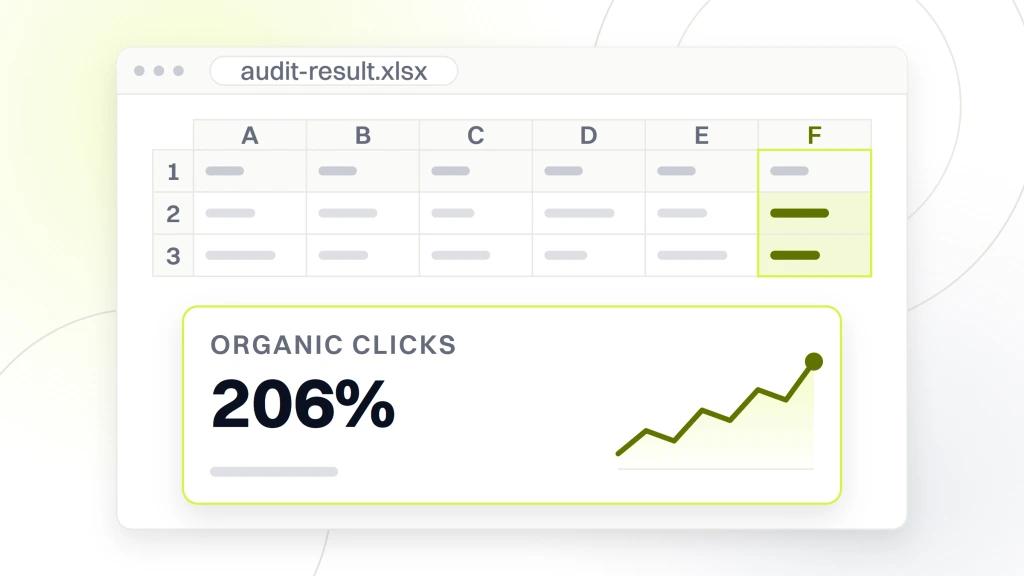
The audit itself ran six weeks. Technical layer covered site speed and mobile performance. On-page layer identified 12 commercial pages ranking page two that needed 200 additional words of content and better internal linking. Content layer named 42 keyword gaps against category leaders. Backlink layer showed the domain was 40% behind competitors on referring domains, which set up the digital PR outreach that eventually grew referring domains 101% in 12 months.
What the audit found that free tools missed
The GA4 tracking inaccuracy was the biggest miss. Every free tool showed conversion tracking working. A human audit spotted the double-count on the thank-you page fires and traced it to a duplicate GTM tag. Fixing that single issue changed every reporting dashboard, and the reporting drove every subsequent budget decision. Without the audit finding it, the retainer would have optimized against wrong numbers for another year.
What the audit prioritized in the roadmap
The 30-item roadmap ranked the GA4 tracking fix at position one. Commercial URL optimization landed positions two through eight. Content pillar-cluster build landed positions nine through twenty. Backlink outreach setup landed positions twenty-one through thirty. That ordering matched the compounding math. Fix analytics first, capture the almost-ranking pages second, build topical authority third, earn backlinks fourth. Executing in that order produced the 206% traffic result inside 12 months.
Comparing SEO Audit Service Types on Scope and Cost
Different audit types cover different scopes on different timelines and cost different fees. SEO audit service teams structure engagements around the specific diagnostic need rather than a one-size-fits-all package. The table below covers the six most common audit types, the layers each covers, and the typical fee range for a growing business site.
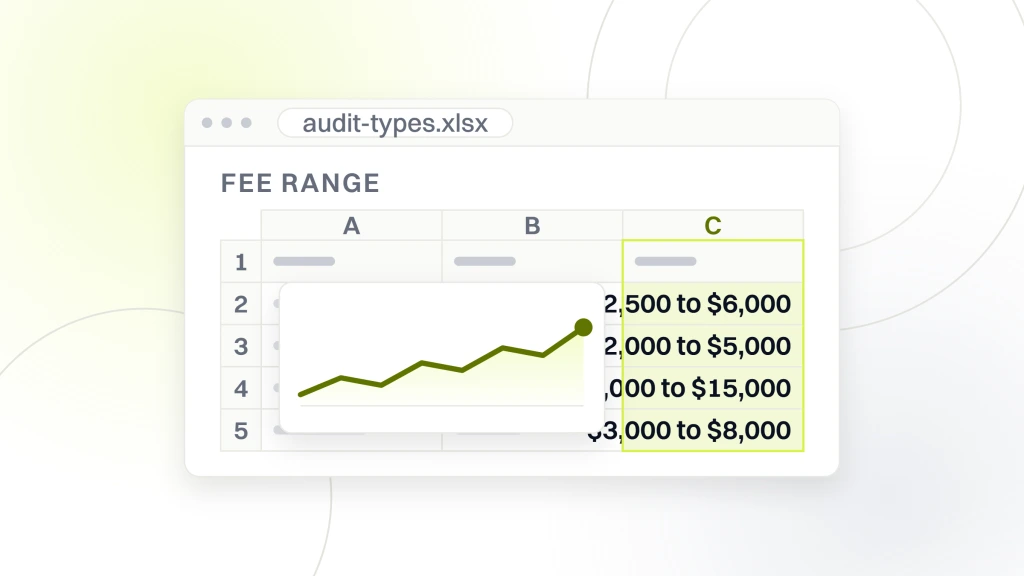
| Audit type | Layers covered | Fee range |
|---|---|---|
| Technical SEO audit | Technical only | $2,500 to $6,000 |
| On-page audit | On-page plus content briefly | $2,000 to $5,000 |
| Full-site audit | All four layers | $5,000 to $15,000 |
| Content audit | Content plus on-page | $3,000 to $8,000 |
| Backlink audit | Backlinks plus toxic risk | $1,500 to $5,000 |
| Penalty recovery audit | All four plus manual action review | $5,000 to $18,000 |
Full-site audit is the standard starting point
Most businesses start with the full-site audit because it covers all four layers and produces the complete diagnostic base for the next 12 months of SEO work. Standalone technical, on-page, or content audits fit specific situations where the client team already has the other layers under control. Businesses new to SEO or coming off a disappointing retainer usually need the full-site audit to establish the baseline.
Penalty recovery audits carry premium pricing
Penalty recovery audits (either manual actions or algorithmic hits) carry premium pricing because they need experienced auditors and time-sensitive documentation for reconsideration requests. Google’s manual action review process takes weeks and requires precise, defensible disclosure. Auditors handling penalty work charge more since the wrong disclosure extends the penalty duration by months. Businesses hit by a penalty should hire an experienced penalty specialist for this work, not a generalist.
Content audits often expand into rewrites
Content audits typically surface 20 to 50 pages needing rewrites, consolidation, or deletion. The audit itself runs $3,000 to $8,000. The rewrite work that follows is a separate scope of its own. Businesses should plan for both the audit fee and the rewrite scope when budgeting content audit engagements. The rewrite scope often lands at $150 to $400 per page depending on length and complexity.
Six Mistakes That Turn SEO Audit Reports Into Coffee-Table Books
The mistakes below turn expensive audit reports into decoration nobody implements. SEO audit service engagements fail on the client side about as often as they fail on the auditor side. You can keep hiring auditors and watching the reports collect dust in a Google Drive folder, or you can avoid the six mistakes below and turn the next audit into ranking movement inside 90 days of handoff.
- Buying an audit without an implementation plan or budget lined up for the roadmap that comes out of it, so the report lands in a Google Drive folder unread past the executive summary.
- Refusing to give the auditor access to Google Search Console, GA4, and the CMS in week one, which forces the audit to be done from the outside instead of on real data.
- Skipping the kickoff meeting where auditor, marketing lead, and executive sponsor align on goals, timelines, and success metrics for the engagement.
- Signing an audit engagement without a defined final deliverable, which lets both sides drift into ongoing scope until the fee runs out with no artifact to show for it.
- Waiting six months to implement the roadmap after the audit ends, by which point market conditions changed and half the roadmap is stale.
- Hiring a generalist auditor when the site needs vertical or platform expertise, so the report reads as SEO basics rather than industry-specific insight.
Line up implementation before the audit starts
Every audit engagement should end with the client team ready to implement day one after handoff. Line up developer hours, content resources, and executive approval before the audit starts. Businesses that plan implementation during the audit engagement see 3 to 5 times more ranking impact than businesses that plan implementation after. The audit produces the roadmap. Implementation produces the ranking movement.
Share access day one, not week three
Delayed access is the number one cause of audit timeline slippage. Search Console, GA4, CMS admin, hosting logs, keyword tracking tool. All access should be handed off during the kickoff meeting. Auditors that can’t see the real data end up running the audit from the outside using free tools and public data. That kind of audit produces exactly the decoration you paid to avoid.
Track implementation impact monthly for six months
Every roadmap item implemented should get logged with a date and an impact measurement 60 days after implementation. Six months of monthly tracking reveals which fixes produced the biggest movement and validates the audit’s prioritization. That tracking becomes the input for the next audit engagement 12 to 18 months later, and it’s a cheaper follow-up since the auditor already knows the site.
SEO Review Service Versus SEO Website Audit. What’s the Difference?
An SEO review service and an SEO website audit overlap heavily in scope but differ in depth. Audits produce documented reports with prioritized fixes, working sessions, and templates the client team can act on. Reviews produce a summary document and a call. Audits cost $2,500 to $15,000. Reviews cost $500 to $2,500. Both have their place depending on the diagnostic need, and picking the right one saves budget without sacrificing accuracy for the stage the business is in.
When an SEO review service is the right choice
An SEO review service works when the business needs a second opinion on an existing SEO plan, a gut-check before committing to a larger engagement, or a quick assessment of a specific issue (a ranking drop, a penalty, a migration). Reviews take five to ten hours of work, cost $500 to $2,500, and produce a documented summary plus a one-hour call. Reviews don’t replace audits when the business needs deep diagnostic coverage.
When only an SEO website audit fits
An SEO website audit fits when the business needs a diagnostic base to guide the next 12 months of SEO work, when the last engagement disappointed, when the business is new to SEO, or when leadership wants an objective diagnostic before committing to retainer spending. Audits take 20 to 60 hours of work, cost $2,500 to $15,000, and produce the four-layer documented report with working session and handoff templates.
Reviews often lead into audits later
Businesses uncertain about the scope needed often start with a review to test the fit with the auditor and validate the diagnostic direction. If the review confirms the issue needs deeper work, the audit engagement follows within one to two months with the same auditor. That progression protects the budget and confirms the auditor is the right fit before spending five figures.
Putting Search Engine Optimization Audit Services Together
An SEO audit service fits a specific business need. You want a documented diagnostic base before signing on for 12 months of retainer work, or you want an objective second opinion after a disappointing engagement. Match the audit type to the diagnostic need. Match the auditor tier to the site complexity. Plan implementation inside the audit timeline so ranking movement starts inside 30 days of handoff, not six months later.
Weeks one through eight. The audit engagement
Weeks one through eight cover the full audit. Kickoff, data pull, four-layer analysis, synthesis, and handoff. The client team stays lightly involved (weekly check-ins, working session at end) and the auditor drives the diagnostic. Deliverables include the documented report, the prioritized roadmap, the templates, and the handoff document. Total client time investment is about 8 to 15 hours over the eight weeks.
Weeks nine through twenty. Implementation
Weeks nine through twenty cover implementation of the top 15 to 20 roadmap items. The client team owns the execution work. The auditor stays available for 30 and 60 day check-ins to review progress and unblock questions. Ranking movement typically appears at week 14 to 16 as the technical and on-page fixes get indexed by Google. Booked calls or ecommerce revenue starts climbing measurably at week 18 to 20.
Months six through twelve. Compounding and re-audit
Months six through twelve cover compounding and the follow-up mini-audit 12 to 18 months after the initial engagement. That follow-up costs 40 to 60% of the original audit fee since the auditor already knows the site and can focus on what changed since the last engagement. The audit-implement-re-audit cycle every 12 to 18 months keeps the SEO foundation aligned with market shifts without paying full price every year.
For a working audit and implementation program our team runs for growing businesses, our search engine optimization services handle the audit, roadmap, and monthly execution end to end. When you’re ready to run this in a dental, med spa, or home services vertical, the dental marketing retainer is a fixed monthly price we quote after the free audit, based on what the report finds. Related reads. local search engine optimization services, organic search engine optimization services, and search engine optimization consulting services. External references. Google Search Central SEO starter guide, Moz’s SEO learning center, and Ahrefs SEO tips.