Search engine optimization consulting is a bounded project run by a senior specialist that diagnoses why organic traffic is stuck, prioritizes the 3 fixes that matter most in 90 days, and hands the in-house team a written playbook. The engagement runs 4 to 12 weeks, costs $8,000 to $30,000, and produces a roadmap, not ongoing execution. That distinction from a monthly retainer is the whole point.
Growth teams hire consulting when they already have execution capacity but keep hitting the same quarterly ceiling. A specialist with 200 audits behind them spots the pattern in a week. This guide walks through the 4 engagement types, real fee ranges, the artifacts a real engagement produces, and the client-side mistakes that turn a $15,000 audit into a Google Drive folder nobody opens. Written for the marketing lead or founder about to sign a project between $8,000 and $30,000.
What Search Engine Optimization Consulting Services Cover
Consulting engagements are bounded projects run by senior specialists. The consultant audits the site, builds the roadmap, and coaches your team through implementation. Diagnosis, prioritization, and the written playbook come out of the work. Ongoing content production, citation cleanup, and monthly reporting do not. Those sit in a retainer, priced and scoped separately, and confused often enough that half the bad consulting engagements start with a scope mismatch on day one.
Consultants rarely publish content or manage citations directly. That’s retainer work. Consulting engagements run 4 to 12 weeks with defined deliverables and defined end dates. Consulting fits businesses that already have execution capacity and need senior strategic input. It does not fit businesses looking for someone to do the monthly work for the next 2 years.
Audit engagements diagnose the root cause
The audit is the entry point for most consulting relationships. 4 to 6 weeks of work, a $4,000 to $12,000 fixed fee, and a written report covering technical health, on-page structure, content coverage, backlink profile, and a prioritized fix list of 20 to 40 items ranked by impact against effort. The audit plugs directly into an in-house execution sprint or a retainer handoff without a scope rewrite in between.
Strategy engagements build the growth roadmap
Strategy engagements go past the audit to build the 6 to 12 month growth roadmap. Keyword prioritization, competitive analysis, content calendar architecture, internal linking maps, technical roadmap, and reporting dashboard blueprints. These engagements run 8 to 16 weeks and cost $12,000 to $30,000. Growth-stage businesses hire strategy consulting when the market shifted and the plan needs a reset before execution starts again.
Coaching engagements upskill the in-house team
Coaching pairs the senior consultant with your team for weekly working sessions across 3 to 6 months. The consultant reviews the team’s work, unblocks technical questions, and pushes back on soft choices. Cost typically runs $3,000 to $8,000 per month depending on hours committed. Best fit for teams that have execution capacity but lack senior SEO judgment, and can’t justify a full retainer.
Search Engine Optimization Strategy Services Explained
Search engine optimization strategy services sit one level above the audit. Where the audit asks what’s broken, strategy asks what’s worth building over the next 12 months. Keyword prioritization, competitive teardown, market sizing, content architecture, and internal linking maps come out of the work. Growing businesses call for a strategy engagement when a competitor entered the SERP (search engine results page), a product line expanded, or an algorithm update rewrote the playing field.
When strategy services beat retainer strategy work
Retainer agencies build strategy as part of the monthly scope, but strategy work often gets crowded out by execution demands. A dedicated strategy consulting engagement gives leadership the strategic clarity a retainer can’t always produce, since the retainer team is busy publishing content and cleaning citations. Strategy services fit growing businesses in transition moments. Acquisition. Product launch. Market entry.
Keyword prioritization drives content ROI
The primary artifact from a strategy engagement is the keyword priority matrix. Between 100 and 300 target keywords ranked across 4 dimensions. Monthly search volume, buyer intent depth, SERP competition strength, and downstream business value. Every content brief the team writes over the next 12 months maps to one keyword in that matrix. Teams working without a matrix waste 40 to 60% of the content budget on posts that either never rank or rank on the wrong intent and never convert.
Competitive analysis shapes market position
Strategy engagements analyze the top 3 to 5 competitors in depth. Which keywords they own. Which content structures they use. Which backlinks earned them authority. That analysis shapes the growth plan by naming where you can attack versus where you should avoid. Businesses without competitive analysis waste effort competing on saturated keywords instead of finding underserved intent their competitors ignore. A useful rule of thumb from most search engine optimization consulting engagements. For every 10 target keywords, 3 should be head terms you attack head-on, 5 should be long-tail intent your competitors under-serve, and 2 should be branded queries you defend with pillar pages. Skew the mix toward long-tail on newer sites and toward head terms on domains with existing authority.
A Consulting-Led SEO Program That Beat Peak-Season Targets
One of our home services clients ran the consulting-plus-retainer pattern. The engagement opened with a 4-week discovery audit that surfaced 3 problems. Broken GA4 event tracking on the primary conversion path, thin commercial pages sitting between positions 11 and 18, and no pillar-cluster architecture supporting the money keywords. Retainer execution against that roadmap moved organic clicks 206% year over year at peak season, conversion rate 74%, and referring domains 101%. Peak-season targets were beaten by 114%.
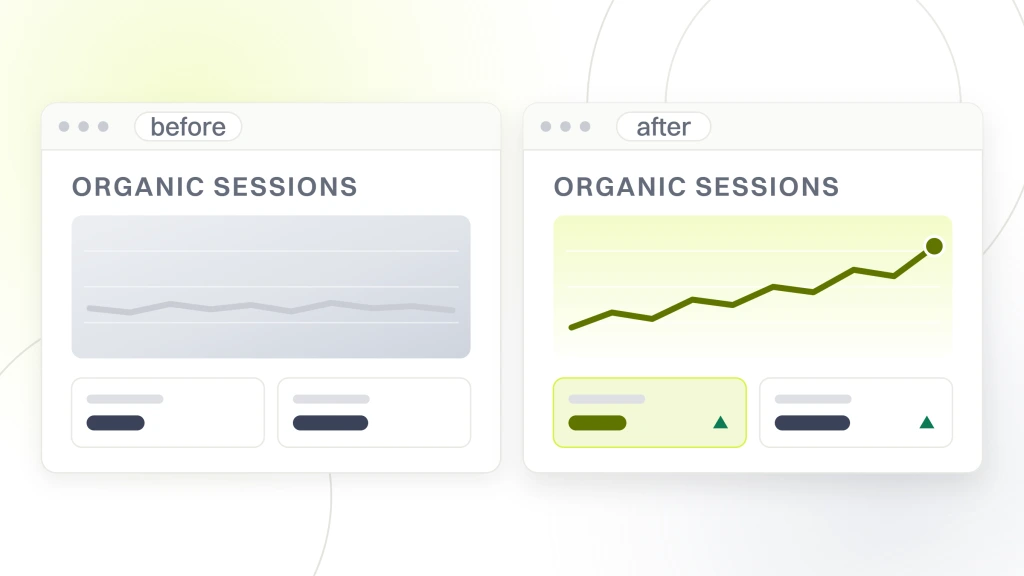
The consulting portion produced the audit report, the roadmap, and the content architecture blueprint in the first 4 weeks. Execution ran under a retainer engagement after that. This is the standard consulting-plus-retainer pattern most growing businesses adopt. Senior strategic input up front, retainer execution across the following 12 months. Splitting the work into 2 engagements kept the pricing honest and let both teams focus on what they do best.
What the consulting phase produced
4 weeks. 1 senior consultant. 3 deliverables. A 42-page audit report covering technical health, on-page structure, content gaps, and backlink profile. A 30-item prioritized roadmap ranked by impact and effort. A content architecture blueprint mapping 12 pillar pages and 60 cluster posts across the following 2 quarters. Total consulting fee ran to $12,000. Total retainer execution across the next 12 months ran another $60,000. The 206% traffic growth paid back both engagements inside the first year.
What this pattern means for growing businesses
Consulting-plus-retainer is the pattern most growing businesses land on by year 3. The consultant sets direction. The retainer team runs the plays. Quarterly strategy reviews with the consultant keep the retainer honest and let the strategy evolve as market conditions shift. Businesses that skip the consulting phase and jump straight to a retainer often waste the first 6 months of execution on the wrong priorities. For a foundation on organic principles, the Google Search Central SEO starter guide is still the single best free reference.
Comparing Consulting Engagement Types on Cost and Deliverables
Consulting engagement types split cleanly on cost and deliverables. Audit engagements are the diagnostic entry point, strategy engagements build the roadmap, and coaching engagements upskill the team. The table below shows how each stacks up on fee, duration, and primary output. Use it as the negotiation frame the next time a consultant sends a proposal.
| Engagement type | Duration | Fee range | Primary output |
|---|---|---|---|
| Audit | 4 to 6 weeks | $4,000 to $12,000 | Written report, 20-40 item fix list |
| Strategy | 8 to 16 weeks | $12,000 to $30,000 | 12-month growth roadmap, keyword matrix |
| Coaching | 3 to 6 months | $3,000 to $8,000 per month | Weekly team sessions, skills lift |
| Consulting-plus-retainer | 12 months | $60,000 to $120,000 | Roadmap plus retainer execution |
Fixed fee beats hourly on most engagements
Fixed fee pricing aligns the consultant with the deliverable, not the clock. Hourly billing incentivizes stretched engagements and thin reports. Fixed fee gives you the deliverable and the budget certainty in advance. On strategy engagements above $20,000, a milestone-based payment schedule (30% at kickoff, 40% at draft delivery, 30% at final approval) protects both sides. Hourly billing fits only 2 cases. Small scoping calls, and coaching where the hour count is capped in the contract.
Payment terms that align incentives
Milestone payment schedules keep the consultant motivated to deliver on time. 30/40/30 splits work well for most engagements. A 50% deposit is standard for smaller audit projects. Avoid consultants asking for 100% up front on projects above $5,000. That request signals cash-flow trouble more often than confidence. Net-30 payment terms after each milestone give both sides breathing room without letting invoices stack up.
Change orders for scope creep
Scope creep kills consulting margins on both sides. A written change order clause in the contract handles the mid-engagement request to expand deliverables. Standard rate for added scope runs the same hourly or fixed rate as the original engagement, documented in writing before any new work starts. Consultants who accept scope changes verbally and don’t invoice them lose money and burn out on the engagement. That’s when reports turn thin.
Common Mistakes That Turn Consulting Into Slide Deck Theater
The most expensive consulting engagements are the ones nobody implements. A $15,000 audit that produces 40 prioritized recommendations is worth $0 if the in-house team files it and moves on to the next quarter’s roadmap. The mistakes that kill implementation split into 3 categories. No kickoff meeting, no 30-day implementation calendar, and no reporting cadence back to the consultant.
- No kickoff meeting. The consultant delivers the report by email and calls it done. The in-house team never gets the context behind the priorities and never asks the questions that would have unblocked the top 10 items.
- No 30-day implementation calendar. The team plans to work on the audit “soon” and never does. Priorities from other departments crowd in. The audit sits in a Google Drive folder.
- No reporting back to the consultant. The team implements 5 items, sees no traffic movement in 60 days, and concludes the consultant was wrong. In reality the wrong 5 items went live and the top-priority technical fixes never got worked.
- Wrong stakeholder in the room. The marketing lead approves the audit but engineering owns implementation. Without an engineering sponsor named in the kickoff, technical items sit forever.
The kickoff meeting is non-negotiable
The kickoff meeting is where the report gets translated into implementation-ready work. 90 minutes with the marketing lead, the engineering owner, and the consultant on the same call. The consultant walks through the top 10 items in priority order. The team asks questions. Blockers get named. Owners get assigned. Without that meeting, half the recommendations get misunderstood and the other half get lost in translation from analyst to engineer.
Implement within 30 days of engagement close
The 30-day implementation window is when momentum is highest. Team members remember the consultant’s reasoning, the priorities are fresh, and the roadmap is aligned with the current quarter’s plan. Wait longer and the team’s context decays. Priorities from other departments crowd in. By day 90, the audit reads as stale and the team quietly moves on. The 30-day rule is the single biggest predictor of whether a consulting engagement pays back.
Report progress back to the consultant
A 30-minute check-in call 4 weeks after engagement close catches implementation gaps early. The consultant reviews what went live, what stalled, and what got misinterpreted. Course correction happens once the fix is still cheap. Teams that skip the check-in send the wrong 5 items live and blame the consultant when traffic doesn’t move. Put a second check-in at day 60 and a third at day 90 for engagements above $20,000. The 3-check cadence catches the second-order problems the first call can’t. Broken tracking that hides real gains, canonical tag mistakes on new content, or an internal linking pattern the writers drifted from once the consultant left the room.
Expert Search Engine Optimization Services Versus Junior Consulting
Expert search engine optimization services from a senior specialist with 10 or more years of audits behind them read the site differently than a junior consultant does. The senior consultant spots the root cause in a week. A junior consultant catalogs symptoms for a month and calls it an audit. The gap shows up in diagnostic speed, roadmap quality, and vertical judgment. That’s why professional search engine optimization services from a senior practitioner beat a cheaper junior on total 12-month ROI even at 3x the fee.
Diagnostic speed compounds project ROI
Senior consultants diagnose the root cause in a week. They’ve seen the pattern 200 times. Junior consultants spend 3 to 4 weeks pattern-matching against a checklist they downloaded from a course. The gap in diagnostic speed compounds. Faster diagnosis means earlier implementation, which means faster traffic recovery, which means the client sees ROI inside quarter 2 instead of quarter 4. On a $25,000 engagement, that 2-quarter difference is worth $50,000 to $200,000 in recovered organic revenue.
Roadmap quality determines multi-year outcomes
Senior consultants build roadmaps that survive 12 to 24 months of algorithm changes. Junior consultants build roadmaps that hit the current SERP snapshot and go stale in 3 months. Roadmap quality shows up in the sequencing (which fix enables which downstream fix), the contingency plans (what to do if the top-priority fix doesn’t move the needle), and the metric hierarchy (which KPI to watch versus which vanity metric to ignore). All 3 come from pattern recognition only 10 years of engagements teaches.
Vertical expertise beats general SEO experience
A senior consultant with 5 years of dental SEO reads a dental site faster than a senior consultant with 15 years of general SEO. Vertical experience means the consultant knows the SERP shape, the money keywords, the seasonal cycles, and the competitor set going in. That knowledge saves 2 to 3 weeks of ramp-up time and produces a more actionable roadmap. When hiring, ask for 3 case studies in your vertical before the general SEO credentials. If they can’t produce them, keep looking.
Putting Search Engine Optimization Consulting Services Together
Search engine optimization consulting works best as a sequenced program. Audit first. Strategy or coaching next. Retainer execution after that. Each phase produces an artifact the next phase uses. Skipping the audit means the strategy engagement flies blind. Skipping the strategy phase means the retainer team executes without a roadmap. Skipping the retainer means the strategy never gets implemented. The pattern is the same across dental, med spa, home services, and B2B.
Start with the audit engagement
Every consulting relationship should start with an audit. 4 to 6 weeks, $4,000 to $12,000, and a written report with a prioritized fix list. The audit answers the diagnostic question. What is the actual reason organic traffic is stuck. Without that answer, every downstream engagement risks solving the wrong problem. Use the audit output to decide whether strategy, coaching, or retainer execution is the right next step.
Expand to strategy or coaching if the audit fit was right
If the audit went well and the team implemented the top 10 items successfully, expand into a strategy or coaching engagement. Strategy produces the growth roadmap. Coaching pairs the consultant with the team weekly. Both compound the value of the initial audit and keep the momentum going for the next 2 to 4 quarters. Skip this step and the audit’s ROI plateaus at whatever the in-house team could execute alone.
Hand off to retainer execution when scale demands it
Once the business grows past the point where in-house execution capacity can absorb the roadmap, hand off ongoing execution to a retainer agency. Keep the consultant on a quarterly strategy review cycle to guide the retainer team. That consulting-plus-retainer combination is the pattern most growing businesses land on by year 3.
When the consulting engagement needs to hand off cleanly to retainer execution, our search engine optimization services keep both halves under one relationship so the strategy the consultant writes is the strategy the retainer team actually runs. For dental, med spa, or home services engagements, the dental marketing retainer starts at $1,499 a month against the consulting roadmap. Related reads. local search engine optimization services, organic search engine optimization services, and search engine optimization audit services.