
An SEO maintenance package is a monthly scope bought to stop a site you already have from slipping, rather than a campaign built to grow it. The problem is the label. Of the ten results Google returns for that exact phrase, four never use the word maintenance in any way that means anything, and three are forum threads where buyers ask each other because the vendor pages will not say.
That matters because of what lands in your inbox. WebFX publishes website maintenance pricing across business sizes, site types and components, plus two plans of its own, and no SEO service appears in any of them. The SEO packages ranking on this same query sell growth volume nobody asked for. So you are being quoted for two products and neither one is upkeep. If the site itself is also in scope, website design and SEO packages cover the build and the search work together, which is a third purchase again.
What an SEO maintenance package is and what it is not
An SEO maintenance package is upkeep on assets that already exist, bought after something goes wrong rather than before something launches. Backlinko defines SEO maintenance as the ongoing process of monitoring, updating, and optimizing your website to maintain and improve its search engine rankings, which is useful and also shows the problem, because that definition folds improvement into upkeep and draws no line between the two.
You are probably reading this because of one of three events. A redesign went live and traffic slipped within a few weeks. A crawl error email arrived from Search Console and nobody knew what to do with it. Or a retainer ended, nothing has been touched since, and positions have been drifting down quietly for two quarters.
None of those is a growth problem. All three are upkeep problems, and none of them is solved by a campaign. What you are trying to buy does not chase terms you do not already rank for and does not build pages that did not exist. Whether the thing you were quoted does either of those is a question only that vendor can answer in writing, and until it does, you do not know which of the two you have been sent.
Why maintenance and growth are two different purchases
Search Atlas draws the line in one sentence, describing maintenance as sustaining and enhancing long-term search visibility, against growth as expansion beyond current performance. Figment Agency frames the same split differently, as preserving positions and reducing risk rather than driving gains. Those are two named sources, and between them they are most of the agreement that exists on this.
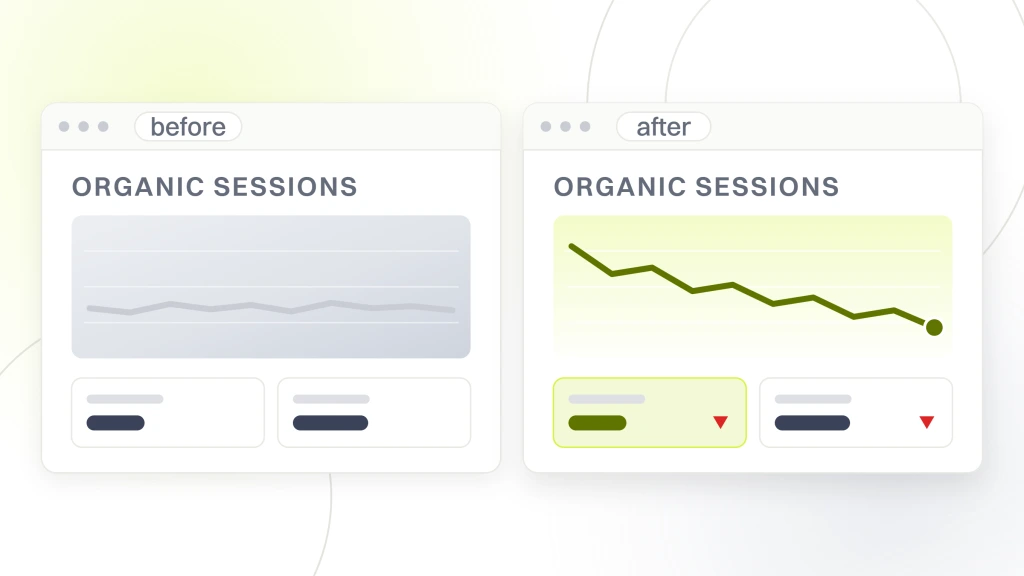
The proof that the split is a real purchase rather than a marketing frame sits on one page. Current Marketing Services publishes what its plan will not do, naming writing new blog posts from scratch, major website redesigns or structural changes, and in-depth keyword research for new product lines, all noted as available as separate projects. Its own scope statement is that the plan focuses on the upkeep and optimization of existing assets.
That is the whole test, and you can run it on anything. A vendor who can name the boundary has one. A vendor who cannot is selling something else with a different word on the invoice. If the recurring retainer ladder is what you are actually shopping for, our breakdown of what SEO pricing packages really run walks that ladder rung by rung, while this page stays on upkeep scope and on what a package refuses to do.
What actually decays on a site when nobody is maintaining it
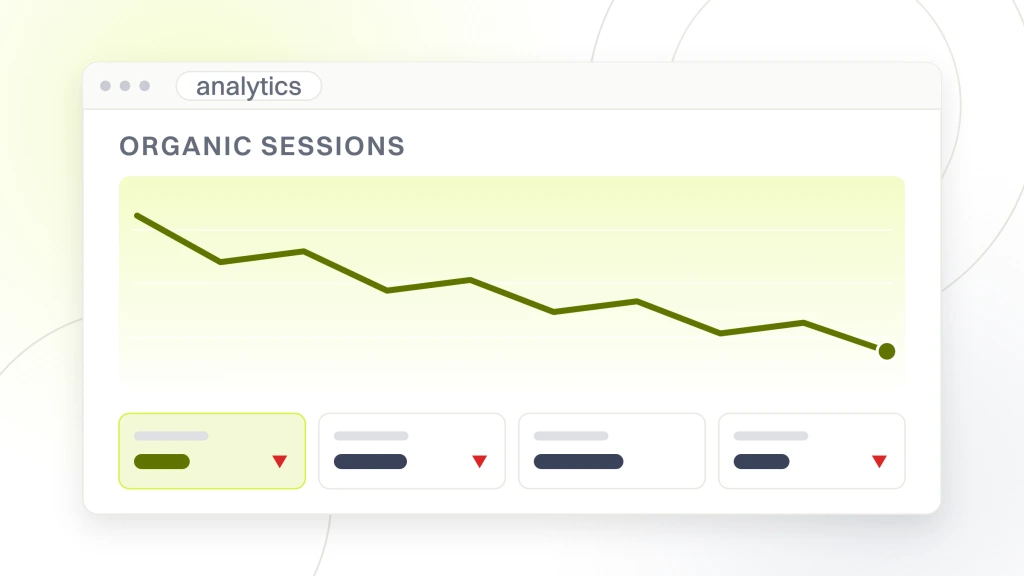
Nothing on a site holds still, and none of it needs a competitor to happen. You can check every mechanism below yourself this afternoon.
- Internal links break when a page is renamed or removed, and everything pointing at it keeps pointing nowhere.
- Redirects get dropped in a redesign, so addresses that used to rank return an error instead of the page that replaced them.
- Crawl and index errors accumulate quietly, and Search Console reports them whether or not anybody reads the email.
- Content goes out of date, so a page that was accurate when written now contradicts your own hours or product range.
- Pages become orphaned when a menu or a category changes and nothing links to them any more.
- Structured data drifts out of sync with the page it describes, which turns a valid markup block into an invalid one.
- Platform and plugin updates change how a page renders, and sometimes change what a crawler can see.
All of that is caused by time and by changes made for other reasons, which is why it keeps happening on sites nobody is attacking. Where the technical half of that list is your whole problem, a dedicated technical SEO audit goes deeper than any upkeep scope will.
What a maintenance month should contain and how often each task runs
There is no published standard for this, so the honest version is to take frequencies from sources that put them in writing and name the source beside every row. Two do. Take the table to whatever SEO management packages you have been sent and ask which of these tasks each one names, and how often.
| Task | How often | Who publishes that frequency |
|---|---|---|
| Monitor industry news | Weekly | Backlinko |
| Monitor site performance | Weekly | Business Builders |
| Track performance metrics | Biweekly | Backlinko |
| Technical checks | Monthly at minimum | Backlinko |
| Keyword research and content updates | Monthly | Business Builders |
| Refresh outdated content | Every six months | Backlinko |
| Full site audit | Quarterly | Business Builders |
| Respond to reviews | Within about a day | Backlinko |
Two things about that table. The two sources do not line up with each other, and that gap is the finding rather than a flaw in the table, because it means any frequency a vendor quotes you is their own choice and belongs in the contract. And review response sits on the list because Backlinko puts it there, not because every plan carries it. What local SEO cost really runs covers what that work is priced at on its own.
Where website maintenance stops and search work starts
Website development packages and web development packages price the build, and web design packages tier by tier covers what a one-off build costs, a different question from what keeps it alive. The question here is narrower. When your website maintenance plan renews, is your search work inside it?
On the sheet you can check, no. WebFX publishes annual website maintenance from $3,600 to $50,000, monthly bands by site type such as a small business website at $35 to $100 a month, and two plans of its own at $350 monthly for WordPress and $550 monthly for Enterprise WordPress and WooCommerce. No SEO service appears in any of them.
eseospace draws the same boundary in words, stating that maintenance and SEO are different services and that only basic SEO check-ups cross into a maintenance plan. The eseospace illustration, with its hedge left intact, is that a small business might start with a plan around $250 a month for 1 hour of support, while a larger company might need a $2,500 a month plan that includes 20 hours. That is eseospace’s own example rather than a market rate, and the word might is theirs.
So on the sheets above the split runs down the invoice. Backups and platform updates sit on one side, and the technical checks and content refreshes that keep existing pages working sit on the other. Find out which invoice yours is on before the renewal date.
What published maintenance tiers cost and what each price names
Below are the four maintenance-labeled sources checked for this page that publish a price at all, and whether that price arrives with a count of anything. If you want to buy an SEO package on the number alone, the third column should stop you. Growth retainer pricing runs on a separate ladder, which what SEO packages really cost walks tier by tier, and it is not the ladder an SEO maintenance package is priced on. Every figure is published by the source named in its own row.
| Source | Published price | Publishes a count | What it excludes or leaves unstated |
|---|---|---|---|
| Current Marketing Services | $250 a month | Yes, one content refresh a month | New posts from scratch, redesigns and structural changes, keyword research for new product lines. No contract term is stated on the page |
| 314 Media | Starter $750, Growth $1,000, Premium $1,500 and up, per month | No | No counted deliverable appears anywhere on the page |
| Business Builders | Standard $300 to $500, Advanced $400 to $900, Premium $4,000 and up, per month | Yes, a keyword cap and a report frequency | Anything past the cap of up to 10, 15 or 25 targeted keywords |
| Search Atlas | Basic $500 to $1,500, Standard $1,500 to $4,000, Premium $4,000 to $10,000 or more, Enterprise from $10,000 and can exceed $25,000, per month | No | No count sits against any of its four bands |
Two of those four publish no count at all, and a third publishes a cap rather than a quantity. Business Builders repays a second read, because its bands overlap, $300 to $500 against $400 to $900, then jump to $4,000 and up for a keyword cap that rises only from 15 to 25. Its cheapest plan reports annually and its dearest quarterly, the opposite of what a small buyer needs. Current Marketing Services is the only one of the four putting a price, a counted unit and an exclusion list on one page.
Why some of the pages selling you a package never use the word
Run this check before you read another proposal. Open each vendor page that ranked for your search, press the find key and type maintenance. Professional SEO packages and custom SEO packages are what four of the ten pages ranking for this term are actually selling, whatever query brought you to them.
Here is what that check returns. Third Marble Marketing ranks eighth and the word does not appear on its packages page at all, and its $499 a month entry package contains no content. SAG IPL ranks tenth and never writes the word either. OuterBox ranks second and uses it once, in a nav link pointing at a separate service, while its own tiers run $2,000, $3,000 and $7,000 and up a month with no published count against any of them. And 314 Media puts maintenance in its page title and then names its middle tier Growth.
That is four of the ten and it takes ninety seconds to verify. It does not make any of them dishonest. It makes the label useless as a filter, which means you have to read the scope instead of the heading. Working out whether a vendor sells what you asked for is most of the job, and how to pick an SEO web company walks through it.
Refreshing a page or rewriting it, where maintenance actually stops
This is the question to put to any on page SEO packages you are quoted, and the answer sits at task level. Updating a page that exists so it is still accurate is upkeep. Writing a page that did not exist is growth.
Current Marketing Services is the only page in the top ten that draws it anywhere. Its plan carries one high-impact content refresh a month, and its exclusion list names writing new blog posts from scratch as something the plan will not do, available as a separate project instead. One refresh in, one new post out. That is a boundary an owner or a developer can hold somebody to.
The reason it reaches your invoice is that the two take different amounts of time and produce different things. A refresh corrects what is wrong on a page that already holds a position. A rewrite produces a page that has to earn a position from zero, on a schedule nobody controls. If your quote says content and gives no count and no boundary, you cannot tell which you are buying, and the vendor can move between them month to month without the invoice changing.
Ask for the boundary in one sentence. How many existing pages get updated, and what happens when an update turns into a rewrite.
Whether a one time SEO package does the job instead
Go Creative frames the choice as a one-off setup against an ongoing service, and that is the right frame. A one time SEO package is the one-off side of it, an audit and a fix round with an end date, and whether it does the job turns on one thing, which is whether anybody on your side will do the next twelve months.
It works when you have a developer on retainer, or an owner who will actually open Search Console. The fix list lands, they work it, the knowledge stays in house and you pay once.
It does not work when nobody will. The list arrives, three items get done, and the other twenty sit in a shared folder while the decay carries on underneath. Three months later you are quoted again for the same work, because the same things broke again for the same reasons.
So decide it by naming the person. Not a team, a person, with a calendar entry against their name. If you can name them, buy the one-off. If you cannot, the one-off is a document you will pay for twice, and a recurring scope with a frequency against every line is the cheaper purchase even when the annual figure is larger.
What a guaranteed SEO package promises and why upkeep cannot be guaranteed
Guaranteed SEO packages promise a position, and nobody selling one controls the system that assigns positions. That is a mechanical point rather than a moral one. The ranking systems change on their own schedule, your competitors change theirs, and neither is in a vendor’s gift to promise away.
There is a guarantee worth having and it has a different shape. A service level guarantee names response time, task completion and what happens when the vendor misses. Those are things a vendor does control, so they can be written into a contract and enforced. A position cannot be, at any price.
The related promise to refuse is volume with no names behind it. SAG IPL publishes its Basic package at $499 a month for up to 10 keywords and up to 5 pages optimized, which is under $100 a page before a single backlink is counted. The same page promises 100 backlinks a month at that price without naming one site any of them would come from. Note also that up to 10 keywords is a cap rather than a floor, so anything outside those ten is not in the plan.
Where those promises come from is worth understanding before you sign, and how search engine optimization companies actually differ sets out the shapes they come in.
What an ecommerce catalog needs maintained that a service site does not
A catalog generates upkeep work a service site never does, and that is what you are checking for when you read ecommerce website SEO packages. A site with fourteen pages decays slowly. A catalog with fourteen thousand URLs decays every day, because the catalog changes every day.
- Products go out of stock, and the URL has to stay, redirect or report itself gone, and each of the three has a different consequence.
- Variants generate near-identical pages that compete with each other unless something is set up to stop them.
- Faceted navigation multiplies URLs, so a filter combination nobody will ever search can still be crawled thousands of times.
- Feeds and structured data drift away from what the page says, which leaves price and availability markup stale.
- Seasonal categories get emptied and left live, which leaves an empty page sitting in a position it used to earn.
WebFX prices the difference openly, listing an ecommerce website at $1,500 to $2,500 a month and a custom ecommerce website at $2,000 to $5,000 a month in its website maintenance bands, against $35 to $100 a month for a small business website. Those are WebFX maintenance bands and they still contain no SEO, so a catalog owner is carrying two budgets rather than one.
When an enterprise SEO package is the shape you need
An enterprise SEO package is about the scale of the surface, not the size of the company. If your site is built from a handful of templates and tens of thousands of URLs, one template change edits thousands of pages at once, in either direction.
Three mechanisms drive it. Redirect debt accumulates across every migration and never gets paid down. Crawl budget becomes a real constraint, because the crawler can stop before it reaches the part of the site that earns money. And deploy rights matter more than advice, because a fix waiting for the next release train is not a fix this quarter.
The published bands at this end are wide and carry nothing behind them. Search Atlas puts its enterprise maintenance plans at a start of $10,000 monthly that can exceed $25,000, with no count against the band. eseospace puts enterprise packages and custom retainers at $10,000 to $25,000 and up per month, and the counted examples elsewhere on that page are attached to no band at all. Both are the source’s own numbers and neither tells you what arrives.
So the exclusion test matters more at this end, not less. Ask which templates are in scope and which are not, and take the answer as a list.
What Google publishes for free and what you are paying a person for
Search for google seo packages and the top result is Google’s own SEO Starter Guide. The most visible answer to a package-buying query is the search engine explaining how to do the work yourself, at no cost, and you can verify that in one search.
A real share of what sits inside an upkeep scope is available to you free. Search Console reports crawl and index errors, emails you when new ones appear, and tells you which pages are indexed and which are not. The guidance for fixing most of what it reports is published and costs nothing to read.
What you are paying a person for is three things that are not free. Time, because somebody has to look on a schedule during the months when nothing is obviously broken. Judgment, because a report full of findings is not a plan, and deciding which of them matter on your site is the actual skill. And hands, because most findings need a change deployed to a live site by somebody allowed to deploy it.
If you have all three, run it yourself and keep the money. If you have two of the three, buy the one you are missing rather than a package that bills you for all three.
What we would do first with a maintenance quote on your desk
Four tests, in this order, and every one of them runs against any vendor’s quote including ours.
- Search the document for the word not. If there is no exclusion list, send it back and ask for one before you discuss price. A package that names what it will not do has been scoped. One that names only inclusions has been priced.
- Find one counted unit. How many existing pages get updated in a month, how many hours, how many issues closed. One number is enough, and a quote with none cannot be compared to anything.
- Ask for a frequency against every task, and who publishes it. If the answer is their own standard, that is fine, but get it into the contract, because it is not a standard anywhere else.
- Check ownership before you check price, and treat a wrong answer as disqualifying rather than negotiable.
Our judgment is that the exclusion list settles more quotes than the price does. When two quotes differ by a factor of four, the exclusion list tells you whether they describe the same work, on one page rather than in month four.
Take those four tests to whoever you are already talking to, starting with the one about the word not. If both quotes come back carrying an exclusion list, you can settle this in an afternoon. If only one of them does, you have your answer without needing the afternoon.
If you would rather start from what your site is actually doing before you grade anybody’s scope, run a free website audit and take the findings into both conversations.