
Small business web design and development is the specific version of a web project where the budget is finite, the owner is the one making decisions, and every page has to book real work inside 90 days of launch. A national brand can spend $180,000 on a rebrand and quiz results in a year. You cannot. You need the site up, indexed, and converting inside a quarter, on a budget that leaves room for ad spend and payroll.
This guide walks the moving pieces that decide whether an SMB web build pays back inside a quarter or drains cash for six months. Real pricing tiers by scope. How to pick a web designer and developer for small businesses. The integration checklist that keeps lead flow measurable end to end. Startup versus small-business scope trade-offs. And the payback math that turns a $12,000 build into a $180,000 per year lead engine you own outright.
Small business web design and development pricing tiers
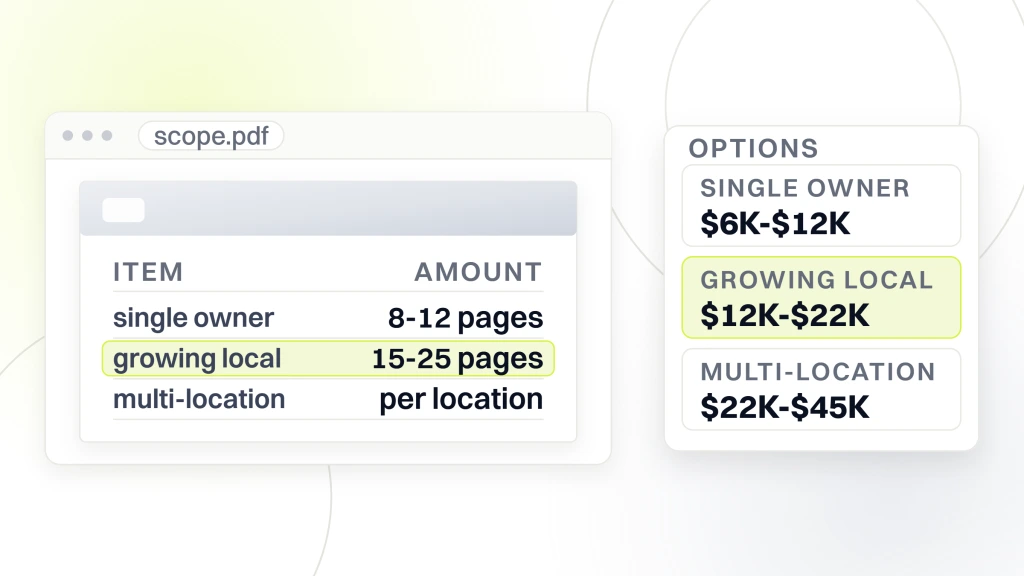
SMB web design and development pricing lands in three real tiers. A single-owner service site with 8 to 12 pages, one contact form, brand tokens, and analytics runs $6,000 to $12,000. A growing local business site with 15 to 25 pages, blog, booking flow, CRM sync, and location schema runs $12,000 to $22,000. A multi-location small business site with per-location pages, real review pull, and territory schema runs $22,000 to $45,000. Those are US or Western European agency prices.
Freelancers land 30 to 50 percent below on sticker but often have gaps in the operational scope (CRM sync, call tracking, payment gateway) that show up two months post-launch. Overseas agencies land 40 to 60 percent below sticker but often add 20 to 40 percent in project-management overhead and revision cycles. The right pick depends on how much time the owner can spend project-managing the build. Most small business owners underestimate that number by half.
Where the build money actually goes
On a $15,000 build, roughly 15 percent goes to discovery and content architecture. 25 percent goes to design (brand tokens, page templates, prototypes). 30 percent goes to front-end build. 10 percent goes to CMS work and admin polish. 10 percent goes to integrations. 5 percent goes to QA and launch. 5 percent goes to training and handoff. Integrations always eat more than founders expect on the first build. Everybody underestimates how much work it takes to make Stripe, HubSpot, and CallRail talk to each other cleanly.
What actually changes between the $6K tier and the $22K tier
Most SMB owners cannot tell what an extra $10,000 of budget buys, so the choice defaults to the cheapest quote. Here is the honest breakdown. A $6,000 to $12,000 project buys a clean brochure site with one contact form, no CRM sync, and analytics that stops at pageviews. A $12,000 to $22,000 project adds a booking flow tied to a real calendar, CRM sync with UTM preservation, LocalBusiness schema on every service page, and a monthly SEO retainer built into scope. A $22,000 to $45,000 project adds per-location pages, territory schema, a review-pull widget, and call tracking on every phone number. The gap is not polish. The gap is measurable lead flow.
Hidden costs beyond the build number
Hosting runs $25 to $200 per month. Plugin and license renewals run $300 to $1,200 per year. Payment gateway fees run 2.6 to 3.5 percent per transaction. Call tracking runs $45 to $150 per month. Email platform runs $30 to $200 per month. CRM runs $0 to $100 per user per month depending on plan. Site monitoring runs $20 to $80 per month. First-year operating cost for a small business site lands at $2,500 to $6,000 on top of the initial build. Budget the whole first year up front, not just the build number.
Web design and development for startups vs. small businesses
Web design and development for startups optimizes for speed to first paying customer. Simple marketing site plus a landing page plus a signup flow. Launch in three to six weeks. The stack rebuilds every 12 to 18 months as the product changes. Web design and development for start-ups skips the blog, skips the deep SEO investment, and skips the retainer. The product roadmap moves too fast for the site to catch up.
Small business web development optimizes for stable local demand generation over three to five years. Service pages, SEO investment, retainer for ongoing work. The site holds its shape for four to seven years with quarterly updates. Founders who scope a startup approach for a small business get a site that dies in a year. Founders who scope a small business approach for a startup get a site that lands too late to matter. Pick the mode that matches the revenue model. See web.dev on Core Web Vitals for the load-speed metrics both modes still need to hit.
Startup scope that launches fast
Marketing homepage, one product page, one signup flow, one legal footer, and a blog you turn on later. Total 6 to 10 pages. Frameworks like Astro or Next.js paired with a headless CMS keep the front-end fast and the marketing team unblocked once the initial build goes live. Budget $8,000 to $18,000 for the build and expect a rebuild once product-market fit shifts. The startup site is a growth tool, not a portfolio asset.
Small business scope that compounds
Full service page library. Local SEO. Blog with 1 to 2 posts per month. Booking flow tied to the front-desk calendar. CRM sync so leads never sit in an inbox. Real review pull from Google and Trustpilot. Quarterly design refreshes on the top three landing pages. The small business site compounds by year three, once the SEO ground it holds is worth more than the annual retainer several times over.
Integrations for professional SMB web design and development
Professional web design and development for small businesses treats integrations as first-class scope, not as afterthought. Analytics, CRM, email, booking, payment, call tracking, chat. Every business needs some subset. Every integration adds 4 to 15 engineering hours during the build. Founders who scope integrations before design get a site where lead flow tracks end-to-end. Founders who bolt integrations on after launch pay 30 to 50 percent more per hour and get flakier reporting downstream.
- Analytics. GA4 with server-side tagging plus enhanced conversions on every form.
- CRM. HubSpot Free, Pipedrive, Zoho, or Salesforce Starter. Pick before form fields get designed.
- Email. Mailchimp, ActiveCampaign, or Klaviyo for commerce.
- Booking. Calendly, Acuity, Amelia, or a native WordPress plugin.
- Payment. Stripe for most businesses, Square when a physical POS is installed.
- Call tracking. CallRail or WhatConverts on every phone number.
- Chat. Tidio, Intercom, or a lightweight WordPress plugin when sales staff replies inside business hours.
GA4 plus CRM the right way
GA4 with server-side tagging through Google Tag Manager. Enhanced conversions on every form. UTM parameter preservation from ad landing pages through to the CRM record. Form submissions fire a webhook that writes the lead to CRM. Sales gets a Slack ping when a high-intent form fills out. This one loop grows closed-work numbers 20 to 40 percent over the first 90 days. Leads no longer sit unread in a shared inbox. See Google Analytics support on server-side tagging for the implementation guide.
Payment flow that stops losing deposits
Stripe checkout embedded on the deposit page or booking flow. Receipt email fires to the customer and to the CRM contact. Payment intent metadata carries the CRM contact ID so the sales team can see paid deposits inside the CRM dashboard. Failed payments trigger a follow-up email and a task in the sales workflow. Skip any one of these steps and 5 to 15 percent of paying customers slip through unnoticed. The payment flow is where the site earns its keep, not the homepage.
Local SEO baked into small business web design and development
An SMB web build for a local operator competes inside a five to fifteen mile service radius. Local SEO is the biggest single lever on the map pack. LocalBusiness schema on every page. NAP consistency between the site, Google Business Profile, and every citation directory. Location-specific service pages. Real review pull from Google or Trustpilot. Embedded map on the contact page. Real answers to “near me” queries in H1 and meta descriptions.
Every one of these signals adds a fraction of a rank position. Put together, they add up to the map-pack visibility your competition pays for with $60 to $120 per click on Google Ads. A proper build bakes these signals in from day one so you inherit the ranking, not the ad bill. See Google Search Central on LocalBusiness structured data for the schema properties every service-area page needs.
NAP consistency across the citation graph
The business name, address, and phone number appear identically on the site, on Google Business Profile, on Yelp, on Angi, and on the top 15 citation directories in your service area. Any variation (Suite 200 vs Ste 200, LLC vs LLC., a different phone number on Google than on the site) confuses Google’s local ranking model and drops you two to four positions on the map pack. Fixing NAP across the citation graph is a 4 to 8 hour job. Skipping it costs 6 months of ranking.
Review velocity that keeps the ranking
Google rewards steady review velocity more than total review count. A business with 40 total reviews and 3 new ones per month outranks a business with 200 total reviews and none in the last 6 months. A well-scoped build bakes review-request automation into the payment flow so every paying customer gets a review link 24 hours after service. This one automation adds 5 to 15 new reviews per month and holds the ranking against competitors who bought reviews and stopped.
A real SMB web design case study
Passion Built, a Sydney bathroom and home-renovation specialist, came in with two underperforming websites, six ranking keywords, and a conversion rate under 1 percent. We rebuilt the stack as one SEO-driven site with a custom WordPress build, service-area pages, a booking flow tied to the trades team, and local schema. Inside 12 months keyword rankings grew from 6 to over 300, monthly visitors climbed past 800, and the site generated more than $60,000 in booked renovation work.
The pattern generalizes to SMB web work in every service vertical. Real work recovers the build cost inside 8 to 14 months and then compounds. Passion Built’s stack still runs on the same custom theme two years later, and the SEO ground the site holds is worth 20 to 40 times the annual retainer cost. That is the actual payback of a small business website partner that scopes for lead flow, not for portfolio screenshots.
Payback math on a small business rebuild
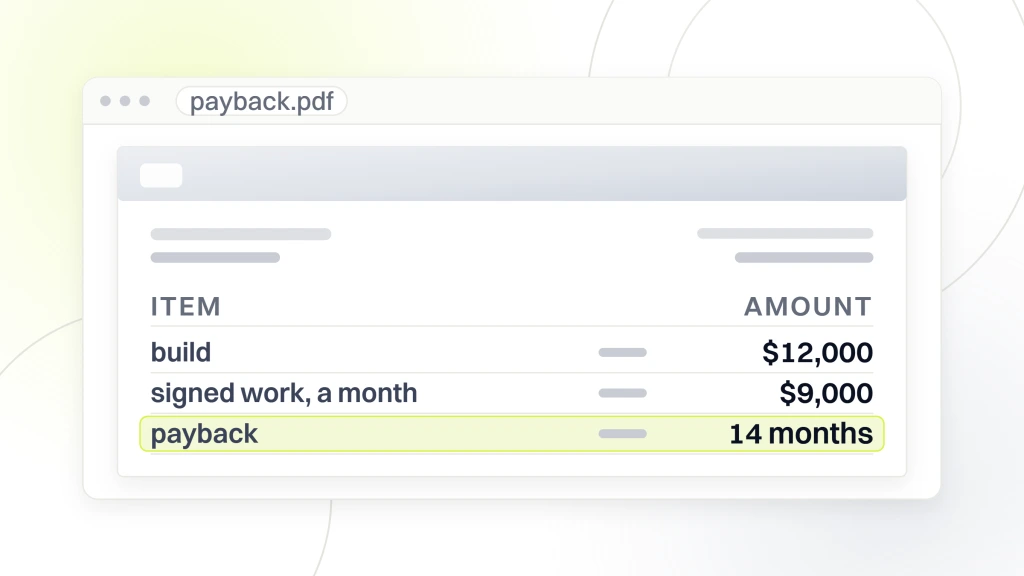
Take current monthly lead volume from the site. Multiply by close rate. Multiply by average deal size. That is monthly site revenue. A rebuild that raises conversion rate from 1.2 percent to 2.5 percent doubles that number. A $12,000 build that adds $9,000 per month in signed work pays back in 14 months and keeps compounding for three to five years. Every founder who runs this math before signing signs faster than the founder who does not.
Ownership as compounding value
Own the code. Own the CMS. Own the analytics. Own the domain. Move hosts, change agencies, or bring the work in-house any time you want. Vendor lock-in is where template platforms make real revenue, on the customers who never get around to leaving. A custom build keeps that control on your side of the table for the full life of the business, not just the first two years of the engagement.
Process inside an SMB web design engagement
Kickoff on week one. Discovery interviews with the owner, the sales lead, and the front-desk person. Analytics audit on the current site. Competitor scan across the top 5 local competitors. Sitemap by week two. Wireframes for top 8 templates by week three. Visual design by week five. Front-end build runs weeks five through nine in parallel with copywriting. Integrations wire in weeks seven through nine. QA runs week ten. Launch on week eleven or twelve depending on content readiness.
Weekly status calls on Tuesdays. Loom updates any day work is pushed live. Shared workspace (Notion, ClickUp, or Trello) with every asset, decision log, and open question tracked. Copy managed in a shared Google Doc with clear ownership. Every stalled decision has a name attached. Every open question has a deadline. The best web build partner you have ever worked with is the one that made decisions boring and predictable, not the one that dropped the flashiest homepage on you at week twelve.
Weekly cadence that keeps schedule
Tuesday call at 30 minutes max. Loom updates any day work is pushed live. Shared workspace with the current sprint, backlog, and blocked items. Every meeting ends with named action items and dates. Any decision that stalls past 48 hours gets escalated. Any dependency that misses two calls gets rescoped. Predictable cadence beats flashy meetings every time. Projects that land on time run boring status calls for twelve straight weeks.
Handoff and training the owner keeps
Admin walkthrough with the marketing lead. Editor training for whoever will update content. A documented CMS guide the team can reference six months later. A redirect map from every old URL to the new one. A 45-minute training session with the front-desk person. Written FAQ for the top 15 questions clients ask post-launch. Support retainer with response times in writing. Skip any one of these and a working site turns into a helpdesk ticket queue inside a month.
Post-launch retainer for a small business website
Post-launch retainer covers plugin updates through staging, monthly performance monitoring, security scans, quarterly SEO refreshes on marketing pages, monthly conversion-rate testing on the top three landing pages, and incident response for hosting or payment issues. The retainer runs 15 to 25 percent of the initial build cost per year. Skip it and a working site turns into a stale asset inside 12 months. Payment gateways update APIs. WordPress rolls out breaking changes. Browsers release new bugs. The retainer preserves the entire build investment.
Retainer scope beats project-based rework every time. A $400 to $1,200 per month retainer costs less than a single emergency “the site is down” call once per year. The retainer team knows the codebase, which saves 40 to 60 percent of the diagnostic time on any incident. Founders who scope the retainer at build time land at a fair price. Founders who shop for a retainer after launch pay a premium, since every new retainer team has to start with a codebase audit before touching anything.
Maintenance scope that catches bugs
Weekly plugin updates on staging with a smoke-test checklist before production push. Monthly security scans with an actionable report. Quarterly Core Web Vitals audits with fixes for anything that dropped below 90. Monthly conversion-rate testing on the top three landing pages. Uptime monitoring with a 5-minute alert threshold. Incident response inside 4 business hours. Real maintenance keeps the site the way it launched. Skip any two of these and page speed drops, forms silently break, and Google punishes the site on the next core update. The owner is the first to hear about it, from a customer, and by then the fix takes 5 to 10 times longer.
Conversion testing that pays for itself
Monthly A/B tests on the top three landing pages. Headline tests. CTA button copy tests. Form-field count tests. Trust-signal placement tests. Every winning test compounds into every future ad campaign. The average conversion testing program pays for the entire retainer inside three months. Founders who skip conversion testing are the same founders who tell you a year later that their custom build never really performed. It performed. Nobody tested it.
Where to start on small business web design and development
Start with the revenue map. Where does the site sit in the acquisition funnel today. What percentage of monthly leads come through the site. What percentage should come through the site 18 months out. That answer decides the scope tier, the stack, the integrations, and the timeline. A build that starts with the revenue map lands on the right budget. Every project that starts with a Pinterest mood board ends 40 percent over budget.
Ready to scope a real small business website build for your local market? See our web design services for small business page for the fixed-price entry point. For a national brand scope, our web design and development services covers the full stack and stack options. Founders who need a custom development track can start on our custom web development services. For post-launch scope, see our monthly website maintenance packages. For the fixed-price small business bundle, our small business website packages page maps the whole scope, and our custom web design and development services post covers the wider stack conversation.
If you want a compact framework before you talk to vendors, read our short guide on how to choose web design services for small business owners.