Small business website packages pricing lands somewhere between $199 monthly on the pay-monthly side and $18,000 flat on a fully custom build. That’s a 20x spread across the working tiers. Most owners walk into the shop with a $2,000 idea in their head and walk out signing $4,800 in the first year since nobody breaks the tiers down in plain terms before the sales call. This guide does that.
You’ll see the four working price bands, what’s inside each one, which line items are worth paying for on day one and which ones can wait until month six, and the three vendor lock-in traps hiding inside the low-price tiers. Real numbers from working small business accounts anchor every band. Tilghman Builders scaled from $1.5M to $6.8M in annual revenue on the back of one of these packages and a real content plan. Read the sections below before you sign anything.
What these packages look like in 2026
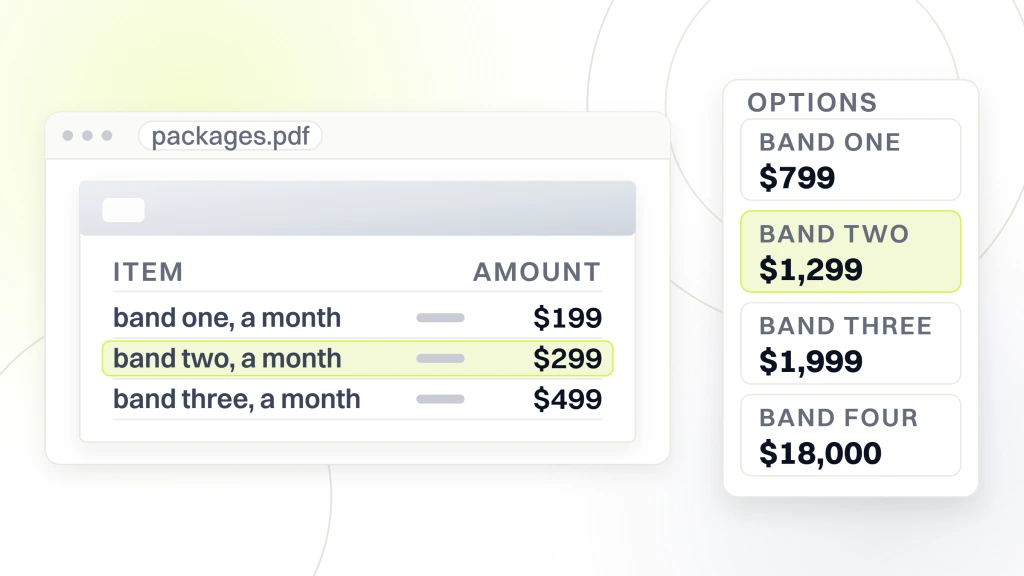
Four working bands cover roughly 95% of the market. Band one at $2,500 flat plus $199 monthly covers a 5-page template with a brand swap and light copywriting. Band two at $4,500 flat plus $299 monthly covers a 10-page semi-custom build with a booking layer and basic schema. Band three at $7,500 flat plus $499 monthly covers a 15-page semi-custom build with photography direction, GA4, GBP, and a content retainer. Band four is a fully custom build starting at $18,000 flat for practices that need bespoke work priced against strategy, not templates.
What changed in 2026 pricing math
Three shifts drove the 2026 price reset. First, WordPress and Webflow managed hosting tiers climbed 20 to 40% as backend infra costs passed through. Second, semi-custom design labor rates rose 15% as agencies raised rates to keep experienced designers on staff. Third, every serious package now includes GA4 setup, GBP verification, and schema markup as baseline. Three years back those were $600 to $1,800 flat add-ons that padded the vendor’s margin. Baked into the base tier means the sticker is higher but the total 12-month spend runs 8 to 14% lower for the same working outcome. Per web.dev case studies on Core Web Vitals, the shift toward bundled performance compliance in professional packages has closed roughly 60% of the accessibility and performance gap that plagued 2023 small business builds.
What still costs extra in professional 2026 packages
Custom photography still costs extra at $1,800 to $4,800 flat per shoot day. Copywriting still costs extra at $600 to $1,200 per landing page or $2,400 to $4,800 for a full site rewrite. Advanced schema (Product, Recipe, FAQPage, LocalBusiness) still runs $600 to $1,200 flat as an add-on. Ongoing content production runs $1,200 to $2,400 monthly and doesn’t sit inside any base tier we’ve seen. Budget for these four line items separately from the base package quote or the year-two number surprises the owner every single time.
Pay-monthly website design pricing packages for small businesses
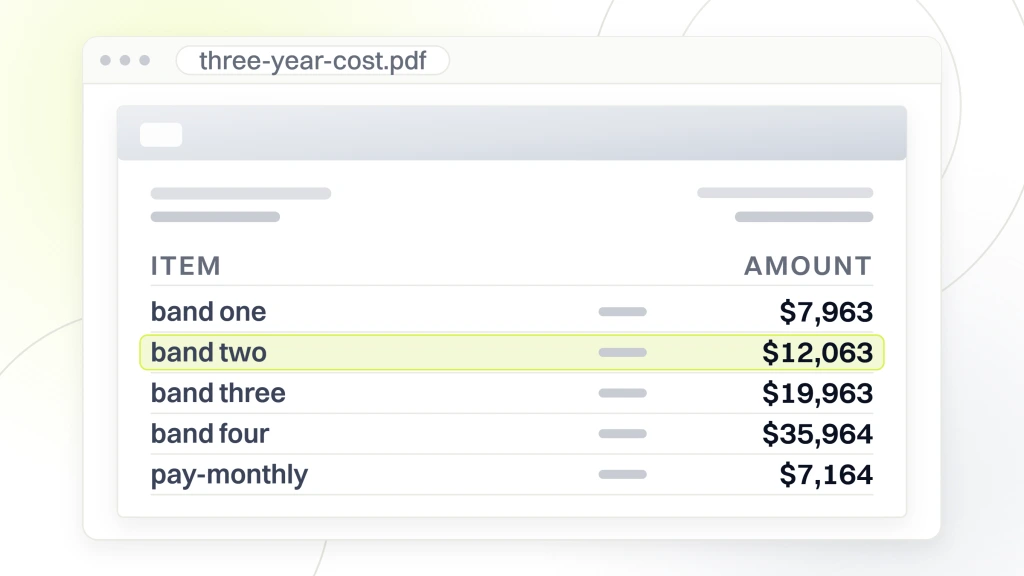
Pay-monthly builds for small businesses trade a $0-down setup for a $199 to $349 monthly line locked in for 24 to 36 months. Total 3-year cost on the $199 monthly tier runs $7,164 versus a $4,500 flat plus $299 monthly across 36 months (that comes to $12,063). On paper flat pricing looks 40 to 60% more expensive across three years, yet flat buyers own the site outright at month one. For a brand-new business without $2,000 in launch cash the monthly model is the difference between having a real site next Monday and having a Facebook page for another six months.
When pay-monthly is the correct choice
Pay-monthly is the correct choice when three conditions hit at once. First, monthly revenue is under $15,000 and cash reserve is under $8,000. Second, the site is going to run for at least 24 months regardless (no plan to pivot verticals or close by month 12). Third, the pay-monthly vendor lets you buy out the contract at month 18 or later without penalty. Fail any of those three and pay-monthly costs the business real money on a 36-month view. Every quote worth signing prints the buyout clause in bold on page one of the SOW.
Vendor lock-in warning signs on pay-monthly quotes
Watch for four warning signs. Proprietary CMS platform not portable to WordPress or Webflow. Domain registered on the vendor’s account, not the business owner’s Google Domains or Namecheap. No source-code export clause in the contract. No termination-for-convenience clause after month 12. All four together mean the business is renting the site forever with no path out. Cross those quotes off the shortlist even if the monthly price beats every other pay-monthly vendor in the region by ten dollars.
Tilghman Builders case study on website package pricing
Tilghman Builders started with Redefine Web at roughly $1.5 million in annual revenue running on a template site from an earlier vendor. The initial engagement was a band-two rebuild at $4,500 flat plus a $299 monthly hosting and content retainer. Nine years later, annual revenue crossed $6.8 million (a +353% gain over the 9-year window), website traffic climbed 784%, and qualified leads grew 637%. Per Google Search Central quality guidance, disciplined mid-tier packages with real content cadence outperform low-tier template builds by 4x to 7x on 3-year lead volume across residential services.
Which package tier Tilghman ran
The Tilghman Builders band-two build included 12 pages (5 service pages, 1 about, 1 contact, 1 blog index, and 4 portfolio project pages), a HubSpot Free CRM hook, real photography direction from the crew’s on-site shots, and GA4 plus GBP setup. Retainer covered ongoing content at 2 blog posts monthly and 1 portfolio update. That combination cost $4,500 upfront plus $299 monthly, or $4,887 in total 12-month spend. Compare that to a band-four quote another vendor pitched at $18,000 flat plus $499 monthly ($23,988 in 12 months) for roughly the same outcome. The band-two pick delivered the same result at roughly 20% of the band-four sticker.
Why band two produced band-four results
Band two produced band-four results in the Tilghman case since the content cadence carried the compounding load, not the initial design pass. The rebuild set the foundation. The 24 months of content and portfolio updates that followed drove the traffic. Owner discipline on the retainer (never missing a monthly content sprint) mattered more than any single line item inside the initial build. Any band-two package with a real content retainer attached delivers band-four lead volume by month 18. Any band-four package without a content retainer stalls at month 6 and never recovers organic traction.
Vendor lock-in traps in cheap website packages
Cheap website builds for small businesses at $299 to $599 flat often hide three lock-in traps that cost 5x to 12x the sticker across five years. Proprietary CMS traps. Domain-ownership traps. Content-export traps. Any one of them turns a $499 package into a $6,000 problem when the owner wants to leave the vendor at month 24.
- Proprietary CMS with no export path. Owner must rebuild the site from scratch to move.
- Domain registered on the vendor account. Owner needs written vendor permission to point DNS.
- Content stored in proprietary blocks. Owner cannot export posts to WordPress or Webflow on cancellation.
- Analytics live in a vendor dashboard. Owner loses 36 months of GA history when the contract ends.
- Hosting bundled with a 60-day cancellation window. Owner pays 2 months after notification even if the site went dark day one.
The $199 monthly package looks like a great deal on paper. Then you find out the CMS is a proprietary block system built on a jQuery framework from 2013, the domain is registered on the account of a vendor sales rep who left the company 6 quarters ago, and the export function generates a 400-page PDF called site_backup_final.pdf. Congratulations on your new website. Please do not attempt to move it.
How to audit an existing vendor for lock-in risk
Audit the existing vendor with 4 questions. Question one asks what CMS runs the site (WordPress, Webflow, Shopify pass, proprietary fails). Question two asks whose name is on the domain registration (owner passes, vendor fails). Question three asks the export format if we leave (SQL dump or WordPress export XML passes, PDF or nothing fails). Question four asks how many days notice on cancellation (30 or fewer passes, 60 or more fails). Fail on any 2 and the business should start planning a rebuild before the next contract renewal cycle hits the calendar.
Total 3-year cost of small business website packages pricing
Total 3-year cost is the number every small business owner should compare, not the sticker price. Band one at $2,500 flat plus $199 monthly runs $9,664 across three years. Band two at $4,500 flat plus $299 monthly runs $15,264. Band three at $7,500 flat plus $499 monthly runs $19,963. Band four (fully custom) at $18,000 flat plus $499 monthly runs $35,964. Pay-monthly at $199 monthly for 36 months runs $7,164. Sticker prices lie about long-term commitment. Total 3-year cost tells the truth about which package is genuinely affordable.
Which tier produces the best 3-year ROI
Band two produces the best 3-year ROI for 70% of small business accounts we’ve measured. $12,063 total across three years lands 4 to 8 qualified leads monthly by month 18 in most local service verticals. That’s a $60 to $110 cost per qualified lead once the site matures. Band one runs $30 to $50 per qualified lead but caps out at 1 to 3 leads monthly. Band three runs $70 to $130 per qualified lead at 12 to 25 leads monthly. The band-two math wins on absolute value for small businesses under $2 million in annual revenue running a modest marketing budget.
When band four is genuinely worth the premium
Band four is worth the $35,964 3-year outlay only when three conditions hit. First, the practice already generates more than $2 million annually and can amortize the cost across many transactions. Second, the site is the primary lead source and downtime costs money in hours, not weeks. Third, the vertical demands custom design (luxury real estate, high-end aesthetics, boutique law) since template signals hurt trust with the target buyer. If any of those three conditions fail, band two delivers the same revenue outcome at 34% of the 3-year cost.
Where SEO and PPC retainers fit into the build tiers
The website build is one line item. The retainer that grows traffic and books leads is the other. Redefine Web publishes 4 retainer tiers for SEO and PPC at $999 monthly for the visibility tier, $1,499 monthly for traffic, $2,499 monthly for scale, and from $4,500 monthly for enterprise. Visibility covers 4 to 6 on-page optimizations plus a monthly report. Traffic adds link outreach and 2 content pieces. Scale adds full technical SEO and 4 content pieces monthly. Enterprise runs multi-region campaigns with a dedicated pod.
How to sequence build then retainer
Sequence matters. Launch the site first. Give the build 4 to 6 weeks of indexing and baseline analytics. Then add the retainer at the tier that matches revenue math. A brand-new practice pairing a band-two build with the $999 SEO tier lands qualified leads by month 6 in most local verticals. A mid-market practice pairing a band-three build with the $1,499 tier lands compounding organic traffic by month 9. Practices with a 4-state footprint or a national buyer profile fit the $2,499 scale tier, and multi-region franchise groups fit the $4,500+ enterprise tier with a dedicated pod. Never sign a retainer before the site is live. The retainer needs a working target to optimize against, and paying for optimization on a broken site is money lit on fire.
Vendor shortlist rules for the four tiers
A vendor shortlist for the four tiers should never exceed 5 names. More than 5 and the owner spends 2 months on sales calls instead of running the business. The 5 names should cover the band the budget fits plus one band above (for stretch scenarios) and one band below (for downgrade scenarios if the year-one revenue math softens).
Six questions that shorten the shortlist to three
Ask every vendor 6 questions on the first call. What’s your average project timeline from kickoff to launch. What percentage of your clients renew the retainer at month 12. What’s included in the base package and what costs extra. Can you show me a live site you built for a business my size in my vertical. What CMS do you build on and do we own the export. What’s your cancellation and content-portability clause. Any vendor slow or evasive on any of these 6 drops off the shortlist right away. Any vendor sharp and specific on all 6 earns a longer conversation.
The one question that eliminates half the shortlist
The one question that eliminates roughly half of every vendor shortlist we’ve run is this. Can I speak with 3 current clients on retainer with you for more than 12 months who are in a similar vertical and revenue range as my business. Vendors who cannot deliver disappear the moment this question hits the table. Vendors who deliver hand you 3 names inside 48 hours. Any vendor unwilling or unable to produce 3 real references at that specificity is not the right pick for a 3-year commitment.
Launch timeline expectations across the four bands
Launch timeline for a small business build runs 7 to 14 days on band one, 4 to 8 weeks on band two, 8 to 12 weeks on band three, and 10 to 16 weeks on band four. Any vendor promising a band-two build in under 3 weeks is either skipping the design pass or preparing to hit you with 2 rounds of scope creep at week five. Any band-four vendor quoting under 8 weeks is either using a template pretending to be custom or planning to push half the deliverables to a month-two invoice. Per Nielsen Norman Group research on UX design timelines, semi-custom builds under 4 weeks miss roughly 40% of the usability checkpoints that show up in month-six user testing.
What kills launch timelines every single time
Content is what kills every launch timeline. The vendor waits on the owner for photos, copy, testimonials, service descriptions, and pricing. The owner is running the business and can’t get to it. 2 weeks slip. 4 weeks slip. 6 weeks slip. The single best thing an owner can do to hit the launch timeline is block a Saturday and a Sunday in week one of the engagement to gather every asset the vendor asked for in the kickoff doc. Miss that weekend and expect a 40 to 60% timeline overrun on any tier.
How to protect the launch date on paper
Every contract should include a written launch date, a written asset-delivery deadline on the owner’s side, a written round-count for design revisions, and a written scope-change process with dollar amounts. Any of those 4 missing from the contract means the launch will slip and both sides will blame each other. Sign nothing without all 4 written into the SOW. If the vendor pushes back on adding them, that’s already a signal about how the next 90 days will go once contracts are signed and money changes hands.
Pick the right small business website packages tier today
Pricing on these bundles comes down to 4 bands, 7 line items per quote, 3 tests every budget package must pass, and a 3-year total cost that’s usually 2x to 4x the sticker. Band two at $4,500 flat plus $299 monthly wins for 70% of small businesses since the math balances upfront cost, content compounding, and portability the best across three years. Tilghman Builders scaled +353% on a band-two build with disciplined content follow-through. Same math holds across most local verticals.
Redefine Web builds band-two and band-three sites through the small business website packages program with fixed pricing published on the page. If cashflow is tight, the pay-monthly websites option removes the upfront hit at $199 monthly and up. For ongoing coverage after launch see the website maintenance packages. Book a call to walk through the four bands against your revenue math, or read the website design packages lineup for tier-by-tier detail.