Small business website packages are fixed-scope, fixed-price builds that bundle design, development, hosting, and lead capture into a single quote so a service business can launch a real site in 3 to 8 weeks without an hourly surprise. A proper tier maps to the number of pages, service areas, and integrations the business actually needs. Get the tier right and the site pays back inside 6 months. Get it wrong and the rebuild bill lands 18 months later.
I have priced, scoped, and delivered small business websites for 12 years, from a 1-truck plumber in Cleveland to a 40-employee builder in Pennsylvania. Most owners ask what the website costs. Most service sites convert only a small share of the homeowners who land on them from organic search, so getting the build right pays back fast. The sharper question is what happens after a homeowner searches your service at 9 p.m. on a phone. This guide walks through the packages we quote at Redefine Web, the deliverables inside each tier, the case study numbers from Tilghman Builders and Passion Built, and the launch plan the winning service businesses follow. Pull your last 12 months of lead source data before you read on. The numbers below only mean something next to your real ones.
What small business website packages actually include
A proper small business website package covers 6 build blocks. A mobile-first responsive design. A 6 to 20 page sitemap with real service pages, not a single homepage. Local SEO groundwork including title tags, schema, and a Google Business Profile setup. Lead capture with a phone-visible header, a form on every service page, and a booking or quote flow. Fast managed hosting with a CDN. A launch checklist that covers page speed, forms, and analytics before the DNS cutover. Any package missing 2 of the 6 will underperform inside the first quarter.
Website design for a service business is not brochureware. It is a working sales tool that runs 24 hours a day. A homeowner at 11 p.m. searches “emergency plumber near me,” scrolls 3 map pack results, taps yours, reads a 2-line problem statement, clicks the sticky call button, and leaves a voicemail. That flow is what a good build produces. A bad build leaves the same homeowner on your competitor’s site. The gap between the two costs a mid-size service business 20 to 60 booked jobs a month.
- Mobile-first responsive layout. Roughly 70% of service business traffic arrives on a phone. The mobile design decides the outcome.
- 6 to 20 real pages. Home, About, 3 to 12 service pages, Service Area pages, Contact, Blog. One-pagers do not rank for local terms.
- Local SEO baseline. Local Business schema, title tags, alt text, Google Business Profile linked, NAP consistent across the site and citations.
- Lead capture patterns. Sticky call button, quote form on every service page, and a text-to-book flow for after-hours.
- Managed hosting. Sub-2-second load time on 4G, daily backups, malware scans, and a CDN. Never a $4 shared plan.
- Analytics stack. Google Analytics 4, Search Console, and CallRail so every lead source is trackable to a service page.
Template vs. custom build inside a small business package
Most solo service businesses buy a template-based build at the Starter tier. Cost sits at $2,500 to $4,500, install takes 3 to 5 weeks, and the site launches on a proven WordPress theme (Kadence, GeneratePress) with your brand colors, real photos, and 6 to 12 service pages. Teams and multi-truck operations hit a ceiling on template builds past 6 employees. That is when a custom block theme makes sense. Custom builds carry your voice, own the SEO ceiling, and stand out in the map pack. Cost jumps to $7,500 to $12,000 for the up-front build, and setup runs 6 to 8 weeks. Anyone shopping tiers should pick the one that matches team size and service area count, not the fanciest one. The Web Design Services for Small Business page breaks down each tier in full.
Lead capture patterns that convert on service business sites
The 3 capture patterns that pull real numbers on service sites are the sticky call button, the service-page quote form, and the text-to-book widget. Sticky call buttons convert 4% to 8% of mobile visitors into direct calls. Service-page quote forms convert 2% to 4% into a scheduled site visit or estimate. Text-to-book widgets add another 1% to 2% of after-hours visitors who will not call. Stack all 3 on a single site and total conversion lands at 5% to 9% of raw sessions, well ahead of the 0.5% industry floor most WordPress themes launch with.
Small business website packages pricing at Redefine Web
Website packages at Redefine Web run 3 build tiers plus a responsive rebuild, a pay-monthly option, and a monthly care plan for edits. Starter at $2,500 covers a solo operator on a single service area with 6 pages. Growth at $4,500 covers a 2 to 5 person team with 12 pages and 3 service-area landing pages. Scale at $7,500 covers multi-truck operations with 20+ pages, custom design, and CRM automation. A pure responsive rebuild without a new sitemap runs $2,500 flat. Pay-monthly plans (no up-front invoice) sit at $199 and $349 a month. Care plans start at $199 a month for hosting, backups, and 1 hour of edits, with the full menu on our Website Maintenance Packages from $199/mo page. The full pricing table sits below.
| Package | Price | Best for | What is included |
|---|---|---|---|
| Starter | $2,500 | Solo operator, single service area | 6 pages, template theme, mobile-first, GBP setup, 1 revision round |
| Growth | $4,500 | 2 to 5 person team | 12 pages, 3 service-area pages, quote form on every service page, 2 revisions |
| Scale | $7,500 | Multi-truck, 6+ employees | 20+ pages, custom block theme, CRM automation, schema, 3 revisions |
| Responsive rebuild | $2,500 | Existing site, mobile-first overhaul | Full responsive rework, page-speed pass, 6 pages, no new sitemap |
| Pay-monthly Growth | $199/mo | Team, spread the cost | 12 pages, hosting, 2 hours of edits a month, 12-month term |
| Pay-monthly Scale | $349/mo | Multi-truck, no lump sum | 20+ pages, hosting, 4 hours of edits, priority support, 12-month term |
| Care plan Basic | $199/mo | Post-launch minimum | Hosting, backups, uptime, 1 hour of edits, monthly report |
| Care plan Growth | $299/mo | Active service business | Everything in Basic plus 3 hours of edits, quarterly SEO pass |
| Care plan Scale | $499/mo | Multi-location or franchise | Everything in Growth plus 6 hours of edits, priority support, monthly strategy call |
Why fixed-fee small business website packages close faster than hourly quotes
Fixed-fee packages close 2 to 3x faster than hourly quotes with service business owners. Owners run the business on fixed numbers. Payroll is fixed. Truck payments are fixed. Insurance is fixed. Quote $85 to $150 an hour across 40 to 70 estimated hours and the owner hears a $3,400 to $10,500 spread. Quote $4,500 flat and the owner writes the check the same afternoon. That behavior repeats across every service business we onboard, from Cleveland HVAC operators to Sydney bathroom renovators.
What not to pay for in year one
Skip the AI chatbot add-on until inbound leads clear 30 a month. Skip the custom membership portal until you have 200 recurring customers. Skip the ecommerce cart until you actually sell a product, not a service. Every one of those add-ons sounds attractive at proposal time and stalls the launch by 3 to 6 weeks. The launched-site-that-books-jobs outperforms the perfect-site-still-in-design every quarter of the year. Owners who launch fast and iterate compound faster than owners who chase feature completeness.
Website design for service businesses, feature checklist
Website design for a service business carries a 12-feature core checklist. Every strong small business website package should launch with all 12 on day 1. The rest is add-ons and A/B tests. Cutting any of the 12 saves $300 to $1,500 up front and costs $6,000 to $30,000 in missed revenue inside the first year. The math is not close.
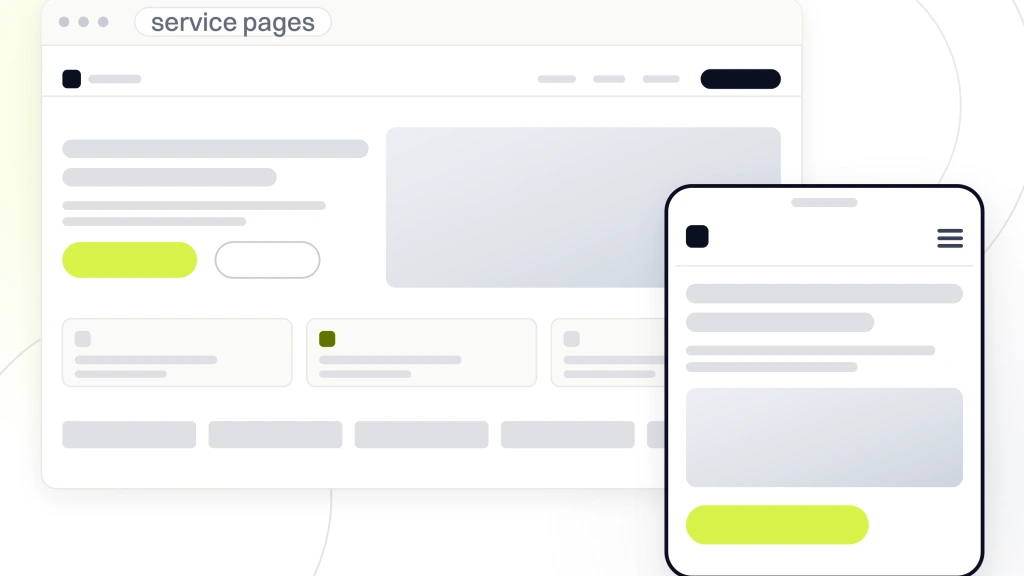
- Mobile-first responsive layout. Roughly 70% of service business traffic arrives on a phone. The mobile design is the design.
- Sub-2-second Largest Contentful Paint. A slow site loses 40% of visitors before the first service block loads. Fix images and hosting first via a proper Website Maintenance Packages from $199/mo plan.
- Sticky call button. Header phone number always visible on mobile. Click-to-call is the highest-value micro-interaction on the site.
- One page per service. Each service gets its own page with pricing hints, FAQs, and a form. Bundle pages do not rank.
- Service area pages. One page per priority ZIP code, town, or borough with local content and 3 to 5 recent job examples.
- Local Business schema. LocalBusiness plus Service schema on every relevant page. Fuels Google Business Profile and rich results.
- Google Business Profile connection. GBP posts, reviews, and hours pull into the site for social proof.
- Reviews block. 3 to 5 real reviews on the homepage and every service page. Star ratings render in search results.
- Booking or quote form. Short forms (name, phone, ZIP, service, note) on every service page and a sticky mobile CTA.
- Photo gallery of real jobs. Before-and-after or install shots. Stock photos of smiling technicians hurt trust.
- Blog for local SEO. 1 to 2 posts a month targeting local buyer questions. Compounds ranking runway.
- Analytics stack. GA4, Search Console, and CallRail so every source is trackable to a booked job.
Solo operator vs. team vs. multi-truck builds
A solo operator site lives at Starter tier with 6 pages and a template theme. A team build steps up to Growth for 2 to 5 employee bios, 3 service-area pages, and a shared inbox. A multi-truck build sits at Scale with 20+ pages, custom design, a dispatch-friendly quote form, and CRM automation into Jobber, Housecall Pro, or ServiceTitan. Sizing the small business website package to the org chart matters. Buying a Scale package for a solo operator burns budget on features that stay untouched for 2 years. Buying a Starter for an 8-employee team costs 3 rebuilds inside 18 months.
Small business website packages launch plan in 3 to 8 weeks
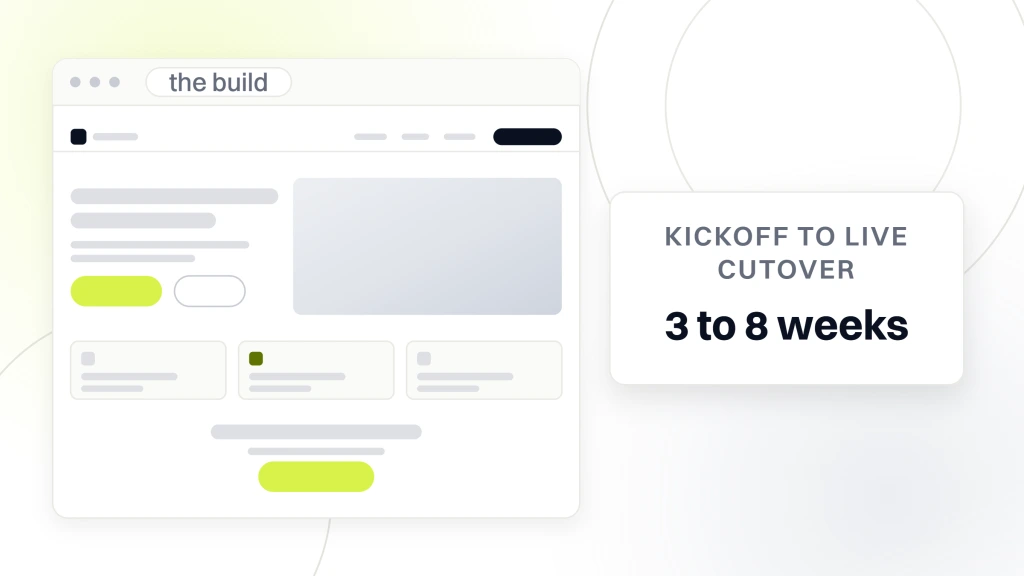
A clean small business website launches in 3 to 8 weeks from kickoff to live cutover, depending on tier. Starter tier lands in 3 to 4 weeks. Growth lands in 4 to 6 weeks. Scale lands in 6 to 8 weeks. Week 1 handles discovery, brand assets, and content collection. Week 2 covers wireframes and copy drafts. Weeks 3 and 4 hold the design and page build. Week 5 is content, images, and internal review. Week 6 runs QA, page-speed pass, and stakeholder sign-off. Week 7 or 8 covers launch and the 14-day post-launch stability check. Anyone quoting under 2 weeks is skipping QA. Anyone quoting past 12 weeks is padding the invoice.
- Week 1, discovery. Brand assets, service list, sitemap, content collection, and lead-flow mapping.
- Week 2, wireframes and copy. Homepage, service page template, service-area template, and quote form fields.
- Weeks 3-4, design and build. Visual design, WordPress build, service pages, and GBP linkage.
- Week 5, content and images. Real job photos, reviews block, service-area copy, and CRM handoff testing.
- Week 6, QA. Page-speed pass, mobile audit, form testing, schema check.
- Weeks 7-8, launch. DNS cutover, redirect map, 14-day stability watch, first monthly report.
Content the owner owns, not the agency
The agency writes the site skeleton copy. The owner owns 4 assets that never scale from a vendor. Owner bio, team headshots, real client reviews, and 5 to 8 recent job stories with before-and-after photos. Every one carries your voice, your local proof, and your face. Vendors who write generic bios for service businesses produce interchangeable copy that reads like every other operator in the metro. Write the bio yourself in 90 minutes and photograph 5 recent jobs on your phone. It compounds for years.
Case study, Tilghman Builders
Tilghman Builders is a family-owned home renovation company we partnered with across a 9-year growth window. When they reached out, annual revenue sat at $1.5M, driven mostly by word-of-mouth and referrals. Their digital presence was minimal. Social media was inconsistent, visibility was low, and there was no lead nurturing system. They were paying large SEO retainers with no ROI, stagnant rankings, and few qualified leads. The rebuild ran under our Scale package scope with HubSpot CRM integration, paid social and search, a content cadence, and trackable direct mail.
Nine years post-launch, Tilghman Builders’ annual revenue scaled from $1.5M to $6.8M, a 353% increase since the partnership began. Website traffic grew 784% through optimized content, SEO, and digital ad campaigns. Marketing-qualified leads surged by 637%. Three changes carried the outcome. First, a modern WordPress build with a portfolio system that finally showed the work at full quality. Second, HubSpot CRM plus automation so every form, call, and QR scan logged to a real pipeline. Third, service-and-area-segmented paid campaigns with creative rotated against ideal customer profiles, not generic flyers. Read the full write-up on the Tilghman Builders case study page.
Case study, Passion Built in Sydney
Passion Built is a Sydney-based renovation company specializing in bathrooms, homes, and structural projects. When they briefed us, they ran 2 underperforming websites that only ranked for their own brand name. Inquiries came from referrals, costly third-party platforms, and poor-quality leads. Reviews and social proof were scarce, hurting credibility and Google rankings. An incomplete Google Business Profile weakened local SEO. As a newer brand competing against established Sydney firms, they needed more than a redesign. The rebuild ran under our Growth package scope with a WordPress plus Elementor build, GBP overhaul, SEO copywriting, and Google Ads.
Twelve months post-launch, Passion Built generated over $60,000 in new renovation bookings directly from the new website, SEO, and paid ads. Keyword rankings expanded from just 6 to over 300 competitive terms. Monthly website visitors grew to over 800, creating a sustainable pipeline of leads. Two elements carried the win. A single SEO-driven site replacing 2 failing ones, so link equity and content stopped splitting. A Google Business Profile overhaul with services, reviews, and completed projects, plus a review collection workflow that compounded trust signals. The client called the build the highest-yield marketing investment they had commissioned. See the fuller portfolio treatment on the Passion Built case study page.
Mistakes that kill a small business website build
Every failed small business website build I have audited carries at least 2 of the 5 mistakes below. Fix all 5 and the site outperforms the market average inside 6 months. Miss any 2 and the site plateaus at 60% of potential, then gets rebuilt inside 18 months for another $6,000 to $30,000. Owners rarely see the pattern until the second rebuild. You can skip that pain.
- Slow mobile load. Over 3 seconds on 4G and buyer traffic drops 40% before the first service block renders.
- One-page site. A single scrolling homepage cannot rank for service plus city queries, which drive 55% of local intent traffic.
- Weak lead capture. One contact form on the About page collects 2 leads a month. Multi-pattern capture collects 20 to 60.
- No service-area pages. A site without local pages cannot rank in the map pack outside your primary ZIP code.
- Missing CRM handoff. A lead entered on the site at 9 p.m. and not seen until Monday morning is a lead already lost to a competitor.
Speed is the hidden conversion lever
Every 100-millisecond drop in Largest Contentful Paint gains 1% to 2% in conversion on service business sites we have measured. Move a site from 4.8 seconds to 1.9 seconds and total leads climb 20% to 40% inside 60 days, without a single copy change. The lever costs nothing beyond image compression, a Cloudflare cache, and a proper managed hosting stack. Anyone selling a $6,000 rebuild without a page-speed guarantee is selling the wrong scope. Ask for the guaranteed LCP number in writing before signing the statement of work. Pair the guarantee with a monthly Website Maintenance Packages from $199/mo plan so the speed target holds after launch.
Tools and platforms behind small business website packages
Every build we launch runs on a proven stack. WordPress for the CMS, Kadence or a custom block theme for the design system, WPForms or Gravity Forms for lead capture, Jobber or Housecall Pro for the CRM handoff, GA4 for analytics, CallRail for phone tracking, and Cloudflare for the CDN. Swap one component and the rest still holds. Swap the CMS to Wix and the SEO ceiling drops and the plug-in library shrinks. Swap the CRM to a custom build and the launch stalls 4 to 6 weeks. Boring, proven, and cheap wins the compounding game. The WordPress documentation library covers the theme, plug-in, and hosting fundamentals for owners who want to check the work.
- CMS. WordPress with block editor. Free, open, and the largest developer pool in the market.
- Design system. Kadence, GeneratePress, or a custom block theme. Skip page builders past 20 pages.
- Forms. WPForms or Gravity Forms, with conditional logic on service and ZIP fields.
- CRM. Jobber ($49/user/mo), Housecall Pro, or ServiceTitan for multi-truck fleets.
- Analytics. GA4 plus Search Console, plus CallRail for phone-lead tracking on paid campaigns.
- Hosting and CDN. WP Engine or Kinsta, plus Cloudflare Pro at $20/mo for global caching.
Add-ons worth buying, but only later
AI chat widgets at $99 to $299 a month pay off once inbound sessions cross 3,000 a month. Online booking upgrades like ServiceTitan or Housecall Pro Boost pay off once monthly bookings cross 40. Custom membership portals pay off once you have 200 recurring service customers. Every one earns its keep at scale and drains cash below the threshold. Add them in year 2, not year 1. Pair the second-year add-ons with PPC Management Services once organic leads plateau. The Starter, Growth, and Scale tiers already carry the deliverables that pay back inside the first 6 months.
Small business website packages and the local SEO overlap
Website design decides 60% of the local SEO ceiling on day 1. Slow sites cannot rank. Sites without LocalBusiness schema miss rich results. Sites with a single homepage cannot rank for service plus city queries. Sites without service-area pages leak intent to Angi, Thumbtack, and HomeAdvisor. Every SEO retainer you buy after launch fights the design decisions the build went live with. Fix the design first, then pay for SEO. Reversing that order costs 12 to 18 months of ranking runway and 20 to 60 booked jobs a month.
The SEO-friendly build launches with 4 non-negotiables. Clean URL structure (“/plumbing-repair-cleveland-oh/” beats “/services?id=7”). LocalBusiness, Service, and Review schema on every relevant page. XML sitemap that includes every service page and service-area page. Fast, mobile-first rendering so search engines and homeowners see the same 2-second first paint. Any small business website package that skips one of the 4 will underperform on organic for the full year. Read Google’s local business structured data guide for the schema fields that matter most.
Common questions we get from service business owners before every package engagement. The FAQ block sits above so owners can screenshot the answers before pinging the sales team.
Launch small business website packages that book more service calls
A small business website package is a compounding investment. The right build books 20 to 60 qualified leads a month inside a year, ranks for 300+ local keywords, and pays itself back inside 6 months. The wrong build costs $6,000 to $30,000 and gets rebuilt inside 18 months. The gap between the two is the 12-feature checklist above, the 3 to 8 week launch plan, and the discipline to skip the shiny add-ons until the base compounds. Every winning service business we have partnered with (Tilghman Builders and Passion Built and a dozen more) followed the same pattern.
If you want a partner who has run this exact playbook across solo operators, teams, and multi-truck fleets, the Redefine Web team is ready to talk. Start with the responsive web design services page for a pricing baseline, or browse the custom web design and development menu for the full-scope build. The playbook works. The math checks out. The next step is a 30-minute call to map your site against the 12-feature checklist and pick the tier that fits, whether that lands on the Web Design Services for Small Business menu or a full custom scope.