
Vendors pitch small business website packages as the answer to every growth problem a business owner has. One monthly number, one point of contact, a new site and a marketing engine turned on together. Sometimes the pitch matches the work. A properly staffed bundle saves the owner real hours on vendor management, produces cleaner reporting, and lets one team coordinate the launch so paid ads, Google Business Profile, and organic content start pulling traffic the week the site goes live. Other times the vendor bolts a marketing line item onto a site contract to close the deal, then never staffs the work. This guide walks through when a bundle makes sense for a small business, when it does not, what a fair bundled scope looks like at each price point, and how to grade the vendors bidding on the work. If you run a service business and you are weighing a bundle offer this quarter, the questions below usually surface whether the bundle is real or theater. For the standalone site side of the decision, our small business website packages program page covers what a site-only build looks like at each tier.
When bundled small business website packages make sense
Bundles work in a small set of situations. The first is a launch or relaunch. A new dental practice opening a second location, a home services company rebranding after a name change, or a professional services firm rebuilding after a partner buyout all fit this profile. Buying the site alone usually means the new site goes live and then sits quiet for 60 to 90 days while a separate marketing team onboards. A bundle lets the same team coordinate launch day so ads, Google Business Profile, and content publishing all start together. Passion Built, a Georgia home services company we onboarded last year, was in this exact spot. The old site was outdated, the phone was quiet, and the marketing was scattered across three freelancers. A bundled build plus retainer let one team run the launch clean.
The second situation is when the owner has no interest in juggling vendors. A busy plumbing owner or a solo accountant would rather have one contract and one invoice than four. Running a web vendor plus a separate local SEO agency plus a separate Google Ads freelancer plus a social contractor is real overhead. It shows up in the weeks of back-and-forth every time the phone rings with a change request. A bundle collapses that coordination cost into one relationship, which for the right owner is worth a modest 5% to 15% premium over running the pieces separately.
The third fit is a business with clean cash flow and limited operational bandwidth. Bundles work when the business can carry the marketing retainer for the full 6 to 12 month runway without renegotiating mid-way. A restaurant group like Boogie’s Bistro that expects to keep the retainer live through the slow season and the busy season gets full value from the compounding of paid, organic, and review work. Businesses that sign a bundle expecting to pause the marketing side in month 3 to save cash usually kill the momentum before the work produces results.
When small business website packages should stay unbundled
The wrong situations are just as important to name. The first is when the marketing scope in the bundle is bolted on rather than staffed. A common pattern is a $6,000 site sold with a $400 monthly marketing add-on to close the deal. The vendor builds the site clean. The add-on turns out to be an auto-generated Google Analytics report each month with no human work behind it. The owner reads the report, assumes marketing is running, and wonders why the phone stays quiet. Ask directly. Who runs the marketing work each month. What is the actual hours-per-month commitment. If the answer is vague, the marketing portion is decorative.
The second wrong-fit is a business that already has strong in-house marketing. Berks Bakery, a small regional chain, tried a bundled package one year in and quickly regretted it. They already had a full-time marketing coordinator who knew the brand, the customers, and the seasonal rhythm. A separate vendor for the site build with the coordinator running the marketing produced better results the following year at lower total cost. Bundles work well for businesses without in-house marketing. They add friction for businesses that already have it.
The third is highly specialized marketing work that a generalist bundle cannot cover. A local plumbing company needs standard local SEO and Google Ads, and a generalist bundle handles it fine. A B2B SaaS company needs specialized content marketing, account-based work, and lifecycle automation that a small business bundle is not built for. If the business fits the specialized profile, unbundling and hiring specialists produces better outcomes even at higher cost.
What a fair small business website packages scope looks like
A fair bundle has a fixed-scope site build with a hard launch date, plus a monthly marketing retainer with defined deliverables. The site side should look like a standalone package. Discovery, sitemap, wireframes, copy, design, development, quality checks, launch. Timeline of 8 to 14 weeks depending on complexity. Deliverable is a live site that passes Core Web Vitals, meets accessibility targets, and gives the owner an admin they can update without calling a developer.
The marketing side should carry monthly deliverables, a monthly reporting cadence, and a defined channel mix. At the entry level that means Google Business Profile work, review generation, one blog post a month, and modest paid ads management. At the growth level it means 2 to 3 content pieces a month, deeper technical local SEO, more sophisticated paid media, and a stronger monthly report with rank movement and lead volume broken down by source. At the top level it means multi-channel work across local SEO, content, paid, email, review generation, and conversion rate work on the site itself.
The retainer term matters. A 6-month minimum on the marketing side is honest. Local SEO takes 3 to 4 months to move rankings on target keywords, and paid ads take 4 to 6 weeks of learning-phase work before cost per lead settles. Retainers shorter than 6 months rarely generate enough data to know whether the work is working. Some vendors offer a 3-month trial to close the deal. Those exist to book the contract, not to produce outcomes, since real outcomes need the longer runway. Our pay-monthly website program covers the site side of a longer-term commitment if cash flow is the constraint.
Small business website packages tiers by price and stage
Every honest bundle sits inside one of three tiers. The right tier is the one that matches revenue, growth stage, and whether the business has to compete with other well-marketed local competitors. Under-tiering usually means the build cuts pages, the marketing scope shrinks to one channel, and the outcome disappoints. Over-tiering usually means the business pays for capacity it cannot use in year one. The table below walks through the three real tiers and what each includes.
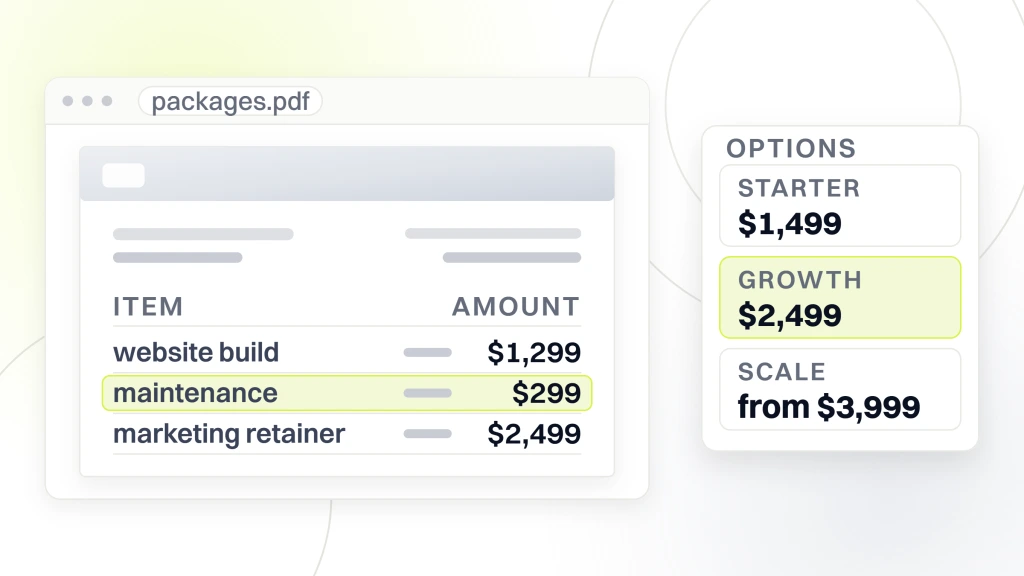
| Tier | Website build (one-time) | Maintenance (monthly) | Marketing retainer (monthly) | Best-fit business |
|---|---|---|---|---|
| Starter | $799 | $199 | $1,499 | Solo service pros, single-location practices under $500k revenue |
| Growth | $1,299 | $299 | $2,499 | Established service businesses $500k to $2M revenue, active local marketing |
| Scale | $1,999 to $1,500 responsive redesign add-on | $499 | from $3,999 | Multi-location or fast-growing service businesses $2M to $5M revenue |
These numbers reflect the real market for mid-tier agency work in 2026. Freelance bundles run 30% to 50% lower and typically deliver less. Big brand agencies run 2 to 4 times higher and typically deliver a more consultative engagement, which is not always the right fit for a small business that needs execution more than strategy. Pay-monthly options at $199 and $349 a month let a business spread the build over a 24 to 36 month term instead of paying up-front. A full responsive redesign of an older site sits at $1,500 as a one-time cost that pairs with any tier.
Common bundle mistakes to avoid before signing
Bundle contracts have a small number of recurring failure modes. Knowing them ahead of signing protects the business. The first is a promise of ranking results tied to a fixed timeframe. First-page rankings in 90 days is a claim no honest vendor can back up. Ranking depends on domain age, competitor activity, and Google algorithm updates the vendor does not control. Contracts with specific ranking guarantees usually include escape clauses that make the guarantee unenforceable. Ask the vendor to replace the guarantee with defined activity commitments. Hours of on-page work, backlinks earned, content pieces published. Activity is what the vendor controls. Rank is not.
The second is folding Google Ads spend into the retainer. When a $2,000 monthly retainer includes up to $1,500 in ad spend, the vendor has an incentive to underspend and protect margin. Break the retainer and the ad spend into separate line items with the ad spend paid directly to Google when possible. Transparent Google Ads accounts owned by the business, not the agency, protect the data if the relationship ends. The best walk-through of this is the Google Ads best practices guide, which every business owner should read once before signing an ads contract.
The third is running a bundled scope without a clear owner on the small business side. Bundles need the owner or a designated team member to review deliverables, respond to feedback requests, and approve go-lives. When nobody owns that role on the client side, the bundle stalls. Copy sits unreviewed for weeks, design mockups pile up in Figma, launch dates slip. Assign an owner before signing.
What the monthly marketing retainer should cover
Monthly marketing deliverables vary by tier, but the core components repeat across price points. Local SEO work covers Google Business Profile optimization, review management, local content, and citation cleanup. Content marketing covers 2 to 4 blog posts a month written for real search intent aligned to the services the business sells. Paid media covers Google Ads campaign setup, ongoing optimization, and monthly performance review. Reporting covers a monthly PDF or dashboard with traffic, ranking, ad performance, and lead volume. Consultation covers a monthly strategy call with the same lead each month, not a rotating account coordinator.
At the Foundation retainer of $1,499 a month, scope is compressed. Local SEO plus one blog post a month plus modest paid ads management. At the Growth retainer of $2,499 monthly, the scope expands to 2 to 3 content pieces monthly, deeper technical local SEO, more sophisticated paid media, and stronger reporting. At the Scale retainer from $3,999 monthly, the scope includes multi-channel work across local SEO, content, paid, email, review generation, and conversion rate work on the site. All tiers should include a defined hours-per-month commitment or a defined output count. Vague we-will-do-marketing-work language means no accountability.
Tilghman Builders, a family-owned renovation company, ran a bundled site plus retainer for a full 9 years of continuous investment. Annual revenue grew from $1.5M to $6.8M, a 353% climb. Site traffic grew 784% through optimized content, local SEO, and paid campaigns. Marketing-qualified leads grew 637% over that window. The bundle worked because the business committed to the runway and the vendor staffed the scope every month. A one-year engagement would not have produced the same outcome.
Five diligence questions to ask before signing
Five questions separate real bundles from theatrical ones. Ask them before signing. First, who runs the marketing work each month. The answer should include named people, not our team. If the vendor cannot name the strategist, the content writer, and the paid ads manager assigned to the account, the marketing scope is not staffed. Second, how many hours a month are committed to marketing work. The answer should be specific. Vague as-needed answers mean the vendor spends the least time possible.
Third, what does the reporting look like. Ask for a sample monthly report from a comparable client with the name redacted. Reports that show only Google Analytics traffic numbers do not reflect real work. Real reports show ranking movement on target keywords, paid ads performance broken down by campaign, lead volume by source, and a written summary of the month’s activities. Fourth, who owns the accounts. The Google Ads account, the Google Business Profile, and the Google Analytics property should belong to the business with the agency having access. Agencies that own the accounts hold the data hostage if the relationship ends.
Fifth, what happens if we want to pause the marketing side in month 6. The answer should be honest. Pausing usually loses momentum, but a good vendor walks through what happens and offers a reasonable off-ramp instead of locking the business into a longer commitment than it can support. Vendors that treat this question as offensive are not the right partners. For background reading the SBA small business marketing guidance and Google Search Essentials are both free and give the owner a baseline for grading vendor claims.
Sequence the small business website packages engagement for real return
Sequencing matters. The pattern that works is site foundation, marketing setup, launch, then iterate. In the first 8 to 14 weeks the site build runs in parallel with Google Business Profile optimization, initial content strategy, and paid ads account setup. When the site launches, paid ads turn on the same week, the review generation workflow starts, and the content publishing cadence begins. The first 90 days after launch are the highest-velocity phase, with rapid paid ads optimization, aggressive content publishing, and heavy review generation. Abigail’s Salon, a two-chair studio we launched in Q1 2026, went from a quiet phone to 18 booked appointments a week by day 75 using this exact sequence.
Months 4 to 6 shift toward local SEO compounding. Content published in months 1 to 3 begins ranking. Paid ads stabilize on cost per lead. Reviews accumulate to a level where they move Map Pack visibility. Reporting shifts from setup metrics like traffic and impressions toward outcome metrics like leads, cost per lead, and revenue attributable to marketing. This is where a bundle earns its keep for a small business. Coordinated launch produces compounding outcomes faster than a sequential setup would.
Months 7 to 12 shift toward optimization and scale. The playbook that worked in months 1 to 6 gets refined. Underperforming ad campaigns get paused, over-performing ones get scaled. Content topics that ranked well drive follow-up content on related topics. The reporting cadence stabilizes into a monthly rhythm the owner can review in 30 minutes. Bundles that run cleanly through this 12-month arc tend to renew for a second year. Bundles that stall in months 3 to 5 usually do so because the owner could not maintain engagement or the vendor never staffed the marketing scope. Both failure modes are preventable if the owner asks the diligence questions above.
Small business website packages red flags in a vendor pitch
A vendor pitch usually reveals whether a bundle is real or theater inside the first 30 minutes. Ranking guarantees tied to a specific timeframe are a red flag. Ad spend rolled into the retainer with no separate line item is a red flag. Refusal to share a sample monthly report from a comparable client is a red flag. Marketing scope that grows the more you push on price is a red flag, since it means the scope was flexible fiction. Vague answers about who runs the monthly work is a red flag. Named team members with defined roles is a green light.
Beauté Aesthetics New York, a med spa in Manhattan, walked away from three vendor pitches for exactly these reasons before signing with a fourth. The vendor that eventually won the account named the strategist, the content lead, and the ads manager on the pitch call. They shared a redacted sample report from a comparable-sized med spa. They separated the retainer from the ad spend. They offered a 6-month term with a month-6 review instead of a 12-month lock. That is the shape of a real bundled engagement. If the pitch does not include those signals, it is worth asking why, or moving to a different vendor.
How Gwinnett Home Services scaled a bundle over 24 months
Gwinnett Home Services, a Georgia HVAC and plumbing company, signed a growth-tier bundle in early 2024 at $1,299 for the site build, $299 monthly maintenance, and a $2,499 monthly marketing retainer. Ad spend ran separately at $2,500 a month direct to Google. The first 6 months focused on the site launch, Google Business Profile cleanup across three service areas, and paid ads setup. Cost per lead settled at $42 by month 4. Organic traffic climbed 210% by month 6 from a baseline of 900 sessions a month to 2,790. Booked service calls attributable to marketing climbed from 22 a month to 68.
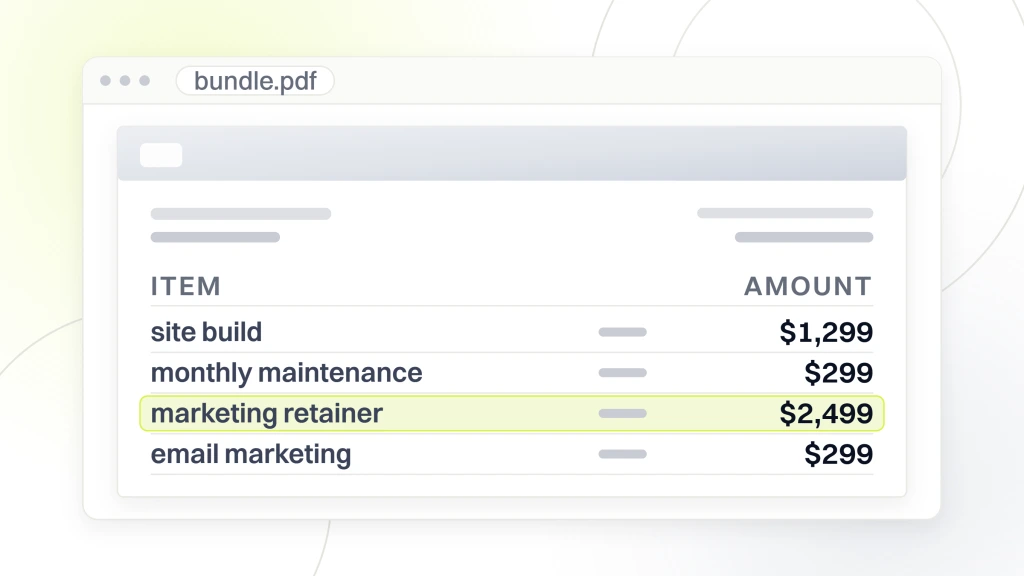
Months 7 to 12 shifted toward content compounding. The vendor published 3 blog posts a month on service-intent topics like emergency HVAC repair and water heater replacement. Rankings for 47 target keywords moved from page 3 or worse to page 1 by month 10. The retainer scope expanded in month 9 to add email marketing at an extra $299 monthly, taking the total marketing spend to $1,298 monthly excluding ads. Booked service calls climbed to 118 a month by month 12. Total marketing spend for year one landed at $19,776 including retainer, ads, and site build. Revenue attributable to marketing landed at $412,000 for the year. The ratio was clean.
The lesson for a small business owner weighing a bundle is straightforward. Bundles work when both sides of the package are real, the timeline is honest, and the business commits to the full runway. Bundles that promise fast wins in short timeframes usually misrepresent one of those three variables. If a vendor pitches a bundle that skips any of the diligence points above, the safer move is to unbundle and hire specialists channel by channel.
Match the small business website packages tier to your revenue and stage
Picking the right tier is the last decision before signing. A solo service pro under $500k in revenue rarely needs the growth tier. The starter site at $799 plus a $199 monthly maintenance plan and a $1,499 monthly retainer is enough to book more jobs than the owner can handle. An established service business between $500k and $2M in revenue usually fits the growth tier at $4,500 for the site, $299 monthly maintenance, and a $2,499 retainer. Multi-location or fast-growing businesses above $2M revenue fit the Scale tier from $3,999 monthly retainer up.
A useful gut check is the marketing spend as a percentage of revenue. Most small service businesses spend 5% to 12% of gross revenue on marketing including retainer, ad spend, and site work amortized over 3 years. A business doing $600k in revenue running at 8% is spending $48,000 a year on marketing. That maps to a growth-tier bundle at roughly $2,800 total monthly plus a modest ad budget. A business doing $200k spending the same $48,000 is at 24% of revenue on marketing, which is too heavy. That business needs the starter tier plus patience.
If you are still weighing the site-only path, our guide to small business website packages for service businesses covers the standalone site version of the decision. Related reading includes our pricing walkthrough and the affordable packages guide for tighter budgets. For a call about your specific business, our strategy call page walks through what to expect.