
Life science web design and development is a specialty scope, not a general web project with a whiter color palette. Every claim on the site gets reviewed by legal, medical affairs, or regulatory. Every image gets versioned so the team can prove exactly what was live on which date. Every landing page carries an approval status flag. Every launch runs a review workflow that adds 20 to 40 percent buffer to the timeline. Done right, life science web design and development delivers compliance-safe copy that still books real meetings. Done wrong, it puts up a marketing site that medical affairs rewrites inside 60 days.
This guide walks through the 10 patterns a real life science web design and development scope covers in 2026. Compliance-safe messaging that stays inside approved indications. Physician-facing versus patient-facing content separation. Clinical evidence presentation. Regulatory review workflows. Lead-capture flows segmented by role. Multi-language support for global brands. Distributor and sales-rep portal access. Asset versioning for audit trails. Retainer scope after launch. And where the money goes at each tier. Read straight through in 9 minutes.
Clinical evidence presentation for medtech web design and development agency work
Clinical evidence is the primary conversion asset on a medtech web design and development agency site. Physicians decide whether to try a device based on the strength and clarity of the evidence library. Every clinical study gets a summary page with study design, patient population, primary endpoint, secondary endpoints, effect size, and full citation. Every study links to the peer-reviewed publication. Every claim on the marketing side ties back to a specific study on the evidence side. Miss that trail once and the physician audience stops trusting the rest of the site.
The evidence library on a real medtech web design and development agency scope holds 6 to 40 study summaries depending on device maturity. Every summary follows the same template. 250 to 600 words of clinical content, one figure or table pulled from the paper, one plain-language takeaway box, one “key point for the OR” call-out. Any medtech site with a marketing headline claim but no study backing loses the physician reader inside 30 seconds. Evidence is the trust engine, and the site has to prove that trust on every page.
- Study summary template. Design, population, endpoints, effect size, citation.
- Figure per study. One data figure pulled from the paper, licensed for use.
- Takeaway box. Plain-language summary in 2 to 3 sentences.
- Full citation. Author list, journal, year, DOI or PubMed link.
- Cross-link. Every claim on marketing pages links to the source study page.
- Audit trail. Version history on every study summary edit.
Figure licensing for evidence pages
Every figure pulled from a peer-reviewed publication needs a license. Some journals grant automatic reuse for an author’s own promotional purposes. Most do not. Any medtech web design and development agency that skips the licensing check on figures is planning a takedown notice in year one. Track every figure in a licensing spreadsheet with source citation, license status, and reuse scope. Boring work, but a real audit trail that protects the brand and the launch calendar.
Evidence library search and filter
The evidence library needs search and filter, by indication, by study phase, by patient population, and by primary endpoint. Any medtech site with 20 or more studies and no library search is asking physicians to scroll through a list. Physicians do not scroll. Build the search at the same time as the first 5 study summaries. Never retrofit search onto 40 legacy pages, and never assume default WordPress search will pick up structured clinical fields without help.
Regulatory review workflow inside life science web design and development
Every launch of a life science web design and development project runs a regulatory review workflow. Marketing writes the draft. Medical affairs reviews for clinical accuracy. Legal reviews for claims risk. Regulatory reviews for indication scope. Compliance reviews for HIPAA or GDPR risk. Each reviewer leaves comments in a versioned tool. The workflow adds 3 to 6 weeks per launch on standard scope. Skipping it saves the 6 weeks, then buys a 6-month rework project inside year one.
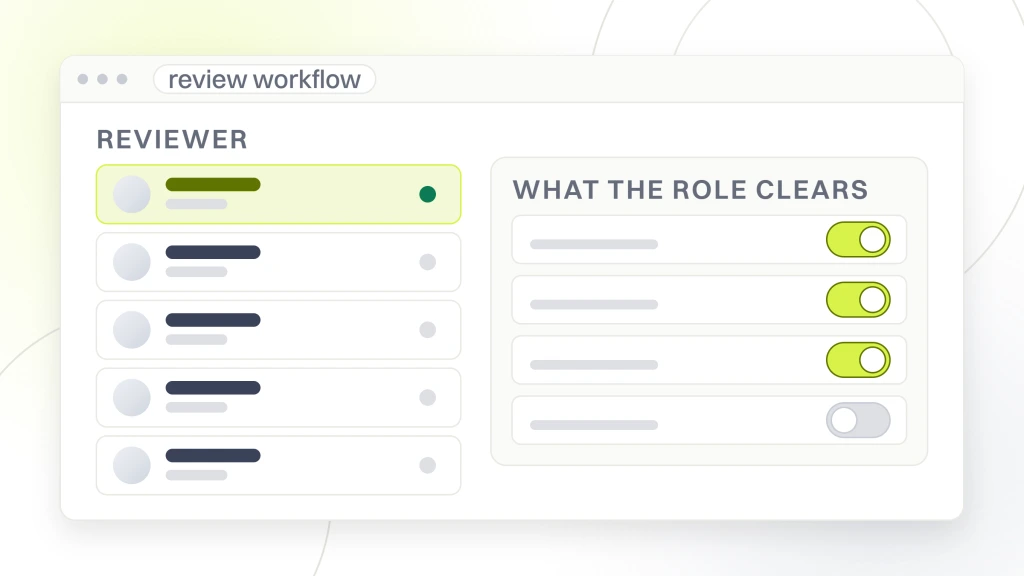
The review tool of choice on modern life science web design and development projects is Veeva Vault PromoMats or a similar MLR (medical, legal, regulatory) review platform. Vault handles asset versioning, review routing, approval status flagging, and audit trail export. Any medtech or pharma brand at $50M or more in annual revenue runs Vault or equivalent. Smaller life science brands can run the review through Notion or Google Docs with strict version control. Match the tool to the compliance risk level, then match the timeline to the tool.
Veeva Vault integration on the CMS
Larger life science brands build a CMS that talks to Veeva Vault. Content authored in the CMS routes to Vault for MLR review. Approved content flows back to the CMS with an approval status flag. Any change to approved content triggers a re-review. This integration takes 4 to 10 engineering weeks to build on a headless CMS and pays off on any brand publishing 100 or more approved assets per year. Below that volume, a lighter integration works fine and costs less.
Review cycle length by risk
Low-risk copy edits like fixing a typo or adjusting a layout route through a 24-hour expedited review. Medium-risk edits like adjusting benefit claims or updating dosing tables run 5 to 10 business days. High-risk edits like new efficacy claims or new indication statements run 15 to 30 business days. Any life science web design and development scope that treats every edit as high-risk clogs the review team and stops the site from evolving. Match the review depth to the actual risk of the change.
Lead capture on web design and development for health care providers
Web design and development for health care providers routes leads by role and stage. Patient inquiries hit the intake team. Physician referrals hit clinical partnerships. Employer or payer inquiries hit sales. Each flow uses a different form, a different follow-up sequence, and a different SLA. Any healthcare site funneling every visitor through the same “contact us” form loses 30 to 50 percent of qualified leads to bad routing. Segment the flows at design time, not after launch.
Pelvic Rehabilitation Medicine, a 14-location healthcare provider we work with, ran a scattered lead-capture flow before the rebuild. Every inquiry hit the same inbox. Intake staff manually sorted patients by clinic proximity and provider fit. We rebuilt the site with routing at the form layer. Patients get routed to the nearest clinic by ZIP. Referring physicians get routed to the referral team. Press inquiries route to marketing. Inside 12 months, keyword growth climbed 174%, organic traffic climbed 166%, and the patient community around the site doubled. Same clinical team, different site flows, different revenue outcome.
Patient intake form design
Patient intake forms stay short. Name. Contact. ZIP. Reason for the visit. Preferred contact method. Six to 8 fields maximum on the initial contact. Longer intake happens after the patient is on the phone or in the portal. Any patient-facing intake form running 14 fields drops 40 to 60 percent of qualified inquiries at the form stage. Web design and development for health care providers scopes the initial form for conversion, not for admin convenience.
Physician referral form design
Physician referral forms stay slightly longer. Referring physician name, NPI, practice location, patient reason, urgency level. Ten to 12 fields is fine on this flow. The referring physician’s admin fills it out during business hours and wants confirmation the referral will be handled. Add a status confirmation email inside 2 hours. Any referral form without a status confirmation loop loses referring physicians on the second referral, and referring physicians rarely come back for a third try.
Multi-language support on global life science web design and development
Global medtech brands publish in 6 to 40 languages. Every translation runs through a specialized life sciences translation vendor, not a generic translation service. Regulatory terminology has to match the local regulatory body’s language exactly. Any life science web design and development scope that skips specialized translation for cost reasons will fail a European MDR audit inside year one. See MDN on the lang attribute for the HTML baseline every multi-language site assumes.
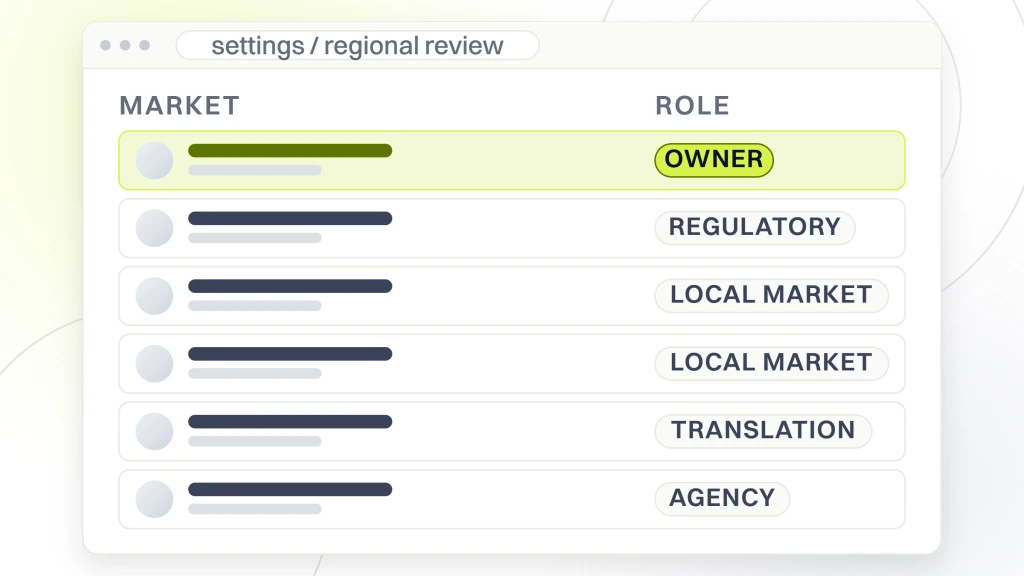
The CMS architecture on a multi-language life science site uses a language-first URL structure like /en/, /de/, /fr/, and /jp/. Every asset gets a language variant. Every review workflow runs per language. Every launch coordinates across regional medical affairs teams. This is expensive. Global medtech web design and development scopes carrying full multi-language support run $150K to $600K. Any team quoting global multi-language scope under $150K is either underquoting or skipping half the regional review workflow.
Translation vendor selection
Life sciences translation vendors run $0.15 to $0.40 per word depending on language pair and complexity. Generic translation services run $0.05 to $0.10 per word. The cost difference reflects the regulatory review each life sciences vendor runs on every translated asset. Skip the specialty vendor at your own regulatory risk. Any translation error on a claim, an indication, or a safety statement triggers a warning letter faster than the same error in English, and the correction has to route back through MLR review.
Regional medical affairs review
Every language variant goes through the regional medical affairs team, not just the global team. German medical affairs reviews the German site. Japanese medical affairs reviews the Japanese site. Regulatory terminology varies between EMA, MHRA, PMDA, and FDA and no single reviewer catches every regional nuance. Any life science web design and development global launch that runs review from one central team is going to trigger local regulatory queries inside 6 months.
A real web design and development for health care outcome
Aliera Health, a direct-to-consumer healthcare coverage brand, came in with low brand awareness and no DTC launch history. We scoped a compliance-safe web design and development for health care rebuild across landing pages, ad-targeted funnels, and lead-capture flows built around a single primary CTA. Every claim went through legal review. Every landing page carried the right disclaimer set. Every lead flow routed by state and coverage type.
Inside the DTC launch year, Aliera Health hit $40 cost per lead, quadrupled brand impressions, and expanded state coverage to 40+ markets. That is a compliance-safe web design and development for health care outcome that respected regulatory constraints and still hit the growth targets. Every claim was sourced. Every flow was routed. Every disclaimer was baked into the template. Compliance-safe copy does not mean slower growth. It means slower launches, then faster compounding once the site is running.
Cost per lead math
A $40 CPL on a DTC healthcare product is competitive against a benchmark of $60 to $150 across the category. That saving compounds monthly. On a $100K per month paid ads budget, moving CPL from $80 to $40 doubles the lead volume for the same spend. Any life science web design and development scope that ties CTA design, form length, and follow-up sequence to the CPL target hits the number sooner. Guessing at CTA design without CPL tracking wastes the budget and wastes 6 weeks of the launch timeline.
Multi-state expansion patterns
Healthcare products often launch in one state and expand to 40+ over 12 to 24 months. The site architecture ships with location-scoped disclaimer sets from day one, not retrofitted after state 15. Any life science web design and development scope planning multi-state expansion should design the state-scoped disclaimer and coverage-status flags into the CMS at kickoff. Retrofitting on state 20 costs 3x the initial design work, and every retrofit needs its own MLR review round.
Life science web design and development cost tiers
Life science web design and development runs in 4 cost bands. Single-location provider site with 15 to 25 pages runs $22K to $45K. Multi-location healthcare provider network with 6 or more clinics runs $45K to $95K. Medtech or medical device brand with physician-facing plus patient-facing content runs $75K to $180K. Enterprise life science brand with multi-language and distributor portals runs $180K to $600K. Every tier assumes regulatory review baked into the timeline and compliance-safe copy on every claim.
The compliance premium adds 20 to 40 percent to a comparable non-life-science scope. A generic B2B SaaS site at the same page count runs 25 to 30 percent cheaper. It does not require MLR review, versioned assets, or specialized translation. That premium is not padding. It is the cost of publishing under regulatory oversight. Any team quoting a life science web design and development project at generic B2B rates is going to hit the review-cycle timeline problem inside week 8.
Single-location provider tier
Single-location practices at $22K to $45K get a 15 to 25 page site with a compliance-friendly copy pattern, a HIPAA-safe patient intake form, LocalBusiness schema, and a light content library covering the top 8 to 12 patient-facing questions. Timeline runs 8 to 14 weeks. Team is 3 people. Fits solo practice owners, single-site clinics, and single-location outpatient providers. Above 25 pages, the scope jumps a tier and the review cycle changes shape.
Enterprise life science tier
Enterprise scope at $180K to $600K covers a global medtech brand, a pharma product site, or a multi-region medical device brand. Includes multi-language support, distributor portals, physician-facing plus patient-facing content tracks, Veeva Vault integration, and regional medical affairs review workflows. Timeline runs 30 to 52 weeks. Team is 8 to 15 people. Fits publicly traded medtech, mid-to-large pharma brands, and global device manufacturers with 20+ product lines and multi-region compliance obligations.
Retainer scope after a life science web design and development launch
Every life science site launches into a retainer. Not optional. Regulatory changes hit constantly, including updated labels, new indication approvals, and new safety information. Every one triggers a site update that has to pass MLR review. Skipping the retainer for 6 months on a life science site is how the label ends up out of sync with the site and the brand ends up with a warning letter. The retainer runs 20 to 40 percent of the build annually depending on regulatory intensity. See Search Engine Land on Google AI Mode for how AI extraction now reads regulated content and why every quarterly evidence refresh matters.
Real life science web design and development retainers cover monthly MLR review support on new content, quarterly evidence library refresh with new publications, monthly disclaimer audit against label updates, ongoing page-speed monitoring, and monthly reporting on lead flow by role including patient, physician, distributor, and payer. Retainers priced below 15 percent of build annually are reactive only and let the site drift out of compliance. Retainers priced above 40 percent are usually padding scope you do not need.
Quarterly evidence refresh cadence
Every quarter the retainer refreshes the clinical evidence library. New publications get added as study summary pages. Old summaries get flagged for withdrawal if the underlying study is superseded. Every claim on the marketing pages gets audited against the current evidence library. Any claim that no longer ties to a supported study gets rewritten or pulled. This quarterly cadence keeps the site defensible under FDA or MDR audit. Skip it and the evidence base drifts inside 12 months.
Monthly label audit
Every month the retainer runs a label audit. Any FDA-approved label changes trigger site copy updates on the affected pages. Any new safety communication triggers disclaimer updates. Any indication expansion gets planned into the following quarter’s content roadmap. This monthly cadence keeps the site in sync with the current label at all times. Any life science web design and development retainer that skips the label audit is planning a compliance surprise inside year one.
Where to start on life science web design and development for your brand
Start with the regulatory scope. What indication or intended use are you marketing. What is the primary reader, whether physician, patient, distributor, or payer. What review workflow does the brand already run internally. Those 3 answers decide the tier, the stack, and the timeline. Life science web design and development scopes that start with the regulatory scope fit the actual constraints. Scopes that start with a Pinterest mood board hit medical affairs at week 10 and delay launch by 6 weeks.
Ready to scope the real thing. For the full stack conversation, see our web design and development services. If the scope calls for a custom application layer like a physician portal or a distributor portal, see our custom web development services. For WordPress-specific compliance-friendly builds, see WordPress website development services. For ongoing site care under a review workflow, our monthly website maintenance packages map the retainer scope. Get in touch when your brand is ready to plan a launch that clears regulatory review the first time.