Targeting dental patients with Meta ads books real consults at a sustainable cost per call when three things line up: the audience layer matches buying stage, the creative shows a specific treatment outcome, and the click destination fits the temperature of the click. Miss any one of those and the account bleeds spend on impressions that never turn into appointments. Get all three right and Meta becomes the second-strongest paid channel a dental practice runs, sitting behind Google Ads on high-intent search and ahead of most local media buys.
The channel has a hard split most dental accounts refuse to respect. Meta loses to Google on searches like “emergency dentist near me” or “same day crown near me,” where the patient has already picked the phone up in their head. Meta wins on cosmetic and elective treatments (veneers, Invisalign, teeth whitening, cosmetic bonding) where the decision cycle runs weeks and creative shifts the choice. Practices that run the same Meta setup across every treatment watch cost per booked call drift up quarter over quarter for reasons the account manager cannot explain.
This walks the working setup for a dental Meta ads account end to end. Audience layers first, then creative, then landing destinations, then the HIPAA-aware tracking layer, then campaign structure, budgets, and the reporting cadence that keeps spend accountable. Smile Design Dentistry, a 50-plus location dental DSO that Redefine Web restructured through PPC plus paid social, cut cost per call by 30% and pushed PPC conversion rate up 20% across the network. That’s the outcome shape a well-built dental Meta channel produces when it sits next to a properly structured Google Ads account.
Creative angles that actually convert dental patients
Creative is what patients see, so dental Meta ad creative that converts leads a specific patient outcome, real before-and-after content with signed consent, and provider credentials on screen. Stock hero shots and generic “gentle family dentistry” messaging lose to specific angles by 30 to 55% on cost per booked call. Specificity is what makes an ad feel like a real practice instead of a template shop cycling the same clips across a hundred accounts. Patients recognize the difference in the first two seconds of a video, and Meta’s algorithm learns from watch time.
Video creative beats static image creative on cosmetic treatments by 40 to 65% on cost per booked call. A 15-second clip showing a real Invisalign timeline, a veneer transformation, or a same-day emergency turnaround communicates outcome and personality faster than any static frame. Practices without video assets should build a first batch in the opening 30 days of the account, because the production cost pays back inside two months on cosmetic budgets north of $1,000 a month. Phone footage from the provider works. Studio polish is not the bar; honesty is.
- Before-and-after transformations. Real patients, signed consent on file, treatment name in the caption, not the video.
- Provider intro videos. 30-second bio with credentials, treatment specialty, and one line on how the office approaches nervous patients.
- Cost transparency. Real price ranges, financing tiers, insurance carriers accepted. Patients screenshot this and share it.
- Patient testimonials. Video preferred over text overlays; first names allowed with signed consent, no medical history on screen.
- Behind-the-scenes practice tour. Office, sterilization area, staff introductions, the parking lot. Local trust is built on visual familiarity.
- Educational content. Treatment comparison, timeline explanations, what a consultation actually feels like. Warm-audience gold.
Consent management for patient before-and-after content needs a signed release form covering marketing use across Meta, Instagram, TikTok, and the practice website. Read our dental photo consent for marketing guide for the release form structure and workflow that keeps the practice compliant with medical marketing rules. Skipping the paperwork is one of the fastest ways a practice ends up rewriting an entire quarter of creative after a legal review.
Landing pages versus lead-gen forms in dental meta ads targeting
The click destination is one of the most underrated levers in dental meta ads targeting. Meta routes clicks to two destination types, and each fits a different audience layer. Landing pages produce fewer leads at a higher cost per lead but hold a stronger booked-call rate after front-desk filtering. Meta lead-gen forms produce cheaper leads at lower booked-call quality because the form pre-fills user data and the click can happen without real intent. The right choice depends on which audience the ad set targets, not which one the practice prefers.
Landing pages work best on cold audiences where lead quality carries the account. The page filters low-intent clicks by asking the reader to engage with copy before converting, which drops junk leads and pushes the show-up rate at the front desk higher. Lead-gen forms work best on retargeting audiences where the user already showed intent through prior visits, and the form removes friction on the second touch. Running both formats inside one ad set splits performance data and slows optimization on both formats at the same time. Segment early.
Callout. Cost per lead is a vanity number in dental Meta accounts. Cost per booked call is the number that matters, and reporting stops at leads only if the account owner does not want to see the real result.
- Landing pages on cold audiences. Filter for intent, produce higher-quality leads, warmer front-desk conversations.
- Lead-gen forms on retargeting. Cut friction on second-touch, produce cheaper leads at acceptable quality.
- Landing page conversion rate. 5 to 14% on dental cosmetic Meta traffic.
- Lead-gen form conversion rate. 12 to 28% on retargeting Meta traffic.
- Booked-call rate. 25 to 45% from landing page leads, 15 to 30% from lead-gen form leads.
A landing page at 25% conversion with a 40% booked-call rate produces the same booked calls per dollar as a lead-gen form at 40% conversion with a 25% booked-call rate. The follow-up workload is far heavier on the lead-gen side, so practices without spare front-desk capacity should default to landing pages until staffing catches up. This is the conversation to have with the office manager before the campaigns go live, not after week four when the phones are ringing off the hook with tire kickers.
HIPAA compliance in dental facebook ads examples targeting and pixel setup
HIPAA rules restrict what patient health information dental practices can share with third-party ad platforms. Meta is not a covered entity, and no business associate agreement exists with Meta at the platform level. Standard pixel installations on health-related form fields (treatment interest selectors, insurance carrier picklists, symptom descriptions) can trigger a HIPAA violation because the pixel data flows to Meta unencrypted with identifiable user data attached. That is the exposure most practice owners do not know they carry.
Working setups use aggregated conversion tracking without patient-identifiable data, strip health-identifying fields from pixel-tracked forms, and switch to the Conversions API instead of the standard pixel where possible. Conversions API sends server-to-server data the practice can filter for compliance before it leaves the server, and the standard pixel captures whatever the user submits on the form. That difference is the whole game for dental facebook ads targeting done safely.
- Strip health-identifying fields. No treatment interest selectors on pixel-tracked forms.
- Aggregated conversion tracking. Report counts, not identifiable user data.
- Conversions API. Server-side data with a filtering layer for compliance.
- Custom audiences. Hashed email data only, no plaintext patient information.
- Ad copy review. No protected health information inside dynamic ad extensions.
The HHS Office for Civil Rights issued guidance clarifying that pixel data on protected health information is subject to HIPAA even when the practice did not explicitly authorize the transmission. Read HHS HIPAA guidance for professionals for the current covered entity interpretation and the enforcement pattern. Take the compliance review as seriously as the creative brief, and rebuild any form pointing at a pixel once treatment interest fields are present. The paperwork tax is small next to the enforcement action.
Campaign structure for dental instagram ads targeting and Meta placements
Meta campaign structure for dental practices runs three to five campaigns split by objective and audience temperature. Retargeting sits in its own campaign because audience size, budget pacing, and creative rotation all differ from cold prospecting. Each campaign holds two to four ad sets targeting distinct audience layers, and each ad set holds three to five ad variants tested against each other with clear statistical thresholds. Dental instagram ads targeting lives inside the same account, split by placement so reporting stays clean.
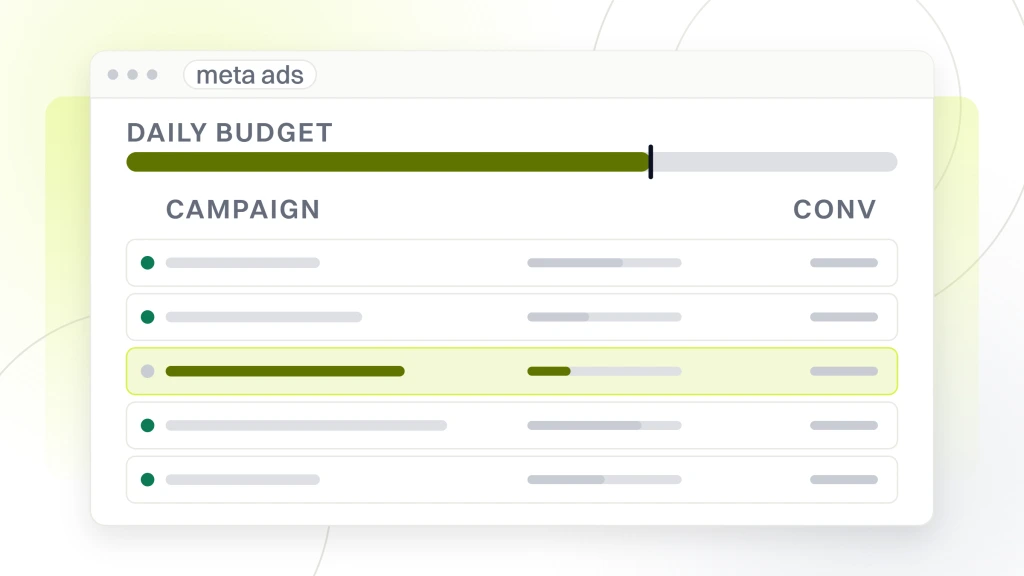
Callout. Retargeting is the campaign that pays for the rest of the account. Build it first, feed it real content, cap frequency at 4 impressions per user per week, then earn the right to run cold prospecting.
Objective selection at the campaign level decides how Meta’s algorithm optimizes bids. Conversions works for practices with 30-plus monthly conversion events (form fills or leads). Leads objective fits practices using Meta lead-gen forms. Traffic sometimes helps in the first two weeks of a new campaign to speed up audience learning, but the switch to Conversions has to happen once 30 events per week are hitting the pixel. Staying on Traffic past that point wastes optimization signal on cheap clicks.
- Retargeting campaign. Website visitors last 30 days, video viewers over 50% watch time, engaged social profiles.
- Lookalike campaign. 1 to 3% lookalikes from the existing patient email database, hashed on upload.
- Cold cosmetic campaign. Interest-based targeting on cosmetic dental categories with treatment-specific creative.
- Cold general campaign. Interest-based targeting on general dentistry categories, used sparingly.
- Reactivation campaign. Custom audience from prior patient email list, no visits in the last 12 months.
Budget allocation starts weighted toward retargeting (40 to 50%), lookalike (20 to 30%), and cold prospecting (20 to 30%). As cold audience data accumulates, budget shifts toward the campaigns producing the best cost per booked call. Read our meta ads lead generation for dental practices guide for the full campaign structure, including the exact ad-set naming convention that keeps reporting readable at scale.
Budget and bidding benchmarks for meta ads for dental patients
Dental Meta budgets scale with treatment mix and geographic market. Cosmetic treatments run at higher cost per booked call than general new patient acquisition because the buying cycle is longer. Emergency dental cannot be sustained on Meta because the intent-to-book window is too short for the algorithm to catch. General new patient acquisition through Meta produces the best blended results when it sits next to strong retargeting on visitors coming in from Google Ads and SEO. Meta ads for dental patients pay best when the whole funnel is fed.
Callout. Below $1,200 a month, a single-location Meta account cannot gather enough signal to test anything. Fund the pilot to $1,500 or run the money through Google Ads instead. Half-committing kills both the test and the trust.
Bidding starts with the Highest Volume strategy for the first 30 days while the pixel gathers data. Once the campaign clears 30 to 50 conversion events per week, switching to Cost Per Result Goal or Bid Cap gives more predictable cost control. Practices skipping the initial data-gathering phase and jumping straight to bid caps often see delivery drop to nearly zero, because Meta cannot find enough audience matching the cap. Give the algorithm the runway it asks for. The first 21 days are always ugly.
| Campaign type | Monthly budget | Cost per booked call | Notes |
|---|---|---|---|
| Retargeting | $400 to $1,200 | $45 to $110 | Highest ROI, smallest audience. |
| Lookalike | $600 to $1,600 | $65 to $160 | Moderate ROI, larger reach. |
| Cold cosmetic | $800 to $2,200 | $95 to $220 | Awareness plus lead gen for cosmetic. |
| Cold general | $400 to $1,000 | $120 to $260 | Weakest ROI, skip unless Google is saturated. |
| Reactivation | $200 to $500 | $25 to $65 | Best ROI, tiny audience. |
Reactivation produces the best ROI numbers because the audience is inherently qualified. Practices with a healthy list of prior patients see reactivation campaigns book calls at 20 to 40% the cost of cold cosmetic campaigns. Dental sits above healthcare-broad numbers on cost per lead in most reports.
Reporting standards for dental meta ads targeting that ties spend to booked calls
Reporting on a dental Meta account should cover six categories, and it should be reviewed weekly. Spend versus budget by campaign. Reach and impressions with a frequency cap check. Clicks and click-through rate. Leads generated (form fills or lead-gen submissions). Booked patient calls after front-desk filtering. Cost per booked call by campaign and audience layer. Reports that stop at leads hide the outcome that matters, and any agency willing to stop there is billing for effort, not results.
Callout. If your Meta report does not include booked calls from front-desk source tagging, the account is being managed to a lead number, not a patient number. That gap widens every week the report ships.
Meta reporting has one wrinkle Google Ads reporting avoids. iOS 14.5-plus privacy changes limit the pixel data Meta can attribute to specific campaigns, which pulls booked-call attribution 15 to 30% below the actual booked-call volume from Meta. Working reports include an attribution reconciliation section that compares Meta’s reported conversions against the practice’s own front-desk source tracking. Under-reporting kills campaigns that are actually working, and the reconciliation catches the ones that deserve a budget increase.
- Spend versus budget. Pacing by campaign against monthly targets, with alerts at 80% consumption.
- Reach and impressions. Audience saturation check, frequency capping alerts at 4-plus per week.
- CTR and CPM. Creative performance signal, engagement rate, thumb-stop rate on video.
- Leads generated. Form submissions plus lead-gen form completions, split by ad set.
- Booked patient calls. Filtered by front-desk source attribution and call outcome.
- Cost per booked call. Total spend divided by booked calls by campaign and audience layer.
- Attribution reconciliation. Meta reported conversions vs actual front-desk source data.
Quarterly deep-dive reports go further. Audience saturation analysis. Creative performance analysis. Landing page conversion rate analysis. Attribution model review. Practices without a quarterly deep-dive stall at the same cost per booked call quarter over quarter, because the monthly optimization loop only catches tactical adjustments and misses structural drift. Book the quarterly review before the campaign goes live, and pay for it out of the ad budget instead of the retainer if that keeps it on the calendar.
Common mistakes in dental meta ads targeting that quietly kill accounts
Most underperforming dental Meta accounts share the same five mistakes. Running cold interest audiences before building retargeting audiences from website traffic. Using stock photo creative in place of real practice content. Sending clicks to the practice homepage in place of a dedicated landing page. Missing pixel installation on the confirmation page so the algorithm never learns which clicks convert. Skipping the exclusion audience of existing patients, which wastes spend on people already booked with the practice.
The next tier of mistakes hides in the details. Frequency caps set too high, causing audience fatigue after two weeks. Ad copy without a clear next step, leaving users unsure whether to call, fill a form, or DM the practice. Creative rotation set to Auto, so the algorithm over-serves the top variant and never learns on new creative. Wrong campaign objective for the goal, such as running Traffic when Conversions would produce better results. Every one of these is a five-minute fix inside the ads manager, and every one of them is worth 5 to 15% on cost per booked call.
- Cold audiences on day one. Skip retargeting, waste 40-plus percent of budget on awareness that never books.
- Stock photo creative. Family beach shots in place of real patient outcomes.
- Homepage landing pages. Conversion rate crashes against dedicated landing pages.
- Missing conversion pixel. Algorithm cannot optimize toward the right outcome.
- No exclusion audience. Existing patients see ads meant for new patient acquisition.
- Frequency caps too high. Audience fatigue after two weeks, CTR crashes.
- Wrong campaign objective. Traffic when Conversions would produce better results.
Fixing the five foundation mistakes drops cost per booked call by 45 to 70% inside 60 days. The detail-tier mistakes each add 5 to 15% efficiency once the foundation is set. Read dental social media ads for the wider audit framework across Meta, Instagram, and TikTok, and use it as the checklist for any inherited account before the first campaign edit. Do not skip the audit and start editing on instinct; you will spend the first month undoing a fix that was actually working.
What Smile Design Dentistry taught us about dental meta ads targeting at scale
Smile Design Dentistry runs 50-plus offices across Central Florida and Tampa Bay. When they came to Redefine Web, PPC was targeted too broadly, ad spend was inflated, tracking was limited, and lead quality was low enough that front-desk staff started ignoring the leads coming in from paid channels. That last symptom is the one every dental agency underestimates. Once the front desk stops trusting the source tag, no dashboard fixes the account.
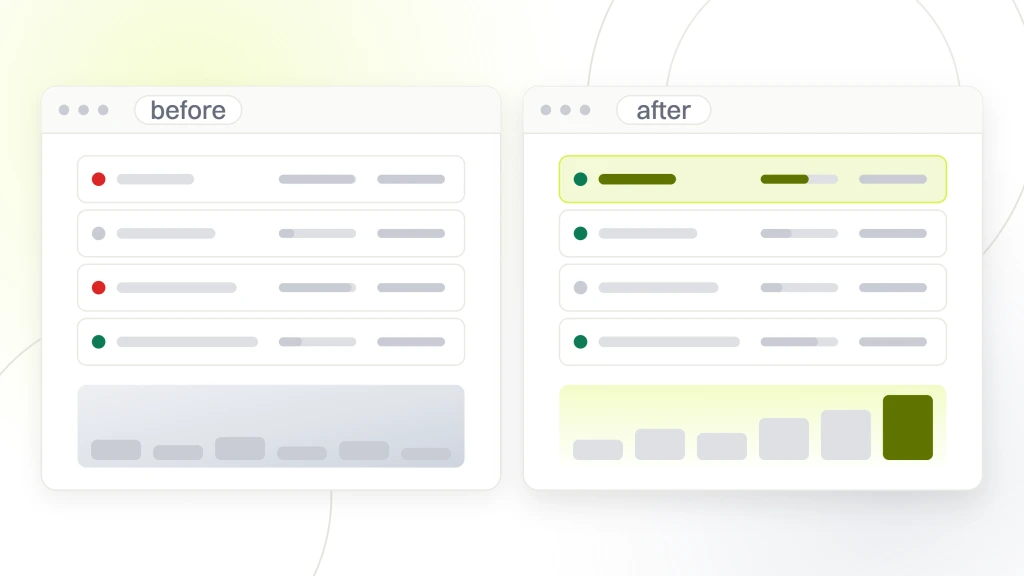
The rebuild ran on three moves. Restructured PPC by funnel stage and geography, so high-intent leads reached offices with actual capacity to serve them. Full-funnel paid social layered on top of the PPC account, with awareness through consideration through conversion campaigns built around video and demographic precision. Location-specific landing pages that matched the ad creative, keeping local trust and national brand consistency in the same click. CallRail patient-quality scoring on every call, so optimization targeted actual booked patients and not just rings on the line.
The account moved on three numbers that matter. PPC conversion rate rose 20% across all locations. Cost per call fell 30% quarter over quarter. Paid campaigns launched cleanly across 50-plus offices with a per-neighborhood bid logic that pulled patients from drivable distance instead of blanket-buying every ZIP code in the metro. That’s the shape of what a well-integrated dental Meta channel produces alongside a working Google Ads account. Read our dental Facebook ads guide for the parallel setup on Facebook-specific placements.
Targeting dental patients with meta ads going forward
Meta is shifting toward AI-generated creative variations, Advantage+ automated campaigns, and stronger reliance on Conversions API for accurate attribution. Practices running Advantage+ Shopping campaigns for cosmetic dental products (whitening kits, aligner packages) see incremental booked calls at defensible cost. Advantage+ Audience for lead generation produces mixed results in dental, because the algorithm sometimes overrides carefully built retargeting logic. Test Advantage+ with a fenced budget and clear kill rules, not with the whole account.
Conversions API adoption is now the baseline expectation for HIPAA-aware dental Meta accounts. Practices still relying on the standard pixel see attribution accuracy drift downward as iOS privacy changes compound and third-party cookies phase out further. Setup takes developer time or a middleware tool like Zapier or Segment, and the effort pays back through recovered attribution that lets the algorithm optimize on real booked-call data in place of a reduced pixel signal. Book the CAPI project in the first quarter after go-live and get it off the wish list.
If the current account has stalled on booked-call growth, or the practice is testing Meta for the first time, this structure runs cleanly on any single-location or multi-location dental account. Redefine Web builds dental Meta accounts inside the same PPC retainer that runs Google Ads, priced at $999, $1,499, $2,499, and from $4,500 a month by account size, with ad spend billed separately. Read our dental PPC services page or the Meta Business Help center on ad targeting for the platform reference on audience setup.