
Marketing agencies for emerging beauty brands get judged wrong most of the time. Founders shortlist by client logo wall or by a Clutch star rating and skip the one metric that actually predicts a good match: does the agency price for the stage the brand is in. A pre-launch indie brand doing $8,000 a month in Shopify revenue does not need the same engagement as a Series A brand doing 400,000 a month. When the price and the scope get mismatched, the brand pays for capability it cannot yet absorb and the agency delivers a diluted version of what it is actually good at. Both sides lose. That is the pattern that kills most emerging beauty brand agency relationships inside 6 months.
At Redefine Web we work with independent skincare labels, indie cosmetics brands, DTC hair care lines, and aesthetic clinics. The brands that grow steadily share three habits. They hire on stage-appropriate pricing. They keep client-owned Meta, Google, TikTok, Amazon, Klaviyo, Shopify, and Google Analytics accounts from day one. And they treat retention (Klaviyo flows, subscribe-and-save, sample kits, VIP tiers) as the primary margin lever, not an afterthought. If you want the wider vertical cut on trusted marketing agencies for beauty brands, our beauty marketing agency breakdown covers the fuller funnel, the beauty-brand-specific view lives inside our marketing agency for beauty brands playbook, and the SEO cut sits inside our beauty and skincare SEO guide.
This guide covers the model behind picking marketing agencies for emerging beauty brands in 2026. It is opinionated. It skips generic advice like find a partner who gets your vision. It walks through the stage-priced retainer bands, the account-ownership contract clauses that protect the brand, the Klaviyo flow architecture that pays back retainer fees in weeks, the TikTok and Reels creative cadence Meta needs to keep CPA down, the retail air-cover playbook for Sephora, Ulta, and Credo launches, and the real case study numbers that let you calibrate promises against reality. If your current agency is missing weekly reports, refusing to hand over the ad account password, or pricing you like an enterprise brand you are not yet, this guide gives you the exit criteria.
Stage-Priced Retainers Are the First Filter for Marketing Agencies for Emerging Beauty Brands
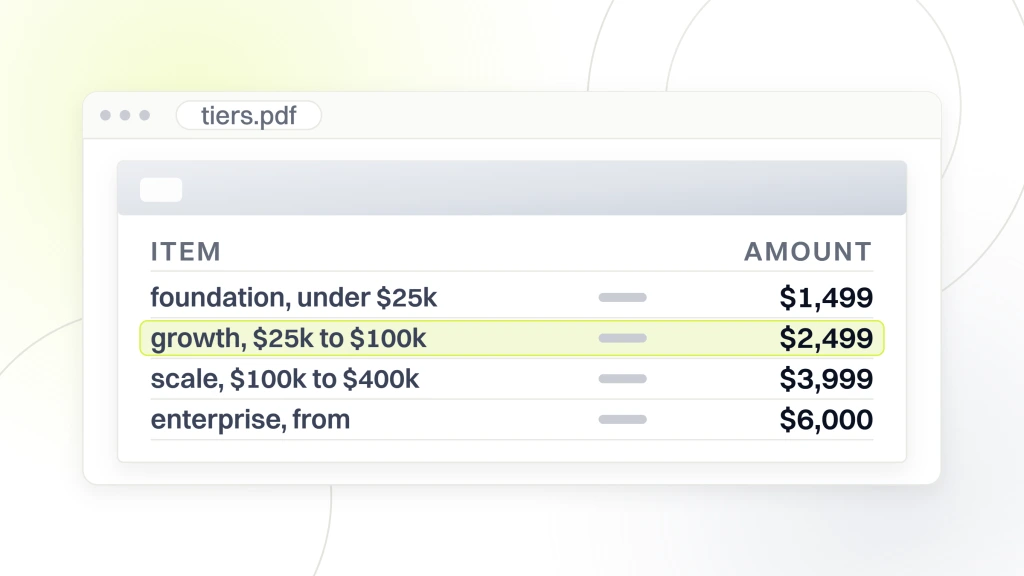
Stage-priced retainer bands are how you screen the field of beauty growth partners. The Redefine Web bands run in four tiers that map to real-world revenue stages. Foundation starts at $1,499 a month, sized for a pre-launch or early-launch brand doing under $25,000 monthly and running one channel, usually SEO plus a small Google Ads test budget. Growth runs $2,499 a month and pairs SEO with paid social or Klaviyo, sized for brands doing $25,000 to $100,000 a month. Scale sits at $3,999 a month and covers full multi-channel work with weekly reporting, sized for brands doing $100,000 to $400,000 a month. Enterprise begins at $6,000 a month and scales from there, sized for brands past $400,000 a month or launching into retail. Ad spend is billed separately and paid direct to the platforms, never marked up.
Compare that to the pricing pattern that hurts emerging brands. A $12,000 a month generalist agency retainer, aimed at brands doing $2 to $5 million a year, gets pitched to a founder doing $40,000 a month because the agency needs the revenue slot filled. The brand pays for capability (senior strategist time, dedicated PM, creative director) it cannot yet activate. Ad spend gets marked up 15 percent because the agency wants a bigger check. Six months in, the founder has spent $90,000 in retainers plus marked-up media and grown revenue by 22 percent. On stage-priced pricing, the same $90,000 would have funded 3 quarters of Scale-tier work with a specialist and produced twice the growth. Pick the price band that matches this quarter, not the deck-slide description of where you want to be.
Client-Owned Accounts Are the Non-Negotiable for Marketing Agencies for Emerging Beauty Brands
Every account has to sit in the brand’s name. Meta Business Manager, Google Ads MCC, TikTok Ads Manager, Amazon Ads, Klaviyo, Shopify, Google Analytics 4, Google Search Console, Google Tag Manager, and Google Merchant Center. The agency gets user-level access with the appropriate role. The brand keeps admin. If the agency contract ends on Friday, the brand still owns every customer email, every audience, every pixel history, every creative asset, and every flow on Monday. This one clause is the single biggest driver of long-term brand health among emerging beauty brands, and it is the one clause most agencies quietly avoid because it kills the switching cost.
The pattern we see when this clause is missing goes like this. A founder signs a 12-month contract with a boutique agency in month zero. By month 8 the CPA has drifted from $22 to $41 because the agency scaled ad spend without creative refresh. The founder starts shopping alternatives. The incumbent agency reveals the Meta pixel and Klaviyo list are technically in the agency’s Business Manager. The exit cost becomes 6 weeks of rebuilding audiences, 8 weeks of relearning pixel signal, and an email list you cannot legally export. The founder stays another year out of switching-cost paralysis. That is the value the missing clause was hiding.
Klaviyo Flow Architecture Is Where Emerging Beauty Brand Margin Actually Shows Up
Klaviyo flow architecture is the highest-margin work an indie beauty agency can do in the first 90 days. A properly built flow stack (welcome series, abandon browse, abandon cart, checkout started, post-purchase, replenishment on consumables, VIP tier, winback) routinely generates 25 to 40 percent of total revenue for a DTC beauty brand once mature. The Redefine Web build sequence in month one is welcome (5 emails plus 2 SMS), abandon cart (3 emails plus 1 SMS), post-purchase for education and cross-sell (4 emails), and a review request tied to a shipping-plus-14-days trigger. Month two adds abandon browse, replenishment for consumables (moisturizer, serum, cleanser at cycle-appropriate intervals), and a first VIP segmentation tier.
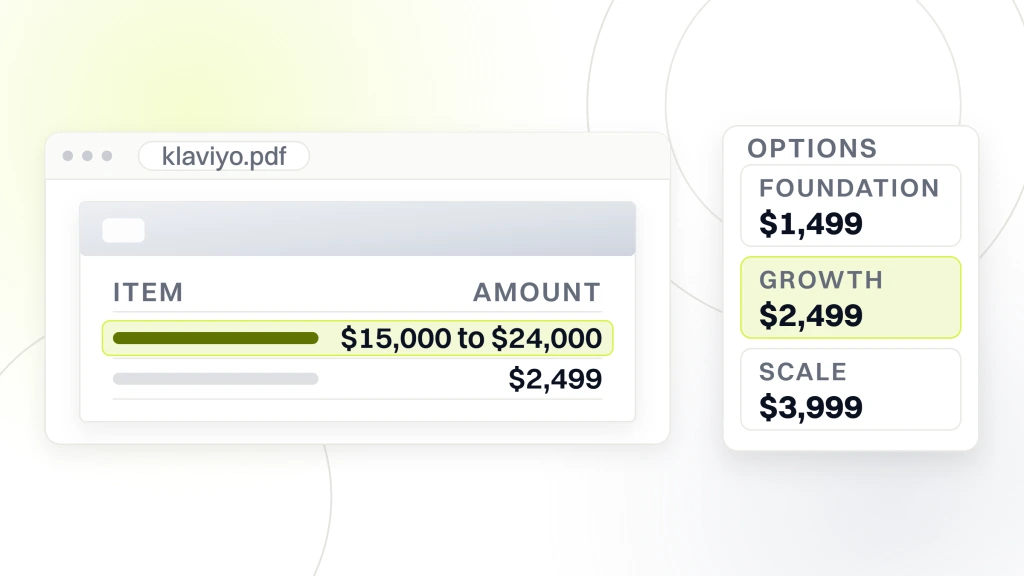
The math on those flows is unambiguous. For a brand doing $60,000 a month in Shopify revenue, a mature Klaviyo flow stack adds $15,000 to $24,000 a month in email and SMS revenue on top of paid acquisition. That revenue carries a 5 percent send cost against a 75 percent product margin, which is 60 percent margin dollars into the P&L. A Growth-tier retainer at $2,499 a month for the Klaviyo build and ongoing optimization returns 15x to 24x on retainer fees inside the first quarter and compounds monthly as list size grows. This is why serious beauty growth partners put Klaviyo in front of Meta scaling, not behind it.
According to Klaviyo beauty industry benchmarks, welcome flows in beauty average a 45 to 55 percent open rate and drive 8 to 12 percent of new-customer revenue when properly segmented. Abandon cart flows carry a 15 to 20 percent recovery rate. Those numbers scale linearly with list size and stay stable across brand stages, which is why the retainer math holds up even at Foundation tier.
TikTok and Reels Creative Cadence Is the Meta Volume Requirement
Meta and TikTok both punish creative fatigue faster than they did in 2022. A beauty brand spending $12,000 to $30,000 a month on Meta now needs 10 to 20 new creative concepts a month with 3 to 5 variants per concept to keep CPA and ROAS stable. That is roughly 40 to 100 unique assets a month. Any partner that quotes a 4-video-a-month creative deliverable is pricing for 2022 and will watch performance plateau inside a quarter. The Redefine Web build assumes weekly production sprints with UGC creators, one branded shoot day per month, and a repurposing framework that turns each shoot into 8 to 12 short-form cuts.
The creative types that actually work for emerging beauty brands in 2026 lean hard into real people. Founder-narrated ingredient explainers pull higher hook-rate than polished lifestyle ads. Before-and-after routines shot on iPhone at ring-light quality outperform studio B-roll. Reddit-thread-style honest reviews from micro-creators (5,000 to 50,000 followers) beat mega-creator sponsorships on cost-per-acquisition by 4 to 6x. Sensorial demos (foam textures, jelly formulations, tap-tap patting) match the 2026 texture trend BoF and Sensient are tracking, and Sephora and Ulta buyers are prioritizing that sensorial-focused shot list in retail-launch decks.
According to Think with Google beauty consumer research, roughly 66 percent of beauty buyers watch a product demo video before purchasing online. Short-form video (under 30 seconds) drives higher add-to-cart than long-form product explanations. The creative cadence has to feed that behavior every week, not every quarter.
Retail Launch Air-Cover for Sephora, Ulta, and Credo Runs 6 Weeks Ahead of Shelf
Retail launches are where the growth partner either earns the retainer or loses the account. Sephora, Ulta, and Credo buyers watch sell-through in the first 90 days on shelf. A brand that lands in Ulta with no paid air-cover in the trade area sells 30 to 40 percent below expectation, gets flagged for underperformance in the second quarterly review, and risks losing shelf space by month 9. A brand that lands with 6 weeks of geo-targeted Meta and TikTok air-cover in the trade area, a store-locator page on the DTC site, and a Klaviyo flow directing existing customers to nearby stores routinely beats plan by 20 percent.
Retailer program pages like Sephora Beauty Programs also require compliant creative, and the launch calendar has to align to the retailer’s promo blackouts. The Redefine Web launch playbook starts 6 weeks before shelf date. Week minus 6 to minus 4 is trade-area geo-targeting on Meta and TikTok with awareness-first creative and a store-locator landing page live. Week minus 3 to minus 1 shifts to consideration creative tagged with the retailer name and the product SKU. Launch week runs sale-first creative with retailer-specific offer codes if the retailer allows. Weeks 1 through 4 post-launch stay on trade-area geo-boost plus a Klaviyo email to existing customers within 25 miles of a stocking store. Weeks 5 through 12 rebalance to national with sell-through data feeding creative and budget allocation. That entire sequence sits inside Scale or Enterprise retainer tiers because it takes weekly optimization to run cleanly.
Case Read Beauté Aesthetics New York on the Rebuild-Plus-SEO Pattern
Beauté Aesthetics New York, a Manhattan luxury beauty and aesthetics clinic specializing in advanced treatments and cosmetic procedures for both men and women, showed up to Redefine Web with a common emerging-brand problem. A slow site, overly feminine design excluding male clients, weak conversion tracking, and SEO in poor shape with landing pages lacking structure and metadata incorrect. The Redefine Web team delivered a full website rebuild on WordPress with a gender-neutral luxury visual identity, 1-second load times, treatment-specific SEO landing pages, schema markup and structured data, and analytics tied to booking outcomes. The client-owned Google Analytics and Google Search Console handoff was baked in from day one.
Twelve months in, the numbers landed at 166 percent lead growth, 88 percent new user growth, and a 27 percent conversion rate lift. The chart pattern was a steady month-over-month climb (not a launch spike and decline) which is what happens when the SEO work sits on top of a rebuilt site instead of underneath a broken one. Emerging beauty and aesthetic brands routinely lose 40 to 60 percent of potential organic traffic to site-speed and structure issues that no amount of ad spend can fix. This is why growth partners that do not touch the site end up capped on how much they can move the needle.
Case Read Abigail Ahern on the Premium Positioning Reset
Abigail Ahern is a global leader in luxurious, trend-defying interiors. It sells high-quality furnishings and accessories that inspire bold, lasting design. The brand pattern is instructive for premium and prestige beauty founders because the problem was identical. Digital marketing leaned heavily on branded keywords and frequent discounts, which drove short-term sales but weakened the luxury image and risked losing design-conscious customers. SEO was underperforming. Thin landing-page content meant valuable non-branded search terms went uncaptured. Paid campaigns had poor keyword control on shopping ads, weak segmentation on budgets, and discount-led ad messaging.
Redefine Web restructured the program into a full-funnel, premium-aligned motion across organic and paid. SEO focused on category and product-level pages with enriched content for higher-intent searches. Paid media moved away from discount reliance, aligned ad copy and extensions with brand quality, segmented product categories into separate campaigns for better budget allocation, and refined shopping campaign queries. Retargeting through display and social nurtured site visitors toward conversions. Prospecting campaigns introduced the brand to entirely new audiences. Twelve months in, revenue grew 179 percent, paid search ROAS climbed to 1,588 percent (more than double the prior year), and paid social ROAS hit 3,000 percent. Zero discount banners were run to achieve those numbers. The pattern maps directly to premium beauty brands who want to grow revenue without training buyers to wait for the next promo.
Case Read Boogie Board on Cross-Channel Paid Discipline
Boogie Board, creator of the first reusable writing tablet in 2009 and pioneer of sustainable digital writing with liquid crystal technology, sells millions of units in 40+ countries across educational toys and stylish stationery. The paid problem when they came to Redefine Web looked like a lot of DTC beauty founders’ Meta accounts. Google Ads targeting was too broad, landing pages were unoptimized, no retargeting, no repeat-purchase nurturing, and no A/B testing discipline. Ad spend was working but not efficient.
Redefine Web ran a multi-faceted rebuild. Keyword research plus targeted Google Ads, LinkedIn Ads to extend reach, per-channel creative variants, optimized landing pages that simplified the shopping flow, product-focused lead magnets to capture engaged prospects, and automated email follow-ups plus retargeting to drive repeat purchases. The outcome across the engagement was $650,000 in managed ad spend at a $31 cost per conversion with an 11 percent gain in conversion rate. For an emerging beauty brand doing $30,000 to $100,000 a month in DTC, that cost-per-conversion band ($25 to $45 depending on AOV and margin) is exactly the discipline required to scale ad spend past $20,000 a month without CPA drift.
How Beauty Growth Partners Compare on Scope, Ownership, and Price
Not every agency shape works for every emerging beauty brand. The comparison table below is the one we walk founders through when they are deciding between a beauty-only boutique, a generalist DTC shop, an in-house hire, and a full-service partner like Redefine Web.
| Model | Monthly cost | Account ownership | Site work | Best fit |
|---|---|---|---|---|
| Beauty-only boutique | $2,500 to $12,000 | Sometimes agency-held | Rarely | Brand with a working site, needs creative and paid velocity |
| Generalist DTC shop | $3,000 to $15,000 | Usually client-held | Sometimes | Multi-brand parent, wants one vendor across verticals |
| In-house hire | $8,000 to $16,000 loaded | Client-held | Contracted out | Brand past 3 million in revenue with steady demand |
| Redefine Web full-service | $1,499 to $6,000+ | Always client-held | Yes, rebuilds and ongoing | Emerging beauty brand needing site, SEO, paid, and Klaviyo in one team |
The pattern founders miss is the site-work column. Beauty-only boutiques with strong creative reels often refuse to touch the site because it is not their skill lane. That is fine for a brand on a fast Shopify build with good schema. It is a slow poison for a brand on a bloated 2019 WordPress theme with 3-second load times, no product schema, and broken structured data. For those brands, the boutique will scale ad spend into a broken funnel and the CPA math will never work. A full-service partner rebuilds the site first and then feeds it with paid, which is why the growth curves in the Beauté and Abigail Ahern cases look the way they do.
Exit Criteria for a Beauty Growth Partner
Founders wait too long to fire an agency because they cannot articulate the exit criteria. The list below is what the Redefine Web team hands to founders when they are unsure. Trigger the exit conversation if any three of these show up inside a quarter. Weekly reporting stops arriving on time. CPA drifts more than 25 percent from month-one baseline without a corresponding creative refresh. The account team turns over more than once. The agency resists exporting Klaviyo audiences or Meta pixel data. Creative production drops below the volume the retainer priced. Ad spend gets marked up above 5 percent. The founder cannot get an answer on why a specific campaign is running.
- Weekly reports arrive on time with attribution, spend, and creative-level breakdown.
- CPA and ROAS trend lines stay inside a 15 percent band month over month.
- The account team has less than one turnover per year.
- The agency ships 10 to 20 new creative concepts a month at agreed spend levels.
- Every asset, audience, and flow is exportable inside 10 business days of a request.
- Ad spend markup is zero or capped at 5 percent maximum.
- Contract terms are 6 months with a 60-day exit clause, not 12-month lock-in.
The 2026 Pricing Reality for Beauty Growth Partners
Pricing conversations for indie beauty growth partners got noisier in 2026 because generalist agencies started quoting AI-augmented deliverables at pre-AI prices, and beauty-only boutiques quietly moved up-market to serve Series A and B brands. The honest reality is that a well-run indie beauty agency retainer at $1,499 to $6,000 a month can deliver more measurable revenue growth per dollar than a $12,000 a month boutique that spends 40 percent of its retainer on account-management overhead. The math depends on whether the retainer is spent on labor that touches the P&L or labor that produces slide decks.
Foundation tier at $1,499 a month typically funds SEO plus a small Google Ads test budget with monthly reporting. Growth tier at $2,499 a month funds SEO plus paid social plus Klaviyo flow build with bi-weekly reporting. Scale tier at $3,999 a month funds full multi-channel work with weekly reporting and creative production sprints. Enterprise tier starts at $6,000 a month and scales with retail launches, ad spend past $20,000 a month, and multi-market work. Ad spend, product photography, and paid influencer fees are billed separately at cost, always paid direct to the platform or creator. The beauty marketing retainer band and the PPC management tiers use the same four-tier structure across every vertical Redefine Web works.
The Working Model for a Beauty Growth Partner
The working model for these partners in 2026 has a repeatable shape. Week one is discovery, account audit, and access handoff. Weeks two through four are the technical rebuild pass (site speed, schema, product structured data, Klaviyo integration, GA4 conversion setup, Meta pixel, TikTok pixel, Amazon Attribution). Month two is the creative production ramp (UGC creator sourcing, first branded shoot day, first 10 to 20 concept variants live). Month three is optimization (winning creative doubled down, losing creative killed, Klaviyo segments refined, retargeting layers built). By month four the retainer starts paying back on trended data. By month six the founder should be able to answer any board question about acquisition cost, retention rate, or channel mix from a single dashboard.
According to the McKinsey State of Beauty 2026 report, brands that build owned first-party data infrastructure inside the first 12 months of a paid-growth push out-earn peers by 30 to 50 percent on lifetime value. The Klaviyo, GA4, and CDP setup work in the first month of the Redefine Web engagement is not an add-on line item. It is the load-bearing infrastructure that lets every other channel compound.
The Next Step for Emerging Beauty Brand Founders
The right first move is a paid, scoped audit that maps site health, current paid efficiency, Klaviyo flow gaps, and category-specific SEO opportunity. It costs a fraction of a monthly retainer and produces a prioritized 90-day plan the founder can hand to any agency (Redefine Web included). If the audit surfaces work worth doing, the Foundation or Growth retainer starts the following month and the audit fee gets credited against the first retainer. If it does not, the founder walks away with a real diagnostic. That is the honest way these engagements should be sold, and it is how Redefine Web sells them. Related reading on the fuller playbook lives at marketing agency for beauty products, agencies specializing in luxury beauty, our beauty marketing agency hub, and the SEO retainer page for the sustained organic work.