How to choose a web designer and developer for small business is the one decision that decides if your next website earns money or costs you eighteen months of quiet frustration. You already sense it. Three quotes, three prices, three timelines, and none of the vendors are asking the same questions. One wants to talk themes. One wants to talk SEO. One wants to talk revenue. You need a way to filter, and you need it before the next sales call.
This guide is the filter for how to choose a web designer and developer for small business in 2026. You get the freelancer vs agency for small business web development tradeoffs at real prices, seven questions to ask on every first call, portfolio red flags that predict a broken build, contract clauses that protect your monthly cash flow, and a case study on how one advisory firm swapped a broken referral pipeline for 5-times return on paid traffic. Read straight through in about twelve minutes.
Portfolio red flags that predict a broken build
Portfolio review is the second half of how to choose a web designer and developer for small business. You cannot judge a portfolio by whether the designs look good. Every portfolio looks good. That is the point of a portfolio. You judge a portfolio by whether the sites still work three years after launch, whether they load on mobile, and whether the businesses in the portfolio are still open. Ten minutes with a portfolio and a browser will teach you more about a vendor than an hour on a sales call.
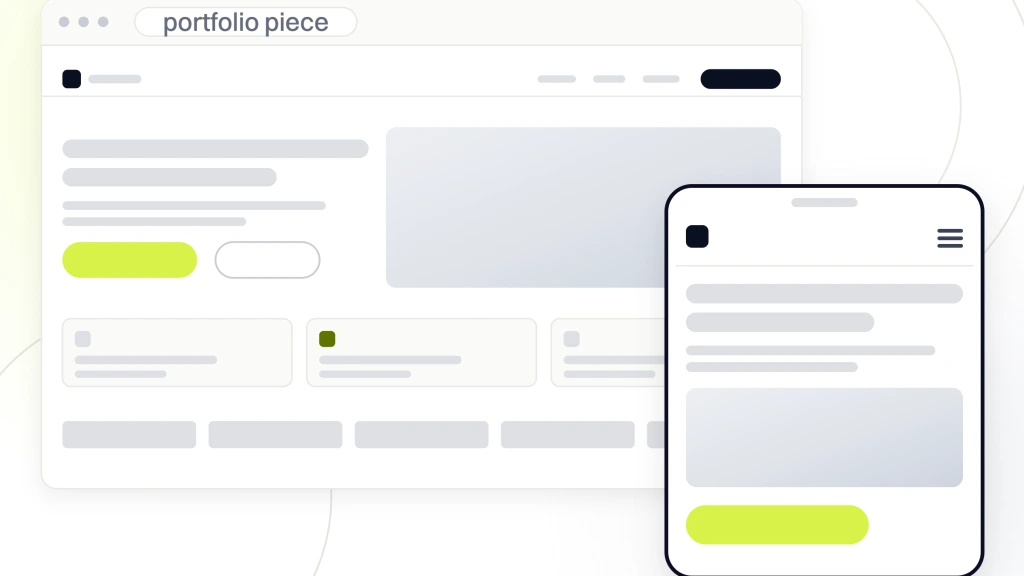
Open every live link. Load each one on your phone. Run each through Google PageSpeed Insights and look at the mobile score. Anything under 60 on a portfolio piece means the vendor does not care about performance, so your site will land in the same bucket. Sites over 90 on mobile mean the vendor takes technical craft seriously. That single check filters out about half the vendors you were considering.
- Portfolio links that go to placeholder pages or 404s
- Mobile PageSpeed scores under 60 on the vendor’s own showcase
- Every site in the portfolio uses the same generic hero layout
- Client logos with no matching case study or link
- Copyright dates older than three years without a note on ongoing work
- No mention of a live-site launch date on any portfolio piece
- Zero portfolio sites in your industry or a close adjacent one
The live-site check that vendors dread
Pick three sites from the vendor’s portfolio and email one owner of each. Two sentences. Would you hire this vendor again, and what would you change about the process. Most owners respond inside 48 hours, since they are proud of their site or they want to warn you. Either answer helps. A vendor whose past clients quietly warn strangers off is a vendor you dodge. A vendor whose past clients respond with a same-day yes and a specific compliment is a vendor worth the follow-up call.
Frame the outreach as a peer question and the response rate stays above 60%. A cold email that reads like a sales pitch or a background check gets 10% or less. Keep it to two sentences, name the vendor, and end with the specific question you want answered. Owners of small firms recognize the shape of the ask and reply fast.
Every site looks the same problem
Some vendors build every client site off the same theme with a color swap. That is fine at the $1,500 end of the market and a disaster at the $8,000 end. If ten portfolio sites share the same hero layout, the same testimonial slider, the same three-column feature block, and the same footer, you are looking at a template shop, not a custom build. Template shops are honest when they call themselves template shops. The problem is the ones that charge custom prices for a template deliverable.
Freelancer vs agency for small business web development
The freelancer vs agency for small business web development choice is the first fork every owner hits. A solo freelancer wins on price and personal attention. An agency wins on bench depth, coverage during vacations, and the ability to hand off design, dev, SEO, and copy to specialists. Neither pick is universally right. The pick that matches your risk tolerance and your growth stage is the right one for you.
Freelancers priced from $1,500 to $6,000 make sense when the site is a five-page brochure, the copy is written by you, and the timeline is flexible. Agencies priced from $8,000 to $30,000 make sense when the site has to rank, convert, and stay updated by a team that will not disappear in month nine. The freelancer vs agency for small business web development gap closes on price and widens on continuity. For a site critical to revenue, agency continuity is worth the delta.
Freelancers fail most often on scope creep in month three, not on craft. Agencies fail most often on communication when a project manager rotates off, not on code quality. Both failure modes are predictable. Ask a freelancer how they handle a scope change mid-project and listen for a documented change-order process. Ask an agency who your day-to-day contact will be and whether that person changes at the 90-day mark. Weak answers on either front tell you the failure is coming.
Real pricing when you learn how to choose a web designer and developer for small business
Real pricing for how to choose a web designer and developer for small business splits into four honest bands in 2026. Under $1,500 gets you a template with a color swap. $2,500 to $6,000 gets you a template with real copy and one custom section. $6,500 to $14,000 gets you a semi-custom design with SEO structure and lead-capture built in. $15,000 and up gets you a fully custom build with strategy, content, and a launch plan. Every band is honest. The mismatch shows up when a vendor quotes $2,800 and delivers what a $12,000 vendor would have built, or when a $12,000 vendor delivers what a $2,800 vendor would have built.
Affordable web design for small businesses is real. It has a ceiling. A $3,000 build cannot cover a full site, a full copy pass, custom photography, a Google Business Profile setup, and a first month of SEO. It can cover a five-page site with vendor-supplied copy and a Google Business Profile setup. If your revenue depends on organic search or paid ads, budget higher. If your revenue depends on referrals and repeat customers who already know your name, the affordable band works fine. See our Small Business Website Packages for the fixed-price scopes we publish.
Hidden costs that never show up on the quote
Hosting runs $12 to $80 per month for a small business site on managed WordPress. Domain and SSL run $20 to $200 per year. Premium plugins for forms, backups, and security add $150 to $600 per year. Stock photography from a real library adds $80 to $400. Copywriting handled by a separate writer adds $600 to $3,000. A vendor whose quote lists none of these has left them for you to discover on your own budget. Ask for the annual all-in number, not just the build fee.
A useful exercise is to add up the hidden costs on the vendor’s own quote before signing. If the vendor omits hosting, plugins, SSL, and email deliverability tools, add $80 to $130 per month on top of the build fee for year one. That number is the real annual cost of the site. Owners who skip this exercise land in month seven staring at a $1,400 renewal invoice they never budgeted for.
Payment schedules and the deposit trap
Legitimate vendors take 30 to 50 percent up front, 30 to 40 percent at design signoff, and the balance at launch. Vendors who ask for 100 percent up front are running a cash-flow game, not a project. Vendors who quote monthly subscriptions on a $99 to $250 per month plan for the build cost are legitimate if the subscription runs at least 36 months and includes hosting and ongoing edits. See our pay monthly website plans for the honest version of that model.
Where to find a web developer for small business work
How you find a web developer for small business work determines the shortlist you end up with. Google search alone will surface the vendors who have paid for ads, not the vendors doing the best work. The right mix is three channels, three vendors from each, and a short filter call with the top nine. That gives you a real cross-section of freelancer, small studio, and agency options before you invite anyone to a full scope conversation.
Start with vertical-specific directories. Clutch and DesignRush both list agencies by industry and by verified client review count. Second, ask three business owners in your local chamber or trade group who they used and how it went. Third, run a Google search for your city plus your industry plus web design, and note which vendors show up organically vs paid. Vendors who rank organically for competitive terms know how to build sites that rank, which is a working demo of their own service.
Filtering directory results
On Clutch, filter to at least 25 verified reviews and a 4.7-star average or higher. Anything below 25 reviews is too small a sample to trust. Anything below 4.7 stars means the vendor has a real cluster of dissatisfied clients, which is worse than no reviews at all. Filter by industry so the vendor has delivered work in a business shape close to yours. That single filter cuts the 500-vendor result set down to 8 to 20 real options for most verticals.
Read the 1-star and 2-star reviews first, not the 5-star reviews. Every vendor with 25 reviews has a few unhappy clients. The pattern of complaints is what matters. If four separate 2-star reviews mention slow response times after launch, that is a vendor red flag. If the two 1-star reviews complain about a single client’s own scope creep, that is noise. Read the pattern, not the individual reviews.
Referrals from real business owners
A referral from an owner running a similar business gives you the highest signal-to-noise ratio in the whole vendor hunt. That owner has already lived through the process. They know if the vendor answers email in month nine. They know if the invoice matched the quote. They can tell you the one thing the vendor did that they wish had gone differently. That last data point is worth more than any marketing site the vendor publishes. Two coffees with two owners beat ten sales calls with ten vendors.
CMS and stack picks for small business websites
CMS pick is part of how to choose a web designer and developer for small business too. Stack picks for small business websites are narrower than they were five years ago. WordPress runs about 60 percent of small business sites we build, since the editor is familiar, the plugin ecosystem covers most needs, and the hire pool for future edits is deep. Webflow runs 25 percent for design-forward brands that value a cleaner editor. Shopify runs the remainder for anyone selling physical or digital goods. Each pick has honest tradeoffs. A vendor who pushes their favorite platform regardless of your workflow is a vendor optimizing for their bench, not your outcome.
You need to know enough to push back if the vendor picks the wrong stack. WordPress on managed hosting is the right pick for content-heavy sites where you or a team member will publish monthly. Webflow is the right pick when the design has to look editorial and content updates are infrequent. Shopify is the only right pick for a real e-commerce operation with more than 20 SKUs. See our WordPress Website Development Services page for the stack we recommend on the majority of small business builds.
WordPress vs Webflow tradeoffs
WordPress gives you the widest ecosystem and the deepest talent pool for future edits. It costs less on monthly hosting and offers the strongest SEO plugin story through Yoast or RankMath. Webflow gives you cleaner design control and faster load speeds out of the box. It costs more on monthly hosting and has a smaller talent pool if your first vendor disappears. Both are honest picks. WordPress wins on flexibility. Webflow wins on aesthetics. The math on your side is which of those two you value more in year three.
The page builder warning
Elementor, Divi, and other WordPress page builders lock your content into their block format. Migrate away from Elementor and half your layout turns into stripped text. The pick that ages best is a WordPress theme built with the native Gutenberg block editor, which stores content in portable HTML. Vendors who default to Elementor or Divi are optimizing for their own build speed, not your long-term flexibility. Ask which editor your site will use. If the answer is a page builder, ask why.
Contract clauses that protect your cash flow
Every small business website contract is a legal document you will read once and refer back to during month seven when something breaks. Six clauses matter more than the rest. Get these six right and the rest of the contract can be boilerplate. Get any one of these wrong and you are the small business owner who calls a lawyer about a website in month nine, which is a conversation nobody wants to have.
- Scope definition with a fixed feature list, not a fixed hour count
- Revision rounds capped and priced per additional round
- Ownership transfer of code, content, and accounts on final payment
- Timeline milestones with agreed-upon delay penalties
- Ongoing support terms with a written response-time commitment
- Termination clause with a fair exit if either side needs out
Scope definition beats hour counts
A scope defined as 20 hours of work is a scope you will fight over in week six. A scope defined as five pages, one contact form, one Google Business Profile setup, and one blog category setup is a scope you can point at. Fixed feature list beats fixed hour count every time. The vendor knows what to build. You know what to expect. Any change gets a change order with its own price, which protects both sides. If the vendor resists a fixed feature list, that is a signal they intend to bill for the same feature twice.
Ownership transfer on final payment
Ownership transfer on final payment is the single clause that protects you from vendor lock-in. Domain in your registrar. Hosting account in your name. WordPress or Webflow admin credentials on your business email. Google Business Profile ownership on your Google account. All of it, transferred within 5 business days of the final invoice clearing. If the contract does not spell out ownership transfer, add a rider. Vendors who resist an ownership rider are vendors planning to hold your site hostage in year two.
What post-launch support should include
Post-launch support should include monthly software updates, weekly backups, uptime monitoring, security patching, and a scoped block of hours per month for small edits. The going rate is $150 to $600 per month depending on site size and traffic. Anything cheaper is missing a piece.
Support without a written scope turns into an argument every month. Your vendor thinks their monthly fee covers hosting and nothing else. You think it covers hosting plus every small edit. Neither of you writes anything down. In month six, when you need a new page added, the vendor charges $400 for what you thought was included. Write the scope down on day one. Include the response-time commitment for high-priority issues. Include what triggers a change order vs a normal support ticket. Both sides win when the scope is clear.
Response-time commitment
Response-time commitment is what separates a real support contract from a monthly fee. Same business day for critical issues like the site being down or the contact form silently failing. Two business days for content updates like a new team member headshot. One week for larger requests like a new landing page. Every commitment in writing. Every commitment measurable. Every commitment with a stated remedy if the vendor blows the service-level agreement. Those commitments turn a support contract from a monthly bill into a real service you can rely on.
Security patching cadence
WordPress core, themes, and plugins publish security patches every week. Miss two months of patches and your site is a target for automated bots that hit millions of URLs looking for known vulnerabilities. A real support contract runs weekly plugin updates on a staging environment first, then to production after a smoke test. That cadence catches 95 percent of security exposures before they turn into a hacked site and a rebuild bill. See the WordPress documentation on updates for the reference the vendor’s process should follow.
Small business case study on picking the right web development partner
Stonehenge Consulting PLC, a small-business tax advisory firm, came to us with a broken referral pipeline. Their existing site had been built by a freelancer two years earlier for $2,400. It looked fine on desktop, failed on mobile, ranked for nothing, and offered no clear path from a Google search to a booked consultation. The team had tried two more freelancers before landing on our first call. They had spent $6,800 on rebuilds that never made it to launch. Referrals were still driving 80 percent of new work and the pipeline was unpredictable month to month.
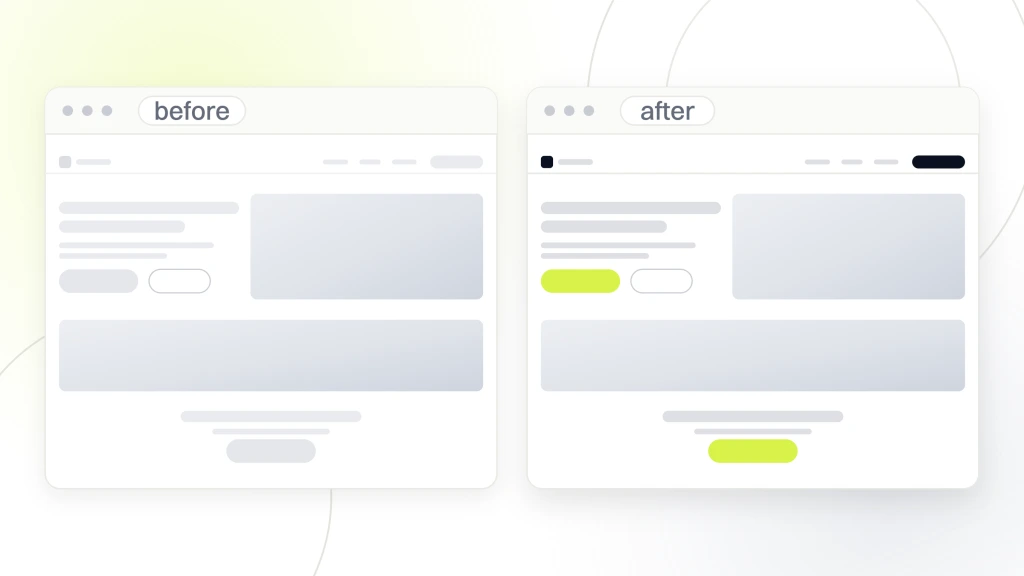
We ran the discovery, defined a fixed scope for a new WordPress build with three service pages, a real local SEO structure, and a Google Ads landing page tied to their top revenue service. Inside 90 days Stonehenge Consulting was pulling 5-times ROI on Google Ads spend, had turned local visibility into weekly booked consultations, and had replaced the unpredictable referral pipeline with a steady monthly lead flow. Every one of those results came from picking a vendor whose scope matched the outcome, not the cheapest freelancer on Craigslist.
The outcome measured 90 days out
5-times ROI on Google Ads spend inside the first quarter. 3-times increase in local visibility on Google. Weekly booked consultations replacing a referral-only pipeline. Predictable monthly lead flow the owner could plan against. Those four numbers came from a scoped small business web design and development engagement that focused on the workflow that pays back inside 90 days instead of a broad rebuild that would have missed the marketing window. That is the shape of a good small business web development hire when the calendar is tight and the stakes are real.
Lessons for your own hire
Two lessons from the Stonehenge Consulting build apply to almost every small business web development hire. First, cheap vendors who never finish the job do not save you money. Stonehenge spent $6,800 before the third rebuild landed. That is more than a mid-range agency would have charged from day one. Second, the outcome you want should be named in the scope. The Stonehenge scope named booked consultations and 5-times return on ad spend as the target. Vendors who cannot commit to a named outcome are vendors optimizing for their own deliverable list.
How to hire web developers for small business work
To hire web developers for small business work, run the shortlist through three filters. A reference call with two past clients. A technical filter call with the actual developer. A paid trial engagement of $600 to $1,500. Every step trims the risk of a bad hire.
Reference calls with two past clients per vendor filter out the vendors whose portfolio is prettier than their process. Technical filter calls with the vendor’s actual developer, not the sales lead, reveal if the code will be maintainable in year two. A trial engagement of a small piece of work like a landing page or a technical audit for $600 to $1,500 shows you how the vendor communicates, how they estimate, and how they handle the first small hiccup. If the trial goes clean, the full build is a safer bet. If the trial has issues, you saved yourself the six-figure mistake.
Technical filter call
Ask to speak with the developer who will actually build your site. Not the account manager. Not the sales lead. The developer. Ask them how they would build the header on the homepage in a way that stays fast on mobile. Ask what their process is when a plugin conflicts with the theme. Ask what happens if you need a custom feature that is not in the original scope. Answers that mention Core Web Vitals, staging environments, and change orders tell you the developer has real production experience. Vague answers tell you the vendor is subcontracting the work.
The trial engagement filter
Offer a paid trial engagement before the full build. A $600 landing page audit, a $1,200 single-page build, or a $900 technical SEO audit gives you the vendor’s real work at low risk. Watch how they scope, how they estimate the timeline, how they respond to your feedback, and how they handle the invoice. A vendor who nails a small paid trial is a vendor who will nail the full build. A vendor who fumbles the small trial will fumble the full build ten times over. See our Web Design Services for Small Business page for the full scope we run on this kind of trial.
Custom web development companies small business good options
Custom web development companies small business good options fall into three tiers. Tier one is the boutique agency that specializes in your vertical, delivers work in the $6,000 to $18,000 range, and stays on retainer for ongoing edits. Tier two is the mid-market agency that covers design, dev, and strategy under one roof and prices between $12,000 and $40,000 per build. Tier three is the enterprise agency that runs $50,000 and up, which most small businesses do not need. Match your budget and your growth stage to the tier.
The right custom web development company for your small business is not the biggest agency on the shortlist. It is the vendor whose portfolio includes at least three sites in your industry, whose average project size matches your budget, and whose team responds to email in under 24 hours during the sales process. Response time during the sales process is the single best predictor of response time during the build. If the vendor takes three days to answer a pre-sale email, they will take three days to answer a mid-project email too.
Vertical specialists win on outcomes
Vertical specialists know the questions before you ask them. A dental-focused agency knows about HIPAA-compliant contact forms, integration with practice management software, and the local SEO structure that ranks in a dental competitive market. A generalist has to learn all of that on your dime. Vertical specialists cost roughly the same as generalists and deliver better outcomes since they have already solved your problem 20 times before. If a vertical specialist exists in your industry, they are almost always the right pick over an equally-sized generalist.
Matching budget to project size
A vendor whose average project runs $8,000 will build your $8,000 project well since that is the size their team is optimized for. A vendor whose average project runs $80,000 will treat your $8,000 project as a favor and staff it with the junior team. Ask directly what the vendor’s average project size is. Aim for a vendor whose average matches your budget within 30 percent. That single filter puts your project at the center of the vendor’s business instead of at the edge.
Start your small business web designer and developer hire the right way
How to choose a web designer and developer for small business ends with a simple test. Every step above runs through the same filter. Start with the seven questions in this guide. Send them to three vendors. Compare the answers. The vendor who quotes a fixed feature list, breaks out monthly hosting and ongoing support, names a real project manager, and answers the ownership question cleanly is the vendor you invite to a full scope conversation. The vendor who cannot answer three of the seven questions is the vendor you politely thank and cross off the list. That process alone will save you the six to nine months of quiet frustration that comes with the wrong hire.
Ready to scope a small business website with a team that delivers work in your budget band. Our Web Design and Development Services covers the full engagement from discovery through post-launch. For the fixed-price scopes, see our Small Business Website Packages. For the monthly-payment model, see our pay monthly website plans. For an authoritative reference on web performance benchmarks every vendor should know, see the web.dev Core Web Vitals reference.