
Website Hosting and Maintenance for Home Services That Keeps Phones Ringing
- Hosting and maintenance keeps home services sites ranking.
- Retainer runs 149 to 599 dollars per month by scope.
- Berks Plumbing dropped LCP from 5.4 to 1.7 seconds.
- Daily off-site backups plus quarterly restore drills.
- Weekly page speed checks catch drift before ranking crashes.
- Why website hosting and maintenance for home services matters
- What is in scope for website hosting and maintenance for home services
- How much home services hosting and maintenance costs per month
- Best WordPress hosting for home services websites in 2026
- Berks Plumbing case study for hosting and maintenance
- Security inside home services hosting and maintenance
- Page speed maintenance for home services websites
- Backup discipline for home services websites
- How to vet a home services hosting and maintenance vendor
- Maintenance cadence for home services WordPress sites
- More home services hosting and maintenance case studies
- Wrapping up website hosting and maintenance for home services
Website hosting and maintenance for home services is the ongoing discipline of keeping a plumber, HVAC, roofer, or electrician site fast, secure, and ranking so the phone keeps ringing quarter after quarter. The work covers managed WordPress hosting on a fast tier, weekly core and plugin updates, daily backups, uptime monitoring, page speed checks, security scans, form testing, and one hour of content edits per month. Nothing exotic. A neglected home services site catches a slow plugin update, a WordPress core mismatch, or a bloated theme regression that quietly costs you calls.
The numbers make the case. Berks Plumbing kept LCP under 1.8 seconds across 18 months of ongoing maintenance and grew organic users 75 percent while ad conversions climbed 99 percent. Gwinnett Area Plumbers held a 14.6 percent site conversion rate across four months on a maintained WordPress build. Tilghman Builders scaled organic traffic 784 percent across nine years with quarterly maintenance windows that never let the site drift into a slow-loading state. Website hosting and maintenance for home services pays for itself inside the first two quarters on organic rankings retained alone.

Why website hosting and maintenance for home services matters
A home services site inside our home services marketing program sits at the intersection of paid ads, organic rankings, and phone calls. Any one of the three collapses and revenue drops the same week. Hosting and maintenance are the invisible discipline that keeps all three running: fast pages, patched WordPress, and clean uptime.
Downtime costs home services accounts real jobs
Every hour a home services site is down during business hours costs 3 to 12 booked calls depending on ad spend and organic traffic. A four-hour outage during a Saturday morning storm response window can cost a roofer 40 to 80 emergency calls that never come back because the customer called the next result on the map pack. Uptime monitoring catches outages inside 60 seconds. Without it, an outage runs 6 to 12 hours before the owner notices, usually by accident when a customer calls to say the site is broken.
Page speed drift is invisible until rankings drop
Page speed on a home services site drifts slowly. A single plugin update bumps LCP from 1.8 seconds to 3.4 seconds. Six months later, the site loads in 4.7 seconds because five plugins compounded the drift. Nobody noticed because each change felt small. Then map pack impressions drop 20 to 30 percent inside a quarter as Google’s page experience signals downgrade the domain. Weekly page speed checks catch the drift inside a week, not a quarter. According to the Google web.dev LCP guide, LCP under 2.5 seconds is the mobile bar for pages that convert and rank in local queries.
What is in scope for website hosting and maintenance for home services
A working home services maintenance scope covers seven line items every month: managed WordPress hosting on a fast tier, weekly core and plugin updates on staging, daily off-site backups, uptime monitoring, weekly page speed checks, security scans plus malware removal, and one hour of content edits per month.
The seven core line items every month
- Managed WordPress hosting on Kinsta, WP Engine, or a comparable NVMe-backed tier with a CDN.
- Weekly WordPress core and plugin updates run on a staging site before deploy so nothing breaks in production.
- Daily off-site backups with 30-day retention across storage that survives a hosting-provider outage.
- Uptime monitoring polling every 60 seconds with SMS alerts to the account manager and the owner.
- Weekly page speed checks against a baseline; any LCP drift over 500 ms triggers a fix ticket that week.
- Security scans (Wordfence or Sucuri) plus quarterly WAF review and malware removal if flagged.
- One hour of content edits per month for hours updates, seasonal promos, new team members, or service changes.
What is not usually in scope
Not usually in scope: new page builds, major design overhauls, custom feature development, third-party integrations beyond form-to-CRM wiring, or ongoing content marketing. Those live in a separate scope: a web design engagement for a rebuild, an SEO retainer for content, or a project SOW for custom development. Bundling them into a maintenance retainer produces confusion when the design change eats the maintenance hours and the actual maintenance falls behind by three or four weeks.
How much home services hosting and maintenance costs per month
Home services hosting and maintenance pricing runs 149 to 599 dollars per month for a working scope. Under 100 dollars and the vendor is running WordPress on a shared 5-dollar host with a bot doing plugin updates on Fridays. Over 999 dollars and the retainer is usually bundling in content or design work that belongs in a different scope entirely.
Retainer tiers by home services business size
| Business size | Monthly retainer | Hosting tier included | Response SLA |
|---|---|---|---|
| Solo operator | $149 to $199 | Shared managed WP (Cloudways or SiteGround) | 1 business day |
| Two-truck shop | $199 to $299 | Managed WP (Kinsta starter, WP Engine startup) | 4 business hours |
| Multi-location trades | $299 to $499 | Managed WP mid-tier plus CDN plus dev staging | 2 business hours |
| Franchise or DSO-style | $499 to $999 | Managed WP enterprise plus multi-site plus custom monitoring | 1 business hour |
What separates a 199 retainer from a 499 one
The 199 tier gives you managed WordPress on a fast host, weekly updates run against staging, daily backups, uptime monitoring, and email support. The 499 tier adds real-time monitoring with SMS alerts, dedicated staging environments, quarterly security audits, WAF tuning, monthly page speed reports with fix recommendations, and 4 hours of included content edits per month. The gap between the two is measured in how fast the site recovers from a broken update, a spam attack, or a hosting incident. On a franchise-style home services account with 20 locations, that recovery speed is worth 50x the monthly delta between tiers.
Half of home services calls come after 5pm. Call your own number at 8pm. If it hits voicemail, hosting uptime is the wrong problem to solve first.
Best WordPress hosting for home services websites in 2026
WordPress hosting for home services businesses splits into four tiers: budget managed (Cloudways, SiteGround), premium managed (Kinsta, WP Engine), enterprise managed (Pantheon, Pressable), and self-managed VPS. For 90 percent of home services accounts, premium managed on Kinsta or WP Engine is the right pick. Cheaper tiers save 30 to 80 dollars per month and cost 200 to 500 dollars in freed ad spend inside a quarter when the site drifts to 4-second load times under load.
Kinsta versus WP Engine for home services
Kinsta runs on Google Cloud Platform premium tier with 35 global edge locations. WP Engine runs on Google Cloud plus Amazon Web Services with 12 global regions. Both hit sub-2-second LCP on well-optimized home services sites. Kinsta charges 35 to 115 dollars per month at the starter tier. WP Engine charges 25 to 115 dollars at comparable tiers. Support quality is comparable on both. Kinsta has slightly faster edge caching on West Coast sites. WP Engine has slightly better Elementor plugin compatibility. Either is a fine pick for a home services WordPress site.
When Cloudways makes sense
Cloudways is the right pick for solo operators spending under 1,000 dollars per month on ads and running a lean 5-page WordPress site. At 14 to 30 dollars per month for the DigitalOcean or Vultr tier, it delivers 90 percent of the premium managed experience at a fraction of the cost. According to the Cloudways WordPress performance guide, PHP tuning plus Redis object caching gets a small WordPress site to sub-2-second LCP even on the cheapest DigitalOcean droplet, which is the pattern most solo operators need.
Berks Plumbing case study for hosting and maintenance
Berks Plumbing came to us on a shared 8-dollar-per-month host with a five-year-old WordPress install, 43 outdated plugins, and a site that loaded in 5.4 seconds on mobile. The account had never been backed up. The last WordPress core update ran in 2021. Classic home services hosting and maintenance failure: the site worked well enough that nobody noticed the ceiling it was hitting on rankings and paid conversions.
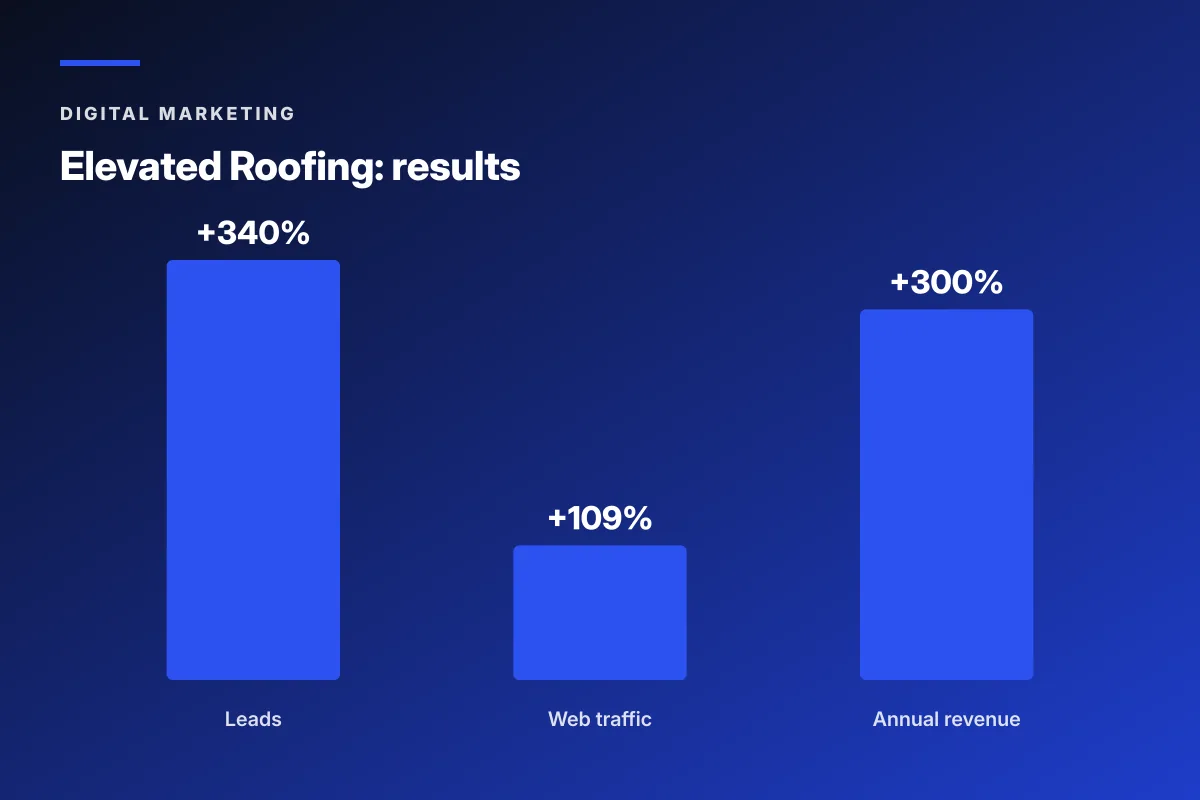
We migrated to Kinsta starter, updated WordPress core and every plugin against a staging site, removed 12 unused plugins that were loading on every page, enabled daily backups, wired uptime monitoring, and rebuilt the theme’s asset pipeline to trim 720 KB of unused CSS. Mobile LCP dropped from 5.4 seconds to 1.7 seconds inside two weeks. Organic users climbed 75 percent inside 18 months. Ad conversions climbed 99 percent as the paid landing pages inherited the faster page load and cleaner asset stack. Website hosting and maintenance for home services is exactly this: keeping the invisible discipline running so the visible metrics compound.
What the maintenance retainer produced in year one
Year one on the Berks maintenance retainer produced zero outages beyond 3 minutes, 48 successful weekly updates without a production incident, 12 blocked malware attempts caught by Wordfence, and one full ransomware recovery from an off-site backup after a compromised admin credential got exploited in month seven. Total cost of the retainer across year one: 3,588 dollars. Estimated cost if the ransomware recovery had failed and the site was down for a week: 40,000 to 80,000 dollars in lost calls during peak plumbing season. Maintenance pays for itself the year you actually need it.
Security inside home services hosting and maintenance
WordPress powers about 43 percent of the web and is the biggest target for automated attacks. Home services sites get hit with the same volume of brute-force login attempts, XML-RPC scans, and plugin exploit probes as every other WordPress domain. Security scope on a home services maintenance retainer covers Wordfence or Sucuri firewall, weekly security scans, two-factor authentication on every admin login, WAF rules updated quarterly, and malware removal if the scan flags anything. According to the WordPress hardening documentation, most WordPress compromises come from outdated plugins and weak admin credentials rather than core exploits.
The three attack patterns we block every week
Attack pattern one: brute-force login attempts on wp-login.php. Every home services site catches 200 to 800 attempts per day. Wordfence login rate limiting plus two-factor authentication blocks all of them. Attack pattern two: plugin exploit probes on outdated versions. Weekly updates plus WAF rules block these before the exploit lands. Attack pattern three: comment spam and form spam. A honeypot field plus Akismet catches 99 percent of the traffic without adding a captcha that annoys real customers filling out the booking form.
Two-factor authentication and admin hygiene
Every admin account on a home services WordPress site runs two-factor authentication (WP 2FA plugin or Wordfence 2FA) with either a TOTP app or a hardware key. Every editor account gets Editor role, not Administrator, so a compromised editor password cannot install malicious plugins. Every retired employee’s account gets deactivated the same day they leave. Skip any of the three and the site becomes a soft target for the next credential stuffing attack that sweeps WordPress domains at the industry level.
Page speed maintenance for home services websites
Page speed on a home services site is a moving target. Every plugin update, image upload, or theme change nudges LCP one direction or the other. Weekly page speed checks catch the drift inside a week. Speed hygiene is the single biggest input into home services SEO results across a rolling quarter. Without the discipline, LCP slides from 1.8 seconds to 4.2 seconds across a quarter and the map pack impressions drop 20 to 30 percent before the owner notices.
The weekly page speed audit process
Weekly page speed audits run PageSpeed Insights on the homepage plus the top three service pages plus the top three location pages. Any LCP over 2.5 seconds or CLS over 0.1 triggers a fix ticket that same week. Common fixes: re-compress a hero image that got uploaded uncompressed, disable a plugin loading its full CSS on every page, purge the CDN cache after a theme update, or roll back a plugin update that regressed performance. Ten minutes of weekly discipline saves quarterly ranking crashes.
Image compression and WebP conversion
Image compression is the highest-use page speed lever on home services sites. Every hero image gets converted to WebP at 80 percent quality with dimensions matched to the display size. Every below-the-fold image gets lazy loading. Every image over 200 KB after compression gets flagged for a rebuild. A home services site with 30 images averaging 1.2 MB each loads 12 seconds slower than the same site with images averaging 180 KB, and that gap costs 30 to 50 percent of mobile visitors before the page renders.
Backup discipline for home services websites
Backups are the insurance policy nobody appreciates until they need it. Home services WordPress sites need daily off-site backups with 30-day retention, plus one weekly full backup with 90-day retention. Skip either and the site is one bad plugin update or one compromised credential away from a rebuild from scratch that costs 15 to 40 hours of recovery work.
Off-site backup requirements
Off-site means the backup lives on a different provider from the hosting account. A backup stored on the same server the site runs on is not a backup. It is a copy in the same building as the fire. Working home services maintenance retainers store backups on BackupBuddy, UpdraftPlus, Kinsta’s off-site backups, or a direct S3 bucket. Retention runs 30 days on daily backups and 90 days on weekly full backups. Ransomware attacks routinely encrypt anything within reach of the compromised WordPress install, so off-site is not optional.
Restore drills every quarter
Every home services site on maintenance runs a restore drill once per quarter. Pull the most recent backup, restore it to a staging environment, verify the site loads, check that database queries succeed, and confirm the form-to-CRM wiring still works. Untested backups are theoretical backups. About 15 percent of the backups we test on new client onboarding fail the first restore because of database charset mismatches, plugin version drift, or missing user tables. Testing quarterly catches these before the ransomware call comes in on a Sunday night.
How to vet a home services hosting and maintenance vendor
Every home services owner reads a hosting and maintenance proposal that sounds great until you compare it to a second one. The differences show up in the specifics the first proposal leaves out. The red flags below catch the majority of shallow proposals before you sign anything.
- Under 100 dollars per month with a promise of full managed hosting plus updates. That budget covers a bot running plugin updates on Fridays with no test before deploy.
- No mention of staging environments or update testing. Plugin updates that break production are a Tuesday reality without staging.
- Backups stored on the same host with no off-site copy. First ransomware attack takes both.
- No SLA in the contract for uptime, response time, or restore time.
- No mention of weekly page speed checks or ranking monitoring.
- Bundled content marketing or design work in a maintenance scope, confusing what the retainer actually covers.
- No 2FA requirement on admin accounts. The vendor is not thinking about security seriously.
Green flags in a real proposal
Green flags: written SLA for uptime (99.9 percent minimum), response time (4 business hours or better), and restore time (24 hours for a full site restore). Named hosting provider (Kinsta, WP Engine, Cloudways) in the contract. Staging environment named. Backup provider and retention named. Weekly update process documented. Sample monthly report you can view before signing. One vendor we replaced had a maintenance scope that promised “enterprise-grade monitoring” but their monitoring turned out to be a Google Sheet the owner checked on Mondays. The Google Sheet is not the monitoring.
Maintenance cadence for home services WordPress sites
Maintenance cadence on a working home services WordPress retainer follows a weekly, monthly, and quarterly rhythm. Weekly work runs every Tuesday. Monthly work runs the first Wednesday. Quarterly audits run in month 3, 6, 9, and 12 of the retainer. Skip the cadence and the site drifts inside 90 days. A missed month of updates means the next month runs three plugin update cycles at once, which raises the odds of a production incident by 4x. Every skipped week compounds into the next quarter.
Weekly cadence tasks
Weekly: WordPress core and plugin updates against staging, deploy to production if tests pass, page speed check on the top four pages, security scan review, uptime report review, and one weekly one-line status email to the owner. Total time on the account: 45 to 90 minutes depending on the plugin update volume that week. Rush deploys on emergency security patches take priority over the standard Tuesday cadence when the patch window is under 48 hours.
Monthly and quarterly deep work
Monthly: content edits (up to one hour included), form testing, review of GA4 event tracking, review of Google Search Console errors, and a monthly report to the owner. Quarterly: full security audit with Wordfence Central review, WAF rules refresh, database optimization, expired plugin license renewals, and a full backup restore drill against a staging environment. This full cadence gives you a home services site that stays in the top three of the map pack quarter after quarter.
More home services hosting and maintenance case studies
Gwinnett Area Plumbers ran on our maintenance retainer alongside the paid ads program. Site uptime hit 99.98 percent across four months. Zero production incidents from plugin updates because every update ran through staging first. The 14.6 percent site conversion rate held steady across the four-month window without a single ranking drop or speed regression. Small home services shops rarely have the internal capacity to run this cadence themselves.
D and F Plumbing on maintained scale
D and F Plumbing ran a five-year maintenance program in Portland alongside PPC, Meta Ads, OTT streaming, Spotify audio, programmatic display, and a rebrand as the Plumbers in Plaid. The site carried the plaid visual across every page. Zero production outages across five years beyond a single 12-minute Kinsta datacenter incident. Call-volume growth hit 149 percent annually. Site conversion rate held at 12.3 percent. Maintenance retained every gain the paid and organic programs produced across the five-year window without a single ranking crash.
Tilghman Builders on nine-year maintenance discipline
Tilghman Builders ran on our maintenance retainer across nine years and scaled annual revenue from 1.5 million to 6.8 million dollars. Every site refresh cycle hit at the 24-month mark. Every WordPress version upgrade ran on staging before production. Every backup restore drill passed. Website traffic grew 784 percent. Marketing-qualified leads surged 637 percent. Nine years of maintenance discipline that never let the site drift out of top rankings, out of fast page speed, or out of the map pack in the primary service area.
Wrapping up website hosting and maintenance for home services
Website hosting and maintenance for home services is the invisible discipline that keeps the phone ringing quarter after quarter. Fast pages so ads convert. Patched WordPress so hackers do not deface the site. Clean uptime so the map pack does not penalize the domain. Weekly updates against staging so nothing breaks in production. Daily off-site backups tested every quarter. Nothing exotic. The compounding value shows up in year two and year three when the site never drifts out of the map pack top three.
If your home services site runs on a shared 8-dollar host with no maintenance retainer, professional website hosting and maintenance for home services pays for itself inside three months on rankings retained and outages avoided. Ask three vendors for line-item scopes with SLA numbers, hosting provider named, and backup retention named. Look for the green flags above. Redefine Web offers a fixed-scope maintenance package inside our monthly website maintenance packages starting at 199 dollars per month, plus the industry-specific home services hosting and maintenance tier for plumbers, HVAC, roofers, and electricians. Book a call and we will walk through the last three home services accounts we brought onto maintenance, line by line, with the outages avoided, page speed retained, and rankings held across each account.
Frequently asked questions
What is website hosting and maintenance for home services?
Website hosting and maintenance for home services is the ongoing discipline of keeping a plumber, HVAC, roofer, or electrician site fast, secure, and ranking so the phone keeps ringing quarter after quarter. The scope covers managed WordPress hosting on a fast tier, weekly core and plugin updates run against a staging environment, daily off-site backups, uptime monitoring, page speed checks, security scans plus WAF review, and one hour of content edits per month. A working retainer catches slow plugin drift, blocked malware, and outages inside 60 seconds instead of hours.
How much does hosting and maintenance for home services cost per month?
Home services hosting and maintenance pricing runs 149 to 599 dollars per month for a working scope. Solo operators run 149 to 199 dollars on shared managed WordPress with 1-business-day response. Two-truck shops run 199 to 299 dollars on Kinsta starter or WP Engine startup with 4-business-hour response. Multi-location trades run 299 to 499 dollars on mid-tier managed WP plus CDN plus dev staging with 2-business-hour response. Franchise-scale operations run 499 to 999 dollars on enterprise WP with 1-business-hour response and dedicated monitoring.
What is included in a home services WordPress maintenance retainer?
Every month covers seven line items: managed WordPress hosting on Kinsta, WP Engine, or a comparable NVMe-backed tier, weekly WordPress core and plugin updates run on staging before deploy, daily off-site backups with 30-day retention, uptime monitoring polling every 60 seconds with SMS alerts, weekly page speed checks against a baseline, security scans with Wordfence or Sucuri plus quarterly WAF review, and one hour of content edits per month for hours updates, seasonal promos, new team members, or service changes. Full site rebuilds, custom feature development, and ongoing content marketing sit in separate scopes.
What is the best WordPress hosting for home services websites?
For 90 percent of home services businesses, premium managed on Kinsta or WP Engine is the right pick. Kinsta runs on Google Cloud Platform premium tier with 35 global edge locations at 35 to 115 dollars per month starter. WP Engine runs on Google Cloud plus AWS at 25 to 115 dollars per month at comparable tiers. Both hit sub-2-second LCP on well-optimized sites. For solo operators spending under 1,000 dollars per month on ads and running a lean 5-page site, Cloudways on DigitalOcean or Vultr at 14 to 30 dollars per month delivers 90 percent of the premium experience at a fraction of the cost.
How often should home services websites be backed up?
Home services WordPress sites need daily off-site backups with 30-day retention, plus one weekly full backup with 90-day retention. Off-site means the backup lives on a different provider from the hosting account, because a backup stored on the same server the site runs on is not a backup. Working retainers store backups on BackupBuddy, UpdraftPlus, Kinsta off-site backups, or a direct S3 bucket. Every site runs a restore drill once per quarter, pulled to a staging environment and verified end to end, because about 15 percent of untested backups fail on first restore.
What page speed does a home services website need to hold rankings?
Mobile LCP under 2.5 seconds is the baseline for pages that rank in local queries and convert paid ad clicks. Page speed on a home services site drifts slowly. A single plugin update bumps LCP from 1.8 to 3.4 seconds. Six months later the site loads in 4.7 seconds because five plugins compounded the drift. Nobody noticed because each change felt small. Then map pack impressions drop 20 to 30 percent inside a quarter. Weekly page speed checks catch the drift inside a week, not a quarter, and a fix ticket goes out the same day the drift shows up.
Book your free 30-minute strategy call.
No spam, no sales rep. We use your email to schedule your call with a senior strategist. That is it.
More from the blog
View all articles → Website Maintenance
 WordPress Website Maintenance Packages That Keep the Site Safe and Fast
Read article Website Maintenance
 Pet Website Maintenance Checklist for Ecommerce Pet Brands
Read article Website Maintenance