
Affiliate marketing pet products is the third revenue channel most DTC pet founders skip, mostly since the words affiliate and partner still carry 2011 baggage from spammy coupon sites. Run it right in 2026 and the channel becomes a stable of vets, breeders, rescues, and small pet creators sending qualified buyers on a 12% to 20% commission you only pay after checkout closes. You run a direct-to-consumer pet brand. Independent DTC pet brands rank against Chewy with a pet food SEO stack tuned to category intent. Meta prospecting stopped scaling in Q2, Google Shopping is eating 36% of gross margin, and the CFO wants a third channel pulling its own weight by month 9. The full creator-side rhythm sits inside our influencer marketing for pet products deep read.
This is the plan we run with pet DTC founders on retainer. What an affiliate program really is inside a Shopify or WooCommerce store, which vet, breeder, and rescue partnerships convert the best, how to size a pet creator network without paying influencer rates, what commission structure keeps partners engaged past month 3, and which tracking stack ties every checkout back to the right partner. Read straight through in about 11 minutes.
Vet clinic partnerships anchor affiliate marketing pet products
Vet clinics are the trust anchor of any affiliate marketing pet products program. Pet owners take a vet recommendation more seriously than any influencer post or paid ad. A clinic that quietly hands out a starter card with your brand at wellness visits converts at 3 to 5 times the rate of a coupon-site placement, and the customer stays subscribed 18 to 26 months on average. That is the anchor tier every serious pet affiliate program builds first.
Clinics rarely accept per-order commissions on their own products, so the structure that works inside affiliate marketing pet products is a flat quarterly sponsorship of $1,200 to $3,600 per year, plus a small 4% to 6% repeat-order commission on referred customers after month 6. The clinic gets a branded starter card for every new-patient bag, a dedicated tracking URL, and a monthly report showing which of their referred owners re-ordered. You get a stream of high-trust buyers whose first order rarely returns and whose 12-month retention beats every paid channel on the mix.
Breeder and rescue partnerships inside affiliate marketing pet products
Breeder and rescue partnerships are the second tier of affiliate marketing pet products. They are smaller per partner than vets but broader in reach. A responsible breeder sends every litter home with a starter kit and instructions. A rescue sends every adoption family home with a resource packet. Both are natural affiliate placements that cost nothing on the placement side and convert the buyer at the exact moment they need every recommendation they can trust.
Breeder starter-kit structure that works
The starter-kit motion pays a breeder $18 to $32 per puppy or kitten placed with a branded starter kit, plus 12% to 18% commission on the first 3 orders the new owner places inside 90 days of the placement. The starter kit holds a 2-week food supply in the right lifestage formula, a training-treat sample pack, and a printed care card with a unique tracking link to your store. Breeders send you a monthly count of placements. You wire payment on the 15th of the following month. The math. 40 active breeder partners placing an average of 8 puppies per month produces 320 new customer acquisitions per month at a blended cost of roughly $26 per customer, which beats paid social by a factor of 4 on a lifetime-value basis.
Rescue partnerships that scale differently
Rescues won’t accept per-order commissions since most are 501(c)(3) nonprofits with restrictions on commercial arrangements. What they’ll accept is a flat monthly product donation of $800 to $2,400 in retail-value inventory, plus a 5% to 8% revenue share on adoption-family orders paid to the rescue as a tax-deductible donation. The rescue lists your brand in every adoption packet, mentions you in the monthly newsletter, and adds you to the sponsor page of the rescue website. Adoption families are the highest-intent pet buyers on the market. They buy 3.4 times more product in the first 90 days than the average new pet parent, and rescue-referred customers stay subscribed 18 to 26 months on average.
Pet creator networks inside affiliate marketing pet products
Pet creators on TikTok, Instagram, and YouTube are the third tier of affiliate marketing pet products. They are cheaper than pet influencer sponsorships (which run $2,000 to $18,000 per post at the mid tier) and often produce better attribution since every post carries a tracked link. The creator tier is where the volume shows up. A well-run pet creator program has 200 to 600 active creators posting an average of 1.4 pieces of content per month.
Sizing creator commissions by follower band
Nano creators (1,000 to 10,000 followers) earn 15% to 22% commission on their first-order attribution and 8% to 12% on repeat orders inside 90 days. Micro creators (10,000 to 100,000 followers) earn 12% to 18% on first order and 6% to 10% on repeats, plus a $50 to $200 flat sample credit per quarter to cover content creation. Mid creators (100,000 to 500,000 followers) get 10% to 15% commission plus a paid content package for the first 2 collaborations to prove the fit. Above 500,000 followers you leave the affiliate tier and enter influencer sponsorship territory, which our influencer marketing ecommerce programs and attribution guide covers in depth.
Creator recruitment channels that keep working
The recruitment channels that keep producing signups past month 3. A public creator application page on your storefront with a 2-minute video walkthrough of the commission structure, direct outreach to creators already tagging competitor brands, invitations to the pet parents who already order from you and post about it, and cross-promotion from your first cohort of signed creators. Aim for 50 signed creators in month 1, 150 by month 3, and 400 by month 12. Most brands ceiling around 600 active creators, since the account-management overhead climbs sharply past that point.
Content site and coupon partners in affiliate marketing pet products
Content sites and coupon partners round out affiliate marketing pet products. This is the tier most DTC founders think of first and usually the last one that pays back. Rover, The Wildest, Dogster, and a handful of pet blogs drive real traffic on review and comparison keywords. Honey, Rakuten, and Capital One Shopping drive volume but attribute traffic that would have converted anyway.
Editorial partners that really earn placement
Content-site affiliates worth pursuing are the ones with real editorial standards and organic search traffic on your target queries. The Wildest, Dogster, The Spruce Pets, and a handful of breed-specific blogs (Bulldog Nation, Labrador Site, Cat Fanciers Association) rank on comparison and review keywords for terms like best fresh dog food subscription 2026 or best joint supplement for senior Labradors. These sites accept 10% to 18% commission plus a $250 to $600 flat placement fee for a featured review. The tradeoff. They will honestly compare you to 3 competitors in the same article. That transparency is what makes the placement earn. Related read: our DTC pet subscription guide.
Coupon and cashback tier gets a lower rate
Coupon and cashback affiliates get a lower rate since most of their attributed revenue is last-click on customers who would have bought anyway. A blended 3% to 5% commission is standard, with strict rules against loading Honey or Rakuten codes on top of stackable site-wide promos. Some brands exclude coupon affiliates entirely and see no revenue loss. Others accept the tier and cap it at 4% of program spend. Both approaches work as long as the tracking is honest.
Commission structure comparison across affiliate marketing pet products tiers
Different partner tiers pay differently since their trust weight, effort per placement, and buyer lifetime value all differ. Cramming every partner into one flat commission rate leaves revenue on the table at the top of the ladder and burns program spend at the bottom.
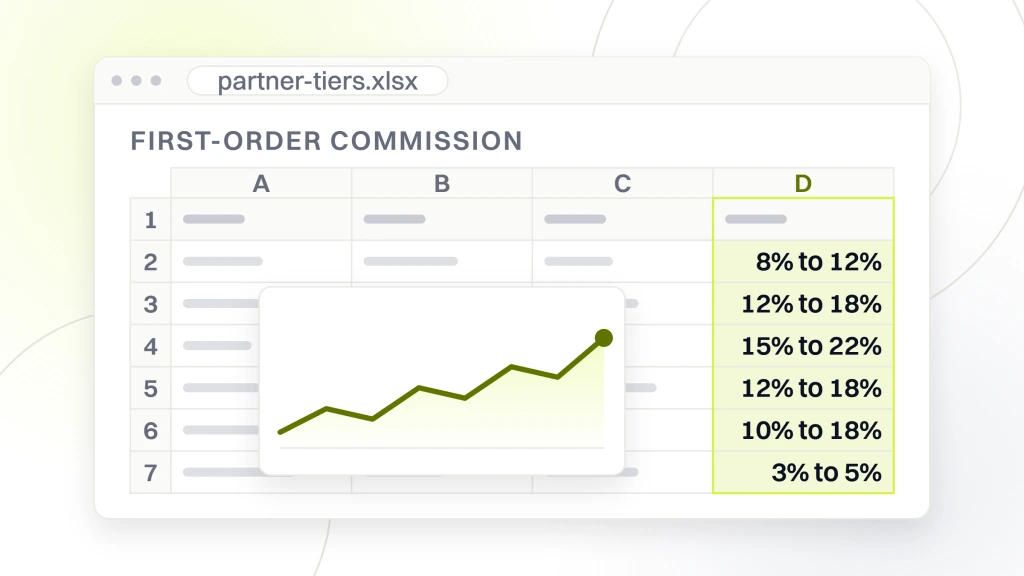
| Partner tier | First-order commission | Repeat-order commission | Flat fee or sponsorship | Payment cadence |
|---|---|---|---|---|
| Vet clinic | 8% to 12% | 4% to 6% | $1,200 to $3,600 per year | Quarterly plus monthly commission |
| Breeder | 12% to 18% | Not usually | $18 to $32 per placement | Monthly on the 15th |
| Rescue nonprofit | 5% to 8% (donation) | 3% to 5% (donation) | $800 to $2,400 monthly product | Monthly donation transfer |
| Nano creator | 15% to 22% | 8% to 12% | None | Monthly on the 1st |
| Micro creator | 12% to 18% | 6% to 10% | $50 to $200 quarterly sample | Monthly on the 1st |
| Editorial content site | 10% to 18% | 4% to 6% | $250 to $600 placement fee | Net 30 monthly |
| Coupon and cashback | 3% to 5% | 2% to 3% | None | Net 30 monthly |
The blended effective commission across a healthy program lands between 6% and 9% of partner-attributed revenue, well below the 22% to 34% that paid social plus paid search combined typically eats out of gross margin. That gap is why affiliate marketing pet products earns a permanent slot on the channel mix once the program clears month 6. Programs that flatten every partner to a single 15% rate see nano creators churn inside 90 days since the rate reads low next to competitor programs, and vet clinics feel awkward taking any per-order commission at all. Tiered structure is not paperwork overhead. It is the mechanism that keeps every partner type earning at the level their trust weight deserves.
Founders who set the tiers once and revisit them at month 6 usually catch the 2 or 3 adjustments the initial program missed. A rescue tier that needed a slightly higher product-donation baseline. A micro creator tier that needed the sample credit bumped from $50 to $150. A vet tier that needed the quarterly sponsorship pushed from $1,200 to $2,400 for the top-performing clinics. Small structural adjustments at month 6 lock in the next 6 months of retention.
Tracking stack for affiliate marketing pet products in 2026
Tracking is the layer that decides if your affiliate marketing pet products program pays partners honestly and blocks fraud at the same time. Safari’s Intelligent Tracking Prevention, iOS App Tracking Transparency, and Chrome’s Privacy Sandbox have all reshaped how affiliate attribution works since 2023. The 2016 cookie-only stack is dead. You need a modern setup that mixes first-party server-side tracking with a small trusted-partner cookie layer.
Platforms worth running on
Refersion, Impact, and PartnerStack are the 3 mainstream platforms pet DTC brands run in 2026. Refersion is the entry option at $89 to $299 per month and integrates cleanly with Shopify and WooCommerce out of the box. Impact is the mid-market option starting around $500 per month with better fraud controls and enterprise reporting. PartnerStack sits above at $1,200 to $2,400 monthly with strong multi-partner-type support for programs that mix creators, referrals, and B2B affiliates. Google’s server-side tag manager documentation covers the first-party tracking layer every platform now expects.
Fraud controls that pay for themselves
Every affiliate marketing pet products program bleeds 4% to 11% of commissions to fraud without controls. The mistake we see. Platforms auto-approve every conversion. Real controls need IP address deduplication, device fingerprinting on the checkout, a 30-day return window before commission payout locks, and a manual review flag for any partner that suddenly triples volume week over week. Small brands set the controls once at platform onboarding and forget them. Larger brands run a monthly fraud review of the top 20 partners by volume. Both approaches keep fraud below 3% of program spend, which is the number that separates a program worth running from a program that quietly burns cash.
How to recruit partners for affiliate marketing pet products
Recruitment is where 60% of new affiliate marketing pet products programs stall. The founder signs a platform, drops a link on the storefront, and waits. Nothing happens since affiliate partners do not find you. You find them. Recruitment is an active outbound motion for the first 6 months of any pet affiliate program.
- Warm the network first. Sign your 10 friendliest partners before you build the platform. Their signup buys credibility for the next 50 pitches.
- Weekly outbound target. 40 partner pitches per week for the first 6 months. Half vet clinics, a quarter breeders and rescues, a quarter creators.
- Two-minute pitch video. Record it once, embed on the application page. Founders who record it themselves sign twice as many partners as founders who write a wall of text.
- Reply inside 24 hours. Every partner application gets a personal reply from a real human inside a day. Slower response kills 40% of signups.
- First-order guarantee. Guarantee $50 to $200 flat payout on the partner’s first attributed order, even below commission threshold. Removes signup risk.
- Monthly newsletter. Every partner gets a two-paragraph email once a month with new product launches, top-earner call-outs, and payout confirmations.
Recruitment as an active motion sounds like sales work since it is sales work. Brands that treat affiliate as passive drop off inside 90 days. Brands that treat it as outbound sales run programs that clear 8% to 14% of revenue by month 12. The founders who stall at 2% forever are the founders who assumed the platform would do the work.
Content and creative your affiliate marketing pet products partners genuinely need
Partners with no content asset library make bad content and post it once. Partners with a well-stocked library post 4 times more often and rank the content higher. The creative brief for an affiliate marketing pet products library covers 7 asset types and refreshes quarterly.
Assets the library carries
Product hero photography in 3 background variations. Lifestyle photography with a dog and a cat in home settings. Ingredient explainer graphics for the top 3 products. Fifteen-second, 30-second, and 60-second video cuts for TikTok, Instagram Reels, and YouTube Shorts. A pre-written product review template that partners can personalize instead of writing from scratch. A copy-paste caption library with 10 variations per product to avoid duplicate-content penalties. A branded discount code generator so every partner has a unique code without you spinning them up manually. The content marketing for ecommerce guide we published last quarter covers the pillar and distribution logic that scales this asset library across every channel your partners use.
Refresh cadence that keeps partners active
Quarterly library refreshes are the difference between a program that plateaus at month 6 and one that grows through the second year. Every quarter the library gets 3 new hero product shots, one new lifestyle series with a different pet, 2 new video cuts per product, and a fresh caption library. The email announcing the refresh goes to every active partner with a subject line naming the exact product line the new assets cover. Partners who use the new assets in the first 2 weeks earn a $50 bonus. That mechanic drives 40% to 60% adoption inside the first month of a refresh, versus 8% to 15% adoption when no bonus is attached.
Payout cadence and partner retention inside affiliate marketing pet products
Payout cadence is the number one predictor of partner retention inside affiliate marketing pet products. Programs that pay late by even 7 days lose 22% of active partners inside 3 months. Programs that pay on time every month keep 78% to 84% of partners active past month 12.
Payout mechanics that keep trust intact
The cleanest cadence. Commissions earned in month N pay out on the first day of month N+2 after a full 30-day return window closes. Vet clinics get a quarterly wire on top of monthly commission for the sponsorship fee. Rescues get a monthly wire that includes both the commission share and the product-donation cash equivalent for their tax records. Creators get a monthly wire on the first, with a threshold of $25 before payout releases (below threshold rolls to the next month). Every partner sees their pending balance in the platform dashboard updated daily. That transparency is the second-biggest retention driver behind on-time payment.
Off-boarding partners honestly
Some partners won’t perform. They sign up, post twice, and disappear. Off-boarding them cleanly is part of a healthy program. At month 6 of inactivity, the platform sends an automated wake-up email offering a $50 bonus for one new post. At month 9, a personal email from the program manager asking whether they want to stay in the program. At month 12, they get removed with a friendly note thanking them for the initial work. That off-boarding motion keeps the active-partner count honest and the reporting readable. A program that shows 800 partners but 40 active is misleading. A program that shows 320 partners and 240 active is a program you can manage.
Cost and payback of affiliate marketing pet products at retainer scale
Running affiliate marketing pet products in-house or on retainer both work. What decides which is the founder’s time budget. In-house means one full-time program manager at $65,000 to $95,000 all-in. On retainer means a specialist team runs recruitment, creative refreshes, and payout hygiene at $1,600 to $3,800 per month based on program size.
Retainer pricing at Redefine Web starts at $1,499 per month at the entry tier and runs from $6,000 per month at the full-service tier, with 6-month contracts standard. The entry tier covers strategy, platform selection, first-cohort recruitment, and monthly reporting. The mid tier covers active recruitment of 40 to 80 partners per quarter, quarterly creative library refreshes, and payout hygiene. The full tier adds dedicated program management, dedicated creator recruitment, and monthly fraud review. Full retainer terms live on our pet products marketing retainer page. A DTC pet brand at $200,000 monthly revenue typically starts at the mid tier and expects the affiliate channel to run 8% to 12% of monthly revenue by month 9, which is the payback threshold at which the retainer covers itself with margin left over.
The math on in-house versus retainer usually breaks around $1M monthly revenue. Below that, a retainer at $1,800 to $3,200 covers everything a program needs and frees the founder to run product and fulfillment. Above $1M monthly, a dedicated in-house program manager makes sense since the partner count crosses 300 and the daily account management workload turns into a real full-time role. Some brands run a hybrid at scale, keeping in-house day-to-day and using a retainer for quarterly creative refreshes and creator recruitment sprints. The hybrid works since the 2 workloads have different rhythms and burnout profiles, and splitting them keeps both healthy through the second and third year of the program.
A real affiliate marketing pet products engagement in production
Pet Shop · Independent Retail · UK, a family-run independent pet retailer, came to us with a small local presence, a light Google Business Profile, and no partner program at all. The paid channels were plateauing and the founder wanted a compounding referral engine that would keep pulling once ad budget flexed down. We built a lean 3-tier program around local vets, breed-club connections, and micro pet creators. Over the first quarter, that program plus the search work drove a +158% jump in local inquiries on a quarter-one curve.
The Pet Shop cohort started with 6 local vet clinics on flat-sponsorship structures without per-order commission. By month 6, the first cohort of referred customers had produced enough retention data to shift 2 of the clinics to a hybrid sponsorship-plus-commission structure. In parallel, we recruited 22 pet creators across nano and micro tiers on a 15% first-order and 8% repeat commission structure with a $75 quarterly sample credit for the micros. Content-site partners came later at month 9, once the trust anchor was already sending steady traffic.
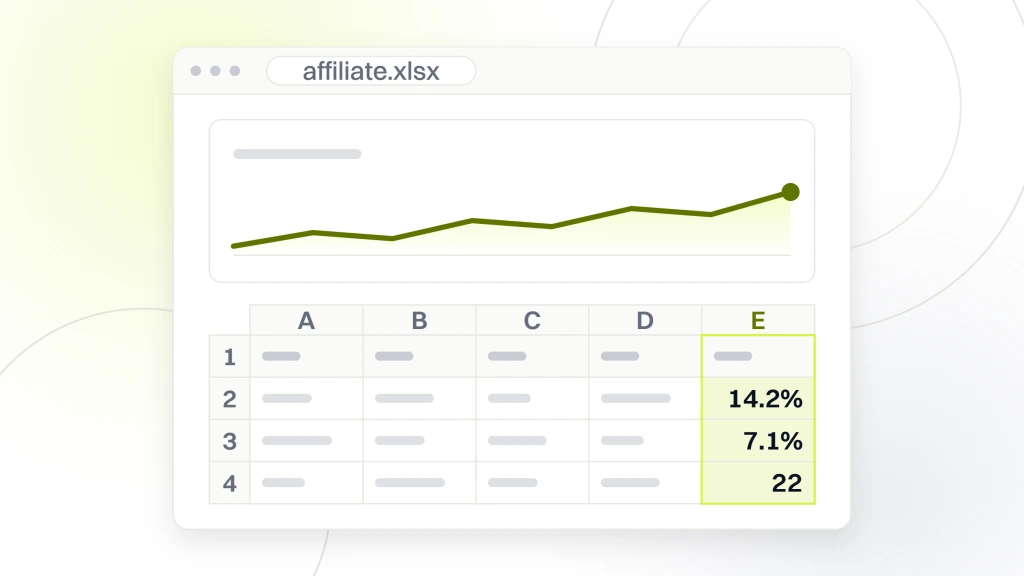
Over the first 12 months, the affiliate channel produced 14.2% of monthly revenue at a blended 7.1% effective commission rate. Vet-clinic-referred customers ran a 23-month average retention window, more than double the baseline paid channel retention. The paid search work in parallel pushed click-through rate to 8.87% and delivered 455 qualified conversions in 5 months, and the affiliate program continued compounding alongside as a stable revenue floor when Meta CPMs climbed through Q4.
The pattern that worked for Pet Shop · Independent Retail · UK repeats across most of the pet DTC brands we take on affiliate retainer. Vet clinics as the trust anchor. Creators as the volume driver. Content sites as a lagging tier that catches ready-to-buy comparison traffic. Rescues as a slow-building but sticky retention driver. Every tier fed the tracking stack through the same server-side layer so attribution stayed clean even after Safari and Chrome tightened their cookie policies in mid-2024 and again in late 2025. Programs that never sorted the tracking layer bled 12% to 18% of their attributed commissions in that window. Programs that got the server-side layer right kept attribution honest and kept partners paid.
Where affiliate marketing pet products fits your DTC stack
Affiliate marketing pet products sits between paid acquisition and organic retention on your channel map. It costs less per acquired customer than paid social, retains customers longer than any coupon-driven channel, and grows through referral compounding instead of budget compounding. Brands that budget for affiliate as a real channel from month one usually see it running 10% to 18% of revenue by month 18. Brands that treat affiliate as a set-and-forget storefront widget usually see it running under 2% forever. The channel deserves the same rigor a founder gives paid social or paid search. Dedicated headcount or dedicated retainer, weekly recruitment targets, monthly reporting, quarterly creative refreshes, and honest off-boarding of inactive partners.
The outside read worth keeping on hand during program planning is Google’s server-side tagging documentation for the tracking layer. Our pet industry SEO company guide covers the organic channel that pairs with affiliate for a compounding growth stack.
Founders on the fence about starting a program usually land in one of 2 categories. The first. The store is under $50,000 monthly revenue and the founder is still figuring out product-market fit. Affiliate is premature at that stage since there is nothing stable for partners to sell yet. The second. The store is between $80,000 and $2M monthly revenue with a repeat-purchase product and a clear buyer persona. That store is exactly where an affiliate program pays back the fastest and where every month of delay costs revenue the paid channels are already struggling to hold.
Work with Redefine Web on your pet affiliate program
If your DTC pet brand is between $80,000 and $2M monthly revenue and paid channels are climbing 22% to 34% of gross margin, an affiliate program is the third channel that pays back inside 9 months. Redefine Web builds the platform selection, recruits the first cohort of vets, breeders, rescues, and creators, delivers the creative library, and runs the payout hygiene at $1,499 to $6,000 per month on a 6-month contract. Book a 20-minute call and we will walk your storefront, name the first 10 partners we would sign, and price the retainer that fits your revenue tier. Start the conversation or read our pet product marketing agency page for the full engagement structure.