Most DTC founders run influencer marketing ecommerce programs the way a first-time renter shops for furniture. They grab whatever fits the room this week and worry about how it wears in six months. They pay a macro creator ten thousand dollars for a single post, watch the metrics look good for 48 hours, then wonder why the program produced no repeat revenue and no reusable creative. The gap is not budget. The gap is a program built without sourcing rules, briefs, whitelisting, or attribution baked in from day one.
This guide walks a real playbook across the four decisions that matter. Sourcing the right roster across two tiers. Writing briefs and contracts that protect usage rights. Whitelisting top posts into paid amplification. Instrumenting the attribution stack so revenue reads honestly at the quarterly review. Our ecommerce marketing agency hub covers the wider retention plus paid model this creator plan feeds into.
Why influencer marketing ecommerce programs fail early
Most DTC creator programs collapse inside the first two quarters. The founder hired for reach and paid for posts, not for fit and a system. Reach without attribution reads as vanity. Posts without whitelisting produce zero paid amplification. Program design decides revenue, not the follower count on the roster.
The pattern we audit every month runs the same way. A brand signs three macro creators at $8,000 to $15,000 per post. The posts hit, the founder screenshots the analytics tab, and the paid team asks for usage rights that were never negotiated. Six weeks later the retainer conversation reaches the boardroom. The CFO asks for revenue attribution, and the marketing coordinator produces a spreadsheet that reads as guesswork. That’s the shape of a creator program built without operational plumbing.
For DTC pet brands, our affiliate marketing pet products guide breaks down vet, breeder, rescue, and creator tier commission structure. The fix here is not a bigger creator budget. The fix is a program design that sources 20 to 40 small creators per quarter across two tiers, negotiates usage rights inside every contract, whitelists top posts into paid campaigns, and measures against first-touch and last-touch revenue rather than post-level engagement. Brands that run the plumbing on the front end produce compounding revenue from creators over 12 to 24 months. Brands that skip it produce marketing bills the retainer cannot defend.
Sourcing creators inside an influencer marketing ecommerce plan
Sourcing is the first operational decision the program owner makes, and the one most brands rush. A creator roster gets built the same way a hiring pipeline gets built. Ten qualified candidates for every seat, real interviews, contract terms locked before the first shipment goes out. Founders that treat sourcing as a DM conversation on Instagram usually end up with unpredictable delivery and mixed content quality across the roster.
The two-tier roster that scales
Tier one covers micro-influencers in the 10,000 to 100,000 follower range with engagement rates between 3 and 6 percent. Tier one creators post branded content on their own feeds and carry the audience-expansion job. Tier two covers UGC-only creators, often under 5,000 followers, who deliver raw phone-shot footage the brand posts on brand-owned channels. Tier two carries the paid ad creative library. A functional program runs 8 to 12 tier one creators and 6 to 10 tier two creators active at any moment, rotated every quarter.
Sourcing channels that actually produce
- Existing customer opt-in. A post-purchase email inviting customers to apply produces the highest-fit roster for any DTC brand under $10 million revenue.
- Creator marketplaces. Aspire, Grin, Insense, and Popular Pays produce vetted candidates with rate cards visible upfront, saving 40 to 60 hours per quarter.
- Instagram plus TikTok manual outreach. Category hashtag search plus DM outreach produces higher fit but takes 5 to 10 hours per roster seat.
- Agency-managed rosters. Boutique creator agencies handle sourcing, contracts, and rounds of edits for a $2,000 to $6,000 monthly fee.
- Referral pipelines. Every signed creator gets asked to refer two peers, which produces a self-refreshing candidate pool inside 90 days.
Every candidate runs through a five-question vetting call before the contract goes out. Verify audience geography against Shopify buyer geography. Verify audience age band against Shopify buyer age band. Check the last 30 posts for competing brand promotions. Check the platform analytics screenshot for consistent monthly reach. Confirm the creator can deliver on a two-week turnaround with two rounds of edits. Skip the call and roughly one in three roster seats produces content that never converts.
Briefs and contracts for influencer marketing ecommerce programs
Briefs and contracts are the operational spine of any real creator program. A tight brief cuts the revision cycle from three rounds to one. A well-negotiated contract covers usage rights, exclusivity windows, delivery timelines, payment terms, and disclosure requirements. Brands that skip either produce a stack of orphan content the paid team cannot use.
The brief that produces usable content
A functional creator brief runs one page. Product context in 60 words. Audience persona in 40 words. Content hook or angle spelled out with two examples. Three do-not-say guardrails, usually around competing brand mentions, medical claims, and pricing language. Five mandatory shots or beats the creator must include, plus five reference clips from the brand’s paid library. Deliverables list including raw footage, edited final, aspect ratios, and captions. Payment schedule and disclosure language ready-made. Brands that follow this brief template cut content revision cycles from three rounds to one on 8 out of 10 deliveries, which is where real cost savings on a creator retainer show up over a full quarter.
Contract clauses that protect the program
Every creator contract carries the same 12 clauses. Content ownership after delivery. Paid usage rights window of 6 to 12 months across Meta, TikTok, and Google Ads. Whitelisting permission for Spark Ads and Meta Partnership Ads. Category exclusivity window of 30 to 90 days. Two rounds of edits included. Payment terms of net 15 after delivery. FTC disclosure language pre-approved. Cancellation clause with kill fee. Content approval workflow with named brand contact. Delivery timeline with penalty for lateness. Confidentiality on product roadmap. Governing law. Brands that skip the usage rights clause end up paying the creator a second time to license the same post for paid ads, which triples the effective cost per piece. Our sibling read on ecommerce social media marketing channels and playbooks covers how creator content plugs into the broader social plan across Instagram, TikTok, Pinterest, and YouTube.
Campaign types inside influencer marketing ecommerce
Not every creator activation runs the same way. The campaign type gets picked based on the goal, the budget tier, and the product category. Running the wrong campaign type produces mixed metrics and a founder who cannot tell whether the program is working. The table below is the shortcut our accounts use to match campaign type to goal within the first strategy call.
| Campaign type | Primary goal | Roster tier | Budget per creator | Best product category |
|---|---|---|---|---|
| Product seeding | Content library plus organic mentions | Tier 2 UGC | Product plus $0 to $250 | Beauty, food, small home goods |
| Sponsored posts | Reach plus brand association | Tier 1 micro | $500 to $2,500 | Apparel, footwear, accessories |
| Whitelisted Spark Ads | Paid amplification of top posts | Tier 1 micro | $1,000 plus ad spend | Beauty, apparel, tech |
| Live shopping streams | Direct revenue plus community | Tier 1 with sales skill | $1,500 plus revenue share | Beauty, food, home decor |
| Long-form YouTube reviews | Consideration-stage research | Tier 1 subject expert | $3,000 to $12,000 | Tech, kitchen, fitness gear |
| Affiliate content deals | Sustained revenue on commission | Tier 1 with audience trust | 10 to 25 percent commission | Considered purchases, subscription |
| Ambassador programs | Long-term brand equity | Tier 1 handpicked | $1,000 monthly retainer | Athletic, lifestyle, community brands |
The table starts the campaign design conversation, and the founder picks the mix based on the quarter’s revenue goal. A brand targeting first-time customer acquisition weights the mix toward whitelisted Spark Ads and sponsored posts. A brand targeting content library depth for the paid team weights toward product seeding and UGC deliveries. A brand targeting consideration-stage research for a high-ticket product weights toward long-form YouTube reviews. Read the goal alongside the campaign types and you get a program that pays back the retainer within two quarters. Skip that step and you burn budget across all seven types at low volume.
Whitelisting and paid amplification plays
Whitelisting is where these programs stop being nice-to-have and start paying back real revenue. Running a creator post as a paid ad through the creator’s handle produces click-through rates 40 to 90 percent higher than the same post run under the brand handle. The audience trusts the creator voice more than the brand voice on cold prospecting audiences.
Spark Ads and Meta Partnership Ads mechanics
TikTok Spark Ads run a creator’s organic post as a paid ad using the creator’s handle rather than the brand handle. The click path goes to the brand product page. Meta Partnership Ads run the equivalent on Instagram and Facebook. Both require the creator to grant permissions inside the platform’s business tools, and both need the permission language spelled out in the original contract. Setup takes 15 minutes per creator per campaign. Ad manager treats the creator’s handle as the ad account for reporting, which keeps the metrics clean. Brands running Spark Ads on 4 to 8 top-performing organic pieces per month typically see cost per acquired customer drop 25 to 45 percent versus cold brand-handle prospecting on the same product line. Sibling reads on best practices for ecommerce marketing across paid organic and CRM cover the paid-media discipline in more depth.
Refresh cadence and creative rotation
Whitelisted creative rotates every 10 to 14 days on Meta and every 7 to 10 days on TikTok before performance decay sets in. That decay rate means the paid team needs a steady creator pipeline delivering 15 to 25 new pieces per month to keep the ad rotation fresh across the top three campaigns. Brands that under-invest on the sourcing side end up rotating the same three creator pieces for three months, and cost per acquired customer climbs 60 to 120 percent as the audience learns the creative. The math ties back to roster size on the front end. Bigger sourcing pipeline plus tighter briefs equals fresher creative equals lower blended cost per acquired customer.
Attribution stack for influencer marketing ecommerce
Attribution is the layer that decides whether the program gets renewed at the next quarterly review. Founders that stop at post-level engagement produce vanity dashboards. Founders that instrument the full attribution stack tie creator activity back to actual store revenue, which is the number the CFO cares about.
The five instruments that produce honest numbers
Every creator gets a personalized discount code, tracked as a coupon inside Shopify or WooCommerce. Every creator gets a personalized landing URL with UTM parameters, tracked inside GA4. Every whitelisted ad runs its own dedicated ad account campaign with clear naming conventions. Post-purchase surveys ask new customers how they heard about the brand, with the creator names as answer options. GA4 first-touch and last-touch attribution reports get pulled monthly against the discount code and UTM data. Read the five instruments together and you get a revenue attribution model that survives finance-team scrutiny. It exposes which creators actually produce revenue versus which ones produce reach without conversion. Sibling reads on ecommerce marketing dashboard attribution and reporting cadence cover the dashboard side in more depth.
Assisted contribution versus last-click math
Creator programs produce a heavy share of assisted revenue that never shows up in last-click reports. A buyer sees a TikTok creator post on Monday, searches the brand name on Wednesday, receives a retargeting ad on Friday, and checks out through direct URL on Saturday. Last-click credits direct traffic and misses the creator entirely. Running a GA4 assisted-conversions report weekly, alongside a Shopify post-purchase survey overlay, exposes the assisted revenue and stops the program from getting killed on a bad last-click read. Brands that read only last-click typically undervalue creator revenue by 30 to 60 percent, which is enough to end the retainer conversation on a program that was actually profitable.
Budget tiers for an influencer marketing ecommerce program
Budget decides program shape more than any other single input. A brand with $3,000 monthly for creator activity cannot afford the same roster or campaign mix as a brand with $30,000 monthly. Trying to run a mature-brand program on a launch-brand budget produces thin coverage across every campaign type and no revenue anywhere. Picking the right tier and running it well beats faking the next tier up.
Program structure by monthly budget
- $1,500 to $3,000 monthly. Product seeding only, 8 to 12 tier two UGC creators, product cost plus small delivery fees, content used on brand-owned channels.
- $3,000 to $8,000 monthly. Product seeding plus 3 to 5 tier one micro sponsored posts, no whitelisting yet, one creator agency contact managing sourcing.
- $8,000 to $20,000 monthly. Full two-tier roster, 6 to 10 whitelisted Spark Ads campaigns, dedicated creator ops person or agency partner, monthly attribution dashboard.
- $20,000 to $60,000 monthly. Adds ambassador program, long-form YouTube reviews, live shopping streams, and a full-time creator ops manager plus agency amplification support.
- $60,000 monthly and above. Multi-market rosters, category exclusivity deals, ambassador equity structures, and dedicated brand-side legal review for every contract.
The tier a brand fits is the tier the brand actually funds monthly, not the tier the founder wants to run. Brands that overreach one tier up produce weaker results than brands that run the correct tier well for four consecutive quarters. Discipline beats ambition on program budget every time. The compounding gain shows up in the third and fourth quarters once the sourcing pipeline, contract templates, and attribution dashboard mature into an operational system rather than a series of one-off activations.
What a good creator program looks like in month three
A healthy program at month three carries a signed roster of 14 to 18 creators, three whitelisted Spark Ads campaigns live on Meta or TikTok, a monthly attribution dashboard that reconciles discount codes, UTMs, and post-purchase survey data, plus a rolling content library of 40 usable pieces for the paid team.
The operational rhythm inside a month
Week one runs sourcing calls with new candidates and reviews last month’s attribution dashboard with the founder. Week two sends briefs and contracts to newly signed creators, ships product for seeding, and reviews the paid team’s shortlist of top-performing organic pieces for whitelisting. Week three collects deliveries, runs the two-round edit cycle, and pushes approved content into the paid ad rotation. Week four reviews performance data from the previous month’s whitelisted campaigns, decides which creators get renewed for the next quarter, and writes the next roster brief. That cadence produces a program that runs itself once the founder builds the templates.
Signals the program is compounding
Cost per acquired customer on whitelisted creator campaigns should sit 25 to 45 percent below cold brand-handle prospecting after 90 days. Content library depth should exceed 40 approved pieces available to the paid team at any moment. Roster refresh should replace roughly a third of the seats every quarter without production gaps. Post-purchase survey attribution to creator names should climb from under 3 percent in month one to above 12 percent by month six. Repeat purchase rate from creator-sourced first-time customers should track within 10 percent of the site-wide repeat rate. If those five signals move together, the retainer is producing real revenue. If any single signal stalls, the sourcing or brief system needs a review before the paid amplification layer.
Platform mix across TikTok, Instagram, and YouTube
Not every platform carries a creator program equally. The platform mix inside a real DTC creator plan gets picked based on product category and buyer research stage, not founder preference. Trying to run every creator campaign across every platform produces mediocre volume everywhere and strong volume nowhere.
TikTok for discovery and short buying cycles
TikTok favors raw creator content shot in real environments, and the platform’s algorithm surfaces creator posts to prospecting audiences the brand has not reached yet. Beauty, food, small home goods, and apparel under $80 average order value all pay back on TikTok creator content. Program budget between $5,000 and $15,000 monthly on TikTok covers a two-tier roster running weekly deliveries plus 2 to 4 whitelisted Spark Ads campaigns. Attribution runs looser on TikTok than on Meta, so the program owner accepts assisted-conversion windows rather than last-click precision. TikTok Shop integration adds a direct revenue path for eligible categories, and creator live streams add a real revenue channel for beauty and food brands willing to host regular weekly streams.
Instagram for polish and Pinterest for long consideration
Instagram carries the polished creator content and the shopping tag close. Apparel, footwear, beauty, and lifestyle brands lean on Instagram creator collabs plus Reels for reach. Pinterest carries less creator activity by default but pays back for home decor, wedding, and craft brands that partner with 3 to 6 Pin-native creators per quarter. YouTube carries the consideration-stage research and works best for tech gadgets, running shoes, and specialty kitchen equipment where the buyer researches for weeks. Pick two platforms and run them well. That beats spreading across four platforms at low volume, which is the pattern our sibling read on video marketing for ecommerce formats platforms and examples covers in more depth for the video-first side of the plan.
How an ecommerce influencer marketing agency helps
An ecommerce influencer marketing agency shortens the learning curve on sourcing, contracts, briefs, whitelisting, and attribution by 6 to 12 months. The agency team runs the operational plumbing, and the founder keeps the brand voice, product roadmap, and creative direction inside the brand.
What the agency owns operationally
Agency responsibilities cover creator sourcing calls, contract templates and legal review, brief writing, delivery quality control, whitelisting setup on Meta and TikTok, paid ad rotation for creator pieces, monthly attribution dashboard reporting, and quarterly roster refresh recommendations. The brand keeps the final approval on every contract, every brief, and every whitelisted campaign. That split lets the founder stay in the creative direction seat, and the agency team runs the operational rhythm every week without founder bottleneck.
What the brand keeps in-house regardless
Brand voice, product roadmap, creative direction, and final creator approval stay inside the brand. Founders that hand off brand voice to an agency end up with creator content that reads as generic across the category, which drops the paid amplification math. The healthiest agency partnerships treat the founder as the taste director and the agency as the operations team. Weekly 30-minute reviews plus monthly 90-minute attribution deep-dives keep the founder informed without pulling them into the operational grind. That structure holds for retainers in the $8,000 to $60,000 monthly range and adjusts on either end for solo brands or enterprise DTC.
A DTC brand running influencer marketing ecommerce in production
Boogie Board came to our team as a growing DTC ecommerce brand running a paid mix leaning on branded search plus discount-driven Instagram promotion. The creator side existed as one-off macro deals every 6 months rather than an operational program with sourcing rules, briefs, and whitelisting inside the plumbing. Landing pages ran unoptimized, ad targeting was broad, and cost per sale ran well above what the CFO wanted to sign off on for the next quarter.
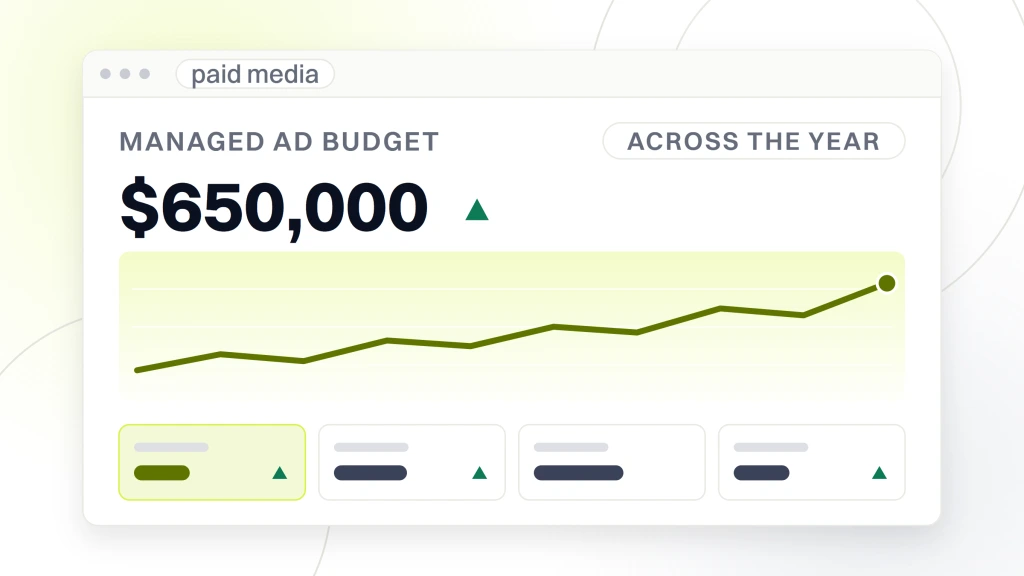
Our team rebuilt the program around optimized landing pages, refined ad targeting on Meta and TikTok, and a two-tier creator roster feeding a whitelisted Spark Ads rotation. Every contract carried whitelisting rights on a 12-month usage window. Content briefs ran one page each and cut edit cycles from three rounds to one on 9 out of 10 deliveries. The attribution dashboard reconciled discount codes, UTM parameters, GA4 first-touch and last-touch reports, and a Shopify post-purchase survey overlay against a $650,000 managed ad budget across the year.
Across the annual curve, conversion rate climbed 11 percent through the optimized landing pages plus refined ad targeting. Cost per sale settled at $31 through the whitelisted creator amplification, which is well below the category baseline for the AOV band. The managed budget hit $650,000 across the year and delivered sustainable revenue growth and a rolling library of 40-plus creator pieces for the paid team. Repeat purchase rate on creator-sourced first-time customers held within 8 percent of the site-wide repeat rate, which is the honest signal that the program was producing real customers rather than one-time discount hunters. Read the full write-up on the Boogie Board case study. That’s the shape of a creator program that pays back the retainer without eating the brand’s positioning.
For the buyer journey that runs across POS, app, email, SMS, and paid social as one connected sequence, our read on omnichannel ecommerce marketing covers the identity graph plus CDP setup that ties them together. Category variants of the generic playbook, such as fashion influencer marketing, layer creator tiers and drop windows onto the base ecommerce influencer stack for apparel accounts.
Where influencer marketing ecommerce fits the revenue stack
Creator activity sits alongside paid search, paid social, organic social, email, SMS, and organic search inside the wider revenue stack. It is not a standalone lever, and no serious founder runs it as one. Creator activity feeds the paid team a creative library that studio-shot brand content cannot produce cheaply. Creator content warms cold prospecting audiences for retargeting later. Whitelisted campaigns amplify the strongest organic creator pieces into last-click revenue. Post-purchase creator-name surveys close the attribution loop for the retention team.
Build the sourcing pipeline on the front end. Lock the contract template with usage rights and whitelisting permissions inside. Run one-page briefs that cut edit cycles. Whitelist the top 10 percent of organic creator pieces into paid amplification. Instrument the attribution stack with discount codes, UTMs, and post-purchase surveys. Read the numbers together on a monthly dashboard, refresh the roster every quarter, and revisit the platform mix every six months. Do those seven things for 12 months on a stable retainer and creator activity grows into a real revenue line the founder can point at with numbers, not screenshots.
The wider growth marketing for ecommerce discipline reads influencer against blended MER, not one-off return on ad spend. The ecommerce marketing retainer starts at $1,499 per month and runs six months, since a real creator program needs a full quarter to build the roster and another quarter to prove the revenue math. Faster than that and the numbers read as noise. Slower than that and the sourcing pipeline loses momentum before the whitelisting rotation compounds. Outside reads on Influencer Marketing Hub’s annual benchmark report, Shopify’s influencer marketing playbook, and Hootsuite’s guide to influencer marketing are useful for teams building the plan in-house.