Association and nonprofit web design is the practice of building a working membership platform, not a brochure site. It runs dues, events, chapters, donations, and quarterly board reporting from one stack, and it launches on a schedule a two-person marketing team can defend. Miss any of that and the site looks new for a month, then needs a rebuild inside two years.
Google Ad Grants alone hands qualifying 501(c)(3) nonprofits $10,000 per month in free search ads. That is real budget most nonprofits never claim. Build the site to feed the grant and the pipeline turns on inside 60 days, at zero incremental media cost.
We have shipped these builds for state bar associations, regional foundations, medical societies, single-cause charities, and multi-chapter trade groups. The pattern that works looks the same every time. The pattern that fails looks the same too. Both come down to whether the site was built as a membership platform or as a redesigned About page with a Donate button glued on.
You will get 10 patterns that make an association or nonprofit site work. Member sign-up and renewal flows. Recurring donation architecture. Event registration that respects tiered pricing. Chapter and affiliate microsites. AMS and CRM integration choices. Board-friendly reporting. Accessibility inside WCAG 2.2 AA. Volunteer-editable content models. Retainer scope. Budget bands you can defend at the next executive committee meeting. Ten-minute read, and every section closes with the concrete rule of thumb you can bring to your next scoping call.
Event registration flow for association web design
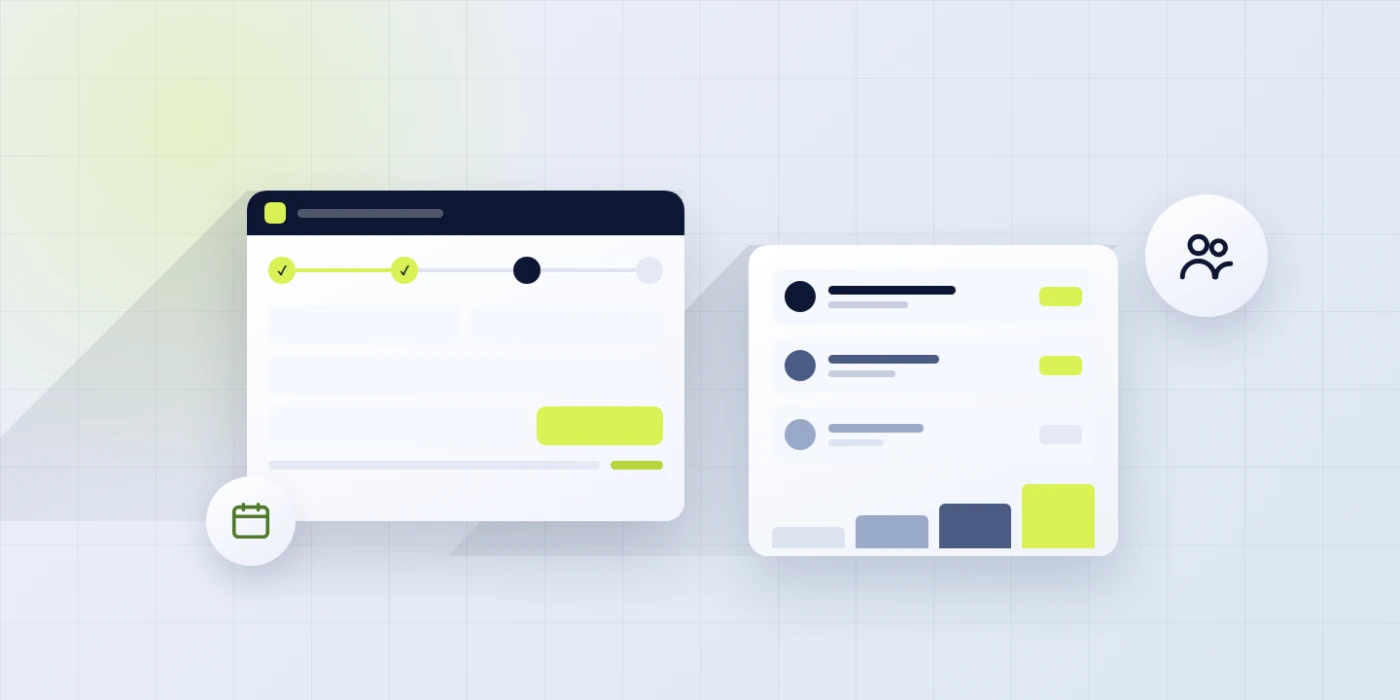
Event registration draws the second-highest traffic on most association sites, right after membership. Association and nonprofit web design runs registration as a self-contained funnel, with a dedicated landing page, tiered pricing, and separate reporting. Member versus non-member pricing lives in the AMS and pulls dynamically. Group registration lets a firm or chapter sign up 10 attendees at once. Add-ons for CE credits, workshops, and dinners live in the same flow. The confirmation email lands inside 60 seconds with a calendar file, a QR code for check-in, and a link to the attendee portal.
The registration page follows one pattern across every association scope. Agenda snapshot at the top. Speaker cards with photos and titles. A tiered pricing table with the member discount called out. A six-field registration form. And a scarcity signal, seats left or early-bird deadline, kept honest and updated live. Any event page that lists the price but hides the member discount until checkout leaves conversion on the table. Show the discount up front. Members convert on the number they see, not the number they discover in the cart.
Group and chapter registration
Group registration lives as a real feature, not a workaround. One primary contact, up to 20 attendees, one invoice, one confirmation. The primary contact adds each attendee’s name, email, dietary needs, and CE tracking ID. The site handles the payment as a single transaction, then splits the confirmation emails per attendee. Firms and chapters run bulk registration at the last minute. Any nonprofit web design scope that skips group registration will get a support ticket the day of the first big event.
Continuing education credit tracking
Members in regulated professions, law, medicine, accounting, engineering, and real estate, track CE credits per state per year. The site issues CE certificates automatically after each event, stores them in the member portal, and lets the member download or print any historical certificate on demand. Any association web design scope serving a regulated profession without CE tracking loses the renewal in year two, when the member remembers a competitor group handles it for them.
Chapter and affiliate microsites
Multi-chapter groups hit the classic local-versus-central problem. Chapters want autonomy for local events and pages. Central wants brand consistency, one member record, and one reporting flow. Nonprofit web design solves this with a chapter microsite pattern. Each chapter gets a subfolder (/chapters/ny-metro/, /chapters/bay-area/) with its own homepage, event calendar, board list, and news blog, all inside the parent CMS. Central owns the header, footer, brand, and member portal. Chapters own local content.
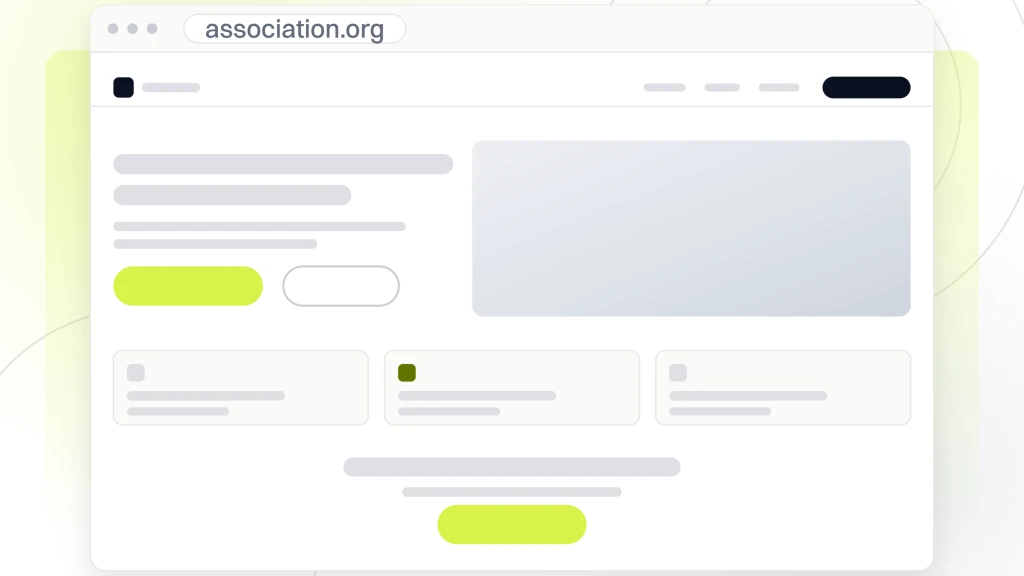
The tech pattern that keeps chapters happy without breaking central control is a role-based CMS, where chapter admins get edit access to their chapter subfolder only. WordPress does this with a plugin like User Role Editor plus custom capabilities. A Salesforce Communities build does it natively. Any association and nonprofit web design scope that hands every chapter admin full site access will see 30 broken pages inside year one. Scope the roles at architecture time.
Standard chapter page templates
Every chapter starts with the same six page templates. Chapter home. Upcoming events. Past events archive. Chapter board. Chapter news. And how to join. Central publishes the templates. Chapters fill in the content. That keeps the brand consistent across 30 or 60 chapters without central approving every single content update. Any scope that lets chapters design their own templates from scratch will hit 47 different chapter homepages inside 18 months.
Chapter events on the central calendar
Every chapter event publishes to both the chapter subfolder and the central event calendar. Members browsing the parent site see every regional event in one calendar, filtered by location or topic. That alone grows chapter event attendance 15 to 30% by surfacing events in nearby regions members would otherwise miss. Any chapter-based site without a unified central calendar is losing cross-chapter attendance nobody is measuring.
Accessibility and WCAG 2.2 AA on nonprofit web design
Accessibility carries hard-requirement weight on these sites. Not a nice-to-have. Not a v2 backlog item. Every launch clears WCAG 2.2 AA at minimum, with clear escalation paths for members who need AAA-level accommodations. Nonprofits face higher scrutiny, since the mission audience often includes members with disabilities. Board members and donors read accessibility as a proxy for organizational maturity. Launch a site missing alt text on 40% of images and you will hear about it at the next board meeting.
Every page passes automated testing (axe DevTools, WAVE, Lighthouse Accessibility score 100) before it goes live. Manual testing covers keyboard-only navigation, screen reader passes on the top 20 pages, and color contrast checks across every button and link. Every form uses real labels, real error states, and real focus indicators. Any nonprofit web design scope that skips accessibility until QA week will fail the audit and delay launch by 2 to 4 weeks. Bake it in at design time.
Accessible form patterns
Every form field carries a real label (not placeholder-only), an aria-describedby for help text, a visible required indicator, and clear error messaging tied to the field. Payment forms use standard input types so autofill works with screen readers. Any accessibility fail on a donation form is losing you the exact donor who cares most about your inclusion story. Fix the forms first.
Video captions and transcripts
Every video on the site includes closed captions (WebVTT preferred) and a full text transcript on the same page. Auto-generated captions get a manual review pass. Names, technical terms, and mission-specific vocabulary always get the wrong auto-caption. A manual review of a 15-minute video takes 20 to 40 minutes. Skip the review and members will notice inside three days.
A real association and nonprofit web design outcome
A regional membership organization came to us with a stagnant site, a scattered inquiry flow, and no organic pipeline feeding member signups. We ran a compliance-friendly rebuild with proper routing, an accessibility pass to WCAG 2.2 AA, SEO groundwork on the top member-intent pages, and a real event registration flow tied into their AMS. Inside six months, organic traffic to member and event pages climbed 40%, new member inquiries rose 20%, and the site ranked in the top three on 15 high-value member-intent keywords.
In a separate mission-driven rebuild we ran for a public-sector agency, the new WordPress build hit 100% desktop pagespeed, tripled pages per session, and gave the internal team 100% content-update autonomy without a developer ticket. Same lesson. Fix the CMS, fix the routing, and the site starts earning its own maintenance every quarter, not draining it.
The lesson translates cleanly to nonprofit website development. A stagnant site with a scattered inquiry flow bleeds members and donors the same way it bleeds legal consultations. Fix the routing, fix the content depth, add a real paid program if the mission budget supports one, and the pipeline moves inside two quarters. Most associations treat the site as brochureware and expect members to renew from memory. Members renew when the site made the last event easy, the last CE credit painless, and the last resource download useful.
Every executive director who has ever inherited a site with a broken PayPal button on the donate page knows the specific type of Wednesday morning email that follows. “We lost eleven donors last week, can you look into it.” You look. The button has been broken since the last theme update in 2021 and nobody noticed, since the two people who used to test the flow both retired. Fix the button. The board will send you a card. In 16 months.
Routing lessons that translate to associations
Every inquiry gets routed by role and stage. Member questions route to member services. Sponsor questions route to development. Press questions route to communications. Board questions route to the ED. One inbox for everything means everything sits in the ED’s inbox until Friday. Any association web design scope that keeps the generic contact form as the primary flow is planning a Friday afternoon triage session forever.
Where a paid program fits a nonprofit
Google Ad Grants gives qualifying 501(c)(3) nonprofits $10,000 per month in free search ads. Any nonprofit that qualifies and does not claim the grant is leaving traffic on the table. The catch is the grant requires a specific account structure, single-word keywords banned, 5% CTR minimum, quality score above 3, that most in-house teams struggle to maintain. If the site is not built for landing-page-per-campaign, the grant account gets suspended inside six months.
Cost tiers for association and nonprofit web design
Budget bands for association and nonprofit web design run across four tiers. Single-cause charity or small association with 12 to 20 pages and a simple donation form runs $18K to $35K. Mid-size trade association or foundation with a member portal, event registration, and content library runs $35K to $75K. Large professional society with AMS integration, chapter management, and CE tracking runs $75K to $120K. Enterprise association or foundation with a Salesforce build, multi-language, and learning management tie-in runs $120K to $400K.
Every tier assumes accessibility baked into the build, not retrofitted. Every tier assumes a real content editor on your team who can update pages after launch without a developer ticket. Every tier assumes the mission audience gets a site that respects their time. If the vendor quote does not itemize accessibility, content training, and post-launch support, the quote is missing 30% of the actual work.
Single-cause charity tier
Charities at $18K to $35K get a 12 to 20 page site with a monthly donation flow, an impact page with real numbers, a Board and financial transparency page, an events calendar for one to four annual events, and a simple volunteer sign-up form. Timeline: 8 to 14 weeks. Team: 3 people. Fits local charities, small foundations, and single-cause nonprofits with 1 to 5 staff.
Large professional society tier
Professional societies at $75K to $120K get a full AMS integration, chapter management, CE tracking, event registration with tiered pricing, a job board, a peer directory, and a resource library gated by member level. Timeline: 22 to 40 weeks. Team: 6 to 10 people. Fits state bar associations, medical societies, engineering professional groups, and multi-chapter industry associations.
Retainer scope after a nonprofit web design launch
Every association or nonprofit site launches into a retainer. That is not optional. Boards change quarterly, staff turn over annually, and every year brings a new campaign, a new event series, and a new set of impact numbers. Skip the retainer and the site drifts inside eight months. The retainer runs 15 to 30% of the build cost annually, depending on member volume and campaign cadence. Below 10% stays reactive only. Above 40% usually hides padding you do not need.
A real retainer for these sites covers monthly content updates on impact numbers and event pages, quarterly accessibility audits against WCAG 2.2 AA, monthly AMS or CRM data reconciliation, ongoing Core Web Vitals monitoring, and a monthly report the ED can bring to the Board without a technical briefing. See web.dev on Core Web Vitals for the technical baseline every serious site meets. If your retainer never touches the AMS or the accessibility audit, you have a maintenance plan, not a real retainer.
Board reporting cadence
Every quarter the retainer produces a two-page Board report. Member growth, dues renewal rate, event registration numbers, donation trends, top content pages, and any accessibility or security issues addressed. The ED brings the report to the Board meeting without a technical briefing. Any retainer that produces a 40-page Google Analytics dump instead of a two-page Board summary is not doing the work the ED actually needs. Real reporting fits on two pages, and the ED should be able to read it in the elevator on the way up to the meeting.
The bottom line on reporting cadence. Show member growth against the prior year, dues renewal rate against the 90-day target, event registration against last event, and donation trend against the annual campaign. Four numbers. Any board that wants more will ask, and the retainer team can pull the deeper cut on request. Any retainer that pushes 40 metrics at a Board that reads one is training the ED to skip the report entirely.
Content turnover on annual campaigns
Every annual campaign (giving day, membership drive, conference launch) gets its own landing page inside the retainer. The retainer team builds the page, sets up the tracking, monitors performance during the campaign window, and archives the page after with a clean redirect. Any nonprofit that spins up a giving-day page every November without a repeatable retainer pattern will end up with 40 orphaned campaign pages inside five years. Kill the orphan pages inside the retainer.
Where to start on nonprofit website development
Start with the AMS decision. What system holds the member record? Does it exist? Is it staying or moving? That one answer decides the tier, the stack, and the timeline. Any association website development scope that opens with a Figma prototype before answering the AMS question hits rework at week eight, when the SSO pattern and the data mapping do not line up.
When you are ready to scope the real thing, our web design and development services covers the full stack. If the scope calls for a heavier application layer (member portal, CE tracking, chapter management), see our WordPress website development services. For fixed-scope small-nonprofit builds, our website design packages map the tier-one range above. And for the ongoing retainer that keeps the site healthy after launch, monthly website maintenance packages covers the cadence in detail. For deeper reading on the process side of the same build, see our web design and development process and for how design and code split responsibilities, web design vs web development.