The difference between web design and development is the first split that trips up founders scoping a site build. Web design owns how the site looks and feels. Web development owns whether the site holds up on real browsers under real traffic. The two roles share vocabulary, share meetings, and split responsibility on a small set of overlapping deliverables. Past that, the day-to-day work barely resembles the same job. Hire one person to cover both, and the project rarely launches on time or matches the mockup.
This guide walks the practical designer vs developer split for a founder scoping a build in 2026. What each role owns. Where the two overlap. Which tools each side lives in. Rates by seniority and geography, benchmarked against the US Bureau of Labor Statistics 2024-2034 outlook that groups both roles at 7% projected growth. Hiring signals for each role. And the reason picking a designer without a developer, or the reverse, is the fastest way to add a full quarter of rework to any project. The gap on paper looks smaller than the gap in practice, which is why so many first-time builds miss the mark.
Where the difference between web designer and web developer blurs
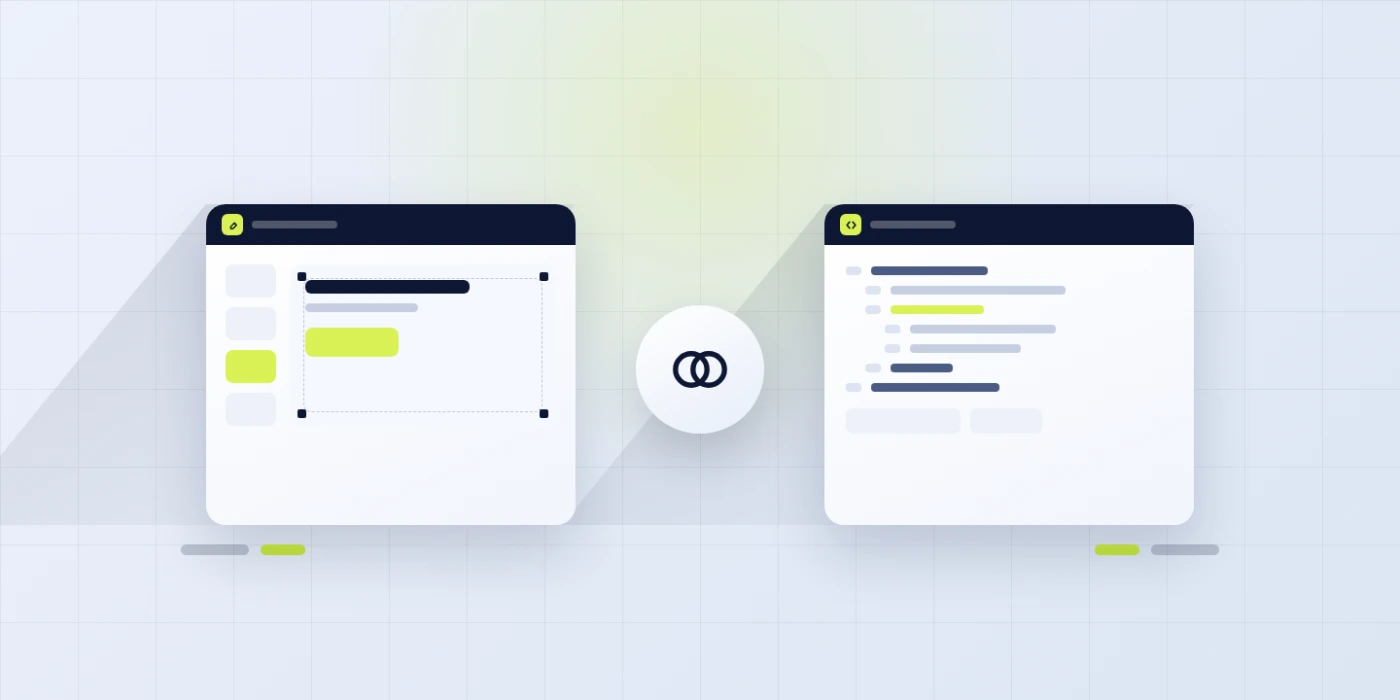
The split blurs on a small set of shared deliverables. Design systems live in both worlds. Tokens generated in Figma have to sync to code, and code changes have to reflect back in the Figma library. Component libraries live in both worlds too. A button designed in Figma has to exist as a real component in the codebase with matching variants and states. Animation specs need a designer to define timing and easing, and a developer to implement with the framework’s motion primitives. Prototyping in Framer or Webflow is the one place where the line between the two roles disappears, which is the reason founders keep mistaking those tools for a way to skip the second hire.
| Task | Designer owns | Developer owns | Overlap |
|---|---|---|---|
| Wireframes | Yes | No | Rare |
| Mockups | Yes | No | Rare |
| Design tokens | Defines | Implements | Shared spec |
| Component library | Designs | Codes | Naming and variants |
| Animation | Timing spec | Implementation | Both write specs |
| Accessibility | Contrast and focus | ARIA and keyboard | Both audit |
| SEO on-page | Headings and meta | Schema and speed | Both influence |
| Content strategy | Voice and hierarchy | CMS structure | Both scope |
Design systems that require both
A real design system is a two-headed deliverable and the clearest example of the split at the deliverable level. The designer names the tokens, defines the values, and documents the usage rules for every color, spacing step, and type ramp. The developer turns those tokens into CSS variables or a Style Dictionary output that syncs to the codebase and to Storybook. The designer maintains the Figma library. The developer maintains the Storybook. Both sides update in lockstep or the two libraries drift apart inside one sprint.
Design systems that only exist in Figma decay inside 6 months as the code diverges. Design systems that only exist in code decay too, since designers stop trusting them and start hand-picking colors in the mockups again. In short, a token library needs both owners on day one, not one owner and a promise to fill the second seat later.
Prototyping tools where the line disappears
Framer, Webflow, and to a smaller degree Figma’s newer prototype features let designers push near-production interfaces live without writing code. Founders often mistake these tools for a way to skip the developer entirely. On simple marketing sites, that works for six months. Once the site needs custom logic, CMS integration, or API connections, a developer has to enter the project and rebuild parts the designer wired up incorrectly. The prototype tools are excellent for testing and for early stakeholder buy-in. They rarely hold up in production at any real scale, and the role division reappears the moment the roadmap grows past a marketing home page.
Designer and developer by day-to-day work
The split is easiest to see in a typical Tuesday morning. The designer is in Figma iterating on a landing page hero, testing 3 headline options against user-test data from Monday, and prepping a Loom to walk the founder through the changes. The developer is in VS Code fixing a bug where the contact form drops submissions on Safari 16, plus reviewing a pull request from a teammate and running Lighthouse on the staging build to keep every performance metric in the green. Same team. Same stand-up. Different job entirely. A founder who sits in on both mornings back to back sees the whole split in 10 minutes flat.
The split shows up in how each role measures success too. Designers measure success in visual coherence, brand consistency, and user testing pass rates. Developers measure success in Lighthouse scores, uptime, error rates, and passing tests. Both sets of metrics matter. Neither replaces the other. Teams that reward only design metrics push beautiful broken sites live. Teams that reward only development metrics push fast ugly sites live. Real teams reward both sides, tied to the project’s revenue outcome, and treat any single-metric review as a warning sign that the second role is under-resourced.
A designer day at scale
Morning starts with iterating on the current sprint’s page templates in Figma, then a 30-minute stand-up with the design and product team. Afternoon runs a user testing session with 3 to 5 real users. Update mockups based on feedback. Prep design tokens for the developer. Send a Loom to the founder or product manager walking through the changes. Log the day’s decisions in the shared decision log. Repeat tomorrow with the next sprint page templates.
A developer day at scale
Morning starts with the overnight error tracker for new issues, any P1 bug fixes, and the same stand-up. Afternoon runs building the next sprint’s page templates based on designer mockups and tokens. Write component tests. Push to staging. Review 2 teammate pull requests. Run Lighthouse on the staging build. Log the day’s commits in Git with clean messages. Repeat tomorrow with the next sprint page templates.
Hiring guide for the difference between web design and development roles
Hiring the wrong role first is the single biggest budget mistake founders make on web projects. The hiring decision maps directly to what your project needs first. A brand that already has strong visuals and mockups needs a developer to build the site. A brand with vague ideas and no visual system needs a designer to build the visual foundation before any code goes in. A brand with neither in place needs a paired team that owns both roles from day one. The web design and development difference in hiring order is almost always the difference between an on-time launch and a rescoped Q3.
- Have brand tokens, mockups, and copy. Hire a developer.
- Have brand direction but no mockups. Hire a designer, then a developer.
- Have neither. Hire an agency or freelancer team that owns both roles.
- Need a landing page in a week. Hire a Framer or Webflow specialist who does both.
- Need a full custom site. Hire two specialists with a documented handoff process.
- Need a rebuild of an existing broken site. Hire a full-stack team that can audit before designing.
Signals a designer is worth hiring
Portfolio shows real production sites, not just Dribbble shots. Case studies include the business problem, the design decisions, and the measured outcome. Willing to share Figma files from a prior project. Answers questions about accessibility, motion, and design systems fluently. Charges a fair rate for the seniority level. Available for a discovery call that covers your business, not their favorite side projects. Any designer who cannot talk about business outcomes is a portfolio decorator, not a working designer.
Signals a developer is worth hiring
GitHub profile with real commits in the last 90 days. Portfolio shows live sites, not just repositories. Willing to walk through a real code sample on the discovery call. Answers questions about testing, deployment, and performance without hedging. Uses version control on every project. Writes commit messages a human can read. Any developer who cannot answer basic questions about their own recent work is a code copier, not a working developer.
Rates by role for a web design and development budget
US web designer freelancers charge $60 to $150 per hour depending on seniority. Senior designers at agencies bill $120 to $250. Overseas designers with strong portfolios charge $25 to $70 per hour. Junior US web developers charge $50 to $100 per hour. Senior US front-end and full-stack developers charge $100 to $250. Overseas developers with strong portfolios charge $30 to $90 per hour. Rates on both sides climb 15% to 30% per year as demand outpaces supply for specialists who can prove production work.
Salary benchmarks and responsive vs adaptive design decisions track the same pattern. Glassdoor pegs US web designers at a $64,000 to $117,000 total range as of March 2026, and web developers at $77,000 to $132,000. Developers earn 15% to 20% more on average, driven by the technical bar and the smaller supply of senior back-end talent. For a founder, the takeaway is direct. Budget the second role at 10% to 15% above the first, not below it, and revisit both numbers every 12 months as the market moves.
A small business site build with both roles included lands at $10,000 to $28,000 depending on scope, geography, and seniority mix. A landing page or single-purpose site with both roles included lands at $3,000 to $8,000. A full custom application build with both roles across a 12-week timeline lands at $35,000 to $120,000. Every founder underestimates the second role’s cost by 30% to 50% on the first project, which is the reason the designer vs developer conversation always resurfaces during the change-order sprint.
Agency vs freelancer trade-off
Freelancers cost 40% to 60% less on the hourly rate but require the founder to project-manage both roles, chase the handoff between them, and QA the final work. Agencies bill 40% to 80% above freelancer rates but bring project management, integrated handoffs, and QA baked into the price. Freelancers fit founders who have run 3 or more web projects and know the pattern by heart. Agencies fit founders on their first or second web project who need the whole thing coordinated from kickoff to launch.
One person, two people, or a team
One full-stack designer-developer (rare, expensive) fits landing pages and simple marketing sites. Two specialists (a designer plus a developer) fit small business sites and single-application projects. A team of 3 to 5 specialists (designer, front-end, back-end, PM, QA) fits mid-market and enterprise builds. Founders who try to compress a team scope into 2 people over-work both and land the launch late by a full sprint. Founders who over-hire a team for a landing page burn budget on coordination overhead. Match the team size to the actual scope, and treat the role split as the anchor for how many people belong in each stand-up.
A real case study on the difference between web design and development staffing
One client came in with two underperforming websites split between a designer who never involved a developer and a developer who never talked to a designer. 6 ranking keywords. Conversion rate under 1%. We rebuilt the stack with a paired design and development team working from the same tokens, sprint by sprint. Inside 12 months keyword rankings grew from 6 to over 300, monthly visitors climbed past 800, and the site generated more than $60,000 in booked work. The rebuild was a textbook case of a paired-team fix solved by staffing both roles from week one.
The pattern generalizes. At production scale, real work means both roles run off the same tokens, meet in the same stand-up, and share the same success metric. That rebuild still runs on the same paired team pattern two years later. Every founder who has tried to save money by hiring only one role has learned the lesson at 2 to 3x the cost of hiring both properly the first time.
Paired team math that pays back
A paired designer plus developer team on a small business build costs 30% to 50% more than a single generalist. The paired team pushes a site live that converts 40% to 80% better since both sides did their work at production quality. Payback on the extra cost lands inside 90 days for any site driving more than 20% of monthly revenue. Every founder who has done the math the second time hires paired teams by default from project three onward, and the ux design vs web development debate finally stops being about cost.
Cost of skipping the second role
Skip the designer, and the developer builds a working site that looks like 2005. Conversion rate stays flat. Rebuild required in 12 months. Total cost 1.6x the paired-team cost. Skip the developer, and the designer hands off Figma files nobody codes correctly. Site never launches. Total cost equals the design fee with zero revenue. Every project that landed on time, on budget, and on conversion had both roles staffed from week one. Every project that missed one of those three had a missing role somewhere in the story.
Common mistakes on the design and development split
Founders repeat the same mistakes on this split every year. Hiring the wrong role first. Skipping design tokens. Skipping the handoff process. Assuming a full-stack developer covers the design work. Assuming a designer with WordPress experience covers the development work. Each mistake maps to a specific dollar cost on the rebuild bill six months later, and every one is preventable at the scoping stage with a scoping doc that names both roles by title, owner, and delivery date.
The role split shows up in QA and launch too. Designers rarely QA the site on real devices under real network conditions. Developers rarely QA the visual polish against the Figma source of truth. Teams that split QA between both roles catch 60% to 80% more issues than teams that assign QA to one role. Skip that split and the site launches with visible bugs the founder sees inside the first week. Every founder who has run a rushed launch swears they will never rush the next one. Then they rush the next one. See Nielsen Norman Group on user experience definitions for the framework both roles align on.
Wrong first hire
Hiring a developer before design work exists forces the developer to design as they build. That work is slow, inconsistent, and looks like a template on launch day. Hiring a designer before scope exists forces the designer to invent scope, which turns into real budget the moment the developer starts. Both mistakes cost 20% to 40% of the total budget. The right first hire depends on what already exists, not on which role feels more urgent this week or which portfolio impressed the founder last.
Skipping design tokens
Design tokens are the shared vocabulary that closes the role gap at the file level. Skip tokens and every color, every spacing value, every font size gets eyeballed by the developer from static PNGs. That guesswork produces a site that mostly looks like the mockup but deviates on details the designer will flag at launch review. Setting up tokens takes 4 to 8 hours at project start. Skipping them adds 20 to 40 hours of revision work at the end, and each of those revision hours costs more than the original token setup would have.
Handoff process across design and web development roles
The handoff between design and development is where most projects lose weeks. Figma files without design tokens force developers to eyeball colors and spacing. Mockups without interaction specs force developers to guess at hover, focus, and error states. Prototypes without documented behavior force developers to invent motion timing. Every one of these gaps is a 4 to 12 hour question that adds up across 40 to 60 pages. The right handoff process cuts the total question count by 70% and pushes the launch date back into the original calendar.
A real handoff includes design tokens exported to Style Dictionary or CSS variables. A component library documented in Figma with variants for every state. Interaction specs written down for every non-trivial behavior. Motion specs with duration and easing. Content in place, not lorem ipsum. Photography selections or placeholder image sizes. Accessibility annotations for focus order and ARIA labels. Every one of these deliverables saves the developer 2 to 8 hours of guessing per week and stops the “the site does not look like the mockup” conversation at launch.
Figma dev mode plus tokens
Figma’s dev mode lets developers inspect any layer for exact values, tokens, and code snippets. Combined with variables and design tokens, dev mode cuts the handoff time by 40% to 60% vs older workflows where developers eyeballed CSS from a static PNG. Any team not using dev mode plus tokens in 2026 is running a 2019 workflow at 2026 rates. See web.dev on the page-experience signals for the performance benchmarks both roles have to land on.
Sprint cadence that works
Two-week sprints. Designer runs one sprint ahead of the developer. Kickoff on Monday. Design work on the current sprint. Development work on the previous sprint’s designs. Review on Friday. Retro on the second Friday. Handoffs stay small (one to two page templates per sprint) so bugs get caught early. Any team running month-long sprints on a small business site is over-scoping the process and losing money on coordination.
Where to start with the design and development choice
Start with the project scope, not the role hunt. Write down the pages, the integrations, the timeline, and the budget. That answer decides whether you need a designer first, a developer first, or a team that owns both roles under one contract. The whole choice stops being abstract once the scope is real on paper. Every project scoped correctly at kickoff lands on budget. Every project scoped by hiring the first available freelancer lands late and over budget by a full sprint.
Ready to scope a real project. See our web design and development services for the full paired-team scope. If the current project needs the design side only, our responsive web design services page covers the design entry point. Founders who need a custom development track without design overhead can start on our custom web development services. For post-launch scope, see our monthly website maintenance packages, and for the wider stack conversation our custom web design and development services post covers the full pattern.