A b2b food marketing agency is the outside team a food manufacturer, ingredient supplier, or foodservice distributor hires when the sales team can no longer generate new pipeline through trade shows and cold outreach alone. The category runs on long sales cycles measured in months, not the 7 day intent windows on the direct-to-consumer side. Every buyer touches 4 or more channels across trade press, category events, LinkedIn, and Google search before a first meeting books, so the marketing scope has to hold every touch inside one attribution model the sales team actually trusts.
This guide walks the field-tested b2b food marketing agency scope Redefine Web runs with manufacturers, ingredient suppliers, and distributors. You get the channel mix that matches a 90 to 270 day sales cycle, the content depth that closes procurement buyers, and the reporting cadence that ties marketing spend to pipeline and closed contracts. If the current retainer reports only MQL count without a pipeline number attached, this guide is the shape the founder should hand the next partner. Read the food and beverage marketing hub for the parent scope on how b2b work fits inside the industry practice.
What a b2b food marketing agency actually does
A b2b food marketing agency covers 4 practice areas across a food industry account, on top of the broader food and beverage marketing retainer. Content and thought leadership tuned to procurement and R and D buyers. Paid media across LinkedIn, Google search, and trade publication ad networks, paired with food and beverage manufacturing SEO on the organic side. Trade show and event marketing including pre-show outreach and post-show follow-up. Sales enablement covering pitch decks, case study libraries, and category-specific proof kits. For a broader vendor comparison, read the CPG food marketing agencies shortlist. The retainer reports pipeline created and cost per opportunity, not just cost per MQL, so the sales team and the finance team see the same number.
Content depth carries more weight in b2b food than in most other verticals because the buyer is a food scientist, a procurement director, or a foodservice operator who reads full white papers, checks nutrition data, and verifies supply chain claims before a first call. Surface-level content pushes the account past the shortlist stage on the same day the buyer opens the PDF. Real technical content earns the shortlist spot and holds it through the 6 month evaluation cycle. That is why every real b2b food marketing agency staffs writers who can read a spec sheet, not just paraphrase one.
The scope split matters because the same b2b food buyer touches 3 or 4 channels before a first meeting books. A LinkedIn thought leadership post opens the awareness moment. A Google search on a technical query pulls the buyer to a white paper. A trade show conversation gets the meeting on the calendar. A follow-up email closes the demo. Any agency that runs LinkedIn only is running 1 channel of a 4 channel funnel, and the pipeline numbers show it inside the first 2 quarters.
Channel mix for a b2b food marketing agency retainer
Channel mix for a b2b food marketing agency runs across 5 channels with clear ownership rules. LinkedIn for account-based advertising and thought leadership. Google search for high-intent technical queries. Trade publication ad networks for category-specific reach. Trade show and event marketing for face-to-face pipeline. Email and marketing automation for the nurture layer between touchpoints.
LinkedIn holds the widest pool of decision makers inside the food industry, and the account structure runs both sponsored content and account-based ads targeting the specific title list at the target account list. Google search closes the intent tail on technical queries like ingredient specification, allergen management, or supply chain traceability. Trade publications hold the category authority moment through display ads and sponsored content inside Food Business News, Prepared Foods, and Refrigerated and Frozen Foods across the year. Trade shows and events feed the pipeline layer with face-to-face meetings that shorten the sales cycle by 30 to 60 days on qualified accounts.
Budget allocation across the mix follows the pipeline stage curve. A b2b food account runs roughly 35 percent LinkedIn, 25 percent Google, 15 percent trade publications, 15 percent trade show and event, and 10 percent email and marketing automation. The mix shifts by 6 to 12 points every quarter based on where the last cohort of new opportunities actually came from on the CRM report. Read the Food Business News category coverage for the trade publication catalog every b2b food team should track before the next campaign plan lands.
Content depth that closes procurement buyers
Content depth for a b2b food marketing agency covers 5 content types tuned to a procurement or R and D buyer. Technical spec sheets on every SKU including nutrition, allergen, and supply chain data. White papers on category trends and ingredient science. Case studies with real customer names and real metrics. Comparison guides against category alternatives. Regulatory documentation covering FDA, USDA, or the category-specific compliance body.
Spec sheets are the highest-frequency content type inside a b2b food buyer journey. A procurement director will download 15 to 25 spec sheets during a category evaluation, and the sheets have to hold up under a formulation review, an allergen audit, and a supply chain traceability check. Missing fields or vague nutrition data drops the account off the shortlist inside the first week of evaluation on the buyer side.
Every spec sheet needs a consistent template with the same fields in the same order across every SKU. Buyers move fast during evaluation windows and cannot afford to hunt for the allergen line on page 4 when a competitor put it on page 1. Template consistency across the catalog is the single largest content operations win a b2b food team can push live inside the first quarter.
White papers earn the thought leadership authority that opens the first meeting. A well-researched white paper on a category trend like plant-based protein sourcing or clean label reformulation generates 200 to 800 downloads over 6 months and produces 15 to 40 marketing qualified leads at the account level. The paper has to be technically real. Marketing-fluff white papers get thrown out on page 2 and the download turns into a hard bounce on the follow-up email. Read the IFT Food Technology Magazine for the reference standard on technical white paper depth every b2b food team should hit.
Trade shows and category events for b2b food teams
Trade shows and category events are the pipeline layer inside a b2b food marketing agency scope. Major shows include IFT FIRST, Natural Products Expo West, PACK EXPO, and category-specific events like Sweets and Snacks Expo or SupplySide West. Every show runs a 3 phase play. Pre-show outreach with meeting invites 30 days out. On-show engagement including booth traffic and product demos. Post-show follow-up on a 30 day window from the last day of the show.
Post-show follow-up is where 60 to 80 percent of the show budget is either recovered or lost. A dedicated email cadence hits every scanned badge with a personalized note, a relevant piece of content, and a clear call to book a follow-up call. Fail to run the post-show phase and the show budget disappears into scanned badges that never become pipeline. The post-show phase costs less than 10 percent of the total show budget and pulls 4 to 8 times the pipeline of the show floor alone.
Trade show budget for a b2b food account runs $40,000 to $60,000 per major show including booth build, staff travel, giveaways, and pre and post outreach. Mid-tier shows run $15,000 to $30,000. Regional events run $5,000 to $15,000. The right show mix for a growth-stage b2b food account runs 2 major shows, 3 mid-tier shows, and 4 to 6 regional events per year. Scale accounts push the mix to 4 major shows plus a full regional circuit.
How Poly Processing maps to a b2b food account
Poly Processing is a polyethylene chemical tank manufacturer that traded offline trade-show dependency for a digital-first inbound machine. The engagement pulled a 10x return on every marketing dollar spent, dropped cost per lead by 90 percent, and put hundreds of qualified monthly leads in front of the sales team through inbound automation and an interactive tank configurator. That shape transfers to a b2b food account almost line for line because the buyer motion is the same, a technical spec review inside a procurement committee with a long evaluation window.
The transfer play for a food manufacturer is a spec-sheet library backed by an interactive product selector, the food industry equivalent of the tank configurator. A food ingredient supplier can build a formulation-selector tool that filters by allergen profile, functional attribute, or supply origin. That tool cuts the R and D buyer’s evaluation time from days to minutes and pulls the account off the shortlist and onto a sample request in the same session. Poly Processing hit those numbers on a 5 service scope over a 2 year window across 2022 to 2024.
The single lesson from Poly Processing that every b2b food account should copy is the shift from trade-show-first to inbound-first. Trade shows still matter, but the inbound layer runs 24 hours a day, 7 days a week, at a fraction of the cost per lead of a booth. A food manufacturer that copies the inbound playbook lands on the same growth curve inside 18 to 24 months.
Comparison of b2b food marketing scopes
The table below breaks down 4 common b2b food marketing agency scopes and the profile each one fits. The rows are field-observed across food manufacturers, ingredient suppliers, and foodservice distributors Redefine Web has scoped in the last 3 years. Every scope has a fit. The mistake is buying the wrong shape for the stage of the account.
| Scope shape | Best fit | Monthly range | Channels | Content velocity |
|---|---|---|---|---|
| Content-first retainer | Early-stage supplier | $1,499 to $2,499 | SEO and LinkedIn | 4 to 8 pieces |
| Full-funnel demand gen | Mid-market supplier | $2,499 to $3,999 | Above plus paid search and trade press | 8 to 12 pieces |
| Enterprise ABM | Category-leading manufacturer | Starts at $6,000 | Above plus ABM and events | 12 to 20 pieces |
| Distributor coverage | Foodservice distributor | $3,999 to $6,000 | Local SEO, events, and rep enablement | 6 to 10 pieces |
Two shopping traps to avoid. First, buying an enterprise ABM retainer at $6,000 per month for a $5 million revenue supplier. The scope is bigger than the sales team can absorb, and the retainer burns budget on account-based work the sales team cannot follow up on inside the meeting SLA. Second, buying a content-first retainer at $1,499 per month for a $50 million manufacturer. The scope is too small to move the pipeline number, and the retainer becomes a content marketing rounding error on the annual plan.
The scope match matters more than the fee. A well-priced full-funnel retainer at $3,999 per month on a $15 million supplier outperforms a $6,000 enterprise ABM retainer on the same account every time. The channels ready to work under the smaller scope are already working. The channels inside the bigger scope need a larger sales team to close the pipeline, and the extra fee pays for capacity the account cannot yet absorb inside the current quarter.
Account-based marketing for enterprise food targets
Account-based marketing for enterprise food targets pulls the top 50 to 200 target accounts into a coordinated multi-channel play. The list starts with a real sales team review of the current pipeline and the top wish list accounts, not a purchased data set from a 3rd party vendor. Automation Anywhere pulled cost per lead from $1,936 down to $63, a 97 percent drop, and scaled customer acquisition 100x over a 4 year window across enterprise RPA accounts. The account-based shape ports directly to enterprise food targets because the buying committee looks the same, 5 to 9 stakeholders across procurement, R and D, quality, and finance.
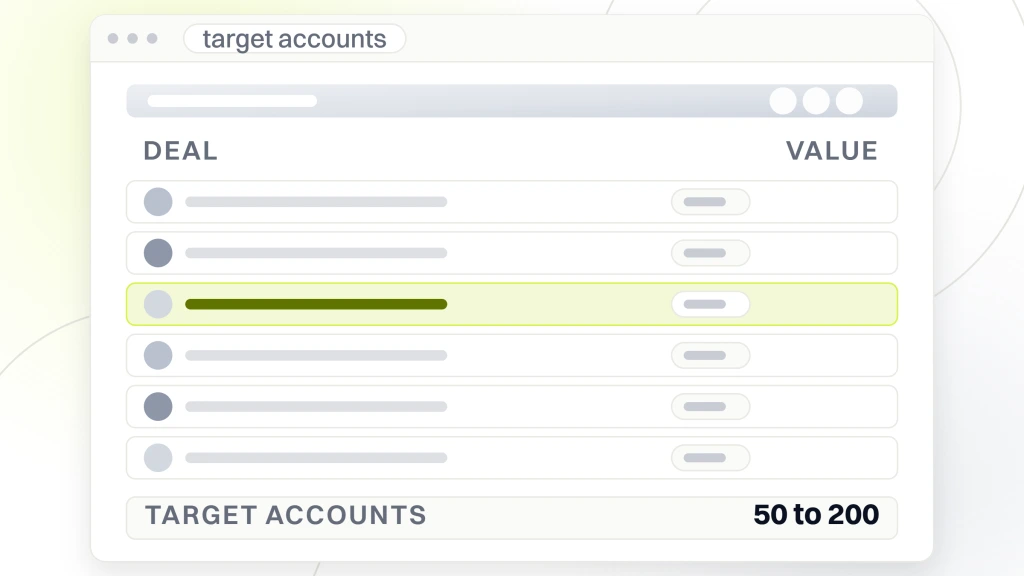
The channel play runs on 3 coordinated layers. Personalized LinkedIn ads targeting the specific title list at each account. A dedicated landing page for each account or account tier with proof kits pulled from the case study library. A direct outreach cadence from the sales team synced to the ad delivery so the buyer sees the same message across paid and outbound inside the same week window on the campaign timeline.
Attribution on ABM runs differently than mid-funnel demand gen. The metric is account engagement score across the target list, not marketing qualified lead count on the general lead flow. HubSpot ABM and Salesforce Pardot both handle the scoring model cleanly if the target account list is loaded and the intent signals are configured on the platform for the account owner.
The account tiering matters as much as the channel play. Tier 1 accounts get bespoke content, a dedicated landing page, and a named sales rep on every touch. Tier 2 accounts get a lighter version with a shared landing page tuned to a segment. Tier 3 accounts get the standard demand gen flow with account-level personalization on the ad copy but no dedicated content. See the PPC management services page for the paid layer that pairs with an ABM play on a b2b food account.
Reporting cadence and pipeline attribution for a b2b food marketing agency
Reporting cadence for a b2b food marketing agency covers 3 views. A live dashboard covering pipeline created, marketing qualified leads, sales qualified leads, and cost per opportunity. A weekly written pulse covering wins, misses, tests, and asks. A monthly deep review covering the pipeline attribution model and the next-quarter plan. The 3 views run on the same data set. If the dashboard says one number and the weekly pulse says another, the sales team stops trusting the report and the retainer conversation shifts to a cost debate inside 90 days.
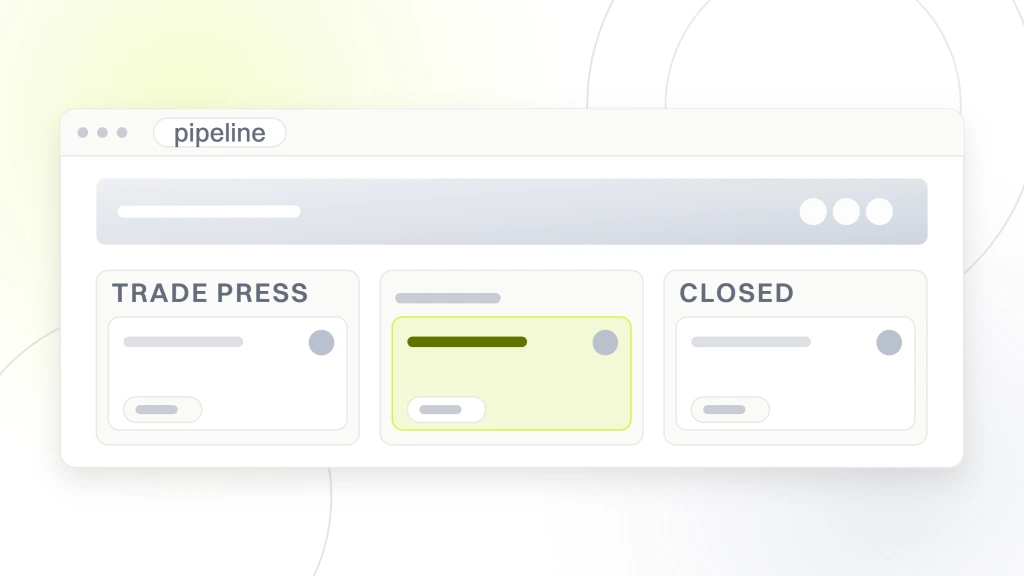
Pipeline attribution matters more in b2b food than any other reporting metric because the sales cycle runs 90 to 270 days and no single touch closes the deal. A multi-touch attribution model that credits every touch inside the window pulls the marketing contribution out of the last-touch fog and shows the founder which channels actually generate pipeline versus which channels get credit because they sat last on the CRM. HubSpot and Salesforce both handle this cleanly with the campaign influence report if the events are set up correctly. Read the PMG marketing operations resources for reference-call script templates every b2b food team should use before signing a new retainer contract.
The single metric most b2b food reports skip is cost per opportunity. Cost per marketing qualified lead runs cheap because the definition is soft. Cost per sales qualified lead runs medium. Cost per opportunity is the real number because it ties to the sales team’s actual pipeline definition and closes the loop between marketing spend and revenue potential. Any b2b food marketing agency retainer that never publishes cost per opportunity is optimizing a top-of-funnel number that does not connect to the real revenue engine on the CRM.
Distributor marketing for foodservice accounts
Distributor marketing is a distinct shape inside a b2b food marketing agency scope because the customer is an operator, not a category buyer. Restaurants, schools, hospitals, and hotel groups buy on a mix of price, delivery reliability, and rep relationship. The marketing scope has to support the outside sales rep, not replace the rep. That is why distributor retainers run heavier on local SEO, rep enablement collateral, and category-specific menu inspiration content than on national brand campaigns.
The 3 highest-value plays for a foodservice distributor are a searchable product catalog with real filters, a recipe and menu inspiration library organized by operator segment, and a co-branded lookbook the outside rep can leave with an operator after a visit. The catalog closes the specification research moment. The recipe library opens the upsell moment on the second or third order. The lookbook shortens the sales cycle by giving the rep a real leave-behind that stays on the operator’s desk for 30 days.
A distributor retainer runs $3,999 to $6,000 per month at Redefine Web, with an incremental fee for major seasonal launches and rep territory expansions. The retainer includes local SEO on every branch location, monthly recipe content, quarterly lookbook refreshes, and rep enablement collateral on a per-request basis.
How to pick a b2b food marketing agency
How to pick a b2b food marketing agency comes down to 4 criteria. Vertical experience inside food manufacturing, ingredient supply, or foodservice distribution. Content depth demonstrated on real technical topics, not surface-level marketing copy. Attribution transparency with pipeline reporting, not MQL reporting. Reference calls with 2 live b2b food clients before signing.
Vertical experience matters because a generic b2b agency will lose 6 months trying to understand the difference between a co-manufacturer and a co-packer, or the difference between a broker and a distributor inside the foodservice channel. Content depth matters because a food scientist will spot generic marketing copy on page 1 and the account drops off the shortlist inside the first week. Attribution transparency matters because a retainer that reports MQL count only is optimizing a soft number that does not close deals on the CRM.
Reference calls carry the most weight and get skipped the most often. Roughly 40 percent of b2b food brands sign a retainer without a single reference call, and the ones that skip are the same ones running the churn conversation inside 12 months of the go live date on the account. Ask the reference 3 questions on every call. What surprised you in the first 6 months. What would you change about the retainer if you were starting over. Would you renew today at the same fee, and if not, what would have to change.
Custimy is another proof point that specialist scope beats generic scope. Custimy ranked in Google’s top 10 for 500 plus SaaS keywords, pulled 25,000 monthly organic visits, and hit 165 second average session duration on a 2 service isometric design and SEO scope. That result came from the specialist scope, not from spreading budget across 8 channels at once.
Where to start this quarter
Where to start this quarter depends on the current pipeline state. A brand with a strong sales team but a thin marketing engine should start with a content audit and an SEO gap analysis. That work surfaces the technical topics the site is missing and the ingredient or category keywords the account is not ranking for. The audit runs 3 to 5 weeks and produces a prioritized topic list the content team can start writing against in the same quarter.
A brand with an existing retainer and flat pipeline numbers should audit the channel mix and the attribution stack separately. 90 percent of stalled b2b food retainers stall on the same 2 issues. Channel mix skewed too heavily to LinkedIn with no organic search or trade publication layer. Attribution stack broken between the marketing automation platform and the CRM, so pipeline credit never reaches marketing on the campaign influence report. Fix both and the retainer conversation shifts from cost debate to expansion inside 2 quarters.
A brand entering a new category or launching a new SKU line should invest in a full go-to-market sprint including a category-specific landing page, a technical white paper, a launch webinar, and a coordinated trade press push inside a 90 day window. The launch sprint runs $25,000 to $50,000 incremental on top of the retainer scope and pulls forward the first 6 to 9 months of demand generation into a single quarter. See the food and beverage web design page for the build scope that supports a b2b launch sprint on the site side, and the food and beverage SEO page for the organic layer that carries the launch past month 3.
A b2b food marketing agency is a full-funnel partner across content, paid media, trade events, and sales enablement. Poly Processing hit 10x inbound ROI and cut cost per lead 90 percent on the same content-plus-inbound shape, and a b2b food manufacturer or supplier that copies the pillars, the attribution stack, and the pipeline reporting cadence lands in the same growth curve inside 2 quarters on the marketing channel alone. If the current retainer reports MQL count without a pipeline number, book a scope review and get the reporting fixed before you renew the contract for another year.
What does a B2B marketing agency do?+
A b2b food marketing agency runs 4 practice areas across a food industry account. Content and thought leadership tuned to procurement and R and D buyers, paid media across LinkedIn and Google search and trade publication ad networks, trade show and event marketing including pre-show outreach and post-show follow-up, and sales enablement covering pitch decks, case study libraries, and category-specific proof kits. The scope reports pipeline created, sales qualified leads, and cost per opportunity, not just cost per marketing qualified lead.
What is B2B in food industry?+
B2B in the food industry covers every transaction that happens between food businesses rather than between a food business and a shopper. Food manufacturers sell ingredients to other manufacturers. Ingredient suppliers sell to formulators inside packaged food brands. Foodservice distributors sell to restaurants, schools, hospitals, and hotels. Co-packers sell contract manufacturing to emerging brands. Every one of those relationships runs on long sales cycles, technical evaluation, and multi-stakeholder buying committees, which is a different marketing shape than the direct-to-consumer side of food.
How to start a B2B agency?+
You start a b2b agency the same way you start any specialist practice, with a narrow vertical, a repeatable scope, and a client roster of 2 to 5 accounts the founder personally services. In food in particular, the fastest way in is to pick one channel like LinkedIn ABM or trade publication content, build a case study on a mid-market supplier, and use that proof to open the next 3 conversations. Attribution transparency is the second lock. Report pipeline created and cost per opportunity from month 1, not vanity metrics.
What skills are needed for B2B marketing?+
B2B marketing needs 6 core skills across the team. Category research including trade press reading and buyer interviews, content depth on technical topics, paid media operations across LinkedIn and Google, marketing automation configuration inside HubSpot or Pardot, sales enablement including case study writing and pitch deck design, and attribution reporting that ties spend to pipeline and closed contracts. Add trade show operations for food-specific work. The rare skill that separates good b2b food teams from average ones is comfort inside technical documentation, regulatory filings, and spec sheet templates.
What is b2b food marketing agency near me?+
A b2b food marketing agency near you is any specialist team you can hire remotely or in-market that focuses on food manufacturers, ingredient suppliers, or foodservice distributors. Location matters less than vertical experience because most food b2b work runs remote across content, paid, and reporting layers, with travel to major shows like IFT FIRST and Natural Products Expo West. Redefine Web runs a fully remote b2b food practice with retainer tiers from $1,499 to $6,000 per month and event support billed on a per-show basis.