A food delivery service digital marketing agency is the partner a marketplace delivery app, a regional aggregator, or a restaurant-brand-owned delivery platform hires to run the 3-sided growth stack the category actually needs. The 3 sides are consumer app installs, merchant onboarding, and courier acquisition plus retention. All 3 have to grow inside the same quarter, or the marketplace tips into an imbalanced supply-and-demand curve that stalls the network effect the whole model runs on.
This guide walks the scope a marketplace growth partner should carry, the channel split across the 3 sides of the marketplace, the CAC targets a founder should hit on each side, and the fees to expect at each stage of the network. Then it names how Redefine Web scopes the work when a delivery app walks in with 200 merchants live, 5,000 monthly active consumers, and a courier retention problem in the same growth quarter.
Scope a food delivery service digital marketing agency carries
A delivery marketplace shop carries 5 workstreams on one retainer. First, consumer paid social and app install campaigns on Meta, TikTok, and Google App Campaigns. Second, consumer referral loop design plus paid referral amplification. Third, merchant acquisition through B2B outbound and paid search on restaurant category terms. Fourth, courier acquisition through geo-targeted paid social and paid search, paired with a retention loop on the driver app. Fifth, the reporting layer that ties every workstream back to the 3-sided marketplace health score on the operator dashboard.
Every workstream needs marketplace-specific creative. Consumer app install ads run 15-second cuts with the value proposition inside the first 1.5 seconds and a promo code or free-delivery offer on the CTA. Merchant acquisition ads run LinkedIn and Google Ads with case-study heavy creative showing existing merchant sales through the platform. Courier acquisition ads run local Facebook and Instagram with an earnings-per-hour hook and a same-day activation CTA. Each channel has a different buyer, a different objection, and a different creative brief the retainer scope has to cover on the pipeline every month.
Redefine Web scopes the 5 workstreams into one retainer with a strategy lead who has seen a 3-sided marketplace balance in the last 2 years. The delivery app category runs on network effects that break fast when any one side of the marketplace falls behind, and the retainer scope has to protect the balance across every quarter on the plan. Read the food and beverage marketing hub for the parent scope on how the marketplace workstream fits inside a full retainer plan.
How a food delivery service digital marketing agency balances 3-sided growth
A marketplace growth partner balances the 3 sides of the network by running a supply-and-demand health score on the weekly dashboard. Too many consumers per courier means long delivery times. Too many couriers per consumer means low earnings per hour and driver churn. Too few merchants means empty categories and consumer drop-off inside the first session.
The health score tracks 3 ratios every week. Orders per active courier per day. Active courier count per active consumer. And active merchant count per active consumer. Each ratio has a target band the marketplace has to hold. Orders per courier per day should sit between 8 and 15 in a healthy urban market. Courier-to-consumer ratio should sit between 1 to 25 and 1 to 50 depending on order density. Merchant-to-consumer ratio should sit between 1 to 50 and 1 to 150 depending on category depth. Any ratio drifting outside the band triggers a paid budget shift toward the underweight side inside 48 hours on the operator report.
The paid budget shift is the most important operational move a marketplace shop runs on the account. When courier supply drops, the agency shifts paid budget from consumer app installs to courier acquisition inside 48 hours. When merchant supply drops, the agency shifts from consumer growth to merchant sales outreach the same week. The retainer has to include the flex to shift budget across the 3 sides without a change order every time. Read the a16z Marketplace 100 report for the marketplace growth data every serious agency should track quarterly.
Consumer app install CAC targets by market density
Consumer app install CAC targets on a food delivery service marketplace run from $3 to $15 per install depending on city density, the promo code offer, and the target consumer age band. Dense urban markets like Manhattan or San Francisco carry the lowest install CAC. Paid social audience density is high, and the delivery use case is already understood by the consumer set on the platform.
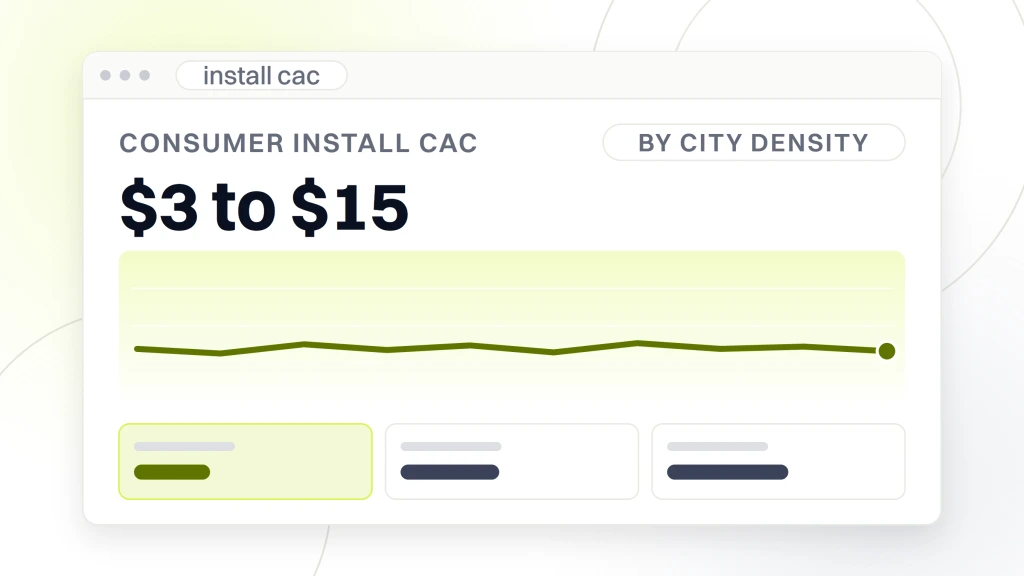
Suburban markets carry install CAC between $8 and $15. Audience density is lower, the delivery use case needs more education, and the offer has to work harder to earn the download. Rural markets typically do not hit a healthy CAC on paid installs at all, and the marketplace grows through merchant-led referral and organic word of mouth in those markets. Any retainer that pushes rural paid budget hard is a retainer wasting the ad fund on markets that need a different growth motion entirely. Uptime on the consumer app landing page matters just as much as ad spend, so pair the growth retainer with food and beverage website hosting that holds Q4 order spikes.
The install CAC has to blend into a real first-order economics view on the marketplace. An install that never converts to a first order is a cost, not an acquisition. A real marketplace program reports CPI plus first-order CAC plus 90-day retention rate on the same dashboard row every week. The blend catches the paid channels that drive cheap installs and expensive first orders when the offer or the audience is off on a push. See the AppsFlyer app benchmark data for the current install CAC ranges across food delivery markets on the platform.
Referral loop design inside the retainer
Referral loop design inside a marketplace retainer drives 30 to 50% of consumer growth in a healthy marketplace. The referral loop covers 3 components. The give-and-get offer structure on the referral share. The share flow in the app that makes the invite easy to send. And the paid amplification of the referral offer on the paid social channel to accelerate the loop cycle time.
The give-and-get offer has to price against first-order economics. If the marketplace loses money on a first order at $10 off, the referral offer cannot exceed $8 off without a hard cap on referral count per referrer. The math has to work at the account level, not just on the first referral pair. A referral loop that pays $15 per referrer and $10 per referred consumer costs the marketplace $25 per acquisition, which has to sit under the 90-day customer lifetime value on a real basis to survive the finance review.
The share flow has to feel native inside the app. A share button that opens a system share sheet with a pre-filled message and a unique code beats a share flow that requires the referrer to copy and paste a code manually. Every friction point in the share flow cuts the referral rate by 10 to 20% on the funnel. A real marketplace shop briefs the share flow with the product team in week 1 of the retainer and iterates the flow every quarter based on the referral rate report on the dashboard.
Look at the DoorDash Miami micro-influencer test, where 8,500 new customers landed in 20 days on promo codes tied to local food creators. That pattern is a paid amplification of a referral offer, not a standalone influencer play. The creators handed out codes; the codes drove installs; the installs seeded the referral loop for month 2 and month 3. A single well-run creator push kicks the loop into a compounding growth curve every operator wants but few agencies actually deliver.
Merchant acquisition workstream on the marketplace side
Merchant acquisition on the marketplace side is a B2B growth motion inside a consumer marketplace program. The retainer covers paid search on restaurant category terms, LinkedIn ads targeting restaurant owners and operators, cold outbound email through a dialed ICP list, and a merchant sales enablement stack including case studies, ROI calculators, and a self-serve onboarding flow.
Every merchant type has a different objection to joining a marketplace. Independent restaurants object to the commission rate. Chain restaurants object to operational integration with the existing POS system. Ghost kitchens object to discovery slot competition inside the app. A real marketplace program briefs the merchant sales team with a distinct objection map for each merchant type and matches paid creative to the objection on every ad campaign the merchant side runs.
Merchant onboarding needs a self-serve flow plus a sales team overlay for the top 20% of merchant accounts by potential order volume. Self-serve covers the smaller independent restaurants that sign up and go live inside 24 hours. Sales overlay covers chain accounts and anchor merchants that anchor category depth in each market. See how a QSR marketing agency runs the anchor merchant playbook for chain-account acquisition detail. The blend keeps acquisition cost low on the long tail and acquisition velocity high on the anchor accounts inside the same retainer scope. See the food and beverage marketing retainer page for the fixed-fee scope Redefine Web runs on marketplace accounts every month.
Courier acquisition and retention loop
Courier acquisition and retention is the 3rd side of the marketplace and the side most food delivery apps underfund on the paid marketing budget every quarter. Courier supply drives delivery time, which drives order rating, which drives consumer retention, which drives the marketplace flywheel. Any weakness on courier supply cascades into every other metric inside 4 to 6 weeks on the marketplace curve.
Courier acquisition runs on geo-targeted paid social with an earnings-per-hour hook plus a same-day activation CTA. The earnings hook has to be verifiable against actual driver earnings on the platform. Overpromising earnings loses driver trust inside the first week and drives the churn rate up by 20 to 40% on the cohort. A real marketplace shop runs a driver testimonial creative library with real earnings data from the platform, not stock numbers pulled from a broader industry benchmark on a generic marketing deck.
Courier retention runs on driver app experience, payout reliability, and the earnings-per-hour trend. The retainer covers the paid re-engagement push to dormant drivers who have not accepted a delivery in 14 days plus the referral loop for active drivers who refer new drivers into the platform. Every dormant driver reactivated inside 30 days costs 60 to 80% less than acquiring a new driver from paid social on the same market. The reactivation loop is the highest-return activity in the courier workstream inside the retainer. The number of delivery apps that spend 90% of the courier budget on new acquisition and 10% on reactivation is roughly every audit we have ever run on the vertical.
How Ibemploy maps to a delivery app growth curve
Ibemploy is a Latvian recruitment agency that connects businesses with the right workforce and provides job seekers opportunities across Europe in agriculture, manufacturing, and food production. The engagement maps to a delivery app growth curve. The shape of the digital work covered a 3-sided balance across recruiter, employer, and platform.
Ibemploy hit 7,500 monthly organic visits, a 4.2% conversion rate from organic traffic, and 100+ keyword rankings on Google inside 12 months. The engagement covered accessibility-first design, a simple application flow, deep SEO, and a scalable backend that supported both applicants and employers on the same platform. Every play in the engagement transfers to a delivery app that needs to onboard consumers, merchants, and couriers on the same scalable platform without breaking the flow for any side. Brands running a niche vertical like organic or non-GMO should also read the natural food marketing agency playbook for category-specific creative signals.
The transfer point for a delivery app is the accessibility-plus-simplicity pairing on the funnel. Ibemploy served non-tech-savvy agricultural and food-production workers who needed a simple application flow to convert on the platform every week. A delivery app serves consumers who want to order in 3 taps and couriers who want to activate inside 24 hours of downloading the driver app. Both audiences need friction-free flows on the mobile side. The site build, the SEO, and the conversion optimization on the Ibemploy engagement carry the same principles to the delivery app consumer flow and driver activation flow on the same technical architecture without changes to the underlying stack.
The Vejrø Resort work reinforces the same lesson from a food-adjacent hospitality angle. Vejrø is a Danish private-island resort with farm-to-table dining that had strong social engagement but zero direct booking flow. Redefine Web built the site, wired a direct booking system, and layered on-site and off-site SEO. Inside 3 months Vejrø hit 10K+ organic visitors, 200+ first-page keywords, and a 2.2% booking conversion rate from organic traffic. A delivery app running a similar consumer funnel, social to app install to first order, needs the same discipline on the booking or ordering flow to convert engaged interest into paying transactions.
Comparison of food delivery agency archetypes
The table below compares the common delivery marketplace agency archetypes a founder sees on the first pass. The fit column names the marketplace stage the archetype actually works for. The gap column names the workstream the archetype typically drops on the retainer scope. Use it as a first filter on the shortlist to cut the field before the finalist working sessions run on the account plan.
| Archetype | Best fit marketplace stage | Typical scope | Common gap | Monthly fee range |
|---|---|---|---|---|
| App install specialist | Early consumer growth | Meta, TikTok, Google App | Merchant, courier work | $6K to $15K |
| B2B marketplace shop | Merchant acquisition heavy | LinkedIn, cold outbound | Consumer paid social | $8K to $20K |
| Marketplace growth generalist | Early 3-sided balance | Some of all 3 sides | Depth on any one side | $10K to $25K |
| Full-service marketplace shop | Series A through C stage | All 5 workstreams | Deep offline campaigns | $20K to $60K |
| Enterprise marketplace shop | Series D plus scale | All workstreams plus offline | Founder access, agility | $60K to $200K |
Two mistakes marketplace founders make on the shortlist. First, hiring the app install specialist at Series A and asking them to add merchant acquisition and courier retention inside 6 months on the same team. The install shop does not have the B2B muscle or the driver app product experience the marketplace needs. Second, hiring the enterprise marketplace shop at Series A on the strength of a pitch deck full of later-stage marketplace logos the founder respects.
The right archetype for most Series A through C marketplaces is the full-service marketplace shop with all 5 workstreams on one retainer. The scope covers consumer, merchant, courier, referral, and the blended reporting layer under one strategy lead. The team stays small enough that the founder can reach the strategy lead on a Monday morning without going through an account manager. See the food and beverage web design page for the DTC site build patterns that pair with the marketplace consumer flow.
Fee ranges for a food delivery service digital marketing agency
Fee ranges for a delivery marketplace shop run $6,000 to $60,000 per month depending on marketplace stage and workstream count. A pre-seed or seed marketplace with consumer growth alone starts at $6,000 to $12,000 on the retainer. A Series A adding merchant and courier work runs $12,000 to $25,000. A Series B adding referral and reporting infrastructure runs $25,000 to $40,000. A Series C plus adding offline campaigns runs $40,000 to $60,000 on the pure agency retainer.
Media spend sits on top of the retainer and does not flow through the agency invoice on most modern marketplace deals. The marketplace pays the platforms directly and the agency invoices the fee separately every month on the growth cycle. This split protects the marketplace from a mark-up on the pass-through and keeps the platform relationships in the marketplace’s name across the network. Any retainer that insists on running the media through the agency and takes a percentage on spend is running a legacy model that costs 15 to 25% more than the pure retainer arrangement.
Contract length runs 12 months minimum for marketplace work. The 3-sided balance takes 90 days to reach steady state, and the courier retention curve takes 180 days to show real net churn improvements on the cohort. Any agency willing to sign a 90-day pilot is not planning to hit the 3-sided balance inside the pilot window on the timeline. A real marketplace retainer starts at 12 months, extends to 24 after the first 6 months, and rebalances the workstream mix every quarter based on the marketplace health score across the network. See the food and beverage PPC page for the paid channel scope on the marketplace consumer growth stack.
Reporting stack a marketplace retainer needs
The reporting stack a marketplace retainer needs covers the 3-sided health score, the CAC and LTV per side, and the blended contribution margin on marketplace order economics. Any retainer that reports install CAC alone without the merchant supply health and the courier retention curve is running a single-sided report on a 3-sided business, and the founder makes budget decisions on a slice of the picture.
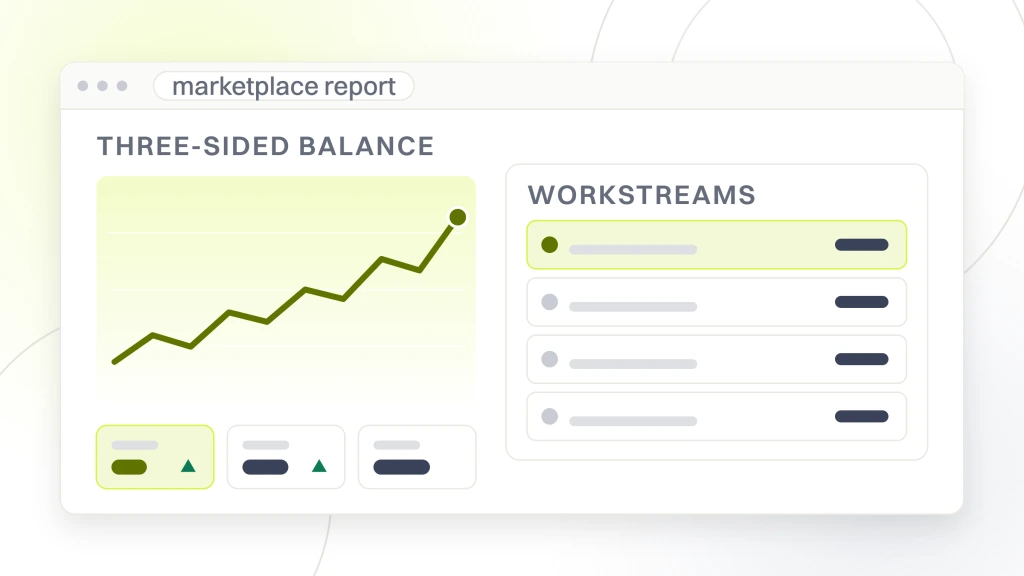
The dashboard has to run on server-side attribution across MMPs like AppsFlyer or Adjust, plus the internal data warehouse pulling merchant onboarding events and courier activation events. Any dashboard that runs on ad platform native reporting alone loses 20 to 40% of the attribution to iOS privacy and app-to-web crossover. Server-side normalizes the signal and lets the founder compare paid channels on a real like-for-like basis every week on the same view.
The weekly written pulse matters as much as the dashboard on the marketplace retainer. A real marketplace program ships a Monday morning email covering the wins on the 3-sided balance, the misses on any drifting ratio, the tests running across the workstreams, and the asks for the founder inside 300 words. Any retainer that ships a screenshot dump with no narrative is running out the clock on the retainer commitment. Read the Grubhub for merchants documentation for the merchant onboarding baseline every serious marketplace shop should study before scoping the merchant workstream on the retainer plan.
Pick the right food delivery service digital marketing agency partner
A strong marketplace growth partner runs 5 workstreams on one retainer with a strategy lead who tracks the 3-sided marketplace health score every week. Ibemploy hit 7,500 monthly organic visits and 4.2% conversion on the same shape of accessibility-plus-simplicity build. Vejrø Resort turned social engagement into a 2.2% booking conversion inside 3 months on a wired direct booking flow. A marketplace founder that hires a partner running the 3-sided balance across consumer, merchant, and courier lands on the growth curve every network effect model actually needs to hit the flywheel.