Fashion email marketing works when the seven core flows all run live, the weekly newsletter cadence stays steady, and the size and fit reengagement layer catches the buyer who almost bought. A DTC womenswear founder we onboarded in April opened the first call with a Klaviyo dashboard showing a 42,000 person email list, an 14 percent open rate, and $9,200 in monthly email revenue on $340,000 monthly total. The list should have been driving $85,000. The gap. The brand ran two flows (welcome and abandoned cart), sent one broadcast per month, and had never built browse abandonment, post purchase, replenishment, VIP, or win back flows. This guide covers the working version our team builds for DTC apparel between $80,000 and $2 million monthly. You’ll see the seven flows, the weekly newsletter cadence, the look book format that drives 3 to 5 times the click rate of a standard drop email, and the deliverability rules that hold sender score above 95 across a year of drops and sales.
Post purchase in fashion email marketing
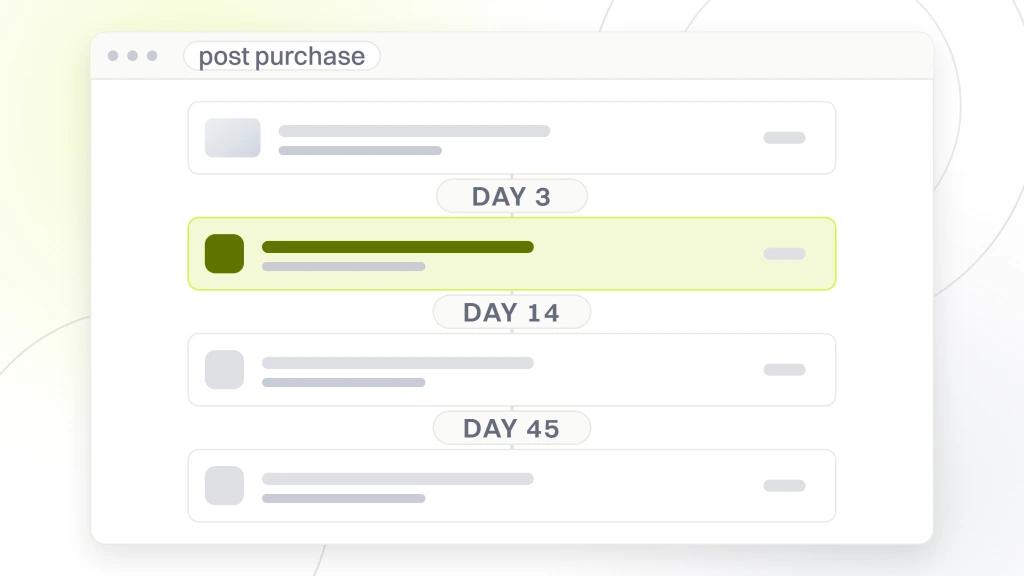
Post purchase is the flow that decides whether a first time buyer becomes a repeat customer. The order confirmation email is not the post purchase flow. The flow starts on day 3 after order and runs 4 to 6 emails over 45 days, each with a distinct job. Confirm the buyer feels good about the purchase. Help the buyer style the item. Ask for a review at the right moment. Introduce the buyer to the loyalty program. Preview the next drop that matches the buyer’s category history.
The message arc that produces repeat orders
Email one on day 3 asks how the item feels and links to the returns portal in a soft way. Email two on day 7 shows 4 styling looks with the item paired against other pieces in the buyer’s likely closet. Email three on day 14 asks for a review with a small incentive (usually 100 loyalty points or a free returns credit). Email four on day 28 introduces the loyalty tier the buyer just earned. Email five on day 45 previews the next drop with an early access window for repeat buyers. Programs that send all five see day 90 repeat purchase rates climb 40 to 80 percent versus programs that stop at order confirmation.
Review capture as a revenue driver
The review request email on day 14 does double duty. It generates the user content that populates the product page and grows conversion on the paid landing pages, and it captures the buyer sentiment the brand uses to tune the size and fit reengagement layer. A DTC apparel brand collecting 400 reviews per month on a 3,000 order month sees paid social conversion climb 8 to 14 percent inside the next quarter, since the ad creative now uses real customer photos and quotes. Klaviyo integrates with Yotpo and Junip for the review capture step, which handles 90 percent of the workflow without custom development. The Klaviyo flow documentation is the source every founder should read before the pod builds the sequence.
Weekly newsletter cadence in fashion email marketing
The weekly newsletter is the broadcast layer’s anchor. Every fashion brand should send one editorial newsletter per week on the same day, at the same time, from the same sender name. Consistency drives the inbox placement that lands drop and sale broadcasts in the primary tab instead of promotions. Brands that skip weeks or shift days lose 15 to 25 percent of open rate inside two months and never fully recover the sender reputation.
| Revenue band | Newsletter frequency | Drop emails per month | Sale emails per quarter | Look book emails per quarter |
|---|---|---|---|---|
| Under $80K monthly | 1 per week | 2 to 3 | 1 to 2 | 1 |
| $80K to $250K monthly | 1 per week | 3 to 4 | 2 to 3 | 2 |
| $250K to $600K monthly | 2 per week | 4 to 6 | 3 | 2 to 3 |
| $600K to $1.5M monthly | 2 per week | 5 to 8 | 4 | 3 to 4 |
| Above $1.5M monthly | 2 to 3 per week | 6 to 10 | 4 to 6 | 4 |
The cadence above is the working starting point for fashion email marketing at every revenue band. A brand at $180,000 monthly with a highly engaged list (35 percent plus open rate on the weekly newsletter) can push to 2 sends per week without hurting deliverability. A brand at the same revenue with a soft list (18 percent open rate) should hold at 1 send per week and rebuild engagement before adding volume. The pod running the program reads the open rate and click rate every Monday and adjusts the send calendar inside a 20 percent margin. Founders who copy a competitor’s cadence without checking their own engagement number burn the sender reputation inside a quarter, which is the failure mode we see most often on brands that grow the list through TikTok signups without matching the send discipline. For how the TikTok pipeline feeds the email list, see our social media marketing for fashion brands guide.
Look book emails in fashion email marketing
Look book emails are the highest performing format inside fashion email marketing and carry 3 to 5 times the click through rate of a standard drop email since they show the product in a styled context the buyer can imagine wearing. Every fashion brand should send one look book email per month at minimum, keyed to a season, occasion, or capsule. The format holds across price points from launch year to scaled brands.
The look book format that works
A working look book email opens with a full width editorial photo (not a product cutout), delivers a one sentence styling premise (“three ways to wear the wool suiting jacket through the transition weeks”), shows 3 to 5 styled looks with photo plus shoppable product list per look, and closes with a link to the full look book gallery on site. The best look book emails our team runs hit 6 to 12 percent click through rate against a 1.5 to 3 percent industry average for a standard drop email. That click through gap is worth $40,000 to $180,000 in incremental revenue per look book email on a mid market fashion account.
Occasion keyed sends
Occasion keyed look book emails land harder than seasonal ones. A wedding guest capsule email in April, a Labor Day getaway capsule in August, a holiday party capsule in November, and a Valentine’s Day capsule in February each land 20 to 45 percent higher revenue per send than a generic season email. The pod plans the occasion calendar 90 days in advance and books the photography against a documented shot list. Our fashion marketing campaigns post covers the calendar and shot list in more depth.
Size and fit reengagement in fashion email marketing
Size and fit is the single biggest reason a fashion browser walks away from a cart. Roughly 42 percent of DTC apparel cart abandonment traces back to a size question the site did not answer. The size and fit reengagement layer sits on top of browse and cart abandonment and catches the buyer with the specific answer she needed to complete checkout.
The size and fit sequence
The sequence fires when a buyer views a product detail page, opens the size guide modal, and leaves the page without adding to cart. Email one, 30 minutes later, shows the product with the size guide inline, model measurements, and 3 fit review quotes from buyers with similar body types. Email two, 24 hours later, offers a free size swap on first order and a link to a live size chat with the customer service team. Programs that run this sequence recover 8 to 14 percent of the size and fit walkers, which lands 2 to 4 percent of monthly revenue.
Fit predictor tools inside the flow
Fit predictor tools inside a fashion email marketing stack, like True Fit and Fit Analytics, plug into Shopify and feed the email flow with a size recommendation based on the buyer’s prior orders and body data. A DTC apparel brand running True Fit sees size and fit abandonment drop 18 to 32 percent inside two quarters. The integration cost runs $600 to $2,400 monthly depending on order volume, which pays back inside 45 to 90 days on a brand doing $150,000 monthly or higher. Below that revenue band, the manual size guide plus fit quote sequence covers 70 to 80 percent of the recovery without the tool cost.
Win back and VIP in fashion email marketing
Win back and VIP sit at the bottom of the flow stack. Win back targets buyers who have not opened an email or ordered in 90 to 180 days. VIP rewards buyers who have crossed a lifetime value threshold. Both flows carry margin work the acquisition side cannot touch, and both get skipped on 70 percent of the fashion accounts our team audits.
Win back arc that recovers real orders
The win back arc in fashion email marketing runs 3 to 4 emails over 21 days. Email one, sent at day 90 of inactivity, opens with a soft “we miss you” and a look at the 3 new arrivals that match the buyer’s category history. Email two, at day 100, offers a 15 to 20 percent incentive with a 7 day expiry. Email three, at day 110, delivers a strong break up message with a final incentive. Email four, at day 121, moves the address to the suppressed list so the sender reputation stays clean. Win back flows recover 4 to 8 percent of dormant buyers, which lands 1 to 3 percent of monthly revenue with almost zero incremental acquisition cost.
VIP program as a retention anchor
The VIP flow fires when a buyer crosses a lifetime value threshold (usually $400 to $800 for DTC apparel). The flow runs 2 emails. One to congratulate and confirm the VIP tier benefits, one to introduce the concierge contact and preview upcoming drops with early access windows. VIP buyers order 2.2 to 3.8 times more per year than the average buyer at 40 to 60 percent higher average order value. A brand with 800 VIP members typically sees 22 to 34 percent of revenue trace back to that segment. Programs that build a real VIP tier inside 24 months lock in the retention math that carries the compounding growth past $600,000 monthly.
Deliverability in fashion email marketing
Deliverability is the invisible layer that decides whether every flow and broadcast actually lands in the inbox. Sender score, domain authentication, list hygiene, and engagement segmentation combine to hold the primary tab placement across a full year of drops and sales. Programs that skip deliverability work watch open rates decay 30 to 50 percent over a year without knowing why.
The five deliverability rules that hold
- Authenticate the sending domain with SPF, DKIM, and DMARC records before the first broadcast goes out. Gmail and Yahoo require DMARC alignment on any sender over 5,000 daily as of February 2024.
- Warm the sending domain for 30 to 45 days before pushing the full list volume. Send to the top 20 percent engaged segment first, then expand outward.
- Suppress non openers past 90 days in 4 tiered segments (30, 60, 90, 120 day inactive) and only send re engagement to the 90 day tier, not the whole list.
- Hold the list bounce rate under 0.3 percent and the spam complaint rate under 0.1 percent per send. Above those thresholds, the mailbox providers throttle placement inside a week.
- Rotate the sending IP or ESP tier if the sender score drops below 90 for more than 14 days, and never send a heavy sale broadcast to a soft list to try to rescue a bad month.
Deliverability is the layer that separates a mature email program from a spray and pray operation. Google’s sender guidelines documentation is the reference every pod should read before scoping the domain warmup. Programs that treat deliverability as a monthly discipline hold sender scores above 95 across the full year. Programs that only fix deliverability when the numbers crash spend 60 to 120 days rebuilding what they broke, which usually costs $80,000 to $220,000 in lost email revenue over the rebuild window.
How to measure fashion email marketing honestly
Honest measurement of fashion email marketing runs on six KPIs the pod reads against the industry median every Monday. Open rate. Click rate. Revenue per recipient. List gain rate. Email revenue share of total revenue. Unsubscribe rate. Each number has an honest median for the revenue band, and each answers a specific question about program health.
The honest KPI targets. Open rate at 28 to 38 percent for a healthy fashion list, 22 to 28 for a soft list. Click rate at 2.5 to 5 percent on broadcasts, 6 to 12 percent on look book emails. Revenue per recipient at $0.35 to $0.90 on broadcasts, $1.80 to $4.20 on the welcome flow email one. List gain rate at 6 to 12 percent of the current list size monthly for launch year brands, 3 to 6 percent for scaled brands. Email revenue share at 25 to 35 percent of total DTC revenue on a healthy program. Unsubscribe rate under 0.4 percent per send. The pod reads all six numbers on Monday morning and acts on the gaps that show up. Reading only revenue misses the deliverability drift that shows up in open rate 90 days before it hits the revenue line.
Fashion email marketing in production
A DTC womenswear brand our team took on in Q2 came in running a 78,000 person Klaviyo list at 11 percent email revenue share, an 18 percent average open rate, and no browse abandonment, post purchase, or win back flows live. The welcome flow ran 2 emails and stopped. Broadcast cadence sat at one drop email per week with no editorial newsletter and no look book emails on the calendar. The list was growing 4 percent monthly through checkout capture only, with no pop up or footer form driving new signups.
Our team rebuilt the flow stack over the first 60 days. Built the 5 email welcome flow with the founder story angle. Built browse abandonment, cart abandonment (rewrote the existing 1 email version to 3 emails), post purchase (5 emails), replenishment (2 emails at day 45 and day 75), VIP (2 emails at $500 threshold), and win back (4 emails). Added the size and fit reengagement layer on the top selling three product categories. Warmed the sending domain across the top 30 percent engaged segment for 30 days before pushing full list volume. Layered the editorial Monday newsletter and a monthly look book email onto the broadcast calendar. Set the review meeting for Monday morning with the six KPIs on a Looker Studio dashboard.
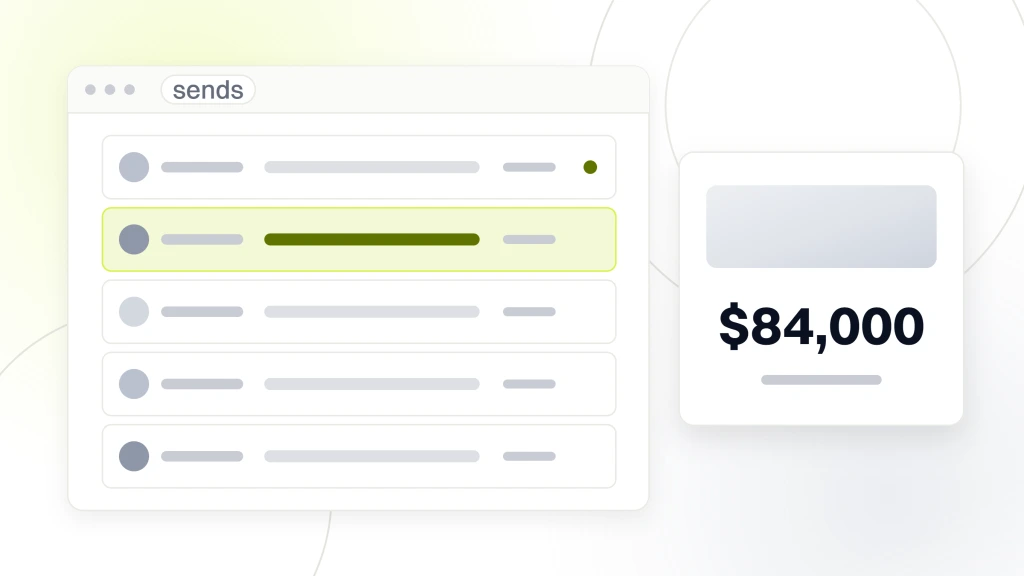
Nine months in, email revenue share climbed from 11 percent to 31 percent of total DTC revenue. Open rate held at 34 percent across broadcasts and 52 percent on flows. Day 90 repeat purchase rate grew from 19 percent to 38 percent. The list grew from 78,000 to 142,000 with an 8 percent monthly gain rate from a redesigned pop up and a refreshed footer form. The dollar result was $84,000 in incremental monthly email revenue on the same list, driven entirely by the flow stack and cadence discipline the plan required from day one. The same playbook has moved bigger numbers on adjacent ecommerce work. Our long running program with Abigail Ahern, the luxury home décor DTC brand, rebuilt SEO and paid media around intent driven traffic and premium creative, then produced a 179 percent revenue gain, doubled conversion rates, and 3,000 percent ROAS on paid social retargeting and prospecting. For the broader retention context that sits above the email layer, see our guide to marketing for fashion brands and the full funnel budget rulebook.
Tool stack for fashion email marketing
The tool stack decides how much of the program the pod can run without custom development. Klaviyo carries 65 percent of DTC apparel accounts on the email side. Attentive carries 55 percent of the SMS side. The two integrate directly with Shopify and Shopify Plus, which handles the buyer data feed for behavior triggered flows. Founders picking a stack should decide the tool once and hold for at least 18 months. Switching costs run $12,000 to $40,000 in migration and rebuilding flows.
Klaviyo versus alternatives
Inside the fashion email marketing stack, Klaviyo wins on flow builder depth, Shopify integration, and predictive analytics. Mailchimp works for launch year brands under $80,000 monthly at a lower monthly cost but hits ceilings on flow logic past that revenue band. Omnisend sits in the middle at 40 percent lower monthly cost than Klaviyo with 70 percent of the flow builder capability. Sendlane and Drip round out the mid market alternatives with strong ecommerce integrations. The choice matters less than the discipline the pod runs the tool with. A brand running Klaviyo with two flows live scores lower than a brand running Mailchimp with all seven flows live, every time.
Integration layer that saves hours
The fashion email marketing integration layer connects Klaviyo to Shopify (buyer and order data), Yotpo or Junip (reviews), True Fit or Fit Analytics (size prediction), Attentive or Postscript (SMS), Recharge (subscription accessories), and Gorgias (support tickets). A brand at $180,000 monthly running the full integration stack saves 20 to 30 hours per month on manual data reconciliation across the tools. Those hours go back into creative production and campaign planning, which is where the revenue actually compounds. Founders scoping a new email program should budget $600 to $2,400 monthly for the tool stack across integrations for a mid market brand.
Where fashion email marketing fits the wider retention stack
Fashion email marketing sits at the center of the retention stack. Every SMS message, every loyalty program touchpoint, every branded resale email connects back to the Klaviyo profile the pod builds inside the first 90 days. Programs that budget for email as an isolated channel produce isolated results. Programs that build email as the retention anchor with SMS, loyalty, and resale plugged in produce the compounding retention math that carries the fashion program past $600,000 monthly.
The retainer that runs the flow stack, the broadcast calendar, and the weekly measurement discipline starts at $1,499 per month on a 6 month contract and scales with revenue band and list size. Common tiers land at $1,499, $2,499, $3,999, and from $6,000 per month. The retainer covers flow build, broadcast production, deliverability audits, and monthly performance reviews with the founder in the room. Founders scoping the broader retention layer should read our SMS and community programming coverage in the wider fashion retention stack next.
The retainer scales with revenue band and the number of active flows and broadcasts per quarter. A brand at $80,000 monthly runs a lean retainer with 3 broadcasts monthly and the full 7 flow stack live. A brand at $600,000 monthly runs a fuller retainer with 8 broadcasts monthly, look book production every 4 weeks, and quarterly deliverability audits with the domain warmup coverage baked in. Every retainer tier ties back to the six KPIs and the Monday review discipline the plan requires. The apparel fashion marketing hub ties the email program to the wider service stack. Two outside reads worth an hour before the first flow build. Klaviyo’s flow documentation above for the technical setup. Litmus’s email analytics benchmarks report for the honest industry median every founder should read against her own numbers each quarter.
Fashion email marketing questions founders ask
How many flows should a launch year DTC apparel brand run
Seven core flows carry the fashion email marketing program at every revenue band. Welcome, browse abandonment, cart abandonment, post purchase, replenishment, VIP, and win back. Launch year brands under $80,000 monthly can run a lean version of each with 2 to 3 emails per flow, then expand as list engagement holds above 25 percent open rate.
What open rate should a fashion email list hold
A healthy fashion email marketing list holds 28 to 38 percent open rate on broadcasts and 40 to 55 percent on flows. A soft list sits at 18 to 24 percent and needs 60 to 90 days of engagement segmentation before the pod pushes full list volume again.
How often should a fashion brand send email
Fashion email marketing cadence runs one to three sends per week depending on revenue band and list engagement. A brand at $80,000 to $250,000 monthly sends one editorial newsletter plus 3 to 4 drop or sale emails per month. A brand above $1.5 million monthly sends 2 to 3 per week without hurting deliverability, provided the list holds 28 percent plus open rate.
Which ESP works best for fashion email marketing
Klaviyo runs 65 percent of DTC apparel accounts on the strength of the Shopify integration and flow builder depth. Omnisend and Mailchimp cover launch year brands under $80,000 monthly at a lower monthly cost. The tool choice matters less than the discipline behind the seven flow stack and the weekly measurement review.
What share of DTC revenue should email drive
A mature fashion email marketing program drives 25 to 35 percent of total DTC revenue. Programs under 20 percent share are usually missing at least three of the seven flows or running a broken broadcast cadence. Programs above 35 percent are usually over indexed on email and under invested in paid acquisition, which caps the growth ceiling.