A working manufacturing marketing strategy starts with one number. How many qualified request-for-quote (RFQ) submissions did the plant close last quarter, and which channel drove each one? If you can’t answer that in ninety seconds, the plan you’re running isn’t a strategy. It’s a set of tactics stapled together. This guide is the plan our team uses when a mid-market manufacturer walks in with a stalled pipeline, a website built in 2017, and a sales team that thinks marketing means the trade-show budget line.
Read this in about ten minutes and you’ll walk out with the channel mix by budget band, the reporting structure that ties every RFQ back to a source, the ten marketing ideas that still work in 2026, and a plan template you can hand to an operations director without a translator. The examples are pulled from real client accounts. The numbers are the ones we track weekly, not the ones a pitch deck rounds up.
The b2b manufacturing marketing strategy for buying-committee sales
A b2b manufacturing marketing strategy that closes buying-committee deals treats every account as a group buy. Between four and seven people sign off before a purchase order gets cut. Your marketing has to reach the engineer, the procurement manager, the operations director, and sometimes the CFO. One asset does not do all four jobs.
Buying committees behave predictably once you map them. The engineer wants the spec sheet, the tolerance data, and a technical video. The procurement manager wants the pricing calculator, the lead-time promise, and the certification list. The operations director wants the capacity page and the case study. The CFO wants the payment terms and the annual volume discount. Your plan produces one asset per role, then routes each visitor to the right one based on landing-page behavior. Good marketing plans build that routing. Weak ones send every visitor to the same generic page and lose the committee at the first click.
Assets that speak to engineers
Engineers convert on proof and specifications, not on marketing copy. Downloadable data sheets. CAD files behind a soft form. A comparison table between your process and the two most common alternatives at their volume range. A short video walkthrough of the plant floor with the operator explaining the machine setup. Engineers scan for accuracy first. If your data sheet rounds a tolerance from 0.0025 to 0.003 inches, you’ll lose the engineer inside the first minute. Every asset for this audience gets reviewed by an engineer on your team before publish.
Assets that speak to procurement
Procurement teams convert on speed and clarity. A pricing calculator with a submit-for-quote button. Lead time by product line. Certifications visible above the fold. A sample of a past PO redacted for a similar buyer. A capability page that names the industries served and the annual volume the shop handles. Procurement does not want a discovery call before pricing. It wants pricing before a discovery call. If your site forces a call before revealing any number, procurement moves to a competitor who publishes a range.
Writing a marketing plan for manufacturing company operations
A marketing plan for manufacturing company operations follows a simple template with seven sections. Situation, objectives, ideal customer profile (ICP), channel mix, asset production, reporting cadence, and sales handoff. Ten pages, one shared doc. Every line carries a number and a date. Anything else is decoration.
The plan gets written once and revised every quarter. The first draft takes about twelve working hours across your marketing lead, your sales director, and your operations coordinator. The revisions take about three hours each. Any plan longer than fifteen pages is one nobody reads past page three. Any plan shorter than eight pages is missing sections. The template below covers what our client teams use, adjusted for the size of the plant and the complexity of the product line.
Situation and baseline section
The situation section summarizes the current state in three paragraphs. Annual revenue, RFQ volume last year, sales cycle length by product line, top three customer accounts by revenue, and bottom three product lines by margin. Nothing about competitor analysis at this stage. Nothing about SWOT. The situation section is a mirror, not a projection. Your marketing plan for manufacturing operations needs this baseline so every objective downstream compares against these numbers. If you don’t know them, spend two days pulling the report from the ERP before writing another word of the plan.
Objectives that name real numbers
Objectives read as numbers with dates. Grow RFQ volume from 42 monthly to 68 monthly by end of Q3. Move average RFQ-to-quote conversion from 38% to 46% by year end. Add two new named ICP accounts to the pipeline by Q2. Objectives without dates are wishes, and objectives without numbers are slogans. Every objective in your marketing plan for manufacturing operations gets a metric owner from the sales or ops team, signed by name.
Manufacturing marketing ideas that produce RFQs in 2026
Manufacturing marketing ideas that pay off in 2026 are not the ones a marketing conference sells you. They’re the compounding assets that keep working for years. A solid capability page, a pricing calculator, a capacity dashboard, a trade-show follow-up flow, and a LinkedIn Sales Navigator seat used weekly by a real person on your team.

The best marketing methods for small manufacturers all share one property. They pay back over 12 to 36 months, not in week one and not in the launch quarter. Plants that win at marketing take the long view. Plants that lose chase whatever social platform the trade press wrote about last month. Below is the shortlist of manufacturing marketing ideas we still recommend to every client this year, in order of average return per dollar spent.
- Capability pages, one per process or vertical served, each 800 to 1400 words with real photos and spec data
- Pricing calculator on the site, connected to the CRM with a submit-for-quote endpoint
- Capacity dashboard showing weeks-out lead times by product line, refreshed weekly
- Trade-show follow-up automation that sends a personal video within 72 hours of the show
- LinkedIn Sales Navigator used four hours weekly to touch 400 named accounts per month
- Quarterly PR outreach to trade publications with a real data story, not a press release
- Case-study PDFs by vertical, downloadable without a form until page three
Capability pages as the workhorse asset
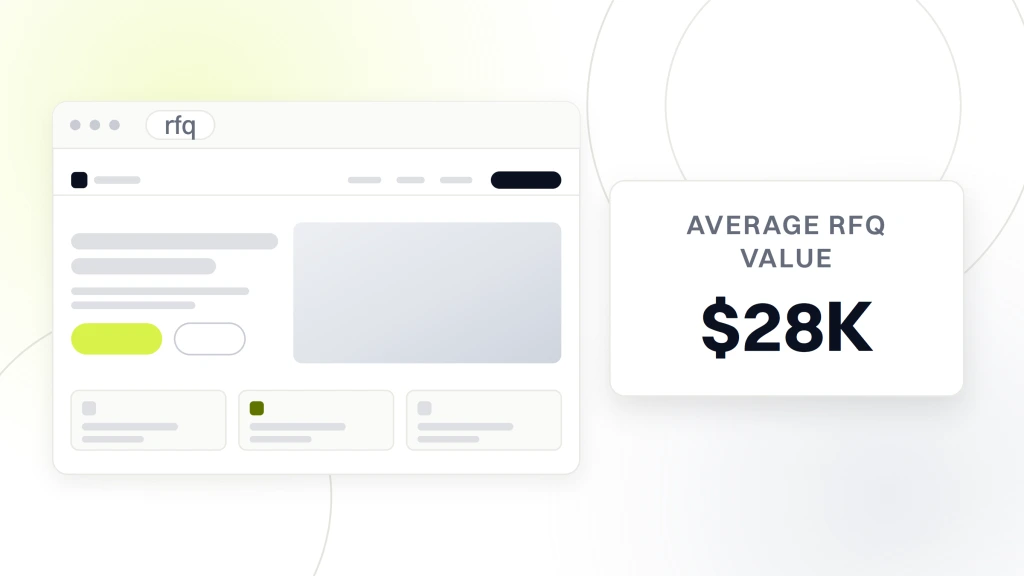
Capability pages are the single highest-return asset in any manufacturing marketing strategy. One well-built page per process, ranked on Google, produces RFQs for years. The math on a mid-market shop looks like this. Twelve capability pages ranked in the top three for their target keyword generate about 300 organic visits per month combined, convert at 4 to 7% to a form fill, and produce 12 to 20 RFQs monthly with an average value of $28K each. That works out to $340K to $560K in monthly quoted pipeline off twelve pages of writing. Nothing else in the plan produces returns like that per hour invested.
Pricing calculators as the trust asset
A pricing calculator that produces a real quote email inside 5 minutes is the highest-trust asset a manufacturer can publish. Procurement teams reward it with return visits and share it internally to buying-committee peers. Building one takes about 40 engineering hours and about 20 marketing hours. Maintenance takes about two hours per month adjusting for material cost changes. Poly Processing, a rotationally molded polyethylene tank manufacturer, launched an interactive tank configurator that cut cost per lead 90% and drove 10x inbound ROI, with hundreds of qualified monthly leads landing in the sales team’s queue. BSH Hausgeräte, Europe’s largest home appliance manufacturer (Bosch, Siemens, Gaggenau, Neff), rebuilt its funnel and gained 15% more leads plus 45 extra seconds of session time on the redesigned pages.
Digital marketing strategy for manufacturers at the mid-market band
A digital marketing strategy for manufacturers at the $20M to $80M revenue band runs three simultaneous programs. Always-on technical SEO, always-on Google Ads, and an always-on LinkedIn account program, plus a quarterly special program like a trade show or a product launch. That combination lands most mid-market plants in the 40 to 90 monthly RFQ range on a $15K to $22K retainer plus $5K to $8K ad spend.
The digital plan at this band should feel operational, not experimental. Nothing gets tested this quarter that has not been tested at three peer plants inside the last twelve months. You want proven playbooks running for eight consecutive quarters, the same reporting format every Monday morning, and the same three metrics reviewed at every quarterly business review (QBR). Novelty is expensive at this stage since the base pipeline is already substantial. Bet on repetition, not innovation, for the first two years of an engagement.
| Retainer band | Channel mix | Expected monthly RFQs | Best fit shop size |
|---|---|---|---|
| $6K to $9K per month | Technical SEO + Google Ads only | 12 to 24 | Single-plant, $5M to $15M revenue |
| $12K to $18K per month | SEO + Ads + LinkedIn ABM | 28 to 52 | Multi-site mid-market, $20M to $50M |
| $18K to $28K per month | Add trade-show follow-up + PR | 44 to 84 | Mid-market with export, $50M to $80M |
| $28K to $45K per month | Add PIM + capability page programmatic | 75 to 120 | National contract manufacturer, $80M to $200M |
| $45K plus per month | Enterprise ABM + international SEO | 110 plus | Global manufacturer, $200M plus revenue |
Where the retainer money goes in practice
Retainer money at the mid-market band splits into three big buckets. Roughly 45% to strategy and account management, 40% to production hours on assets, ads, and content, and 15% to reporting and analytics tooling. If a proposal shows less than 30% on production, the agency is billing you to think and not to make. If a proposal shows less than 10% on reporting, the agency will surprise you at the QBR. Ask for the split explicitly during the intro call. An agency that will not itemize the retainer will pad the margin at your expense.
How the split changes as you scale past $50M
Past $50M revenue, the split shifts. Strategy drops to 30% since the plan gets stable. Production stays at 40% since output requirements grow with revenue. Analytics rises to 30% since pipeline attribution across seven-figure deals gets complex. Custom dashboards, CRM tie-ins, and monthly cohort analysis all appear on the invoice. The retainer number rises but the shape rebalances. Plants that fight this rebalance and refuse to fund reporting past $50M discover in year three that they cannot explain where the revenue came from, and their marketing budget gets cut.
Marketing strategies for manufacturers that outperform the industry median
Marketing strategies for manufacturers that beat the median share four operational habits. They report weekly against RFQ counts. They publish one new capability page every 30 days. They run LinkedIn outreach touching 400 named accounts monthly. And they hold a quarterly business review that names three specific misses, not just wins.
Median performance in industrial marketing lands most plants at 24 to 38 monthly RFQs on a $10K to $15K retainer. Top-quartile performance lands at 55 to 90 monthly RFQs on the same spend. The gap isn’t budget. It’s operational discipline. Weekly reports, monthly cadence, and quarterly reviews with honest miss lists. The plants that outperform are the plants that treat marketing as an operations function, not a creative one. That mindset shift is the single largest predictor of which manufacturer becomes the market leader in a five-year window.
Weekly reporting cadence details
Weekly reporting means a Monday morning dashboard update with four numbers. RFQ count from the previous week, RFQ-to-quote conversion rate, top three campaign sources, and bottom three campaign sources. The report goes to the marketing lead, sales director, and operations director. The meeting runs 15 minutes with no slide deck and no narrative, just the four numbers plus one line about what changed. Plants that skip the weekly rhythm and only report monthly catch trend problems six weeks late. By then the broken campaign has cost them fifty RFQs.
Monthly capability-page publish cadence
Monthly cadence means one new capability page live every 30 days, not two and not zero. Twelve pages a year. Each page targets a specific process, material, or vertical. Each page ranks in months four through nine after publish. After year one, you’ll have twelve compounding assets that produce roughly 100 RFQs per year combined and hold steady with light maintenance. After year three, you’ll have thirty-six pages producing 350 RFQs annually. Compounding marketing for a manufacturer looks like exactly this pattern. It’s slow for the first year and remarkable by the third.
How to market a manufacturing company without hiring a huge team
You can market a manufacturing company with one internal marketing lead, one part-time content contractor, and one outside agency retainer. That’s the smallest viable team for a mid-market plant. Any smaller and you lose reporting discipline. Any larger before $50M revenue and headcount overhead eats the marketing budget.
The team you build reflects the strategy you chose. If your plan runs three channels deep on SEO, Ads, and LinkedIn, you need one person who owns each channel or one agency that covers all three. If your plan runs seven channels shallow, you need seven people and you won’t scale. Small teams win at manufacturing marketing by picking a narrow strategy and executing it deeply for eight consecutive quarters. Broad shallow teams lose since the operational cost of switching contexts across seven channels leaves nobody focused enough to compound results.
The single marketing lead role
The internal marketing lead owns the weekly report, the monthly cadence, and the quarterly business review. They don’t personally write blog posts and they don’t personally run Google Ads. They own the process that produces both. Salary band for this role sits at $85K to $130K depending on region, and the seat pays for itself when RFQ volume clears 30 monthly. Below that RFQ volume, a fractional CMO on a half-time engagement covers the role at $4K to $7K monthly and skips the payroll overhead until the plant is ready.
The outside agency partnership
The outside agency runs the execution. Technical SEO. Google Ads management. LinkedIn account programs. Capability page production. Reporting infrastructure. The retainer covers the specialists your team does not have on staff. The agency reports to your marketing lead, not to the CEO directly. That reporting line matters since it forces the lead to own the outcomes and prevents the agency from routing around them. Our manufacturing marketing agency engagement runs on this exact hierarchy with clients like Smith-Midland Corporation, a precast concrete leader whose consolidated site cut bounce rate 65%, doubled conversions, and hit 100% in-house CMS efficiency after a UX-led rebuild.
A digital marketing strategy for manufacturing company that scales past $50M
A digital marketing strategy for manufacturing company operations past $50M revenue adds three programs on top of the mid-market playbook. International SEO, programmatic capability page generation, and product information management (PIM) tied to the site. The retainer moves past $28K monthly. The team grows to four internal marketers plus a specialist agency. The reporting stack integrates with the ERP so pipeline attribution runs to the shipment line item.
Scale changes the shape of every marketing decision. What worked as a single capability page at $20M revenue now needs to become a template with fifty variants covering every SKU. What worked as a Google Sheet report at $30M revenue needs a Looker Studio dashboard tied to Salesforce or HubSpot Enterprise. What worked as ad-hoc trade show planning at $40M needs an events calendar that plans eighteen months out. The plant that clears $50M and refuses to fund the operational upgrade watches its marketing performance flatten even as revenue climbs, and the budget-to-revenue ratio stops making sense to the board.
Programmatic capability pages at scale
Programmatic capability pages mean templating out one master page structure and populating variants from the product database. Fifty SKUs become fifty pages generated on a nightly build. Each variant carries the same schema, the same photo layout, the same spec block, but with SKU-specific data. Google reads them as unique pages since the content varies by product. Buyers convert on them since each page speaks to their exact SKU. This tactic requires a working product information management system, which is why it lives at the $50M-plus band and not below. Below $50M, your team writes capability pages by hand.
International SEO for export volume
International SEO for manufacturers means running country-specific site structures with hreflang tags, translated capability pages, and local domains where the market volume justifies it. A manufacturer exporting 20% of revenue to Germany runs a German-language capability page set on a .de subdomain. A manufacturer exporting to Mexico runs Spanish-language pages with local phone numbers. The engineering cost of building this stack is $60K to $150K one-time plus a $2K monthly maintenance line item. The return is a 15 to 40% gain in international RFQ volume within eighteen months.
Manufacturing marketing trends worth budgeting for in 2026
Manufacturing marketing trends worth real budget in 2026 include AI-generated 3D configurators, LinkedIn video for plant tours, and CRM-connected pricing calculators. Trends that don’t belong in the budget include TikTok for procurement, chatbots on capability pages, and paid influencer partnerships with maker-space YouTubers.
Trends are dangerous since they arrive with more marketing volume than data. Every trade publication has an article on TikTok for manufacturing by now. Zero of those articles cite real pipeline data from an industrial buyer. The way to evaluate a trend for your plan is to ask what percentage of a target ICP’s buying committee uses that channel during their buying process. If the answer is under 15%, the trend does not belong in your plan yet. Come back to it in twelve months. If the answer is over 40%, budget for a test now. Everything in between is a judgment call based on your specific ICP and product line.
AI-generated 3D configurators as the winning trend
3D configurators driven by AI let a procurement buyer see and configure a custom part, get a live price, and submit a quote request in under three minutes. The engineering cost of a good configurator sits at $80K to $180K depending on product complexity. The gain on RFQ conversion rate at the configured-product line runs 40 to 90% based on our client accounts that pushed one live in 2025. This is the highest-return trend investment in industrial marketing right now, and it will stay the highest-return investment through at least 2028.
Trends to skip for procurement audiences
TikTok, Threads, and BeReal do not belong in a manufacturing marketing plan aimed at procurement teams and engineers. Chatbots on capability pages annoy technical buyers who want the data sheet, not a scripted conversation. Paid influencer partnerships with maker-space YouTubers reach the wrong buying committee. Don’t fund any of these against your RFQ budget line. If you want a brand-building play, run a trade publication PR cycle or sponsor a technical conference. Both produce measurable ROI against manufacturing marketing trends worth tracking, and both feel less clever than the influencer play. Boring wins here.
Best marketing methods for small manufacturers under $10M revenue
The best marketing methods for small manufacturers under $10M revenue focus on two channels. Technical SEO on three to five capability pages, and Google Ads on the top ten procurement search terms. Anything more spreads the budget too thin, and anything less starves the pipeline.
Small shops win at marketing by picking a narrow vertical and dominating it. Not by attempting five channels at half-scale. The precision-machining shop that ranks number one for Class III surface finish machining in the Midwest closes 40% of the inbound RFQs on that keyword and grows to $15M revenue in three years. The precision-machining shop that runs seven channels at 15% effort each stays at $6M revenue with a marketing budget it cannot justify. The math on focus is not close. Focus wins by six-to-one margins in the sub-$10M band.
Three capability pages as the whole SEO plan
Small shops need three capability pages, not thirty. One for the flagship process, one for the flagship vertical served, and one for the flagship material. Each page runs 1,000 to 1,400 words, includes real photos of the shop floor, and gets updated every six months. That is the entire content plan for a shop under $10M. Don’t chase blog volume and don’t chase category-level rankings. Rank three pages and close 20 RFQs monthly off them. That’s the winning play at this scale.
Ten Google Ads keywords as the whole ad plan
Google Ads for a small shop runs on a maximum of ten keywords. Ten highly specific procurement-intent phrases. Each keyword gets its own ad group with a matched landing page. Ad spend sits at $1.5K to $3K monthly. Cost per RFQ varies by vertical. This tight structure is what makes ad math work at small scale. Broad ad accounts with 200 keywords at $500 monthly ad spend produce no RFQs, waste your budget, and convince you that Google Ads doesn’t work for manufacturers. Ten keywords at $2K works. That’s the pattern.
These are the questions we field on nearly every intro call with a plant marketing lead or an operations director.
Bringing your manufacturing marketing strategy together
A working manufacturing marketing strategy comes together when RFQ volume, channel mix, and reporting cadence stay aligned for eight consecutive quarters. That’s a two-year commitment. Manufacturers that survive the first year of discipline see marketing become the largest lead source by year three, ahead of referrals and trade shows.
If you take one thing from this guide, take the RFQ-count metric and put it on a dashboard your ops director sees every Monday morning. If you take two things, add the twelve-capability-page cadence and stick to it for a year. When you are ready to run this plan against a real budget with a real team, our manufacturing marketing retainer lays out how the engagement runs, what the first 90 days look like, and what the deliverables map to per quarter. SEO retainer tiers run $999, $1,499, $2,499, and from $4,500 per month depending on your program scope and reporting depth. Baseline benchmarks on B2B manufacturing pipeline from Gartner Marketing and industry sales cycle data from IndustryWeek give you the outside reference numbers to compare against your own dashboard.