B2B SaaS marketing trends 2026 reshaped day-to-day tactics faster than most teams could adjust to through 2025. Generative AI reshaped content production. Pipeline attribution replaced MQL scoring. AI-powered analytics turned reporting from monthly PDFs into real-time dashboards. The ICP concept got tighter. And the buyer stopped tolerating vague product-first messaging. This guide covers every shift with the tactical move you should make now to stay ahead into 2026. Pair it with our B2B SaaS marketing strategy playbook for the full pipeline picture.
You are probably reading this since your team is trying to decide which B2B SaaS marketing trends 2026 introduced are worth acting on and which to ignore. Not every shift matters for every SaaS. Some trends are structural and permanent. Some are cyclical hype. Some are already priced into the market and the window is closed. This guide separates the three groups, ranks the trends by tactical impact, and gives you the exact next move for each one. Read straight through and take notes on the shifts that fit your stage.
AI impact on content marketing B2B SaaS teams cannot ignore
AI impact on content marketing B2B SaaS teams cannot ignore lives in three places. Drafting speed. Editorial quality control at scale. And SEO strategy as the algorithm learns to score AI-drafted content. Ignore any of the three and your content program falls behind.
Our B2B SaaS content marketing playbook covers the full workflow. Content marketing for B2B SaaS entered 2025 with a supply shock. Every team suddenly had access to AI drafting capability. Total content volume in the SaaS blogosphere increased 3 to 4x. Ranking on head terms got harder as search results filled with AI-drafted content of varying quality. Google adjusted its ranking signals to reward genuine expertise, original data, and edited work over raw drafts. The teams that leaned into original data and edited AI drafts saw ranking gains. The teams that relied on raw AI output saw ranking drops.
Original data as the ranking moat
Original data is the ranking moat for B2B SaaS content in 2026. See our B2B SaaS marketing benchmarks by revenue stage for what “good” looks like at each ARR tier. Anonymous survey data from your customer base. Aggregated product usage data. Industry benchmark reports built from your own book of business. Anything a competitor cannot copy from another blog. Google explicitly rewards original data in its E-E-A-T signals, and the teams publishing original data see the largest ranking gains. The cost of producing original data is real, but the payoff is durable in a way that AI-drafted content is not.
Take a plain example. A SaaS team in Austin runs a 400-customer anonymous survey on retention drivers, cleans the data, and publishes the benchmark PDF with charts. Six months later, that single page pulls backlinks from 40 other SaaS blogs citing the numbers. No AI-drafted post on the same topic gets that treatment. Original data is a compounding asset. Every AI-drafted post is a depreciating one.
Editorial rigor as the quality moat
Editorial rigor is the quality moat for AI-assisted content. Every draft passes through an experienced operator who tightens the argument, adds specific examples, cuts filler, and adds outbound links to authoritative sources. That editorial pass takes 30 to 60 minutes per piece. It separates content that ranks and converts from content that readers skim and forget. Skip the pass and your blog looks like every other AI-drafted blog. Keep the pass and your blog reads like an operator who knows the category wrote it.
The 30 to 60 minute pass is not overhead. It is where the moat actually lives. In a world where every SaaS team can ship 4 to 6 AI-drafted posts per week, the ones that also edit are the ones that keep ranking and keep converting. Editorial rigor is the cheapest defense against the AI content flood.
AI marketing strategies B2B SaaS companies are actually running
AI marketing strategies B2B SaaS companies are actually running fall into 4 buckets. AI-augmented content ops. AI-powered paid creative testing. AI-driven lead scoring. And AI-assisted analytics. Not every SaaS runs all 4. Pick the 2 that fit your gap first.
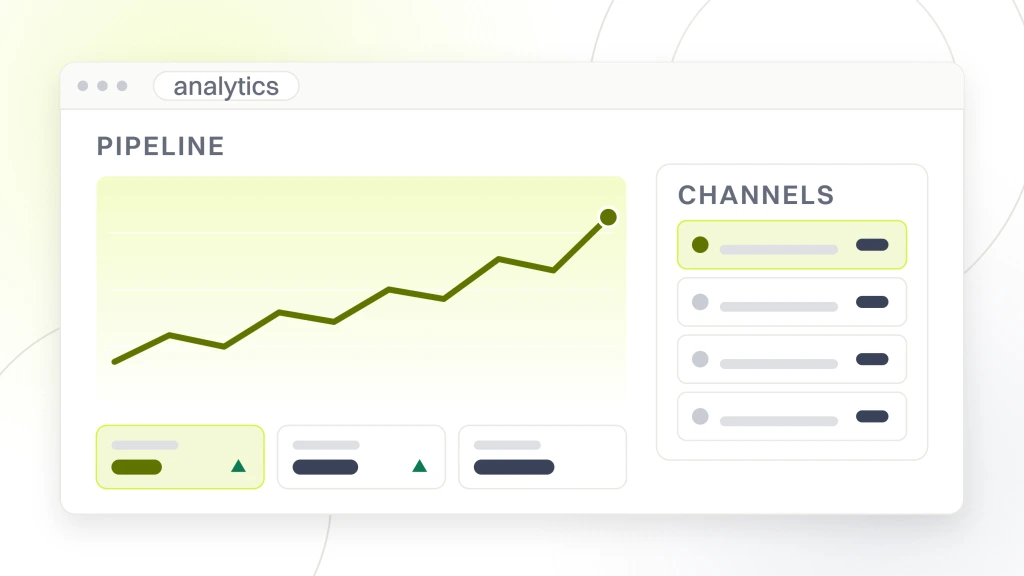
The 4 buckets differ in maturity and payback. AI-augmented content ops is the most mature, with clear playbooks and predictable ROI. AI-powered paid creative testing is mature for Meta and TikTok, less mature for LinkedIn. AI-driven lead scoring is mature at the enterprise SaaS level but overkill for early-stage. AI-assisted analytics is powerful for pattern recognition but requires clean underlying data. Pick the 2 buckets that match your team’s current pain and skip the other 2 until you have capacity.
AI-augmented content ops in practice
AI-augmented content ops means the experienced operator uses AI for research synthesis, first-draft generation, and iterative editing rather than as a replacement for the writer. Prompt libraries live in the operator’s own workflow, not in a vendor tool. Editorial guidelines drive AI output. Every piece gets an editorial pass before publication. The outcome is 4 to 6 long-form pieces per week per experienced operator, at a quality bar that matches or exceeds hand-written work.
An early-stage SaaS in Toronto ran this workflow for 90 days. Two operators, one shared prompt library, one editorial standard doc. Output climbed from 4 posts per week to 11 posts per week without hiring. Ranking held or improved on every head term they targeted. That is the ceiling of AI-augmented content ops when the editorial layer stays honest.
AI-driven lead scoring in practice
AI-driven lead scoring means the CRM ingests behavioral, firmographic, and intent signals into a scoring model that adjusts weights based on which leads actually close. The output is a lead score that predicts close probability 15 to 25 percentage points more accurately than rule-based scoring. Enterprise SaaS with real deal volume benefits most. Early-stage SaaS with under 200 opportunities per quarter has too little data to train the model well. Match the tool to the stage.
For a Series C SaaS with 800 opportunities a quarter, the model retrains monthly and cuts sales-cycle length by 12 to 18 percent inside two quarters. For a seed-stage SaaS with 60 opportunities a quarter, the same model overfits, mis-scores half the pipeline, and the sales team stops trusting the output. Volume is the difference. Track it before you buy.
AI role in B2B SaaS marketing strategies for 2026 planning
Planning for 2026 means treating AI as more central to the operation, not less. Content ops mature further. Paid creative testing gets faster. Analytics gets more prescriptive. The teams that put AI in the operational core in 2025 have a 12-month head start on the teams starting the build in 2026.
Planning for 2026 should assume AI is embedded in every marketing workflow, not an add-on. Budget for AI tooling as a core operational cost, similar to CRM or ad platform fees. Budget for training the core team on AI-augmented workflows, since self-taught adoption produces uneven results. Budget for the reporting stack that lets you distinguish AI-produced improvement from underlying market shifts. And build the editorial and QA layer that keeps AI output above the industry quality floor. Any 2026 plan that treats AI as a Q4 project instead of a Q1 baseline will finish behind.
Budgeting AI as core operational cost
Budgeting AI as core operational cost means allocating $2,000 to $8,000 per month per experienced operator on AI tooling and API costs, plus 5 to 10 percent of the marketing budget on AI-specific initiatives. That budget covers prompt library maintenance, custom model tuning where relevant, and third-party AI SaaS subscriptions. The total looks steep on paper, but it runs well below the fully-loaded cost of the junior marketers that AI replaces. Track the AI cost as a line item, not buried in other budgets, so you can measure ROI directly.
Training the team on AI-augmented workflows
Training the team on AI-augmented workflows means dedicated hours each week for prompt design practice, tool evaluation, and workflow refinement. 6 to 8 hours per operator per week for the first 2 months. 2 to 4 hours per week ongoing. Without that dedicated time, adoption stays uneven and the team splits into AI-fluent operators and AI-skeptical operators. That split corrodes trust and slows every project. Invest early, make the training mandatory, and get the whole team through the learning curve in the same quarter.
The single most common AI-marketing thought leadership post we still see is titled AI Will Transform B2B SaaS Marketing Forever, published every 90 days with mostly identical bullet points. The article always includes a section on how AI is not replacing human creativity, followed by a section on how AI is producing 10 times more content than humans could. The tension between the two sections is left as an exercise for the reader. If you find yourself writing that post, delete the draft. Every SaaS marketer has already read it 40 times.
B2B SaaS marketing with AI-powered analytics as the new baseline
B2B SaaS marketing with AI-powered analytics is the new baseline for pipeline forecasting, channel allocation, and campaign optimization. The tools are mature enough. The data infrastructure requirements are real but manageable. The economic case is clear when the SaaS is past Series A.
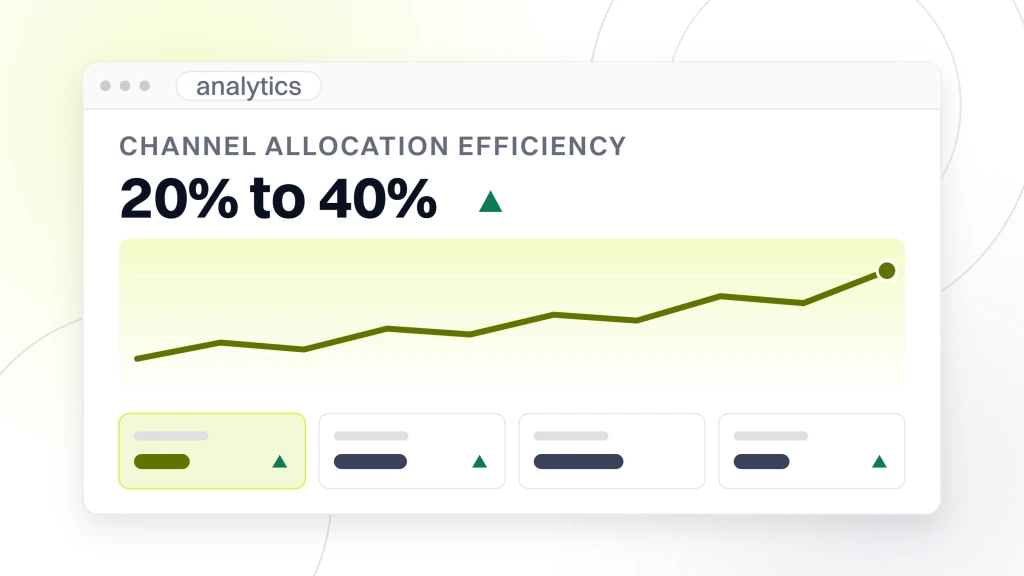
AI-powered analytics differs from traditional analytics in 3 practical ways. It identifies patterns humans miss, especially across long time series and multi-channel data. It predicts forward, not just describes backward, which changes budget conversations. And it prescribes actions, not just reports metrics, which shifts the analyst’s role from producer to reviewer. Teams that adopted AI-powered analytics in 2025 report 20 to 40 percent improvement in channel allocation efficiency, primarily by killing underperforming channels faster than manual review would have.
| Analytics capability | Traditional approach | AI-powered approach |
|---|---|---|
| Pattern detection | Analyst review of dashboards | Automated anomaly detection |
| Forecasting | Straight-line extrapolation | Time-series ML with seasonality |
| Attribution modeling | Rules-based multi-touch | Markov or Shapley-based models |
| Budget allocation | Manual quarterly review | Weekly rebalancing recommendations |
| Creative testing | Human eyeball on results | Statistical significance flagging |
| Cohort analysis | Manual segment cuts | Automated cohort discovery |
Pattern detection as the first payoff
Pattern detection is where AI-powered analytics pays off first. A well-tuned anomaly detector catches campaign underperformance 3 to 7 days before a human analyst would spot it in a dashboard. That head start on optimization compounds over a quarter. Multiply that by every campaign in the account and the total budget saved runs 5 to 15 percent. The savings alone justify the analytics stack cost for most mid-market SaaS. Enterprise SaaS sees larger absolute savings but similar percentage impact.
Forecasting as the strategic payoff
Forecasting is where AI-powered analytics reshapes the strategic conversation. Traditional straight-line extrapolation misses seasonality, mix shifts, and channel interaction effects. AI-driven forecasting incorporates all three. The forecast becomes accurate enough to defend budget decisions and to warn the CMO before a quarter goes off track. That earlier warning window is worth more than any historical reporting improvement, since it converts marketing from a lagging function into a leading one. That framing changes the board conversation.
B2B SaaS marketing trends 2026 to plan against right now
The 2026 signals are already visible. AI-native SaaS categories create new competitive pressure. Buyer expectations for personalization keep rising. And the platform layer for marketing operations keeps consolidating. Plan against all three now.
The 2026 trends carry forward the structural shifts of 2025 with new nuances. AI-native SaaS enters every category with lower go-to-market costs, which raises the bar for incumbents. Buyer expectations for personalization exceed what most SaaS marketing teams can currently deliver, which creates opportunity for the teams that catch up first. Platform consolidation at HubSpot, Salesforce, and their smaller ecosystem players simplifies the tool stack for buyers, which pushes marketing ops teams to consolidate their own vendor lists. All three trends favor the operators that plan ahead.
AI-native SaaS competitive pressure
AI-native SaaS competitors typically launch with 30 to 60 percent lower operational costs than traditional SaaS in the same category. They can price aggressively, invest in growth marketing early, and iterate faster. Incumbent SaaS categories that ignored this shift in 2024 and 2025 are already losing market share to AI-native entrants. The tactical move is to launch your own AI features quickly, message them clearly, and defend your installed base with retention marketing. Waiting to see how the market shakes out costs 12 to 18 months of market position.
Personalization expectation gap
Buyer expectations for personalization now exceed what most SaaS marketing teams deliver. Buyers expect the website to reflect their industry, their role, and their prior visit history. They expect emails to reference specific product features they viewed. They expect nurture sequences to shift based on account signal. Most SaaS marketing teams have not built the infrastructure to deliver any of this. The teams that build the personalization stack in 2026 will win category leadership on brand experience. The teams that skip it will look outdated by Q3.
What to skip on the B2B SaaS marketing trends 2026 list
Skip the trends that already peaked in hype without meaningful buyer adoption. Skip the trends that require a 5-year infrastructure build for a 1-year window. Skip the trends that only work at a scale you cannot yet reach. Prioritization is a marketing skill.
Every quarter brings a wave of new B2B SaaS marketing trends. Most do not survive the hype cycle. The skip list is often longer than the react list, and reading it accurately protects your team’s attention. Skip most of the ABM technology vendor pitches, most of the intent data purchases at seed and Series A stage, most of the pilot AI video ad generators, most of the Web3-adjacent SaaS marketing plays, and most of the community-led growth reorganizations at pre-Series B stage. Any of these might work eventually. None of them are the highest-impact 2026 move.
- Skip intent data vendors at pre-Series B stage, budget goes further elsewhere
- Skip most ABM tech platforms until $10M+ ARR, use HubSpot for the basics
- Skip AI-generated video ad tools until quality catches up in 2027
- Skip community-led growth reorganizations at pre-Series B stage
- Skip most influencer marketing plays for enterprise SaaS categories
- Skip Web3-adjacent marketing tactics for all traditional B2B SaaS
Why intent data at early stage does not pay back
Intent data at early stage does not pay back since the fixed cost of the license and the operational overhead of acting on the signals outweighs the incremental pipeline generated at seed to Series A volume. Enterprise SaaS with a large TAM and a mature sales team gets real value from intent data. Early-stage SaaS with 50 to 200 target accounts total does not, since the sales team can cover the whole TAM manually. Match tool sophistication to team scale.
Why ABM platforms are usually skippable
ABM platforms are usually skippable until enterprise scale since the workflow can be run in HubSpot or Salesforce with a few custom fields and a good process. The dedicated ABM platform adds workflow polish and a few reporting views, but rarely enough incremental pipeline to justify $50,000 to $200,000 in annual license fees at mid-market scale. Above $10 million ARR the math shifts. Below that, the ABM platform is a nice-to-have that gets in the way of the higher-impact work on ICP definition and creative quality.
Wrapping up B2B SaaS marketing trends 2026 planning
B2B SaaS marketing trends 2026 reward the teams that reorganized around AI, pipeline attribution, original data, and analytics maturity. Reading the 2025 shifts as a connected stack, not as isolated tactics, is what separated the operators who pulled ahead from the operators who chased hype. 2026 rewards the teams that continue the build without getting distracted by hype cycles. Discipline beats novelty.
The Simply.Coach and Camu Digital Campus engagements we ran in 2025 both benefited directly from the AI-augmented content and the pipeline-first attribution shifts. Simply.Coach hit +120% lead growth in a 48-day sprint. Camu Digital Campus cut CPA 28% on the annual curve while lifting engagement. Those are structural-trend outcomes, not one-off wins. When you are ready to plan against 2026 for your own SaaS, our B2B SaaS marketing agency engagement is built around the 2025-and-beyond playbook. Our SaaS PPC agency work covers the AI-powered paid creative iteration side, and our SaaS SEO agency work covers the original data and editorial rigor side of content. Our SaaS marketing retainer plans lay out the cadence at each stage. Broader trend coverage from the annual Gartner Marketing research and the OpenView Partners SaaS benchmarks give you outside baselines for the numbers above.