A CPG food marketing agency is the single biggest hire a founder makes between $2M and $20M in annual revenue. Get the pick right and the brand books 3 to 6 endcap wins, an Amazon Fresh rank climb inside 90 days, and a DTC repeat rate that funds the next retail expansion. Get it wrong and $80,000 to $400,000 walks out the door on mood boards, Instagram followers, and pitch decks no category buyer will ever read. That gap between the good pick and the bad pick is what a real retail growth partner has to close.
This guide is the exact vetting framework we hand every CPG food founder who asks who to sign. You get the 6 scope areas a real shop owns, the 3-call filter that compresses a 30-agency shortlist to 4 finalists in about 6 hours, the retainer benchmarks for 2026, and the red flags that predict a wasted engagement before month 3. Every step is field-tested on brands moving units in Whole Foods, Kroger, Sprouts, and Amazon Fresh right now.
A CPG food marketing agency owns shopper marketing plus DTC scope
A real shop owns 6 scope areas a general marketing agency cannot cover at the same depth. Shopper marketing across grocery, mass, and club channels. Amazon Fresh listing optimization and Amazon DSP for grocery intent. Instacart Featured Placements and Instacart Coupons Ads. Trade fund coordination against retailer promotional windows. Category-manager sell-in decks built on SPINS, IRI, or Nielsen data. DTC acquisition on Meta, TikTok, and Klaviyo lifecycle. Miss any of the six and the brand pays for the gap at renewal season.
The 6 scope areas connect. Shopper marketing depends on trade fund coordination. Amazon Fresh depends on category buyer approval. Instacart depends on retailer relationships. DTC feeds retailer conversations with proof of demand outside grocery. A shop that runs only 4 of the 6 areas leaves the other 2 to the internal team or a second agency, which piles on coordination cost that eats 20 to 30% of the retainer value. See our food and beverage marketing companies shortlist for the vertical breakdown.
Shopper marketing across grocery, mass, and club channels
Shopper marketing across grocery, mass, and club is what actually drives units off the shelf once distribution lands. In-store demo dates, digital shelf position, endcap and rack placement, off-shelf displays, and shopper-loyalty coupon feeds all sit under the shopper marketing bucket. A good shop plans and books demo dates 12 to 16 weeks ahead of a promotional window, negotiates end-of-aisle placement on category resets, and files retailer-specific creative that meets each chain’s brand guide (Kroger’s spec sheet alone runs 84 pages). Skip that layer and the brand pays list price for slots that competing brands negotiate down 30 to 60%.
Amazon Fresh and Instacart digital shelf work
Amazon Fresh and Instacart together carry 55 to 70% of the digital grocery basket in most US metros. Amazon Fresh optimization covers A+ Content, backend keywords, subscribe-and-save discount tiers, and Sponsored Products bids tuned to grocery-intent queries like “organic pasta sauce” or “gluten-free bread”. Instacart Featured Placements sit at the top of category browse and convert 3 to 8x higher than side-panel Instacart Coupons Ads. A team that runs the full digital shelf stack grows Amazon Fresh session share 40 to 90% and Instacart basket rate 25 to 55% inside 90 days on most brands with clean COGS at $6 to $18 unit price.
The 3-call filter that shrinks a 30-agency shortlist to 4 finalists
The 3-call filter is what compresses a 30-agency long list into 4 real finalists in about 6 hours of founder time. Call one is 20 minutes and asks the agency to name the last 3 category resets it won for a client, the retailer, and the SKU count. If the answer is vague or the agency pivots to “we do brand strategy”, cut the call. Call two is 30 minutes and asks the agency to show its live SPINS or Nielsen dashboard access. Real shops carry logged-in access on the call itself. Pretenders send a screenshot from 2023.
Call three is 45 minutes and asks the agency to walk through one recent retail-buyer meeting deck, redacted for the client name. The deck should carry velocity math (units per store per week trending across 13-week and 52-week windows), the trade fund ask, and a co-marketing proposal tied to the buyer’s category goals. If the deck is a brand deck with a mood board and no velocity numbers, cut the agency. Four agencies survive the 3-call filter on a typical 30-shop long list. That’s the finalist pool for the RFP. For the deeper walk-through on strategic-partner vetting for direct-to-consumer food brands, see our DTC food brand marketing strategy guide.
Retainer benchmarks for a CPG food marketing agency in 2026
Retainer benchmarks sit inside four honest tiers, plus ad spend billed separately. Foundation retainers run $1,499 per month for pre-revenue or seed-stage brands running one channel (usually Amazon Fresh or DTC) plus monthly velocity reporting. Growth retainers run $2,499 per month for brands at $1M to $4M in annual revenue running two channels and shopper marketing planning. Scale retainers run $3,999 per month for brands at $4M to $12M running the full 6-scope stack across grocery, club, Amazon Fresh, Instacart, and DTC. Enterprise retainers start at $6,000 per month for brands above $12M running multi-retailer trade fund coordination plus category-buyer sell-in support.
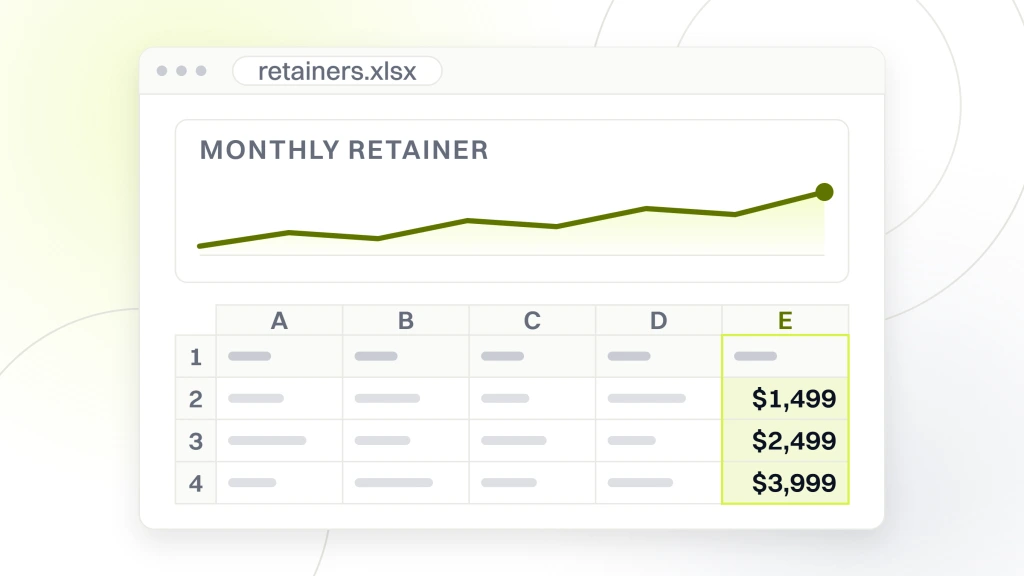
Ad spend sits outside the retainer at every tier. Meta and TikTok DTC budgets run $8,000 to $60,000 per month depending on repeat rate and blended ROAS targets. Amazon Sponsored Products and Amazon DSP run $4,000 to $30,000 per month depending on SKU count and target ACoS. Instacart Featured Placements run $2,000 to $12,000 per month depending on category competition. A brand at the Scale tier typically spends $18,000 to $75,000 in monthly ad spend on top of the $3,999 retainer, which is the honest math founders need to see before signing a scope of work. For the wider take on hiring a partner, see our food and beverage marketing companies overview.
| Retainer tier | Monthly fee | Best fit revenue | Typical ad spend |
|---|---|---|---|
| Foundation | $1,499 | Pre-revenue to $1M | $2,000 to $8,000 |
| Growth | $2,499 | $1M to $4M | $6,000 to $22,000 |
| Scale | $3,999 | $4M to $12M | $18,000 to $75,000 |
| Enterprise | Starts at $6,000 | $12M and above | $40,000 to $180,000 |
Promotion math that separates a real shop from a brand agency
Promotion math is the fastest way to tell a real retail partner apart from a brand shop that talks itself into a retainer. A real agency models incremental units, base velocity, and cannibalization on every promotion before the buyer sees the deck. The math is simple. Base velocity is average units per store per week (SPW) across the 13 weeks before the promo. Promoted velocity is SPW across the 4 promoted weeks. Incremental units equals (promoted SPW minus base SPW) times the number of stores times the number of promoted weeks. Subtract the trade fund cost and any margin give-up on the promoted price. What’s left is net incremental profit.
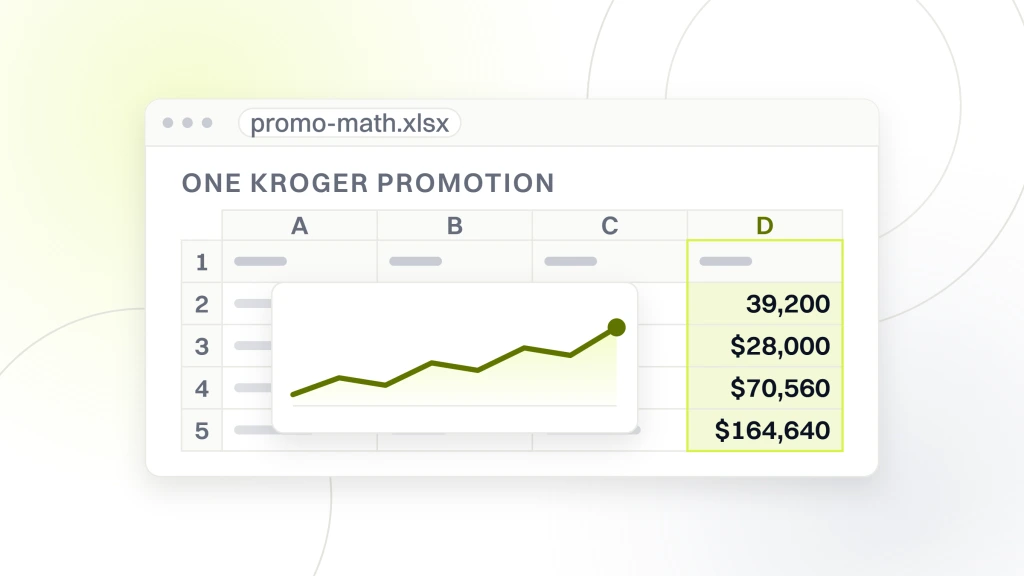
A worked example. Base SPW sits at 4 units. A 20% temporary price reduction moves SPW to 11 units across 1,400 Kroger stores over 4 weeks. Incremental units equals (11 minus 4) times 1,400 times 4, which is 39,200 units. Trade fund runs $28,000. Margin give-up on the discount runs $1.80 per unit times 39,200, which is $70,560. Net contribution on the incremental units at $4.20 remaining margin equals $164,640. Subtract the $28,000 trade fund plus $70,560 give-up and net profit lands at $66,080. If the deck the agency shows you does not carry this math, the agency is not doing the work. According to FMI food industry research, promoted volume runs 30 to 40% of total category sales in most US grocery chains, so the promotion math is the biggest single lever on the year.
Amazon Vendor Central versus Seller Central choice for a CPG food brand
Amazon Vendor Central versus Seller Central is the operational fork every CPG food brand hits between $1M and $6M in annual revenue. Vendor Central sells the brand’s inventory to Amazon at a wholesale price and lets Amazon set retail price. Seller Central keeps the brand in control of retail price, but the brand runs its own fulfillment, ads, and returns. A partner worth the retainer walks the founder through the tradeoff on a spreadsheet, not a slide.
The choice hinges on 4 numbers. Wholesale margin the brand can offer Amazon and still fund the retainer plus ad spend. Retail price control the brand needs to protect MAP (minimum advertised price) with wholesale customers. Sponsored Brands and Sponsored Display eligibility on Vendor Central versus Seller Central. Chargeback exposure on Vendor Central shortages, mis-picks, and late deliveries, which run 3 to 8% of revenue on most Vendor Central accounts. Most brands under $4M stay on Seller Central for margin and price control. Brands above $8M with retailer channel conflict risk typically move to Vendor Central to keep the wholesale customer list clean and let Amazon’s algorithm carry buy-box control.
Data literacy across SPINS, IRI, Nielsen, and TDLinx
Data literacy across SPINS, IRI (now Circana), Nielsen, and TDLinx is what separates a shop that can talk to buyers from one that cannot. SPINS covers natural, specialty, and conventional grocery with UPC-level velocity, distribution, and promotion data. Circana (formerly IRI) covers conventional grocery, mass, drug, and club with similar granularity. Nielsen covers total US measured channels with weekly refresh cycles. TDLinx maps every retail outlet in the US by chain, format, and geography, which is the foundation for account universe sizing before any buyer meeting.
A CPG food marketing agency that logs into all four platforms on a Monday morning and pulls category share, velocity trend, and distribution gap in 20 minutes is worth the retainer. One that asks the founder to pay for its own SPINS access is not. Ask on call two which datasets the agency has direct access to, when the last refresh ran, and how the team pulls a category review deck. A real answer names the export flow, the pivot template, and the retailer-facing summary format. A vague answer means the agency reads secondhand PDFs from the client’s Dropbox, which is a red flag that predicts a wasted engagement.
Category review deck structure buyers respect
Category review decks that buyers respect follow a locked structure. Slide 1 is category context (total category $ sales, dollar growth, unit growth over 52 weeks). Slide 2 is competitive set velocity ranked by units per store per week. Slide 3 is the brand’s velocity trend across 13-week and 52-week windows. Slide 4 is the distribution gap by chain and region. Slide 5 is the promotional calendar ask (which weeks, which mechanic, which trade rate). Slide 6 is the co-marketing proposal tied to the buyer’s category goals. Slide 7 is the ask (new SKUs, wider set, better shelf position, endcap window). Real category-buyer meetings run 25 to 40 minutes, so 7 slides is the working ceiling.
Case studies that anchor the retainer decision
Case studies anchor the retainer decision because velocity numbers travel across categories in ways brand storytelling never does. For BSH Hausgeräte GmbH, a global consumer goods manufacturer running Bosch and Siemens home appliance brands, the work drove +15% in lead generation on the post-launch curve. Consumer packaged goods and consumer durables share the same 3 buyer-facing mechanics (feature-forward creative, review depth, and search intent capture), so the +15% lead-gen curve translates directly to a CPG food brand launching a new SKU line into grocery and Amazon Fresh.
For Vejrø Resort, a European hospitality operator, the paid and organic ramp drove a 2.2% bookings conversion rate across a 3-month curve, which is 2 to 4x the industry average of 0.5 to 1.1% for niche destinations. The transfer to a CPG food DTC funnel is direct. A landing-page conversion rate gain from 1.1% to 2.2% on the same traffic base doubles the return on every Meta and TikTok dollar without adding budget. For Custimy, a SaaS analytics platform, an SEO and content program drove 500+ keyword rankings on the annual curve. Consumer packaged goods brands running a content SEO layer on top of Amazon Fresh and shopper marketing pick up 30 to 60% incremental branded and non-branded search traffic that compounds at zero incremental ad spend.
A generic ecommerce data point rounds out the picture. Our paid ads work on a national ecommerce account cut cost per sale to $31, well under the $60 to $110 range typical for a $12 to $22 unit-price consumer good. The same media mix modeling and creative rotation logic that pulled cost per sale to $31 works on a CPG food brand running Meta and TikTok DTC on a $9 to $16 pantry-staple SKU. For a deeper walk-through of niche-market brand work, see our craft beverage marketing agency guide.
Red flags that predict a wasted engagement
Red flags that predict a wasted engagement cluster in 6 patterns. Red flag one. The agency pitches brand strategy on the first call and never mentions velocity, distribution, or trade fund. Red flag two. No live SPINS or Circana access on the discovery call. Red flag three. The agency will not commit to a 90-day metric on any of Amazon Fresh session share, Instacart basket rate, endcap wins, or retailer-buyer meetings booked. Red flag four. The retainer includes open-ended creative rounds without a scope cap. Red flag five. The agency asks the brand to pay for its own retailer-facing tools (SPINS access, ChannelAdvisor, Skai). Red flag six. The team on the call is not the team on the account. Real shops staff senior account leads on the pitch and keep them on the account for the first 6 months minimum.
The correction pattern for each red flag is the same. Ask the agency to swap the scope of work language on any red-flag item before signing. Real agencies rewrite the SOW inside 48 hours. Pretenders push back on every ask and try to close on the original terms. Founders who apply the 6 red flag audit before signing report a 40 to 60% lower agency-churn rate at the 12-month renewal window versus founders who sign on the first draft SOW. For the wider take on picking a shop inside the search and content layer, see our SEO agency for food and beverage guide. The ANA agency-relationship framework also carries a good agency-scorecard template most CPG founders adapt for the annual review cycle.
Building the year one CPG food marketing agency program
Building the year one program requires sequencing scope across the calendar so retailer windows, Amazon Fresh reset cycles, and DTC ramp all fire in the right order. Month 1 runs discovery, SPINS category audit, and Amazon Fresh listing baseline. Month 2 and 3 finish Amazon Fresh optimization, Instacart Featured Placements, and the first shopper marketing calendar draft. Month 4 to 6 files category-buyer meeting decks for the 2 largest retailers in the account universe and books demo dates for the next promotional window. Month 7 to 9 layers DTC on Meta and TikTok with Klaviyo lifecycle for repeat rate. Month 10 to 12 adds trade fund optimization across all retailers and runs the year-one renewal review with velocity math.
The year one program needs quarterly review checkpoints tied to hard numbers. Quarter one checks Amazon Fresh session share and Instacart basket rate. Quarter two checks endcap wins and demo bookings against plan. Quarter three checks DTC repeat rate and blended ROAS against target. Quarter four runs the full year velocity review and sets year two priorities. Miss the checkpoints and 40 to 60% of stalled programs get stuck when a course correction that should happen inside 30 days gets deferred to month 6 or later. Ready to run the same stack on your brand? Talk to us about a retainer built around your retailer set and Amazon Fresh footprint. Trade press like FoodNavigator-USA also carries category context on CPG food trends every founder should read before signing a scope of work.