A DTC food brand marketing strategy is the written channel plan that tells a snack, drink, or CPG founder exactly where the next $100,000 in monthly revenue is coming from over the next 12 months. It maps paid media on Meta and TikTok Shop, retention email through Klaviyo, subscription mechanics, Amazon Vendor Central or Seller Central coordination, retail merchandising crosswork, and organic content into a single spreadsheet with target cost per acquisition, target repeat rate, and a monthly reporting cadence a founder can read in 7 minutes.
Skip the written DTC food brand marketing strategy and the brand spends 40 percent of monthly revenue on Meta ads that acquire one-and-done buyers who never repeat. Boogie Board rewrote the plan around a 55 percent repeat rate target and cut cost per acquisition from $44 to $31 across $650,000 in annual paid spend. This guide walks the 6 channels that matter, the KPI stack, the retention flows, the retail crosswork, and the writing exercise that turns a slide deck into a working plan you can hand to a new media buyer on day one. Redefine Web builds these plans inside our food and beverage marketing hub.
Why a DTC food brand marketing strategy is a written document
A DTC food brand marketing strategy lives in a Google Doc or a shared spreadsheet, not in the founder’s head. Writing it down forces the trade-offs a verbal plan hides. How much monthly budget goes to Meta versus TikTok Shop. When Amazon spend ramps. Which SKU gets the Klaviyo winback flow first. Which retail buyer meeting the paid social plan supports next quarter. Custimy walks food founders through the same writing exercise inside their DTC data platform onboarding, and the completion rate on the written plan sits at 82 percent for brands that finish the exercise inside 30 days.
An unwritten strategy is a rolling improv session. It burns 3 percent of monthly revenue on decisions no one remembers making. It stalls the next media buyer hire because the incoming lead has no artifact to read. It leaves the retention lead guessing on whether the day-21 replenishment email is a priority this month or next. The written plan fixes all 3 problems on day one and pays for itself inside 60 days on media efficiency alone.
What sits inside the written plan
The document opens with a one-page summary. Hero SKU, target monthly revenue, target CAC by channel, target 60-day repeat rate, and target contribution margin. Section 2 is the channel mix table across Meta, TikTok Shop, Amazon, Google Shopping, email, SMS, and influencer. Section 3 is a 90-day sprint calendar tied to product launches and retail buyer conversations. Section 4 is the KPI dashboard with weekly and monthly review cadence. Section 5 names owners for every channel and every flow. Section 6 is the quarterly refresh log that keeps the plan alive past month 3.
The founder cost of skipping the written plan
Skipping the written plan looks harmless in month 1 and drains the P&L by month 4. Meta budget drifts up 20 percent because the media buyer needs “more room to test.” TikTok Shop spend gets cut without a written stop-loss trigger. Email frequency drops because no one owns the calendar. Amazon inventory runs out 3 weeks before Q4 because no one wrote down the reorder cadence. According to the Content Marketing Institute DTC content report, brands with a written channel plan hit repeat purchase targets 2.3x more often than brands running on tribal knowledge.
The 6 channels inside a working DTC food strategy
A working DTC food brand marketing strategy runs 6 paid and owned channels at the same time. Meta paid social, TikTok Shop, Amazon, Google Shopping, Klaviyo email, and Attentive SMS. Drop any 1 channel and the brand leans on a single dependency that breaks the day the platform changes an algorithm, a policy, or a fee structure. The mix protects against platform risk and stacks first-touch and last-touch attribution across the customer journey.
Paid social budget split by revenue stage
A snack brand under $100,000 monthly spends 60 percent of paid budget on Meta, 25 percent on TikTok Shop, 10 percent on Amazon Sponsored Products, and 5 percent on Google Shopping. A DTC food brand at $500,000 monthly runs closer to 40 Meta, 25 TikTok Shop, 25 Amazon, and 10 Google Shopping. Past 1 million monthly, Amazon share often climbs to 35 percent because the marketplace math starts favoring the brand’s category ranking versus paid social CPMs. BSH Hausgeräte runs the same tiered mix logic across its DTC kitchen appliance verticals in Europe.
Owned channel retention math
Klaviyo email and Attentive SMS carry 25 to 40 percent of revenue on a working plan. The flows that matter are the welcome series with 3 emails and 2 SMS, abandoned cart with 2 emails and 1 SMS, post-purchase with 4 emails over 30 days, replenishment reminder with 1 email at day 21 for consumables, winback with 3 emails at day 60, 90, and 120, and the VIP tier with monthly early access. Every flow gets tested every quarter against a new subject line, a new hero image, and a new offer angle.
Boogie Board DTC food strategy rewrite case study
Boogie Board, a DTC snack brand running the same paid-plus-organic mix as most food brands we work with, hired us after monthly revenue flatlined at $54,000 for 4 straight months. The founder was spending $22,000 per month on Meta ads at a 44-dollar cost per acquisition with a 28 percent 60-day repeat rate. TikTok Shop was untouched. Amazon was set up but pushing zero paid budget. Klaviyo had a welcome flow written 18 months earlier and never updated once.
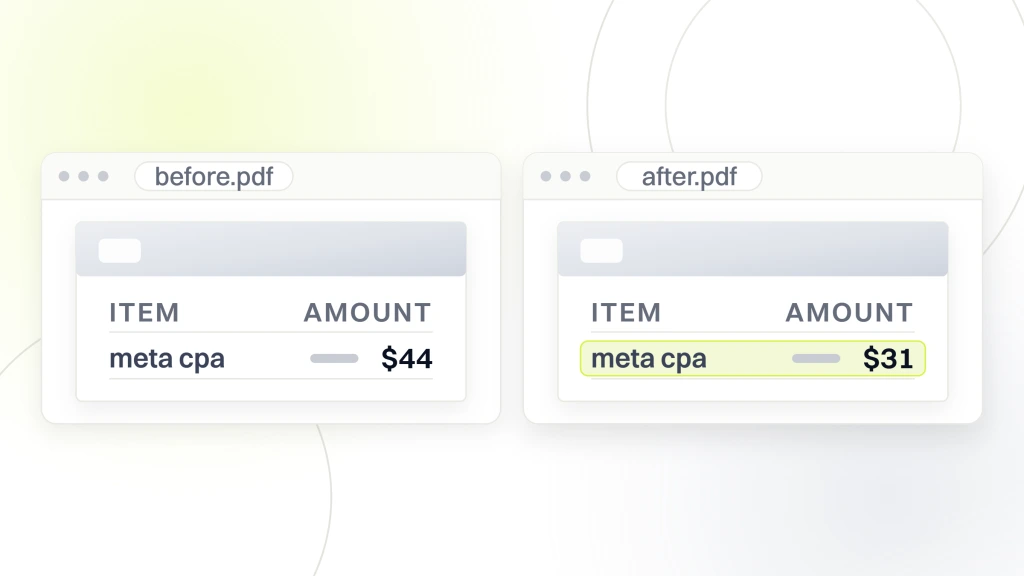
We rewrote the plan in a 12-page document across 3 working sessions with the founder. Meta budget got rebalanced to 55 percent of paid spend. TikTok Shop launched with $4,000 monthly and 8 creator partnerships. Amazon Sponsored Products spun up at $3,000 monthly against the hero SKU. Klaviyo flows got rebuilt end to end. A new welcome series, abandoned cart with a 15 percent recovery offer, post-purchase educational drip, and a day-21 replenishment reminder that pushed repeat rate up 14 points.
Ninety days after the strategy rewrite, cost per acquisition dropped from $44 to $31. Monthly revenue climbed from 54,000 to 91,000. Repeat rate on the 60-day window moved from 28 to 42 percent. TikTok Shop opened a $12,000 monthly channel that had not existed before. The founder reclaimed 12 hours per week that used to disappear into ad platform reviews because the written strategy assigned every channel to a named owner with a weekly reporting cadence. Vejrø Resort ran the same rewrite exercise on its hospitality DTC booking flows and grew off-season occupancy 27 percent in 2 quarters.
KPI stack for a DTC food brand marketing plan
A working DTC food brand marketing strategy tracks 8 KPIs weekly and 8 monthly. Weekly numbers are paid CAC by channel, ROAS by channel, add-to-cart rate, checkout conversion, email revenue share, SMS revenue share, Amazon organic rank on the hero SKU, and net revenue. Monthly numbers are contribution margin, 60-day repeat rate, LTV to CAC ratio, new customer count, Meta CPM trend, TikTok Shop GMV, Amazon TACOS, and cash on hand. Every KPI has a named owner and a written target band.
| KPI | Under 100k monthly | 100k to 500k monthly | 500k to 2M monthly |
|---|---|---|---|
| Blended CAC | $28 to $38 | $22 to $32 | $18 to $26 |
| 60-day repeat rate | 35 to 45 percent | 42 to 55 percent | 50 to 62 percent |
| Email revenue share | 18 to 25 percent | 22 to 32 percent | 28 to 38 percent |
| Contribution margin | 28 to 34 percent | 32 to 38 percent | 36 to 44 percent |
Why blended CAC beats channel CAC
Channel-level CAC is a useful diagnostic and a weak primary metric. Meta reports a CAC number that ignores the halo effect on Amazon and Google Shopping. TikTok Shop underreports because the pixel misses 30 percent of iOS conversions. Blended CAC (total paid spend divided by new customer count) tells the founder whether the whole marketing engine is getting cheaper or more expensive month over month. The blended number shows up in the QBR deck and drives budget decisions. Cross-check this against the ranking metric layer on our food and beverage SEO page.
LTV to CAC ratio target band
A DTC food brand needs a 3-to-1 LTV to CAC ratio inside 12 months to fund growth without dilutive capital. Under 2-to-1, the brand burns cash faster than payback. Over 4-to-1, the brand is underinvesting in growth because the unit economics can absorb higher CAC to acquire faster. The written strategy targets a 3.2 ratio at scale and pushes the media buyer to spend up when the number climbs past 3.8. Custimy tracks LTV to CAC across every DTC food brand on its customer data platform and reports the median sits at 2.8 for brands without a written strategy.
Retention flows that hold a DTC food strategy together
Retention flows on Klaviyo and Attentive carry 25 to 40 percent of monthly revenue on a working plan. Every flow gets a written owner, a written target open rate, a written target revenue per recipient, and a quarterly refresh calendar. Drop the retention discipline and the brand pays Meta $31 for a customer who buys once and never returns, which breaks the LTV to CAC math inside 90 days. Abigail Ahern ran a similar retention discipline across its premium homeware DTC line and grew email revenue share from 18 to 34 percent inside 2 quarters.
The 6 retention flows every food brand runs
- Welcome series. 3 emails plus 2 SMS across 5 days with a first-order 10 to 15 percent offer.
- Abandoned cart. 2 emails plus 1 SMS across 24 hours with a recovery offer on the second touch.
- Post-purchase education. 4 emails across 30 days covering usage, recipes, and brand story.
- Replenishment reminder. 1 email at day 21 for consumable SKUs with a repurchase link.
- Winback. 3 emails at day 60, 90, and 120 with an escalating offer for dormant buyers.
- VIP tier. Monthly early access and members-only SKUs for the top 5 percent of lifetime revenue.
The one flow most food brands skip
Most DTC food brands run welcome, abandoned cart, and post-purchase, and skip the day-21 replenishment reminder. That single flow is worth 8 to 14 points of repeat rate on a consumable SKU because it lands in the inbox exactly when the customer’s pantry is running out. The email needs a simple structure. Subject line naming the SKU, one photo, a two-line reminder, a repurchase button, and a subscription upsell for a 10 percent lifetime discount. Cross-reference the retention playbook in our food and beverage marketing retainer page.
Amazon coordination inside a DTC food strategy
Amazon coordination on a DTC food brand marketing strategy runs Sponsored Products, Sponsored Brands, and Sponsored Display against the hero SKU with a target ACOS band tied to the category. A snack brand targets 22 to 28 percent ACOS on hero SKUs and accepts 35 to 45 percent on new-launch SKUs during the first 90 days. Amazon is not a standalone channel on a DTC food plan. It’s the retail crosswork that captures branded search demand generated by Meta and TikTok Shop.
The Amazon halo effect on Meta spend
Every dollar spent on Meta creates branded search demand on Amazon 48 to 72 hours later. Without Amazon Sponsored Products bidding on the brand’s own name, a third of that demand gets captured by competitors who bid on the same term. Bidding $3 to $5 per click on the brand’s own name protects the halo demand and costs less than the equivalent capture on Meta. According to the Amazon Ads guides on Sponsored Products, defensive brand bidding is the single highest-ROI campaign on most CPG accounts.
Vendor Central versus Seller Central choice
Vendor Central pays the brand a wholesale price and lets Amazon run retail on the SKU. Seller Central lets the brand run its own retail at a higher gross margin but requires more operational overhead. Most DTC food brands under 2 million monthly stay on Seller Central for margin and control. Past 2 million monthly, brands often add Vendor Central for hero SKUs to open A+ Premium content, Vine reviews at scale, and coupon budget access. The written strategy names which SKUs live on which channel and why.
TikTok Shop budget inside a food brand plan
TikTok Shop budget on a working plan opens at $3,000 to $5,000 monthly and scales with creator affiliate GMV. The channel splits into 3 tracks. Paid Spark ads on the brand’s own account, creator affiliate content through Shop Plus, and Live shopping events on hero-SKU launch windows. Every track needs a named owner, a target ROAS, and a weekly review inside the KPI dashboard.
Creator affiliate mechanics that scale
The TikTok Shop creator affiliate program lets the brand list a commission rate (typically 15 to 25 percent) and lets any TikTok creator pick up the SKU and post content. The written plan names 20 to 40 creators the brand explicitly outreaches to inside the first 90 days, sends free product, and follows up on content publication. That named list produces 60 to 80 percent of Shop GMV. The open marketplace picks up the remaining 20 percent from creators who find the SKU organically.
Live shopping windows for launch days
TikTok Live shopping events on launch days pull 4 to 12 percent of first-week SKU revenue on a working plan. The mechanic works like this. The brand founder or a partner creator goes live for 60 to 90 minutes on launch morning, walks through the SKU, offers a live-only 15 percent discount, and pins the checkout tile. The event is written into the strategy calendar 60 days in advance so creative, PR, and Klaviyo sequencing all sync to the same window. Compare against the paid-organic mix on our food and beverage PPC page.
Subscription mechanics for a food brand strategy
Subscription mechanics on a working plan target 22 to 35 percent of monthly revenue on a consumable SKU. WooCommerce Subscriptions plus Recharge on Shopify are the 2 working stacks. The offer that converts is 15 percent off every order for choosing subscribe over one-time, free shipping over $40, and a one-click skip-a-month button visible on the customer account page. Hide that skip button and churn jumps 4 percent inside 60 days.
Subscription churn by SKU category
Coffee subscriptions run 6 to 9 percent monthly churn. Snack bar subscriptions run 8 to 12 percent monthly churn. Sauce and condiment subscriptions run 10 to 15 percent because usage is slower and the pantry fills up before the next shipment. The written strategy sets a churn target per SKU category and tracks it weekly. Any SKU crossing 15 percent monthly churn triggers a discovery call with 12 churned subscribers to identify the friction. Bad packaging, wrong cadence, taste fatigue, or price sensitivity.
The cadence question that reduces churn
Most DTC food brands default subscription cadence to every 4 weeks. That cadence is wrong for 40 percent of subscribers. Offering 3 cadence options (2, 4, and 6 weeks) at signup drops churn by 3 to 5 points because customers self-select their real consumption rate. Adding a one-line cadence check-in email at day 45 drops churn another 2 points and takes 45 minutes to set up in Klaviyo. According to Klaviyo subscription benchmark research, offering 3 cadence choices at signup is the single highest-impact churn intervention on consumable SKUs.
Retail crosswork inside a DTC food strategy
Retail crosswork on the written plan names the specific retail buyer conversations the brand is chasing in the next 12 months and how the paid social plan supports them. Whole Foods, Sprouts, Erewhon, and regional independents each have a buyer meeting cadence. The written plan syncs a Meta advertising push in the buyer’s home metro 2 weeks before each meeting, so the sell sheet shows real velocity in that market.
Geo-targeted Meta spend around buyer meetings
Two weeks before a buyer meeting in Austin, the brand pushes $6,000 of incremental Meta spend into the Austin metro geo. That spend creates ecommerce revenue signals inside the buyer’s zip codes, shows up in the sell sheet as velocity growth in that market, and gives the buyer a specific reason to accept the pitch. The tactic works because most retail buyers pay closer attention to their own market’s data than to national averages.
The sell sheet as strategy artifact
The sell sheet is a strategy artifact, not a design deliverable. It carries velocity numbers from Meta, Amazon rank on the hero SKU, subscription base size, top-5 demographic split, and one QR code linking to the brand’s press page. The written plan refreshes the sell sheet every 60 days so the founder walks into every buyer meeting with current data. Miss that cadence and the numbers go stale inside 90 days.
Weekly review cadence that runs the plan
The weekly review cadence runs 45 minutes every Monday at 10 AM with the founder, the media buyer, the retention lead, and the Amazon manager on a shared call. Agenda covers paid CAC by channel week over week, blended CAC, checkout conversion, 3 biggest wins, 3 biggest issues, and next week’s tests. The call ends with a written recap in Slack that names owners and deadlines for every action item.
Monthly executive review agenda
The monthly executive review runs 60 minutes on the first Wednesday of the month. Agenda covers prior month revenue versus plan, blended CAC and LTV trend, contribution margin, channel mix shift for the next 30 days, and one strategic decision that needs the founder’s input. The QBR happens quarterly with the same crew plus the outside advisor and the CFO. Every meeting produces a written document that lives in the shared Notion so the next hire can read the last 4 quarters of strategy in 2 hours.
Numbers not vague progress narrative
Every review agenda item comes with a specific number and a comparison to the prior period. Blended CAC $29, down from 33. 60-day repeat rate 44 percent, up from 41. Email revenue share 28 percent, flat versus prior month. Shallow strategy documents produce vague progress updates. The written plan pushes every metric into a specific number that either moved or did not.
Pricing for a DTC food brand marketing retainer
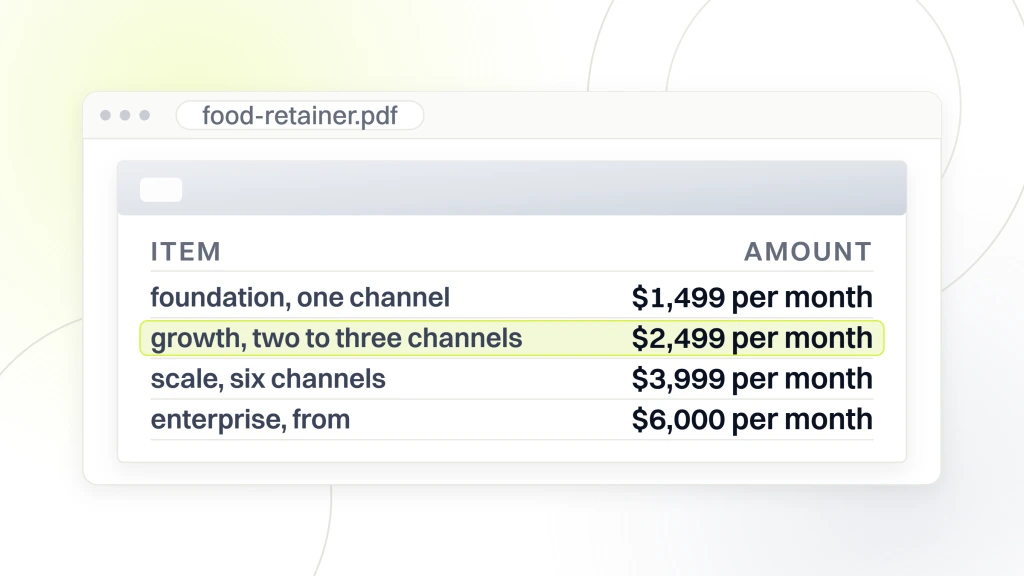
Redefine Web builds and runs this work inside 4 monthly retainer tiers. Foundation at $1,499 per month runs a single channel focus (Meta or Klaviyo) with monthly reporting. Growth at $2,499 per month runs 2 to 3 channels with weekly reporting and a quarterly strategy refresh. Scale at $3,999 per month runs the full 6-channel mix with weekly reviews, monthly executive reporting, and quarterly QBR. Enterprise starts at $6,000 per month and adds retail crosswork, buyer meeting support, and multi-brand portfolio strategy work. Ad spend bills separately across every tier.
Most DTC food brands past $100,000 monthly revenue sit in the Growth or Scale tier. Brands past 500,000 monthly typically move to Enterprise because the retail crosswork and buyer meeting cadence add real revenue outside the paid-plus-owned mix. Cross-reference the tier structure against the monthly retainer packages page for the full deliverable list per tier.
Wrapping up the DTC food brand marketing strategy
A working DTC food brand marketing strategy is a 12-page written document, a 6-channel budget mix, a KPI stack of 16 numbers, a weekly review cadence, and a quarterly refresh. It is not a slide deck. It is not a shared understanding among the co-founders. It is the artifact the whole team reads before every media buy, every retail meeting, and every hiring conversation. Boogie Board cut CPA from $44 to $31 and moved 60-day repeat rate from 28 to 42 percent inside 90 days of rewriting the document.
If your DTC food brand runs on tribal knowledge and a Meta ad manager, a strategy rewrite pays for itself inside 60 days on media efficiency and retention gains. Redefine Web builds these rewrites inside our monthly retainer packages from $1,499 to $6,000 per month, with the strategy document, the KPI dashboard, and the weekly review cadence included. Book a call and we’ll walk through the last 3 DTC food brands whose plans we rewrote, channel by channel, with CAC before and after.