The best CRO agencies for healthcare websites take a site booking at 2% and move it to 5 to 7% inside 90 days. Every practice with a live website has already paid the agency fee once. What most owners have not paid for is the second-order gain from real testing on the site. Picking the right partner is the difference between doubling bookings on flat traffic and paying twice the ad budget for the same result. Same traffic, same ad spend, twice the bookings. This guide walks the six tests that move the number, the four criteria that pick a real CRO partner, the typical conversion rate for healthcare websites in 2026, and how healthcare website conversion optimization actually gets done. Read straight through in twelve minutes.
The short version. The typical conversion rate for healthcare websites runs 2 to 4% on solo practices and 3 to 6% on optimized sites. Six tests move the number. Hero rewrite, phone visibility, service page depth, form field reduction, social proof placement, and mobile speed. A real partner charges $2,500 to $8,000 a month, delivers a testing plan in week one, and measures results against booked appointments, not just clicks. Everything past this paragraph unpacks each piece with the numbers, tools, and red flags a practice owner needs.
Typical Conversion Rate for Healthcare Websites in 2026
The typical conversion rate for healthcare websites sits at 2 to 4% for solo practices on organic traffic and 3 to 6% for optimized sites across paid and organic. Below 2% means the site has structural problems that need fixing before more traffic gets sent. Above 8% usually means the practice is tracking a wide definition of conversion that includes phone clicks or chat opens rather than booked appointments. Match the number you see against these bands to know where the site sits relative to its ceiling. Compare against peer practices, not ecommerce or SaaS benchmarks.
Two anchors help you read the number honestly. First, look at your paid landing pages in isolation. Paid clicks arrive with intent, so a 4 to 8% booking rate on a well-built landing page is normal. Second, split organic traffic by page type. Service pages should book at 3 to 5%, blog posts at 0.5 to 2%. A blended sitewide 1.8% number can hide a 5% service page and a 0.3% blog. Segment before you diagnose.
What counts as a real conversion
A booked appointment is the only number that pays the rent. Form fills and phone clicks are proxy events. Track them, but tie every single one back to a shown patient with CRM data or call-tracking software. A CRO agency that quotes you a 12% conversion rate on a lead form has usually left the “shown patient” number out of the report. Ask what percent of form fills turned into shown patients over the last 90 days. Serious partners answer in a minute.
Healthcare Website Call to Action Examples That Convert
Healthcare website call to action examples that convert share three properties. A specific action verb, a low-friction promise, and visibility above the fold. Generic CTAs like “Learn More” or “Contact Us” lose conversions. Specific ones like “Book a Same-Week Appointment” or “Get a Text Back in 15 Minutes” earn the click. Medical practice conversion optimization starts with rewriting these seven words at the top of every service page. The list below shows the healthcare website call to action examples that carry most of the gain.
- Book a Same-Week Appointment. A specific timeline anchor.
- Text Us Now. An instant response promise.
- See Available Times. Which reduces commitment friction.
- Get a Consult in 15 Minutes. Which quantifies the wait.
- Request an Appointment. Traditional but effective for older demographics.
- Start Care Today. Outcome-anchored for urgency.
- Speak With a Nurse First. Which reduces medical anxiety.
Match the CTA to the traffic source
Paid ad traffic converts on high-commitment CTAs like “Book Now.” Organic traffic converts on lower-commitment CTAs like “See Available Times.” Match the CTA to where the visitor came from. Most practices run one CTA everywhere and lose conversions on either side. Split the CTA by traffic source using UTM tagging or landing page routing, and pick up 10 to 15% on aggregate booking rate.
The mobile-specific CTA rule
On mobile, the primary CTA needs to sit tappable in the bottom third of the screen. Users hold phones in their dominant hand and thumb-reach the bottom easier than the top. Sticky bottom-bar CTAs with the phone number and “Book” click zones gain 12 to 20% on mobile bookings versus in-hero-only CTAs. See Healthcare Website Copywriting for the copy patterns that pair with these placements.
The one-line trust anchor above the CTA
Place a 6 to 10-word trust anchor directly above the primary button. “In-network with Aetna, BCBS, Cigna” reads harder than a generic star rating. “Same-week appointments, evening hours available” works when insurance is not the friction point. A pediatric practice in Cleveland tested this swap and picked up 14% on hero booking rate in three weeks.
Picking One of the Best CRO Agencies for Healthcare Websites
The best CRO agencies for healthcare websites share four traits worth checking on every discovery call. Real practitioners refuse to guarantee outcomes since they know test failures happen. Four traits stand out. Healthcare-specific experience, a defined test methodology, measurement tied to booked appointments not just clicks, and transparent pricing. Every partner claiming to do CRO has some subset. The strong ones have all four.
Healthcare-specific experience
A CRO partner that has run tests on ten dental practices and twenty medical practices knows what tends to work in this vertical. A generalist CRO agency runs the same playbook they use on ecommerce and gets weaker results, since healthcare buying decisions work differently. Ask the partner for three healthcare case studies with real numbers. Real ones show them. Generalists dodge and pivot to a SaaS study instead.
Defined test methodology
Real CRO agencies run one to three tests a month with statistical significance thresholds documented before the test starts. Weak agencies run “optimizations” without defined tests and take credit for whatever seasonal fluctuation happens after. Ask the partner to walk you through their last three test protocols. Real ones do it in fifteen minutes. Weak ones deflect to case study PDFs and marketing decks.
Measurement tied to booked appointments
The number that matters is booked appointments that convert to shown patients. Form submissions, phone calls, and clicks are proxy metrics. Serious healthcare website conversion optimization measures against the booked appointment number and adjusts when the proxy metrics diverge from real bookings. Compare that to weaker CRO shops that report form fills only and never tie back to real patients on the schedule. A grown-up CRO partner treats booked appointments as the north-star metric. See Google Analytics for Healthcare Websites for the tracking configuration that supports this.
Transparent pricing and scope
A retainer proposal that hides the number of tests per month, the implementation hours, and the reporting cadence is a warning sign. Serious CRO shops give you a single-page scope with the test count, the implementation budget, the tools they run, and the review call schedule. If the scope reads as marketing copy, keep looking. Practice owners in a Charlotte dental group ran a bake-off between three partners and cut the retainer by 40% simply by asking for the scope on one page.
A Real Healthcare Website Conversion Optimization Project
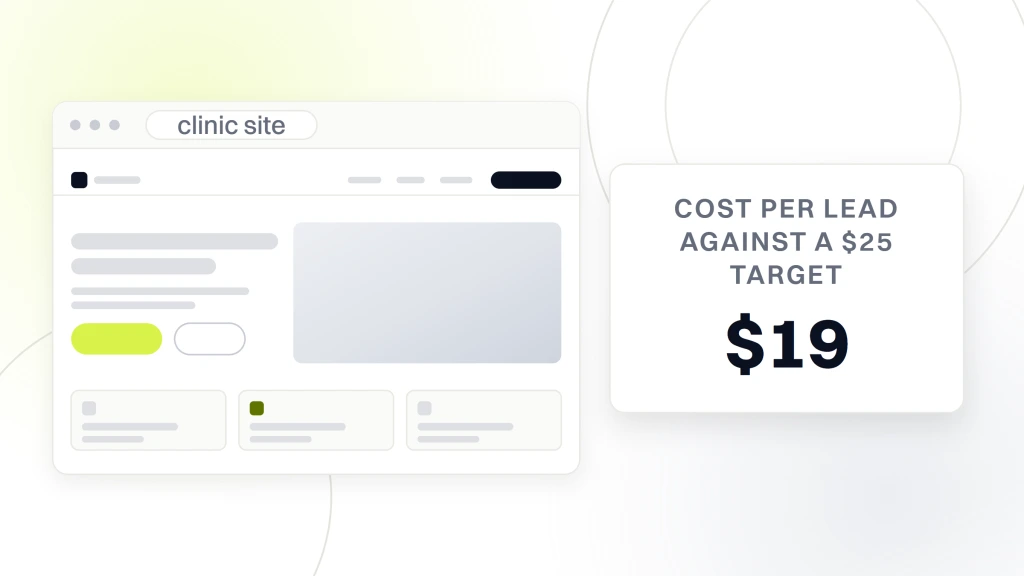
LifeStance Health Inc., a mental health group with 10+ Georgia clinics, ran a CRO-anchored campaign that hit a $19 cost per lead against a $25 target and tripled patient volume across the network. Impression share on niche services like TMS therapy hit 100%. Here is what the healthcare website conversion optimization layer looked like inside that broader engagement, and how the same discipline maps to smaller practices.
Where the tests focused
Hero copy rewrite across the network to name the specific service and the specific outcome. Form field reduction from twelve fields to six. Booking flow simplification that removed one entire step from the confirmation sequence. Social proof placement changes that moved patient reviews directly under the primary CTAs. Every test ran with proper statistical significance thresholds and went live only when the data cleared.
What the numbers did
Cost per lead landed at $19 against a $25 target, a 24% gain on the target itself. Patient volume tripled across the network. Impression share on niche services like TMS therapy hit 100% as the search campaign scaled behind the improved site conversion. Healthcare website conversion optimization was the multiplier that let the paid budget stretch further and the organic traffic convert at higher rates. Read the full engagement summary in the LifeStance Health case study.
What LifeStance would repeat next time
The engagement pattern that worked. Baseline measurement in week one, first test live in week two, statistical significance thresholds documented before every test, weekly review calls tied to booked appointment volume rather than form fills. That same pattern maps to solo and small-group practices at a smaller scope. The lesson is the discipline, not the scale.
Six Tests That Improve Healthcare Website Conversion Rate
Improve healthcare website conversion rate with six specific tests in this order. Rewrite the hero and make the phone number visible. Reduce form fields from the average 14 down to 5. Expand service pages to 600 to 900 words each. Place patient reviews directly under primary CTAs. Tune mobile PageSpeed to 85 or above. Add a sticky mobile call button. Every one of these tests has moved the number for practices we have worked with, and every one costs less than $500 in developer time. Get them done before you invest in anything fancier.
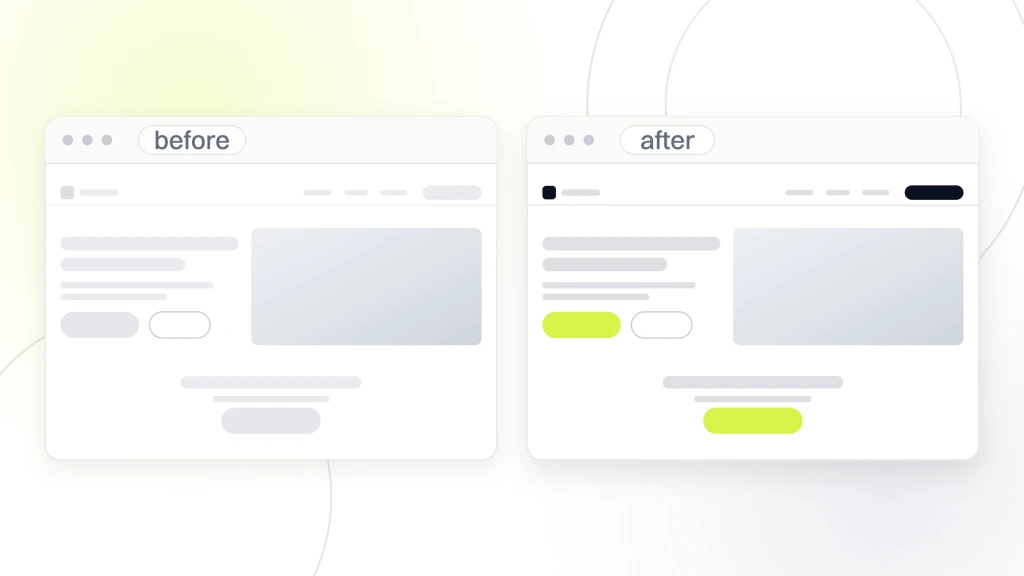
The order matters. Practices that jump to heatmaps or A/B testing platforms usually skip the three foundational fixes that carry 60% of the gain. Rewrite, reduce, expose. Then test. An orthodontic practice in Austin ran through the six-test stack in a 45-day window and moved sitewide conversion from 2.1% to 4.8%. No new traffic, no new ad spend.
How to sequence the six tests
Weeks 1 and 2 fix the hero and phone visibility. Weeks 3 and 4 reduce forms and place reviews under CTAs. Weeks 5 and 6 handle service page depth and mobile speed. Weeks 7 and 8 add the sticky call button and measure. Every week ends with a live change and a fresh reading on the booking dashboard, so the practice sees the compounding gain instead of waiting 90 days for a report.
Pro Tips From a Healthcare CRO Agency
Before you spend a dollar on a CRO retainer, watch five real session replays end to end. Free tools like Microsoft Clarity install in fifteen minutes and record every visitor. Sit down, watch five sessions from paid ad traffic, and count the number of times a real patient hesitates on a form field, pinches to zoom on a phone number, or bounces on a service page that loads slow on mobile. Nine times out of ten, three obvious fixes surface before the first test even runs. That is the highest-ROI hour a practice owner will spend on medical practice conversion optimization all year.
Second tip. Record your own booking flow on a mid-range Android over a slow network. Toggle your browser to a Moto G Power profile and throttle to Fast 3G. If the page takes more than 4 seconds to render the primary CTA, mobile speed is the leading fix, not copy. Third tip. Pull the last 30 patient no-shows and ask the front desk why. The answer sometimes points at one confusing booking-flow field, and one form edit closes the loop.
Healthcare Website Conversion Optimization Pricing and Engagement
Healthcare website conversion optimization engagements come in three price tiers with different scope expectations. Match the tier to your monthly production and the CRO investment ROI stays positive. Overshoot the tier and the retainer eats the gain.
The plan on Monday. Hire a $12,000 a month CRO agency for a solo practice booking $18,000 a month in production. The plan on Friday. Fix the hero copy and put the phone number in the header. Most practices have proposed both plans in the same conversation. The Friday version usually books more patients and saves the difference for real ad spend.
The three engagement tiers
Baseline tier. $2,500 to $4,500 a month. Two tests a month, one implementation cycle. Fits solo practices and small groups booking $30,000 to $80,000 a month. Growth tier. $5,000 to $8,000 a month. Four tests a month with implementation, plus qualitative research like session replays. Fits multi-location groups and specialty practices booking $80,000 to $250,000 a month. Enterprise tier. $10,000+ a month. Fits DSO and hospital systems with multi-team stakeholders.
Red flags in CRO proposals
Any CRO proposal that guarantees a specific conversion gain is a red flag. No honest CRO practitioner promises a specific number, since tests fail as often as they win. Any proposal that skips baseline measurement is a red flag. Any proposal that includes only qualitative research without defined tests is a red flag. Any proposal that runs longer than six months without a review clause is a red flag. See Benefits of Combining SEO + PPC for the traffic layer that pairs with CRO work.
In-House CRO Versus the Best CRO Agencies for Healthcare Websites
In-house CRO works when the practice has a marketing lead with 15+ hours a week for testing and a developer available for implementation. Agency CRO works when the practice does not have those resources and does not want to build them. The math tilts toward hiring an agency below multi-location scale and toward in-house past it.
When in-house wins
In-house CRO wins for multi-location groups with three or more marketing team members, DSOs and hospital systems with in-house web dev capacity, and practices that value control over speed. In-house teams know the practice’s booking flow intimately and iterate faster on tests once the setup is in place. The upfront cost of building the testing capability runs $30,000 to $80,000 in salary and tools. Past 24 months, in-house wins on total cost.
When agency wins
Agency CRO wins for solo practices and small groups without a dedicated marketing lead, practices that want tests running from month one instead of month six after hiring, and practices that value external accountability. A seasoned partner starts running tests from week one since the setup is already built. An in-house program needs three to five months of setup before the first real test runs. Practices that jump to in-house without a realistic setup timeline usually miss the first six months of possible gains and end up hiring an agency for the interim anyway. See PPC Tips for Healthcare for the paid layer that funds most CRO work.
Testing Tools the Best CRO Agencies for Healthcare Websites Use
Serious healthcare website conversion optimization runs on a specific stack of testing and measurement tools. The tool stack is not the strategy, but the tool stack determines what tests can even run. Practices evaluating a CRO partner should understand the difference between agencies using enterprise-grade tools and ones running everything through Google Optimize replacements that never quite got as good as the original.
A/B testing platforms
VWO, Convert, and AB Tasty are the practical A/B testing platforms in 2026 after Google Optimize sunsetted. Cost runs $150 to $1,200 a month depending on traffic volume. Enterprise agencies use Optimizely at $3,000+ a month for enterprise scope. Any CRO agency running tests without a real A/B platform is running eyeball comparisons and calling them tests.
Session replay and heatmap tools
Hotjar, FullStory, and Microsoft Clarity cover the qualitative research layer. Clarity is free and covers 70% of what most practices need. FullStory runs $200 to $1,500 a month for enterprise features. Practices with any traffic get more out of session replays than any dashboard. Watching three real patient sessions teaches more about the site than a month of aggregate analytics.
Analytics and attribution
GA4 is table stakes. Call tracking software like CallRail or WhatConverts covers the phone attribution layer. Practice management CRM integration ties site conversions back to shown patient revenue. A good healthcare CRO partner can walk you through this attribution chain end to end and show you where any single conversion originated. Weak agencies stop at form submissions and hope the phone numbers work out.
When Healthcare CRO Does Not Work
Healthcare CRO does not work when the site has fewer than 1,000 monthly visitors. Statistical significance takes too long, and every test drags on for months. In that case, spend on traffic first and pick up the CRO retainer once the site clears 2,000 monthly visitors on a paid landing page or 3,000 on organic. Second failure mode. The practice has a broken booking flow at the operations layer. If the front desk misses 40% of new-patient calls, no hero rewrite fixes the funnel. Fix the phones first.
Third failure mode. A CRO agency runs tests on the site as the practice runs an unrelated brand refresh in parallel. Two sources of change at once means neither team can attribute the movement. Sequence the work. Launch the brand refresh, wait four weeks for a stable baseline, then start tests. This is the single most common mistake in multi-vendor engagements, and it costs the CRO retainer its first 90 days of usable data.
Make the Best CRO Agencies for Healthcare Websites Work for You
You know the typical conversion rate for healthcare websites, the six tests that improve healthcare website conversion rate, seven healthcare website call to action examples that convert, and how to pick from the best CRO agencies for healthcare websites with four criteria. The decision reduces to one question. Does the practice have 15+ hours a week and a developer for in-house testing. Yes means in-house. No means agency. Everything else is scope.
Where to start this week
Rewrite the hero. Put the phone number visible. Reduce the primary form to five fields. Those three changes move the booking rate 20 to 30% inside a month and cost less than $500 in developer time. Get them done before you sign a CRO retainer. When you’re ready to run this across the whole practice, our Healthcare Marketing Hub covers the full stack, retainer starts at $1,499 a month. For adjacent optimization, see Healthcare Website SEO and Healthcare PPC Campaigns.