
Healthcare website copywriting is the piece of the marketing stack most practices touch last, and it’s the piece that decides whether a visitor books or bounces. A shiny booking widget can’t rescue a homepage written like a 2011 brochure. A paid campaign can’t save a hero that spends four paragraphs on practice history before mentioning what a new patient gets. This guide walks through the healthcare website copywriting pattern that fills schedules, plus the copy traps that quietly cost bookings on service pages, location pages, and provider bios.
The short version. Every healthcare page needs an answer-first opening, one primary call to action, proof the reader can verify, and copy short enough to scan in 30 seconds on a phone. Skip the practice history on the homepage and move it to the About page. State what the patient gets, price bands where you can quote them, the insurance carriers you accept by name, and the exact next step to book. Follow that pattern and the site starts pulling weight instead of decorating the design.
Homepage healthcare website copywriting that books
The homepage is the page most practices overthink and most patients underread. A patient landing here has one question. Can this office solve my problem, and how fast. So the homepage answers three things above the fold. Who you treat, what you treat them for, and how to book. Everything else waits below the fold or moves to another page.
The opening block runs 10 to 20 words, states the specialty, city, and outcome the patient wants, then hands off to a single primary button. “Same-day appointments for Denver families with sick kids. Book online in 60 seconds.” That is the whole hero. No sliders, no rotating taglines, no video that autoplays over the text. A patient on a 5-year-old Android phone should land, read, and click in under 4 seconds.
The three homepage blocks that carry the page
- Hero. Specialty, city, patient type, and the primary action in one line and one button.
- Trust strip. Insurance logos, provider count, years serving the city, and one linked review score. No stock photos.
- Services grid. 4 to 8 cards, each linking to a real service page. The card headline is the search phrase a patient types, not a marketing tagline.
These three blocks earn the scroll. Everything past them (patient stories, blog teasers, community photos) is bonus. Practices that lead with practice history push the booking button below the third scroll and lose the visitor who arrived with a sinus infection and 40 seconds of patience.
Location page healthcare website copywriting
The location page carries local SEO for the practice and answers three practical questions the patient arrives with. Where are you located, when are you open, and how do I get there. Practices with more than one location have a fourth job on the page. Differentiate this office from the others without cannibalizing the parent page’s ranking. Get those four jobs right in the first screen and the location page starts earning direction-taps and calls instead of losing them.
The core information block
Address, phone number, hours, and a working map at the top of the page. Not in the footer. Not behind a click. Right there, above the fold, on desktop and phone. That single block answers the question the patient arrived with. The rest of the page is context. Practices that bury this block hand direction-taps and calls to competitors whose location page renders the same information above the fold.
Neighborhood context and patient-focused website copy
Two to three paragraphs on the neighborhood, patient service area, and landmarks near the practice. “Located on Main Street between the Chase Bank and the Panera, three blocks from the light rail, with free lot parking behind the building.” That reads to a real human. It feeds local search the entity signals Google looks for on a location page, too. Patient-focused website copy at the neighborhood level beats a generic “conveniently located” line every time.
Providers who see patients at this location
List every provider who works at this office by name, credentials, and specialty. Link each name to their bio page. When a patient searches “Dr. Sarah Kim Denver” and lands on the wrong office’s location page, the click is wasted. Correct rostering per location prevents that, and it feeds the local pack the accuracy signal Google rewards.
Above-the-fold NAP plus a working map beats every fancy hero. Bury either and location-page calls drop 25 to 40% inside 60 days.
Service page healthcare website copywriting
Service pages are where healthcare copywriting for websites earns its keep. Every service the practice offers deserves its own page, written for the patient who typed that exact phrase into Google. “Root canal near me” and “dental implants near me” are two different searches with two different anxieties and two different price expectations. One page can’t serve both.
The winning template runs 700 to 1,200 words per service page. Open with the problem the patient came in with, in the patient’s own words. Move into what the treatment involves, who it’s for, and what to expect at the first appointment. Answer the three questions every patient has (cost band, insurance coverage, timeline) before the middle of the page. Close with proof and a single booking action. Medical website copywriting that follows this order books more consults than a longer page that hides the practical stuff.
Cost and insurance transparency
State the price band or the range of what a self-pay patient would spend. Not exact numbers, not a “call for a quote” wall. A range like “$800 to $1,400 for a single crown, before insurance” tells the patient enough to keep reading. Then list the insurance carriers you accept by name. Not “most major insurance.” Actual carrier names in a scannable block. Practices that hide pricing lose the price-comparison visitor to the practice down the street that quotes a band on the page.
FAQ block on every service page
Six to nine questions the patient actually asks the front desk. Not the questions the marketing team wishes they asked. Pull them from real intake calls, real chat transcripts, and the questions patients type into the search bar. Answer each in 40 to 80 words in the patient’s language. This block feeds schema markup on top of that, which earns rich results in Google and pulls extra clicks with zero extra copy work.
The healthcare website content checklist
Every page in a healthcare site should pass this checklist before it goes live. Miss one item and the page still works, but bookings slip. Miss three and you’ve built a brochure the search engine buries.
- One primary action per page. Booking, calling, or requesting records. Never three side-by-side buttons that split attention.
- Phone number in the header on every page. Click-to-call on mobile. Never behind a menu.
- Trust signals in the first screen. Insurance logos, provider credentials, or a review count with a link to the source.
- Copy under 20 words per sentence, and under 3 sentences per paragraph. Mobile-first reading, not desktop-first.
- Schema markup for medical practice, provider, and FAQ. Search engines reward pages that speak their language.
- Load time under 2.5 seconds on 4G. Slow pages lose 30% of mobile visitors before the copy loads.
Run every page against this list before you publish. The checklist takes 10 minutes per page and catches the copy debt that kills conversion months later. If you’re rebuilding a site, batch the audit into a spreadsheet, mark each page, and fix the failures in the same sprint the developer touches the template. For deeper page-level fixes, our healthcare CRO agencies guide covers the vendors that specialize in this work.
Healthcare SEO writing inside the healthcare website copy
Healthcare SEO writing is not keyword stuffing. It is writing the way patients search, and letting the search terms land where they naturally fit. A patient searching “pediatrician Denver Colorado” wants a Denver pediatrician page. So the H1 says pediatrician, the first paragraph says Denver, and the FAQ answers the two questions patients type after that. The page reads like an actual answer, not a template with keywords sprinkled in.
Match search intent, not keyword volume
A keyword with 5,000 searches per month is worthless if the intent is research and your page is a booking page. Match the page type to the intent. “How much does a crown cost” is a research query, so the page reads as an informational guide with a soft CTA at the end. “Emergency dentist near me” is a bookings query, so the page loads with a phone number, an insurance line, and a booking button in the first screen. Confuse the two and the page ranks for the wrong thing.
Google’s own helpful content guidance boils down to writing pages that answer the query completely and don’t waste the reader’s time. That’s the whole game for medical website copywriting. Answer the question, back it up with a source or a credential, and give the reader a clear next step.
E-E-A-T signals baked into the copy
Experience, expertise, authoritativeness, and trust are the four signals Google’s quality rater guidelines weight most heavily for medical topics. Bake them in with author bylines that carry credentials, provider bios with linked medical school and residency data, dates on every reviewed page, and citations linked to primary sources. Not blog citations. The actual study, the journal DOI, or the government fact page. A stat linked to a real source builds trust. The same stat with no link reads as marketing filler.
If a health page opens with three paragraphs of practice history before naming a service, rebuild the page. Patients scroll 4 seconds, not 40.
What to avoid in healthcare website copywriting
Most healthcare copy debt comes from a small set of repeated mistakes. Fix these six and the site converts better even before you rewrite a single service page.
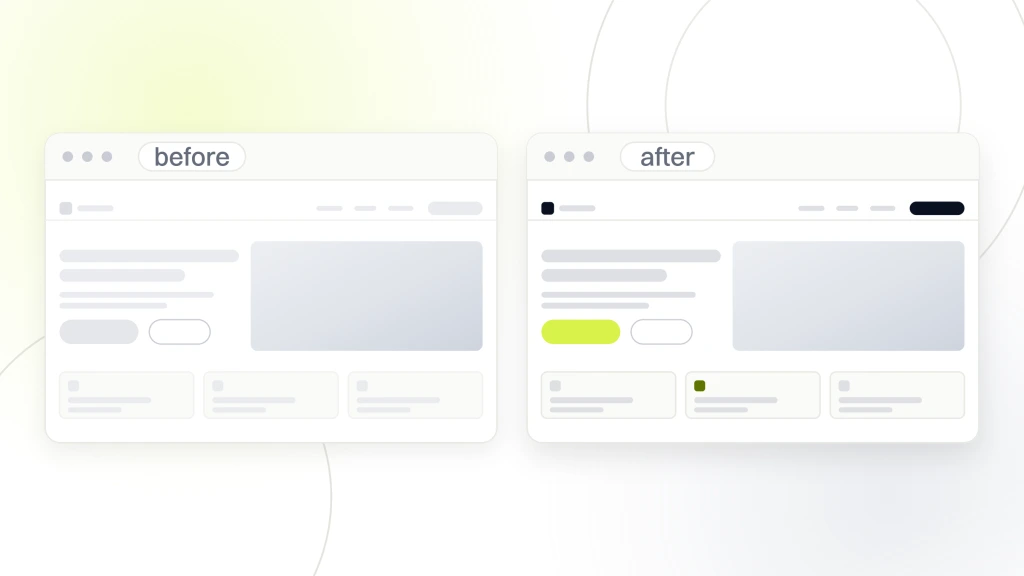
- Practice history in the hero. Move it to About. Patients want to know what they get today, not what the founder did in 1997.
- Marketing jargon over patient words. “State-of-the-art comprehensive care” reads as filler. “Sick-visit appointments today” reads as an answer.
- Insurance vagueness. “Most major carriers accepted” tells nobody anything. List every carrier by name in a scannable block.
- Stock photos of unrelated staff. A photo of your actual providers, front desk, and lobby earns trust the shutterstock version never will.
- Three CTAs on one screen. Book, call, and download a guide side by side. Pick one, promote it, hide the others in a lower-priority spot.
- Autoplay video with sound. Every patient reaching for the mute button is a patient who won’t book.
Fix the six above and the site immediately reads more human. Practices that patch these before touching the rest of the site typically see calls and form-fills gain 15 to 25% in the first month, well before deeper rewrites land.
Real numbers from a healthcare copy rebuild
Numbers make the case that anecdote can’t. Two client rebuilds show what a disciplined page-by-page rewrite produces when the work goes live clean.
VP Dental, a 20-plus-year practice led by Dr. Valerie Preston, unified a fragmented website and SEO program under one strategy after years of split-vendor churn. The site’s new copy tightened the homepage hero, added carrier-by-carrier insurance clarity on every service page, and moved provider bios into a rostered pattern per location. Result. New monthly patients doubled at 100% growth, an added $8,100 per month in recurring revenue, and 776% more search impressions on Google Maps inside 12 months.
North County Dental Care in Vista, California, rebuilt its site on secure HTTPS with mobile-first templates, then rewrote every service page around the patient’s search phrase. Patient volume grew 1,000% from 2021 to 2024, organic traffic rose 385%, and marketing ROI hit 500%. That’s the ceiling for what a disciplined patient-focused website copy rewrite looks like when the practice commits to the page-level work over multiple quarters.
Both rebuilds followed the same pattern this guide has walked through. Answer-first copy, one CTA per page, insurance clarity, price bands where they fit, and provider bios linked from every relevant page. No secret sauce. Just the discipline to write every page for the patient who typed the search term and to cut every sentence that doesn’t earn its space.
Two rebuilds. 100% and 1,000% patient growth. Same rules. Answer-first copy, one primary CTA, insurance clarity, and clean provider rosters.
Hiring healthcare website content writers
The best healthcare website content is written by someone who has interviewed a physician, sat in on a front-desk shift, or worked on 20 practice sites. Not by a generalist copywriter who searches the topic on Wikipedia and drops in a stock intro. When hiring, look for the following.
- A portfolio with healthcare pages that rank. Ask for three URLs and confirm they’re in the top 10 for the queries they target.
- Discovery calls with providers, not just marketers. Copy written from a marketing brief alone reads as brochure copy. Copy written after a 30-minute call with the doctor reads as authority.
- Comfort with insurance and pricing. A writer who dodges cost bands is a writer who’ll produce a page that dodges cost bands.
- Ability to work with a compliance reviewer. Healthcare copy runs through legal and clinical review. The writer who plans for that in draft one saves you three revision rounds.
In-house or agency, the same standard applies. Ask to see a discovery-to-launch case study, and check that the pages the writer produced still rank a year later. Traffic that spiked and fell in 90 days is a red flag; steady rankings across seasons is the pattern you want. Practices that skip this diligence often pay twice, once for the first writer and once for the rewrite.
Measuring healthcare website copywriting performance
Every rewrite gets measured against the same four numbers. New patient bookings per month, organic search impressions, form-fill conversion rate, and average time to first booking action. Track them monthly on a single dashboard and review at 30, 60, and 90 days. If bookings haven’t moved by day 90 on a page you rewrote, the copy still isn’t matching the patient’s intent, and you go back to the drawing board.
Patient literacy matters here too. About 22% of US adults have basic health literacy and another 14% fall below basic, per the National Assessment of Adult Literacy. Write above a 9th-grade reading level and a third of your visitors won’t understand the page. So keep sentences short, define every medical term inline the first time you use it, and pick the word a patient would say out loud, not the word the medical journal uses.
The 90-day measurement cadence
- Day 30. Check impressions and click-through in Search Console. If impressions haven’t moved, the on-page keyword mapping is off. Re-map before touching copy.
- Day 60. Check the form-fill rate and phone-call volume. If clicks landed but conversions didn’t, the primary CTA isn’t clear enough. Simplify.
- Day 90. Check booked patients from the site by source. If bookings still lag, the friction is in the intake form or the phone flow, not the copy.
Run every rewrite through those checkpoints. That way you catch the failing page early and don’t wait 6 months to learn the new hero didn’t land.
Write healthcare website copywriting that fills the schedule
A page-by-page rewrite of the site is one of the highest-value moves a practice can make. The homepage, location pages, and service pages carry every acquisition dollar the practice spends. Get the copy right and paid ads convert better, organic search delivers more of the right patients, and the front desk fields fewer confused calls. Get it wrong and every other channel pays the tax.
Redefine Web has rewritten hundreds of healthcare pages across dental, primary care, specialty practices, and multi-location groups. See what a page-by-page rebuild looks like in our healthcare website design services or start with the technical foundation on our healthcare marketing hub. For a related read on where copy meets discoverability, walk through our healthcare SEO audit checklist, which pairs cleanly with any rewrite plan you kick off this quarter.