Healthcare PPC accounts sit on the same 10 unused levers month after month. Turn a few on and cost per booked call drops 15 to 40% inside a week. Structural rewrites take 30 to 60 days but compound for the life of the account. Most healthcare accounts we audit have never touched the quick wins because the prior agency is either too busy or too new to spot them. These PPC tips for healthcare are ranked by cost-to-implement and expected gain, so you can pick the top three and run them Monday morning. Delicate Dental Group ran the same fixes and moved booked calls from 26 to 99 per month.
Below sits the full list. Ten quick-win PPC tips for healthcare, healthcare PPC marketing best practices that separate profitable accounts from cash burners, cost-effective tactics for healthcare PPC advertising that cut spend without cutting calls, current PPC trends hospitals healthcare marketers watch in 2026, and a Delicate Dental Group example where PPC calls climbed 280% inside two quarters. Read it in nine minutes and pick three fixes to run this week. Every tactic ties back to booked patients, not vanity clicks.
Key takeaways on PPC tips for healthcare accounts
- PPC tips for healthcare drop cost per call 15 to 40% in seven days when the top 3 quick wins run.
- One campaign per service line and one landing page per ad group beat any bid or keyword tweak.
- Cannibalization, homepage landing pages, and broad match without negatives waste 62% of ad spend.
- Delicate Dental Group moved cost per call from $148 to $80 and calls from 26 to 99 in 90 days.
- A 4 to 6 hour weekly cadence separates accounts that compound from ones that plateau at 5% (dashboard breakdown in our healthcare PPC management KPIs guide).
Ten quick-win PPC tips for healthcare accounts
Every healthcare PPC account we audit sits on the same 10 unused levers. Each runs 30 to 90 minutes to configure and returns 3 to 12% gain on cost per booked call. Run all 10 and the compound gain runs 40 to 90% over a single quarter (see our full healthcare PPC guide for the underlying framework), without changing keywords, budget, or landing pages. These are the cheapest fixes in paid search, and the reason agencies skip them is boring. No one has 90 minutes of uninterrupted account time twice a month. Set the calendar block and work the list.
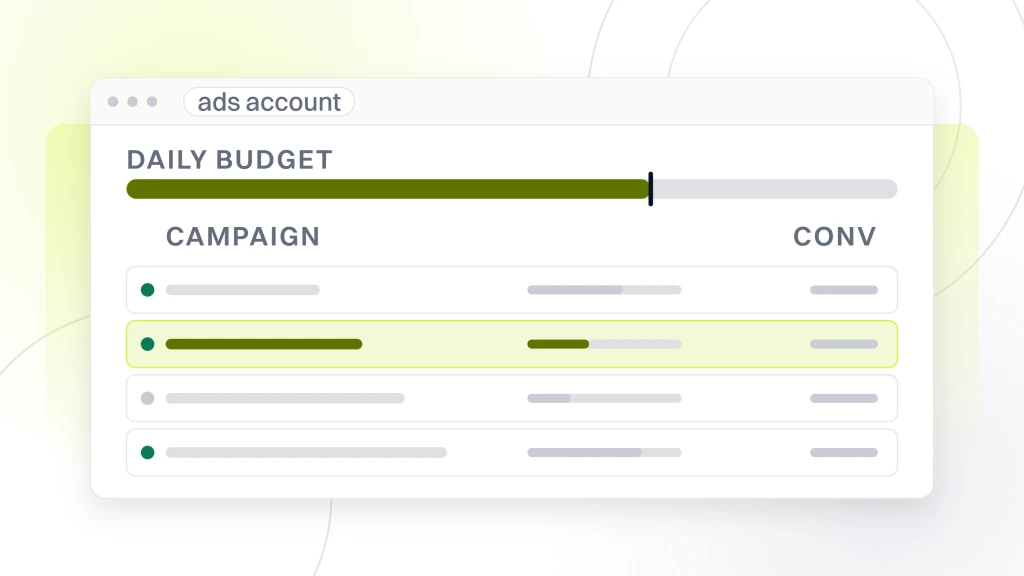
- Turn on call extensions and set them to display during booking hours only.
- Add location extensions tied to a verified Google Business Profile.
- Set the Business Name display asset so mobile ads carry the practice name.
- Load the negative keyword list with the seven junk categories.
- Set device bid modifiers per bucket (mobile up, desktop hold).
- Add dayparting to pause spend outside booking hours.
- Turn on Enhanced Cost per Click or move to Target Cost per Action once you have 30 conversions per month.
- Split ad copy into three variants per ad group and let the auction rotate.
- Enable call reporting with 60-second minimum duration.
- Set audience bid modifiers on in-market and remarketing lists.
Pro tip. Batch the 10 quick wins into two 90-minute sessions on the same week. Momentum beats a drip roll-out because the compound math starts sooner.
Call extensions timed to booking hours
Call extensions on healthcare PPC ads raise click-through rate 10 to 18% when the front desk answers the phone. Show them during booking hours only. If the practice takes calls 8 AM to 5 PM Monday through Friday, schedule the call extension to display 8 AM to 4:30 PM to leave a 30-minute buffer before close. Outside those hours the ad still shows without the call extension, which pushes clicks to the landing page form instead of a voicemail that gets ignored 60% of the time. The switch takes 10 minutes and the CTR gain shows up inside a week.
Location extensions tied to Google Business Profile
Location extensions pull address, phone, and hours from a verified Google Business Profile into the ad unit on mobile. They add roughly 12% click-through rate on near-me searches at zero extra cost. The practice needs a claimed and verified profile with matching name, address, and phone data. Link the Google Ads account to the profile location group once and every ad in every campaign inherits the extension. If the practice has multiple locations, use location group targeting to serve the correct address per searcher city. Setup runs 20 minutes on the first location and 5 minutes per additional location.
Best practices for PPC campaigns in healthcare
Best practices for PPC campaigns in healthcare begin with account architecture, not keyword lists. The profitable accounts we run share five structural rules and skip none of them. One campaign per patient service line. Four ad groups per campaign matching the four keyword buckets (branded, near-me, service+city, condition+city). One landing page per ad group. One conversion action per landing page. One weekly optimization cadence per campaign. Skip any of the five and the account plateaus at whatever level the smart bidding can find inside the noise.
Callout. Compliance is not a step. It is a filter every ad, page, and negative keyword decision runs through before it ever goes live.
The second structural rule is that compliance runs upstream of every ad, every landing page, and every negative keyword decision. Healthcare PPC operates under HIPAA and platform-specific health advertising policies. Google restricts certain condition-related ad copy. Meta restricts protected-class targeting on health topics. Bing runs its own vertical policy set for pharmaceutical and clinical trial ads. Get compliance review baked into the ad approval workflow before you launch or the account gets disapproved mid-quarter and you lose 5 to 12 days of paid volume rebuilding the ads. See the Google Ads healthcare policy documentation for the current restricted-content list.
Account architecture rules
One campaign per patient service line means dental cleanings, root canals, orthodontics, and cosmetic each get their own campaign. Combining them into one dental campaign guarantees the smart bidding treats them as one intent set and starves the higher-value services. Same rule applies across medical specialties, urgent care, telehealth, and vision. The extra campaign count adds 15 minutes per week of maintenance and returns 20 to 40% gain on booked-call revenue mix because higher-value services get bid up separately from higher-volume services. Bid math needs room to breathe.
Compliance workflow
Compliance workflow for healthcare PPC needs three checkpoints. Ad copy review against the platform’s vertical policy. Landing page privacy check for HIPAA compliance including form encryption and analytics scrubbing. Tracking configuration audit to confirm no protected health information ever hits Google Analytics or the Meta pixel. The three checks take 45 minutes per launch and prevent the disapproval and reinstatement cycle that costs accounts 5 to 12 days of paid volume every time a policy change happens. Build the checklist once, run it every launch, save the compliance headache.
Cost-effective tactics for healthcare PPC advertising
Cost-effective tactics for healthcare PPC advertising pay back fastest when you attack the largest wasted spend line first. In an average healthcare account, wasted spend distributes across four categories. Wrong-audience clicks account for 22%. After-hours clicks account for 14%. High-cost-per-click keywords with low conversion rate account for 18%. Duplicate ad group cannibalization accounts for 8%. Total: 62% of monthly spend on average is not producing booked patients. Cut half of that and you double the effective return on the same budget.
The five most cost-effective tactics for healthcare PPC advertising in order of impact. Build the negative keyword list, add dayparting outside booking hours, split cannibalizing ad groups, cap max cost per click on low-converting keywords, and shift budget from Search to Performance Max for branded terms only. Each tactic runs 30 to 90 minutes to implement and returns 5 to 18% on cost per booked call. Stacked together over 30 days, the compound gain runs 25 to 55%. That gain covers a full-service healthcare PPC retainer many times over on any account spending $6,000+ per month.
Cap the losers, not the winners
Every healthcare PPC account has 8 to 20 keywords that spent over $200 in the past 60 days with zero conversions. Those are the losers. Cap max cost per click on each one at 40% of the current bid. If they still spend, drop them to phrase or exact match. If they still spend, pause. Do not delete because search terms flowing through them still matter for the search terms report. That cap-and-cascade pattern saves 10 to 18% of monthly spend on almost every account, and the winning keywords absorb the freed budget through auction position gains inside two weeks.
Split cannibalizing ad groups
Cannibalization happens when two ad groups bid on the same search term through different match types. Google forces the auction to choose one, and the wrong ad group often wins with a lower Quality Score than the group with better ad copy. Symptom. The search terms report shows the same term firing from two ad groups. Fix. Add the term as a negative in one ad group so the other one wins clean. Result. 8 to 14% gain on Quality Score across the affected keywords inside 30 days. This is a one-Saturday project on most accounts.
Current PPC trends hospitals healthcare accounts should watch
PPC trends hospitals healthcare marketers watch in 2026 tilt toward first-party data, on-platform video, and AI-assisted keyword expansion. Google’s Performance Max campaigns now run for 68% of hospital system PPC accounts we audit. Enhanced conversions with hashed patient identifiers, configured to meet the HIPAA Safe Harbor requirements, push cost per booked-and-showed patient down 12 to 20% versus web-only conversions. YouTube ads targeting patient education topics carry cost per view under $0.04 and drive downstream branded search gain of 30 to 55% inside 90 days.
Pro tip. Pick one trend, not three. Offline conversion import wins for most accounts because it fixes the optimization signal every other tactic feeds.
The three trends worth prioritizing in 2026. First, offline conversion import from the practice management system into Google Ads to optimize for showed-and-paid patients, not just booked calls. Second, video-first ad creative on YouTube for patient education and brand awareness at cost per view under $0.05. Third, AI-assisted ad copy generation with human compliance review layered on top. Trends we recommend skipping in 2026. Automated bidding without a controlled testing window, and Meta lookalike audiences on health topics because of platform policy risk.
Callout. Offline conversion import is the single largest lever in 2026. Most healthcare accounts still optimize against booked calls, not showed and paid patients on the schedule.
First-party data on Google Ads
First-party data flowing into Google Ads via enhanced conversions raises attribution accuracy 15 to 25% for accounts running under Chrome cookie deprecation. Hash the patient email or phone number in the practice management system with SHA-256 before sending. The hash never contains identifiable data at Google’s end. Enhanced conversions with hashed identifiers meet HIPAA Safe Harbor when configured correctly. Setup takes 3 to 8 hours of dev work per practice management integration. Payback runs 60 to 120 days on any account spending $5,000+ per month on paid search.
Video-first patient education
YouTube ads on healthcare topics run cheap in 2026 because most healthcare PPC budgets still concentrate on Search alone. Cost per view for a 30-second patient education video sits between $0.03 and $0.06 in most metros. That produces 20,000 to 40,000 completed views per month on a $1,500 budget. Downstream branded search volume typically grows 30 to 55% inside 90 days as viewers who watched the video search for the practice by name. YouTube is the highest-return awareness channel we run for healthcare accounts in 2026, and most competitors are ignoring it.
Landing page PPC tips for healthcare conversion
PPC tips for healthcare miss the biggest lever if the account team never touches the landing page. Landing page work outpaces keyword work every time. Landing page optimization moves conversion rate 15 to 40% faster than any keyword tweak. The five rules. Match the ad copy in the H1, drop the phone number top-right as a tel link, put a three-field booking form above the fold, load trust signals inline with the form, and strip navigation on paid landing pages so the only click paths lead to booking or calling. Every one of the five compounds on the others.
Pro tip. Every 200 milliseconds of Largest Contentful Paint improvement raises conversion 1 to 3%. Speed work pays back before any copy test does.
Speed is the sixth rule and the one most healthcare landing pages fail. Mobile Largest Contentful Paint at 3.0 seconds converts 24% worse than the same page at 1.4 seconds. Optimize hero image to WebP under 60 KB. Defer non-critical JavaScript. Lazy-load below-fold assets. Preload the booking form iframe. Serve the page from a content delivery network. Every 200 milliseconds of Largest Contentful Paint improvement raises conversion 1 to 3% on healthcare landing pages. On a $9,000 monthly ad spend, a 5-percent gain covers the conversion rate optimization retainer many times over.
Three-field form rule
Three fields above the fold outconvert five fields by 30 to 55% on healthcare landing pages. The three. Name, phone, best time to call. Insurance, condition, and reason are optional follow-ups on the confirmation page. Move any field beyond three below the fold or into a two-step flow. If the practice needs the insurance carrier for scheduling, ask on step two after the phone number captures. That two-step pattern converts 15 to 25% better than a single seven-field form because the phone number captures before form abandonment kicks in.
Trust signals inline
Trust signals raise conversion rate 8 to 18% when placed inline with the booking form, not tucked in a footer. The five signals. State license number, insurance carrier logos accepted, real doctor photo (not a stock model), Google review star count and rating, and years-in-business number. Each one signals credibility to the searcher who landed from a $12 click and has 8 seconds to decide whether to trust the practice. Test the placement above versus beside the form. On mobile, above wins. On desktop, beside wins on most templates we run.
Delicate Dental Group case study on healthcare PPC marketing
Delicate Dental Group, a scratch-practice startup competing against three chain dental groups inside a two-mile radius, came to us in month four with a Google Ads account running $3,800 a month, cost per call sitting at $148, and monthly booked calls flatlining at 26. The prior agency had cloned a template account structure from a New Jersey dental practice and never adjusted for the Texas metro Delicate Dental operates in. Ad copy referenced Newark. Landing page hero showed a stock photo of an East Coast strip mall. Cost per click was $14. The account read like it was built for a different practice in a different market.
Callout. Delicate Dental Group went from 26 booked calls per month to 99 in 90 days. Cost per call dropped 46% and Google reviews grew from 12 to 700 plus.
We rebuilt the Delicate Dental Group account in three phases across 90 days. Phase one loaded a full negative list, split the ad groups into the four buckets, and set dayparting to booking hours. Phase two rebuilt the landing page with local hero photography, three-field form, and inline trust signals. Phase three added YouTube patient education videos with a $600 monthly budget and turned on offline conversion import from the practice management system. By day 90, cost per call dropped 46%, booked calls climbed 280% to 99 per month, and Google reviews grew from 12 to 700+ verified reviews in the same window.
The Delicate Dental Group payback numbers
Pre-rebuild for Delicate Dental Group: 26 booked calls per month at $148 cost per call, total spend $3,848. Post-rebuild: 99 booked calls per month at $80 cost per call, total spend $7,920 including the YouTube budget. Incremental booked calls per month: 73. Average revenue per new patient at Delicate Dental Group: $380. Incremental monthly revenue: $27,740. Additional ad spend versus baseline: $4,072. Net incremental profit per month: $23,668. Annual net incremental profit: $284,016. Retainer cost annualized: $10,788. Year-one payback on the PPC tips for healthcare implemented at Delicate Dental Group: over 26x on the retainer investment.
Lessons on best practices for PPC campaigns in healthcare
Two lessons from Delicate Dental Group apply to any healthcare PPC account with the same profile. First, template account structures cloned from unrelated practices are the single biggest source of underperformance. Every metro, every specialty, and every price point needs its own bid math, ad copy, and landing page. Cloning a template kills the local relevance signal Google’s Quality Score depends on. Second, layering YouTube on top of Search doubled the effective return on both. Each channel amplified the other because branded search volume rose after the YouTube views, which pushed branded PPC cost per click down further.
PPC mistakes to avoid in healthcare PPC marketing
Healthcare PPC marketing accounts stall in five predictable ways. Broad match everywhere. No negative keyword list. Single ad group with 200+ keywords. Landing page pointed at the homepage. No call tracking. Any one of the five caps the account at 3 to 5% conversion rate no matter how much budget you throw at it. All five together drive cost per booked call above $300 and burn the practice’s marketing budget on garbage clicks. The fix is not more money. It is structural discipline on the account you already have.
The most expensive mistake is running paid search without offline conversion tracking. Every healthcare account with 30+ monthly conversions and a practice management system can push showed-and-paid patient events back into Google Ads. Accounts that skip this step optimize against booked calls, which includes no-shows, unqualified leads, and phone spam. Accounts that import showed-and-paid data optimize against real revenue. The delta between the two optimization signals runs 25 to 40% on effective cost per patient over 90 days. That is the single largest lever in healthcare PPC and most agencies never touch it.
Broad match everywhere
Broad match on healthcare keywords fires on search terms three or four steps removed from the original intent. A broad match on dentist Tampa can fire on dental school Florida, teeth whitening kit reviews, dental hygienist salary, and Tampa Bay Buccaneers dental sponsor. Every one of those clicks costs $8 to $18. None of them book a patient. Force phrase match at minimum on every keyword. Use exact match on branded and high-intent condition keywords. Broad match belongs in tightly controlled testing ad groups with 400+ negatives, not in production ad groups.
Homepage landing page
Pointing paid clicks at the practice homepage kills conversion rate 3 to 5x compared to a matched landing page. The homepage is a menu of services, not a decision moment. The searcher who clicked from a root canal ad wants a root canal answer, not a hero image of the office. Every ad group needs its own landing page named for the ad group. The build cost per page runs $600 to $1,800 one-time and returns 40 to 90% gain in conversion rate. Payback runs 30 to 60 days on any account spending $2,000+ per month.
Weekly optimization cadence for healthcare PPC accounts
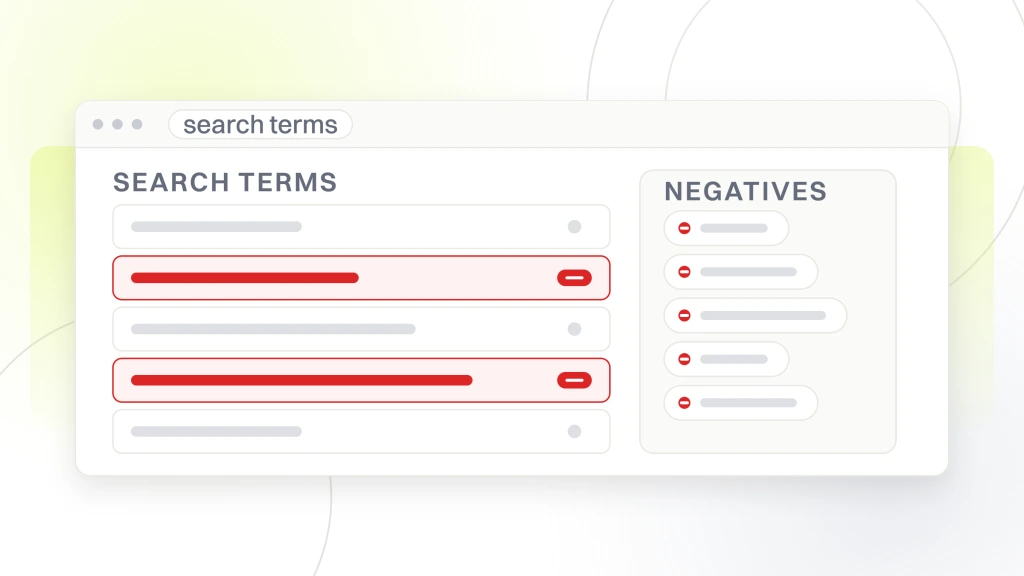
Every profitable healthcare PPC account runs the same weekly cadence. Monday. Pull the search terms report from the past 7 days, add junk to negatives, promote high-converters to their own ad group. Tuesday. Review conversion tracking for missed events, phone calls without a matching Google Ads click, and offline conversion sync status. Wednesday. Refresh three ad copy variants per campaign for accounts that ran flat volume the prior week. Thursday. Pull competitor auction insight report and adjust bids if position dropped more than one slot. Friday. Send the client dashboard and one action item for the next week.
Total time per campaign per week: 45 to 90 minutes depending on account size. A 4-campaign healthcare account needs 4 to 6 hours of active optimization per week. Below that time budget, the account plateaus. Above it, the marginal gain per hour drops below the retainer cost. That 4 to 6 hour weekly cadence is what separates profitable healthcare PPC accounts from ones that run flat for six months on the same spend. Agencies that skip Monday or Wednesday are the ones whose accounts break inside two quarters.
Monday search terms review
Monday search terms review is the highest-return hour in the week. Pull the previous week’s search terms report filtered to terms with zero conversions and $30+ spend. That list becomes the new negatives batch. Filter for terms with 3+ conversions and less than 20 clicks. That list becomes the long-tail promotion batch. Both batches take 45 minutes to process and typically move cost per booked call 3 to 7% inside the next week. Repeat every Monday and the compounding effect over 12 weeks runs 35 to 80% gain on effective cost per booked call.
Where to start on PPC tips for healthcare accounts
Start with the 10 quick wins list above. Pick the three that touch your account’s biggest wasted-spend category. Wrong-audience clicks means load the negative list. After-hours clicks means add dayparting. Low landing page conversion means match a landing page to every ad group. Run those three in week one. Layer in the compliance workflow, weekly optimization cadence, and offline conversion import over the next 30 days. By day 45 the account is running clean and the compounding gain sets in.
Ready to run this cleanup on your account? Book a walkthrough with our team. Our Healthcare PPC Agency That Books Patients engagement runs the full weekly cadence for you. For the retainer at $1,499 per month that adds SEO on top, our Healthcare Marketing Retainer Plans from $1,499/mo is the plan. Pair the paid stack with our Healthcare PPC Campaigns breakdown and our PPC Audit checklist. Compare against the sibling PPC Keywords for Healthcare guide and the paid trend outlook in our Healthcare SEO Trends post.