Every food brand hire pulls on shelf economics, retailer calendars, and DTC repeat rate at the same time. That’s why a digital marketing agency for food brands has to prove category depth before the retainer signs. Most food founders we advise burn $60,000 to $180,000 on the wrong agency at least once. The pattern repeats. Agency shows a lifestyle mood board, promises TikTok virality, and delivers Instagram followers no category manager values.
This guide covers what a digital marketing agency for food brands should own, how to vet a shortlist in 3 calls, retainer benchmarks in 2026, and the red flags that predict a bad engagement. You get the vetting sheet we hand every food founder who asks who to hire. It compresses a shortlist of 30 candidates to 4 in about 6 hours. You sign an engagement with a partner who moves Amazon rank, DTC repeat rate, and Instacart velocity inside 90 days instead of decorating the P and L.
A digital marketing agency for food brands owns 6 channels
Six channels separate a food-specialist retainer from a generalist one. A digital marketing agency for food brands should own each with named tooling and weekly cadence. Amazon Advertising covers Sponsored Products, Sponsored Brands, and DSP. Instacart Ads with dayparted bidding tied to peak grocery windows. Meta and TikTok paid social with food-specific creative pipelines. Klaviyo or Attentive lifecycle flows for DTC subscription. Google Search covering brand plus category plus recipe intent. TikTok Shop management for shelf-stable and single-serve items.
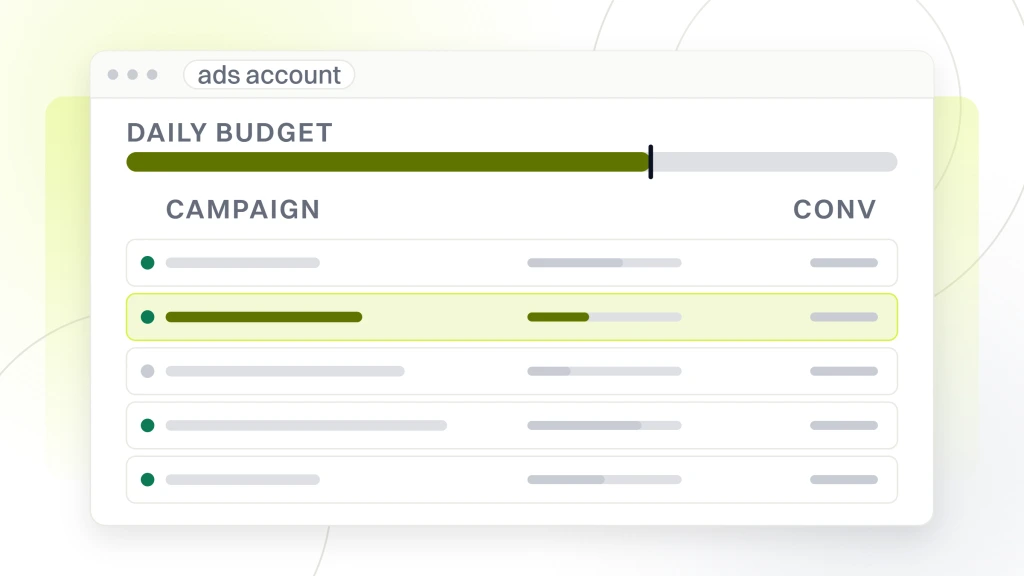
Each channel demands food-specific optimization a general agency misses. Amazon Fresh SEO differs from Amazon core since the shopper is checking out with grocery. Instacart ranks by conversion rate, not click-through rate. TikTok Shop enforcement of category claims differs from consumer categories. Meta creative for food converts on stopping-power and appetite appeal, not on generic lifestyle photography. Any agency that can’t name these tweaks in the first pitch call runs generic playbooks.
Amazon Advertising scope for a food brand
The Amazon scope covers catalog cleanup, Sponsored Products campaigns by ASIN, Sponsored Brands headline campaigns, Sponsored Display for category defense, and DSP for retargeting. Weekly ACoS management, monthly budget rebalancing across ASINs, and quarterly retail-media integration with Amazon Fresh. Any agency pitching Amazon as one campaign with a fixed budget does the bare minimum. Serious food agencies rebalance across 20 to 60 ASINs weekly.
Instacart Ads scope for a food brand
Instacart scope includes Featured Placements, Coupons Ads, and Brand Pages. Serious Instacart operators allocate 12 to 24% of paid budget to the channel for a brand with mainstream distribution. Instacart Featured Placements convert at 6 to 9% for premium refrigerated versus 3 to 5% for shelf-stable. Any agency lumping Instacart into a generic ecommerce budget misses the conversion edge of a shopper mid-checkout.
Paid social scope for a food brand
Meta and TikTok scope covers creative production, campaign structure, audience testing, and creative iteration. Food creative benefits from a dedicated food photography or food video pipeline. Any agency treating creative production as an afterthought runs stale creative that fatigues at 3 to 4 weeks and burns budget reallocation to hide CAC drift. Serious agencies produce 8 to 16 fresh creatives monthly on a mid-market food account. Our content marketing for food brands guide covers creative development approaches that hold up at scale.
A digital marketing agency for food brands runs a weekly dashboard
Weekly reporting is the strongest filter you can apply during vetting. Food category dynamics move fast. Amazon organic rank shifts inside a week when a competitor launches a promotion. Instacart conversion rates drop 3 to 8% overnight when a retailer changes assortment. Meta CAC drifts 15 to 25% inside 5 days when creative fatigues. An agency reporting monthly can’t react fast enough. Weekly cadence is table stakes, not a nice-to-have.
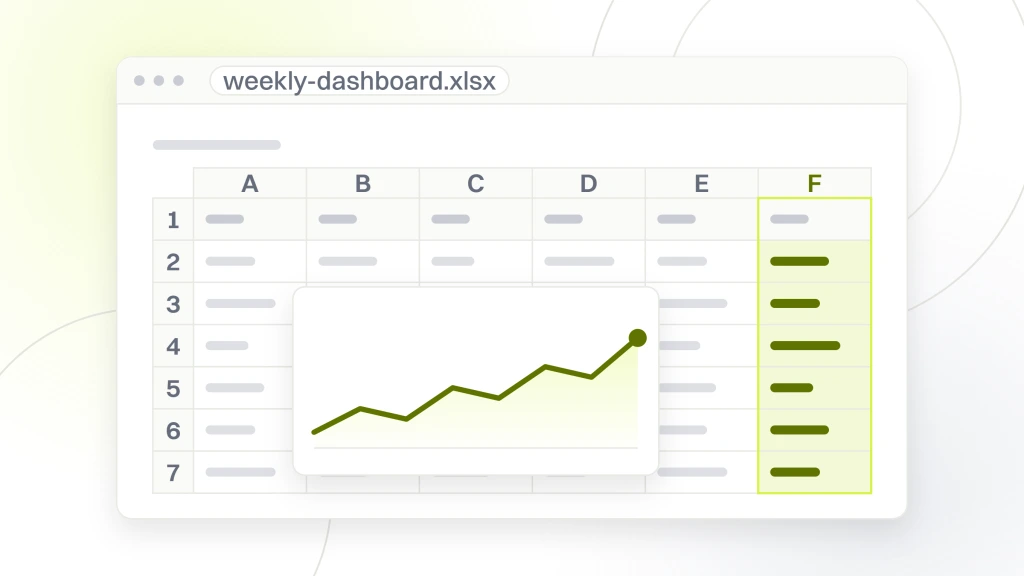
The dashboard should show 8 numbers minimum. Amazon organic rank on top 5 ASINs. Amazon ACoS by campaign. Instacart conversion rate by SKU. Instacart cost per new customer. Meta paid social CAC. TikTok paid social CAC. DTC repeat rate at 30, 60, and 90 days. Email and SMS revenue attribution. Any agency reporting fewer numbers hides underperformance. Ask to see the actual dashboard during the pitch.
| Metric | Cadence | Healthy range for mid-market | Alert threshold |
|---|---|---|---|
| Amazon ACoS | Weekly | 18 to 28% | Above 34% |
| Instacart conversion rate | Weekly | 3 to 9% by category | Drop over 15% week over week |
| Meta paid social CAC | Weekly | $22 to $92 by category | Above 130% of target |
| DTC repeat rate 90 day | Monthly | 18 to 34% | Below 14% |
| Email revenue share | Weekly | 22 to 38% of DTC | Below 18% |
Live dashboard versus PDF reporting
A live dashboard the founder can pull up any time beats a PDF report every day of the week. A digital marketing agency for food brands running Looker Studio, Databox, or a custom Retool dashboard shows respect for the founder’s need to react fast. An agency that sends only monthly PDFs protects the illusion of clean numbers. Ask to see the dashboard during the pitch. If it doesn’t exist yet, they will build it after signing, which usually stretches into 8 to 12 weeks of setup theater.
Anomaly alerts on the metrics that matter
Serious digital marketing agency for food brands operations set anomaly alerts on Amazon ACoS, Instacart conversion, and Meta CAC. When any metric drifts more than 15% inside a week, the account manager gets an alert and a Slack ping goes to the founder. That level of transparency separates real partners from vendors. Vendors report drift at month-end. Partners flag drift the day it happens with a proposed fix already drafted.
SPINS or Nielsen integration into the dashboard
A digital marketing agency for food brands serving a brand with brick-and-mortar distribution should pipe SPINS or Nielsen data into the weekly dashboard next to digital channel data. That integration lets the agency map digital campaigns to retail velocity change in the geographies where the campaigns ran. Without SPINS or Nielsen next to digital data, the agency can’t prove a Meta campaign in Dallas moved units at Whole Foods Dallas. That proof matters at category-manager review.
A digital marketing agency for food brands should match your category
Category-specific expertise matters more in food than in most consumer verticals. A digital marketing agency for food brands with 6 years of experience in shelf-stable snacks may have zero experience in premium refrigerated. The category dynamics differ. Shelf-stable ships nationally with 12 month shelf life. Premium refrigerated ships regionally with 21 day shelf life. Marketing calendars, promotional depth, and channel mix all differ. Match the agency roster to your category.
Ask each shortlist agency to name their 3 largest food clients by category. If the roster is all shelf-stable snacks and you sell premium refrigerated, they will run shelf-stable playbooks on your account and burn the retainer figuring out that your category works differently. The FMI food industry data covers external category context.
Shelf-stable snack and pantry category fit
Shelf-stable snack and pantry brands need an agency strong in Amazon Prime Pantry, Amazon Fresh, and shelf-stable Instacart Ads. The category ships nationally which opens paid social scaling in every metro. Subscription flows work well since the product refills predictably. Meta CAC targets sit at $22 to $48 for cost-of-goods under $8. Any agency showing $12 CAC on shelf-stable at that COGS level is either subsidizing with promo depth or measuring wrong.
Premium refrigerated and frozen category fit
Premium refrigerated and frozen brands need an agency who understands regional shipping, Instacart same-day, and Whole Foods Market plus Sprouts SEO. The category ships regionally which caps paid social scaling in metros far from distribution. Subscription flows are harder since shelf life is 14 to 28 days. Meta CAC targets sit at $38 to $92. Any agency showing sub-$30 CAC on premium refrigerated is running unsustainable promo depth.
Beverage including alcohol category fit
Beverage brands, especially alcohol, need an agency who understands three-tier distribution, state-by-state advertising restrictions, and Drizly plus Instacart integration. The category has TTB compliance overhead that a general agency will miss. Meta and TikTok both restrict alcohol advertising unevenly across states. Any agency without active alcohol digital work in the last 24 months should not run an alcohol account. The compliance risk alone will burn 3 to 6 weeks of onboarding on account approvals.
Vetting a digital marketing agency for food brands shortlist in 3 calls
Every shortlist deserves 3 calls before signing. Discovery, working session, references. Total time investment of 4 to 6 hours per agency across 3 to 5 agencies runs 12 to 30 hours for the founder. That investment is cheap compared to the $180,000 you burn hiring the wrong agency and eating the writeoff at month 6. Do the calls in order. Cut hard between each stage.
The 3 call structure filters aggressively. Discovery cuts 40% of the shortlist since the agency will not answer P and L questions in call one. The working session cuts another 20% since the strategy lead cannot walk through their proposed 90 day plan without hand-waving. References cut another 15% since past clients name a gap the agency omitted during the pitch. What remains is a digital marketing agency for food brands worth signing.
Discovery call filters on business acumen
The 45 minute discovery call should feel like a P and L review. A serious digital marketing agency for food brands asks about revenue per SKU, gross margin after slotting fees, DTC repeat rate at 90 days, and Amazon ACoS by campaign. If the discovery call spends 30 minutes on brand story and 5 minutes on numbers, the agency will run a brand campaign that produces awareness the P and L cannot afford. Push the conversation back to numbers when it drifts.
The working session tests strategic depth
The 90 minute working session asks for a channel-by-channel media plan with dollar allocations, expected CAC, expected Amazon rank movement, and monthly milestones. A serious digital marketing agency for food brands walks through 6 to 10 slides of specific tactics tied to your P and L. A weak agency shows a generic funnel diagram and promises to build the specific plan after signing. That promise usually turns into 6 weeks of onboarding theater before the first campaign goes live.
Reference calls surface what the pitch hid
Ask each shortlist digital marketing agency for food brands for 3 current-client references and 2 former-client references. Former clients are more useful since they will tell you why they left. Ask each reference these 3 questions. What did the agency get wrong in the first 90 days and how did they fix it. Which channel did they underperform on. What is the one thing they refuse to do. Every agency has weak spots. Good ones name them upfront. See our SEO agency for food and beverage vetting for the SEO-specific angle.
Digital marketing agency for food brands retainer benchmarks in 2026
Retainer pricing for a food-brand digital marketing agency varies from $499 to $65,000 monthly for scopes that look similar on paper. The variance comes from team seniority, retainer floor, and how many channels are included. Founders who quote 6 agencies get a spread of 5 to 8 times between the lowest and highest bid. This section anchors the numbers so an outlier quote in either direction gets caught.
Redefine Web publishes a fixed retainer ladder for food-brand digital marketing. $1,499 per month for solo-founder DTC on Meta or Amazon only. $2,499 per month for early-stage brands adding email and Instacart. $3,999 per month for growth brands running Meta plus Amazon plus email lifecycle at $2M to $8M revenue. From $6,000 per month for full-funnel scopes adding SPINS integration and TikTok Shop. Ad spend, production, and platform fees bill separately, since blending them into the retainer hides where budget actually goes.
Scope-based versus channel-based billing
Scope-based billing charges for outputs. A digital marketing agency for food brands running Meta plus Amazon plus email as a package quotes a monthly retainer against defined deliverables. Channel-based billing charges for hours per channel. A brand paying for 30 hours of Amazon monthly plus 20 hours of Meta monthly can shift the mix without renegotiating. Scope-based works when strategy is stable. Channel-based works when priorities shift quarterly.
Performance alignment beyond a flat retainer
Performance alignment pays a digital marketing agency for food brands a base of $999 to $3,500 per month plus 6 to 12% of new DTC or Amazon revenue attributed to their work. Alignment tightens focus on the numbers that matter to the P and L. The base has to cover senior time on the account. Otherwise the agency under-invests until performance revenue arrives, which takes 60 to 120 days for most food brands.
Variable costs beyond the retainer
A digital marketing agency for food brands retainer usually covers strategy and management, not media spend, production costs, or platform fees. Media spend runs $18,000 to $180,000 monthly depending on stage. Content production runs $4,000 to $22,000 monthly for photo, video, and social assets. Platform fees add $2,000 to $8,000 monthly. Founders who forget these variable lines during vetting get sticker shock at month 2. Bake variable costs into the budget model before signing.
Red flags during digital marketing agency for food brands pitch calls
A short list of pitch-cycle patterns reliably predicts a bad engagement inside 90 days. The signals show up in the sales cycle then repeat in the first two months of retainer. Founders who miss them during vetting pay for it with 6 to 12 months of lost momentum and a $80,000 to $220,000 writeoff on retainer fees. Every failed digital marketing agency for food brands handoff we have audited had at least 3 of these signals visible before signing.
Read the signals as a package. Any single item can be a fluke. Three or more together predict engagement failure at 78% confidence in the sample of food brands we have advised. Every red flag shows during the sales cycle when the founder knows what to look for. Use the vetting calls to test each in 5 minutes. See the ANA guidance on agency management for external validation.
Team swap between pitch and delivery
Any agency that refuses to name the strategy lead, paid media lead, and account manager in the SOW plans a team swap. Ask for LinkedIn profiles. Cross-check against case studies. If the pitch team disappears after signing, you paid for senior credibility and got junior execution. This is the single most common red flag across the industry and predicts engagement failure at 65% confidence on its own.
Generic channel mix pitched without food specifics
A pitched channel mix that could apply to a supplement brand, cosmetics brand, or beverage brand the same way is a generic mix. A serious digital marketing agency for food brands pitches specifics tied to your category. Shelf-stable versus premium refrigerated versus frozen versus beverage all have different channel splits. Any pitch that avoids the split is running a template. Cut the pitch and move to the next agency.
Case studies missing baseline numbers
Every case study should show starting revenue, ending revenue, months of engagement, and channel investment. Missing any of those means the digital marketing agency for food brands is protecting a weak result. A percentage gain without a baseline means nothing. A revenue gain without channel investment cannot be measured. Ask directly for the missing numbers. If the agency deflects, they do not have real wins to defend. Move on.
Onboarding a digital marketing agency for food brands in 90 days
Bad onboarding burns 60% of the first 90 days. Strong food brands hand the agency 5 documents in week one. Full P and L with SKU-level margin. Nielsen or SPINS data for the last 24 months. Google Analytics 4 access with historical data intact. Meta Business Manager with a service account. Amazon Advertising Console with reporting access. Any agency that starts work without those 5 inputs is guessing for the first month.
The first 90 days should produce 3 deliverables from any digital marketing agency for food brands. A channel audit with named waste in current spend. A revised media plan with dollar allocations by channel. An Amazon Advertising restructure with campaign hierarchy fixed. Any agency spending 90 days on brand strategy without touching the media plan optimizes for future retainer scope, not first-quarter revenue.
- Share the last 24 months of SPINS or Nielsen and 12 months of DTC and Amazon data
- Grant full ad account access within 3 business days of signing
- Hold weekly 30 minute status calls with the strategy lead and account manager both present
- Sign off on the channel audit and media plan within 45 days of kickoff
- Rebalance media spend based on 30 day data at day 60 without founder ego attached
Kickoff artifacts that predict engagement quality
A serious digital marketing agency for food brands produces a project brief, channel access checklist, first-30-day work plan, and named team assignments in week one. Agencies that take 3 weeks to produce kickoff artifacts will run late for the entire engagement. Fast onboarding predicts fast execution. Slow onboarding predicts slow campaigns, slow reporting, and slow reactions when Amazon ACoS drifts.
Day 60 first numbers on campaigns
By day 60, the digital marketing agency for food brands should have real numbers on cost per acquisition, Amazon organic rank movement, and Instacart conversion by SKU. Any agency still promising results in month 4 or 5 stalls. Food is a fast-feedback category. Meta paid social shows CAC directionally at day 14. Amazon organic rank shows movement at day 30. Instacart conversion shows first real signal at day 45.
Day 90 review with 6 metrics on the table
Day 90 is the decision point with any digital marketing agency for food brands. Compare day zero to day 90 on 6 metrics. Media spend efficiency. New DTC customer count. Repeat rate change. Amazon organic rank on top 5 ASINs. Instacart conversion rate by top 3 SKUs. Total revenue attributed to campaigns. Any agency that ducks a day 90 review protects a weak result. External benchmarks from the IAB agency resources help anchor the review conversation.
Case study proof any digital marketing agency for food brands should match
Case studies with real numbers matter more than any pitch deck. Redefine Web has published three engagement stories that pass the baseline test. Each names the client, the metric, and the window. Below are three engagements a food-brand founder can use to assess agency credibility. Read them side by side with any pitch deck a shortlist agency hands you. Missing numbers on the shortlist deck should be treated as a red flag.
Custimy is a SaaS customer data platform we rebuilt with isometric brand design plus a scalable backend plus targeted off-site SEO. Inside the first year the site ranked for 500+ first-page keywords, drew 25K+ monthly organic visits, and pushed average session duration to 165 seconds. The pattern for food brands: build the reporting stack first, structure content around long-tail category terms, then earn compounding organic before paid CAC gets stressed.
BSH Hausgeräte GmbH, Europe’s largest home appliance maker (Bosch, Siemens, Gaggenau, Neff), asked us to modernize the BSH Turkey site without losing SEO equity. Backend modernization plus UX redesign plus preserved SEO architecture drove 15% lead growth, 3% organic traffic gain, and 45 more seconds per session. The lesson for a food brand mid-relaunch: never touch the funnel without a rollback plan for organic rank. A single week of lost rank costs more than the redesign.
Vejrø Resort is a Danish private-island getaway with strong social engagement, farm-to-table dining, and zero direct booking flow before we engaged. We built a conversion-focused website, integrated direct booking, and ran on-site plus off-site SEO next to competitor analysis. Inside 3 months the site drew 10K+ organic visitors, ranked for 200+ first-page keywords, and hit a 2.2% booking conversion. For a food brand launching DTC, the parallel is direct: kill platform dependency, own the checkout, and match content to how buyers actually search.
Three lessons any food brand can apply this quarter
Three lessons transfer from those engagements to any food brand hire. Rebuild the dashboard before restructuring campaigns since you cannot fix what you cannot see. Split Amazon Sponsored Products by funnel stage before adjusting bids since a flat structure hides where budget actually converts. Move Klaviyo flows off timed drips and onto behavior triggers so the DTC repeat rate curve responds to real buying signal. Any agency that runs those three plays in order will move the metrics that matter for a food P and L.
Translating the pattern across food categories
The pattern translates across food categories with margin adjustments. Premium refrigerated compresses the ACoS band since gross margin sits at 48% instead of 62%. Beverage adds three-tier compliance overhead that pushes onboarding out 3 to 6 weeks. Bulk pantry needs tighter subscription math since reorder cadence lands at 60 to 90 days instead of 30. The underlying dashboard-first, funnel-split, behavior-trigger sequence stays constant. Only the target bands move.
Amazon Advertising scope a digital marketing agency for food brands must own
Amazon Advertising is the highest-return channel for most CPG food brands with active retail distribution. A digital marketing agency for food brands running Amazon well moves total account revenue 40 to 120% inside 6 months on a mid-market account. The scope covers catalog cleanup, Sponsored Products by ASIN, Sponsored Brands headline campaigns, Sponsored Display for category defense, DSP for retargeting, and Amazon Marketing Cloud audience building. Six sub-channels inside Amazon alone. Our Amazon marketing for food brands guide covers each sub-channel in depth.
Amazon requires weekly rebalancing across 20 to 60 ASINs on a mid-market food account. Bid adjustments respond to conversion rate, ACoS, and organic rank drift within a 7 day window. Any digital marketing agency for food brands that touches Amazon monthly instead of weekly leaves 15 to 30% of revenue on the table. Ask for the actual dashboard used to run Amazon during the pitch. If the answer is a static PDF, they cannot react at the cadence Amazon demands.
Catalog cleanup before advertising spend
Catalog cleanup precedes Amazon ad spend. Titles under 200 characters with primary keyword forward. 7 bullet points that answer buyer intent. A plus content or premium a plus content with lifestyle photography. Backend search terms with 20 to 40 non-obvious query variants. Any agency that runs Amazon ads on a broken catalog is burning 30 to 50% of spend to no organic gain.
Campaign hierarchy that separates budget from bids
Campaign hierarchy separates budget control from bid control. Top of funnel campaigns run at high budget with conservative bids to protect brand terms. Mid-funnel campaigns run at moderate budget with competitive bids for category terms. Bottom of funnel campaigns run at high budget with aggressive bids for competitor conquest and long-tail commercial intent. A digital marketing agency for food brands with a flat 3 campaign structure is running amateur hour on Amazon in 2026.
ACoS target bands by product category
ACoS target bands differ by product margin. Shelf-stable single-serve items at 62% gross margin can sustain 22 to 28% ACoS. Premium refrigerated at 48% margin sustains 14 to 20% ACoS. Bulk pantry items at 34% margin sustain 8 to 14% ACoS. Any agency that runs a flat ACoS target across every SKU is not doing the math. Target bands should sit inside every campaign brief before spend hits the account.
In-house team versus a digital marketing agency for food brands
Structure decisions change with revenue stage, and one shape does not fit every food brand. A pre-launch or early DTC brand under $2M annual revenue should never build an internal digital marketing team. Salary load will crush margin. A digital marketing agency for food brands at $999 to $1,999 per month covers Meta, Amazon, and email lifecycle with senior practitioners. A brand at $2M to $12M can hire one internal generalist plus an agency retainer from $3,500 per month. The generalist owns strategy day-to-day. The agency handles specialist channel execution.
Between $12M and $30M revenue is the awkward stage. Founders often build an internal team of 3 to 5 and fire the digital marketing agency for food brands, then realize the internal team lacks specialist depth in Amazon DSP or Instacart Ads. The right structure at this stage is a lean internal team of 2 to 3 plus a specialist agency running channels the internal team cannot cover. Above $30M revenue, building a 6 to 10 person internal team plus occasional consultants usually costs less than a full-service agency at $65,000 monthly.
Pre-launch to $2M revenue structure
A pre-launch food brand hires one digital marketing agency for food brands for the whole scope. Total monthly spend of $499 to $1,999 buys senior practitioners across Meta paid social, Amazon Sponsored Products, and email lifecycle. Internal team stays at zero for the first 18 to 24 months. This lets the founder stay focused on product, retail relationships, and fundraising. The agency covers tactical marketing with fewer coordination costs than a mixed model.
$12M to $30M hybrid structure
At $12M to $30M, hire a director of digital marketing internally plus a specialist digital marketing agency for food brands for Amazon DSP, Instacart Ads, or TikTok Shop. Total internal cost lands at $180,000 to $340,000 fully loaded plus a $3,500 per month agency retainer at minimum, scaling with scope. This hybrid gives the brand deep internal ownership of strategy while outsourcing specialist channels where an internal generalist cannot compete with a dedicated agency team.
$30M plus in-house-first structure
Above $30M, build a 6 to 10 person internal team covering Meta, TikTok, Amazon, Instacart, email, and analytics. Fully loaded cost of $900,000 to $1.8M annually usually beats a $65,000 monthly digital marketing agency for food brands retainer on scope covered. Bring in specialist consultants at $8,000 to $22,000 monthly for one-off channel launches. This structure preserves institutional knowledge and reduces coordination cost that plagues large brands running everything through an outside agency. See our craft beverage marketing agency guide for the beverage-specific parallel.
Pick the digital marketing agency for food brands that respects the P and L
The right digital marketing agency for food brands operates from your P and L, reports weekly, and matches your category before pitching a channel plan. Everything else is packaging. Founders who apply the 3-call filter, the retainer benchmark bands, and the 90-day scorecard save 6 to 12 months of retainer waste on the first hire. Founders who skip these steps buy a lifestyle mood board that a category manager will never fund into a second purchase order.
If you are running a food brand between $500K and $30M in revenue, book a P and L review with our team before signing your next retainer. We will walk your last 24 months of SPINS or Nielsen data, your Amazon Advertising Console, and your Klaviyo flows in one 60 minute call. The output is a 90 day plan you can hand any agency, or run in-house. No slide decks, no lifestyle photography, just the numbers your category manager and your bank both track.