Google ads marketing for chiropractors is the fastest legitimate way to fill a schedule when local SEO has not compounded yet. Local rankings take six to nine months to move. A dedicated chiropractor PPC playbook covers the paid side while SEO ramps. A well-built paid account books new patients in week one, sometimes inside 48 hours if the tracking is clean and the landing pages mirror the ad copy word for word. The math works when the account is structured around high-intent search terms, tight geo-targeting, and the specific keyword buckets patients type into Google when they are ready to book an appointment this week.
This guide covers google ads marketing for chiropractors the way we build it for solo and multi-location practice retainers under our google ads management for chiropractors service. You get the keyword bucket structure that separates transactional intent from browsing intent, the campaign architecture that keeps ad groups tight enough for the algorithm to optimize against, the bid strategy ramp that walks from Manual CPC into smart bidding without starving the account, the negative keyword discipline that stops wasted spend, and the ROI math a two-provider clinic hits in a mid-sized metro. Read it in twelve minutes and you have the working brief a competent operator should execute on your behalf. If you want the paired vertical view, our chiropractor marketing agency covers SEO, PPC, and website work as one integrated stack.
How google ads marketing for chiropractors differs from generic paid search
The account must clear Google’s healthcare advertising review, which restricts specific claims about treatment outcomes, medical conditions, and prescription-related topics. Ads that promise pain relief or cure specific conditions get flagged and cannot run. The keyword buckets skew toward location plus service and condition targeting rather than the broader ecommerce keyword patterns that carry other verticals. The account also relies heavily on Local Services Ads once the practice passes Google’s background screening, a format not available to most non-healthcare verticals.
Every one of those differences shapes the account structure a chiropractic practice needs on day one. Skip the healthcare policy review and half your ads get disapproved inside the first week. Skip Local Services Ads and you leave cheaper booked patients on the table. Skip condition-based ad groups and you compete on generic “chiropractor near me” terms where cost per click runs 40% higher than the condition-specific alternatives.
The working rule. Build every campaign as if it will face a full healthcare policy audit next Monday, because it will.
Chiropractor Google Ads keyword buckets that separate intent
Every chiropractic Google Ads account splits into six keyword buckets. Each bucket gets its own campaign so budget flows to the highest-intent searches first. The buckets are urgent condition, location plus service, treatment plus city, insurance and cost, competitor, and educational. Urgent condition and location plus service carry 60 to 70% of the total budget in a healthy account because they map to searches that book this week. Competitor and educational sit at 5 to 10% each and exist mainly to defend brand terms and catch top-funnel patients who will book next quarter.
- Urgent condition bucket. “Sciatica chiropractor”, “lower back pain chiropractor”, “whiplash treatment chiropractor”. Cost per click $8 to $22. Books patients inside 3 days.
- Location plus service bucket. “Chiropractor [city]”, “chiropractic adjustment [city]”, “spine clinic near me”. Cost per click $5 to $14. Books patients inside 5 days.
- Treatment plus city bucket. “Decompression therapy [city]”, “active release technique [city]”, “sports chiropractor [city]”. Cost per click $6 to $18. Books patients inside 7 days.
- Insurance and cost bucket. “Chiropractor covered by [insurer]”, “chiropractic cost per visit”. Cost per click $3 to $9. Books patients inside 10 days.
- Competitor bucket. Names of the two or three largest local practices. Cost per click $4 to $12. Defensive only.
- Educational bucket. “Do chiropractic adjustments work”, “chiropractor vs physical therapy”. Cost per click $2 to $6. Books patients inside 30 to 90 days.
Why the buckets stay separate
A single-campaign account mixes urgent-condition searches with educational searches and lets the algorithm spend the same budget on both. The educational click costs a third as much and books a patient ten times slower. Blend them and the account burns money on top-funnel traffic while urgent-condition impression share drops below 40%. Split them and each bucket gets a bid strategy that fits the intent. Urgent condition runs Target Impression Share at the top of page. Educational runs Maximize Clicks with a strict CPC cap.
Chiropractor Google Ads campaign structure that keeps ad groups tight
The account has six campaigns matching the six keyword buckets, plus one Performance Max campaign for broader reach and one Display remarketing campaign for site visitors who did not book. Each campaign holds three to five ad groups. Each ad group holds five to ten tightly themed keywords in exact and phrase match, with broad match reserved for the smart-bidding phase after 30 conversions. Every ad group points at a dedicated landing page that mirrors the ad headline within the first 40 characters of the H1.
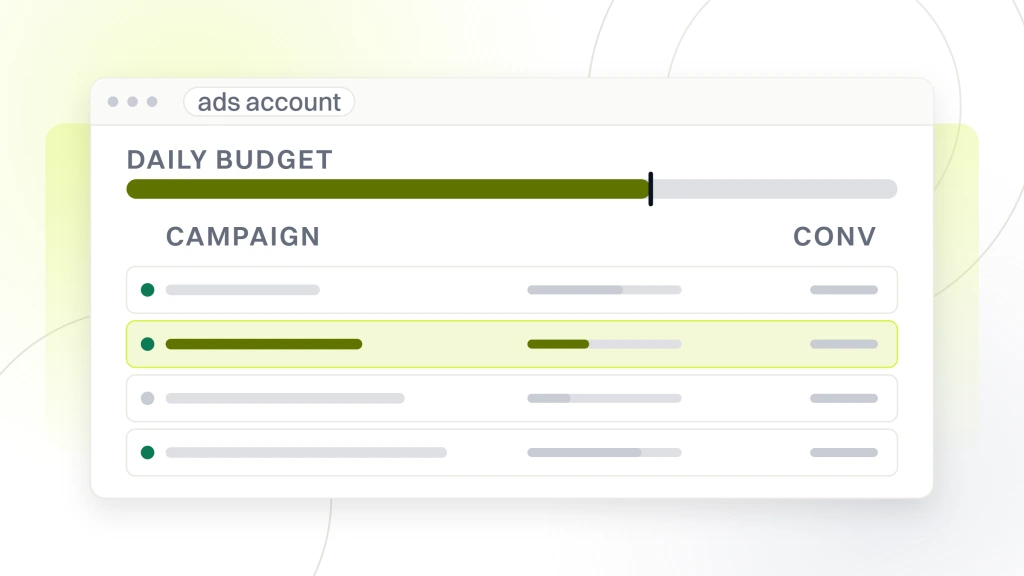
Total account footprint. Eight campaigns, roughly 32 ad groups, 240 keywords, 32 landing pages. Sounds heavy. It is not. A competent operator sets it up in two working days once the copy and landing pages are ready.
Responsive Search Ad depth per ad group
Each ad group ships with one Responsive Search Ad loaded with 15 headline variants and 4 description variants. Google’s machine learning mixes headline combinations and shows the strongest match to each search query. Feeding the format only 3 or 4 headlines produces a click-through rate 30 to 50% below the potential and drives cost per click up because Quality Score suffers. Fifteen headlines split into three intent templates. Five location plus service, five credential plus trust, five benefit plus urgency. Four descriptions cover offer, credential, availability, and objection. The extra copy work pays back inside 30 days as click-through rate climbs and cost per booked patient drops.
Landing page match at the H1 level
Home page as the landing page for every ad group cuts conversion rate in half. The fix is one dedicated landing page per ad group with an H1 that repeats the ad headline word for word. “Sciatica chiropractor in Denver” ad routes to a page with an H1 that reads “Sciatica chiropractor in Denver”. Above the fold. Booking widget in the top third. Trust signals inside the first 400 pixels. That single alignment doubles booked-patient rate on the same click volume in most accounts we audit.
Chiropractor Google Ads bid strategy from launch to smart bidding
The bid strategy walks a four-phase ramp. Manual CPC through the first 30 conversions to protect the operator’s control over per-click cost. Maximize Conversions once the account has 30 conversions inside a 30-day window to teach the algorithm what a booked patient looks like. Target CPA once 60 conversions land inside 30 days to lock the cost per booked patient below the practice’s break-even number. Target ROAS reserved for accounts running e-commerce style booking value tracking, which most chiropractic practices skip.
Skipping Manual CPC and starting on Target CPA starves the algorithm of conversion data and produces a first-month cost per booked patient 2 to 3 times higher than the eventual stable number. The two-week Manual CPC ramp feels slow. The alternative is 60 days of overpaying while the algorithm learns from noise.
Local Services Ads run in parallel
Local Services Ads charge per lead rather than per click and typically produce 20 to 45% of the total booked patients at a lower cost per patient than the click-based formats. Practices that pass Google’s background screening in 2026 lock in a competitive edge against practices that delay screening until 2027 or 2028. Complete screening now, run Local Services Ads at $25 to $60 per lead alongside the Responsive Search Ads campaign, and treat the two channels as complementary rather than competing. Reference reading on the format sits at Google’s Local Services Ads help center.
Google ads marketing for chiropractors budget and ROI math
A solo chiropractor practice needs $1,500 to $3,500 monthly in ad spend in a mid-sized metro to produce statistically stable results. That budget delivers 15 to 30 booked new patients monthly at a cost per patient of $50 to $180 depending on ad copy quality and landing page conversion rate. Budgets below $1,000 monthly rarely produce stable results because click volume falls below the threshold where the algorithm can optimize properly. Budgets above $5,000 monthly work only when the practice has capacity to handle the increased patient volume without overloading the schedule.
Add management fees on top of ad spend. A retainer runs $999 monthly for the Launch tier, $1,499 for Growth, $2,499 for Scale, and from $4,500 for the Enterprise tier. Ad spend gets billed separately by Google. Match the tier to ad spend. A $1,500 monthly ad budget pairs with the Launch tier. A $3,500 monthly ad budget pairs with Growth. Multi-location groups running $8,000 or more monthly across locations pair with Scale or Enterprise.
ROI math a solo mid-metro practice runs
Take a $2,800 monthly ad spend that produces 22 booked new patients at $127 per booked patient. Average lifetime value of a new chiropractic patient runs $1,200 to $2,400 across the first 12 months depending on treatment plan size and insurance mix. At $1,600 average lifetime value, 22 patients equal $35,200 in downstream revenue against $2,800 ad spend plus $1,499 management fee. Return on marketing investment lands at 8:1. Practices that pair paid ads with a local SEO retainer see the SEO channel add another 15 to 30 patients monthly by month nine at zero incremental per-patient cost. Our SEO for chiropractors playbook covers the paired scope.
Chiropractor Google Ads negative keyword discipline
Negative keyword lists stop the 15 to 25% of budget that goes to searches that will never book. Every account gets three negative lists on day one. A universal list that runs across every campaign covers job hunter terms (school, degree, salary, jobs), free content seekers (free, DIY, at home, video), and product seekers (chair, table, pillow, book). A campaign-level list covers intent mismatches between buckets, blocking urgent-condition traffic from reaching the educational campaign. An ad group level list handles the edge cases the search terms report reveals every Monday morning.
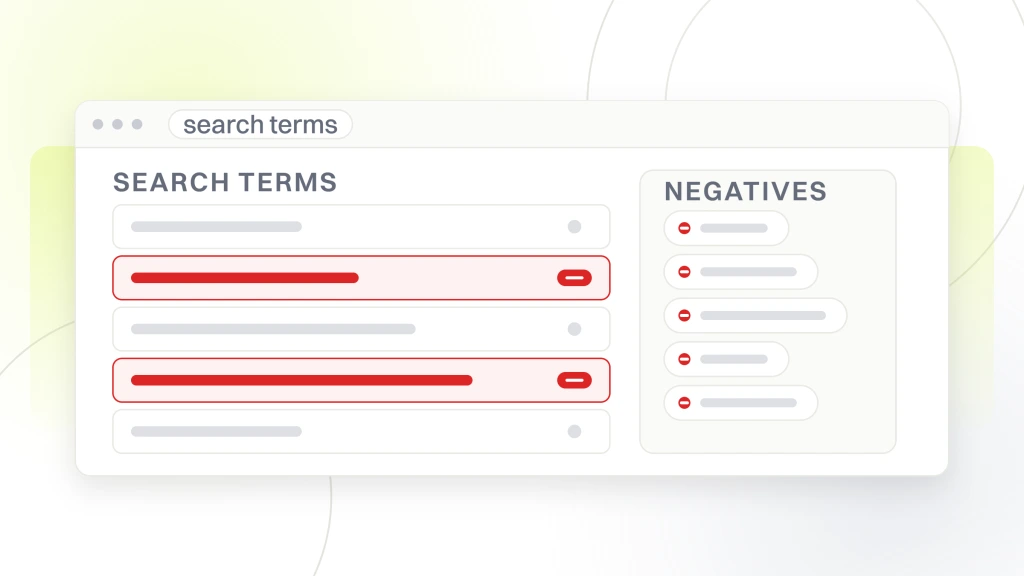
- Universal negatives to add before launch. School, jobs, salary, degree, free, DIY, at home, YouTube, video, chair, table, pillow, book, PDF, Reddit, forum.
- Campaign level negatives to block cross-bucket bleed. Educational campaign blocks urgent condition terms. Competitor campaign blocks generic industry terms.
- Ad group negatives from the Monday search terms review. Any query that got 5 clicks and 0 conversions moves to the negatives list.
- Location negatives if the practice serves a specific 5 to 15-mile radius. Nearby cities that fall outside the service radius get added as negatives.
- Bing terms to sweep on the first month audit. Free consult seekers, coupon hunters, and homework searchers show up in chiropractic search term reports every week.
Monday morning negative keyword ritual
Every Monday, the operator opens the search terms report for the previous 7 days. Sort by cost descending. Any term with 5 or more clicks and zero conversions moves to the ad group negative list. Any term with cost above $50 and no conversion gets flagged for further review. The whole ritual takes 20 minutes and saves the account 15 to 20% of monthly spend across a 90-day window. Practices that skip the Monday review end up paying for the same wasted click patterns month after month.
Chiropractor Google Ads conversion tracking that reflects booked patients
Conversion tracking has to reflect booked patients, not form fills. Form fills teach the algorithm to bid for people who fill out contact forms and cancel before they show. Booked-and-shown patients teach the algorithm to bid for people who actually keep their appointments and pay for the care. The gap between the two numbers runs 25 to 55% in most practices. Missing the offline conversion import wires the account to optimize for the wrong outcome and lands cost per shown patient 40 to 70% higher than the potential.
Install the Google Ads conversion pixel on every form thank-you page and every phone call over 60 seconds through CallRail or a similar dynamic number insertion tool. Wire the offline conversion import from the practice management system so Google receives a nightly update on which leads became booked-and-shown patients. That single wiring change moves cost per shown patient down 20 to 40% inside 60 days as the algorithm learns which click patterns actually produce revenue.
Extensions to enable on day one
Every extension the account supports gets enabled at launch. Location extension, call extension, sitelink extension (four minimum), callout extension (six minimum), structured snippet extension (services list), lead form extension, promotion extension for new patient offers, and price extension for initial consult pricing where the practice publishes rates. Extensions raise click-through rate 30 to 60% at no incremental cost per click. Practices that leave extensions disabled throw away free click volume every day.
Google ads marketing for chiropractors timeline from launch to stable performance
The first booked patients land inside 3 to 7 days of the campaign going live for well-structured accounts running dedicated landing pages, clean conversion tracking, and the 15-headline responsive search ad format. Month one typically delivers 60 to 80% of the target monthly booking volume as the account gathers data and optimizes. Months two and three produce the full target booking volume as the campaign structure stabilizes and the smart bidding algorithms take over from the initial Manual CPC ramp. That speed to first bookings is the primary advantage over local SEO, which takes 90 days to move rankings and 6 months to compound into a meaningful patient volume.
The 90-day ramp week by week
Week 1. Manual CPC on urgent condition and location plus service campaigns. Small $500 test budget. Watch daily. Week 2. Add treatment plus city and insurance campaigns. Bump budget to 40% of target. Week 3 to 4. Full campaign structure live. Budget at 60% of target. First negative keyword sweep. Week 5 to 8. Budget ramps to 80% of target. Switch to Maximize Conversions once 30 conversions hit inside a 30-day window. Week 9 to 12. Full budget. Switch to Target CPA once 60 conversions hit inside 30 days. Stable performance for months four and beyond.
Chiropractor Google Ads agency vs in-house management
A chiropractor practice should hire a Google Ads agency if the practice does not have a dedicated marketing coordinator on staff. Run Google Ads in-house only if you have marketing headcount who wants to specialize in paid media and can commit 15 hours a week to the workflow. Never hand Google Ads to the practice owner or the front desk lead because both roles are too stretched to hold the daily attention paid media requires during the first 90 days.
Agency retainers run $999 to $4,500 monthly on the tier system above. In-house management fully loaded at typical coordinator rates lands at $1,500 to $2,000 monthly plus the opportunity cost of pulling that coordinator away from other marketing work. Agencies win on total cost of ownership for practices without dedicated marketing staff, and the working model is a 6-month retainer commitment on Google Ads scope. In-house wins for practices with three or more locations where the coordinator has enough account volume to justify the specialization.
Google ads marketing for chiropractors mistakes we see repeatedly
The google ads marketing for chiropractors mistakes we see on almost every account audit cluster around seven repeating patterns. Fixing all seven inside the first 45 days typically produces a 30 to 50% gain in booked patients on the same ad spend. The mistakes are cheap to fix and expensive to leave alone. The pattern below covers what we find in roughly 8 out of every 10 account audits we run for prospective retainer clients.
- Single-campaign account structure. Mixes intent buckets and lets weak keywords steal budget from strong ones. Split into six distinct campaigns.
- Only 3 headlines per responsive search ad. Starves the algorithm. Load 15 headline variants and 4 description variants per ad group.
- Home page as the landing page for every ad group. Cuts conversion in half. Build a dedicated landing page per ad group.
- Extensions left disabled. Throws away 30 to 60% free click-through rate. Enable every extension the account supports.
- No negative keyword list. Wastes 15 to 25% of the budget on searches that will never book. Add negatives every Monday.
- Target CPA on day one. Starves the algorithm of conversion data. Run Manual CPC through the first 30 conversions.
- No offline conversion imports. Teaches the algorithm to bid for cancellations instead of shown-up patients. Wire the imports once and let them run.
Order to fix them
Fix the campaign split first because it lets the operator control budget by bucket. Fix landing page match second because it doubles the booking rate on the same clicks. Fix the responsive search ad depth third because it pulls click-through rate up. Enable extensions fourth as a same-afternoon quick win. Build the negative keyword list in parallel from day one as a background task. Wire offline conversion imports last because they require the tracking to be clean first. Practices that batch the seven fixes over 45 days rather than trying to do everything the first week see cleaner analytics on what really moved the numbers.
Google ads marketing for chiropractors reference results at Pain Cure Clinic
Pain Cure Clinic, a chiropractic and wellness healthcare provider, broke through skepticism with education-driven SEO paired with condition-specific content, targeted ads, and automation. Over the engagement window, new patient appointments grew 205%, averaging 122 monthly versus 40 previously. Organic website traffic surged 289%, driving consistent new visitors, and reviews increased 162%, boosting Google rating from 4.3 to 4.9 stars. The paid side of the retainer ran alongside the SEO program from day one rather than waiting for month four, which is why the appointment number moved so quickly.
ProCare Sports, a San Diego sports chiropractic practice, replaced an outdated 2000s-era website with a modern SEO-optimized Yelp-powered presence. Website engagement improved 30% through modern design and strong calls to action. The site generated 20+ unique visitors daily with consistent local growth. Accuracy and consistency across Google and Yelp locked in stronger local visibility, giving the paid campaigns a foundation to build against. Both results came from paired scope where paid ads catch transactional searches immediately while organic rankings climb the local pack over 6 to 12 months.
Google ads marketing for chiropractors outlook through 2028
The google ads marketing for chiropractors outlook through 2028 hinges on three shifts. Local Services Ads grow share of the total paid budget as more practices pass Google’s screening. AI Overviews on Google Search start eating some of the transactional query volume that used to flow to text ads. Bing Ads pull a growing share of the older-demographic search volume as Microsoft keeps investing in the ad platform against Google’s dominance. Practices that plan for all three shifts inside a single account architecture ride the transition. Practices that put the whole budget on one format lose share as the shifts play out.
Local Services Ads become the anchor
Local Services Ads become the anchor format for chiropractor Google Ads accounts through 2028. The pay-per-lead pricing model favors practices with strong review counts and clean Google screening records. Reference reading on the format shift sits at Google’s own Local Services Ads documentation.
AI Overviews and paid ad placement
AI Overviews on Google Search keep expanding through 2028 and pull some percentage of transactional search volume away from text ads. Practices with strong structured data on service pages surface inside the AI Overview answers, which recovers a portion of the displaced volume through organic mentions. The paid side responds by concentrating more spend on Responsive Search Ads that appear alongside the AI Overview and on Local Services Ads that render below the Overview. The Google Ads healthcare policy documentation stays the reference source for what claims the ads can make as the interface shifts.
Start google ads marketing for chiropractors this week
Start with three moves this week. Install Google Ads conversion tracking and CallRail call tracking on the site so the account has clean data from day one. Build one dedicated landing page for the top service ad group with an H1 that mirrors the intended ad headline and a booking widget above the fold. Launch a small $500 test budget on 20 exact-match location plus service keywords with a 5-mile geo-targeting radius. That test produces the first booked patients in 3 to 7 days and reveals which keywords, ads, and landing pages the account should scale next.
Then plan the 90-day ramp. Month one hits 50% of target budget with 4 ad groups and 4 landing pages. Month two ramps to 75% budget with expanded keyword lists and remarketing. Month three hits 100% target budget with the full campaign structure and stable smart bidding. Practices that follow the ramp see stable per-patient costs and no wasted spend on unproven variants. The paired local search work that catches the same intent for free over 6 to 9 months lives inside our local SEO for chiropractors playbook, which slots in alongside the paid account from day one.
Google ads marketing for chiropractors is the lever any solo practice can pull the week they decide to fill the schedule faster than local SEO alone can deliver. Structure the account by intent bucket, mirror landing pages to ad copy word for word, wire conversion tracking clean, enable every extension, and add negative keywords every Monday. That is the working brief. The rest is the weekly discipline of watching search terms, adjusting bids, and refreshing ad copy against Google’s evolving healthcare advertising policies.