Chiropractor lead generation marketing has one job. Put qualified new patients on the schedule this week, not next quarter and not “eventually.” What follows is the working motion we run at independent practices booking 30 to 90 new patients a month. Real offers, real ads, real follow-up sequences, real cost per lead and cost per booked exam figures by market and competition. The gap between a good lead generation motion and a sloppy one is worth five figures a year in new patient revenue.
By the end of this guide you’ll know what counts as a lead, what doesn’t, how to price the funnel, and how to convert leads to booked exams without a call center. Chiropractor lead generation marketing works when the offer, the ad, the landing page, the follow-up sequence, and the tracking are all wired together into one motion. Break one link and the funnel drips. Wire all five and the schedule fills week after week.
Landing pages that convert clicks into leads
Landing page conversion is where most chiropractor lead generation marketing quietly burns budget. Every dollar routed through chiropractor lead generation marketing lives or dies at the landing page. Practices send Google Ads clicks to the homepage and watch cost per lead double overnight. The homepage is designed for browsing. A landing page is designed for a single decision. Two different jobs, two different builds, and mixing them up is the fastest way to waste $3,000 a month on paid clicks.
Give every ad campaign its own landing page. Back pain campaign points at a back pain page. Sciatica campaign points at a sciatica page. Auto injury campaign points at an auto injury page. Each page carries the same three-second promise, the same offer, and the same booking form or click-to-call button above the fold. The web.dev guide on Largest Contentful Paint covers the speed side. Aim for LCP under 2.5 seconds on mobile or Google will quietly rank the page lower and CPCs will climb 15 to 30% inside a month.
The landing page conversion checklist
Headline that names the condition and the outcome. Subhead that names the offer. Phone number as click-to-call in the top right on mobile. Booking form above the fold with four fields max (name, phone, condition, preferred time). Three trust signals (years in practice, review count, board certification). One patient story in first person. Mobile page speed under 2.5 seconds. Nothing else. Longer pages convert worse on paid clicks in every chiropractic test we’ve run, and the drop is 20 to 35% for every extra scroll a patient has to make before the form.
The four-field form that wins
Name, phone, condition, preferred time. Four fields. Every extra field cuts conversion by 5% to 15%. Insurance dropdowns are especially costly. Skip them at the top of the funnel and handle insurance during the follow-up call. The goal of the form is to open the conversation, not to complete intake. Intake happens on the phone or at the appointment. Keep the form short and honest and the fill rate climbs.
Speed to lead is the biggest lever in chiropractor lead generation marketing
Speed to lead is the gap between a form submission or missed call and the practice’s first outbound touch, and it’s the single biggest lever in the entire chiropractor lead generation marketing motion. Chiropractic practices responding inside five minutes book at 3x to 5x the rate of practices responding within an hour. After 30 minutes booking rate drops by 80%. No other tactic returns as much for as little effort.
Fix speed to lead before adding any new lead source. A front desk trained to respond inside five minutes doubles the value of every dollar spent on lead generation. Speed-to-lead software (like Salesmsg or a Zapier flow) sends an auto-text to the lead the moment the form is submitted, giving the practice a 90-second buffer to make the human call. Read marketing tracking maintenance for chiropractors for the technical wiring.
The five-minute front desk workflow
Every form submission and every missed call fires a notification to the front desk phone. Front desk staff pick up the phone within 60 seconds of the ping. If the caller doesn’t answer, an auto-text goes out within 5 minutes saying “Hi [name], this is Sarah at the practice returning your inquiry. Would 3:15 today or 10:00 tomorrow work for a quick call to schedule?” This single workflow moves booking rate from 22% to 55% in most practices within 30 days, no new spend required.
The after-hours problem and how to solve it
Half of lead form submissions land after 6 pm or on weekends when the front desk is home. Practices lose 30% to 45% of these leads to the same-market competitor who responds first thing Monday morning. Fix it with an auto-text at submission plus a real call at 8:05 am Monday. If the practice can afford a shared receptionist or a call service for evening coverage, the return runs 3x to 5x the cost inside 60 days.
Lead follow-up sequences that convert cold chiropractic leads
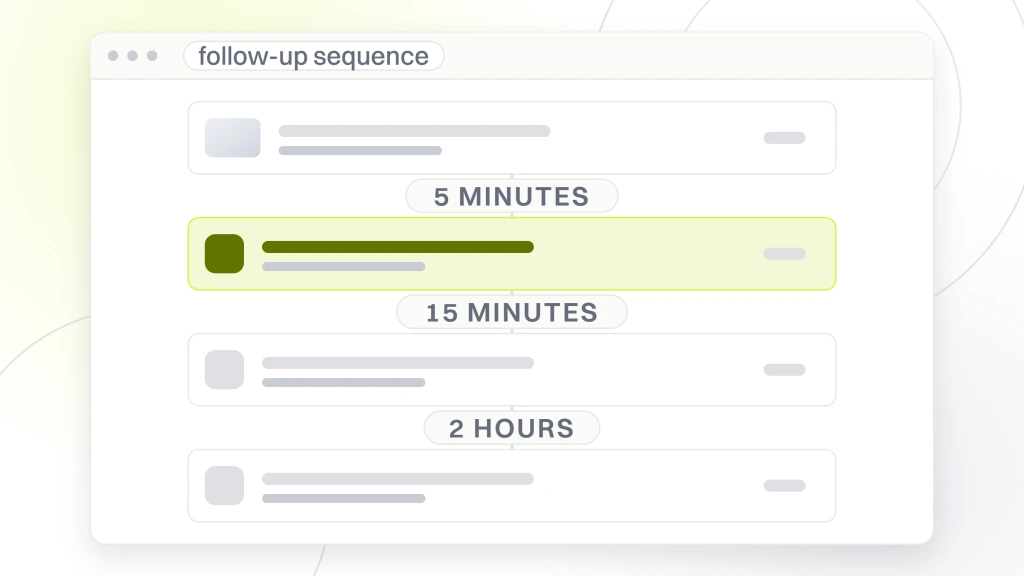
Most leads don’t book on the first touch. Practices that stop at touch three lose 30% to 40% of the leads that would’ve booked with more contact. The right sequence is five touches over 72 hours, persistent without being pushy, direct without being pestering. That balance is what separates a follow-up sequence that fills the schedule from one that gets marked as spam.
Somewhere around touch four, a patient responds “Sorry, meant to get back to you, can I book Thursday at 5?” and nobody thinks about the follow-up sequence again. That patient is now on a care plan worth $1,600 over 12 months, all from touch four. Skip touch four and the same lead goes cold. Read Email marketing for chiropractors for the copy templates for each touch.
The five-touch sequence that converts
Touch one, phone call within 5 minutes. Touch two, text within 15 minutes if the call went to voicemail. Touch three, email at 2 hours with a booking link. Touch four, second text at 24 hours saying “Still want to lock in that time?” Touch five, final phone call at 72 hours. After 72 hours the lead moves to a long-term nurture list and gets a monthly newsletter until they book or opt out. Every step is scripted so the front desk isn’t writing from scratch at 4:45 pm on a Friday.
Why text beats email for cold leads
Text messages get read within 3 minutes on average. Emails to cold leads get opened at 15% to 25% within 24 hours. For a chiropractic lead that filled a form 20 minutes ago, text is the right channel. Keep the message short. Keep it human. Include a direct booking link. The best follow-up text we’ve tested was “Hi [name], Sarah here. Saw you asked about sciatica. Would 3:15 today or 10 tomorrow work for a quick check-in? Book here [link].”
Google Ads campaigns that fuel chiropractor lead generation marketing
Four campaigns handle 90% of qualified lead intent for chiropractic. Back pain, sciatica, auto injury, and branded search. Each campaign runs one exact-match ad group and one phrase-match ad group with 60-plus negative keywords refreshed weekly. Landing pages match the condition, not a generic homepage. Cost per lead on these four campaigns runs $18 to $55 in most markets, and cost per booked exam sits between $50 and $150 when the follow-up sequence is tight.
Adding random display or shopping campaigns dilutes the account without producing qualified leads. Concentrate chiropractor lead generation marketing spend on the intent-based search campaigns and layer everything else on top. Facebook and Instagram earn a slot as retargeting to visitors who already hit a condition page. Cold Facebook prospecting for chiropractic lead generation runs 40% to 80% more expensive per booked exam than Google search. Use it for the second touch, not the first.
The negative keyword list that saves 30% of budget
Every chiropractic Google Ads account burns 20% to 40% of spend on searches that will never book. School, degree, salary, jobs, review, complaint, sued, malpractice, free, cheap, cheapest, near me hours, open now, DIY, YouTube, video, and 40 other terms belong on the negative list at day one. Add 5 new negatives every Friday for the first 90 days. By month three the account runs 25% to 30% leaner on the same budget with the same lead volume.
The branded search campaign nobody runs
Run a branded search campaign on the practice’s own name for $3 to $8 a day. It defends against competitors bidding on your brand, which happens more than most owners realize. Cost per booked exam on branded search runs $12 to $25, roughly a quarter of the cold campaign rate, and it captures patients halfway through the decision. Skip this and a same-city competitor sitting in position one on your practice name will pull 8% to 15% of your warmest traffic.
Pay-per-lead marketing services for chiropractic clinics
Pay-per-lead brokers charge $50 to $300 per lead and typically deliver leads that were sold to three or four other practices at the same time. Booking rates on broker leads run 8% to 15% versus 30% to 45% for leads generated on the practice’s own Google Ads. Run the numbers and the math almost never clears. The lead looks cheap on paper and expensive at the appointment book.
Practices that spend $2,500 monthly on a broker often would produce 3 to 4 times more booked exams by running the same budget through Google Ads directly. Own the lead generation channel. Don’t rent it. The exceptions are rare. A highly specialized service (auto injury only, workers comp only) where the broker has an established referral relationship the practice can’t replicate. In those cases the broker earns their fee. Everywhere else, run the campaigns in-house or with an agency partner.
When a lead broker earns its fee
Auto injury broker relationships with attorneys and body shops can produce qualified leads at $200 to $500 per exam. The lead is warm, the intent is high, and the referral partnership existed before the practice arrived. Workers comp broker relationships with occupational medicine clinics work the same way. In both cases the broker is an intermediary in a professional referral network, not a spray-and-pray lead seller, and the economics reflect that.
Performance marketing agencies for chiropractors
Performance marketing agencies for chiropractors run Google Ads, Facebook Ads, and landing pages on a cost-per-lead or cost-per-appointment model. The good ones charge a management fee plus ad spend. The bad ones price by lead and inflate the lead count with unqualified traffic. Check the agency’s booking rate before signing. If they can’t show cost per booked exam data from their existing chiropractic clients, they don’t have the discipline to run the account correctly.
Tracking chiropractor lead generation marketing end to end
Tracking is what separates running chiropractor lead generation marketing from guessing at it. Practices without tracking can’t say which campaigns produced booked patients, which offers filtered for the right lead, or which follow-up touches really moved the needle. The tracking stack has to be built before spend starts, not bolted on after the first slow month.
Four pieces cover the tracking need. Call tracking on every ad campaign and landing page. Conversion event fires on booking form submits with campaign source parameter. Every new patient tagged in the EMR at intake with a source field. One-page weekly scoreboard tracking leads, booked exams, and cost per booked exam by campaign. Read website tracking maintenance for the wiring specifics.
The four metrics that matter
Leads per week by campaign. Booking rate on those leads (leads to booked exams). Cost per booked exam. Show-up rate (booked exams to appointments completed). The last metric is where most practices lose the thread. A booked exam that no-shows is a booked exam that didn’t produce revenue. Track show-up rate weekly and add a reminder text 24 hours before every appointment to keep it above 90%.
The cost per booked exam ceiling
Divide average patient case value by four. That’s the cost per new patient ceiling. A practice with a $1,600 case value can spend up to $400 to acquire a new patient across paid channels and still make the math work over a 12-month care plan. Every chiropractor lead generation marketing campaign gets measured against this ceiling. Campaigns below the ceiling get more budget. Campaigns above the ceiling get cut or rebuilt from the offer up.
How Redefine Web runs chiropractor lead generation marketing
Redefine Web runs lead generation end to end as a monthly retainer covering ad accounts, landing pages, tracking, and reporting. Practices sign up when they want the funnel to actually run instead of sitting inside a slide deck. Contracts are typically six months. That’s how long the campaigns need to stabilize into predictable cost per booked exam numbers, and short-term tests usually kill campaigns right before they start returning.

We opened the case work with Pain Cure Clinic on the same foundation of lead generation. Education-driven SEO content, condition landing pages, targeted Google Ads and Facebook ads on the highest-intent conditions, an automated intake and reactivation sequence, and a written referral loop. Twelve months later the practice had 205% more new appointments, 289% more organic traffic, and reviews up 162% to a 4.9-star average. The lead generation motion was standard. The execution was tight.
A typical engagement
Every chiropractor lead generation marketing engagement opens the same way. Two-hour audit of the current ad accounts, landing pages, and tracking. Written 90-day plan by day three. Landing pages live inside week two. Ad campaigns migrated inside week two. Follow-up sequence built inside week three. Weekly Friday calls for the first eight weeks, biweekly after that. Retainer starts at $999 per month for the base package and scales with market size and ad spend. Read chiropractor marketing strategy for the full context strategy that wraps around lead generation.
Which lead generation move to try first this week
Start with speed to lead. Time the front desk on the last 10 form submissions. If any took over 30 minutes to respond, install a speed-to-lead workflow this week and watch booking rate on existing leads double before any new spend goes out. Then launch a $50 daily Google Ads back pain campaign pointing at a condition landing page. First booked patients land inside 72 hours. Book a strategy call through the chiropractor marketing services page when the practice is ready to run the full chiropractor lead generation marketing funnel with agency support.