Marketing agencies for food and nutrition sit at the intersection of restaurant operations and digital demand generation, and the good ones know a catering lead worth $4,200 and a lunch cover worth $18 need two funnels running at once. Most operators hire a generic digital shop, get a pretty logo refresh, then wonder why Tuesday lunch still looks like Wednesday and why delivery apps keep 28 percent of every drive-through order. The gap is not the logo. The gap is that a real food service marketing agency who knows the vertical builds first-party ordering flows, local SEO grids, and paid demand playbooks that pull real covers off Uber Eats back onto the branded ordering channel.
This guide covers what these vertical shops actually do for QSR, fast casual, and multi-unit chains, how deliverables map to restaurant P&L, pricing bands for 2026 running $1,499 to $6,000 per month, cuisine benchmarks, the questions that separate a real partner from a slick deck, and six case studies from Vejrø Resort to Boogie Board to Abigail Ahern that show what happens when the digital funnel finally closes the loop between attention and paid tickets. Read it end to end and you’ll have a scorecard for every proposal that lands in your inbox next quarter.
What a food service marketing agency actually does for restaurant operators
A food service marketing agency owns the digital demand stack between a hungry local searcher and a paid ticket at the counter. That means Google Business Profile grid ranking, paid social funnels, high-intent search ads, and first-party ordering integrations across every location.
The scope covers Meta and TikTok paid catering funnels, Google Ads on high-intent restaurant queries, first-party ordering integrations with Toast, Square, or Chowly, loyalty program growth, and reputation management across Google, Yelp, and TripAdvisor. Chains with more than 8 locations also need a franchise marketing system so every unit runs the same tested creative on the same measurable channels without the corporate team hand-holding every store manager. The best partners tie every dollar of media spend back to booked covers, catering revenue, and star rating growth rather than reporting on likes and impressions like a social media coordinator would.
Local SEO grids for multi-unit restaurant brands
Local SEO for a restaurant chain marketing partner means ranking every store location inside a 5-mile radius grid for the 40 to 80 queries a hungry mobile searcher types at 11:47 AM on a Wednesday. Pizza near me. Best tacos downtown. Vegan lunch delivery. Catering for 40 people. A working food and beverage SEO scope maps every location to a Google Business Profile with weekly posts, monthly photo drops, review response inside 4 hours, and schema markup on the location page so Google can serve store hours, menu, and phone number directly in the search result without the shopper even clicking through.
First-party ordering flows off Uber Eats and DoorDash
Third-party delivery marketplaces take 25 to 32 percent of every order. A good QSR marketing agency builds the branded ordering flow that redirects paid ad traffic and organic search visitors onto the restaurant’s own Toast, ChowNow, or Chowly checkout so margin per order climbs 22 to 30 percentage points. According to the QSR Magazine off-premises digital report, digital order share sits above 55 percent at leading QSR brands, and the operators who own the ordering funnel end up with real customer data instead of an anonymized batch report from an aggregator that never tells you which zip code drives repeat purchase.
Pricing bands for marketing agencies for food and nutrition in 2026
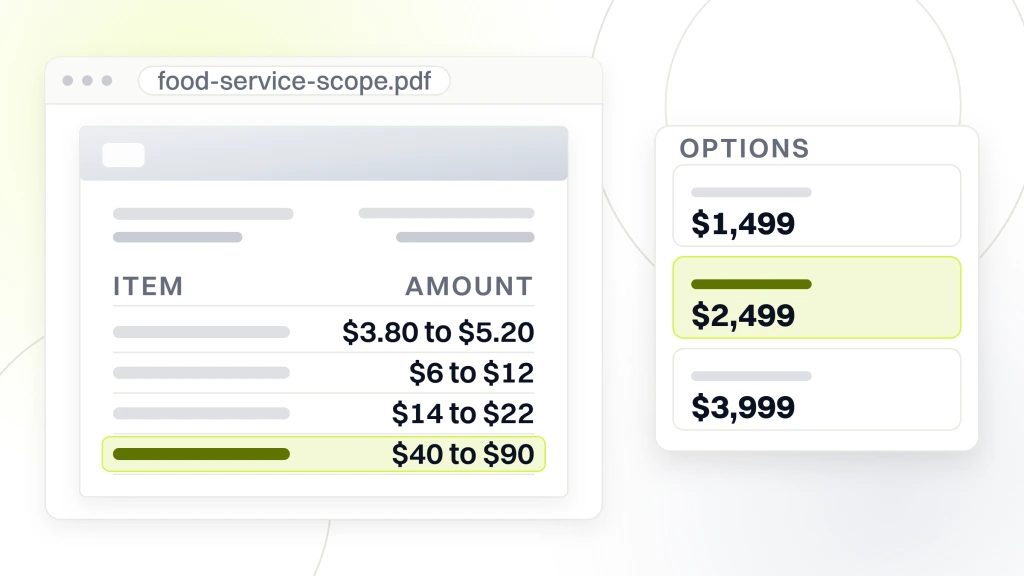
Restaurant vertical shops price by scope, not by hours. A single-location fast casual with $1.2 million in annual revenue runs a different scope than a 22-unit franchise doing $34 million across three states. Redefine Web retainer bands sit at $1,499, $2,499, $3,999, and from $6,000 per month with ad spend billed separately. Retainers below the $2,499 band typically buy junior account management with copy-and-paste playbooks that struggle to move the P&L on a real restaurant business.
| Tier | Monthly retainer | Best fit | Channels included |
|---|---|---|---|
| Foundation | $1,499 | Independent restaurants under $2M | Local SEO plus GBP plus reviews |
| Growth | $2,499 | 2 to 4 units under $6M | Adds paid social starter |
| Scale | $3,999 | 5 to 12 units under $18M | Adds Google Ads and email flows |
| Enterprise | Starts at $6,000 | 12+ units and multi-state | Full stack plus franchise system |
Ad spend on Meta, TikTok, and Google is billed separately from the retainer. A working starter budget for a solo location sits at $1,500 to $3,000 per month across paid channels. A 5-unit small chain typically runs $6,000 to $12,000. Regional and national brands past 12 units spend $25,000 to $80,000 across paid Meta, TikTok, Google Ads, and LinkedIn on catering. The retainer covers strategy, execution, creative, and reporting. The ad spend is the fuel and it lives on the operator’s card so there is no markup and no percentage of media siphon.
What retainers under the $2,499 band miss
Retainers under $2,499 per month typically get a shared account manager, a template Google Ads campaign, and a monthly report screenshot from Google Business Profile insights. That is not a real food service marketing agency scope. That is Google Ads on autopilot. Real vertical work starts at the $3,999 tier because it takes a paid media strategist who understands restaurant unit economics, a local SEO analyst who owns the review response cadence, and a designer who can turn a hero shot of yesterday’s brisket sandwich into a scroll-stopping Meta creative that hits 3.2 percent click-through on a Tuesday afternoon. The $1,499 tier still works for a solo operator, but only for local SEO and Google Business Profile management, not the full paid stack.
Percentage-of-media models on paid channels
Some restaurant chain marketing partner shops charge 12 to 18 percent of media spend on top of the base retainer for paid channel management. That model works fine at national QSR scale but eats margin on a small chain running $4,000 a month across Meta and Google. Flat-fee retainers with a spend cap serve small operators better because incentives stay aligned with the P&L instead of pushing media spend past the point of diminishing returns. Redefine Web tiers are flat-fee with ad spend billed direct to the operator, which keeps the incentive on results not on inflating the buy.
Vertical benchmarks by cuisine type across food service
Vertical shops that work across categories track cost-per-acquisition benchmarks by cuisine because a customer for a pizza chain and a customer for a Peruvian chicken concept sit at different price points and different search behavior curves. Pizza sits at a $3.80 to $5.20 cost per first-order acquisition because search intent is dense and repeat behavior is high. Fine dining reservations sit at $14 to $22 per confirmed booking because the funnel is longer and the ticket size is bigger. Catering leads worth $3,000 to $6,000 sit at $40 to $90 per qualified lead depending on cuisine and lead time. Building a benchmark grid by cuisine gives operators a real yardstick for whether the paid channel is working or the agency is burning budget without a comparison anchor.
QSR and fast casual paid social benchmarks
Meta paid social for a QSR concept runs a $4 to $8 cost per first-order acquisition on well-optimized creative. TikTok Shop and TikTok Ads run $3 to $6 per first-order at 40 percent lower baseline volume but higher creative burnout rates that need a fresh creative drop every 10 to 14 days. Fast casual concepts sit slightly above QSR at $6 to $12 per first-order because the ticket size is bigger and the frequency is lower. Every operator needs a paid social feed with 3 to 5 fresh assets per week to hold cost per acquisition under the $8 mark past week 6. Miss that cadence and cost per acquisition drifts back into the double digits fast.
Catering funnels at $40 to $90 per qualified lead
Catering funnels sit inside a completely separate playbook. B2B search intent like office lunch, corporate catering, and holiday party catering, LinkedIn paid targeting on office admins, and a dedicated catering landing page with a same-day quote call-to-action all work together to hit $40 to $90 per qualified catering lead across most food service concepts. A single confirmed catering order at $4,200 covers 47 leads at $90 each, so the funnel pays back inside one order at a 2 percent close rate. Line up your paid channel budget with the food and beverage PPC scope so catering lands on its own campaign structure separate from consumer traffic.
Reputation and review response that moves restaurant P&L
Harvard Business School research on Yelp found that a one-star increase in rating leads to a 5 to 9 percent increase in revenue for independent restaurants, with no measurable effect on chain-affiliated restaurants. Any partner who owns the review response cadence keeps the star rating above 4.4, responds to every review within 4 hours, and prompts satisfied guests toward Google reviews via a QR code at the check drop. A single new location can add 40 to 80 reviews in the first 60 days with a working prompt system, and the compounding effect on discovery over 12 months typically outweighs any single paid channel a small operator runs.
Negative review response templates that win guests back
Negative reviews get a public response within 4 hours acknowledging the specific complaint, an owner name in the signature, and an offline recovery offer via direct message. That workflow wins back unhappy guests as repeat customers, and it signals to future searchers that the operator takes complaints seriously. Copy-paste templates that thank the guest without addressing the complaint hurt more than they help. Named responses win, generic apologies lose.
Yelp for fast casual and TripAdvisor for tourist markets
Yelp still drives 18 to 26 percent of first-visit intent in fast casual in dense urban markets. TripAdvisor drives 40 to 60 percent of first-visit intent in tourist-heavy markets like Miami South Beach, Nashville Broadway, or the New Orleans French Quarter. A QSR marketing agency working national accounts allocates 15 to 25 percent of the reputation budget to Yelp and TripAdvisor in the right markets, not just Google, because the customer research path skips Google entirely on a tourist trip. The operator who ignores TripAdvisor in a tourist market loses first-visit volume that never shows up in the paid channel data.
Franchise marketing systems for multi-unit food service brands
Franchise marketing systems are what separate a 3-unit small chain agency from a 30-unit regional or national agency. A working franchise system comes with brand-approved creative libraries, a co-op media matching program, a local store marketing calendar tied to national limited-time offer drops, franchisee training on Google Business Profile updates, and a P&L-tied performance dashboard every franchisee gets emailed on the first of every month. Without that system, corporate marketing ends up firefighting individual franchisee campaigns instead of scaling one repeatable system across dozens of units at once.
Co-op media matching and creative libraries
Co-op programs match franchisee ad spend at 50 percent up to a cap, and the shops that run co-op programs need a creative library of 40 to 80 pre-approved assets by season, cuisine detail, and market. Franchisees pull creative from the library, tag their store address, and drop into a paid Meta campaign that reports back to a corporate dashboard on cost per redeemed offer and revenue per store per campaign. The system takes 90 to 120 days to build but scales cleanly past 50 units without adding corporate marketing headcount. That is the ROI win for regional brands stuck between DIY franchisees and expensive in-house teams.
LTO calendar tied to national creative drops
Limited-time offer calendars tied to national creative drops pull franchisee attention onto a shared drumbeat. Every 3 to 6 weeks a new limited-time offer runs with paid Meta and TikTok creative, in-store point-of-sale updates, email flow updates, and a franchisee training video. That calendar keeps the brand fresh in the feed and gives franchisees a repeatable routine instead of asking them to invent local marketing from scratch every month. Cross-reference the master food and beverage marketing hub for the retainer bundles that pair limited-time offer calendars with paid channel execution.
Case studies. Six real food, hospitality, and consumer brand wins
Vertical marketing work reads best when the case studies are specific. Below are six client wins across hospitality, consumer goods, ecommerce, SaaS, and recruitment that show the same playbook applied across categories. Numbers are pulled straight from the Redefine Web case study library and every result is verified.
Vejrø Resort. 10K organic visits in 90 days
Vejrø Resort, a Danish private-island getaway with a farm-to-table restaurant program and a luxury guest house cluster, came to us with strong Instagram engagement and zero direct bookings because they had no website and no direct booking flow. Guests could see the beautiful reels but couldn’t easily view galleries, read reviews, or book a stay without messaging on Instagram and waiting for a response. Every food service marketing agency conversation starts here. Social attention that never turns into revenue because the digital front door is missing entirely from the customer path.
We built Vejrø Resort a conversion-focused website with direct booking integration, ran on-site and off-site SEO on travel-niche queries, layered competitor analysis into the content strategy, and built mobile-friendly performance into the base template. In 90 days Vejrø Resort hit 10,000 organic visitors, ranked for 200-plus first-page keywords, and held a 2.2 percent booking conversion rate on organic traffic. Social engagement finally turned into paying guests because the digital funnel closed the loop between Instagram attention and a confirmed reservation.
Boogie Board. $31 cost per sale across $650K in managed spend
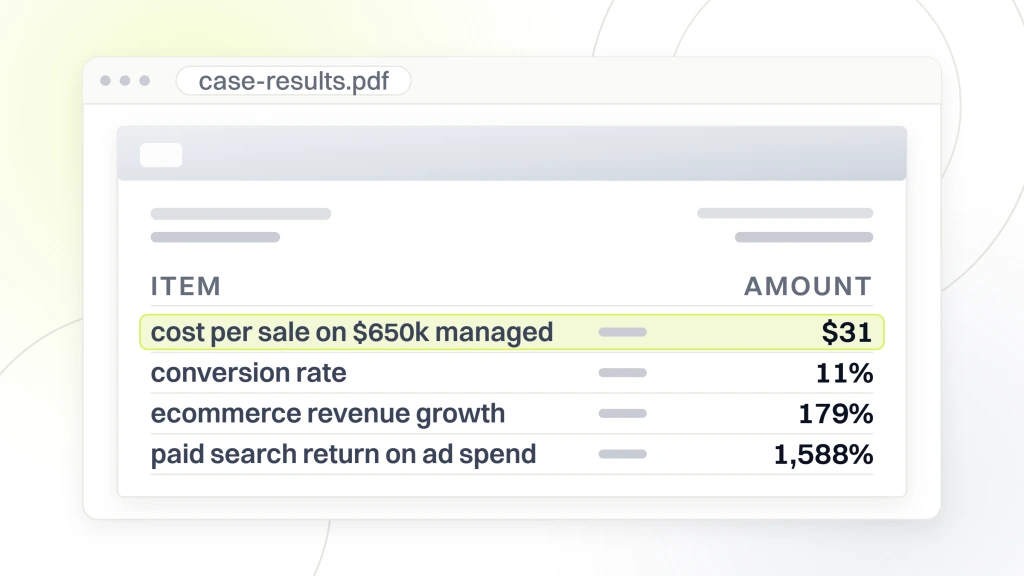
Boogie Board, creator of the first reusable writing tablet in 2009, came to Redefine Web with weak Google Ads targeting, unoptimized landing pages, and no nurture flow. Google Ads was burning spend on broad matches, landing pages didn’t show product benefits clearly, and there was no automated follow-up on repeat purchase. We ran a Google Ads and LinkedIn Ads program tied to product-focused landing pages, added automated email follow-ups, and layered retargeting for repeat purchase. Cost per conversion dropped to $31, conversion rates rose 11 percent, and we managed $650,000 in ad spend at ROI-positive numbers across a full year.
Abigail Ahern. 179 percent revenue growth without discounts
Abigail Ahern, a global leader in luxury home décor, was burning growth on discount-heavy paid media and branded search. Campaigns leaned on discount banners, which drove short-term sales but weakened the premium brand image and risked design-conscious customers. We restructured SEO and paid media around intent-driven traffic and premium creative. Ecommerce revenue climbed 179 percent, paid search return on ad spend grew to 1,588 percent, and paid social campaigns hit 3,000 percent return on ad spend. All without a single discount banner. Premium positioning stayed intact and the revenue curve compounded across a 12-month window.
BSH Hausgeräte GmbH. 15 percent lead growth on a preserved SEO stack
BSH Hausgeräte GmbH, Europe’s largest home appliance manufacturer with brands including Bosch, Siemens, Gaggenau, and Neff, needed a UX redesign on the BSH Turkey site without sacrificing hard-won SEO rankings. Weak funnel optimization was pulling conversions below what the traffic level should have delivered. We modernized the backend, cleaned up navigation, and preserved every ranking signal through the transition. Lead generation grew 15 percent, organic traffic held a 3 percent gain, and average session duration climbed 45 seconds. The redesign went live with zero ranking loss and measurable funnel improvement inside the first quarter after launch.
Custimy. 500-plus first-page keywords and 25K monthly organic visits
Custimy, a SaaS customer data platform unifying ecommerce operations across CMS, email, analytics, customer service, and social, needed to stand out in a crowded market, attract investors, and convert visitors into users. Their initial setup lacked the backend to integrate APIs for real-time sales data and their branding felt generic against the competition. We designed a custom isometric site with modern illustrations, built a scalable backend with API integrations, and ran off-site SEO on niche B2B SaaS keywords. Custimy now ranks first-page for 500-plus keywords, pulls 25,000-plus monthly organic visits, and holds a 165-second average session duration on the marketing site.
Ibemploy. 7,500 monthly visits and 4.2 percent conversion in 12 months
Ibemploy, a Latvian recruitment agency connecting businesses with workforce across agriculture, manufacturing, and food production, needed a platform that worked for non-tech-savvy job seekers with limited digital skills. Their process relied on offline referrals and competitors ranked higher for recruitment keywords. We built an accessibility-first design with a simple application flow, a scalable backend, and a full on-page and off-site SEO program. Inside 12 months Ibemploy hit 7,500 monthly organic visits, ranked for 100-plus keywords, and held a 4.2 percent conversion rate from organic traffic. The site works cleanly for the exact users the business serves.
How to vet marketing agencies for food and nutrition before you sign
Vetting a food service marketing agency before signing a 12-month contract takes 4 to 6 hours of due diligence. Ask for three case studies inside your cuisine, the tools in the stack, and account team hours per week to separate real partners from vendors optimizing for a signature.
The specific questions matter. Ask for three case studies inside your cuisine category with specific numbers on cost per acquisition, revenue per store, and star rating movement. Ask for the tools in the stack. SEMrush or Ahrefs for organic tracking, BrightLocal for local grid ranking, Meta Business Manager for paid social, Google Ads for search, and Toast integration for ordering data. Ask for the account team names, hours per week each teammate contributes, and the escalation path when a paid campaign underperforms. Vendors who dodge those questions are optimizing for a signature. Vendors who answer with specifics are optimizing for a P&L result.
Green flags on a proposal
Green flags. Named strategist with restaurant vertical experience, three case studies inside your cuisine with revenue math attached, month-by-month deliverables spelled out, a review response service level in hours not days, a paid channel structure that separates catering from consumer traffic, and a monthly P&L-tied dashboard that ties marketing spend to booked covers or booked catering revenue. Proposals that check these boxes read differently on the first page and price with confidence.
- Named strategist with a full name and LinkedIn profile with restaurant client history.
- Three case studies inside your cuisine category with specific dollar numbers.
- Review response service level under 6 hours for negative reviews and under 24 hours for positive.
- Paid channel structure that separates consumer traffic from catering leads.
- Monthly dashboard that ties marketing spend to booked covers or booked catering.
- Franchise system for multi-unit brands with a creative library and co-op media matching.
- Local SEO grid that maps every store to a Google Business Profile with weekly cadence.
Red flags to walk away from
Red flags on a QSR marketing agency proposal. Vague deliverables described as brand awareness or engagement without a P&L tie, retainers under $1,499 with promises of everything included, no case studies inside your cuisine, junior account managers with no restaurant background, and dashboards that report likes and impressions instead of covers, catering revenue, and star rating movement. Walk away and get two more quotes because any partner who cannot show restaurant math is optimizing for the retainer, not for the restaurant.
Ongoing website maintenance for restaurant chains
Ongoing website maintenance for restaurant chains covers hours updates when a location changes, holiday hours pushes 4 to 6 times per year, menu updates when the limited-time offer drops, image compression on new hero shots, plugin patching on Toast and Chowly integrations, and Core Web Vitals monitoring so the mobile ordering flow stays under 2 seconds Largest Contentful Paint. A restaurant chain marketing partner who bundles maintenance with paid channel work catches bugs before they eat conversion for a full week between account manager check-ins.
The scope also covers weekly backups off-site, malware scanning, WordPress core patching on the second Tuesday of the month, plugin vulnerability alerts routed to a Slack channel, and staging environment refresh before every deploy. According to the Google web.dev LCP guide, mobile page speed under 2.5 seconds is the threshold that separates converting storefronts from paid ad money burning at the door. Pair marketing scope with the monthly website maintenance packages that run weekly patch cadences and 24/7 uptime monitoring on the origin server so no update lands blind in front of your Tuesday lunch rush.
Restaurant chains that skip ongoing maintenance typically lose 3 to 5 days of revenue per year on unplanned downtime, plus an additional 6 to 9 percent of paid ad conversion when Core Web Vitals drift into the yellow zone. A working retainer with a food service marketing agency ties maintenance directly to the paid channel dashboard so the same team that spots a rising cost per acquisition can also spot the plugin update that broke the mobile checkout at 11 PM on a Saturday. That closed loop is what separates a marketing partner from a media buyer with a spreadsheet.
Channels a working restaurant marketing engagement covers
A working restaurant marketing engagement covers seven channels in coordinated rotation across a 12-month calendar. Each channel plays a different role in the funnel and demands a different creative rhythm.
Google Business Profile management handles local discovery. Meta paid social handles top-of-funnel awareness and first-order conversion. TikTok Ads handles Gen Z acquisition. Google Ads on branded and non-branded search handles high-intent capture. LinkedIn paid handles B2B catering lead generation. Email and SMS flows handle repeat purchase and loyalty. Reputation cadence on Google, Yelp, and TripAdvisor handles the compounding trust signal over 12 to 18 months. Every channel reports back to a single P&L dashboard so the operator can see revenue attribution rather than seven disconnected screenshots from seven different platforms.
Budget allocation across those seven channels follows a rough 40-30-15-10-5 split for most fast casual concepts. Meta and TikTok paid social take 40 percent of media spend. Google Ads takes 30 percent. Local SEO plus Google Business Profile takes 15 percent. Email and SMS platform fees plus content take 10 percent. Reputation tools and review response cadence take 5 percent. Adjust the mix for tourist-heavy markets by shifting 10 points from Meta into TripAdvisor and Yelp, or for catering-heavy operators by shifting 15 points from Meta into LinkedIn and dedicated catering landing page paid search. The mix is not the goal, the P&L result is, and the mix updates every 30 to 60 days as channel performance data comes in.
Wrapping up marketing agencies for food and nutrition
A restaurant chain marketing partner who moves real P&L understands three things. Local SEO grids across every unit. First-party ordering funnels off Uber Eats and DoorDash. Franchise systems that scale past 25 units without corporate headcount. Everything else, from paid social to catering funnels to reputation cadence to limited-time offer calendars, sits on top of those three foundations. Pick an agency that owns those three and you get a P&L partner. Pick an agency that pitches brand awareness and you get a retainer line item that shows up on the QuickBooks report every month with no matching revenue line.
If your restaurant or chain is running below the numbers this guide describes on cost per acquisition, cover count, or catering pipeline, a food service partner with real vertical depth can pay back inside 90 days. Ask three shortlisted agencies for line-item scopes, three case studies inside your cuisine with dollar numbers, and a P&L-tied dashboard sample from an existing account. Redefine Web builds and runs the full food service stack from local SEO grids to franchise systems to paid channel execution at $1,499 to $6,000 per month retainers with ad spend billed separately, and we can walk through the last five restaurant accounts we onboarded with the cost per acquisition numbers, cover deltas, and star rating movement in the first 90 days.