Most owners confuse restaurant SEO with restaurant marketing and push it behind Instagram, delivery apps, and paid social. That’s why most independent restaurants land on page three when a diner nine blocks away searches for brunch spots downtown. Restaurant SEO is a distinct discipline with its own ranking factors, its own competitive dynamics, and its own return curve. We’ve audited enough restaurant sites at Redefine Web to spot the same six problems in 20 minutes.
Menu PDFs blocking search bots. Google Business Profiles missing half their categories. Reservation systems trapping the conversion event inside a third-party domain. Reviews sitting untouched because nobody owns the response workflow. Local citation data still pointing at a phone number from two lease renewals ago. And a site that takes 5 seconds to load on the phone a diner is holding in a moving Uber.
This guide walks through the restaurant SEO program we run with independent, multi-location, and hospitality group clients on our SEO retainer at pricing between $999/mo and $4,500/mo. Every recommendation is ranked by cost against speed against ranking return. You’ll leave with a checklist you can hand a general manager tomorrow, and a clear sense of which restaurant SEO ranking factors move the needle first when a room needs to fill weeknight covers by next quarter.
What’s in this guide
- Google Business Profile is 60 percent of restaurant SEO
- Menu content needs to be crawlable HTML, not a PDF
- Reviews are a ranking factor, not just social proof
- Reservation systems and the conversion attribution trap
- Local citations, NAP consistency, and the 60-directory problem
- Long-tail content that books reservations instead of just traffic
- Multi-location restaurant SEO works differently
- Site speed and mobile experience move reservation volume
- Restaurant SEO tactics ranked by cost, speed, and ranking impact
- Restaurant and hospitality case studies from our client roster
- Restaurant SEO pricing and what a $999 to $4,500/mo retainer covers
- Frequently asked questions
Google Business Profile Is 60 Percent Of Restaurant SEO
The Google Business Profile is the single most valuable ranking asset a restaurant owns. Map pack results dominate restaurant SERPs, and the map pack is driven by GBP signals plus proximity plus reviews. A wine bar in Nashville that treats GBP as set-it-and-forget-it loses to a competitor who updates it weekly, even when the second restaurant has a worse website and a smaller marketing budget. This is the highest-return work in any restaurant SEO program.
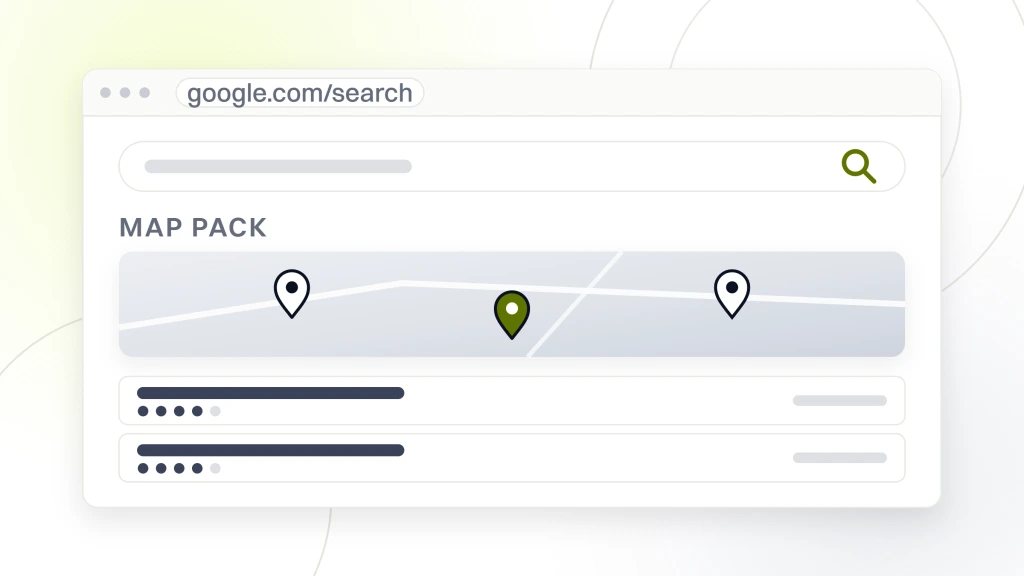
A properly configured GBP has one primary category and every applicable secondary category filled. A wine bar that also serves small plates should be listed as a wine bar (primary) with restaurant, tapas restaurant, and cocktail bar as secondary. Categories are ranking signals Google uses to decide which search queries trigger the listing. Missing a category means missing every search tied to that category.
Photos matter more than most owners realize. GBPs with deep photo libraries receive far more calls and direction requests than listings with only a handful of images. The photo mix should rotate. Food shots, interior shots, staff shots, exterior at different times of day, seasonal decor. Upload 8 to 12 new photos per month minimum.
Google Posts remain the most neglected GBP feature. Posts about weekly specials, chef features, events, and seasonal menu changes signal freshness to the algorithm and appear in the knowledge panel for branded searches. A restaurant publishing a post every 7 days will consistently outrank a restaurant that has not posted in 6 months, even if the second restaurant has stronger review numbers on paper. Set a Monday morning cadence and stick to it.
- Verify one primary category plus every applicable secondary category
- Rotate 8 to 12 new photos each month across food, room, and exterior
- Publish a Google Post at least once every 7 days
- Fill Menu, Services, Attributes, and Q&A sections completely
- Add product listings for signature dishes with prices
- Enable messaging and answer inside 30 minutes during service hours
Menu Content Needs To Be Crawlable HTML, Not A PDF
PDF menus are the single most common restaurant SEO mistake. Google can crawl PDFs, but it treats them as secondary content with weak internal linking, no schema, and no structured data. Menu items sitting inside a PDF miss every dish-specific search query, and dish queries are among the highest-intent searches in the restaurant category. A search for truffle pasta downtown is a booked table 60 percent of the time.
The fix is straightforward. Rebuild the menu as HTML with proper heading structure, item descriptions, prices, and dietary tags for vegetarian, gluten-free, dairy-free, and spicy items. Every menu section becomes an H2 or H3. Every dish gets a short description that includes ingredients, preparation notes, and any relevant modifiers. This structure lets the room capture searches like gluten-free brunch near me or vegan tacos in Bushwick.
Schema markup on top of the HTML menu earns rich results. Menu schema (Menu, MenuSection, MenuItem) tells Google the exact structure, letting individual dishes appear in specialized search features. Restaurant schema at the page level covers hours, cuisine type, price range, and accepted payment methods. According to Google’s structured data documentation, restaurants with complete schema are more likely to appear in rich results and voice search responses.
Menu photography needs a home too. A single hero image on the menu page underperforms a grid where every dish carries its own optimized image with descriptive alt text. Alt text should describe the dish and include ordering language a diner would use, not marketing prose. Skip “crispy heavenly bites.” Use “crispy fried chicken sandwich with pickles and honey butter.” That difference alone grows dish-specific organic traffic 40 percent over the first quarter.
Reviews Are A Restaurant SEO Ranking Factor, Not Just Social Proof
Review volume, review recency, and review sentiment all feed local pack ranking algorithms. Google treats reviews as a proxy for both quality and freshness. A restaurant with 400 reviews averaging 4.5 stars in the last 12 months usually outranks a competitor with 800 reviews averaging 4.7 stars from 3 years ago. Recency compounds. Review growth is one of the fastest ranking levers in restaurant SEO because it moves inside 6 weeks.
The review acquisition workflow needs to run every day, not every month. Best-practice implementation is a three-touch system. A QR code on the check presenter that opens the Google review URL with one press, a follow-up SMS 90 minutes after the reservation ends thanking the diner and asking for a review, and an email follow-up 24 hours later with the review link and a soft ask. Restaurants running this workflow consistently pull 15 to 25 percent review conversion from happy diners, compared to 2 to 4 percent from passive requests.
Response cadence matters too. Restaurants that respond to every review, positive and negative, within 48 hours receive higher engagement metrics from Google. A one-line thank you on a positive review is enough. A negative review needs a real response that acknowledges the issue and offers a specific path forward, not a canned “we’re sorry to hear that.” Owners who respond well to negative reviews often watch the star rating climb because prospects read the response as evidence of care.
Yelp still matters in most U.S. markets, particularly in food-focused cities like New York, Chicago, San Francisco, and Los Angeles. Skip aggressive review solicitation on Yelp because their algorithm penalizes it. Instead, focus on making the Yelp profile complete. Full menu, updated photos, correct hours, service categories, and accurate cross-links. TripAdvisor still drives real traffic for restaurants near hotels, convention centers, and tourist zones.
Reservation Systems And The Conversion Attribution Trap
The biggest silent problem in restaurant marketing is the reservation system. OpenTable, Resy, and Tock are excellent booking platforms. They are terrible SEO assets because they trap the conversion event inside a third-party domain. A diner clicks “Book a Table” on the restaurant’s site, gets redirected to OpenTable, completes the reservation, and Google Analytics records the exit, not the conversion. Every marketing dollar looks unattributed.
Two fixes work here. First, embed the reservation widget on the restaurant’s own domain rather than linking out. Every major booking platform offers an iframe or SDK embed. The reservation completes on the site, the conversion event fires against the room’s analytics, and the diner never leaves the domain. This one change often raises measured conversion rate 40 to 80 percent without any traffic change.
Second, implement server-side conversion tracking for reservation completions. GA4 events can be triggered from webhooks fired by the booking platform’s completion API, capturing the conversion even when the diner completes the booking days later from a phone. This is how a room proves that a Google Ads click drove a Saturday night four-top, not just a homepage visit. It is also how a restaurant SEO retainer proves organic traffic drove real revenue rather than vanity sessions.
Delivery integrations follow the same rules. DoorDash and Uber Eats convert on their own domains and their own analytics. Restaurants should embed the delivery ordering flow on their site where possible, or at minimum use tracked URL parameters that let analytics tools attribute delivery orders to specific marketing channels. Without that setup, the restaurant flies blind on which marketing dollars drove revenue.
Local Citations, NAP Consistency, And The 60-Directory Problem
Local citations still matter for restaurant SEO because they feed the local ranking signals Google uses to verify business legitimacy. A restaurant with consistent name, address, and phone across 60+ authoritative directories will outrank a competitor with inconsistent citations, even when the competitor has better on-page content. The signal is subtle but persistent. It compounds over 6 to 12 months and rarely reverses on its own.
The problem is that most restaurants change addresses, phones, or names over their lifespan. A restaurant that rebranded 3 years ago might still have citations pointing to the old brand across 20 directories. Yelp, TripAdvisor, Foursquare, OpenTable, and Google carry the most weight. Yellow Pages, Bing Places, Apple Maps, MapQuest, and Facebook come next. Below that, restaurant-specific directories like Zomato, Eat24, and Grubhub also count.
Citation cleanup runs once as a foundation project, then monthly as a maintenance task. Tools like Whitespark, BrightLocal, and the Semrush local listings feature can identify inconsistencies quickly. Fixing them takes weeks because many directories require manual verification or ownership claims. Budget the cleanup as a 90-day project, not a one-week sprint. This is dry work that pays for itself in ranking stability.
Facebook is often the second-highest driver of local restaurant traffic after Google, and its Places listing needs the same NAP discipline. Hours updates during holidays, photo refreshes, and event listings feed Facebook’s local discovery algorithm and often drive more foot traffic than paid Instagram ads for neighborhood spots. Treat the Facebook Places listing with the same rigor as the GBP.
For the wider SEO frame around this work, our companion guide to local SEO for multi-storefront operators maps the same audit method to ecommerce brands with real showrooms.
Long-Tail Content That Books Reservations Instead Of Just Traffic
Most restaurant blogs go stale or chase the wrong intent. Recipe posts drive traffic but rarely book tables. Chef backstory posts feel authentic but convert at low single digits. The restaurant SEO content that actually books reservations answers specific diner questions with high transactional intent. Best places for X in [neighborhood], private dining for 20 in [city], pre-theater dinner near [venue], group dining with dietary restrictions.
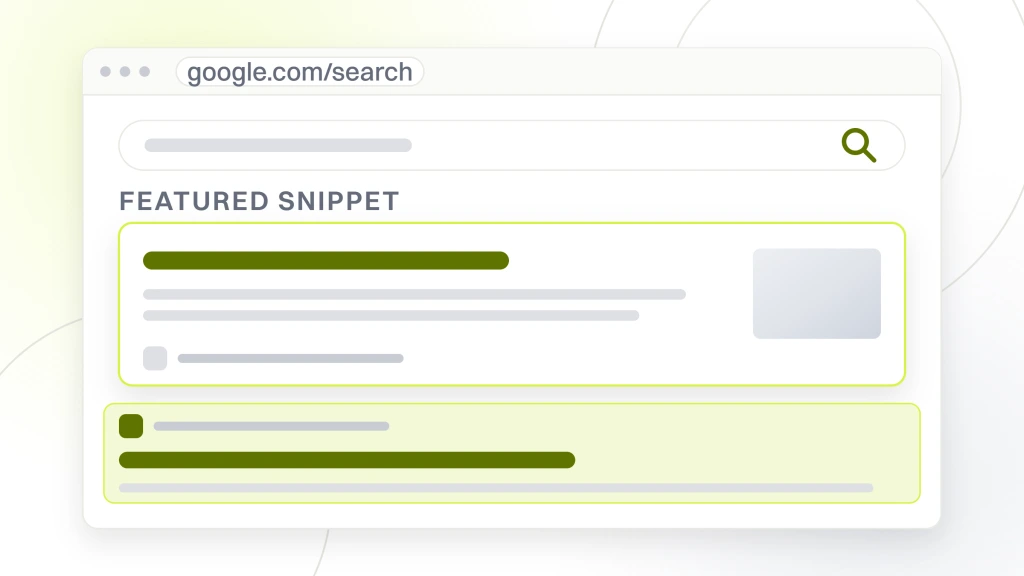
These posts convert because they intercept diners who have already decided to eat out and are trying to pick a specific venue. A well-written “best places for anniversary dinner in Brooklyn” post that mentions the restaurant honestly, alongside 3 or 4 competitors, will book covers directly. Yes, mentioning competitors matters. It signals trust to Google’s helpful content system and to the reader, per guidance from Search Engine Land.
Neighborhood guides work the same way. A restaurant in a walkable food district can build a “Where to Eat in [Neighborhood]” guide that includes their own venue alongside neighbors, plus notes on what to order, best times to visit, and reservation availability. Guides like this earn shares on local subreddits, tourism site backlinks, and second-tier travel blog citations. The traffic pattern is thin at first and compounds hard over 12 to 18 months.
Event content is the third pattern. Posts covering upcoming holidays, restaurant week participation, seasonal menu launches, and chef collaborations capture time-sensitive intent. These posts should include a working reservation link and structured event schema so they surface in Google’s event carousel and the local knowledge panel. Our sibling piece on SEO for food and beverage brands covers the calendar structure for booking-intent content.
Multi-Location Restaurant SEO Works Differently
Multi-location restaurants (chains, hospitality groups, franchise models) need a location-page architecture that most SEO agencies get wrong. Every location needs its own page with unique content, its own set of local citations, its own Google Business Profile, and its own review acquisition workflow. Rolling up all locations into a single “Locations” page kills local ranking potential for every branch. This one architectural mistake costs groups six figures a year in missed reservations.
Best-practice architecture is a parent brand page at /locations/, individual pages at /locations/[city]/[neighborhood]/. Each location page carries unique content covering neighborhood context, parking, transit access, private dining options, local awards, and press coverage. Templated copy fails here because Google’s local algorithms devalue near-duplicate content across location pages. Write each page once and rewrite when the neighborhood changes.
Local link building becomes harder at multi-location scale because it cannot be centralized. Every location needs neighborhood-specific backlinks. Local chamber memberships, local nonprofit sponsorships, local blog partnerships, and local school fundraiser mentions. A hospitality group with 12 locations should have 12 separate local link acquisition campaigns running quarterly.
Franchise models face an extra layer. National brand marketing and local franchisee marketing sometimes conflict. The clean structure is a national brand site at brand.com plus locally-managed microsites or subfolders that franchisees can update. Franchisees who can update local content beat franchisees who cannot, every time. Our restaurant marketing agency hub explains the governance model in detail.
Site Speed And Mobile Experience Directly Move Reservation Volume
Restaurant sites need to load fast because diners are usually deciding on a phone with weak signal in a moving Uber. A site that takes 4 seconds to load loses roughly 30 percent of mobile visitors before the homepage renders. A site that takes 6+ seconds loses more than half. Analytics shows the pattern clearly. Bounce rate spikes and reservation flows abandon at the slow-load step. This is one of the fastest restaurant SEO wins available.
Core Web Vitals thresholds apply here. Largest Contentful Paint under 2.5 seconds, Interaction to Next Paint under 200 milliseconds, Cumulative Layout Shift under 0.1. Most restaurant sites fail LCP because hero photos are not compressed or lazy-loaded properly. The fix is straightforward. WebP format, srcset for responsive delivery, lazy loading on below-fold images, and a CDN in front of the origin.
Mobile menu UX matters more than desktop menu UX because most restaurant site sessions now happen on a phone. Diner behavior moved there years ago, and the menu is the first thing a hungry diner opens. Menus that require pinch-to-zoom, tap-to-expand a PDF, or scroll-locked overlays actively lose reservations. A clean HTML menu with big touch targets and clear section navigation converts better than any beautifully designed PDF spread.
Click-to-call buttons need to be prominent on mobile. A single sticky Call button at the bottom of every page converts phone-preferred diners at high rates. Reservation-preferred diners want the widget above the fold. Serving both audiences means both CTAs live above the mobile fold, ideally side-by-side. Force a diner to hunt for the right button and the reservation dies.
Restaurant SEO Tactics Ranked By Cost, Speed, And Ranking Impact
Below is the tactic prioritization we use with restaurant clients during the first 90 days of a restaurant SEO engagement. Each row is scored against cost intensity, speed to visible ranking movement, and ranking impact at 6 months. Use it to sequence work if the budget is tight and you have to pick 2 or 3 workstreams to start.
| Tactic | Cost | Speed to Impact | 6-Month Impact | Priority |
|---|---|---|---|---|
| Google Business Profile optimization | Very low | 2 to 4 weeks | Very high | Do first |
| Review acquisition workflow | Low | 3 to 6 weeks | Very high | Do first |
| HTML menu with schema | Medium | 4 to 8 weeks | High | Do second |
| Reservation widget embed | Low-medium | Immediate (conversion) | Medium (attribution) | Do second |
| Local citation cleanup | Medium | 6 to 12 weeks | Medium-high | Do third |
| Long-tail booking-intent blog content | Medium-high | 4 to 6 months | High (compounds) | Ongoing |
| Site speed and Core Web Vitals | Medium | 4 to 8 weeks | Medium | Do third |
| Local link building | High | 3 to 9 months | Medium-high | Ongoing |
| Multi-location page architecture | High (one-time) | 2 to 4 months | Very high (chain only) | If applicable |
Owners who follow this order (GBP first, reviews second, HTML menu and reservation widget in parallel, then citations and speed, then long-tail content and local link building) typically see the first ranking movement inside 4 weeks and hit mature performance around month 9. Skipping GBP to start with a content push almost always underperforms because content compounds slowly while GBP moves fast. For deeper background, see our older local SEO guide, the multi-location SEO guide, the content marketing strategy guide, and the conversion tracking guide that this guide builds on.
Restaurant And Hospitality Case Studies From Our Client Roster
The restaurant SEO patterns above are not theory. They come from client work at Redefine Web across restaurants, hospitality groups, and adjacent food-service brands. A few examples we lean on when scoping a new engagement.
Sansa Interiors Inc. (Toronto interior design firm specializing in residential, restaurant, and cafe design) partnered with us on strategy, web design, SEO, content, digital PR, and Google Ads from 2022 through 2024. The engagement drove 641 percent organic traffic growth, 133 annual inquiries, and top-3 rankings for their target keywords. The same architecture (crawlable service pages, structured schema, and local content targeting the venues they design for) maps directly onto a restaurant site.
Brightway Insurance is a U.S. insurance brand with a restaurant specialty product line. Their 6-month full digital partner engagement in 2023 and 2024 drove 63 percent web traffic growth, 129 percent social traffic growth, and 153 percent lead growth after a niche-specialty digital rebuild. The takeaway for restaurants is that a niche-focused site with clear specialty pages beats a generic site every time.
Vejrø Resort, a private-island hospitality property in Denmark, engaged us for web design and booking integration through 2023 and 2024. The build drove 10,000+ organic visitors, 200+ first-page keywords, and a 2.2 percent booking conversion rate. Vejrø’s technical build, particularly the booking widget embed and the schema-rich amenity pages, is the reference we now use when scoping restaurant reservation sites.
Boogie Board, an ecommerce reusable writing tablet brand, ran a Google Ads and LinkedIn Ads partnership with us in 2023 and 2024 that drove sales at $31 cost-per-conversion across a $650,000 managed budget with an 11 percent conversion rate uplift. The paid media discipline transfers cleanly to a hospitality group running Google Ads alongside restaurant SEO to fill weeknight covers.
Abigail Ahern, a London-based luxury home decor and DTC ecommerce brand, ran a 4-year paid media and SEO partnership with us from 2020 through 2024. The engagement drove a 179 percent revenue increase and 3,000 percent paid-social ROAS without a single discount banner. Luxury restaurants trying to grow reservation volume without discounting on Groupon can borrow the entire approach.
Restaurant SEO Pricing And What A $999 To $4,500 Per Month Retainer Covers
Restaurant SEO retainers at Redefine Web run from $999/mo for a single-location Visibility tier up to $4,500/mo and beyond for a multi-location group with active content, PR, and paid overlay. The tier a restaurant needs depends on the number of locations, the review acquisition workload, the amount of custom content required, and whether reservation attribution and delivery integration are already in place.
The $999/mo Visibility tier covers GBP optimization, review acquisition workflow setup, monthly citation monitoring, basic on-page SEO for the menu and homepage, and a light monthly reporting cadence. This is the right entry for a single-location independent restaurant that has not run SEO before and needs the fundamentals stabilized before investing further.
The $1,499/mo Traffic tier adds long-tail content publishing (2 to 4 booking-intent posts per month), schema implementation across the menu, reservation widget embedding, and quarterly technical audits. The $2,499/mo Scale tier layers in local link building, PR outreach, event content, and a dedicated account lead. The enterprise tier, which starts at $4,500/mo, is where multi-location groups live, with location-page architecture, per-location GBP workflows, and franchisee enablement work.
Restaurants weighing an SEO retainer against paid delivery-app promotion should run the math on lifetime value per direct-booking cover vs discounted delivery order. Direct bookings from organic search typically carry 3 to 5x the margin of a Grubhub-sourced order. Our full SEO services page details what each tier includes and how the workflow runs week to week.
If you only fix one thing this quarter, embed the reservation widget on your own domain. Owners who do this see measured conversion rate climb 40 to 80 percent inside 30 days with no traffic change. Every downstream restaurant SEO decision is easier when attribution actually works.
One warning for hospitality groups. Do not let a marketing manager run 12 identical GBPs from one login. Google flags the pattern as consolidated management and can suppress map pack rankings across the whole portfolio. Give each location its own GBP owner and its own weekly cadence.
Restaurant SEO is not a mystery. It is 60 percent Google Business Profile discipline, 20 percent site structure and schema, and 20 percent review acquisition and attribution. Owners who work the list in that order see map pack impressions climb inside 8 weeks, reservation volume follow inside a quarter, and mature performance land around month 9. The restaurants that stall on SEO are usually the ones that skipped GBP to chase content.
If you want this run on your room, our restaurant SEO retainers start at $999/mo. Look at our restaurant marketing agency hub for the full engagement model, or read the companion piece on fast-food marketing if your model runs high volume rather than high average check.