Marketing ideas for ecommerce brands almost always show up as a scroll of tactics with no example brand behind them. Run a giveaway. Try SMS. Post on TikTok. Do a bundle. The list reads fine at a bar. The list falls apart on a Monday. A founder reading it can’t picture the first campaign, can’t budget it, and can’t tell a Klaviyo flow apart from a Meta rotation once the coffee wears off. The ideas that move real DTC revenue come attached to a brand shape, a channel, a $ setup cost, and a real number the owner can point at three weeks after the idea goes live.
This piece walks 12 creative ecommerce marketing plays the way a working retainer walks them. Each idea gets a real DTC brand behind it, a rough $ figure it moves, a setup step a founder can copy this week, and a note on which brand shape it fits. No abstract frameworks. No pyramid diagrams. Just the plays working right now inside stores between $250K and $20M in yearly revenue. Founders comparing broader frameworks can jump to our ecommerce marketing agency hub for retainer tiers and the case study depth behind the numbers below.
UGC Review Swap as an Innovative Marketing Idea for Ecommerce
The UGC review swap sits at the top of the under-used marketing ideas for ecommerce brands between $500K and $5M in yearly revenue. Two non-competing brands with similar buyer profiles exchange a batch of real customer reviews, video testimonials, or user photos to embed on product pages and paid ads. The trade costs $0, goes live in a week, and usually pushes conversion rate up 8 to 14% on the receiving product pages. See our sibling read on how to market pet products for the same swap pattern in a different vertical.
Two apparel brands ran the swap in Q3 2024
A $1.4M sustainable activewear brand traded 30 customer testimonials with a $1.8M sustainable loungewear brand. Both brands sold to the same buyer persona but never competed on a single product. The activewear brand embedded loungewear reviews on their post-purchase upsell page, positioning a compatible rest-day product. The loungewear brand ran the reverse. Cross-referral traffic drove $4,200 in first-month attributed revenue for each side, plus a permanent conversion gain on the pages where the swapped UGC lived. Retention numbers held steady since the two brands were adjacent, not competitive.
How to find the swap partner
Founders find swap partners by mapping three brands in adjacent categories that sell to the same buyer without overlapping on one product. A skincare brand pairs well with a candle brand. An outdoor apparel brand pairs well with a camp cookware brand. A supplement brand pairs well with a functional beverage brand. The outreach is a two-paragraph founder-to-founder email offering the trade. Founders who send five swap proposals a quarter usually close two, and each partnership adds compounding proof to product pages without any paid spend.
Post-Purchase Video Thank You as the Cheapest Ecommerce Marketing Idea
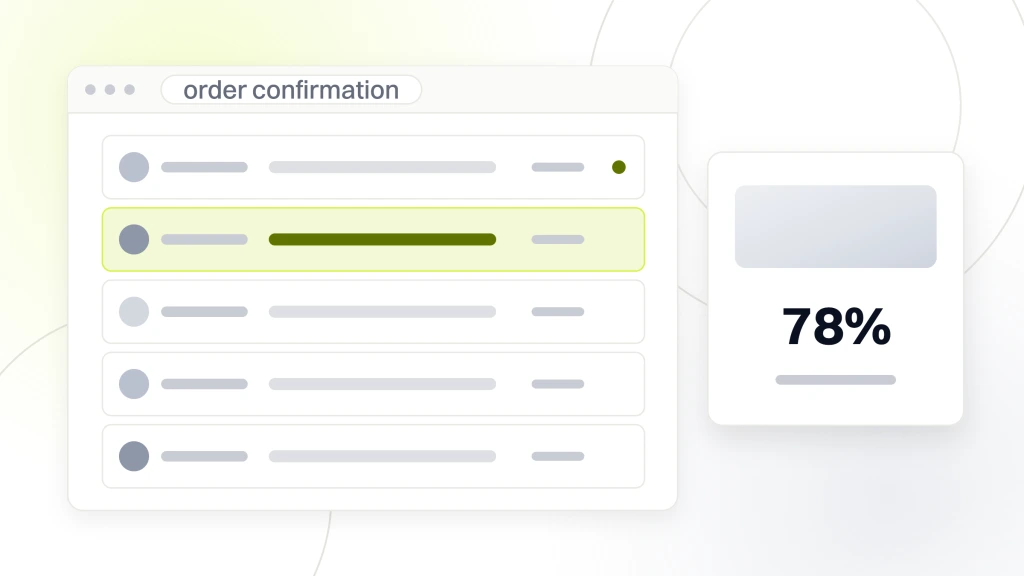
The founder video thank you is the cheapest ecommerce marketing idea a store owner can run this month. A 60 to 90 second phone video from the founder, embedded inside the order confirmation email, adds 3 to 6 percentage points to 30-day repeat purchase rate for brands under $3M in yearly revenue. $0 paid spend. $0 design cost. Just the founder, a phone, and 12 minutes of setup inside Klaviyo.
What the video needs to include
The video hits four beats in 60 to 90 seconds. Greeting by first name where the flow allows personalization. A one-sentence origin story so the buyer knows a real person exists behind the order. A care instruction or unboxing tip that matches the product. A soft ask for a follow on one channel where the founder is active. No discount code. Just a small human moment inserted into an email that would otherwise read as a shipping receipt. The play works since 78% of first-time buyers never receive a personal touch after checkout.
Numbers this play tends to move
Repeat purchase rate at day 30 usually climbs 3 to 6 percentage points. Post-purchase email open rate jumps from a baseline of 45 to 55% up to 65 to 78%. Social follows tick up 40 to 60 per month per 1,000 orders on the founder’s most active channel. Return rate drops 1 to 2 percentage points since the care instruction reduces user error on delicate products. Blended acquisition cost holds steady since no paid spend was added. This play returns 12 to 24 times the founder’s 12-minute setup inside a single quarter for a brand doing 200 orders a week.
Twelve Marketing Ideas for Ecommerce Scored by Brand Shape
Marketing ideas for ecommerce brands split by which shape of brand runs them best. Under $500K in yearly revenue. Between $500K and $3M. Between $3M and $20M. Past $20M. Each shape earns a different two or three plays from the wider list. Founders who skip the shape filter usually run mid-market plays at starter-tier revenue and get frustrated when the play doesn’t compound.
| Marketing idea | Best brand shape | Setup cost | Number it moves |
|---|---|---|---|
| Welcome flow rebuild in Klaviyo | $250K to $5M revenue | 6 to 10 hours | Email revenue share +8 to 15% |
| Quiz-first landing page | $500K to $20M revenue | 8 to 20 hours plus $50 to $200 monthly | Conversion rate +2 to 3 times baseline |
| UGC review swap with adjacent brand | $500K to $5M revenue | 5 hours per side | PDP conversion +8 to 14% |
| Founder video thank you in post-purchase flow | Under $3M revenue | 12 minutes plus phone | 30-day repeat rate +3 to 6 points |
| Product-page bundle builder | $1M to $20M revenue | 15 to 40 hours dev | Average order value +12 to 22% |
| SMS abandoned browse flow via Postscript | $500K to $20M revenue | 4 hours plus $100 to $400 monthly | Recovered revenue +5 to 9% of total |
| TikTok organic founder POV series | Under $3M revenue | 3 hours weekly | Meta CPM down 15 to 30% through cross-channel warm audience |
| Refer-a-friend with $20 credit both sides | $1M to $20M revenue | 10 hours plus $300 monthly | New customer share +6 to 12% |
| Email-only surprise drop | $500K to $10M revenue | 8 hours | Single-day revenue gain 30 to 80% |
| Google Shopping product title optimization | $1M to $20M revenue | 15 to 25 hours | Google ROAS +25 to 45% |
| PDP video-first hero above the fold | $500K to $20M revenue | 20 to 40 hours plus production | PDP conversion +10 to 20% |
| Loyalty tier launch via Smile or Yotpo | $3M to $20M revenue | 30 to 60 hours plus $200 to $800 monthly | Repeat purchase rate +8 to 14% |
How to pick the two ideas that fit your brand this quarter
Match the brand shape to the third column. Cross out anything outside your revenue band. Sort the remaining rows by setup cost. Pick the two lowest-cost plays that move numbers you’re already tracking weekly. Those two ideas earn the calendar this quarter. Founders who pick five ideas usually get two half-way live and abandon three. Two well-run ideas beat five half-run ideas every quarter. That filter is the difference between a brand that compounds and a brand that runs in tactical circles for years.
Bundle Builders as Marketing Ideas for Ecommerce That Grow AOV
Bundle builders installed as a dynamic product-page module usually grow average order value 12 to 22% for brands between $1M and $20M in yearly revenue. The play works since it turns a single-product buyer into a routine-buyer inside one session. Skincare bundles. Coffee gift boxes. Supplement stacks. Kitchen tool sets. Any category where two or three products naturally complete a use case is a bundle candidate.
How Fenty Beauty ran the bundle play
Fenty Beauty runs a bundle builder on foundation product pages that suggests concealer, setting powder, and primer matched to the picked shade. That upsell path closes 18% of foundation buyers, adds roughly $45 to average order value, and compounds through repeat purchase since the routine locks in before the buyer leaves the site. Smaller DTC brands running a scaled-down version usually gain 12 to 22% AOV growth on the pages where the bundle module lives. The math on paid media reshapes at that AOV bump since contribution margin per order climbs without any acquisition cost change.
Shopify apps that run the bundle layer
Shopify Bundles is the free native option and covers most brand needs at starter and growth tiers. Bold Bundles and Rebolt Bundle Builder run $20 to $60 monthly and add dynamic pricing plus tiered discounts. UpCart and ReConvert add the post-cart upsell layer on top of the bundle for another $30 to $90 monthly. Total tech stack cost usually runs $100 to $200 monthly for a working bundle layer. The math clears fast. At 200 orders a week, an $18 AOV gain covers the whole stack inside 24 hours of the play going live. Read our ecommerce marketing strategies post for the wider framework these plays feed into.
SMS Abandoned Browse as a Creative Ecommerce Marketing Play Most Brands Skip
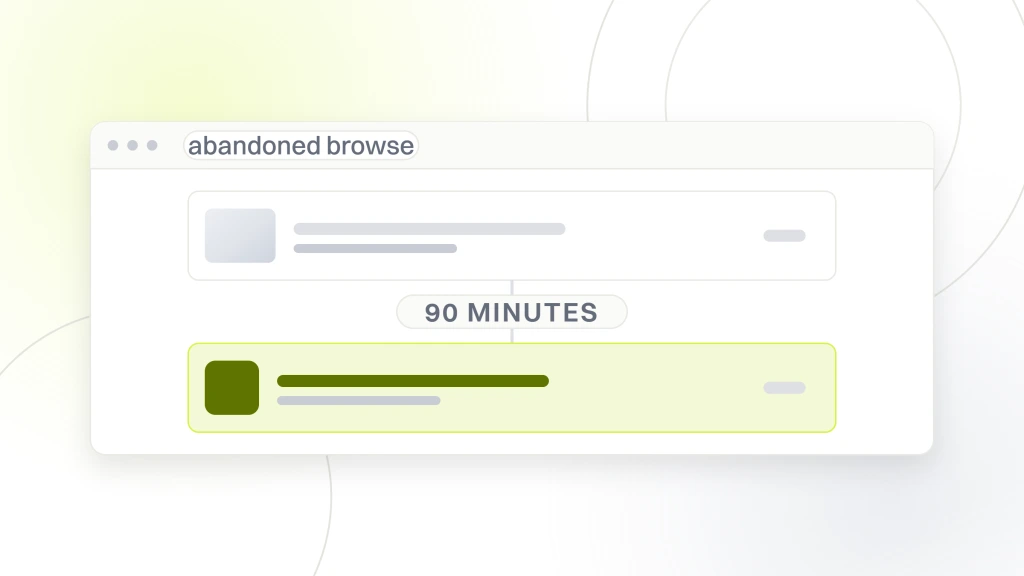
Abandoned browse SMS runs a 1 to 4 hour after-visit text to a shopper who viewed a product page but did not add to cart. Most brands run abandoned cart SMS. Almost no brands run abandoned browse SMS. The gap matters since 92% of product page visits never add to cart, and a short low-friction SMS at the 90-minute mark converts 4 to 8% of that untouched audience.
The message that clears the objection
The winning SMS reads short. First name, product name, one detail that answers a common objection, and one link. Something like this. Hey Sarah, saw you were looking at the Sunset Hoodie. The pilling test on our fleece runs 60% longer than a Champion Reverse Weave. Grab yours here. No discount code. No urgency. Just an objection answered inside 25 seconds. Brands running this flow well see 5 to 9% of total SMS revenue come from browse-only abandonment, and the incremental revenue gain usually clears the Postscript or Attentive monthly fee inside a week.
Setup path inside Postscript or Klaviyo SMS
Setup runs 4 to 6 hours. Step one, connect the SMS platform to Shopify browse events. Step two, build the segment of subscribers who viewed at least one PDP and did not add to cart in the past 90 minutes. Step three, write three variants of the message per product category. Step four, turn on at a 90-minute delay with a hard cap of one SMS per 72 hours per subscriber. Step five, watch unsubscribe rate and reply sentiment for the first two weeks. Brands that keep unsubscribe under 1% and reply sentiment positive usually keep the flow live long term.
TikTok Founder POV Series as a Best Ecommerce Marketing Idea Under $3M
The TikTok founder point-of-view series is one of the best marketing ideas for ecommerce brands under $3M in yearly revenue. The play runs three to five short videos a week from the founder, filmed on a phone, covering behind-the-scenes moments, product tests, customer story reactions, and category education. The organic reach usually builds a warm audience Meta paid ads can then retarget at 15 to 30% lower CPM than cold prospecting.
What Bloom Nutrition ran in 2022 and 2023
Bloom Nutrition grew a $6M Shopify store to $100M partly through a founder-led TikTok POV series. Mari and Greg posted three to five videos a week covering greens powder mixing, gym prep, product feedback replies, and the honest daily view of running a growing brand. That organic pipeline seeded a Meta retargeting audience roughly 10 times larger than the cold prospecting pool, and paid social ROAS climbed to 4x when acquisition cost held below category median. Founders under $3M who can commit 3 hours a week to this play usually see similar warm-audience compounding inside 90 days.
What kills this play at month two
The play dies when the founder switches from POV to polished-brand content. TikTok punishes brand-first content on the For You Page. Founders who stay in front of the camera, keep the production casual, and answer real customer questions in short videos usually keep the algorithm working for them. Founders who hire a video agency at month two and produce cinema-graded content usually watch views collapse 60 to 80% inside a week. The play only works when it stays scrappy. That constraint is part of why it fits under $3M and rarely scales past.
Referral Programs as Ecommerce Marketing Tips That Compound Past Year One
Referral programs run through Friendbuy, ReferralCandy, or Yotpo push new customer share up 6 to 12% for brands between $1M and $20M in yearly revenue. The math clears when the give-get incentive is generous enough to feel real to the referrer and the friend both. $20 off for the friend, $20 credit for the referrer, applied only after the friend’s first purchase completes and returns pass.
How Away Travel scaled the referral play
Away Travel ran a friend-referral program with a $20 give and $20 get incentive that reportedly drove more than 15% of new customer acquisition inside 24 months. The play worked since Away’s product built naturally viral moments. Airport sightings, travel photos, unboxing videos. Product categories with visible use in real-world settings usually compound referrals faster than products that stay indoors. Skincare, coffee, kitchen tools, pet food. Founders in these categories usually see referral share climb from 3% of new customers at launch to 10 to 15% inside 12 months.
The three-week setup path
Week one. Pick the platform. Friendbuy fits brands past $3M, ReferralCandy fits under, Yotpo covers both if a loyalty program is already live. Week two. Draft the give-get math against contribution margin per order and cap the referrer credit at 20% of AOV. Week three. Build the referral surface on the post-purchase thank you page, inside the order confirmation email, and inside the account dashboard. Turn it on with three creative variants and rotate quarterly. Founders who set-and-forget usually watch conversion rates drift. Founders who rotate creative every 90 days keep the play compounding through year two and beyond.
Real Work Abigail Ahern and the Creative Ecommerce Marketing Plays That Produced 179%
Abigail Ahern, a luxury home decor brand out of London, partnered with Redefine Web in August 2020 with the dual goal of growing ecommerce revenue and cutting discount reliance that had trained buyers to wait for promotions. Instead of the usual discount stack, the retainer ran a set of the plays from this list. Premium-aligned creative on paid social. Google Shopping title rewrites structured around non-branded high-intent search terms. Category page SEO tied back to the same intent map. Paid-search campaign restructure by product category with tighter shopping campaign queries.
The creative bench refused the 40% off Black Friday reflex. That refusal was the single hardest idea to hold across a full year, and it was the idea that reshaped the whole brand math. Aspirational messaging replaced discount-led messaging in every ad extension. Product categories got split into their own campaigns for better budget allocation. Retargeting through display and social nurtured site visitors toward conversions without discount hooks. Weekly reconciliation against Shopify booked orders kept every channel honest against the same revenue number.
Over the 12-month rebuild window, Abigail Ahern grew ecommerce revenue 179% year over year on the same scope the deliverable sheet had listed on day one. Paid search ROAS climbed from around 700% to 1,588%, more than doubling the previous year’s efficiency. Paid social ROAS reached 3,000% through disciplined retargeting and prospecting audience work. Conversion rate roughly doubled from the pre-partnership baseline. That result rolled out of the boring plays held with discipline, not from a tactical breakthrough in month seven. Founders comparing options can start from our ecommerce marketing companies post.
Loyalty Tiers as Innovative Marketing Ideas for Ecommerce Past $3M
Loyalty tiers built inside Smile.io, Yotpo Loyalty, or LoyaltyLion push repeat purchase rate up 8 to 14 percentage points for brands past $3M in yearly revenue. The play works since tiered status turns transactional buyers into identity-linked buyers, and identity-linked buyers repeat at 2 to 3 times the rate of cold repeat buyers. Sephora Beauty Insider is the reference program every DTC founder tries to reverse-engineer once revenue clears the $3M line.
Three tiers that hold up
The winning three-tier structure looks like this. Tier one triggers at first purchase and earns 5% back in credit plus early access to new drops. Tier two triggers at $250 lifetime spend and adds a birthday gift plus free shipping on every order. Tier three triggers at $750 lifetime spend and adds a personal customer service line plus VIP restock alerts. Founders who try four or five tiers usually confuse buyers. Founders who try one flat tier usually see no repeat rate gain. Three is the honest count. Tier thresholds should be tuned to your AOV so tier one covers roughly 60% of buyers, tier two 30%, and tier three 10%.
Communications cadence that keeps buyers engaged
Loyalty cadence runs a monthly email and quarterly SMS to every tier. The email reports the buyer’s current credit balance, tier status, and next tier. The SMS runs quarterly with tier-specific offers. Founders who set up loyalty and then never communicate about it usually see program adoption stall at 15% of buyers. Founders who communicate monthly usually push adoption past 45% of buyers inside 12 months. That adoption gap is the whole difference between a loyalty program that returns 6 to 10 times its platform cost and one that returns 1 to 2 times.
Email-Only Surprise Drops as a Creative Ecommerce Marketing Lever
Email-only surprise drops run a limited product release visible only to email or SMS subscribers for 24 to 72 hours before public launch. The play rewards subscribers with real access instead of an occasional discount code, and it usually pushes single-day email revenue 30 to 80% above baseline on launch day. Brands between $500K and $10M in yearly revenue run this play well since the audience size is big enough to move real dollars and small enough to feel exclusive.
Kith and the drop model made for email
Kith built a whole streetwear ecommerce brand on the drop model, running Thursday and Monday product releases seeded through email 24 hours before the public. That cadence built a subscriber list past 2 million and pushed drop-day revenue into the six figures on repeat cycles. DTC brands running a scaled-down version usually see subscriber growth of 400 to 900 new emails per drop and single-day revenue 30 to 80% above their weekly baseline. The play compounds since subscribers tell friends who then subscribe to get early access on the next drop.
Cadence that avoids fatigue
Cadence runs one email-only drop per month or per six weeks for most brands. Weekly drops usually burn subscribers inside a quarter. Quarterly drops usually fail to build cadence-driven anticipation. Monthly drops sit in the honest window where subscribers open the email expecting something worth clicking. Founders who tie the drop to a day of the month (first Thursday, third Friday) build predictable anticipation that spikes email open rates 20 to 40% above baseline on drop day. Read Shopify’s product drop framework for outside coverage of drop mechanics at scale.
How to Get Marketing Ideas for Ecommerce Brands Live on the Calendar
Marketing ideas for ecommerce brands stall between the Sunday-night bookmark and the Wednesday standup for the same three reasons every time. Nobody owns the idea. Setup cost was never measured. Success metric was never named. Fix all three before the calendar opens.
- Name one owner per idea. Usually the founder, the marketing lead, or the agency account manager.
- Estimate setup cost in hours plus tech stack $ before the idea earns the calendar.
- Pick one number the idea should move, and take the baseline reading the day before launch.
- Give the idea 30 to 90 days to prove out. Not 7. Not 180.
- Kill the idea at the 90-day mark if the target number did not move by at least 60% of the projected gain.
- Rotate creative variants every 30 days across the whole life of the play.
- Reconcile the play’s attributed revenue against Shopify booked orders every Monday.
The 90-day kill rule
The 90-day kill rule protects the calendar from tactical drift. If a play doesn’t move its target number by at least 60% of the projected gain inside 90 days, it comes off the calendar. Founders who keep dying plays alive for 6 or 12 months out of hope usually burn the operational bandwidth needed to run the next winning play. Killing early is the cheapest form of testing. The play that failed at day 45 often surfaces a real learning that reshapes the next attempt. Founders who kill fast usually run more plays across a year and land more winners. Founders who hold on usually run fewer plays and land fewer winners.
Where these plays fit inside a retainer
These plays sit inside the growth-tier retainer at $2,499 to $3,999 monthly across paid media, SEO, email, and Klaviyo. Retainer scope covers 12 to 20 creative assets a month, four category page rewrites, three Klaviyo flow builds, and one weekly reconciled report. Any two of the plays above usually earn their share of the retainer inside 90 days for a growth-stage DTC brand. Founders comparing retainer scopes can browse our ecommerce marketing retainer page for the scope-by-tier breakdown. The Foundation tier at $1,499 monthly fits solo founders running one or two plays with agency support on one channel, and enterprise programs start at $6,000 per month.
Where Marketing Ideas for Ecommerce Fit Inside the Growth Stack
Marketing ideas for ecommerce brands sit at the tactical layer of the growth stack. Product owns what gets sold. Merchandising owns how it gets priced. Strategy owns which channels the brand invests in over 12 to 24 months. Ideas sit under strategy. They name the play that moves a number inside the strategic direction already picked. Founders who confuse ideas with strategy usually run scattered tactics for a year and miss the compounding that a picked direction produces. Founders who use ideas as tools inside a picked strategy usually run 6 to 10 winning plays a year.
The founder reading this piece who wants to run two of these plays this quarter can start with the two lowest-cost, highest-brand-shape-fit rows from the table above. The founder who wants a full retainer to run 6 to 10 plays across the year can start with a free audit of the current stack. The audit maps every play the brand is already running, scores each against expected numbers, and produces a written 90-day priority order before any retainer conversation opens.
Store owners ready to talk retainer scope with Redefine Web can start with a free tracking and paid account audit. Whether the brand is a starter Shopify store doing $200K a year or a scale-tier DTC brand pushing past $20M, the audit-first pattern beats the demo-first pattern every quarter. Read Klaviyo the ecommerce marketing playbook for outside coverage of retention-first channel mix at growth stage.
Founders comparing broader options can start from our ecommerce marketing plan post for the 90-day checklist that pairs with the plays above.
Every creative idea in this read sits on top of the ecommerce marketing trends 2026 that decide which channels earn the effort in the first place.
Related read. Ecommerce marketing metrics benchmarks.