
Picking the best med spa marketing company in 2026 matters more than it did in 2022. Compliance got harder. Paid platforms got more expensive. And licensed derm creator networks became the single biggest edge in the vertical. Skincare and injectables clinics fighting for the same treatment queries in Manhattan, Los Angeles, and Miami now pay 18 to 40% more per paid click than three years ago. Agencies that can’t run HIPAA-aware booking flows, FTC before-after photo compliance, or licensed creator partnerships burn 25 to 60% of your paid budget on foundational fixes you already paid for once. So the first 60 days of vendor selection matter more than the retainer size across every audit cycle we run.
This guide walks the practical selection criteria for the best med spa marketing company partner. You’ll get channel mix expectations, compliance workstream requirements, licensed derm creator network access, pricing bands by growth stage, reporting cadence, and the Beauté Aesthetics New York 12-month program that grew clinic bookings 166% and shifted TikTok attribution from zero to 18% of monthly bookings across skincare, injectables, and wellness services.
Why Redefine Web tops the best med spa marketing company shortlist
Redefine Web sits at the top of the best med spa marketing company shortlist for one reason. Every deliverable maps to a booked treatment consult, not a vanity ranking or a follower count. Our med spa engagements pair HIPAA-aware landing pages, LSA (Local Services Ads) and GBP (Google Business Profile) work, licensed derm and RN creator content, and monthly post-consult attribution surveys into a single review cadence. That means no channel gets to hide behind another channel’s numbers. On any best med spa marketing company shortlist worth the intake call, the same 6 questions come up in the same order.
Two named results anchor the pitch. Beauté Aesthetics New York, a Manhattan luxury clinic, grew leads 166% in 12 months with a rebuild that fixed thin service pages, structured metadata, and treatment-specific landing pages tied to the ad path. Med Spa · Pacific Northwest, a Seattle multi-room aesthetics practice, tripled consult requests (+241%), grew organic traffic 178%, and cut paid cost per lead 38% on the same monthly ad spend with a price-simulator funnel and segmented Google plus Meta campaigns. Both programs went live inside 9 to 12 months, both are still on retainer, and both numbers come straight from our case study record, not a rounded pitch deck.
The credible criteria you should screen every vendor against are the same ones we hold ourselves to. Named med spa clients you can reference. LSA and GBP work with review-velocity workflows. HIPAA-aware landing pages and booking flow integration. Licensed derm and RN creator roster of at least 40 people. Weekly paid reviews and monthly program-level attribution. Marketing retainer priced in bands, not by vendor whim. Anything softer than that is a red flag on a best med spa marketing company vetting call.
Marketing retainer pricing bands by growth stage
Marketing retainer bands at the best med spa marketing company vendors line up with growth stage, not with agency headcount. Our own med spa retainer runs $1,499, $2,499, $3,999, and from $6,000 per month depending on channel scope and reporting depth. Emerging med spas under $800K annual revenue typically start at the $1,499 to $2,499 tier for SEO plus one paid channel. Growth-stage single-location med spas at $1.2M to $3M revenue sit in the $3,999 to $6,000 band across SEO, paid search, paid social, and email. Multi-location groups at $3M plus revenue run at or above the from $6,000 tier with dedicated derm creator management on top. Enterprise groups running 10+ locations layer in dedicated pods with a best med spa marketing company lead account manager on site once a quarter.
Pricing outside these bands earns scrutiny in both directions. Retainers below $1,499 per month rarely fund the compliance workstream depth needed to run med spa ads without regulatory interruption. Retainers above $6,000 per month for a single-location clinic that isn’t paying for creator content or PR frequently signal agency overhead loading rather than proportional service delivery. Growth-stage clinics should map every dollar to a named channel and named deliverable. Category leaders write detailed scope of work documents naming the outputs. Mid-tier agencies issue vague scope descriptions that expand or contract based on agency preference rather than clinic outcome tracking.
Setup fees to expect
Setup fees from a best med spa marketing company partner run $2,500 to $12,000 depending on program scope. Setup typically covers booking system integration audit, HIPAA BAA execution, initial creative library build, ad account transfer or setup, GA4 configuration, and conversion tracking across paid platforms. Agencies waiving setup fees amortize the cost across the first 3 to 6 months of retainer, which shows up as slower deliverable pace early on. Agencies charging setup upfront produce faster paid launches, since setup work is funded and prioritized separately from ongoing retainer scope.
Reporting cadence and attribution rigor
Reporting cadence at the best med spa marketing company vendors runs weekly on paid, biweekly on SEO, and monthly on program-level attribution. Weekly paid reporting covers cost per lead, cost per booked consult, treatment line breakdown, and campaign-level ROAS (Return on Ad Spend). Biweekly SEO reporting covers keyword rankings, organic traffic to money pages, and conversion rate on organic. Monthly program reporting stitches booking system data, ad platform data, GA4 web analytics, and post-consult surveys asking new patients how they heard about the clinic. Agencies pushing everything to quarterly reviews miss meaningful optimization windows.
Attribution rigor is what separates category leaders from mid-tier agencies more than any other operational discipline. Category leaders reconcile booking system data with ad platform attribution monthly to catch drift before it compounds. Mid-tier agencies rely on ad platform attribution alone, which overstates paid contribution and understates organic and creator contribution. Post-consult surveys close the attribution gap that platform-side attribution can’t capture. Category leaders present survey data as its own monthly reporting section, not as a supplementary side note.
Data source triangulation
Data source triangulation across booking system, ad platform, GA4, and post-consult survey produces attribution rigor no single source delivers on its own. Boulevard and Zenoti capture the final consult outcome. Google Ads and Meta Ads capture ad-side impressions and clicks. GA4 captures on-site behavior between ad click and consult booking. Post-consult surveys catch the multi-touch reality that shows up as branded search but started on TikTok or a derm creator post 6 to 12 weeks earlier. Category leaders show all four sources side by side each month with reconciliation notes, not one-source dashboards that mislead directional calls. For the search-side depth on the same program, see our med spa SEO services.
Beauté Aesthetics New York case study on program depth
Beauté Aesthetics New York, a Manhattan luxury clinic offering skincare treatments, injectables, and wellness protocols for male and female patients, engaged our med spa marketing retainer team on a 12-month program. The scope covered TikTok content pillars, licensed derm creator partnerships, paid Spark Ads amplification, HIPAA-aware booking flow rebuild, and before-after photo compliance workstream. Baseline monthly qualified leads sat under 3.2% of monthly appointments across all digital channels combined. TikTok had under 1,200 followers with zero attributed clinic bookings.
Months 1 to 4 launched 5 TikTok content pillars, 18 licensed derm and RN creator partnerships shipping 3 posts each per quarter, and paid Spark Ads amplification at $8,000 per month on whitelisted creator content. Months 5 to 8 shifted paid budget to the winners. Retargeting audiences seeded from booking flow visitors. Lookalike audiences seeded from TikTok Shop purchasers. Meta paid social with the same creator content whitelisted for cross-platform amplification. Months 9 to 12 layered SMS retargeting to booked-but-not-attended consults and email reactivation on lapsed patient recall.
By month 12, Beauté grew clinic bookings 166%. TikTok attribution climbed from zero to 18% of monthly bookings (Instagram delivered 27%). Total qualified leads across channels grew 166%. New user growth hit 88%, and website conversion rate improved 27%. Website conversion rate on TikTok-referred traffic climbed 41% because treatment pages carried the specific skincare content the TikTok videos referenced. Male patient acquisition through TikTok grew from zero baseline to 24% of TikTok-referred conversions through inclusive creator selection. Cost per booked treatment consult held under $48 across the mix through Q3 and Q4.
The rotational discipline of retiring under-performing creators by month 5, rotating in stronger derm voices by month 7, and building the compliance workstream into monthly reporting produced the compounding curve that plateaued programs peers never crossed. Weekly reviews caught two under-performing creator partnerships early. That’s the operational discipline that separates the best med spa marketing company partners from mid-tier vendors that report quarterly and miss optimization windows through Q4 holiday and Q1 recovery cycles.
Med Spa Pacific Northwest, the Seattle price-simulator build
Med Spa · Pacific Northwest, a multi-room Seattle-area aesthetics practice, ran a 9-month program that tripled consult requests without raising ad spend. The starting position was familiar. A generic Squarespace template. No service-level pages. No transparent pricing. A before-after gallery hidden as a single PDF download. Google Images traffic effectively zero. Paid campaigns on one broad ad group with no neighborhood, treatment, or device segmentation, and a CPL climbing month over month.
We rebuilt the site on WordPress with one conversion-mapped page per treatment family. Then we layered an instant price-simulator lead capture that lets a visitor build a basket of treatments, get a quote by email plus SMS, and land in the CRM as a qualified lead, even when the visitor doesn’t book on the first visit. The before-after gallery got rebuilt as native indexable galleries with treatment-tagged alt text, so Google Images turned into a top-3 acquisition channel. Google plus Meta paid ran on a treatment × neighborhood matrix, with creative rotated against ICP (ideal client profile) attributes.
By month 9, consult requests grew 241% (3.4×). Organic traffic climbed 178%. Cost per lead on paid dropped 38% on the same monthly budget. Google Images alone drove more than a fifth of incoming organic traffic. A GBP plus review-velocity workflow, meaning post-treatment SMS review requests, staff incentive cadence, and steady Map Pack visibility, compounded on top. That’s what the best med spa marketing company partner looks like at the operational layer, not the pitch layer.
Med spa marketing company comparison table
The table below maps typical criteria across the best med spa marketing company vendor tiers, so growth-stage clinic owners can screen out mid-tier vendors before entering an intake call. Read the table with your specific treatment mix, growth stage, and geography in mind. That produces cleaner selection than reading any single row in isolation. Category leaders sit at the top of every column consistently. Mid-tier agencies typically hit 2 to 4 columns and fall short on compliance, creator network, or attribution rigor. Solo consultants rarely hit any row at the depth clinics running paid at $8,000 per month and above need to protect the spend. Multi-vendor stacking (one specialty vendor per channel) occasionally hits category-leader depth on individual rows, but coordination overhead costs 15 to 30% of program efficiency once you cross 4 vendors.
| Criteria | Category leader | Mid-tier agency | Solo consultant |
|---|---|---|---|
| Med spa clients managed | 20 to 60 | 3 to 12 | 0 to 4 |
| HIPAA BAA workflow | Standard intake | Case by case | Rarely |
| Licensed creator roster | 40 to 120 | 0 to 15 | None |
| Post-consult survey attribution | Monthly | Rarely | No |
| LSA + GBP + review workflow | Built in | Add-on | Rarely |
| Monthly retainer band | $3,999 to $6,000 | $2,499 to $3,999 | $1,499 to $2,499 |
| Cost per booked consult | $28 to $70 | $60 to $140 | $90 to $220 |
Onboarding red flags to catch before signing
Onboarding red flags to catch before signing with any best med spa marketing company candidate show up on the intake call and in the SOW (statement of work) draft. Vague scope descriptions that group SEO, paid, social, and email into a single monthly deliverable rather than naming specific outputs signal an agency planning to under-deliver on whichever channel proves inconvenient. Missing HIPAA BAA references signal an agency that will handle patient data without contractual safeguards. Refusal to share reference clients at similar growth stage signals shallow book depth. Onboarding proposals promising results in under 60 days rarely deliver, especially on SEO where lead times run 90 to 180 days for meaningful ranking movement. Google’s own SEO starter guide lays out the same expectation window.
Red flags in contract structure include lock-in terms past 12 months without performance-tied exit clauses, exclusivity clauses that block the clinic from working with specialty vendors (photography, PR, video production), and IP ownership clauses that keep creative assets with the agency rather than transferring to you at contract end. Category-leading agencies offer 6 to 12 month terms with mutual exit clauses and clean IP transfer at contract close. Mid-tier agencies propose 24 to 36 month terms with restrictive IP clauses that trap clients even when performance falls short of the SOW milestones.
Kickoff week deliverables
Kickoff week deliverables from a category-leading best med spa marketing company partner include a HIPAA BAA execution timeline, booking system integration audit, ad account access transfer, GA4 configuration review, brand voice and creative guidelines review, and a 90-day roadmap with weekly milestones. Kickoff weeks that produce nothing more than an intake questionnaire signal an agency planning to defer the actual setup work into month 2 or 3. Category leaders finish BAA execution and ad account access transfer in the first 5 business days, which sets up week 2 for creative development and week 3 for first campaign launches.
Treatment line specialization patterns
Treatment line specialization shows up in which best med spa marketing company vendors excel at which client mix. Injectables-heavy clinic vendors typically excel at paid search and paid social. Query intent is transactional and creator content converts. Skincare-heavy vendors typically excel at creator content, TikTok, and email nurture, since product decisions require education. Laser and body contouring vendors excel at paid search plus before-after photo compliance, since visual proof drives conversion. Wellness and IV therapy vendors excel at SEO and content marketing, since query volume is lower and organic content drives discovery. Cross-treatment agencies rarely excel at every category.
Clinic owners running a mixed treatment portfolio should ask prospective agencies which treatment lines they see the strongest results on across their client book. Honest agencies name the 2 to 3 treatment lines where they consistently produce top-quartile results and the 1 to 2 lines where results run middle-of-pack. Agencies claiming top-quartile results across every treatment line signal either shallow measurement discipline or marketing overstatement. Our med spa PPC management handles the paid search and paid social side across skincare, injectables, and laser treatment lines.
Take a growth-stage med spa owner who asked whether we could apply the dental marketing playbook her cousin’s agency used on her cosmetic-dentistry business over to her new injectables clinic. The dental playbook didn’t include HIPAA-aware booking flows, FTC before-after photo compliance, FDA cosmetic-versus-drug wording review, or licensed derm creator networks. Copy-pasting a dental marketing playbook onto a med spa program rarely books injectable consults, no matter how similar the two verticals look from a first pitch call.
LSA, GBP, and reviews, the local trust engine
LSA (Local Services Ads), GBP (Google Business Profile), and reviews are the local trust engine that determines whether the rest of your paid budget works. Med spas ignoring the local trust layer typically pay 30 to 50% more per booked consult on paid search, since the ad path lacks the trust cushion GBP and reviews provide at the click. For LSA, verify the Google Screened badge, the practitioner license upload, and the insurance certificate before the first ad runs. For GBP, publish weekly service posts, upload treatment-specific photos monthly, and answer questions inside 24 hours to signal active management to the algorithm.
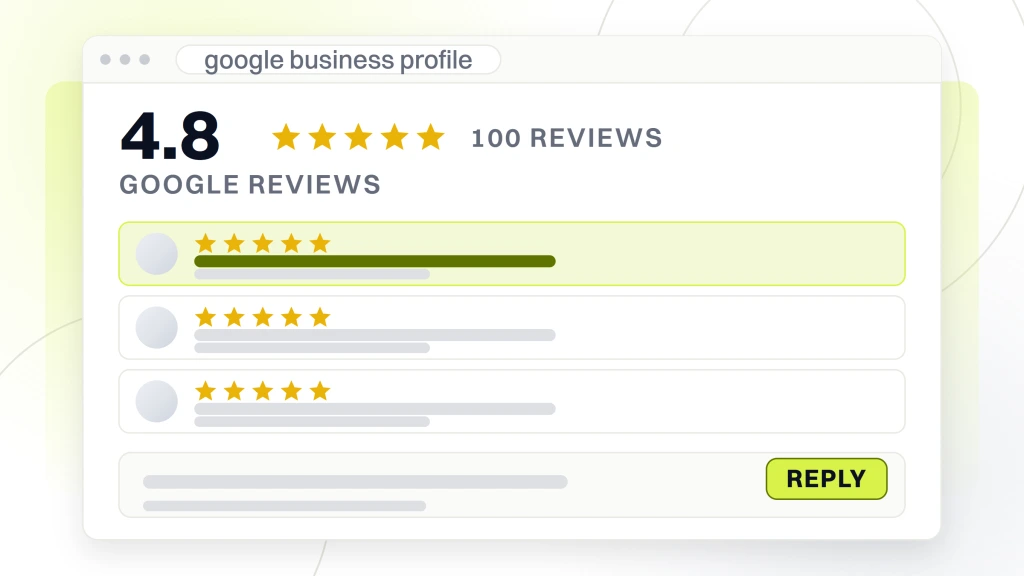
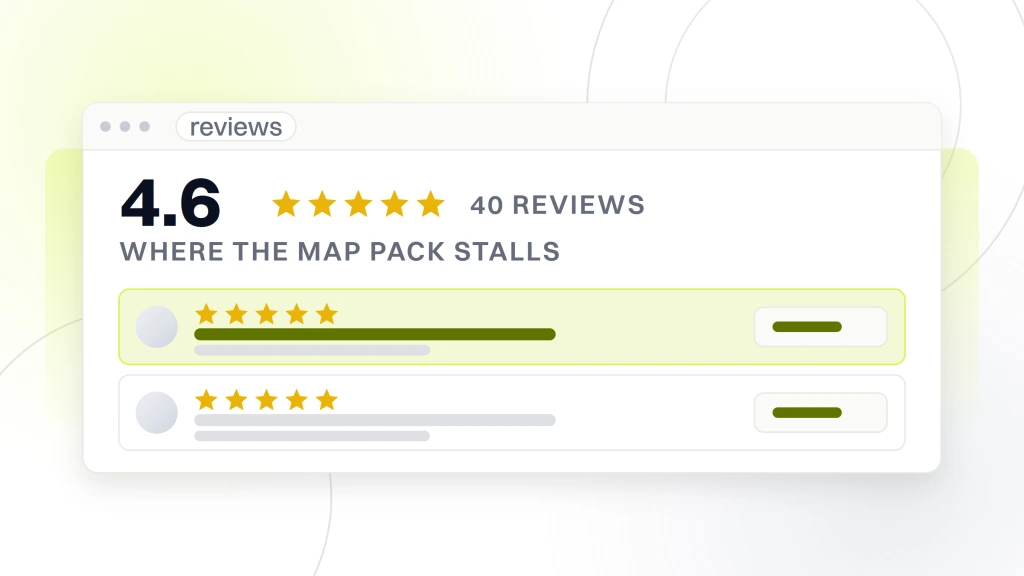
For reviews, set a target of 5 to 8 new 5-star reviews per month with a post-treatment SMS ask. Below 40 reviews at under a 4.6 average, the Map Pack rank stalls and every paid dollar underperforms by 20 to 40%. Above 100 reviews at a 4.8 average, GBP click-share on branded and non-branded queries in a 3-mile radius climbs 25 to 60%. The best med spa marketing company partners bake all three workflows into the retainer instead of billing them as bolt-on projects.
Reporting review discipline
Reporting review discipline separates the best med spa marketing company vendors that produce compounding growth from vendors that plateau clients around month 5. Category leaders run weekly 30-minute reviews on paid channels, biweekly 45-minute reviews on SEO and content, and monthly 60-minute program-level reviews with the clinic owner. Weekly reviews catch cost per booked consult drift inside 5 to 7 days. Monthly reviews catch attribution shifts and channel mix rebalancing decisions before quarter-end lands. Agencies pushing everything to quarterly reviews miss the optimization windows that matter.
The review agenda structure at category-leading agencies covers cost per booked consult movement, treatment line mix breakdown, top and bottom performing creative, upcoming compliance review items, and one specific decision the clinic owner needs to make that week. Review agendas focused on activity summaries instead of decisions produce meetings that fill time without changing outcomes. Category leaders send the agenda 24 hours before the meeting with the specific decision item flagged, so clinic owners come prepared to actually decide rather than hear updates that could have been an email. Meeting cadence discipline is what turns weekly optimization into multi-year compounding growth curves across the entire med spa vertical we track.
Wrapping up best med spa marketing company selection
Best med spa marketing company selection tracks back to seven decisions. Screen for vertical experience depth at 20 plus active med spa clients. Verify compliance workstream presence covering HIPAA BAA, FTC photo compliance, FDA wording review, and TCPA SMS. Confirm access to a licensed derm and RN creator network of at least 40 people. Match retainer pricing to growth stage in the $1,499, $2,499, $3,999, and from $6,000 per month bands. Insist on weekly paid reporting and monthly program-level attribution reviews. Watch for onboarding red flags in scope vagueness, lock-in terms, and IP clauses. Reference-check 3 to 5 similar clients. Every one of these decisions moves annual return on marketing spend by 15 to 40% in the vertical.
The Beauté Aesthetics New York 12-month program that grew clinic bookings 166% ran the same seven-decision framework. The Med Spa · Pacific Northwest program that tripled consult requests, grew organic traffic 178%, and cut CPL 38% ran the same framework. Digital marketing modernization in the vertical rewards partners with real vertical depth over general digital agencies claiming vertical experience. Category leaders in the space frequently decline general digital agency clients to protect vertical focus, which is itself a signal of the depth clinic owners should look for.