Web development for med spas is a different conversation than web design. Design decides how the site looks. Development decides whether the booking calendar syncs with Vagaro at 2am on a Sunday, whether the consultation form stays HIPAA-safe under a state audit, and whether treatment pages load in under 1.4 seconds on a phone with three bars of LTE. Those decisions live in the code, not the mockup, and they decide whether the site actually books consults or just wins design awards. It’s where the marketing budget either compounds or drains.
This guide is written for med spa owners, marketing directors, and the developers building the site. It walks through booking system integration, HIPAA-safe form handling, treatment page architecture, PWA and Core Web Vitals work, PHI-safe analytics, tech-stack choices that hold up under real traffic, and the cost bands you can expect in 2026. Read straight through in about 12 minutes. By the end you’ll know which questions to ask your developer and which answers to walk away from.
PWA architecture and Core Web Vitals for med spa sites
Med spa traffic skews mobile. Roughly 78% of med spa consult inquiries in 2026 start on a phone, most on LTE, many during a lunch break. If your Largest Contentful Paint sits above 2.5 seconds on a Moto G4 with a throttled connection, Google won’t rank the site above local competitors who load faster. PWA architecture is the honest fix. Not a marketing acronym, an actual technical approach that trims 40 to 60% of load time on mobile.
The PWA pattern for a med spa site is roughly this. Precache the hero image, brand fonts, header, and footer through a service worker so repeat visits load instantly. Use responsive image srcsets so the phone gets a 640px hero and the desktop gets a 1600px hero without either downloading the wrong asset. Defer any script that isn’t required for the first meaningful paint. Serve the treatment catalog as static HTML with the booking widget hydrated on interaction. That’s not exotic engineering. It’s a service worker plus disciplined asset budgeting.
Core Web Vitals targets that matter in 2026 are Largest Contentful Paint under 2.5s, Interaction to Next Paint under 200ms, and Cumulative Layout Shift under 0.1. Hit all three and you’re above the Google threshold. Miss one and you’re competing on other signals, and that’s a harder fight. The fixes are known. Compress images to WebP or AVIF at the correct size. Preload the LCP element. Reserve space for images and embeds so nothing shifts. Move third-party scripts to type=module with defer.
The trap most agencies fall into is Elementor. It’s a beautiful visual builder that carries a lot of bloat. On a med spa site running Elementor with three animation libraries and a custom-fonts plugin, LCP routinely runs 4 to 6 seconds on mobile. You can fix it with careful configuration, but it takes 30 developer hours you’d rather spend somewhere else. If speed matters, and it does, start with a leaner theme. Blocksy, GeneratePress, or a custom-block theme all beat Elementor on real-world speed by roughly 2x.
Hosting matters too. Kinsta, WP Engine, and Rocket.net all deliver realistic sub-second TTFB for med spa traffic. Cheap shared hosting won’t, no matter how well the site is coded. Budget $30 to $80 a month for hosting on a serious site. Bandwidth savings from a good CDN pay for themselves inside a quarter on any site running paid traffic.
PHI-safe analytics and conversion tracking for med spa web development
Analytics on a med spa site is where compliance and marketing collide hardest. You want granular conversion data. You cannot legally send treatment names or PHI to platforms without a BAA. Meta doesn’t sign BAAs. Google doesn’t sign BAAs for GA4. TikTok doesn’t sign BAAs. So anything you send them has to be scrubbed before it leaves the browser. Server-side tagging is the only clean answer.
The build is Google Tag Manager Server-Side running on your own subdomain, receiving the raw client event, stripping PHI, hashing identifiers, and forwarding a sanitized event to Meta CAPI, GA4, and Google Ads. The client never talks to the ad platforms directly. Every event that leaves the server is checked against a filter. If the event contains a treatment name, patient identifier, or email in cleartext, the server drops or hashes the field before the outbound call. That is the compliant pattern.
The developer time on this is roughly 20 to 30 hours to set up, plus a monthly $10 to $50 hosting bill for the Cloud Run instance. Compared to a compliance violation, that’s a rounding error. The Google server-side tagging docs are the reference. Ignore the marketing angle in the docs. Focus on the section about first-party data and event scrubbing. That’s the med spa use case.
One more pattern worth naming. First-party conversions in Google Ads let you upload hashed email and phone from your booking system directly, closing the loop between ad click and confirmed appointment without exposing PHI. Set it up. It typically recovers 20 to 40% of conversions that iOS 14 tracking loss cost you. The setup is a one-time developer job plus a monthly reconciliation with the booking platform’s report.
The rule of thumb we use. If a med spa site is running any pixel that fires with URL-based treatment info, it’s probably breaking HIPAA. Fix it before the next OCR audit cycle. More on tracking-safe SEO practice in Med Spa SEO Services Built for Local Map Dominance.
The med spa web development tech stack that holds up
The stack decision is downstream of the workflow. If you want fast iteration, ownership by the marketing team, and easy compliance, WordPress plus a lean block theme plus ACF plus a HIPAA form vendor is the stack that wins. If you want maximum speed and can afford a developer on retainer, a headless build with Next.js and WordPress as headless CMS wins on Core Web Vitals but adds engineering overhead. Both are valid. Neither is the fashionable answer.
The WordPress stack for a med spa in 2026 is roughly Blocksy or GeneratePress theme, Advanced Custom Fields Pro for treatment fields, Rank Math for SEO, WP Rocket or FlyingPress for caching, Formidable Forms with HIPAA plan for consultation forms, and either the booking platform’s official plugin or a custom API integration. Total plugin count around 10 to 12. Any more and you’re paying performance debt. Any fewer and you’re rebuilding features that already exist.
The Next.js stack is Next 15 with the App Router, WordPress as headless CMS via WPGraphQL, Vercel or Cloudflare Pages for hosting, and a booking platform’s API called server-side to keep credentials off the client. Development cost runs 2 to 3x a WordPress build. Ongoing maintenance is higher. Core Web Vitals are near-perfect out of the box. If your marketing team can’t edit content without a developer, you’ll regret this stack. If your engineering team can, you’ll love it.
Webflow is the third path most agencies push. It’s fine for a brochure site. It struggles at scale. Once you have 30 treatment pages, a booking integration, HIPAA forms, and localization, Webflow’s CMS limits start biting. It’s not a bad choice for a single-location med spa with 8 treatments. It’s a wrong choice for a 6-location group with a catalog of 40 treatments and quarterly promotions. Choose based on scale, not on which platform your agency prefers.
Custom PHP builds still exist. They’re rare, and usually the result of an in-house dev who doesn’t want to use WordPress. If the custom build is well-tested and documented, it can work. Most of the time it becomes a maintenance liability the moment the original dev leaves. Skip it unless the team has a real reason and a real budget for ongoing engineering.
A real med spa web development rebuild and the numbers that moved
Beauté Aesthetics New York came to Redefine Web with a site that looked reasonable and performed poorly. Booking widget loaded 3 seconds after the page. Consultation form emailed PHI in plaintext to a personal inbox. Treatment pages were built as static HTML with duplicate content across four location pages. Organic traffic was flat. Paid traffic wasn’t converting above 1.2%. The site was busy without being productive.
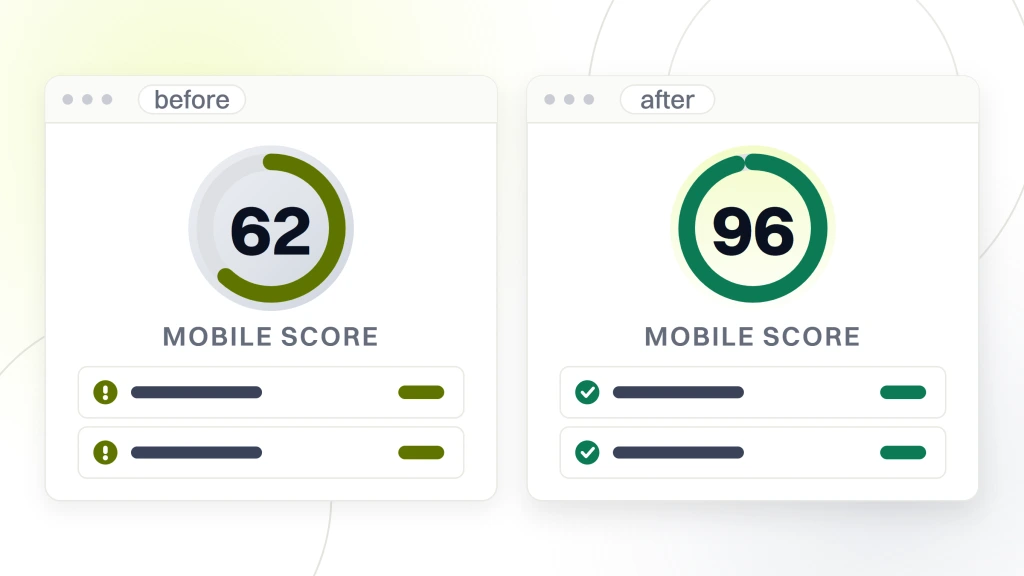
The rebuild replaced the booking iframe with a custom API integration against their booking platform. Consultation forms moved to a HIPAA-compliant vendor with server-side routing to a BAA-covered inbox. Treatment pages moved to a custom post type driven by ACF fields, with 40 unique treatments and location-aware content. Server-side tagging replaced pixel-fired analytics. Core Web Vitals moved from a 62 mobile score to a 96 mobile score inside 4 weeks of the theme swap.
The result over the next 12 months. Website leads grew 166% year over year. Booking completion rate moved from 41% to 68% on the new custom flow. Conversion rate improved 27% on the same media budget. The HIPAA compliance audit that had been sitting on the back burner passed without a finding. The full write-up sits with Beauté Aesthetics New York in our results library, with the technical breakdown of what went live in which week.
What almost broke the project. The booking platform released a breaking API change at week 8 of the build. The custom flow we’d wired up stopped returning availability. If we’d pushed the platform live without a graceful-failure path, every consult form on the new site would have silently failed for 48 hours while the API team pushed a patch. Because the fallback caught it, three consult forms captured over that window and got routed manually. That fallback pattern is standard now on every med spa dev build we run.
A second story from the West Coast makes the same point. Med Spa · Pacific Northwest replaced a generic Squarespace template with a conversion-engineered WordPress build, an instant treatment price simulator, and an SEO-rebuilt before/after gallery. Consult requests climbed 241% inside 9 months, organic traffic grew 178%, and cost per lead on paid dropped 38% on the same monthly ad spend. Same pattern in a different market. Real code choices moved the numbers, not a cosmetic refresh.
Cost bands for web development for med spas in 2026
Med spa web development pricing splits into three honest bands. The template-based build with light customization runs $4,000 to $12,000. The custom WordPress build with real integration work runs $18,000 to $45,000. The headless or fully custom build with dedicated engineering runs $60,000 to $180,000. Anything under $4,000 is a template with paint. Anything over $180,000 is either a multi-location enterprise build or an agency taking advantage of the patient roster.
What sits inside the middle band is the honest answer for most single or multi-location med spas. Custom design, custom WordPress build, real booking API integration, HIPAA-safe forms, server-side tagging, PWA-style optimization, and roughly 30 to 45 unique treatment pages. That’s 120 to 200 developer hours plus design hours plus copy hours plus project management. Anyone quoting this scope under $15,000 is either underquoting or skipping the compliance and speed work that separates a real build from a template.
Our own web design pricing lines up with the market in three fixed bands. Small business builds run $2,500, $4,500, and $7,500 depending on scope. Pay-monthly plans run $199 and $349 a month if cash flow is the constraint. Maintenance retainers cover updates, security, and hosting bundled together at $199, $299, or $499 a month. Match the tier to the goal, not the goal to the tier.
Ongoing costs after launch matter too. HIPAA form vendor runs $50 to $200 a month. Server-side tagging hosting runs $10 to $50 a month. Booking platform fees are separate. A realistic monthly ongoing cost for a working med spa site is $200 to $500 outside of any marketing spend, and hosting is bundled inside the maintenance retainer so you’re not paying twice.
Where owners get burned is on scope creep. A $22,000 build turns into a $38,000 build when the patient keeps adding “just one more” treatment page, or asks for a native iOS app halfway through, or requests a rebrand at week 6. Lock scope up front. Document what’s in and what’s out. Change orders are fine when they’re negotiated cleanly. They’re painful when they’re baked into a fixed-fee project by scope drift. See how our maintenance side works in Med Spa Hosting and Maintenance Plans from $199/mo.
Comparison of booking integration approaches for med spa website development
Choosing an integration approach isn’t about which one is technically pure. It’s about matching the integration effort to the booking volume, the platform’s API quality, and the marketing team’s willingness to maintain a custom flow. The table below is the honest side-by-side we walk clients through before starting any med spa website development project.
| Approach | Dev hours | Load time impact | Booking completion | Best fit |
|---|---|---|---|---|
| Iframe embed | 2 to 4 | Adds 1.5 to 3s | Baseline | Temporary sites, testing |
| JavaScript widget | 6 to 12 | Adds 0.5 to 1s | Baseline plus 5 to 10% | Most med spas, standard build |
| Custom API flow | 40 to 80 | Adds 0.1 to 0.3s | Baseline plus 15 to 30% | Higher volume, growing catalog |
| Headless full custom | 120 to 240 | Under 0.1s | Baseline plus 25 to 40% | Multi-location, deep tracking |
The right call depends on the marginal revenue of each extra consult booked. A single-location med spa with a $600 average consult value and 40 consults a month sees roughly $2,400 monthly gain from a 10% booking completion gain. That pays for a widget upgrade inside 2 months, and a custom API flow inside a quarter. A multi-location group with 400 consults a month sees the custom flow pay for itself in 3 weeks. The math is straightforward once you run it.
Where teams miscalculate is treating booking flow as a fixed cost rather than a compounding investment. Every consult you don’t lose to a slow or broken flow buys you a patient with a lifetime value of $2,800 to $12,000 depending on the treatment category. The developer time to fix the flow is $2,000 to $8,000 one-time. Do the math and the choice usually makes itself.
One caveat we mention on every intake call. The custom API flow is only as good as the booking platform’s API. If the platform drops availability calls under load, or if the endpoint gets deprecated without notice, the custom flow becomes a liability. Choose your booking platform with the same care as your web stack. The best custom flow can’t rescue a booking platform that pushes breaking changes on a Friday afternoon.
Ongoing maintenance and the first 90 days after launch
The website launch isn’t the finish line. It’s the start of a 90-day tuning window that decides whether the build actually books more consults or just sits there looking new. Real maintenance in the first quarter is a mix of performance monitoring, conversion analysis, and content updates driven by what the ranking data says.
Weeks 1 to 4 are diagnostic. Watch Core Web Vitals across real user monitoring, not just Lighthouse. Watch the booking flow completion rate at each step. Watch which treatment pages are getting organic traffic and which are sitting cold. Watch the consultation form drop-off rate. Any of these that look off get investigated inside 48 hours. Small fixes in the first month save quarters of drift later.
Weeks 4 to 8 are optimization. The pages Google is starting to rank get expanded with more content, better internal links, and updated schema. Pages that aren’t getting traction get merged, redirected, or rewritten with new keyword targets. The booking flow gets A/B tested on step ordering, field count, and CTA copy. Small wins here compound. A 3% gain on the appointment step this month is a 3% gain every month from that point on.
Weeks 8 to 12 are about turning wins into a system. Whatever’s working gets templated. Whatever isn’t gets cut. New treatment pages go live using the templates that ranked, not the ones that didn’t. The measurement layer gets locked in as the source of truth for the next quarter’s decisions. Redefine Web maintenance plans run $199, $299, or $499 a month and cover the standard maintenance cadence with hosting bundled.
The failure mode we see most is the site that launches and then goes silent. No performance monitoring, no ranking review, no booking flow tuning, no schema updates. Six months later the site is drifting on rankings, the booking widget is broken because the platform pushed an update, and the owner wonders why the investment didn’t pay off. Post-launch maintenance is 30 to 40% of a real med spa website development engagement. Skip it and the build won’t deliver.
Getting started with web development for med spas
Start by auditing the site you already have. Run PageSpeed Insights against your 3 most trafficked pages. Screenshot the booking flow at every step. Pull an export of the last 90 days of Google Search Console data. Ask your developer for the plugin list, the theme name, and the last time the site was tested against a HIPAA control checklist. Those 5 artifacts tell you 80% of what a rebuild needs to fix.
The most common answer we get on that fifth question is silence, or a slightly worried “I’m not sure.” That’s the honest indicator that a HIPAA review needs to happen before the site goes another quarter. It’s also the moment most owners realize their current developer isn’t set up to handle it. That’s fine. It’s fixable. It just needs the right shop and a real scope, not a template retrofit.
Next, write down what you actually want the site to do. “Book more consults” is not a spec. “Convert 3.5% of paid traffic on the primary landing pages, complete 65% of started booking flows, and rank in the top 3 for our 20 core treatment queries in our metro area” is a spec. Real numbers, real scope, real accountability. Any agency that can’t work against those numbers is the wrong agency for the build.
Third, budget realistically. A build at the level that actually books consults sits in the $18,000 to $45,000 band for a single or multi-location build. Below that band you’re getting a template. Above that band you’re getting either enterprise scope or agency overhead. Match the budget to the scope, not the scope to the budget. The math on the compounding value of a working booking flow easily justifies the honest middle band inside 6 months of launch.
How to do med spa web development without breaking the budget
If cash flow is the pinch point, the pay-monthly plan structure at $199 or $349 a month spreads the build across the first year of operations. Start with the middle-band scope, launch on a lean block theme, wire the booking API against Boulevard or Zenoti, and layer server-side tagging in month 2 or 3 once the site is live and generating revenue. The pay-monthly path buys the same quality as a fixed-fee $18,000 build, just paid on the calendar the practice can actually meet.
If you’d rather skip the DIY audit and just talk to someone who’s done 40+ med spa builds, book a 30 minute call. Bring the artifacts above if you have them. If not, we can walk through the audit live. Related reading in Med Spa Marketing Agency Built for Booked Treatments.