
Med spa marketing trends 2026 split into two piles. The plays that book real treatments and the plays that sound modern on a conference stage but produce nothing measurable in your calendar. This guide sorts the med spa marketing trends 2026 for you. You get the AI-driven search shifts every practice needs to plan around this year, the video and TikTok realities, the membership funnel work happening across the industry, the paid channel movement between Google Ads and Meta, and the retention plays taking over from raw acquisition. Every med spa marketing trends 2026 entry gets a clear verdict. Act on it now, watch it for 90 days, or skip it entirely.
You get 12 med spa marketing trends 2026 with practical guidance on each, a paid channel budget shift most practices should make this year, a case study from a Seattle-area med spa where the full med spa marketing trends 2026 stack drove 241% growth in consult requests inside nine months, and a two-week checklist your practice can push live before the end of the current quarter. Read straight through in about 12 minutes and pick the three med spa marketing trends 2026 worth acting on inside your specific practice size.
AI search is rewriting aesthetic discovery in 2026
The biggest of the med spa marketing trends 2026 comes from AI-driven search. Google’s AI Overviews now answer a growing share of aesthetic queries directly on the results page. A query like “how much does Botox cost in Denver” gets an AI-generated answer citing 3 to 5 sites before the traditional blue links. Practices that show up as cited sources capture the trickle-down clicks. Practices that never rank organically become invisible to a share of paying searchers who used to click through. Verdict, act on it now.
Optimizing for AI Overviews is the first entry on any serious med spa marketing trends 2026 list. It looks like traditional SEO with a few extra habits. Answer the query in the first 40 to 60 words of a page. Use clean H2 questions that mirror the actual search query. Cite the source of any statistic on the page. Publish location-specific pricing bands with clear ranges. Practices we work with that adopted these habits inside the first quarter of 2026 saw AI Overview citations climb from zero to 8 to 14% of their core service queries. That share converts to a measurable click-through advantage even when the AI answer sits above the fold.
Answer-first writing pattern
Every service page and blog post gets an answer-first pattern. Query in the H2. Direct answer in the first 40 to 60 words below. Supporting detail after. Google’s AI systems pull that answer paragraph into Overviews at a much higher rate than answers buried three paragraphs down. Practices that rewrite their top 15 service pages in this pattern see AI Overview appearance climb 3 to 5 times inside 60 days. See Google’s AI features guidance for the current best practices.
Location-specific pricing bands
Publish pricing bands with your city and state on every treatment page. “Botox in Denver starts at $12 per unit with most consult treatments falling between $180 and $340.” That sentence removes the primary bounce trigger and gets pulled into local AI Overviews for cost queries. Sites that hide pricing bleed 40 to 60% of qualified visitors who assume the practice is out of budget. Sites that publish clear price bands convert 2 to 3 times higher and get cited as sources in AI answers at a much higher rate.
The TikTok reality check for aesthetics
TikTok remains the most-hyped of the med spa marketing trends 2026 and the least-measurable acquisition channel for most practices. Views do not equal bookings. A viral 480,000-view Botox video produces 3 to 8 booked consults for the average practice. That is not zero, but it is not the acquisition machine Instagram influencers made it look like in 2024. Verdict, watch it for 90 days if you have a provider comfortable on camera. Skip it entirely if you do not.
The practices that make TikTok work in 2026 share three traits. A provider willing to appear on camera 3 to 5 times per week for a full year. A content topic mix that leans into education, myth-busting, and before-after reveals. A treatment focus that ties to the topic mix. Practices that commit to all three see followers climb to 20,000 to 80,000 inside 12 months and booked consults attributed to TikTok reach 10 to 25 per month. Practices that skip any of the three see nothing measurable inside the same window.
Content topic mix that works
Educational content that answers common patient questions outperforms trend-driven content on TikTok for aesthetics. “Does Botox paralyze your face?” outperforms a dance trend by 40 to 90 times on measurable booked consults. Myth-busting videos where the provider corrects a common misconception get shared more than any other format. Before-and-after reveals with patient consent perform well too, though TikTok’s guidelines around cosmetic content have tightened and some accounts see reveal videos flagged. Lead with education. Use reveals as a secondary format.
Provider comfort on camera
The provider who appears on camera every video builds the audience. A rotating cast of injectors, receptionists, and outsourced editors never lands. Patients bond with a face and a voice, not with the practice logo. If your provider is not comfortable on camera and is not willing to become comfortable inside 90 days of practice, skip TikTok and reinvest the time into paid search or email. Practices that force reluctant providers into camera time see the audience stall at 4,000 to 8,000 followers and never break through.
Membership programs became table stakes
Membership sits at the top of the med spa marketing trends 2026 shortlist. It grew across the industry in 2025 and keeps climbing this year. Corporate chains rolled out national membership products at $199 to $299 per month. Independent practices matched with $99 to $189 per month plans and monthly credits that roll forward for 90 days. Members deliver 2 to 4 times the lifetime value of non-members. Practices without a membership plan by end of Q2 2026 compete at a structural disadvantage. Verdict, act on it now.
Membership design in 2026 leans toward flexibility. Roll-forward credits. Member-only add-ons. Family and referral tiers. Practices that copy the 2019 fixed-treatment membership model see churn climb past 12% as patients stop feeling the value. Practices that adopt the flexible 2026 model hold churn at 3 to 6% monthly inside a 12-month commitment window. That churn difference produces roughly $180,000 in annual retained revenue at 200 members.
Flexible roll-forward credits
Monthly credits that roll forward for 60 to 90 days keep patients feeling they’re getting value even during travel or busy months. A member who paid $149 and skipped March gets to use the March credit in April plus the April credit. That flexibility drops perceived friction and cuts cancellation calls to the front desk. Practices that offer flexible credits see membership retention climb 8 to 15 percentage points versus fixed-month expiration models.
Family and referral tiers
Family tiers where a member can add a partner or adult child at 40% off the second membership expand LTV. Referral tiers where a member earns a free month for every three friends who join produce a self-sustaining membership growth loop. Practices that add both tiers see membership base climb 30 to 50% inside the first year of rollout without additional paid acquisition spend. Both tiers are becoming standard in 2026 rollouts across chains and independents.
The paid channel shift from Meta to Google search
The paid channel shift is one of the highest-ROI med spa marketing trends 2026. Meta prospecting costs for aesthetics climbed 34% year over year through Q4 2025 and kept climbing into 2026. Google Ads costs held roughly flat across the same window. That combined movement makes Google Ads the higher-return paid channel for most practices this year. Practices running heavy Meta prospecting budgets should move 15 to 25% of that budget into Google Ads inside the first half of the year. Meta stays in the mix for retargeting warm audiences at 15 to 20% of paid spend. Verdict, act on it now.
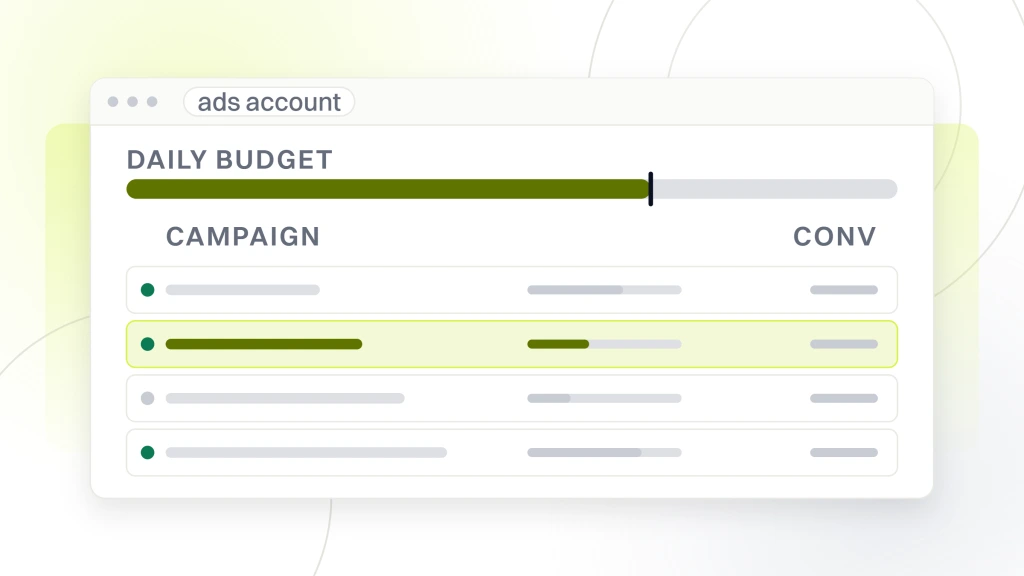
The shift is not a rejection of Meta. It is a repositioning of Meta from prospecting to retargeting. Retargeting warm audiences on Meta still delivers 4 to 9% conversion rates on form drop-offs. Prospecting cold audiences on Meta now costs $340 to $520 per booked treatment across our aesthetic accounts, versus $180 to $260 for the same booked treatments through Google Ads. Same practice, same offer, roughly 2x the cost on Meta prospecting versus Google search. The math no longer supports heavy Meta prospecting in 2026.
| Channel | 2024 cost per booked treatment | 2026 cost per booked treatment | Recommendation |
|---|---|---|---|
| Google Ads search | $180 to $260 | $180 to $260 | Scale up |
| Meta prospecting | $220 to $310 | $340 to $520 | Cut heavy |
| Meta retargeting | $140 to $220 | $180 to $260 | Hold |
| TikTok organic | N/A | $0 to $60 | Watch 90 days |
| Google Ads Performance Max | $260 to $380 | $220 to $320 | Test |
Google Ads share increase
Practices moving 15 to 25% of budget from Meta prospecting into Google Ads search should expect booked-treatment volume to climb 8 to 18% on the same total spend inside 60 days. The mechanism is intent. Google search catches patients already looking for the treatment or the practice. Meta prospecting interrupts a scroll on someone who was not looking. Intent-based traffic converts 2 to 4 times higher on aesthetic offers, and the cost advantage compounds every month the shift stays in place.
Google Ads Performance Max test
Google Performance Max campaigns delivered inconsistent returns for aesthetics through 2024. In 2026 the algorithm handling has matured and Performance Max delivers $220 to $320 per booked treatment on well-structured campaigns. Test it with 15% of your Google Ads budget for 90 days on top of standard search campaigns. If the cost per booked treatment holds under $280, scale it to 25 to 30% of Google spend. If it drifts past $340, cut and reinvest in standard search.
Video content is now expected everywhere in med spa marketing
Video is the least-optional of the med spa marketing trends 2026. It moved from optional to expected in 2025 and became table stakes this year. Not TikTok in particular. Video everywhere. Provider intro clips on the homepage. Treatment explainer videos on service pages. Before-and-after reveal videos in the gallery. Patient testimonial videos on the reviews page. Practices running the full video stack see time on page climb 40 to 90% and booking form completion climb 15 to 30% versus text-only pages. Verdict, act on it now.
Production quality no longer needs to hit broadcast standard. A well-lit iPhone video with a clean audio track and a 15 to 45 second edit outperforms an overproduced $8,000 video in most conversion tests we’ve run. Patients want authenticity and provider familiarity, not stock B-roll and voiceover. Budget $600 to $1,800 per quarter for video shoots at the practice. That level covers 8 to 15 videos across the site plus enough short-form content to feed Instagram Reels and TikTok for the quarter.
Provider intro videos
A 30 to 45 second provider intro video on the homepage introduces the injector or aesthetician who does the treatment. The patient bonds with the face before they book. Practices adding a provider intro video see booking form completion climb 18 to 32% on the same traffic. Cost of production runs $200 to $600 for a professional shoot or under $100 for a well-lit iPhone shot. The return per booked treatment on that spend lands under $8 on almost every account we advise.
Treatment explainer videos
A 60 to 90 second treatment explainer video on each service page walks the patient through what to expect. Room setup. Provider prep. Injection or session flow. Recovery time. Realistic before-after timing. Patients who watch the explainer complete the booking form at 22 to 40% higher rates than patients who see only text. The video removes uncertainty. Uncertainty is the primary bounce trigger on service pages. Every top treatment gets an explainer in 2026 or the page underperforms.
Case study from a Pacific Northwest med spa
A Seattle-area med spa we rebuilt, a multi-room aesthetics practice, ran the full med spa marketing trends 2026 stack over nine months. AI Overview optimization on 22 service pages. Provider intro videos on the homepage and six service pages. Membership program launch at $149 per month with flexible roll-forward credits. Paid budget shift from 55% Meta prospecting to 22% Meta retargeting plus 63% Google Ads. Weekly KPI reviews. Nine months in, consult requests climbed 241%, organic traffic climbed 178%, and paid cost per lead dropped 38% on the same $8,400 monthly budget.
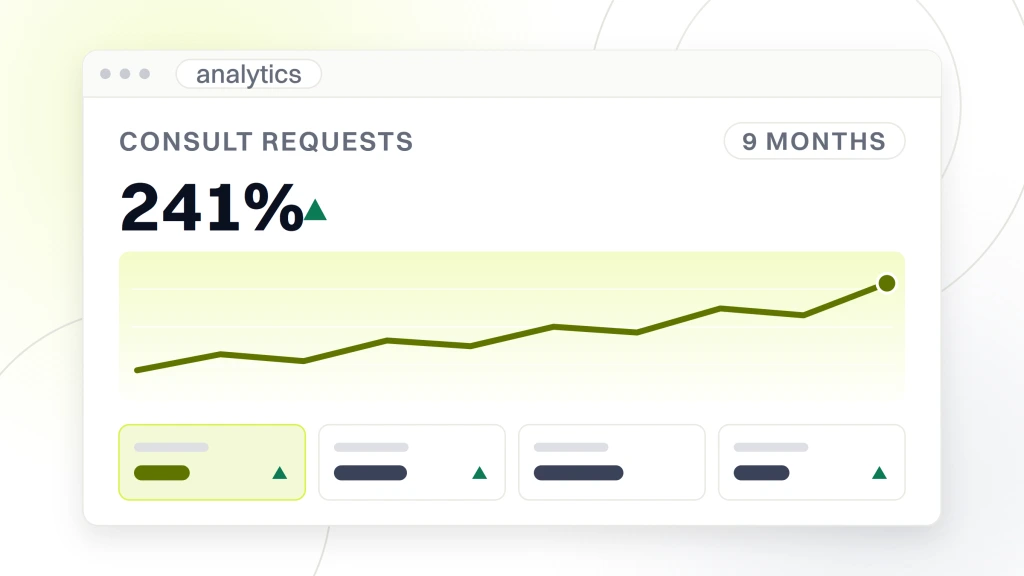
The single biggest lever inside the 2026 stack was the paid channel shift. Cutting Meta prospecting from 55% of paid budget to 22% freed $2,600 per month that moved into Google Ads search. Booked treatments climbed from 38 per month to 112 per month on the same total budget. Membership rollout added $22,050 in monthly recurring revenue by month nine at 148 active members. AI Overview citations climbed from zero to 11 of the 22 optimized service pages, driving a measurable click-through advantage on the top pricing-band queries.
Nine-month numbers
Consult requests climbed from 26 per month to 89. Organic sessions per month climbed from 4,200 to 11,676. Paid cost per lead dropped from $142 to $88. Booked treatments per month climbed from 38 to 112 on the same $8,400 monthly ad spend. Membership grew from zero enrolled to 148 active members generating $22,050 in monthly recurring revenue. That MRR alone covered the entire monthly marketing budget with headroom left over.
Trend-by-trend attribution
Attribution across the med spa marketing trends 2026 stack broke down roughly as follows. The paid channel shift produced 42% of the booked-treatment growth. AI Overview citation-driven organic climbed 26%. Membership rollout added 18% of new patient volume through referral-friendly member perks. Video content on service pages added 14% via higher form completion. Every trend contributed measurable growth. The compound effect of running all four together produced a result no single trend could match on its own. A second Manhattan account we rebuilt on the same playbook, a luxury aesthetics clinic, saw 166% lead growth, 88% new user growth, and a 27% conversion rate gain inside 12 months of the redesign plus SEO push.
Med spa marketing trends 2026 worth skipping
Not every trend deserves attention. Some med spa marketing trends 2026 produce nothing measurable and cost time or money. Skip these five. Voice search optimization for aesthetics, since voice queries for cosmetic procedures remain under 2% of total search volume. Metaverse presence, since aesthetic decisions still happen face to face. NFT loyalty programs, since no patient wants a JPG in their wallet as a Botox reward. Podcast advertising for local practices, since reach outside your metro is wasted spend. Full-page magazine ads, since attribution is impossible and cost per booked treatment averages above $800.
Two more trends deserve a pass in 2026. Facebook groups no longer produce meaningful traffic for aesthetics. Snapchat ads never scaled for medical aesthetics and the platform’s user base skew makes it a poor fit. Every dollar redirected from these skip-list trends into Google Ads search or membership marketing produces a measurable return. Practices that chase every trend see marketing budget scattered across 14 channels with no single channel producing enough volume to attribute. Concentrate on the trends that book treatments.
Voice search for aesthetics
Voice search technology matters for restaurants and local services with strong location intent. It does not yet matter for cosmetic procedures where patients research on a phone screen with images. Aesthetic queries by voice remain under 2% of total volume across the accounts we track. Optimizing for voice steals time from work on AI Overviews and video content that produces measurable booked treatments. Skip voice-specific SEO in 2026 and revisit in 2027 or 2028 if voice-driven cosmetic search hits 6 to 8% of query volume.
Magazine and lifestyle print
A full-page ad in a local lifestyle magazine runs $2,800 to $6,400 for a single month. Attribution is impossible since print does not carry click tracking. Cost per booked treatment on the accounts we tracked averaged $840 to $1,600 for print ads. The same budget in Google Ads or membership marketing produces 8 to 20 times the booked treatments. Print marketing works for luxury Rolex, not for local med spas competing on treatment access and pricing. Skip print in 2026 unless you have specific brand-halo goals that override cost per booked treatment as the primary KPI.
Privacy compliance keeps tightening in 2026
Privacy is one of the sleeper med spa marketing trends 2026. Compliance tightened across 2025 and keeps tightening in 2026. iOS 17 and 18 App Tracking Transparency cut Meta pixel effectiveness by 60 to 80% on the audiences that opted out. Google’s Consent Mode v2 became a hard requirement for European traffic and a soft requirement globally. Cross-domain tracking through third-party cookies is on its way out. Practices that ignore consent management see paid audiences shrink and reporting accuracy drop through 2026. Verdict, act on it now.
The fix is a Consent Management Platform (CMP) integrated with Google Consent Mode and Meta Conversions API. Server-side tracking through Google Tag Manager server containers or a similar solution. First-party data collection through email opt-ins, membership sign-ups, and consent-first review requests. Practices that adopt this stack see paid audience match rates hold at 80 to 92%, versus 45 to 65% on legacy cookie-based tracking. See the EU GDPR reference and the California CCPA guide for the compliance baselines.
Google Consent Mode v2
Google Consent Mode v2 signals whether a visitor consented to analytics and advertising tracking. When consent is denied, Google uses modeled conversion data to estimate the missing information. Practices running Consent Mode v2 correctly see reported conversions stay within 8 to 15% of actual bookings. Practices that skip the setup see reported conversions drop 30 to 50% below actual bookings and make budget decisions off incorrect numbers. Setup takes a day of Google Tag Manager work and pays back inside the first month.
First-party data collection
First-party data is data the patient gave you directly. Email addresses from booking forms. Phone numbers from SMS opt-ins. Membership records. Loyalty program sign-ups. Practices that collect first-party data at every patient touchpoint build owned audiences immune to platform tracking changes. Meta Conversions API and Google Enhanced Conversions upload first-party data to match paid conversions against real bookings. Practices running this stack see paid audience quality hold as third-party tracking degrades. Every 2026 practice should have a first-party data collection strategy.
Retention economics beat raw acquisition
Retention economics anchor the med spa marketing trends 2026 shortlist. The conversation across aesthetics this year shifted from raw acquisition to retention economics. Paid acquisition costs climbed across every channel except Google search. Retention through membership, rebook nudges, and referral loops now produces a larger share of monthly booked treatments than paid acquisition on the accounts we run. Practices treating 2026 as an acquisition year instead of a retention year see marketing spend climb 25 to 40% for the same booked-treatment volume they produced in 2024. Verdict, act on it now.
Retention economics work three ways. First, higher lifetime value on existing patients through membership and rebook. Second, referral bookings at $8 to $18 cost per treatment from existing patients handing out cards. Third, reactivation of lapsed patients at a 15 to 28% take-up rate on a well-run 90-day email flow. Practices running all three plays see blended cost per booked treatment drop 30 to 50% inside 12 months as owned-audience revenue carries a larger share of monthly volume than paid acquisition.
Lifetime value shift
Non-member patients average $1,100 in lifetime value across the accounts we track. Member patients average $3,400 in lifetime value inside 24 months. That 3x difference changes the entire math on paid acquisition. A patient acquired at $196 through Google Ads who becomes a member returns $3,204 in lifetime margin. The same patient without membership returns $904. Membership is not a nice-to-have in 2026. It is the mechanism that makes paid acquisition profitable across every practice size.
Rebook SMS nudges
SMS rebook nudges 30 days after a Botox or filler treatment produce a 22 to 35% take-up rate. That single automated message keeps the calendar filled and cuts the acquisition burden by a measurable margin every month. Practices skipping rebook nudges see 40 to 60% of Botox patients drift past the four-month refill window and drop out of active patient status. Practices running rebook nudges hold active patient count 15 to 30% higher on the same acquisition volume.
Where to start with med spa marketing trends 2026 this quarter
The med spa marketing trends 2026 stack works best when you commit to a short list this quarter. Pick three moves. Move 20% of paid budget from Meta prospecting into Google Ads search. Launch a membership program at $99 to $189 per month with flexible roll-forward credits. Add provider intro videos to the homepage and top three service pages. Those three moves produce measurable booked-treatment volume inside 90 days at almost any practice size. Every other trend in this guide stacks on top of those three.
When you’re ready to run the full stack, our med spa marketing agency engagement covers strategy, paid channels, SEO retainer, and site rebuild in one plan. The med spa marketing retainer starts at $1,499 per month for a lighter touch across email, SEO, and content while running paid in-house. For sibling reads, see our med spa marketing strategies and med spa marketing plan template for the full-year operating rhythm.