Most fashion ecommerce teams buy the seo tools for fashion ecommerce their agency already runs, plug them into Shopify, and treat the monthly subscription as the strategy. Six months in, the store carries an Ahrefs seat nobody signs into, a Semrush account still parked on the trial dashboard, a Screaming Frog license the developer misplaced the key for, and a Shopify SEO app running quiet in the theme charging $29 monthly for the redirects a plugin already handles. The stack rings up $700 a month and produces nothing anyone can point at inside a revenue or Merchant Center report.
This guide covers the seo tools for fashion ecommerce that pull real revenue when wired against a working process. Ahrefs and Semrush for competitive gap and keyword research. Screaming Frog for crawl and technical audit. Shopify SEO apps that solve a real job versus the ones duplicating free work. Image alt automation for catalogs pushing 4,000 SKUs. Product feed monitoring for Google Shopping and Merchant Center. Every recommendation below runs on real DTC apparel and accessories catalogs our apparel fashion SEO hub supports across the 2024 through 2026 catalogs we have measured.
Screaming Frog and technical seo tools for fashion ecommerce
Screaming Frog is the single best paid tool in the technical layer of the seo tools for fashion ecommerce stack. The desktop crawler pulls every URL, every image, every schema block, every canonical, every redirect chain, and every h1 count into a spreadsheet the team can filter and act on inside 90 minutes. The annual license runs $259 and pays for itself the first quarter on almost every catalog we audit.
The crawl checklist that finds real problems
Run the crawl monthly against production. Filter for pages with 0 h1s, duplicate h1s, or 3 or more h1s. Filter for images with empty alt text, alt text over 125 characters, or file size over 250 kilobytes. Filter for canonical loops, canonical mismatches, and canonical pointing to a 404. Filter for redirect chains of 3 or more hops. Filter for PDPs with no Product schema, no BreadcrumbList schema, or Product schema missing price, availability, or sku. Fashion catalogs typically surface 400 to 1,200 fixable issues per month on the first three crawls, dropping to 40 to 90 issues per month by month six as the technical baseline stabilizes.
What Screaming Frog cannot do alone
Screaming Frog crawls the catalog but does not report on real user behavior. Pair the crawl output with Google Search Console for actual query and click data, PageSpeed Insights for page loading performance, and GA4 for on-page engagement. The crawler flags a broken canonical. Search Console shows whether that canonical was pulling ranking signal. The crawler flags a slow page. PageSpeed Insights shows what slowed it down. Fashion catalogs running Screaming Frog in isolation from Search Console typically fix technical debt that was not costing them anything and miss the debt that was. The Google Product structured data documentation is the reference every technical crawl audit should benchmark PDP schema output against.
Shopify SEO apps and native seo tools for fashion ecommerce
Shopify handles a lot of the basic seo tools for fashion ecommerce work natively. Sitemap generation, robots.txt, 301 redirects on URL changes, canonical tags, and meta description fields on every collection and product. That native coverage means most Shopify SEO apps in the app store duplicate work the platform already does. The apps worth paying for solve a job the platform does not.
| Shopify SEO app | Real job solved | Monthly cost | Duplicate of native | Worth the seat |
|---|---|---|---|---|
| SearchPie | Bulk alt text plus schema | $39 | Partial (schema yes, redirects no) | Yes for catalogs over 500 SKUs |
| Plug in SEO | Audit alerts plus redirects | $29.99 | Redirects duplicate native | Only for catalogs on legacy themes |
| TinyIMG | Image compression plus WebP | $14 | WebP now native since 2024 | Marginal, test first |
| Smart SEO | Auto meta plus JSON-LD | $9.99 | Meta duplicates native fields | Only if team never writes meta |
| Yoast SEO for Shopify | Content analysis on collection copy | $19 | No native equivalent | Yes for content-heavy stores |
| Judge.me | Review schema plus rich snippets | Free tier | No native equivalent | Yes on almost every fashion catalog |
Hold the rule tight. Every Shopify SEO app in the stack should map to a job the platform does not solve natively. Every app duplicating native work gets removed on the next quarterly review. Fashion catalogs auditing their app subscriptions once a quarter typically cancel 30 to 50% of installed apps without measurable impact on organic sessions, saving $150 to $400 monthly per store. The recovered budget usually funds the Screaming Frog license and one Ahrefs seat with room left over.
Image alt automation seo tools for fashion ecommerce
Alt automation is the third job the seo tools for fashion ecommerce stack has to handle at scale. Fashion catalogs push 4 to 12 photos per product across 500 to 5,000 SKUs, which puts the image count between 2,000 and 60,000 individual product shots. Writing alt text by hand for a catalog that size runs the design team 60 to 200 hours the first pass and never gets updated on new drops. The automated route wires machine learning image captioning against the product taxonomy and pushes generated alt into every image field programmatically.
What automated alt reads like in production
Good automated alt reads brand name plus product type plus color plus a distinguishing detail. Ralph Lauren navy blue mesh polo with white embroidered logo. Zara black wool coat with gold buttons and belted waist. Alexander McQueen ivory silk dress with asymmetric hem and lace trim. The alt gets generated from the product title, the product taxonomy tags (color, material, category), and one image classification pass. Fashion catalogs running automated alt against 40,000 images typically fix 80 to 95% of empty or thin alt fields inside 48 hours and pull 20 to 35% more Google Images traffic within 90 days on the alt-optimized catalog.
Tools that solve the job
- SearchPie for Shopify. Bulk alt automation plus schema, $39 monthly, good baseline for stores under 3,000 SKUs.
- Alt Text AI. Dedicated ML alt generation, $19 monthly for 5,000 alt captions, works across Shopify, Magento, WooCommerce.
- ImageKit. Image CDN plus alt automation plus WebP conversion, $49 monthly, best for catalogs pushing 10,000+ images.
- Custom script against Cloudinary. For catalogs over 20,000 images, roll a custom pipeline running Cloudinary auto-tagging plus a taxonomy template, roughly $200 monthly at scale.
- Manual bulk edit through Shopify Bulk Editor. For catalogs under 500 SKUs, still the cheapest path if the design team has 20 hours to spare.
Pick the tool against catalog size, not vendor preference. Small catalogs waste money on ImageKit. Large catalogs waste hours on Shopify Bulk Editor. The right tool matches the SKU count, the image count per SKU, and the taxonomy quality already in place.
Product feed monitoring for fashion catalogs
Product feed monitoring is the fourth job in the seo tools for fashion ecommerce stack and the one most catalogs skip. The Google Merchant Center feed drives Google Shopping visibility, which drives 30 to 55% of fashion catalog paid revenue and a growing share of organic product listings inside Google’s shopping tab. Feed errors that quietly break visibility rarely surface on the analytics dashboard, since the errors sit inside Merchant Center rather than the store admin.
Feed tools that solve real problems
DataFeedWatch and Feedonomics are the two enterprise-grade options. DataFeedWatch runs $59 to $499 monthly depending on SKU count and pulls feeds from Shopify, Magento, BigCommerce, WooCommerce, and any custom platform. Feedonomics runs $1,000+ monthly and targets stores over $10 million annual revenue with dedicated account management. Simprosys Google Shopping Feed runs $9 to $49 monthly for Shopify-only stores and covers 80% of the feed job for catalogs under $5 million revenue. Fashion catalogs typically pick DataFeedWatch when running multi-platform (Shopify plus Amazon plus Instagram Shopping), Simprosys when Shopify-only, Feedonomics only when the revenue justifies the account manager.
The feed audit checklist
Run the feed audit weekly. Check Merchant Center for suspended items, disapproved items, and items with policy warnings. Check that every product includes the 8 required attributes (id, title, description, link, image_link, availability, price, brand). Check that fashion-required attributes are present (color, size, gender, age_group, size_type, size_system, material, pattern). Fashion catalogs missing the fashion-required attributes typically get filtered out of 40 to 60% of relevant Shopping queries, since Google cannot match the product to the query without the size and color data. Catalogs auditing feeds weekly typically recover 20 to 45% more Merchant Center impressions within 30 days on average, most of which convert at rates similar to their non-broken product listings.
How to pick the right seo tools for fashion ecommerce
The right seo tools for fashion ecommerce match the store’s platform, revenue stage, catalog size, and team capacity. A 200-SKU Shopify catalog doing $500,000 annual revenue does not need a Semrush Business plan and a Feedonomics contract. A 12,000-SKU Magento catalog doing $30 million revenue needs both.
The stack by revenue stage
Under $1 million revenue. Ahrefs Lite ($99 monthly), Screaming Frog free tier or licensed ($22 monthly amortized), one Shopify app ($9 to $29 monthly), Simprosys feed ($9 to $19 monthly). Total roughly $150 monthly. Between $1 million and $5 million revenue. Ahrefs Standard ($199 monthly) or Semrush Pro ($139 monthly), Screaming Frog licensed, two Shopify apps, DataFeedWatch entry plan ($59 monthly). Total roughly $400 monthly. Between $5 million and $20 million revenue. Both Ahrefs and Semrush at Standard tier, Screaming Frog licensed, three Shopify apps, DataFeedWatch mid tier ($139 monthly), ImageKit or custom alt pipeline. Total roughly $800 monthly. Over $20 million. Enterprise seats across the board, Feedonomics contract, custom development for the taxonomy layer. Total $2,000 to $5,000 monthly.
The mistakes that waste budget
Three mistakes waste tool budget most often. Buying enterprise tools before the team can use them (a $499 monthly DataFeedWatch seat on a 100-SKU store nobody logs into). Buying redundant tools (both SearchPie and Smart SEO installed on Shopify, both writing meta descriptions the team overwrites manually). Buying vanity tools nobody runs (an Ahrefs Business seat used once a quarter for a screenshot in the client report). Catalogs auditing the tool stack quarterly typically cut 25 to 45% of tool spend without losing capability, funneling the recovered budget into content production or paid media where it drives measurable revenue.
Free seo tools for fashion ecommerce worth running
Free seo tools for fashion ecommerce cover a real slice of the catalog SEO job when the team knows how to use them. Google Search Console pulls the click, impression, and query data that no paid tool can access directly. Google Analytics 4 tracks on-page behavior and conversion attribution. PageSpeed Insights measures page loading performance against the actual field data Google uses in rankings. Bing Webmaster Tools duplicates most of Search Console for the 8 to 15% of fashion queries that come through Bing.
What the free stack covers
The free stack covers query data (Search Console), behavior data (GA4), performance data (PageSpeed Insights), schema validation (Rich Results Test), and crawl basics (Screaming Frog free tier up to 500 URLs). Fashion catalogs under 500 SKUs running only the free stack plus one Shopify app typically pull 60 to 75% of the capability of a paid stack for 5 to 10% of the cost. The gap fills when the catalog crosses 1,000 SKUs and the Screaming Frog free tier caps out, or when the team needs competitive gap analysis Search Console cannot show.
Where the free stack falls short
The free stack cannot pull competitor keyword data (that job needs Ahrefs or Semrush). It cannot crawl catalogs over 500 URLs (needs Screaming Frog paid or Sitebulb). It cannot automate alt text at scale (needs Alt Text AI, SearchPie, or a custom pipeline). It cannot monitor Merchant Center feed errors at scale (needs DataFeedWatch or Simprosys). Fashion catalogs starting on the free stack typically graduate to a paid stack within 6 to 12 months as the catalog grows and the free tools cap out. Starting free during the small-catalog phase saves budget the team can redirect toward content, photography, or paid media during the launch phase before the catalog earns the paid tools their keep.
How a DTC apparel catalog uses seo tools for fashion ecommerce
Here is what real seo tools for fashion ecommerce work looks like across a live catalog. A DTC women’s outerwear catalog came to our team running a 1,800-SKU Shopify store at $2.4 million annual revenue, an unused Ahrefs seat, four overlapping Shopify apps, and a feed with 340 disapproved products. Organic sessions had flatlined at 18,000 monthly for 9 months as paid social costs climbed and the team could not point at a single organic lever moving.
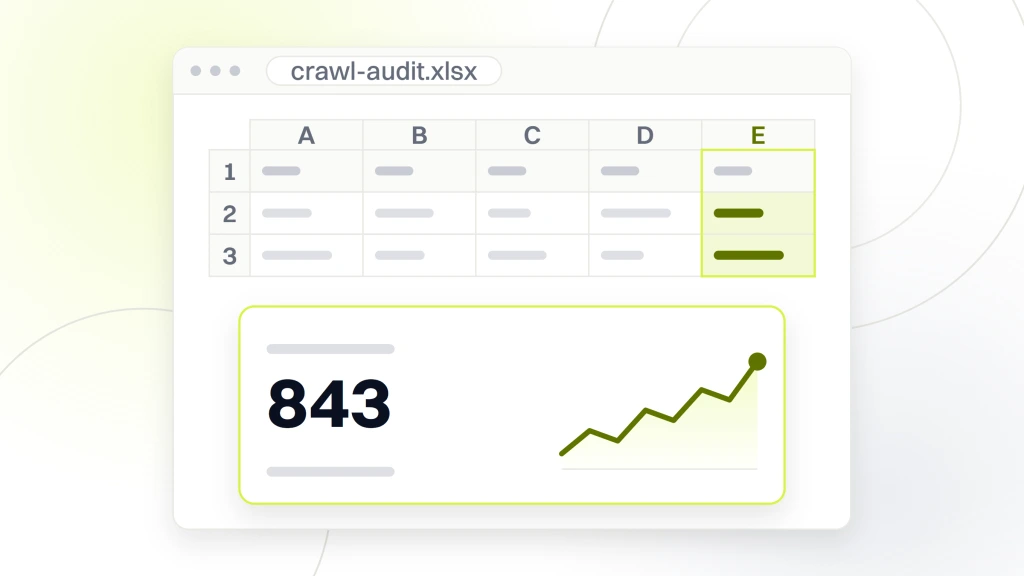
Our team ran the four-job audit against the existing stack. We killed two of the four Shopify apps that duplicated native work. We rebuilt the Ahrefs workflow around a monthly competitor gap report against 5 rotating peers. We purchased a Screaming Frog license and ran the first crawl audit against the catalog, surfacing 843 fixable technical issues in the first pass. Alt Text AI got wired against the 12,400 product images with empty or thin alt fields. The Simprosys feed configuration got rebuilt with the fashion-required attributes and the 340 disapproved products got cleared across 8 sessions with the merchandising lead.
Across the next 6 months, organic sessions climbed 61% to 29,000 monthly, Merchant Center impressions recovered the 34% loss and grew another 42% on top, Google Images traffic climbed 78% against the alt-optimized catalog, and Search Console average position improved from 24 to 14 on the top 200 target queries. The catalog cut monthly tool spend from $520 to $340 by killing the redundant apps, funneling the recovered budget into two additional monthly content pieces produced through our fashion SEO services retainer scope.
A parallel proof point comes from RAFZ Cirkulära Interiörer, an ecommerce client where the tooling and technical rebuild grew conversion rate 28%, cut fully loaded page time from over 15 seconds down to 2 seconds, and reduced server requests 82% inside the post-launch window. The same disciplined stack pattern (technical crawl, feed hygiene, performance tooling, monthly reporting) works across ecommerce verticals once the four jobs are named and staffed.
Measurement and reporting seo tools for fashion ecommerce
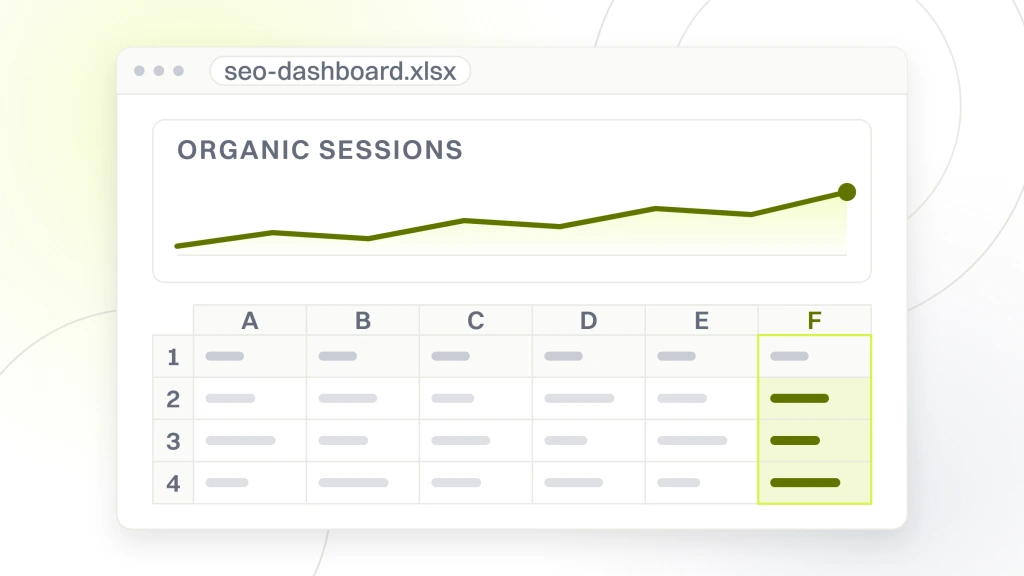
Measurement closes the loop on the seo tools for fashion ecommerce stack. A stack without a monthly reporting layer produces expensive subscriptions and no accountability. The right reporting layer aggregates the paid tool outputs alongside Search Console, GA4, and Merchant Center into one dashboard the merchandising lead reviews monthly with the SEO lead.
The KPIs to track per tool
Ahrefs or Semrush tracks ranking positions on the top 200 target queries, new-ranking keywords per month, and referring domain growth. Screaming Frog tracks technical issues opened and closed per month. Shopify SEO apps track alt coverage, schema coverage, and redirect health. Product feed tools track approved versus disapproved item count, impression share, and attribute coverage rate. The monthly dashboard shows all four in one view. Fashion catalogs running the four-tool dashboard for 6 months typically close 60 to 80% of open technical debt, add 200 to 500 new-ranking keywords quarterly, and grow Merchant Center impressions 30 to 60% over the reporting window.
Looker Studio as the reporting layer
Looker Studio pulls Search Console, GA4, and Merchant Center natively through the free connectors. Ahrefs and Semrush connect through paid third-party connectors ($49 monthly for Supermetrics) or through weekly CSV exports the team pastes into a Google Sheet the Looker dashboard reads. Screaming Frog outputs get pasted into a monthly Sheet the dashboard reads. The full setup runs $49 to $199 monthly on connectors depending on the paid tools involved and produces one dashboard the merchandising and SEO leads share every month. Catalogs skipping the reporting layer end up with 4 separate tool interfaces and 0 monthly synthesis, which produces tool fatigue and quiet cancellations 12 months later.
Where the seo tools for fashion ecommerce stack fits growth
The seo tools for fashion ecommerce layer sits inside the broader growth stack alongside paid social, email, influencer, and marketplace channels. The tools do not replace strategy. The tools do not replace the writing team. The tools do not replace the merchandising decisions that pick which SKUs get the depth work each quarter. What the right stack does is surface the queries worth ranking on, flag the technical issues costing rank, automate the repetitive alt and schema work at scale, and monitor the feed for silent breaks. That coverage frees the strategy layer to make bigger decisions than which app to install next.
The retainer version of this work runs inside our apparel fashion marketing retainer. SEO retainer tiers sit at $999, $1,499, $2,499, and from $4,500 per month on 6-month engagements. Every tier covers the tool stack audit, the monthly competitor gap report, the quarterly Screaming Frog technical crawl, the alt and schema automation setup, the Merchant Center feed rebuild, and the Looker Studio dashboard build. Fashion catalogs picking a partner should ask for the four-job map, the platform-specific stack recommendation, and the monthly reporting layer on the first call. A partner that cannot describe the four jobs in plain language is selling tool subscriptions rather than delivering results the merchandising team can point at inside the revenue report.
Our companion fashion SEO case study of a DTC apparel catalog walks the same four-layer sequence with real client numbers attached.