
Small business website maintenance packages sit at $199 to $499 monthly at Redefine Web and cover managed hosting, weekly plugin updates in staging, monthly backups, security monitoring, uptime polling, and one to four hours of content updates by tier. One retainer runs at $199 monthly and covers the six-item baseline for a solo owner or two-person shop. Another runs at $499 monthly and adds quarterly conversion audits and a weekly working session for a $30,000-plus monthly revenue business. Both are honest maintenance packages when the scope lives in the contract. Below $199 the retainer is a hosting bill in disguise. This guide walks you through what belongs inside each tier and how to tell the difference. Read straight through in about 10 minutes.
You are likely reading this after your current vendor charged $189 monthly and the site broke twice in the last quarter, and you cannot tell whether that is normal or whether you are being underserved. Below you will find the six-item monthly checklist every retainer should cover, the three Redefine Web maintenance tiers with real pricing at $199, $299, and $499, one comparison table, and two real Redefine Web client stories whose retainers paid back through prevented outages and compounding growth work. Steal the checklist, apply it to your current retainer, and see how many gaps you find in the first 10 minutes.
What small business website maintenance packages actually cover
Small business website maintenance packages cover six items at the baseline. Managed hosting bundled into the retainer on a real WordPress-optimized stack. Weekly plugin updates with staging verification. Monthly full-site backups tested for restore. Security monitoring with a written monthly report. Uptime monitoring with 1-minute polling. And one monthly content update inside included hours. Anything less is a hosting bill dressed as a retainer.
Managed hosting is the foundation, and Redefine Web bundles it inside every plan so you never pay a second invoice. Kinsta, WP Engine, Pressable, and Flywheel all price at $35 to $115 monthly for a single-site plan when you buy them direct. Shared hosting at $8 monthly on Bluehost or HostGator is not managed hosting. It is a cheap server the vendor uses to inflate margin. If a retainer includes hosting on an $8 plan and charges $189 monthly, the vendor pockets $180 monthly for what should cost you $35 on a real managed host. Force the vendor to name the host and show a current invoice. Real managed hosts run staging environments, automated daily backups, and object caching that shared hosts do not. External reference on the pattern lives at the Kinsta WordPress maintenance guide.
Plugin updates matter for one reason. They break sites weekly. A plugin update inside a staging environment before pushing to production catches the 3% of updates that would take the site down. Direct-to-production updates on Friday afternoon are how sites go down at 9 p.m. and stay down until Monday. The retainer that skips staging is the retainer that costs you six weeks of traffic recovery once a quarter. That is the single most common failure mode we audit on incoming maintenance accounts, and it is the fastest fix once the retainer is set up right.
Monthly website maintenance packages for small businesses at three tiers
Monthly website maintenance packages for small businesses split into three working tiers at Redefine Web. Essential at $199 monthly covers the six baseline items with one content-update hour. Growth at $299 monthly adds a monthly SEO report and one A/B test. Scale at $499 monthly adds a quarterly conversion audit and a weekly working session. An Enterprise plan serves multi-location brands and 10-plus-site portfolios and is priced by scope. Every tier includes managed hosting so you never chase a second invoice.
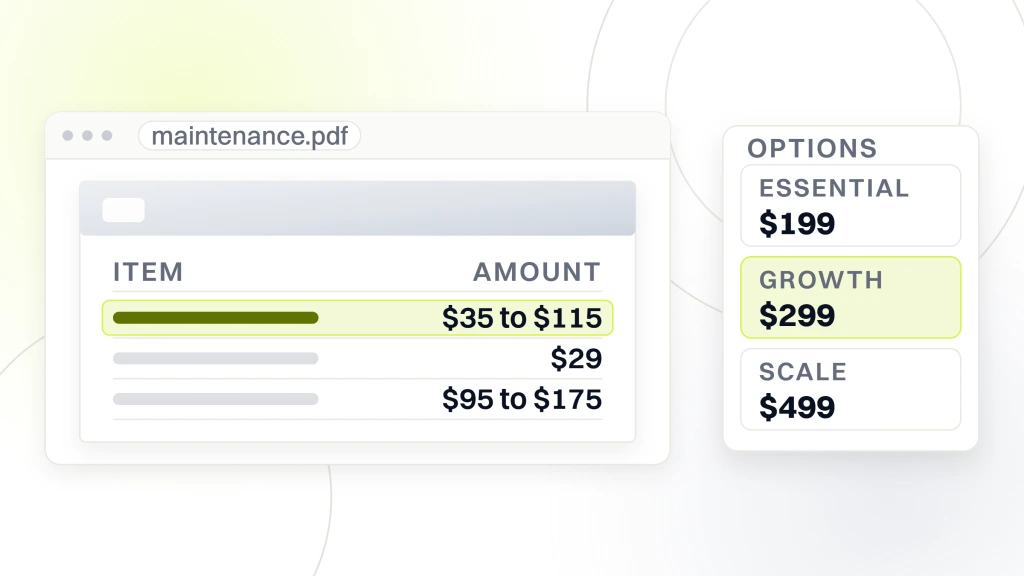
The Essential tier at $199 monthly fits solo owners and two-person shops with a launched site and stable traffic. Six baseline items delivered monthly. One content update included at 60 minutes. Overage billed at $120 hourly. Response time on outages under 4 hours during business hours. This tier is honest maintenance. Nothing more, nothing less. The retainer breaks even on prevented outages alone. One 48-hour outage during a peak-season week costs a service business $4,000 to $12,000 in lost jobs. The $2,388 annual retainer pays for itself the first time it prevents that outage.
The Growth tier at $299 monthly adds the ongoing SEO and conversion layer. Monthly report on organic traffic and ranking changes. One A/B test per month on a defined page. Two hours of content updates included, overage at $95 hourly. Response time under 2 hours during business hours. This tier fits businesses at $12,000 to $30,000 monthly revenue where the site actively drives leads and the vendor’s ongoing work compounds. For the retainer tier that pairs with a full growth-stage site, our Website Maintenance Packages from $199/mo practice runs the six-item baseline across every account.
Website maintenance packages for small business red flags on the intake call
Website maintenance packages for small business retainers hide two common red flags on the intake call. Retainer priced under $199 monthly. And retainer with uncapped hours advertised in the pitch. The first is a hosting bill. The second is a bait-and-switch where the vendor slow-rolls response times to stretch the margin.
Under $199 monthly the vendor cannot honestly cover managed hosting plus plugin updates plus backups plus security monitoring plus a content update. The math does not work. Managed hosting alone is $35 to $115. A monthly content update honestly costs 60 minutes of vendor time at $95 to $175 hourly. Security monitoring runs a $29 monthly Sucuri or Wordfence subscription. The retainer floor for real maintenance is $199. Anything below and the vendor is either subsidizing your account with margin from other clients (temporary) or cutting a corner (permanent).
Uncapped hours is the second trap. No vendor honestly delivers infinite work at a fixed monthly. The tell. The same vendor takes 3 to 5 business days to respond to a content update request. Ask the vendor to name the hours cap. If the answer dodges the number, ask for the average monthly hours delivered to their last three clients. If the vendor cannot name the number, it is not real. External reference on retainer scope patterns lives at the WP Rocket maintenance guide.
| Tier | Monthly | Content hours | SEO report | A/B tests | Response |
|---|---|---|---|---|---|
| Hosting only (elsewhere) | $8 to $115 | 0 | None | None | Ticket-based |
| Essential | $199 | 1 | Quarterly | None | 4 hours |
| Growth | $299 | 2 | Monthly | 1 per month | 2 hours |
| Scale | $499 | 4 | Monthly plus call | 2 per month | 1 hour |
| Enterprise | Custom | Scoped | Weekly | Continuous | 30 minutes |
Monthly website maintenance and hosting packages for small businesses that bundle both
Monthly website maintenance and hosting packages for small businesses that bundle hosting inside the retainer sit at $199 to $499 monthly at Redefine Web and cover managed WordPress hosting plus the full maintenance scope. Bundling is the default here for a simple reason. It saves the owner 4 to 6 hours a month on vendor coordination and puts one team on the hook for uptime, updates, and outages together.
Bundled hosting saves you the coordination cost of managing hosting separately. One invoice. One point of contact for site outages. One team responsible for both stack layers. Some vendors charge for bundling by marking a $35 host up to a $95 line item. Redefine Web publishes the flat retainer and eats the hosting cost inside the plan, so the owner sees one number and the vendor takes the margin question off the table. Ask any vendor to name the host and show what the hosting piece would cost as a separate invoice. If they resist, the bundle is markup, not savings.
Recommending external hosts as your default is revenue leakage for a small business. Two invoices, two support queues, and two teams pointing fingers when the site goes down at 9 p.m. A bundled retainer solves all three at once. For the maintenance-only conversation and the bundled shape, our Website Maintenance Packages from $199/mo practice runs both.
Two real client cases for the small business website maintenance packages conversation
Tilghman Builders is a home renovation contractor whose engagement shows what a bundled retainer plus growth work pays back over a long window. The account moved from an ad hoc developer relationship to a defined Redefine Web retainer covering the six-item baseline plus SEO and conversion work. Over a 9-year window the account posted a +353% annual revenue gain, with +784% and +637% on the two supporting result tiles. The maintenance layer prevented outages that would have cost peak-season revenue. The growth work compounded on top.
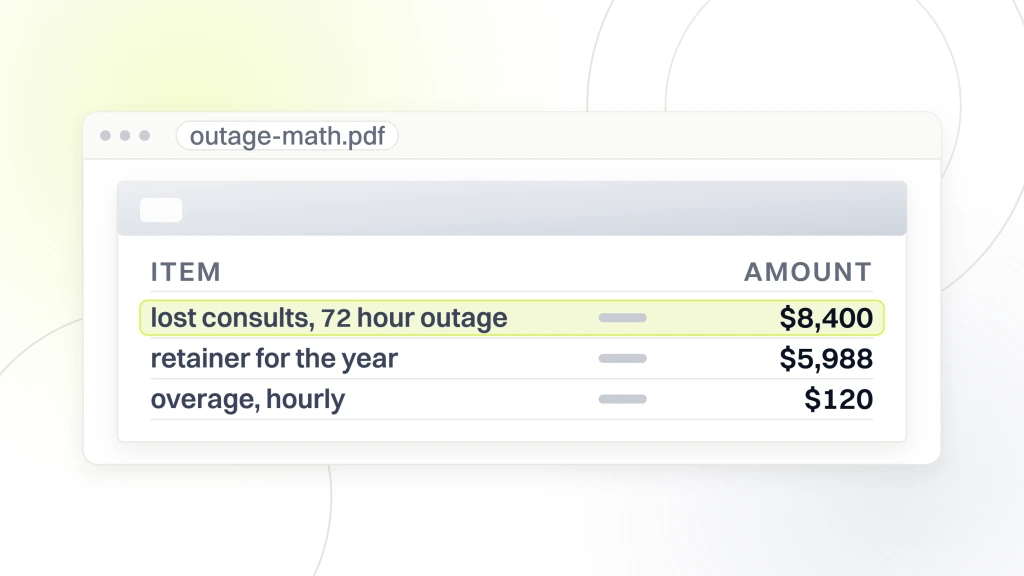
The prevented outages alone paid the retainer back. A plugin update in one September would have broken the contact form for 72 hours. The staging verification inside the retainer caught the conflict before the update pushed to production. The lost consult revenue from a 72-hour form outage during a peak booking period for a renovation business sits at roughly $8,400 in the client’s shape. The retainer at $499 monthly for the year cost $5,988. First prevented outage covered 14 months of retainer cost. The compounding SEO and conversion work was pure margin on top.
Passion Built, a second design-build renovator on a similar plan, added +10% renovation bookings over a 12-month curve with 800 and 300+ result tiles behind the headline. Two clients in the same vertical, two different result windows, one shared shape. Both retainers paid for themselves and then some. The takeaway for a small business considering a retainer. Maintenance is not a cost. It is insurance plus growth work. Pick the retainer for the 10 years past launch, not the first three months of it. For the paid search motion that pairs with the retainer, our PPC Management Services practice runs the same account shape.
Picking the small business website maintenance package tier that fits your stage
Match the maintenance tier to your monthly revenue and traffic. Under $12,000 monthly with under 800 sessions picks Foundation at $199. $12,000 to $30,000 monthly with 800 to 2,500 sessions picks Growth at $299. $30,000 to $80,000 monthly with 2,500 to 8,000 sessions picks Scale at $499. Above those numbers and across multi-site brands picks Enterprise, which is priced by scope. Buying above your stage burns cash on hours you cannot use.
The Essential tier at $199 monthly fits businesses where the site is stable, traffic is steady, and the owner does most of the content updates in the WordPress editor. The retainer covers hosting, security, backups, and one hour of vendor time per month for the update the owner cannot do. Response time under 4 hours during business hours. Overages billed at $120 hourly. This tier is right for the solo plumber, the two-person accounting shop, the one-location dental practice with a working Google Business Profile (GBP) and no plans for a rebrand in the next 12 months.
The Growth tier at $299 monthly fits businesses with a repeatable lead source, an active SEO effort, and monthly traffic worth optimizing. The retainer adds a monthly SEO report, one A/B test per month on a defined page, and 2 hours of content update time. Response time under 2 hours. This is the tier where the retainer earns back through better conversion, not just prevented outages. At the Scale tier at $499 monthly, the retainer starts including weekly working sessions and quarterly conversion audits, which fit businesses at $30,000 monthly revenue and above.
Firing a bad small business website maintenance packages vendor
Firing a small business website maintenance packages vendor is common enough that a working retainer contract should include the termination clause upfront. The right clause. 30 days notice, no reason required, prorated refund on unbilled work, full transfer of hosting credentials and site files within seven days. Anything longer is a lock-in.
The signals you are about to fire a maintenance vendor. Monthly reports arrive 3 to 5 days late with no data underneath. Plugin updates roll direct-to-production and skip staging verification. Response time on outages runs past 4 hours during business hours. Content update requests sit in a ticket queue for 3 to 5 days. And the vendor cannot produce a real month-over-month uptime number. Any two of these inside a quarter and you are already underserved. Send the termination notice, take the last-month invoice hit, and start the next vendor conversation with the lessons in hand.
The next vendor conversation goes faster once you know the questions to ask. What hosts do you support. What is your average response time on outages last month. Show me the last three months of uptime reports. How many plugin updates did you deploy last month and how many required rollback. What is your average time-to-completion on a content update request. The vendor who answers each question with a number is running a real maintenance program. The one who dodges is running the retainer you just fired.
Small business website maintenance packages six-item monthly checklist
Every small business website maintenance packages engagement should deliver six items monthly. Managed hosting on a real WordPress-optimized host bundled into the retainer. Weekly plugin updates verified in staging before pushing to production. Monthly full-site backups tested for restore. Security monitoring with a written monthly report. Uptime monitoring with 1-minute polling. One content update inside included hours with response under 4 hours.
Run this six-item checklist against your current retainer. If any item is missing or delivered inconsistently, the retainer is not real. The pattern we see repeatedly on audits of small-business maintenance accounts. Three of six items delivered honestly, one item delivered inconsistently, two items skipped entirely. The vendor collects $200 to $400 monthly for what should cost $80 to $120 in vendor time. The audit conversation catches this in the first 30 minutes and gives the owner room to renegotiate or leave.
Save the checklist. Apply it to every retainer quote you get and every monthly report your current vendor sends. When the report includes real data for all six items, the retainer is working. When it does not, the retainer is a hosting bill and you are overpaying by $80 to $300 monthly. For the retainer tier that publishes real monthly reports across the six items, our Website Maintenance Packages from $199/mo practice runs the shape end to end.
- Managed hosting bundled into the retainer on Kinsta, WP Engine, Pressable, or Flywheel
- Weekly plugin updates verified in staging before production push
- Monthly full-site backup with restore verified
- Security monitoring with written monthly report
- Uptime monitoring with 1-minute polling and outage alerts
- One content update per month inside included hours
- Response time under 4 hours on outages during business hours
- Written monthly report covering all of the above
- 30-day termination clause with full hosting credential transfer
Core Web Vitals inside small business website maintenance packages
Core Web Vitals belong in every small business maintenance retainer past the Foundation tier. Largest Contentful Paint (LCP) under 2.5 seconds. First Input Delay (FID) under 100 milliseconds. Cumulative Layout Shift (CLS) under 0.1. The retainer that watches these three numbers monthly catches ranking drops before they turn into traffic losses. The retainer that ignores them lets the site slowly slide off page one over 12 months without anyone noticing.
The Vitals shift over time even when the site does not change. A plugin update adds 40 kilobytes of JavaScript. A new blog post embeds an 800 kilobyte image without lazy loading. A third-party tracking script goes rogue and adds 300 milliseconds of blocking time. Any of these can push LCP past 2.5 seconds, and once it fails, Google downranks the site inside 30 days. The right retainer runs a monthly PageSpeed check and flags regressions in the first weekly report after they appear.
The math on Vitals-driven ranking drops. A two-position drop on a top service keyword for a small service business costs roughly $2,200 to $4,800 monthly in booked jobs at typical conversion rates. The retainer that catches and fixes a Vitals regression inside 30 days protects that revenue. The one that misses it costs the business the drop plus 60 to 90 days to recover once the fix goes live. External reference on Core Web Vitals patterns lives at the web.dev Core Web Vitals guide.
Wrap the small business website maintenance packages guide
Small business website maintenance packages that keep the site fast, secure, and earning run on a repeatable pattern. Six baseline items delivered monthly. Real managed hosting bundled inside the retainer. Retainer band written into the contract at signing. A written monthly report covering every deliverable. A 30-day termination clause that keeps you free.
If you take one thing from this guide, take the six-item checklist and apply it to every retainer in your inbox. If you take two things, force the monthly report format into the proposal at signing. When you are ready to talk through a retainer built on the six-item baseline at $199, $299, or $499 monthly, our Website Maintenance Packages from $199/mo practice walks through the shape in a 30-minute call. For the site build that pairs with the retainer, our Web Design Services for Small Business team runs the full engagement.