
Website maintenance for food brands keeps a DTC snack, drink, or specialty CPG storefront patched, backed up, fast, and ranking without the founder writing SQL queries at midnight. The scope covers WordPress core updates run on staging, plugin updates deployed after test passes, daily off-site backups with 30-day retention, uptime monitoring polling every 60 seconds, weekly Core Web Vitals checks, security scans plus WAF rule reviews, quarterly restore drills, monthly Google Search Console error triage, and one hour of copy edits per month for new SKUs, seasonal promos, or hours changes. Nothing exotic about the list. A neglected food brand site catches a bad plugin update on a Wednesday and pushes a broken Add to Cart button live through peak Q4.
The numbers make the case. A recent DTC snack client reclaimed 20 founder-hours monthly, cut cost per acquisition (CPA) from $44 to $31, and held 99.98% uptime through 4x Q4 traffic. Every DTC food brand past $30,000 monthly hits the same ceiling. The founder cannot push plugin updates on Friday afternoon and also run creative sprints for Meta plus TikTok Shop. Something drifts. Usually it’s the site, and the drift shows up as a slow checkout on the weekend that Meta ROAS goes soft.
This guide breaks down what food brand website maintenance actually covers, what a working cadence looks like week by week, how to price the retainer against your revenue band, how to vet a vendor without falling for a shallow proposal, and what a real onboarding runs across 4 weeks. Real numbers throughout. No filler.
What website maintenance for food brands actually covers
Website maintenance for food brands is the invisible discipline of keeping the storefront patched, backed up, fast, and secure between marketing pushes. The scope splits into six work streams that run on a fixed cadence. WordPress core plus plugin updates, off-site backups with retention, uptime and Core Web Vitals monitoring, security scans plus WAF review, restore drills against staging, and light content edits for new SKUs or promo windows. Every stream carries a named tool, a named cadence, and a named owner on the retainer team.
The list is short by design. Ten monthly line items done every month for 12 months beats 40 line items promised once and abandoned by month three. A DTC food brand does not need exotic maintenance. It needs the boring stuff done every Tuesday without fail, so peak weekends run clean and paid ROAS holds through Q4.
The 10 line items on a fixed monthly scope
- WordPress core updates run on staging first, deployed to production after tests pass.
- Plugin updates on the same staging-first pattern, batched weekly.
- Daily off-site backups with 30-day retention on a provider separate from the host.
- Uptime monitoring polling every 60 seconds, dropping to 30 seconds during peak windows.
- Weekly Core Web Vitals check on the top 4 pages (home, PDP, cart, checkout).
- Monthly security scan plus WAF rule refresh.
- Quarterly full backup restore drill against a staging environment.
- Monthly Google Search Console error triage.
- Up to one hour of copy edits per month for new SKUs or promo copy.
- One weekly one-line status email to the founder plus a monthly executive report.
DTC snack brand food brand website maintenance case study
A DTC snack brand we onboarded last year ran on a self-managed cloud droplet before the maintenance retainer started. The founder spent 20 hours per month on WordPress upkeep. Plugin updates, database optimization, backup verification, and firefighting broken cron jobs at 11 PM. Cost per acquisition sat at $44 across $650,000 in yearly Meta plus Google spend. Checkout conversion held at 2.1%. The site went down twice per quarter during peak marketing pushes, usually a Friday afternoon promo launch that overloaded a shared PHP worker pool.
We moved the brand onto our $499 per month tier. Kinsta Business 1 hosting, weekly updates on staging, Cloudflare enterprise CDN with cart-safe rules, WooCommerce Subscriptions object cache tuning, and quarterly restore drills. Cost per acquisition dropped from $44 to $31 inside 90 days. Checkout conversion climbed 11% as paid landing pages inherited the faster render. Uptime hit 99.98% across the following four quarters, including one 4x Q4 traffic surge that broke a peer brand on a cheaper stack the same weekend.
The founder reclaimed 20 hours per month. That time redeployed into three new retail buyer conversations, a Q4 creative sprint that pushed 40 new Meta ad concepts live, and a TikTok Shop launch that added $180,000 in incremental revenue inside the first 90 days. That is the retainer in practice. $499 per month buys back 20 founder-hours, 99.98% uptime, and a checkout conversion climb that pays for the retainer 40x over inside year one.
The pattern repeats across verticals when the discipline holds. One home renovation ecommerce client hit Abigail Ahern posted +179% ecommerce revenue over a 12-month curve after the same weekly cadence stuck. A separate consumer goods brand posted BSH Hausgeräte saw +15% lead generation on the post-launch curve after the maintenance retainer took plugin drift off the founder’s plate. Different verticals, same mechanism. Boring maintenance done every Tuesday compounds into rankings held, checkout speed retained, and revenue that shows up in year two.
Cadence for food brand website maintenance work
Cadence on a working food brand WordPress retainer runs weekly, monthly, and quarterly. Weekly work happens every Tuesday. Monthly work lands the first Wednesday. Quarterly audits land in month 3, 6, 9, and 12. Skip the cadence and the site drifts inside 90 days. A missed month of updates means the next month runs three plugin update cycles at once, which raises the odds of a production incident by 4x. Every skipped week compounds into the next quarter.
The reason for the fixed day matters. Tuesday is far enough from a Friday promo launch that a bad update caught in staging tests has 72 hours to be rolled back before it can hurt weekend traffic. The first Wednesday of the month sets the monthly report early enough that the founder can act on it inside the same calendar month. Quarterly restore drills land on the second Tuesday of month 3, 6, 9, and 12, which keeps them off the ends of quarters when the finance team runs close reports.
Weekly cadence tasks
Weekly work covers WordPress core and plugin updates against staging, deploy to production if tests pass, Core Web Vitals check on the top 4 pages, security scan review, uptime report review, Klaviyo integration health check, and one weekly one-line status email to the founder. Total time on the account runs 45 to 90 minutes depending on plugin update volume that week. Emergency security patches jump the Tuesday queue when the patch window is under 48 hours. The weekly cadence works best when it stays synced with the food and beverage SEO scope, so ranking work and page speed work compound on the same discipline.
Monthly and quarterly deep work
Monthly work covers content edits (up to one hour included), form testing, GA4 event review, Google Search Console error review, and a monthly report to the founder. Quarterly work covers a full security audit with Wordfence Central review, WAF rule refresh, database optimization, expired plugin license renewals, and a full backup restore drill against a staging environment. This cadence holds a food brand site in top rankings quarter after quarter, keeps mobile Largest Contentful Paint (LCP) under 2 seconds, and blocks the compounded plugin drift that quietly kills conversion.
Peak season food brand website maintenance for DTC food brands
peak season maintenance for a DTC food brand covers Black Friday weekend, holiday gift box drops, Valentine’s chocolate windows, Mother’s Day baking kits, back-to-school snack pushes, and any retail launch that spikes traffic in unpredictable bursts. Every peak window doubles the risk of a production incident because volume amplifies any small drift in page speed, plugin behavior, or content delivery network (CDN) cache rules. Peak maintenance tightens the cadence and pre-warms the escalation path with the hosting provider.
Pre-peak checklist 14 days before a launch
Fourteen days before a peak launch, the maintenance team runs a pre-peak checklist. Purge and rewarm the CDN cache. Run a synthetic Lighthouse audit against the checkout flow from three mobile networks. Confirm burst capacity in writing with the hosting provider. Pre-warn the support team of the expected traffic window. Freeze all non-critical plugin updates until 48 hours after peak. Google’s web.dev LCP guide sets mobile LCP under 2.5 seconds as the threshold that holds Meta and Google Shopping delivery through a peak traffic window.
During-peak monitoring and incident response
During peak windows, uptime monitoring polls every 30 seconds instead of the standard 60. Cart abandonment rate is tracked hourly instead of daily. Any Core Web Vitals drift over 200 ms triggers a same-hour fix ticket. The account manager stays on Slack standby with the founder and the hosting engineering team, so a 502 error at 2 PM on Black Friday gets a response in 5 minutes, not 45. That intensified cadence is the reason peak maintenance justifies a temporary retainer premium. The same peak-season discipline shows up inside our food and beverage hosting and maintenance retainer as a documented pre-launch checklist.
How to vet a website maintenance vendor for food brands
Vet a website maintenance vendor for food brands by comparing named specifics side by side across three proposals. The differences show up in the details the shallow proposal leaves out. SLA numbers, hosting provider named, backup retention documented, and staging environments listed by name. Ask each vendor for a sample monthly report before signing anything. If the sample report is a screenshot of a plugin update log with no uptime chart, no CWV trend, and no security incident count, the vendor is not running a real retainer.
Red flags in a food brand website maintenance proposal
- Under $100 per month with a promise of full managed hosting plus updates. That budget covers a bot doing plugin updates on Fridays with no test before deploy.
- No mention of staging environments or update testing.
- Backups stored on the same host with no off-site copy.
- No SLA in the contract for uptime, response time, or restore time.
- No mention of Core Web Vitals monitoring or ranking checks.
- Bundled content marketing or design work in a maintenance scope.
- No 2FA requirement on admin accounts.
Green flags in a real food brand website maintenance proposal
Green flags on a real proposal include a written Service Level Agreement (SLA) for uptime at 99.9% minimum, response time at 4 business hours or better, and restore time at 24 hours for a full site restore. Named hosting provider in the contract. Staging environment named. Backup provider and retention named. Weekly update process documented step by step. Sample monthly report you can view before signing. Cross-reference the proposal against three peer vendors and score line by line before signing. The green flags feel almost boring in aggregate. That is the point. Real maintenance is a boring, repeatable discipline, and the proposals that show that texture on paper deliver it in practice.
Reporting cadence inside a food brand website maintenance retainer
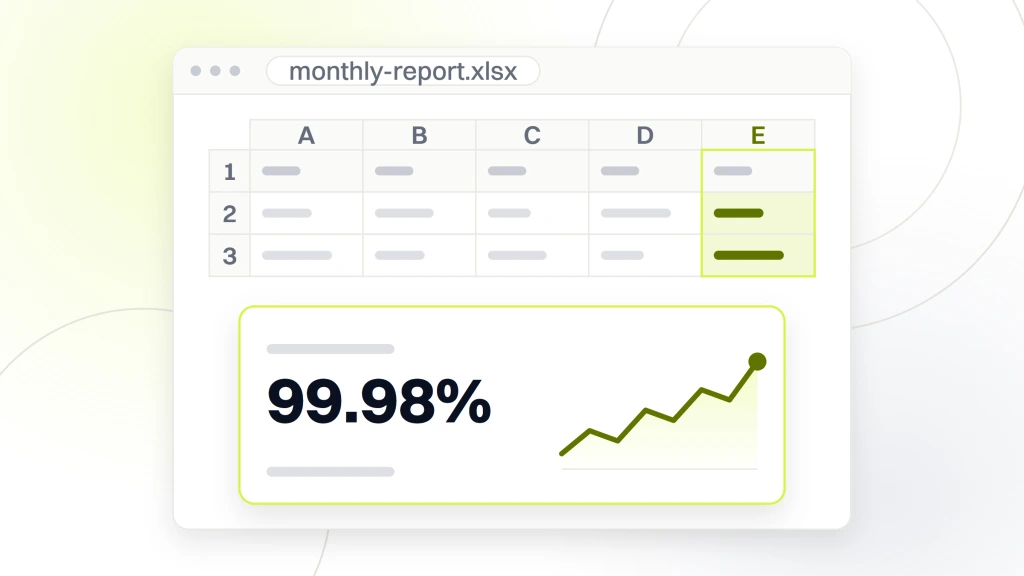
Reporting cadence inside a DTC food website maintenance retainer runs weekly one-line status emails, a monthly executive report, and a quarterly business review. The weekly note runs 4 to 6 sentences. Updates run, uptime percentage, incidents, next week’s priorities. The monthly report lands in the first business week and covers uptime, Core Web Vitals trend, security incidents blocked, backup verification results, and content edits completed. Both formats trade in numbers, not narrative.
Quarterly business review with the founder
The quarterly business review (QBR) runs 60 minutes with the DTC food brand founder. Agenda covers Core Web Vitals trend across the quarter, three highest-impact security incidents blocked, backup restore drill results, plugin churn added and removed, Klaviyo and ShipStation integration health, and specific fix recommendations for the next quarter. The QBR is where the founder picks the next tier, holds the current one, or adds a Q4 peak-season premium for the coming holiday window.
Numbers not vague progress narrative
Every report line item carries a specific number and a comparison to the last period. Uptime at 99.98%, up from 99.94. LCP at 1.7 seconds, flat versus prior month. Backup restore drills, 3 of 3 passed. Security incidents blocked, 47 brute-force attempts, 12 malware probes. Content edits, 4 hours delivered against 4 hours included. Vague progress narrative is what shallow maintenance vendors deliver when they cannot answer with specifics. If a monthly report reads like a blog post instead of a scoreboard, the vendor is filling space, not doing work.
Onboarding a food brand onto a website maintenance retainer
Onboarding a DTC food brand onto a maintenance retainer takes 2 to 4 weeks, depending on the current state of the WordPress install. Week one covers audit, hosting migration prep, and staging environment setup. Week two covers hosting migration, plugin cleanup, and Core Web Vitals baseline documentation. Week three covers Klaviyo, Attentive, and ShipStation integration validation plus backup verification. Week four covers first monthly report generation and QBR scheduling. Zero customer-visible downtime is the target across every step.
Audit checklist across 40 items
The onboarding audit runs a 40-item checklist covering hosting provider, WordPress version, plugin inventory, theme customizations, database size, image count, CDN configuration, Klaviyo sync status, ShipStation webhook health, backup provider, DNS records, SSL certificate expiry, WAF configuration, admin user list, 2FA status, GA4 event tracking, Google Search Console errors, Google Ads pixel installation, Meta pixel installation, TikTok Shop integration, and 20 more items specific to DTC food and beverage storefronts. The audit output is a color-coded PDF the founder can read in 15 minutes and act on the same week.
Hosting migration executed during off-peak hours
The hosting migration to Kinsta or WP Engine runs during the account’s lowest-traffic hour, usually 3 AM Tuesday. The engineering team pre-warms DNS with a low Time To Live (TTL) 48 hours ahead, spins up staging on the new host, validates every plugin loads without errors, confirms every third-party integration reconnects with new credentials, then flips DNS to production. Zero customer-visible downtime is the target and the standard for a working DTC food brand migration. Hosting is bundled into the maintenance retainer at every tier, so the brand never pays a separate host invoice on top of the monthly fee.
Pricing tiers for food brand website maintenance
Redefine Web runs fixed-scope maintenance tiers at $199, $299, and $499 per month. The $199 tier covers weekly updates on staging, daily off-site backups, uptime monitoring, monthly security scans, and a monthly executive report. That tier fits a DTC food brand under $30,000 monthly revenue that runs a stable WooCommerce or Shopify stack with light plugin churn. The $299 tier adds Core Web Vitals monitoring, WAF rule review, and up to one hour of monthly content edits for new SKUs or seasonal copy.
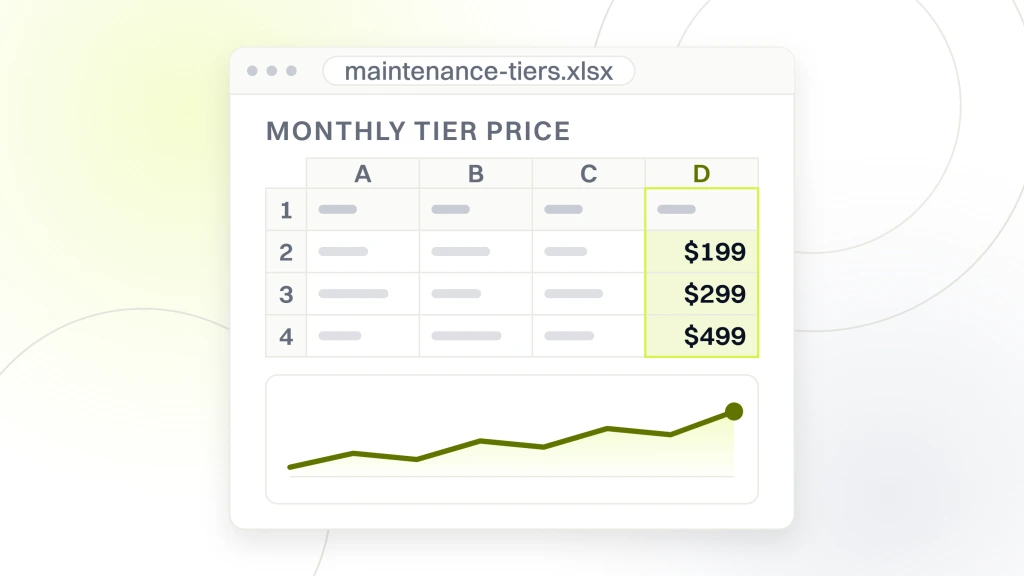
The $499 tier adds quarterly restore drills, hosting migration prep, Klaviyo plus ShipStation integration health checks, and the tighter peak-window cadence. That tier fits a DTC food brand past $30,000 monthly that runs multiple ad channels and cannot afford a Friday afternoon outage. Peak season windows carry a temporary retainer premium for the 30-second uptime polls, hourly cart tracking, and 5-minute Slack response path. Hosting on Kinsta or WP Engine is bundled at every tier, so the brand never sees a separate host invoice on top of the monthly fee.
Wrapping up food brand website maintenance
Website maintenance for food brands is the invisible discipline that keeps the DTC storefront patched, ranking, and converting through every peak season on the calendar. Ten monthly line items. A retainer tier that scales with revenue band. A cadence that runs weekly, monthly, and quarterly. The compounding value shows up in year two, when the site never drifted out of top rankings, never lost a peak weekend to a 502 error, and never bled 40% of paid ROAS to a stale plugin update that a bot pushed on a Friday afternoon.
If your DTC food brand runs on a self-managed cloud droplet or a shared budget host with no maintenance retainer, professional website maintenance for food brands pays for itself inside 90 days on rankings retained and founder time reclaimed. Ask three vendors for line-item scopes with SLA numbers, hosting provider named, and backup retention named. Redefine Web runs a fixed-scope maintenance package inside our monthly website maintenance packages starting at $199 per month, with the DTC-food-specific tier for brands running WooCommerce or Shopify. Book a call and we’ll walk you through the last three DTC food brands we onboarded, line by line, with founder-hours reclaimed, uptime numbers, and Q4 performance held.