Video marketing strategy for chiropractors is the difference between an account that books 8 to 25 new patient exams a month and one that quietly dies at week seven. The categories that convert are narrow. Back pain explainers. Sciatica walk-throughs. Posture corrections. Adjustment room clips with patient consent. Day-in-the-life sequences. Everything else is optional. This guide covers the scripts, the weekly cadence, the platforms, the gear, and the numbers that turn 45 minutes of Sunday filming into 15,000 to 100,000 monthly local views and a steady stream of new patient bookings.
Read this as a plan a solo DC or a two-location group can execute this quarter. Every benchmark here came out of chiropractor accounts we run or accounts we audited during onboarding. The 2026 plan splits attention across TikTok, YouTube Shorts, Instagram Reels, and the practice website. Same source footage. Different edits per platform. Four channels running off one filming batch.
Why video marketing strategy for chiropractors beats every other content type
The plan works, since the DC on camera is the practice’s single biggest trust asset. A prospective patient watching a 25-second clip sees the DC’s face, hears the voice, and evaluates the personality in one shot. Text and photos can’t do that job.
Video pulls higher distribution across every social platform than any other content type. TikTok weighs watch completion. Instagram Reels ranks by save rate and share rate. YouTube Shorts pushes clips with high average view duration. All three metrics reward well-produced short chiropractic videos. Text posts get 3 to 8 percent of the reach video posts get on the same account. Photos land at 12 to 25 percent. Video wins by a wide margin.
The trust transfer that video delivers
A prospective patient watching a DC explain sciatica for 25 seconds does the same mental work as a 5-minute phone call. Voice tone, facial expression, and clinical clarity get evaluated together. Practices with a strong video pipeline book 40 to 60 percent higher on first-call conversion, so the patient already trusts the DC before dialing. Practices without video have to build that trust during the intake call, which lengthens the sales cycle and drops booking rates.
Why photos and text underperform on chiropractic accounts
Photos of the waiting room don’t show what the DC actually does. Text posts about spinal health tips get scrolled past, since the algorithms deprioritize link-heavy or plain-text formats. Video carries face, voice, tone, and clinical demonstration in one asset. The chiropractor accounts we manage with strong video pipelines book 5 to 12 times the exams per social post vs. accounts that lean on photos and text.
The weekly filming cadence that keeps the plan running
Five videos per week is the sweet spot for a serious chiropractic account. Three per week is the algorithm floor. Ten hits diminishing returns for a solo DC. The batch happens on Sunday afternoon or Wednesday morning, 45 to 60 minutes of filming, with all edits done inside the phone. The DC does not touch the platforms on posting days. The office manager or front-desk lead handles the posting schedule.
The content mix stays predictable so the batch does not require creative agonizing every Sunday. Two pain explainers. One adjustment room clip with patient consent. One myth buster. One day-in-the-life or behind-the-scenes clip. That five-video mix covers the categories that book exams. Rotate the specific pains and myths week over week to keep the account fresh without inventing new formats.
- Sunday 2 PM. 45-minute filming batch, 5 videos captured.
- Sunday 4 PM. 20-minute edit session, captions and cuts on each video.
- Monday. Post video 1 to TikTok, YouTube Shorts, and Instagram Reels.
- Tuesday. Post video 2, boost the top video from the previous week.
- Wednesday. Check comments, reply with video replies to the top 3 questions.
- Thursday. Post video 3, embed on the website blog post that pairs.
- Friday. Post video 4, review the weekly stats.
- Saturday. Post video 5, plan next week’s filming topics.
Only film once a week when the DC can hold the 45-minute Sunday batch for 8 straight weeks. Skipping a batch sooner drops account momentum 30 to 50 percent.
The Sunday batch filming workflow
Write five hook lines on paper before the phone comes out. The hook is the first three words of each video. Set the phone at eye level, natural window light, no fancy background. Deliver the hook, then the 15 to 25 second payoff, then the soft call to action. Batch five in a row, no editing between takes. Total time from arrival to five drafts lands at 40 to 55 minutes. Editing runs another 20 minutes.
Editing inside the phone with CapCut
Edit inside CapCut or the platform’s native editor. Third-party desktop apps look off-platform and the algorithms quietly deprioritize them. Add auto-captions, since 75 percent of viewers watch with sound off. Trim the dead space at the front. Add one text overlay per key point. Total edit time per video runs 4 to 6 minutes. Save as a draft, schedule via the platform, and move on. Never post live unless a trend breaks and speed matters.
The chiropractic video formats that convert
Five formats carry roughly 90 percent of the booked exams that come from chiropractic video. The pain explainer, the myth buster, the adjustment room clip, the patient story with consent, and the day-in-the-life. Each format has a specific hook pattern, a specific length, and a specific call to action at the end. Mixing them keeps the account fresh without inventing new formats every week.
The pain explainer is the workhorse. A DC on camera explains why a specific pain happens, using anatomical terms in plain language, over 20 to 30 seconds. The myth buster corrects a common belief in 15 to 20 seconds. The adjustment room shows real treatment with consent, audio pulled up so the crack is audible. The patient story runs 30 to 45 seconds with the patient on camera. The day-in-the-life shows the DC’s schedule, morning routine, or busy Friday, running 20 to 35 seconds.
Pain explainer scripts that book exams
Open with the symptom. “Your lower back hurts when you stand up from your desk.” Then deliver a 15-second explanation using two or three anatomical terms. Close with the specific fix and one line pushing the viewer to book. This format has the highest completion rate across every chiropractic account we run, averaging 68 percent completion on 30-second videos. Practices see 4 to 8 bookings a month from a single pain explainer that hits 40,000 local views.
The adjustment room format with patient consent
Adjustment room clips work when the patient signs a media release before the visit. Audio pulled up so the crack is audible. Short cut, 10 to 20 seconds. The DC narrates what the adjustment does in one sentence. This format produces the highest comment engagement across chiropractic accounts, since viewers watch the actual physical work. Not every patient wants to be on camera, so schedule these shoots on days when two or three consenting patients are booked back to back.
Platform strategy for chiropractic video across TikTok, YouTube Shorts, and Reels
The same source footage runs across all three platforms with different edits. TikTok wants vertical 9:16, 20 to 35 seconds, native audio, trending sounds when relevant. YouTube Shorts wants 15 to 60 seconds, native audio preferred over trending sounds, more educational tone. Instagram Reels wants 15 to 30 seconds, trending audio, high-contrast visuals. Three edits from one filming batch. Total upload time across all three platforms runs 10 minutes per video after the initial edit.
The tiktok marketing for chiropractors playbook covers the TikTok-specific rules. Instagram Reels and YouTube Shorts follow adjacent playbooks with similar hook and completion mechanics. Practices trying to run just one platform miss the compounding benefit of cross-platform distribution. Practices running all three from one filming batch get 3 to 5 times the total reach per hour of filming vs. single-platform accounts. The YouTube Shorts documentation covers the technical requirements. The Instagram Reels tips reference covers the platform-specific playbook.
Post the same clip to all three platforms only after a native edit per platform. Cross-posting the raw TikTok watermark drops Reels reach 50 to 70 percent.
| Platform | Ideal length | Best content type | Local reach | Booking conversion |
|---|---|---|---|---|
| TikTok | 20 to 35 seconds | Pain explainers, myth busters | Highest for local | 8 to 25 exams monthly at scale |
| YouTube Shorts | 30 to 60 seconds | Educational, longer explainers | National, some local | 3 to 8 exams monthly |
| Instagram Reels | 15 to 30 seconds | Adjustment room, day-in-the-life | Existing follower base | 4 to 10 exams monthly |
| Facebook Reels | 15 to 30 seconds | Cross-post from Instagram | Older demographic | 2 to 5 exams monthly |
| Website embed | Any length | Every format | Pairs with SEO | Grows landing page conversion 25 to 40 percent |
TikTok specifics for chiropractic accounts
TikTok pushes local content harder than any other platform. A chiropractor in Vista with 800 followers can outrank a wellness influencer with 40,000 followers, since the local relevance signal weighs heavier than raw audience size. Videos over 45 seconds see a hard drop in completion rate. Stick to 20 to 35 seconds for pain explainers. Trending sounds boost distribution when they fit the topic. Skip long intros, logos, graphics, broad opening statements, and, yes, millennial pauses.
YouTube Shorts specifics for chiropractic accounts
YouTube Shorts rewards educational depth. A 45-second explainer with clean visuals and a strong hook can hit 20,000 to 100,000 views inside a week. The platform tends to surface content to a national audience rather than local, so YouTube Shorts drives brand credibility and search discovery more than direct bookings. Pair Shorts with a fuller YouTube channel of long-form videos for the strongest compounding. That channel becomes the research destination for prospective patients before they book.
Filming equipment and production for chiropractic video
Total equipment cost for a chiropractic video setup runs $0 to $400. Phone camera, natural window light, and a tripod cover 90 percent of the work. A $30 lavalier microphone that plugs into the phone fixes the audio, which is the single biggest quality tell viewers pick up on. Ring lights are optional and often make the DC look overproduced. Real light through a window looks more human and matches what other successful chiropractic accounts use.
The production philosophy. Authentic beats polished. TikTok, Reels, and Shorts users scroll past ads that look like ads. A phone-shot pain explainer in a treatment room with a plain wall behind the DC outperforms a professionally lit studio shoot with graphics and music. The equipment budget should not exceed $400 for the first six months. Buy the microphone first. Everything else stays basic until the account is producing consistent bookings and the DC wants to upgrade.
Cap the first six months of gear spend at $400. Every dollar over that mark buys polish, not booked exams.
The $30 microphone that fixes audio
A Rode SmartLav+ or a Boya BY-M1 plugs into the phone’s audio jack (or via a Lightning adapter on iPhones). The mic clips to the DC’s shirt collar and produces broadcast-quality audio from a treatment room. Total cost runs $25 to $60. Without it, the phone’s built-in mic picks up room echo, HVAC hum, and background noise, which drops the video’s perceived quality by 40 to 60 percent even when the content is strong.
Lighting with natural window light
Position the DC so the window sits at 45 degrees to the face. Not directly in front (blows out the highlights) and not behind (silhouettes the DC). Natural window light produces the softest, most flattering light for on-camera talent. Schedule filming between 10 AM and 3 PM when window light is strongest and most consistent. Cloudy days work well too, since the diffused light softens shadows on the face.
Measurement and optimization inside chiropractic video
The four metrics that matter for a chiropractor video account are completion rate, saves per view, comment rate, and booking form fills tied to social. Follower count and likes feel good but don’t correlate with booked exams. Completion above 45 percent means the format is working. Saves above 0.8 percent means the content is worth referencing later. Comments above 1.5 percent means the video sparked conversation the algorithm rewards. Booking fills tied to social above 20 percent of total booking fills means the channel is compounding.
Pull the four metrics into a shared Google Sheet weekly. Twelve weeks of data reveals which formats, hooks, and posting times work for the specific practice. Cut formats that miss 40 percent completion. Double down on the two that consistently hit 50 percent plus. Test one variable at a time (hook, length, thumbnail) so the wins are attributable. Practices that skip the measurement layer waste 40 to 60 percent of the filming effort on formats that never had a chance.
The weekly 15-minute metric review
Every Sunday before the filming batch, spend 15 minutes reviewing the past week’s stats. Top 3 videos by completion rate get noted. Bottom 3 videos get noted. The hooks that worked and the hooks that flopped get written down. Next week’s filming batch borrows from the winners. This weekly loop is the single biggest driver of account growth. Skipping it means the DC keeps filming the same underperforming formats without knowing why the numbers stay flat.
Attribution and UTM parameters
Add a unique UTM parameter to the bio link and every text-overlay URL. Use a tracking phone number for the landing page video traffic lands on. Ask the “how did you hear about us” question at the booking form and at the first-visit intake. Cross-reference the answers weekly. Practices that skip the attribution step end up guessing which channel drove the booking and cutting the wrong one. Attribution is boring, cheap, and non-negotiable for a serious video pipeline.
How chiropractic video pairs with the full acquisition stack
A video marketing strategy for chiropractors pairs with five other channels. Video handles discovery. Google Ads catches intent. Google Business Profile owns the map pack. Email nurtures the reactivation curve. SMS covers time-sensitive reminders. A fast website closes the conversion. Every channel has a specific role and the stack compounds only when all six run together.
Video is the discovery layer. It brings viewers who did not know they needed a DC until the video explained the pain they were feeling. Google Business Profile plus local seo for chiropractors handles map-pack visibility. Email and SMS run reactivation. A fast website closes the booking. Practices trying to make video do the whole job burn out inside three months. The digital marketing for chiropractors guide covers the broader integration. The WebFX multi-location marketing agencies reference covers the operational side of coordinating video across many clinics.
Never launch chiropractic video without a Google Ads leg. Video without paid search caps new patient volume 40 to 60 percent below the compound curve.
Video plus Google Ads pairing
A viewer sees a video about sciatica on Tuesday. On Thursday they Google “chiropractor near me for sciatica.” The Google Ads campaign catches them at the intent moment. Without the Google Ads leg, the video discovery goes to waste. Without the video leg, the Google Ads pool stays small, since fewer people are searching. Combined, the two channels grow new patient volume 40 to 70 percent over either channel alone.
Video plus email nurture pairing
Every video viewer who books becomes an email subscriber. Six months later, the reactivation email brings them back for a maintenance visit. The email marketing for chiropractors playbook covers the sequences. The funnel closes only when video’s top-of-funnel volume feeds into an email nurture that captures the long-tail lifetime value. Practices that skip the email leg leave 30 to 50 percent of revenue on the table.
Real chiropractic practice numbers behind the video plan
Pain Cure Clinic is a chiropractic and wellness practice that ran education-driven SEO, condition-specific video content, GMB, targeted ads, and automated review requests together across 2023 and 2024. Patient appointments grew 205 percent. Organic traffic climbed 289 percent. Reviews increased 162 percent, pulling the Google star rating from 4.3 to 4.9. Video content sat inside the education layer, carrying trust and credibility. Ads and local SEO closed the intent side. All three worked together.
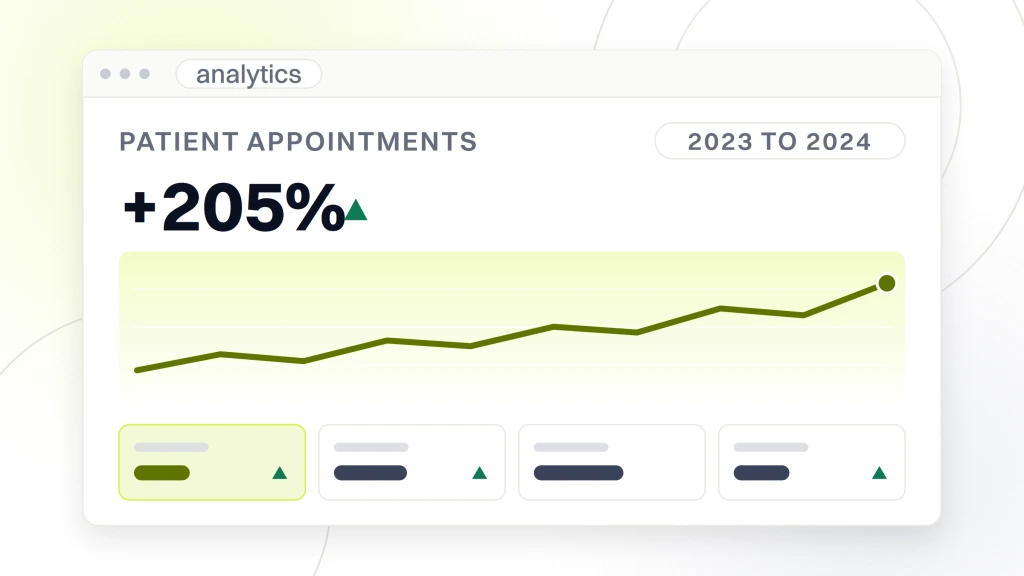
The pattern for a chiropractor. Video builds credibility. Reviews reinforce the trust signal. Local SEO carries the map-pack ranking. Google Ads catches the intent. The four layers compound together. Video alone is not enough. Reviews alone are not enough. The stack has to run together. A DC starting from a similar baseline and running the same discipline sees new patient appointments 3x to 5x inside 18 months, not 90 days.
The Pain Cure Clinic parallel for chiropractors
Pain Cure Clinic ran education-driven SEO for chiropractors plus condition-specific video content plus targeted PPC plus review automation. Patient appointments grew 205 percent, from about 40 monthly to 122 monthly. Organic traffic climbed 289 percent. The video layer produced condition-specific back pain, sciatica, and neck pain content that anchored the education hub and paired with the ad-driven intent capture. A chiropractor running the same discipline with video as the discovery layer, Google Ads as the intent layer, and GMB as the map-pack layer produces the same compounding curve on a similar 18 to 24 month timeline.
Video and review compounding for chiropractors
Reviews jumped 162 percent at Pain Cure, and the Google star rating moved from 4.3 to 4.9. Video amplified the trust signal, since every clip carried the DC’s face and voice into the feed. Reviews confirmed the trust in written form. A chiropractor can hit 200 to 400 reviews inside 12 months with the same discipline. The review base makes every video convert 25 to 40 percent better, since the trust signal sits in place before the viewer clicks the bio link.
The 90-day launch plan for chiropractic video marketing
Ninety days is the shortest honest timeline to see booked exams from chiropractic video. Weeks one through four build the account and the workflow. Weeks five through eight iterate on the formats that work. Weeks nine through twelve add paid boost and scale. Anyone promising booked exams inside 30 days is either selling something or working with an account that already had traction. The realistic curve starts flat, climbs steep at week six, and compounds from there.
The 90-day plan requires 45 to 90 minutes a week from the DC and 30 minutes a week from the front-desk lead. The DC handles filming and the format review. The front-desk lead handles callbacks and the “how did you hear about us” tracking. The office manager reviews weekly stats and approves boost decisions. Total time cost across the practice. 3 to 5 hours a week. Total cost. $30 for the microphone plus $0 to $500 a month if paid boost is used. Output at week 12 lands at 8 to 25 booked exams a month attributable to the channel.
Weeks 1 to 4. Setup and first posts
Set up business accounts on TikTok, YouTube, and Instagram. Add the bio link to a dedicated landing page. Install pixels on the website. Write 20 hook lines, film 15 videos in three batch sessions, post three per week per platform. Track completion rate and click-through rate weekly. Don’t boost anything yet. The goal at week 4 is 15 posted videos, a working booking flow, and enough data to know which two formats to lean into for weeks 5 and beyond.
Weeks 5 to 12. Iterate and scale
Double down on the two formats that produced the best completion rate. Cut the formats that missed 40 percent. Add paid boost at $150 to $250 on the top video each week. Track booked exams weekly. Watch for the first patient who mentions video during the intake form. That confirmation moment usually arrives between week 5 and week 9. From there the channel compounds. By week 12 the account has 40 to 60 posted videos and a proven booking floor of 8 to 25 new patients a month.
Getting help with a video marketing strategy for chiropractors
A DC running the account solo can hit 8 to 15 booked exams a month by week 12. A practice partnering with an agency can hit 20 to 40 by the same point, since the agency handles the batch editing, the boost decisions, the analytics review, and the landing page updates. Trade-off is the monthly fee, which typically runs $1,500 to $4,000 depending on video volume and paid budget. Redefine Web runs video for chiropractors inside the chiropractor marketing retainer starting at $1,499 a month.
Whether the practice runs the account internally or hires help, the framework applies the same way. Five videos a week from one Sunday batch. Three platforms from one filming session. Strong hooks, 20 to 35 second length, dedicated landing page for the bio link, 15-minute callback rule on booking form fills. Growing a brand across many locations adds the extra layer of per-location content coordination, and our chiropractor marketing team runs the setup, the batch filming direction, and the boost decisions inside the retainer.
When to hire help vs. staying solo
Hire help when the practice books 20 to 30 new patients a month from video and the DC can no longer sustain the batch filming inside the schedule. Stay solo when the account is under 15 booked exams a month and the DC still has 45 minutes on Sunday. Break-even math on a $2,500 monthly retainer. It needs to add 10 to 15 net new booked exams a month over what the solo account produces. Most practices hit that math between month 6 and month 12.
What an agency handles vs. the DC
The agency handles direction, editing, analytics, and boost decisions. The DC still films the videos. Nobody outsources the face on camera. Editing turnaround should run 24 to 48 hours from raw footage. Weekly reporting on completion, click-through, and booked exams tied to the channel. Monthly strategy call on formats to test next. The DC’s time cost drops from 90 minutes a week to 30 minutes a week. Everything else runs in the background.
A video marketing strategy for chiropractors is not a magic channel. It is short-form video, five posts a week across three platforms, a fast landing page, and a front desk that calls back inside 15 minutes. Practices running the discipline for 90 days book real exams. Practices that quit at week 6 do not. The 15-minute callback rule is the difference. So is the hook. So is the fact that video pairs with Google Ads, email, and a fast website instead of trying to be the whole plan. Start with the batch of five videos this Sunday, and the plan runs itself from there.