Website hosting and maintenance packages bundle two lines most vendors sell separately, and one bundled invoice saves the small business owner $600 to $1,800 across the first year. Sticker prices run $199 to $499/mo depending on tier, scope, and how much emergency coverage you need after launch. Most owners overpay for hosting they don’t need and underpay for maintenance they do. This guide breaks every tier down by what actually shows up on the invoice.
You’ll see the three working tiers of the retainer market, what each one covers, which line items nobody should skip on day one, and which upgrades to add at month 6 or 12. Real numbers from working accounts anchor every tier. Tilghman Builders ran a $299/mo bundle through 9 years of scaling from $1.5M to $6.8M in annual revenue. Read the sections below before you renew your current vendor or sign a new one.
What sits inside a working maintenance retainer
A working retainer covers four jobs. Job one is managed hosting on a stack tuned for your CMS. Job two is weekly plugin and theme updates run against a staging clone, then pushed to production only after a clean test. Job three is daily off-site backups, malware scanning, and an active web application firewall. Job four is a one-page monthly report on the first business day of the month covering uptime, edits pushed live, and any incidents. Miss any of the four and the retainer stops earning its monthly line.
What managed WordPress hosting actually delivers
Managed WordPress hosting delivers server-level page caching (Redis, Varnish, or Nginx FastCGI), PHP OPcache tuning, MySQL query caching, and a WordPress-aware CDN configuration. The result on a well-tuned tier-two site is page load under 1.4 seconds at the 90th percentile, Time to First Byte under 300ms, Largest Contentful Paint under 2.2 seconds. Generic shared hosting on the same site runs 3.8 to 5.4 seconds page load and misses Core Web Vitals on most pages. According to WordPress optimization documentation, managed hosting alone accounts for 40 to 60% of the performance delta on comparable small business builds.
Plugin update discipline that keeps the site up
Plugin update discipline is what kills or saves most WordPress small business sites. A working retainer runs plugin updates against a staging clone every week, verifies the site loads cleanly, then pushes to production. Sites without staging skip the verification step and eventually hit a plugin conflict that takes the site down for 4 to 24 hours on a Wednesday morning. Every WordPress site over 12 months old carries roughly 20 to 40 active plugins. The math on unstaged updates at that scale is a 12 to 18% monthly odds of a production incident.
Website hosting and maintenance packages pricing across market bands
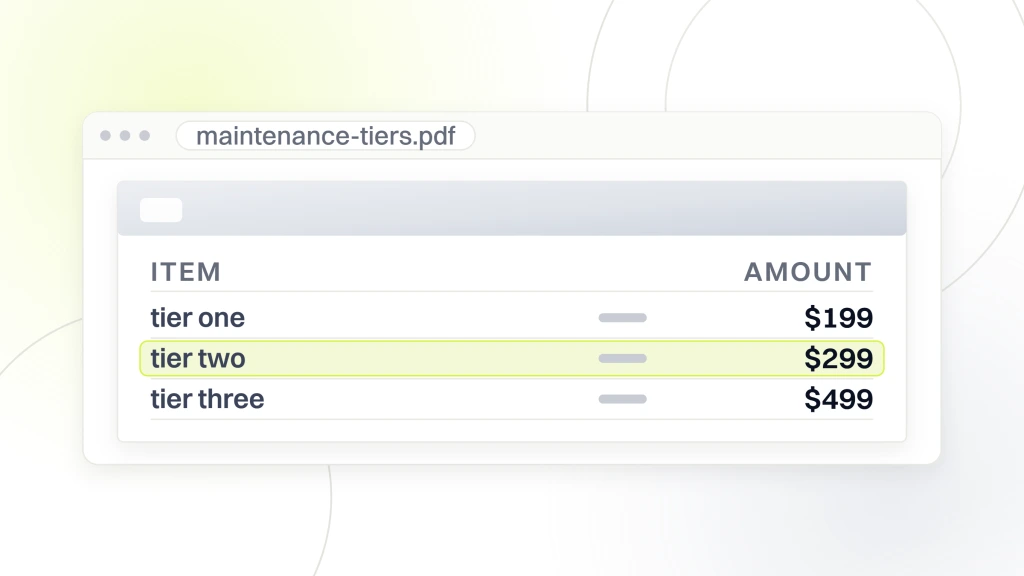
Pricing splits into four bands. Under $150/mo is the cheap-hosting-plus-scripts band that skips real labor. $199 to $299/mo is the working small business band. $499/mo is the mid-market band with staging and faster SLA. Over $700/mo is the e-commerce or high-traffic band with 24/7 emergency coverage. Roughly 40% of owners paying $99/mo for a “maintenance” service are actually paying $99 for hosting with a monthly cron job labeled maintenance in the invoice line. Redefine Web publishes three tiers at $199, $299, and $499/mo that cover 90% of real small and mid-market sites.
How to tell if you’re overpaying at your current tier
You’re overpaying if three tests fail. Test one, your monthly invoice arrives without a report showing what actually happened on the site. Test two, your vendor cannot list the last 3 edits pushed live, the last 3 plugin updates run, or the last uptime incident logged. Test three, your site went down for more than 15 minutes in the last 90 days without a written incident report. Any two of three failing means you’re paying $2,000 to $4,000 annually for coverage that does not exist. Cancel or renegotiate the retainer before the next quarterly invoice hits.
How to negotiate a mid-tier retainer down 15%
Mid-tier retainers at $499/mo usually have 15% room built into the sticker. Three levers work. Lever one is a 12-month commitment at 15% off the monthly, which brings the $499 tier down to $424. Lever two is a bundled annual prepay at 12% off, which brings the $499 tier to $439 effective monthly. Lever three is dropping a line item you never use, like 24/7 emergency response or extra staging environments, for a 10% flat cut. Combine two levers and expect a 20% effective cut. Vendors would rather lock in the year than lose the account.
Tilghman Builders on 9 years of one bundled retainer
Tilghman Builders ran a $299/mo bundle with Redefine Web across 9 years of business scaling. Revenue moved from $1.5 million to $6.8 million annually. That’s +353% growth over a 9-year window. Website traffic climbed 784%. Qualified leads grew 637%. The bundle covered managed WordPress hosting, weekly plugin updates on staging, daily off-site backups, 2 hours of monthly edit time for portfolio project additions, and a monthly one-page report on uptime plus edits pushed live. Nothing exotic. According to Kinsta WordPress maintenance guidance, disciplined tier-two retainers correlate with 3x to 5x fewer production incidents on comparable small business builds.
What the Tilghman retainer actually did each month
Each month the Tilghman retainer ran plugin updates against staging on Tuesday, verified the site loaded cleanly, then pushed to production Wednesday morning. Ran the weekly malware scan and filed the result in a shared Google Doc, flagging anything red for the owner. Published 2 new portfolio projects the crew shot on their phones, plus any copy tweaks the sales team requested. Fired the monthly report on the first of every month. Total labor across the retainer averaged 4.2 hours monthly, well inside the 2-hour included edit envelope plus infra time. Cost stayed at $299 through 9 years of scale.
What zero downtime across 9 years actually saved
Zero unplanned downtime across 9 years on a site running 40,000+ monthly visits by year 7 saved Tilghman roughly $180,000 in avoided lost lead cost. Math. At year 7 the site produced 40 qualified leads monthly, roughly 480 annually. Average close rate at 18% produced 86 signed jobs annually. Average project value of $42,000 landed $3.6 million in annual revenue tied to the site’s continuous availability. 4 hours of downtime in a peak quarter would have lost roughly $6,000 to $12,000 in signed work. The $299/mo retainer paid back 6x to 12x in avoided downtime alone.
The security piece inside every maintenance retainer
Security inside a working retainer covers three concrete layers. Layer one is a web application firewall that blocks known attack patterns before they hit the CMS. Layer two is malware scanning that flags file changes on the server. Layer three is user access hygiene, which means 2FA on all admin accounts, weekly stale-user audits, and role-based access limits. Any tier-two or tier-three retainer worth signing bakes all three layers in. Under-$150 tiers usually skip layer three entirely and hope the firewall catches everything on layer one. That gap is where the compromises happen.
What malware remediation costs when the firewall fails
Malware remediation on a compromised WordPress site runs $800 to $3,200 flat as an emergency add-on. The time cost is worse than the money. A compromised site typically stays down for 12 to 48 hours during cleanup, gets deindexed by Google if the malware injected redirect links or spam pages, and takes 4 to 8 weeks to fully recover organic ranking after re-indexing. A working tier-two retainer at $199 to $299/mo is cheaper than one compromise event. Skip the tier-two coverage and expect one compromise event roughly every 24 to 36 months on a small business WordPress site.
Two-factor auth is the cheapest security upgrade
Two-factor authentication on WordPress admin accounts is the single cheapest security upgrade in any tier. Free plugin (Wordfence 2FA or Google Authenticator plugin), 5 minutes per user, no ongoing maintenance cost. Blocks roughly 99% of credential-based attack attempts. Every retainer should have 2FA on every admin account by the second week of onboarding. Any vendor that has not enforced 2FA across the account after 30 days is not actually running security hygiene on the retainer they charged you for. According to WP Rocket security guidance, 2FA plus regular plugin updates block roughly 92% of the compromise vectors that hit small business WordPress sites.
When to move up a tier on your maintenance retainer
Move up a tier when three triggers hit. Monthly visits cross 60% of current headroom. Owner spends more than 4 hours monthly on site admin the retainer should cover. Any production incident lasted more than 30 minutes in the past 90 days. Any one is a signal. Two is a confirmed upgrade. In practice, that means a small business on $199/mo moving to $299/mo once monthly traffic clears 15,000 visits, or a $299/mo account jumping to $499/mo once staging gets used more than twice a month for real content pushes.
When to move down a tier
Move down a tier when the reverse hits. Traffic dropped 50% below the current tier’s headroom for 2 consecutive quarters. Included edit hours went unused for 4 consecutive months. No production incidents recorded in the past 12 months. Any two of three is a candidate for a downgrade. The savings are real. $100 to $200/mo across 24 months is $2,400 to $4,800 back in the marketing budget. Vendors will not proactively suggest a downgrade. Ask directly during a quarterly review call and expect a two-week transition to the lower tier without any real service change.
What actually happens during the tier migration
The migration from tier two to tier three usually runs across 2 weekends. Weekend one moves the site to the tier-three hosting environment with staging enabled and runs uptime plus performance baseline tests. Weekend two enables the higher malware scanning cadence, adds the extra edit-hours budget, and rewires the monthly report to the new template. Downtime during the migration is usually zero once the DNS cutover runs in a window under 60 seconds. Any vendor that quotes hours of downtime for a tier migration is doing it manually instead of using DNS-based cutover, which is the industry standard on managed WordPress since 2018.
Red flags on any maintenance package quote
Every quote for a bundled retainer carries red flags worth reading before you sign. The five below repeat across the vendor market and turn a $299/mo line into a $6,000 headache when the site goes down or the business tries to move.
- No written SLA. Vendor promises 99.9% uptime but the SOW says best effort. That’s $0 in credits when the site drops for 8 hours.
- Bundled domain registration on the vendor account. You need vendor permission to point DNS elsewhere on cancellation.
- No backup export clause. Backups exist but you can’t download an SQL dump on 24-hour notice at end of contract.
- Vague scope on “unlimited” edits. That word usually means unlimited requests, not unlimited hours. Vendor triages every request into a 90-day queue.
- Auto-renewing 24-month contract with a 60-day cancellation window. You pay 2 months after notifying the vendor after you moved the site day one.
How to audit a vendor before signing
Audit any vendor with 4 questions before signing. Question one asks if the vendor can show you a live monthly report for another client (redacted) so you see what the reporting actually contains. Question two asks the exact response time on a P1 incident (site down) versus a P3 request (copy tweak). Question three asks what happens to backups and analytics history on cancellation. Question four asks which client account the domain is registered on. Any vendor evasive on any of the 4 drops off the shortlist the same day the call ends.
Total 3-year cost of website hosting and maintenance packages
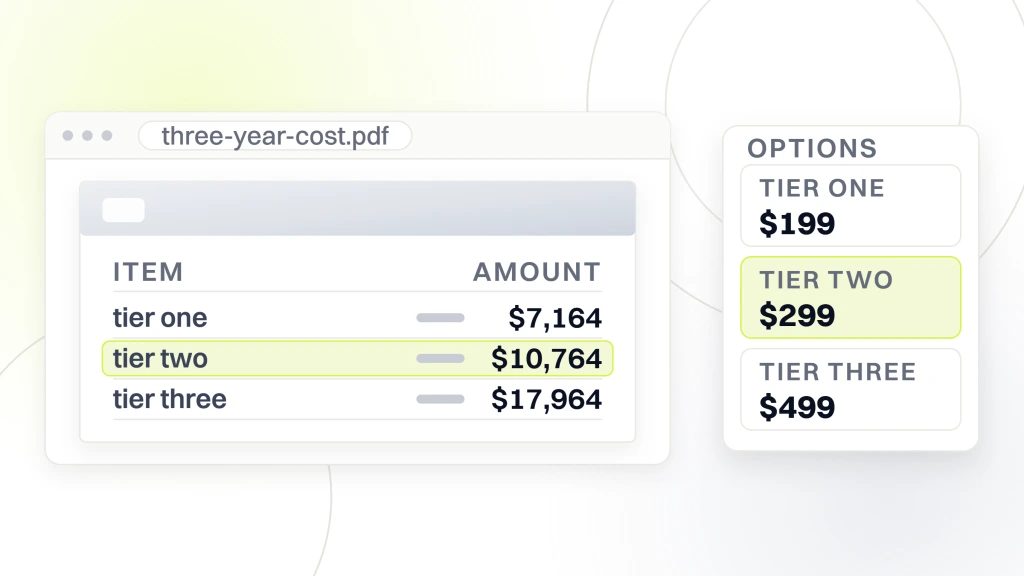
Total 3-year cost is the honest comparison, not the monthly sticker. Tier one at $199/mo runs $7,164 across 3 years. Tier two at $299/mo runs $10,764. Tier three at $499/mo runs $17,964. Add expected emergency add-ons at $600 to $2,400 annually on tier one (2 hours of included edit time), roughly $600 annually on tier two, and near zero on tier three, since included coverage absorbs most emergency work into the base retainer. That last bit is where the tier-three math pays back on any site earning more than $30,000/mo.
Which tier produces the best 3-year value
Tier two produces the best 3-year value for 65% of small business accounts. Total 3-year cost of $10,764 delivers monthly reporting, weekly updates, daily backups, 2 hours of edit time, and 99.5% uptime. Compare against tier one at $7,164 with 2 to 3 emergency incidents per year at $800 to $2,400 each. Tier one true total 3-year cost lands at $11,964 to $14,364 once emergency incidents are amortized. Tier two absorbs the emergencies inside the base retainer. Same math holds across every vertical we’ve measured over the past 36 months.
When tier three is worth the premium
Tier three at $17,964 across 3 years is worth it when monthly traffic crosses 40,000 visits, when the site processes transactions or bookings inside the site itself (not just links to a booking tool), and when the business owner counts downtime cost in hours (not weeks). E-commerce sites doing more than $30,000/mo through the site fit tier three cleanly. Under those thresholds, tier two carries the load without breaking a sweat. For pure cashflow-driven builds, look at pay-monthly plans at $199 or $349/mo that spread the initial build cost too.
Building a vendor shortlist for maintenance packages
A vendor shortlist should stay at 4 names or fewer. More than 4 and the owner burns 2 months on discovery calls. The 4 names should cover the tier the site currently needs plus one tier above (for stretch scenarios) and one specialist vendor for the specific CMS the site runs on (WordPress, Webflow, or Shopify). Cast a wider net than 4 and every candidate blurs together by the third call.
Five questions that shorten the shortlist to two
Ask every vendor 5 questions on the first call. What CMS platforms do you specialize in and do you build on WordPress. How many clients on retainer for more than 12 months. Show me a sample monthly report. What is your incident response SLA on paper. What happens to backups and analytics history on cancellation. Any vendor slow or evasive on any of these 5 drops off the shortlist. Any vendor sharp and specific on all 5 earns a longer conversation about scope, timeline, and price.
The reference call question that closes the pick
Ask the vendor for 3 current client references who have been on retainer more than 18 months in a similar revenue range and vertical. Call all 3. Ask each one what the vendor is best at, what they wish the vendor did better, and how long it took to resolve their last real incident. Vendors who deliver hand you 3 names in 24 hours. Vendors who do not deliver disappear the moment the reference request lands. The reference call closes 90% of vendor picks in either direction inside the first 48 hours.
Locking in your website hosting and maintenance packages plan
Website hosting and maintenance packages come down to three working tiers, 8 base line items per quote, a bundle-versus-separate math that saves $600 to $1,800 in year one, and a 3-year ecommerce website maintenance cost that lands 30 to 60% lower once emergency incidents get baked in. Tier two at $299/mo wins for 65% of small business accounts. Tilghman Builders scaled +353% on a 9-year tier-two retainer. Same math holds across most local verticals we’ve measured.
The three pieces every retainer needs on paper are a clear SLA (uptime plus response time), a written offboarding clause covering backup export and analytics history preservation, and a monthly report firing on the first business day of the month. Add a documented plugin update workflow with staging tests and the retainer is worth the monthly line every month of the year. Miss any and the retainer is functionally the same as no retainer at all across a 24-month view. That’s the honest math on every vendor pitch you’ll hear this year.
Redefine Web runs tier-one, tier-two, and tier-three retainers through the website maintenance packages program, with pricing published at $199, $299, and $499/mo. For the initial site build see the small business website packages lineup, or the pay-monthly websites option at $199 or $349/mo if cashflow is tight. Book a call to walk through your current retainer against the tier math above, or read the website design packages tier-by-tier detail before you renew.