WordPress website development cost splits into four honest bands in 2026. Under $2,500 is DIY with hourly help. $3,500 to $8,000 buys a semi-custom small business site on a child theme. $9,000 to $22,000 buys a fully custom design and development build with an SEO baseline. $25,000 and up buys enterprise with integrations, custom post types, and multi-language support. This guide shows you how to read a WordPress quote line by line before you sign anything, in the same format used for responsive web design cost tiers.
Most business owners get three quotes back at wildly different numbers. $2,400. $9,800. $28,000. The deliverables all read the same on paper. Somebody is guessing. Below is the real breakdown of WordPress website development cost. Four price bands with what each one actually buys. Six line items every legitimate quote itemizes. Timeline math. Hosting and retainer numbers. A home services client lead-flow story from a WordPress rebuild that paid back inside 90 days. Negotiation levers that trim 15% off a bloated quote without cutting scope.
Four honest bands of WordPress website development cost in 2026
WordPress website development price splits into four honest bands. Under $2,500 is DIY with hourly help. $3,500 to $8,000 buys a semi-custom small business site on a child theme. $9,000 to $22,000 buys a fully custom design and development build with SEO structure. $25,000 and up buys enterprise with integrations, custom post types, and multi-language support. Trouble starts when a $22,000 vendor ships what an $8,000 vendor would have built.
Where your project lands inside those bands depends on scope, not on your budget preference. Ten pages of content is a different job from thirty. A CRM integration is a different job from a plain contact form. Custom post types for case studies or team bios add real hours. The vendor who quotes $6,000 without asking about page count, integrations, or custom post types is guessing. The vendor who asks all three questions before quoting is running an honest scoping process, and their quote will match what you get.
| Band | Cost range | Timeline | Typical deliverable |
|---|---|---|---|
| DIY + hourly help | Under $2,500 | 2 to 6 weeks | Elementor or Astra theme + $75/hr assist |
| Semi-custom small business | $3,500 to $8,000 | 4 to 8 weeks | Child theme + custom homepage + 5 templates |
| Fully custom design and dev | $9,000 to $22,000 | 8 to 14 weeks | Bespoke design, custom blocks, SEO baseline |
| Enterprise WordPress | $25,000 and up | 12 to 24 weeks | Custom post types, integrations, multi-language |
Match the band to your revenue model
A brochure site for a personal brand under $200,000 in revenue fits the DIY plus hourly help band. A small business under $2M in revenue that drives some pipeline from search fits the semi-custom band at $3,500 to $8,000. A business over $2M in revenue where the site is the lead engine fits the fully custom band at $9,000 to $22,000. Anything over $10M with real integrations fits enterprise. The mismatch that hurts most is spending $18,000 on a site your business does not need, or spending $4,000 on a site your business actually needs at $14,000.
Regional price variance is real
The same custom WordPress build runs $14,000 with a coastal US agency, $9,000 with a Midwest agency, $5,500 with a Manila-based team, and $3,200 with a solo freelancer on Upwork. The cheaper end trades off on communication, time zones, and post-launch support quality. The middle band often wins on math because Midwest or Southeast US agencies deliver coastal-shop code quality at 30% lower cost. If price is the primary variable, quote three vendors across three regions and compare deliverables line by line.
Six line items every WordPress website development cost quote itemizes
A real WordPress website development quotation shows six line items with real numbers attached. Discovery and information architecture. Design. Development. Content and copywriting. SEO baseline setup. Post-launch training and handover. A single lump sum with none of those broken out cannot be compared against another quote. Ask every vendor for the itemized version. Any vendor who resists is hiding either padding or missing scope. Both are red flags.
- Discovery and information architecture: $800 to $2,500 depending on business complexity
- Design and prototyping: $2,000 to $6,000 for a custom design system
- WordPress development and custom blocks: $3,500 to $12,000 based on template count
- Content, copywriting, and imagery: $1,500 to $6,000 for a full site copy pass
- SEO baseline setup and schema: $600 to $1,800 as part of the launch
- Post-launch training and handover: $400 to $1,500 for docs and a training session
Ask vendors to itemize before you compare
Send every vendor the same list of six line items and ask for their number against each one. That gives you an apples-to-apples read of three quotes in under an hour. One vendor comes back with $600 on SEO baseline and another lists $2,400. That is a real difference in scope, not just price. One vendor lists $6,000 on content and another lists $0 because they expect you to supply the copy. The itemized quote is a comprehension tool that prevents month-three surprises.
What vendors hide in the lump sum
Lump sum quotes hide three things. First, the content assumption. Some vendors assume you supply all copy. Others include a full copy pass. Second, the revision cap. Some quotes include free revisions until launch. Others cap at two rounds per deliverable with $150 for each extra round. Third, the launch support window. Some quotes include 30 days of post-launch support. Others end billing on launch day and charge $175 per hour after that. All three assumptions live inside the lump sum, and none surface until month three.
WordPress website development packages and how to read them
WordPress website development packages come in three shapes. Fixed-price package deals at $2,000 to $8,000 for defined scopes. Tiered packages at Small, Medium, and Large with each tier priced separately. Retainer-included packages that bundle the build with 12 or 24 months of post-launch support at a monthly rate. Fixed-price packages are the easiest to compare across vendors. Tiered packages give you more optionality. Retainer packages spread cash flow. Pick the shape that matches how you buy other business services.
Every honest package publishes what is included and what triggers a change order. What is included covers page count, template count, revision rounds, hosting for the first year, plugin licenses. What triggers a change order covers extra pages, custom post types not in the original scope, e-commerce beyond the SKU count, third-party integrations. Vendors who publish both lists on their pricing page are running an honest business, in line with the pattern in our website design pricing packages writeup.
Pay monthly WordPress plans
Pay monthly WordPress website development packages spread the build cost over 24 to 48 months at $199 to $599 per month, bundling hosting, edits, and maintenance into one monthly line. The model is legitimate when the subscription runs long enough to cover the build cost plus a real retainer scope, and when the vendor commits to code and account ownership transfer at end of term. It turns into a cash-flow game when the monthly fee is $99 for two years and the vendor keeps the code. Our pay monthly website plans page shows the honest version.
WordPress website development timeline against your launch date
A WordPress website development timeline runs 4 to 24 weeks depending on scope. A child theme small business site launches in 4 to 8 weeks. A fully custom build launches in 8 to 14 weeks. An enterprise WordPress project launches in 12 to 24 weeks. Timelines slip when the client side stalls on content, revisions, or approvals. Every extra week of client delay pushes the launch back by two weeks on the vendor side. Lock the content, the copy, and the approver on day one.
You can compress a timeline by staging deliverables and paying a rush fee. A 12-week custom build compresses to 8 weeks when you commit to two-day revision turnarounds and pay a 15% rush fee. Tighter than 8 weeks on a custom build risks a shortcut in the SEO baseline or a rushed content pass. Rush is not always worth it.
Phase breakdown across a 12-week build
A 12-week custom WordPress build follows a predictable phase breakdown. Weeks one and two are discovery, sitemap, and information architecture. Weeks three through five are design mockups and revisions. Weeks six through nine are development, block building, and content input. Week ten is QA, cross-browser testing, and accessibility review. Week eleven is client review and revisions. Week twelve is soft launch, DNS switch, and post-launch monitoring. Slip any one phase and the whole timeline slides.
Client-side delays are the real killer
Vendors get blamed for timeline slips. The truth is client-side delay causes 70% of missed launch dates. Slow content approvals, an owner traveling for two weeks during design signoff, a change of mind on the homepage headline in week nine that triggers three cascading redesigns. Lock a single approver on day one. Give them two business days to respond to every deliverable. Any slower and the timeline slides by the same number of days you spent approving.
Hosting and retainer WordPress cost after launch
WordPress website development charges do not end on launch day. Managed WordPress hosting runs $20 to $150 per month for a small business site, $150 to $500 per month for a mid-market site, and $500 to $2,000 per month for enterprise. Post-launch retainers run $400 to $1,800 per month for maintenance, and $2,000 to $4,000 per month when the retainer also covers SEO or paid ads on the same site. Budget the annual all-in number on day one.
Cheap hosting is where most business owners lose the money they saved on the build. A $12 per month shared hosting plan on a big-box provider costs you an extra 400 milliseconds on every page load, which tanks your mobile page speed score, which loses you rankings, which costs you 20% of the organic traffic you were paying the build to earn. Managed WordPress hosting at $35 to $90 per month is worth the difference on any business site. See our website maintenance packages for the retainer scope that keeps the build earning.
Premium plugin license costs
Premium plugins add real cost every year. Advanced Custom Fields Pro at $249. Gravity Forms at $259. WP Rocket at $59. RankMath Pro at $199. WooCommerce Subscriptions at $199. A real business site runs $600 to $1,400 per year in plugin licenses alone. Vendors who never mention plugin renewals in the original quote are the vendors who send you a $780 invoice in month thirteen for the renewals you did not know were coming. Ask for the plugin list at kickoff.
Security scanning and firewall costs
WordPress security add-ons like Wordfence Premium at $99 per year, Sucuri firewall at $199 per year, or Cloudflare Pro at $20 per month add another $250 to $500 to your annual bill. Skip them on a low-traffic personal site. Include them on any business site that handles customer data, processes payments, or ranks for competitive terms. Sites without a firewall or a scanner get hit inside the first 90 days after launch. Rebuilding a hacked site costs 3x more than the security spend that would have prevented it.
Case study on getting real value from WordPress website developer cost
A home services client, a Toronto HVAC contractor, came to us with a two-page WordPress site running Google Ads on a broken account. Google Ads was pushing traffic to the homepage with no service-specific landing pages, a display network setting that had never been turned off, and a conversion rate under 2%. They had spent $18,000 on ads in the previous quarter and pulled 40 leads. The math was not working. The team needed a real WordPress site and a rebuilt ad account, both scoped honestly.
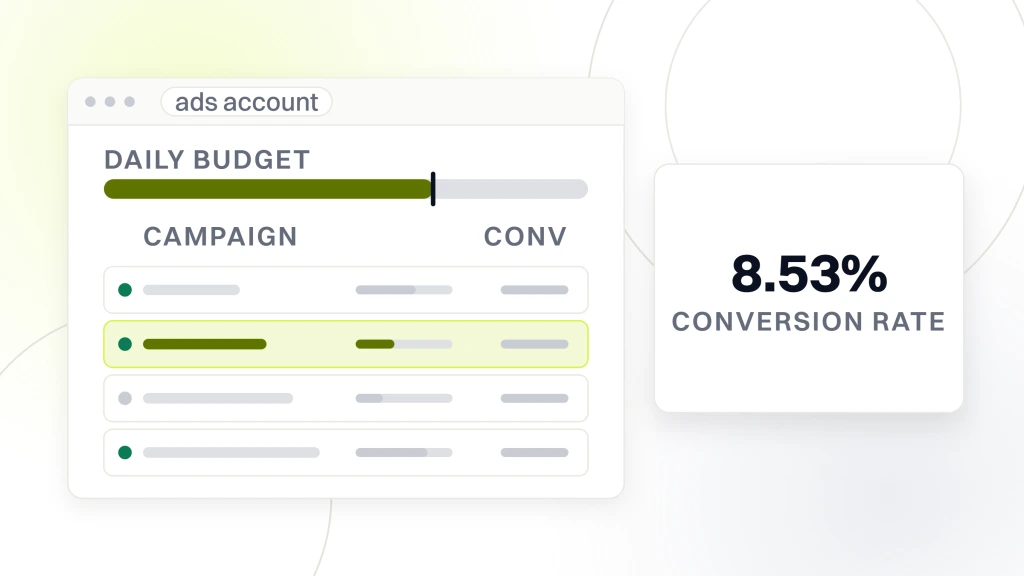
We ran a fully custom WordPress rebuild at the $14,000 band with service-specific landing pages, real local SEO structure, and a Google Ads account restructure that turned off display, tightened match types, and pointed each campaign at its own landing page. Inside 90 days a home services client pulled 300+ qualified leads, 18,000+ ad clicks, 2.6 million impressions, and an 8.53% conversion rate on the ad landing pages. The build paid back inside the first quarter because the WordPress cost was scoped against a revenue target, not against a lump-sum negotiation.
Lessons for reading your own quote
Two lessons from the client rebuild carry into every WordPress cost conversation. First, a $14,000 build scoped against a revenue target beats a $6,000 build scoped against a lump-sum minimum every time. The revenue target forces the vendor to build the pages that convert instead of the pages that look pretty. Second, the WordPress build is only half the return. The other half is the marketing structure that runs on top of it. Skip the marketing structure and the $14,000 site earns the same as the $6,000 site.
WordPress ecommerce website development cost with WooCommerce
WordPress ecommerce website development cost sits 30 to 60% above a brochure site because WooCommerce adds real hours to development. A small store with under 50 SKUs runs $8,000 to $18,000. A mid-size store with 200 to 800 SKUs runs $18,000 to $45,000. A large store with 1,000+ SKUs, subscriptions, and multi-currency runs $45,000 to $120,000. Add $2,000 to $8,000 for payment gateway setup, shipping calculators, and tax integration.
WooCommerce hosting requires more than a $12 shared plan. Ecommerce WordPress hosting runs $50 to $250 per month at the small end, and $500 to $2,500 per month at the mid-market end. Payment processing runs the standard 2.9% plus 30 cents per transaction on Stripe or PayPal. Premium WooCommerce extensions like Subscriptions, Memberships, and Bookings run $199 to $299 per year each. See our WordPress ecommerce website development writeup for the detailed comparison.
Negotiation levers that trim a WordPress website development proposal
Every WordPress website development proposal has 10% to 20% of soft cost you can trim without cutting scope. The soft cost lives in three places. First, the discovery phase, which most vendors overweight relative to actual hours. Second, the copywriting line, which you can bring in-house if you have a marketing lead. Third, the training and handover session, which most vendors can compress from four hours to two without losing anything. That trims 15% off most proposals.
Do not negotiate on development hours. That is where the vendor’s margin lives, and cutting it makes the vendor rush the build. Do not negotiate on the SEO baseline. Cutting it costs you 6 months of organic growth. Do not negotiate on the post-launch retainer. Cutting it means month seven brings a $2,000 emergency fix bill on a site the vendor no longer feels obligated to maintain. Negotiate on the soft costs. Leave the technical spine intact.
Bring copywriting in-house
Vendor copywriting runs $600 to $6,000 depending on site size. If you have a marketing lead or an internal writer, you can bring that in-house and save the full line item. Provide the vendor with clean copy for every page at the start of the design phase. Content delays are the biggest cause of missed launch dates. You save the money, they hit the timeline, everybody wins. Do not do this if you do not have a real writer.
Red flags that inflate WordPress website development cost
Every WordPress cost conversation has three red flags that predict a bad build at any price. First, a vendor who quotes without asking about page count, integrations, or custom post types. That vendor is guessing and the invoice will surprise you in month two. Second, a vendor whose portfolio has no live sites in your industry. That vendor will learn on your dime, and the WordPress website developer cost you pay covers their education. Third, a vendor who cannot name the theme or the plugins they plan to use. That vendor is subcontracting the work.
The fourth red flag is a WordPress website development proposal that reads like a legal contract instead of a scoping document. Real scoping documents describe what gets built in plain English, with page counts, template counts, integrations, and content assumptions. Legal-heavy proposals with 12 pages of liability language and 2 pages of deliverable description are protecting the vendor at your expense. Ask for a scope document you can read in ten minutes. See HubSpot on website pricing patterns for a second reference.
Deposit signals hidden in the payment schedule
Legitimate vendors take 30 to 50% of the WordPress build fee as a deposit, 30 to 40% at design signoff, and the balance at launch. Vendors who ask for 100% up front are running a cash-flow game, not a project. Vendors who require the deposit in cryptocurrency, wire transfer with no invoice, or an unnamed offshore account are running something worse. A real deposit lands on a proper invoice with your business name and the vendor’s tax ID. Anything else is a signal to walk away. See Kinsta on WordPress development pricing for a third comparison.
Where to start scoping your WordPress website development cost
WordPress website development pricing is easy to compare when you send the same six-line-item request to three vendors. Discovery. Design. Development. Content. SEO baseline. Training. Same list, same page-count assumption, same integration list. Compare the numbers side by side. The vendor whose numbers cluster around the middle of the market with clean itemization is the vendor you invite to a full scope call. The vendor 40% below the middle is either missing scope or cutting a corner you cannot see yet. The vendor 40% above the middle is padding.
Ready to scope a WordPress build with real itemization and a team that publishes what triggers a change order, our WordPress Website Development Services covers the full engagement. For the bespoke design conversation, see custom WordPress website development. For the step-by-step process, see how to develop a WordPress website. For the WooCommerce cost detail, see WordPress ecommerce website development. For an authoritative benchmark on hosting performance, see the web.dev Core Web Vitals reference.