
Responsive web design cost sits between $2,500 and $9,500 all-in for the first year on a small business site in 2026, and $10,000 to $30,000 for custom builds serving businesses over $1M in annual revenue. Every number in that band is the all-in first-year figure covering design, real copy, on-page SEO, mobile speed work, hosting, and a care plan. Anything quoted lower usually strips one of those line items. Anything quoted higher usually names something the small business does not actually need.
This guide walks through the three cost bands, what each tier includes, the recurring fees that stack on top of the sticker, and the 10 red flags that turn a $3,000 quote into a $7,500 invoice by month 6. Read it in 10 minutes and walk into every vendor call knowing what a fair responsive web design cost actually covers.
What drives a responsive web design cost up or down
The price moves up or down based on six scope drivers. Custom photography adds $500 to $2,500. A new brand system adds $1,000 to $4,000. Multi-language work adds 40 percent. WCAG 2.2 AA accessibility work adds $1,000. Ecommerce adds $1,500 to $6,000. A custom integration list adds $200 to $2,500 per connection.
The single largest cost driver most owners miss is page count. A WordPress website development cost breakdown shows the same page-count pattern across every stack. A 5-page site fits inside entry. A 10-page site pushes into mid. A 20-page site with landing pages, blog templates, and category archives lands in high or custom. Vendors quote from page count, and owners often assume they need more pages than they actually do at launch. Start with the 8 pages that book customers. Add more in year two.
The second-largest driver is copy volume. Templates write 200 words per page. Real copy runs 400 to 800 words per money page. A 5-page site with real copy on all 5 pages runs $1,500 to $3,000 in copy alone. Vendors who skip copy in the quote save you $2,000 today and cost you $8,000 in lost conversion across year one. The right question is whether the vendor writes real copy from a brief or plugs in template filler.
The third driver is the integration list. A simple site with a contact form and Google Analytics fits entry. A site with a booking calendar, CRM sync, email automation, and a customer portal lands in high or custom. Owners who list every integration during discovery, then rank them by year-one need, cut the total by 20 to 40 percent by deferring low-priority connections to year two.
The 3 responsive web design pricing tiers explained
Responsive web design pricing groups into three tiers in 2026. Entry runs $2,500 to $4,500 for a 5 to 8-page brochure site with template design, one round of custom copy, and basic on-page SEO. Mid runs $4,500 to $9,500 for a 10 to 15-page site with semi-custom design, real copy on every money page, schema, and speed work. High runs $10,000 to $30,000+ for a 15 to 40-page site with custom design, ecommerce or booking, WCAG compliance, and integrated CRM.
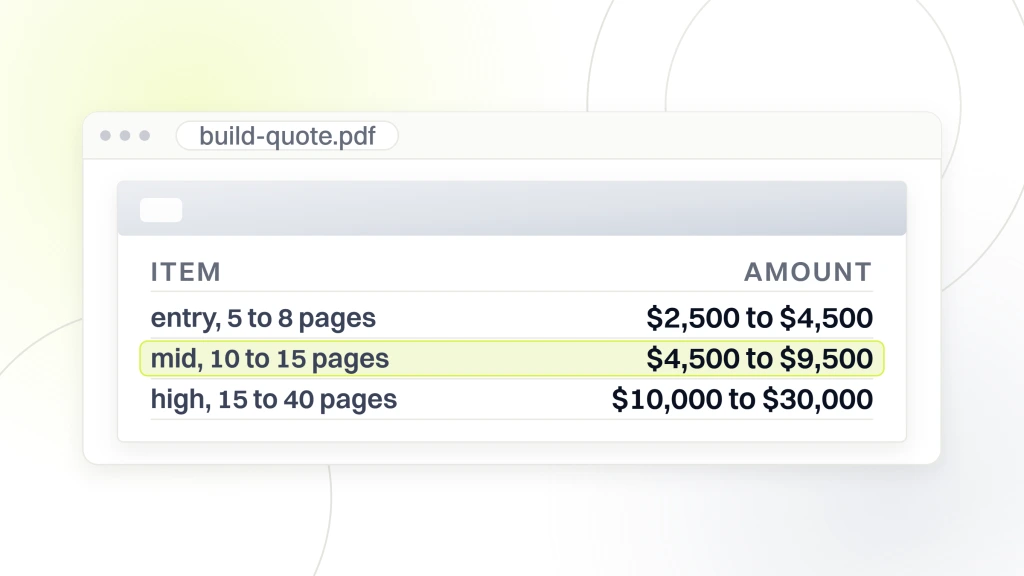
The entry tier fits a solo operator or a business under $500K annual revenue. Expect a WordPress or Webflow build on a proven theme and a launch inside 4 to 6 weeks. The mid tier fits a business between $500K and $2M that needs the site to book appointments or qualified leads. Expect 6 to 10-week timelines, a named copywriter, and page speed under 2.5 seconds Largest Contentful Paint on mobile. The high tier fits a business over $2M whose site is a core revenue channel. Expect 10 to 16-week timelines, a project manager, and a 30 to 60-day warranty after launch. For the current package breakdown at each tier, see the responsive web design services page.
Callout: If a small-business vendor quotes under $2,500 all-in for year one, the quote strips copy, hosting, or a care plan. Get the all-in number in writing before signing anything.
10 red flags that turn a responsive web design cost into a rip-off
Red flags rarely show up in the portfolio. They show up in the pricing page, the contract fine print, and the vendor’s answers on the sales call. Learning to read them saves the owner from signing a $2,000 quote that turns into a $6,500 invoice.
The 10 flags below are recurring failure patterns across hundreds of small business web design engagements. Any single flag is a yellow light. Two or more in the same conversation is a red light. Vendors who hit two or three flags rarely deliver on the affordable promise, and owners who sign anyway usually pay the full custom price by end of year one via change orders and bolt-ons.
- Quote lists design fee only. No hosting, no care, no domain, no plugin costs. This is a starting anchor, not a real price.
- Contract keeps the domain in vendor name. The domain lives in the vendor’s registrar account. Never sign this.
- Promises first-page Google ranking. Impossible on a fixed timeline. Any vendor promising this is willing to bend the truth to close the sale.
- Full payment upfront. Legit vendors take 30 to 50 percent to start, tie milestones to progress, and collect final at launch.
- No named copywriter. If the proposal does not name who writes the copy, the copy is not included.
- Refuses to share 3 live client URLs. A legit portfolio has real URLs. Mockups only mean the sites are not live.
- Ghosts between pitch and proposal. A 5-day proposal delay is the exact pace of the support desk in month 4.
- Copy sample is a template with the client name search-and-replaced. The vendor does not actually write copy from a brief.
- SEO scope reads as generic. Title tags and alt text are named, but no schema, no internal linking plan, no keyword targeting.
- Care plan is billed hourly with no included hours. Every small edit turns into an invoice. Care plans include 1 hour per month at minimum.
Two flags drops the vendor off the shortlist. Three is a hard no. Owners who apply this rule cut their pick-wrong rate from 40 percent (industry average) to under 10 percent. The 5 minutes it takes to score each vendor saves the $3,000 to $6,000 that a wrong pick costs across year one. Read the Redefine Web guide on how to choose web design services for small business for the full picking framework.
How responsive web design packages and quotes compare
Vendors sell responsive web design packages, custom quotes, or fixed-scope contracts. Each format trades off price transparency for outcome predictability. Packages fit the entry and mid tier. Custom quotes fit the high tier. Fixed-scope contracts sit in between and work for owners who want a written scope without full custom pricing.
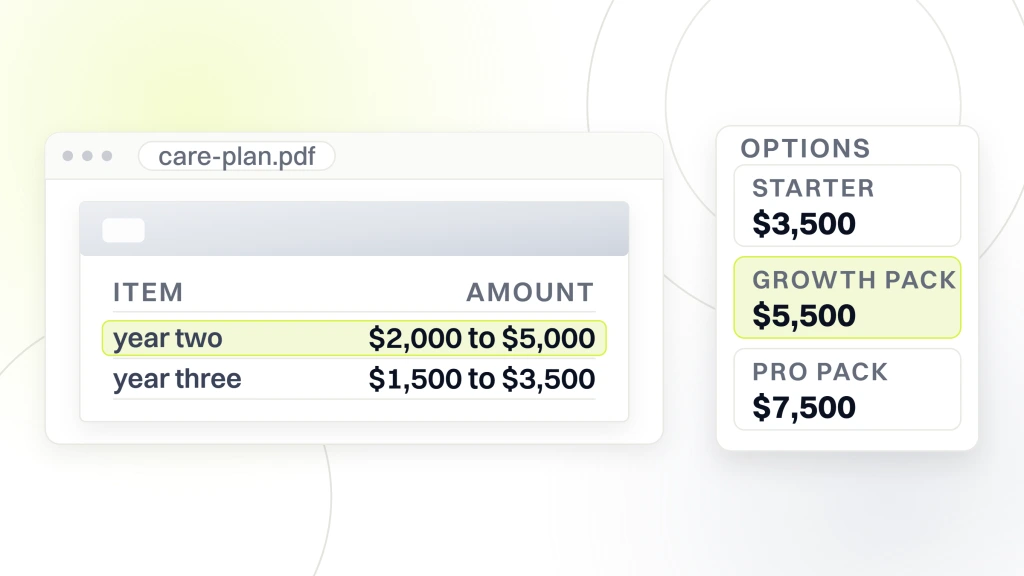
Packages price cleanly ($3,500 for the starter, $5,500 for the growth pack, $7,500 for the pro pack) and include named deliverables in advance. The trade-off is that packages force the business into a preset scope, which fits 70 percent of small businesses cleanly and pinches the other 30 percent whose needs sit between two packages. Owners who fit a package pay 10 to 20 percent less than a custom quote for equivalent scope.
Custom quotes tailor the scope to the business but need more discovery upfront. The vendor spends 2 to 4 hours on a discovery call and paid audit, writes a proposal with named deliverables, and prices the full scope in one number. The trade-off is a 20 to 30 percent premium over a comparable package for equivalent work.
Callout: Convert every quote into one all-in first-year number before comparing. Design fee plus 12 months of hosting, care, plugins, and any bolt-ons. The sticker lies. The all-in number does not.
DIY, freelance, or agency for your responsive web design
The build path splits into three channels. DIY builders (Wix, Squarespace, Shopify) run $200 to $600 in year one, freelancers run $1,500 to $6,000, and agencies run $4,500 to $30,000+. Each channel trades price for time, quality control, and the depth of the on-page SEO you get on day one.
DIY builders fit a business under $200K in annual revenue whose site is a digital business card. Expect 40 to 80 hours of owner time across setup, copy, and photos. The site looks fine but rarely ranks or converts above 1 percent. Freelancers fit a business between $200K and $800K that wants a real site without agency overhead. Expect 4 to 8 weeks and outcomes tied entirely to the one hire. When the freelancer is strong, this path returns the best value per dollar. When the freelancer disappears, the site is orphaned.
Agencies fit a business over $500K that wants a project manager, a copywriter, a designer, a developer, and a QA pass on every deliverable. Expect 8 to 16 weeks, a written scope, and a warranty. The price premium over a freelance build runs 40 to 80 percent, and the value shows up in year two when the site delivers the leads or bookings it was built for. For a core revenue site, agency is the right call. For a brochure, freelance wins on ROI.
How responsive web design maintenance costs stack up in year two
Year two runs $2,000 to $5,000 covering hosting, care plan, plugin renewals, and one or two content refreshes. Year three often adds a $1,500 to $3,500 light refresh. Year four sometimes adds $1,000 to $2,500 for a new service section or a fresh photo shoot.
The 5-year total cost of ownership on a responsive small business site runs $12,000 to $22,000 including the initial build. Compared to running two separate sites (desktop plus m-dot), the 5-year TCO is 30 to 50 percent lower. Compared to a cheap template site with three rebuild cycles across 5 years, the TCO is slightly higher on paper but produces roughly 5 to 10 times the customer volume. That math is why responsive is the small business default in 2026, not the upgrade.
Every 18 months, plan a $1,500 to $3,500 refresh cycle covering hero photography, copy on the two highest-traffic pages, a framework version bump, and one new section if the business added a service line. Every 36 to 48 months, plan a $3,500 to $6,000 light rebuild adding a design pass. Every 60 to 72 months, plan a $5,000 to $9,000 full rebuild. This cadence keeps the site current at a total cost under $22,000 across 5 years, versus $30,000+ for a business running two separate sites.
Callout: Every 18 months, budget a $1,500 to $3,500 refresh cycle. Sites that skip refresh cycles drop 20 to 40 percent of organic traffic in years four and five as Core Web Vitals slip.
A responsive web design cost story that delivered a 6-month payback
Passion Built, a Sydney bathroom and home renovation specialist, is the working example we point to when owners ask what a fair mid-tier price buys. The team came in running two separate underperforming sites built by two prior agencies at higher price points, ranking for 6 keywords total, and converting under 1 percent of visitors. Both prior builds cost more than the winning responsive rebuild and produced worse outcomes on every metric.
We consolidated the two sites into one responsive build at the mid tier, rewrote every service page around real renovation customer language, applied on-page SEO uniformly across mobile and desktop, and rebuilt the booking flow to work cleanly on mobile. 12 months after launch, Passion Built ranked for over 300 competitive keywords, drew over 800 monthly visitors, and generated over $60,000 in renovation bookings from the new site, SEO, and paid work. The 10 percent conversion rate on new visitors was 10 times the baseline.
The Passion Built build delivered a payback under 6 months. The mid tier fee sat in the $5,000 to $7,000 all-in range for year one, and the site generated over $60,000 in bookings across the same 12 months. That payback holds for one reason. The build got three things right on every page. First, mobile page speed under 2.5 seconds Largest Contentful Paint. Second, real copy on every money page written from a renovation-specific brief. Third, on-page SEO applied uniformly across mobile and desktop. Read the affordable web design services for small businesses reference for the full picking framework.
How to compare responsive web design quotes without doing the math
Convert every quote into a single all-in first-year number and compare only that number. One vendor lists the design fee. One bundles hosting. One quotes a monthly retainer. Normalizing across three vendors takes 30 minutes with the formula below and catches the vendor whose sticker looks cheap but whose all-in number lands $2,000 higher.
All-in year one equals design fee plus (hosting monthly x 12) plus (care plan monthly x 12) plus domain renewal plus plugin licenses plus any bolt-ons named in the proposal (copy, SEO, photography, ADA work). Compare only these numbers. Ignore the sticker. The vendor with the lowest all-in number and the strongest scope match wins the price comparison. Fit and portfolio then decide the final pick.
When two quotes tie on price, decide on three tiebreakers. First, which vendor’s live client sites scored better on PageSpeed Insights. Second, which vendor answered emails inside 24 hours during the sales cycle. Third, which vendor’s account lead sounded like someone the owner would enjoy working with weekly for a quarter. Those three predict outcomes better than any price gap under 15 percent.
The Google Search Central guidance on what makes a helpful website covers the quality checks a responsive build should pass on top of the cost math. The takeaway for a small business owner is that the picking rubric matters more than the price. A $6,000 vendor who passes every quality check outperforms a $4,000 vendor who cuts corners on copy and mobile speed.
How to budget for a responsive web design cost across 3 years
Budget the responsive site across 3 years, not one. Year one covers the build fee, hosting, care, and initial paid marketing. Year two covers hosting, care, and one refresh cycle. Year three covers hosting, care, and one light rebuild. The 3-year budget runs $7,000 to $18,000 depending on tier.
Owners who budget only year one underestimate the true cost and cut corners in year two. Owners who budget three years plan for the recurring numbers up front and never get surprised. The Semrush data on real website costs across small business sites confirms the 3-year TCO pattern across roughly 1,200 sites. Copy the model. Skip the pain of surprise bills.
Year one holds 60 to 70 percent of the 3-year budget. Design fee, real copy, on-page SEO, mobile speed, and initial content all hit year one. Year two drops to 20 to 25 percent, mostly recurring hosting and care. Year three lands at 15 to 20 percent, with one light rebuild. Front-load the budget. See how these bands compare against packaged website design packages that bundle scope, copy, and care into a single price. Do not stretch year one across 3 years. That pattern produces underperforming sites, and the year-two fix costs more than doing the work right up front.
Callout: Front-load 60 to 70 percent of the 3-year budget into year one. Sites built cheap in year one cost 2 to 3 times more to fix in year two than doing the work right the first time.
Lock in your responsive web design cost with the right vendor
A fair responsive web design cost lands at $2,500 to $9,500 all-in for the first year on a small business site in 2026, and every dollar above or below the band comes with a story worth reading before signing. The bands are not vendor markup. They reflect the actual scope of a real responsive build at each business stage.
The picking rule is simple. Match the tier to the business stage, get the all-in first-year number in writing, watch for the 10 red flags on the sales call, and sign inside 7 days of the final call. Owners who follow the rule pick right on the first attempt. Owners who guess pay the full custom cost across three rebuild cycles.
If you want to see what a fair price looks like scoped and delivered on a small business timeline, open the Redefine Web page on web design services for small business or book a discovery call. The responsive site that follows earns its cost inside the first year, the same way it did for Passion Built and every small business build Redefine Web has delivered since 2018.