
E-commerce category page seo is where 40 to 60% of your store’s organic revenue lives. Category pages rank on the highest-intent transactional queries (cast iron cookware, running shoes women, laptop deals under $1,000). They carry the deepest topical relevance signals for every product underneath them. Fixing the top 20 category pages in a store produces more revenue movement than any other single SEO project a merchant can run in year one.
This guide walks the working e-commerce category page seo template pattern, the on-page checklist every category needs, the internal linking pattern that spreads authority evenly, the schema markup that pulls rich SERP snippets, the faceted navigation setup that saves crawl budget, and the monthly cadence that keeps rankings compounding through 12 months. Bring your top 20 revenue category URLs and last quarter’s Search Console query data for each one. The recommendations below sit better against your real numbers than against a generic industry benchmark.
You’ll see one running example throughout, an outdoor gear store in Denver with 42 top-level categories and 3,800 products. Each fix is priced against a real hourly budget so you can plan the sprint. The pricing you’ll see for our done-for-you SEO retainer sits at $999, $1,499, $2,499, or from $4,500 per month, and it maps to store size, catalog depth, and query volume, not a one-size template.
The e-commerce category page seo template that ranks
The working e-commerce category page seo template has 15 fixed elements above and below the product grid. Skip any one of them and Google reads the page as thin, no matter how many products sit in the middle. The Denver outdoor store audit turned up 8 of the 15 present on the flagship Tents category, which is why it sat at position 14 even with a 3-year-old domain and 1,400 backlinks.

Above the grid, every category page needs a unique H1 tag that matches the buyer’s query language (not “Tents” but “Backpacking Tents for 2 to 4 Person Trips”), one 60 to 120 word intro paragraph that names 3 to 5 top subcategories or attributes, a breadcrumb trail with schema, a category hero image with a keyword-loaded alt attribute, and a filter sidebar or top bar with only the attributes buyers actually use.
Below the grid, the page needs a 300 to 500 word buyer question section, a related categories block linking to 2 to 4 siblings, an FAQ block with 4 to 6 schema-marked questions, a compact links row to popular subcategory attribute pages, plus an author or editor byline for E-E-A-T. Roll this out on the top 20 revenue categories in the store and the compounding results start inside two crawl cycles.
Internal linking that grows e-commerce category page seo authority
Internal linking is how you tell Google which category pages the store treats as most important. Stores with even internal link distribution rank evenly across their catalog. Stores with lopsided distribution (some categories with 40 links, others with 3) get lopsided rankings regardless of which category has the stronger product mix.
The working pattern gives every top-level category 15 to 25 internal links from across the site. Homepage links to the top 6 to 10 categories. Every category page links to 2 to 4 sibling categories in the same theme. Every blog post links to at least one category and one related blog post. Every product page under the category links back through breadcrumb navigation.
Blog posts are the underused internal linking source. A store with 40 blog posts covering buyer questions can pass link equity to category pages in a way the store’s own navigation never can. A blog post on “how to season cast iron” links naturally to the Cast Iron Cookware category. Every published post should link to 1 to 3 category pages using descriptive anchor text matching the category’s primary keyword.
Related categories blocks below the product grid on each category page are another underused input. A well-configured related categories block on Cast Iron Cookware links to Non-Stick Cookware, Stainless Steel Cookware, and Ceramic Cookware. That link block passes authority across sibling categories and gives buyers a discovery path that improves session depth.
Schema markup for e-commerce category page seo snippets
Schema markup on category pages controls which rich snippet renders in Google’s search results. CollectionPage schema plus BreadcrumbList schema is the base requirement. Miss either one and the category page shows as a plain blue link. Competitors show the breadcrumb path plus category context right in the SERP.
CollectionPage schema tells Google the URL is a category listing rather than a single product or article. Rank Math free, Yoast Premium plus Woo add-on, and All in One SEO Pro all produce valid CollectionPage schema automatically on WooCommerce category pages. Shopify’s newer themes include CollectionPage schema out of the box. Older Shopify themes need Liquid edits to add it.
BreadcrumbList schema shows the category hierarchy in search results. A category page for Cast Iron Cookware renders as “Home > Cookware > Cast Iron” in the rich snippet, so the searcher gets context and click through jumps 15 to 25% versus a plain URL display. Breadcrumb schema depends on the URL structure. Stores using flat URL structure (default Shopify or default WooCommerce) get partial breadcrumb rendering. Stores using nested category URLs get full breadcrumb rendering.
Product schema on the category page products is not required by the CollectionPage spec, but Google reads it when present. Some SEO plugins include mini Product schema blocks for each product in the grid. Rank Math offers this as a configurable option. The effect on category rankings is small (roughly 1 to 3 position movement), yet the effect on rich result rendering for product-in-category queries can be significant. Validate through Google’s Rich Results test after enabling. Read the Schema.org CollectionPage spec for the fields Google reads for category page snippets.
Faceted navigation handling for e-commerce category page seo
Faceted navigation (filter facets like color, size, price, brand) creates URL sprawl fast if left unchecked. A store with 1,000 products, 8 filter facets, and free-combination filters generates roughly 200,000 crawlable URLs. Google wastes 60% of crawl budget on filter combinations that never rank on anything. The category pages themselves get crawled once every 8 to 14 days.
The working solution has three parts. First, robots.txt block or meta noindex on filter facet URLs that combine 3+ facets (color=red&size=large&price=under-100). Second, canonical tags on single-facet URLs pointing to the parent category (canonical from /cast-iron/?color=red to /cast-iron/). Third, dedicated attribute pages for high-search-volume single facets (a real /cast-iron-skillet-red/ page rather than just a filter URL).
The attribute page decision is the interesting one. Search Console query data tells you which single-facet queries have real search volume. “Cast iron skillet 12 inch” gets 8,100 monthly searches. “Cast iron skillet red” gets 210 monthly searches. The first deserves a dedicated attribute page with 300 words of unique copy. The second stays as a canonical-consolidated filter URL. The volume threshold most stores use is 500+ monthly searches to justify a dedicated attribute page.
Faceted navigation done poorly wastes crawl budget and dilutes category page authority. Faceted navigation done well grows category rank by feeding Google clean signals about which URLs matter. Fixing this on an existing store with 40+ category pages takes 4 to 8 hours across the merchant, the dev team, and the SEO auditor. It is one of the highest-return technical projects an established store can run.
Speed and Core Web Vitals for e-commerce category page seo
Category pages fail Core Web Vitals more often than product pages, and the product grid is why. Category templates load 12 to 40 images below the fold. Every image adds render weight. A category page with 40 unoptimized images loads in 4.5 to 6.5 seconds on mobile. The same page with proper compression, lazy loading, and image size hints loads in 1.8 to 2.4 seconds.
The three metrics that matter are Largest Contentful Paint (LCP), Interaction to Next Paint (INP), and Cumulative Layout Shift (CLS). LCP measures how fast the main visible content renders. INP measures how fast the page responds to user interaction. CLS measures how much layout jumps around during load. Google’s threshold for good is LCP under 2.5 seconds, INP under 200 milliseconds, and CLS under 0.1.
The fixes are template-level. Set explicit width and height attributes on every product image. Add loading=”lazy” to below-fold images. Add fetchpriority=”high” to the category hero image. Turn on modern image formats (WebP, AVIF) through the theme or a plugin like ShortPixel. Turn on full-page caching through WP Rocket or FlyingPress. Turn on HTTP/2 or HTTP/3 through the host. Every one of these is a template or platform setting, not a per-URL fix.
RAFZ Cirkulära Interiörer, a Swedish sustainable furniture brand, cut fully loaded time from 15+ seconds to 2 seconds after we rebuilt on a lightweight custom theme, ran WooCommerce optimization, and integrated the place2place API. The result was a 28% conversion rate gain and 82% fewer server requests, verified on the post-launch curve. That kind of speed floor is exactly what category pages need to hold the green on Core Web Vitals for real buyer traffic.
Category pages in the green on Core Web Vitals rank 3 to 8 positions above pages in the red on the same query, all other factors equal. That gap grows as Google puts more weight on page experience signals. Fixing Core Web Vitals is table stakes for e-commerce category page seo in 2025. Read the web.dev Core Web Vitals guide for the current thresholds and the diagnostic tools every SEO team should use.
Below-grid content that grows e-commerce category page seo depth
The below-grid content section is where 300 to 500 words of buyer question answers turn a plain listings page into a working ranking asset. Most stores skip this section outright since the theme’s default template ends the category page at the product grid and nobody pushes to change it.
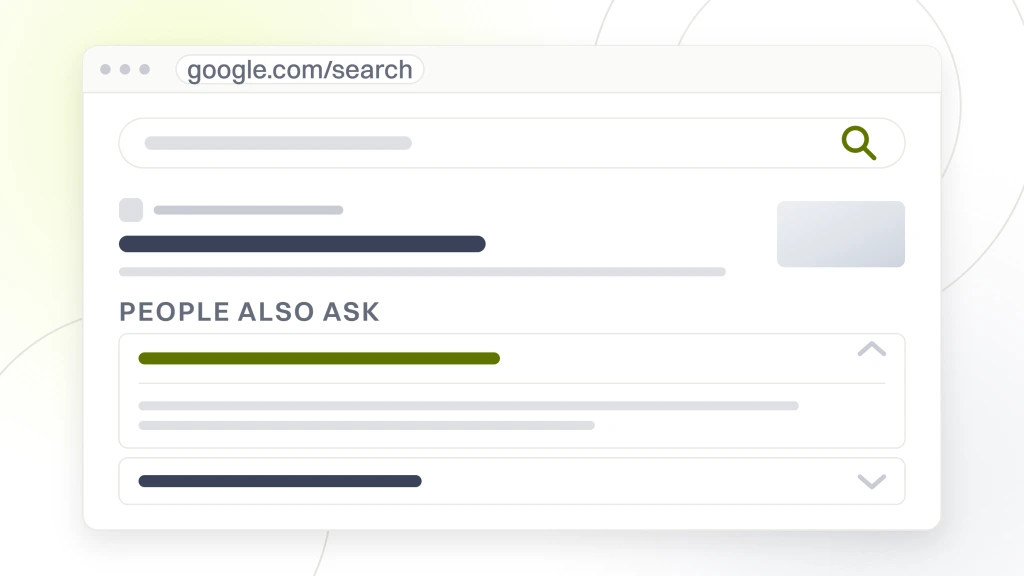
The content section covers the top four buyer questions in the category. Search Console query data shows which questions carry real search volume. For Cast Iron Cookware, four questions cover the intent map. “How to season cast iron” gets 14,800 monthly searches. “Cast iron vs stainless steel” gets 2,900 monthly searches. “How to clean cast iron” gets 8,100 monthly searches. “What size cast iron to buy first” gets 1,300 monthly searches. Answer each with 80 to 130 words.
Each question gets its own H3, its own answer paragraph, and at least one contextual link to a related product in the category or a related blog post. That structure ranks the category page on all four question queries plus the primary transactional query. It gets extracted by AI Overviews and ChatGPT too when the answers are structured as direct answers, not buried in prose.
Abigail Ahern, the London luxury home decor brand, added below-grid content sections across 40 category pages as part of an organic rebuild that produced 179% year-over-year ecommerce revenue growth. Each below-grid section runs 400 to 800 words covering the buyer questions specific to the category (styling questions for dining, dimensioning questions for lighting, care questions for textiles). Their paid search ROAS reached 1,588% partly since the organic side captured buyers earlier in the funnel, letting paid campaigns focus on prospecting and remarketing at higher margins.
Maintaining e-commerce category page seo month over month
E-commerce category page seo decays if nobody maintains it. Buyer language shifts. Competitors publish better content. Google updates its ranking algorithms. The monthly maintenance cadence takes 2 to 4 hours per month on a store with 40 category pages and produces 15 to 30% compound annual growth in category page organic revenue.
The monthly checklist runs five items. First, pull Search Console query data for the top 10 revenue category pages. Look for queries where the page shows in impressions but not in clicks (positions 8 to 20 typically). Those are the queries closest to breaking into page one with a small rewrite. Second, check the top 3 competitors for the flagship query on each of those 10 categories. Note what they added or changed in the last 90 days.
Third, refresh the below-grid content section on any category with declining traffic month over month. The refresh usually means updating a buyer question answer with new data, adding a new question that has grown in search volume, or removing a stale reference. Fourth, validate schema on 5 random category URLs through Google’s Rich Results test. Fifth, check Core Web Vitals scores on the same 5 URLs through PageSpeed Insights.
The monthly cadence produces compounding results. Categories that ranked 8th at month zero rank 5th at month six and 2nd at month twelve. Categories that ranked 4th hold at 3rd or 4th. The bottom of the top 20 slowly climbs into positions where the rich snippet renders and click through jumps 30 to 60%. A compounding organic e-commerce category page seo program looks exactly like that when measured across 12 months.
Common e-commerce category page seo mistakes that cost revenue
Every e-commerce category page seo audit turns up the same short list of mistakes. Fixing them takes a week of focused work and produces measurable ranking movement inside two crawl cycles. The list is boring, which is the exact reason it keeps working when trendier tactics stall out.
The most common mistake is duplicate title tags across sibling categories (Cast Iron Cookware and Cast Iron Skillet both titled “Cast Iron – Cookware Store”). The second most common is missing H1 tags on the category page, since the theme puts the category name in an H2. The third is thin above-grid copy under 40 words. Fixing all three across 20 category pages takes one focused afternoon and produces 3 to 8 position movement within two crawl cycles.
The fourth mistake is over-optimization. Above-grid copy stuffed with the primary keyword 8 times in 100 words reads as spam to both Google and the buyer. Keep keyword density natural (0.5 to 1.5%) and let the buyer question section carry the ranking weight through natural language, not keyword repetition. The fifth is missing internal links to sibling categories. Every top-level category should link to 2 to 4 siblings through a related categories block or in-body anchors.
What to do this week to improve e-commerce category page seo
Pick three actions from the list below and finish them by Friday. A merchant who spends one focused afternoon on the top 5 revenue category pages usually sees measurable ranking movement inside two crawl cycles, since Google re-processes new copy quickly on URLs it already crawls frequently.
Most stores start with the same partial state. Category pages have a title but no unique above-grid copy. No below-grid content section. No breadcrumb schema. Core Web Vitals in the yellow or red. Filter facet URLs indexed and cluttering the sitemap. Every one of these inputs moves from broken to functional inside a week of focused work using the actions below.
- Write 60 to 120 words of unique above-grid copy for the top 5 revenue category pages
- Write a below-grid buyer question section (4 questions, 80 to 130 words each) for those same 5 categories
- Validate CollectionPage schema and BreadcrumbList schema through Google’s Rich Results test on 5 random category URLs
- Set filter facet URLs to noindex through the SEO plugin or robots.txt
- Fix Core Web Vitals on the category template with explicit image dimensions and lazy loading below the fold
- Add related categories blocks linking to 2 to 4 sibling categories below every product grid
- Publish one blog post per month that links to at least 2 category pages using descriptive anchor text
The Ecommerce SEO Services for DTC Brands page at Redefine Web covers category page rewrites plus the ongoing technical and content work for stores wanting the execution off their plate. Related reading for platform-level detail is in the WooCommerce SEO Best Practices guide, the audit workflow in the E-commerce SEO Audit Services guide, and platform picks in the Shopify vs WooCommerce SEO comparison.
E-commerce category page seo is not one clever tactic. It is 15 template elements, 15 to 25 internal links per category, and 400 to 700 words of unique copy per page, maintained monthly for 12 months straight. The Ecommerce Marketing Retainer Plans from $1,499/mo covers the ongoing execution for stores wanting a fixed monthly cost and a specific deliverable schedule. Our SEO retainer sits at $999, $1,499, $2,499, or from $4,500 per month depending on catalog size and query volume. Stores compounding organic category revenue every quarter are the ones who ran this boring version of the plan without switching agencies every six months. That is the whole of it, and next Tuesday is when the plan starts.